September vs. August in Europe: Is It Really Cheaper?
Key Highlights
- 1
- 2
- 3
+5 more in the takeaways below
You're standing in the Amalfi Coast sun at 2pm in late August, sweating through your shirt before you've even found the gelato place, wedged between forty other people trying to photograph the same cliff. A week later, in mid-September, that same viewpoint is half empty and the air finally lets you breathe. Same coast. Same eight days off work. Completely different trip.
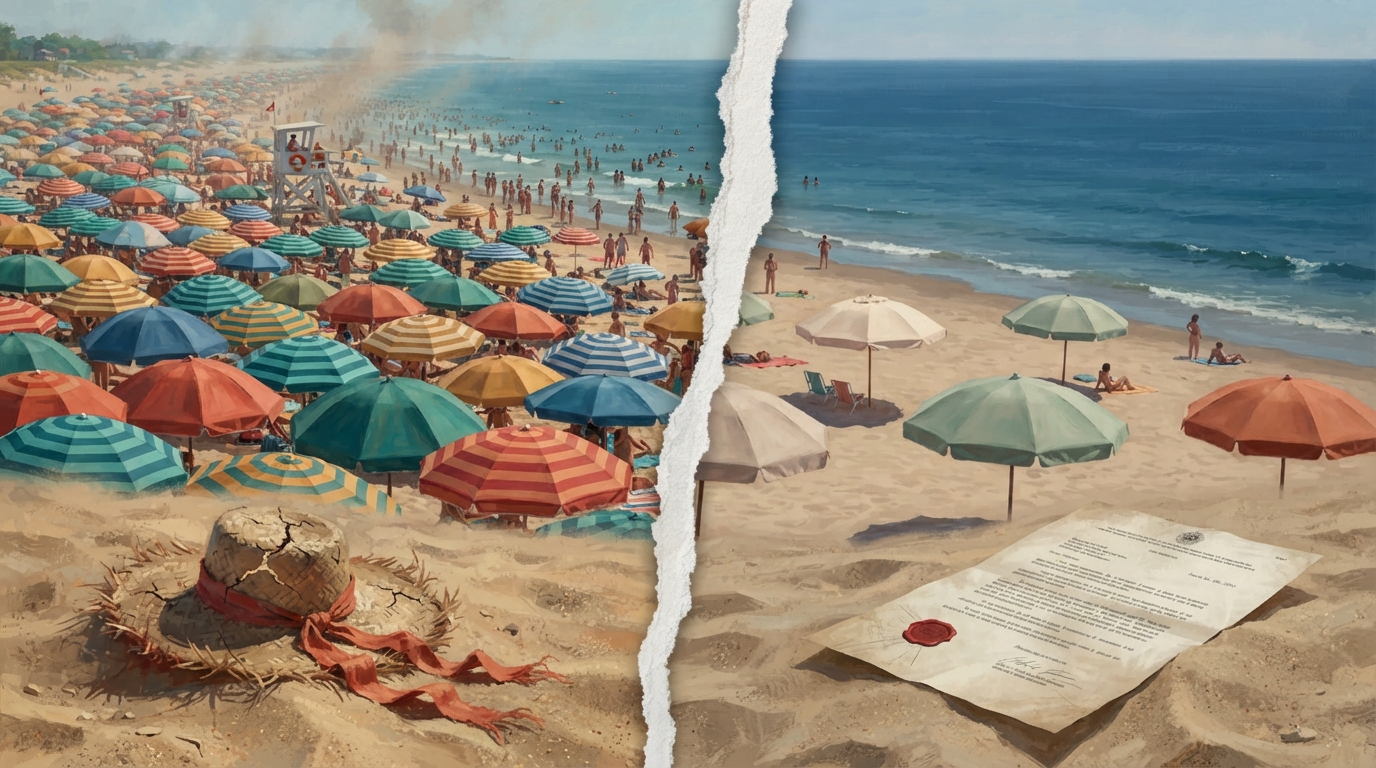
September beats August almost everywhere in Europe: measurably cooler temperatures (Paris drops over 4C, Dubrovnik and Santorini both fall around 3C), fewer people once European schools reopen and US Labor Day passes, and real, government-measured price drops, like Spanish hotels falling from an average €155.70 to €131.40 per room in a single month. Dubrovnik and the Greek islands stay lively in September, just less overwhelmed. August still wins if your dates are locked to school holidays or you want maximum daylight and peak nightlife energy.
Why September Isn't Just a Quieter August
Two dates flip the switch on European travel every year, and neither one has anything to do with the weather. US Labor Day falls on Monday, September 7 in 2026, the unofficial closing bell on American summer vacation. Across the Atlantic, European schools stagger their own return through late August and September. Put those two together and you get a hard demand cliff, not a gradual fade.
Eurostat doesn't hedge on this one. In 2025, 31.1% of every overnight stay booked in EU tourist accommodation happened in just two months, July and August. That is roughly a third of an entire year's tourism activity crammed into 62 days. Once September 1 arrives, that pressure doesn't taper off. It drops off.
It's not only foreign tourists clearing out, either. Locals leave too, and that part matters more than most "best time to visit" guides admit. Greek residents spend 59% of their own annual travel nights in July and August, and Italians aren't far behind at 56%, per the most recent Eurostat national breakdown (2024 data). That's not exaggeration, it's an entire country coming back from its own holiday at once.
So this isn't a vague seasonal vibe shift. It's two overlapping calendars, one American and one European, both pointing the same direction at once. That's the mechanism behind everything else in this article.
Picture the same family booking a week in Croatia twice, one year in late August and the next year in mid-September. Nothing about the destination changed. The flights were booked the same six weeks out, the hotel was the same three-star place two streets back from the harbor. What changed was everyone else's calendar. In the August trip, half the guests were Italian and German families squeezing in one last week before school. In the September trip, most of those families were already gone, replaced by a much smaller mix of retirees, couples, and travelers with flexible jobs. Same coastline, half the competition for a dinner table at eight o'clock.
Don't trust a "best time to visit" list that hands you a single tidy percentage for every city in Europe. Seasonality varies by country, and a number that's true for Greece (59% of nights in two months) isn't automatically true for Croatia or Spain. Check the destination, not just the season.
Keep that distinction in mind as we go destination by destination below.

The Temperature Difference, City by City
Here's the part most comparisons skip: actual numbers, not "warm" and "pleasant." We pulled average daily high temperatures (in Celsius, with Fahrenheit for the first mention) for August and September across six destinations from national meteorological data. Every single one cools down. None of them cool down by the same amount.
| Destination | August Avg High | September Avg High | Drop |
|---|---|---|---|
| Santorini, Greece | 30.2C (86.4F) | 27.2C (81.0F) | 3.0C |
| Mykonos, Greece | 27.6C | 25.7C | 1.9C |
| Dubrovnik, Croatia | 28.5C | 25.1C | 3.4C |
| Amalfi Coast (Salerno), Italy | 31.3C | 28.3C | 3.0C |
| Barcelona, Spain | 28.9C | 26.0C | 2.9C |
| Paris, France | 25.6C | 21.5C | 4.1C Biggest drop |
Paris drops the hardest of the six, a genuine four-degree swing between its August and September averages. Dubrovnik isn't far behind at 3.4C, and its sea temperature only slides from 25.4C to a still-swimmable 24.3C, so you're not sacrificing beach days for the cooler air. Mykonos moves the least, smallest drop, which tracks: it's the most exposed to sea breeze of anywhere on this list, so its August heat was never as brutal to begin with.
That gap matters for more than comfort. A 4C swing in Paris is the difference between a museum queue that has people fanning themselves with the map and one where nobody's in a hurry to get inside just for the air conditioning. In Santorini, a 3C drop means the walk up from the old port doesn't leave you needing twenty minutes in the shade before you can look at a view. None of these are dramatic numbers on paper. All of them are the difference between a day you push through and a day you actually enjoy. If you're chasing that cooling trend on purpose, our roundup of Europe's coolcation destinations ranks the cities that drop the most.
If you're comparing more than one destination before you commit, don't eyeball it from memory. TripProf's free destination guide includes a Weather Outlook section for every city, so you can check Dubrovnik against Barcelona against Santorini in the same afternoon instead of juggling six browser tabs of climate averages.

What September Actually Does to Prices
Spain publishes an actual government price index for hotels, and it's the cleanest real number in this entire comparison. In August 2025, Spanish hotels billed an average of €155.70 per occupied room. One month later, in September 2025, that average had fallen to €131.40, a drop of about 16% nationwide in a single month, according to Spain's National Statistics Institute.
That's not a hotel chain's marketing number. It's a mandatory monthly government survey covering the whole country, published this same planning year. It won't match every city exactly. Barcelona in particular runs hot through most of September because of its autumn trade fair and conference calendar, more on that below, but the national direction is unmistakable: demand drops the moment the calendar flips, and prices follow within weeks.
We couldn't find an equally clean government price index for Greece, Croatia, or Italy specifically comparing these two months, and we're not going to hand you a number we can't stand behind just to fill out a table. What we can hand you is a method that works for any route, any year, and doesn't depend on us re-running this research every summer.
- Open Google Flights' price graph for your exact route and toggle between August and September dates. It shows real fare curves for your actual airports, not a national average that hides the outliers.
- Set a price alert as soon as you have rough dates. Kayak's own fare research tracks booking windows and weekday pricing, and the alert adjusts automatically as fares move rather than locking you into a single guessed date.
- Check the shoulder week, not just the month. Run your specific dates through the price graph rather than assuming any single week wins by default, we couldn't find a source that isolates a single "cheapest week" within August or September and won't hand you one we can't back up.
- Compare a direct hotel booking against a third-party one once you've picked dates. Our direct vs third-party booking breakdown covers when going straight to the hotel actually saves money and when it doesn't.
Flight pricing across an entire year is messier than the Aug-Sept question alone. Expedia's 2026 Air Hacks report, as covered by Euronews, names June as a notably cheap month for international flights and confirms what you'd expect: August is the year's busiest travel month. That report doesn't isolate August versus September specifically, and neither did anything else we checked this run. We'd rather tell you that gap exists than paper over it with a number we made up. For the fuller 2026 airfare picture, including how the Spirit collapse reshaped routes and pricing, see our guide to cheap flights this summer.
Search your route in an incognito browser window before comparing August and September fares. Some booking sites adjust displayed prices based on your search history, and a clean session gives you the actual baseline instead of a number nudged by your last five searches.
With the method sorted, here's what it actually looks like on the ground in the destinations people ask about most.

Dubrovnik: Same Cap, Fewer Days It Gets Hit
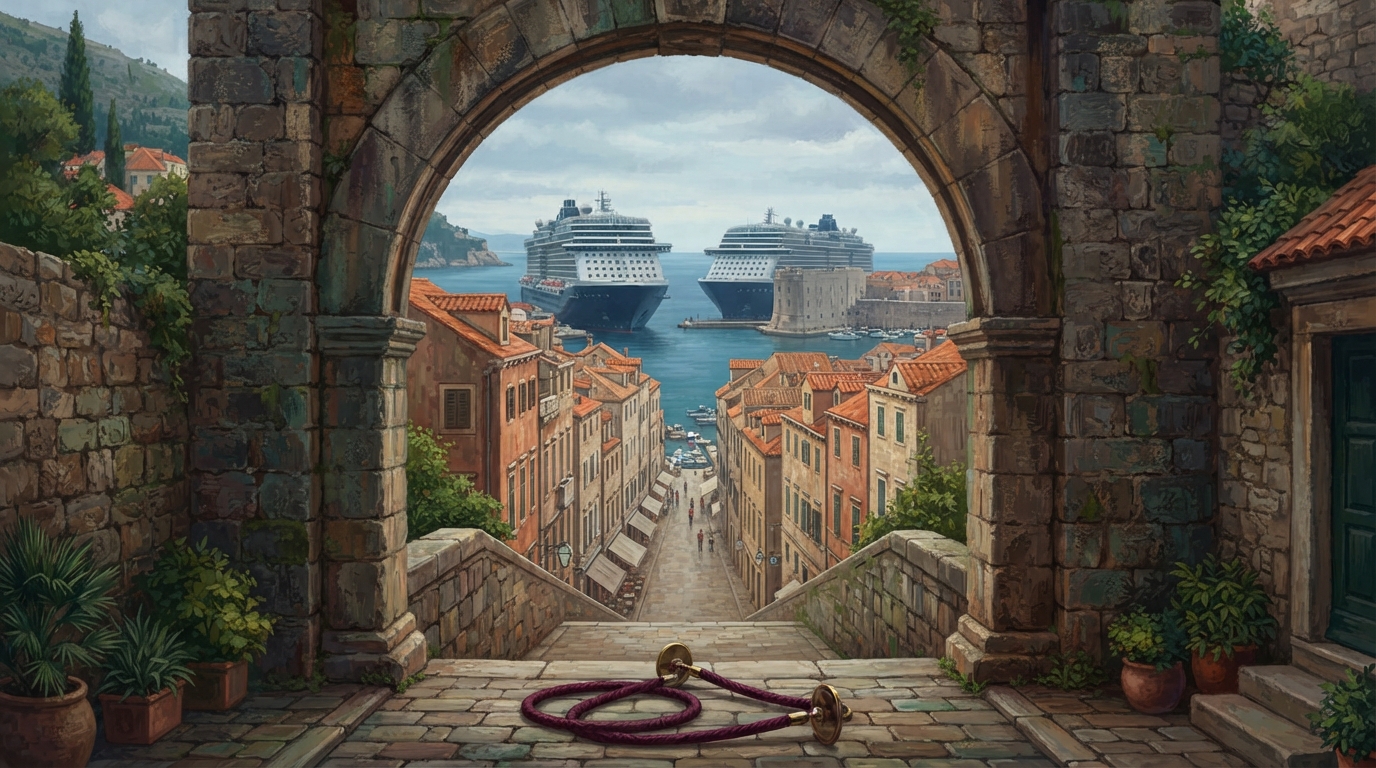
Dubrovnik doesn't quietly get less crowded between August and September. It manages crowding by rule, and the rule barely changes with the season. The city has capped cruise arrivals at two ships a day, with a combined maximum of 8,000 passengers, part of Europe's broader overtourism crackdown that's pushed cities across the continent toward hard visitor limits. What changes is how often the city actually bumps against that ceiling.
August in Italian seaside resort towns is a call travelers regret every year: the whole country is on its own summer holiday at once, so the coast runs crowded and expensive until Italian schools reopen in mid-September.
September isn't a ghost town, though, and pretending otherwise would be its own kind of dishonest. Croatia actually logged more tourists in September 2025 than in September 2024, 2.4 million arrivals and 11.9 million overnight stays, up 5.7% and 6.3% year over year. Cruise traffic told a similarly mixed story that same month: 111 foreign cruise ships called at the Croatian Adriatic coast in September 2025, 6.7% fewer visits than the year before, yet the ships that did show up carried 9.5% more passengers, 166,200 people that month alone.
So don't book September in Dubrovnik expecting an empty Stradun. Book it expecting a city running near its two-ship cap on most days, along with air that's cooled from a sweaty 28.5C average high in August to 25.1C in September, and sea water still warm enough to swim in comfortably.
Here's the thing nobody selling you a Dubrovnik trip wants to say out loud: the cap is a rationing system, not a magic fix. On a capped day, 8,000 people are still funneling through Pile Gate and up onto the city walls at roughly the same hours. September just means fewer of those 8,000-person days happen back to back, and fewer independent travelers competing with them for the same restaurant tables in the evening. If crowd avoidance is your actual priority over this specific city, our guide to skipping the crowds in Europe this summer covers alternate destinations that dodge the cap-and-queue problem entirely.
Santorini and Mykonos: The Same Islands, More Room to Breathe
The Greek islands never fully empty out in September, but the mechanics of who's there shift completely. Remember that 59% figure from earlier? Greek travelers cram the vast majority of their own vacation time into July and August, which means the ferries, tavernas, and caldera-view bars that were sharing space with domestic tourists in August are suddenly sharing it with far fewer of them once September arrives.
Temperature cooperates too. Santorini's average daily high drops from 30.2C in August to 27.2C in September, and Mykonos goes from 27.6C to 25.7C over the same shift, per National Observatory of Athens data. That's the difference between climbing Oia's steps at noon feeling like a mistake and feeling like a genuinely good idea.
- Book caldera-view rooms two to three months out. Early September is still high season in Santorini, the real drop in crowds doesn't start until the second half of the month
- Confirm your ferry operator still runs a full September schedule, some Cyclades routes thin out sharply after mid-month
- Pack a light layer for evenings. September nights cool off faster than August ones once the sun goes down
- Check whether your hotel's pool or beach club closes early. Some Mykonos venues wind down operations by late September
That last point catches people off guard more than anything else on this list.
Greek residents put 59% of their entire year's travel nights into just July and August, per the most recent (2024) Eurostat national breakdown. No other country's domestic travelers in that breakdown concentrates their own vacation time that tightly, which is a big part of why the difference between a Greek island in August and the same island in September feels so much sharper than the temperature numbers alone suggest.
Two islands down. Three very different mainland stories are next.

Barcelona, Paris, and the Amalfi Coast: Where the Rule Bends
Barcelona is the exception worth knowing before you book. Barcelona's average high falls from 28.9C in August to a still-warm 26.0C in September, but the city runs a packed autumn trade fair and conference calendar that keeps hotel demand higher than the "everyone's back at school" story alone would predict. Remember that Spain-wide 16% hotel price drop from earlier? Barcelona itself likely softens less than smaller coastal towns, because business travel refills the rooms leisure travelers vacate. If you're deciding how to book whatever room you do find, our Airbnb vs Booking comparison breaks down which platform wins for different trip types.
Paris tells nearly the opposite story. Its average high drops from 25.6C in August to 21.5C in September, the steepest fall of any city in this comparison, and August is when many Parisians themselves leave town. The city genuinely thins out in August rather than just cooling down. September brings Parisians back to work, but the tourist crowd replacing August's is smaller.
The Amalfi Coast splits the difference. Around Salerno, the closest official weather station to Positano and Amalfi, August's average high of 31.3C eases to 28.3C in September, still warm enough for full beach days, and Italy's own domestic exodus (that 56% figure again) means the narrow coastal road and Positano's famous stairs carry noticeably less local traffic once the calendar turns. Anyone who's sat in a stalled SITA bus above Positano in August, watching a scooter try to pass a tour coach on a hairpin turn, already knows why fewer Italian families on that road in September is worth more than a temperature chart can capture. Most Amalfi Coast trips start and end in Naples, and our 3 days in Naples itinerary covers what to do with a day or two there before heading down the coast.
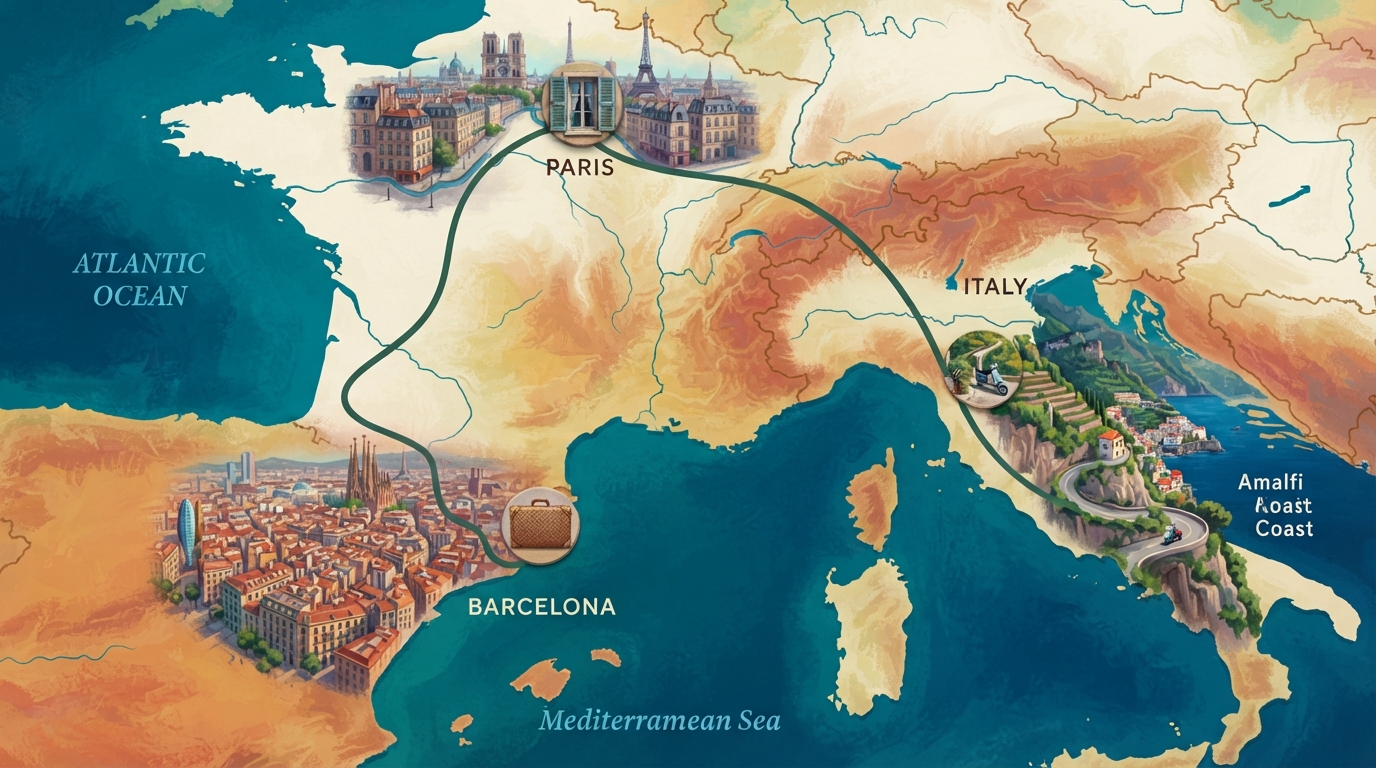
Three destinations, three different reasons the rule bends: a business calendar in Barcelona, an actual population exodus in Paris, and a domestic-traffic bottleneck on a coastal road in Italy. None of them cancel out the broader pattern, they just explain why "check the specific city" beats "trust the average" every time. If you're stitching two or three of these cities into one trip, our multi-city Europe planning guide walks through how to sequence stops without wasting a travel day on backtracking.
So, Is September Actually Cheaper Than August?
Based on everything we could independently verify this year: yes, more often than not. The mechanism is real, two overlapping school calendars flip demand hard right around September 1. The temperature drop is real and measurable in every single city we checked. And the one clean government price index we found, Spain's, showed a genuine 16% hotel price fall in a single month. That's not a guess. That's Madrid's own statisticians doing their job.
August still wins in specific situations, though, and pretending it doesn't would be exactly the kind of overreach we're trying to avoid here.
- You can travel outside fixed school holiday windows
- You'd rather have 25C and elbow room than 32C and a queue
- You're optimizing for hotel and flight value over peak nightlife energy
- Your kids are in school until late August or the first days of September
- You want maximum daylight for long outdoor evenings
- Your destination is Barcelona specifically, where conference season keeps prices firmer than the school-return story suggests
Picture two versions of the same nine-day Europe trip. Version one leaves in the first week of August: three flights delayed by peak-season air traffic, a Santorini hotel booked at the top of its rate calendar, a Dubrovnik afternoon spent queuing behind two cruise crowds at once, and a Paris hotel room that never quite cools down overnight. Version two is the identical itinerary, shifted three weeks later. Same flights, same hotels, same restaurants. The only thing that moved is the date, and that one move is doing more work than any packing hack or app ever could.
Look, the honest answer is that there's no single number that applies to every city on this list. But the direction is consistent, cooler, calmer, and backed by at least one real government price index, so September deserves to be the default assumption, not August.
Frequently Asked Questions
Is it better to go to Europe in August or September?
For most travelers, September wins. Temperatures drop measurably across Southern and Western Europe, crowds thin as European schools return and US Labor Day passes, and at least one government price index (Spain's) shows real hotel savings. August still suits travelers locked into school-holiday dates or chasing maximum daylight.
Is September a good time to visit Greece and the Greek islands?
Yes. Santorini and Mykonos both cool by roughly 2 to 3 degrees Celsius from August to September, and Greek domestic travelers, who took 59% of their own annual vacation nights in July and August per the most recent (2024) Eurostat breakdown, largely head home. The islands stay busy, just less so than August's peak.
What is the cheapest month to fly to Europe?
It varies by route, and we couldn't verify a single universal answer for August versus September specifically. Expedia's 2026 Air Hacks report, covered by Euronews, names June as notably cheap and confirms August as the year's busiest travel month. Check Google Flights' price graph for your exact route rather than trusting a blanket claim.
Do hotel prices actually drop once European schools go back?
In Spain, yes, measurably. The national Hotel Price Index fell from an average €155.70 per occupied room in August 2025 to €131.40 in September 2025, about a 16% drop, per Spain's National Statistics Institute. Individual cities and hotels vary, and business-travel hubs like Barcelona soften less than leisure-only towns.
Is the Amalfi Coast too hot and crowded in August?
It runs hotter and busier than most travelers expect. August highs near Salerno average 31.3C, and Italy's own residents took 56% of their annual vacation nights in July and August, per the same 2024 Eurostat breakdown, filling the coast road and Positano's stairs with domestic traffic on top of international visitors.
How much less crowded is Dubrovnik in September compared to August?
Dubrovnik has capped cruise arrivals at two ships and 8,000 passengers a day, so the daily ceiling itself barely moves month to month. What changes is how often the city hits that ceiling: August is widely the peak of Croatia's coastal season, so the cap gets reached far more consistently than in September, even though September 2025 still saw real growth in overall visitor numbers.
Key Takeaways
- US Labor Day (September 7, 2026) and staggered European school returns create a hard demand drop around September 1, not a gradual fade
- Every destination we checked cooled measurably from August to September: Paris fell over 4C, Dubrovnik and Santorini both fell around 3C
- Spain's own government price index showed hotels dropping from €155.70 to €131.40 per occupied room in a single month, about 16%
- Dubrovnik caps cruise arrivals at two ships and 8,000 passengers a day, but September hits that ceiling far less often than August
- Greek islands stay genuinely busy in September, just with far fewer of the domestic Greek travelers who dominate August
- Barcelona resists the pattern somewhat thanks to its autumn conference and trade fair calendar
- Check Google Flights' price graph and set a Kayak alert for your specific route before assuming either month is cheaper by default
- Whichever month you land on, tools like TripProf can pull together your itinerary, budget estimate, and packing list once your dates are set, so you're not rebuilding a spreadsheet the week before you fly
Pick your dates, check the actual fares for your route, and go. Both months still add up to the same European summer everyone's chasing.
Sources
- Wikipedia: Labor Day: confirms the 2026 date
- Eurostat: EU tourism nights concentrated in July and August, 2025 data
- Eurostat Statistics Explained: seasonality in tourism demand, national breakdowns for Greece and Italy
- Spain's National Statistics Institute (INE): Hotel Price Index, August 2025
- Spain's National Statistics Institute (INE): Hotel Price Index, September 2025
- Euronews: Dubrovnik's cruise ship cap policy
- The Dubrovnik Times: September 2025 cruise ship traffic on the Croatian Adriatic
- Croatian Bureau of Statistics (DZS): September 2025 tourism arrivals and nights
- Euronews: Expedia's 2026 Air Hacks report coverage
- Kayak: guide to flight price timing
- Wikipedia: Santorini climate data
- Wikipedia: Mykonos climate data, National Observatory of Athens
- Wikipedia: Dubrovnik air and sea temperature data
- Wikipedia: Barcelona climate data, AEMET normals
- Wikipedia: Paris (Parc Montsouris) climate data, Meteo-France normals
- Wikipedia: Salerno (Amalfi Coast gateway) climate data
Last updated: July 23, 2026
Keep Reading
More travel tips and guides picked for you
Christmas markets from London by train: what 3 nights really costs per person in 2026
Three nights at a Christmas market from London cost £426 to £704 per person. We priced Eurostar fares, central hotels and food for Lille, Brussels, Bruges and Cologne.

Wizz Air and Ryanair are cutting Vienna flights: what to book instead
Wizz Air has fully left Vienna and Ryanair has cut five aircraft over Austria's aviation tax. Here's exactly what changed, why it happened, and how to still book a cheap flight this winter.
Mallorca's tourist tax hike got cancelled. Here's what a 2026 trip really costs
The Balearic tourist tax hike everyone's still warning about got cancelled in February. Here's what a week on Mallorca actually costs in 2026, flights, hotel, tax, and food, with real numbers.