Direct vs Third-Party Booking: When Expedia Saves You Money and When It Costs You Everything
Key Highlights
- 1
- 2
- 3
+5 more in the takeaways below
You found a killer deal on Expedia: a flight-and-hotel package to Lisbon for $200 less than booking separately. Six weeks later, your airline cancels the outbound leg. You call Expedia. They say call the airline. The airline says call Expedia. Your trip is in four days, and nobody's picking up.
That's the trade-off: OTAs give you convenience and comparison shopping. But they strip away the direct relationship with the company actually operating your flight or hotel. That relationship is worth nothing when everything goes right. It's worth everything when it doesn't.
Book direct with airlines and hotels for flexibility, loyalty perks, and faster help during disruptions. Use OTAs like Expedia only for genuine bundle savings (flight + hotel packages can save around 14%) or when they're meaningfully cheaper. The 24-hour free cancellation rule doesn't apply to OTA bookings in the US, hotel loyalty points often won't count, and getting refunds through a middleman can take months. Search on Google Flights or Kayak, then book on the airline or hotel site.
How OTAs Actually Make Money (And Why It Matters to You)
Online travel agencies like Expedia, Booking.com, and Priceline aren't charities. They're middlemen, and middlemen take a cut. Hotels pay OTAs a commission of 15% to 30% per booking, with Booking.com averaging around 15% and Expedia averaging closer to 20%. Airlines pay far less, which is why OTAs push hotel packages so aggressively.
That commission structure creates a chain reaction you feel as a guest. Hotels paying a 20% cut to Expedia have less margin to give you anything extra. No free upgrade. No late checkout. No flexibility on the cancellation policy. The Points Guy reports that hotel loyalty members who book through OTAs often can't earn points or enjoy elite status benefits at all.
Airlines work differently. They've slashed OTA commissions over the past decade, and many now pay close to zero. That's why Expedia and Booking.com lean so heavily on hotel packages and bundles: hotels are where the money is. When you see a flight price on an OTA that's identical to the airline's website, the OTA is likely making its margin from the hotel portion of a potential bundle, not from the flight itself.
When Booking Direct Wins (And It's Most of the Time)
Direct booking gives you one clear advantage that outweighs almost everything else: when something breaks, you're dealing with one company, not two. No blame-passing. No "please contact the airline." No three-hour hold with Expedia's call center while your gate closes. Here's what you gain by cutting out the middleman.
The 24-Hour Safety Net
Every year, travelers lose money because they don't know this rule exists. The US Department of Transportation requires airlines to let you cancel any flight for free within 24 hours of booking, as long as the flight departs at least seven days out. But here's the catch most travelers miss: that rule doesn't apply to tickets booked through OTAs. The DOT's own guidance makes this explicit. Some OTAs like Expedia voluntarily honor a 24-hour window, but they're not legally required to. Smaller agencies? Forget it.
Faster Refunds When Flights Get Cancelled
The DOT's automatic refund rule, which took effect October 28, 2024, requires airlines to issue refunds within seven business days for credit card purchases when they cancel or significantly change a flight. For domestic flights, a schedule change of three hours or more qualifies. For international flights, it's six hours. These refunds must be automatic: the airline has to issue them without you requesting one.
But when you've booked through an OTA, the refund has to flow from the airline to the agency to you. That extra step adds days or weeks to the timeline. Thrifty Traveler notes that OTAs may not even be aware of the federal law requiring refunds, passing responsibility back and forth until your claim falls through the cracks. We've talked to enough travelers stuck in OTA phone loops to know this isn't hypothetical. If you've dealt with a cancelled flight before, you know that speed matters: the difference between a seven-day refund and a three-month ordeal is whether you booked with one company or two.
Hotel Loyalty Points and Perks
Booking a Marriott through Expedia? You'll get the room, but NerdWallet confirms you generally won't earn points, elite night credits, or status perks. The same goes for Hilton, IHG, and Hyatt. Major chains reserve their best benefits for direct bookers, and many now offer best-rate guarantees that match or beat OTA prices while throwing in extras like free breakfast or room upgrades.
Find a rate on Expedia, then check the hotel's own website. If the price matches, book direct. You'll earn loyalty points, get better cancellation terms, and have a much easier time if you need to modify the reservation later.
Credit Card Bonus Points
Premium travel cards often reward direct bookings with bonus multipliers. Thrifty Traveler reports that American Express Platinum cardholders earn 5x points when booking flights directly with airlines or through Amex Travel, while Delta SkyMiles Gold cardholders earn 2x on direct Delta purchases. Book that same flight through a third-party OTA, and you'll typically earn just 1x, though some OTAs may code as direct airline purchases depending on how they process the booking.
Worth noting: travel credit card portals like Chase Travel and Amex Travel occupy a middle ground. They're technically third-party platforms, but because they're tied to your card issuer, you still earn bonus points as if you'd booked direct. If your card offers a travel portal with bonus multipliers, it can be a smart alternative to both traditional OTAs and airline websites.
Changes and Modifications
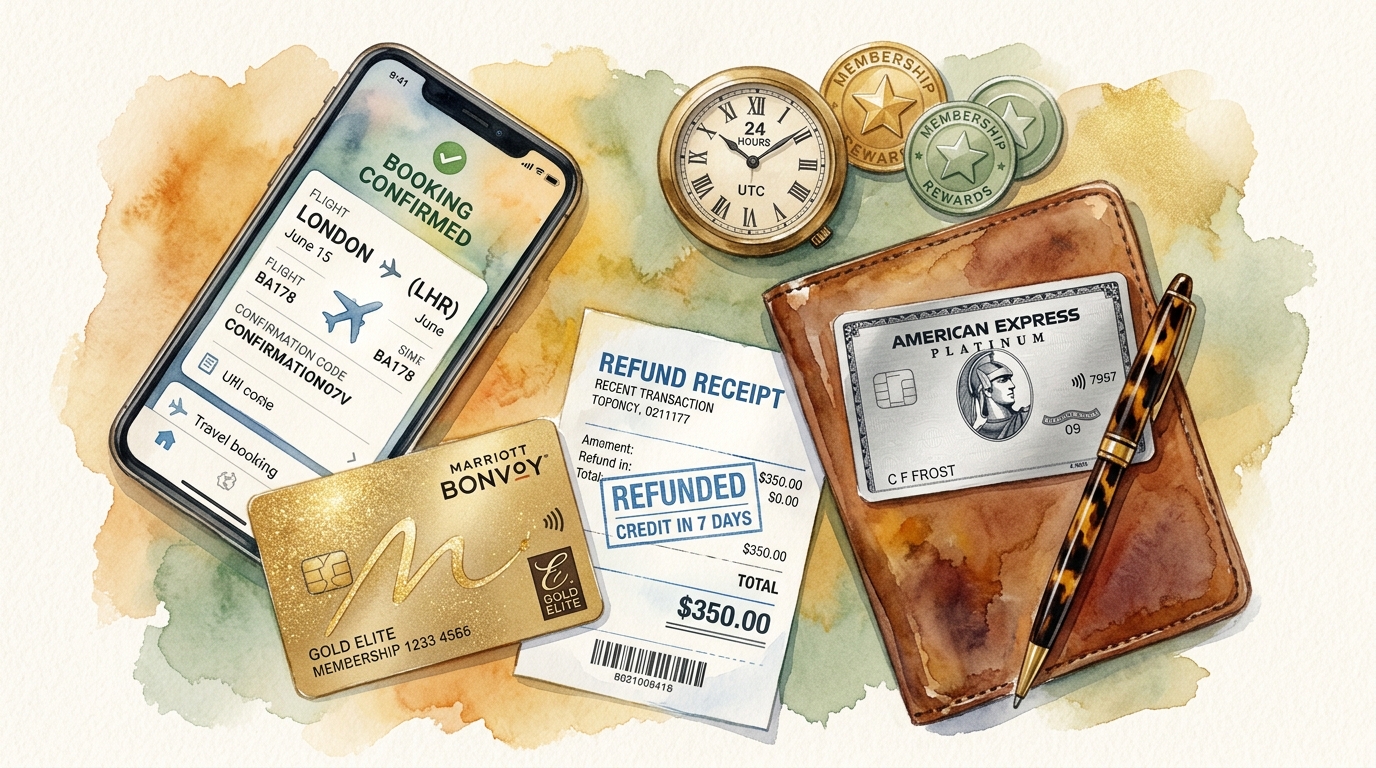
Need to shift your trip by two days? If you booked direct, you handle it in the airline's app or with a single phone call. HuffPost's 2025 investigation found that if you book through a third-party site, you likely won't be able to modify your reservation through the provider directly. You have to go back through the OTA, which may charge its own change fee on top of whatever the airline charges.
Layering an OTA on top of a budget airline like Ryanair or Spirit makes this even messier. You're dealing with two sets of restrictive rules stacked on each other. Most US carriers eliminated change fees for main cabin and above after the pandemic, but those fee-free changes apply to tickets booked directly. OTA-booked tickets may still carry modification fees depending on the agency's terms.
Lower Hotel Prices in Europe (Thanks to the EU Digital Markets Act)
There's another EU development working in your favor. Since July 2024, the EU Digital Markets Act has forced Booking.com to drop its rate parity clauses across the European Economic Area. Hotels in Europe are now legally free to offer lower prices on their own websites than they list on OTAs. If you're booking a hotel in Europe, checking the property's own site isn't just about loyalty points anymore. The price itself may be lower.
- 24-hour free cancellation (DOT rule)
- Automatic refunds within 7 business days
- Full loyalty points and elite credits
- One point of contact during disruptions
- Bundle savings averaging 14%
- Comparison shopping across providers
- Access to distressed last-minute inventory
- Infrastructure for small hotels without booking engines
When Third-Party Booking Sites Actually Save You Money
Direct booking wins most rounds. But there are three scenarios where OTAs genuinely earn their commission - and ignoring them means leaving real money on the table.
Flight + Hotel Bundles
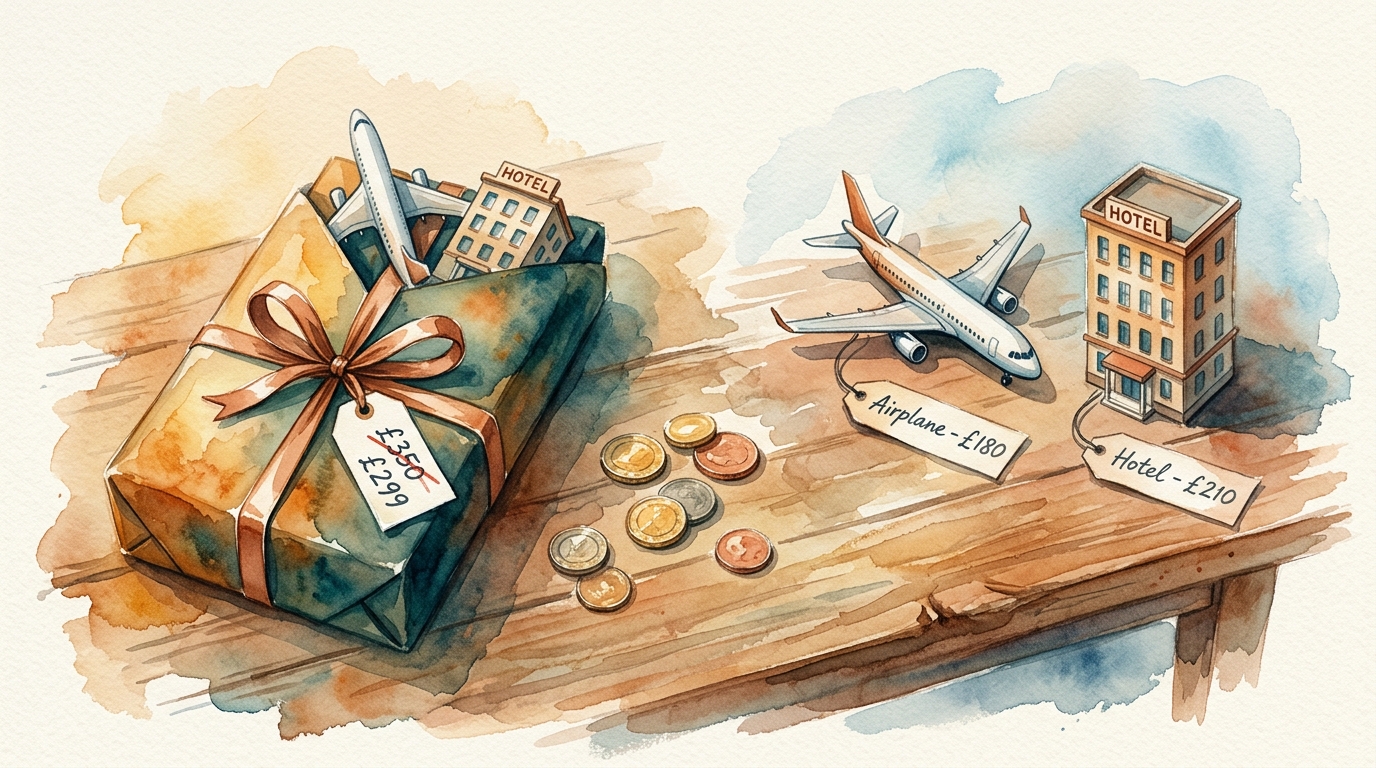
This is the OTA's strongest play. Expedia's own data shows an average savings of 14% when bundling a flight and hotel together, compared to booking each separately. On a $3,000 trip, that's roughly $420 back in your pocket. The savings come from opaque pricing: the OTA bundles components at negotiated rates, so you can't see exactly what you're paying for each part. And those rates can be genuinely good, especially for popular destinations during peak season.
What's the catch? You usually can't cancel just the hotel and keep the flight, or vice versa. If one part needs to change, the whole package unravels. And the opaque pricing means you can't verify whether each component is actually a good deal. You might save 14% overall while overpaying for the hotel portion and getting a below-average flight price.
Last-Minute Hotel Deals
OTAs occasionally get access to distressed inventory that hotels need to move fast. If you're flexible and booking same-day or next-day stays, apps like HotelTonight (owned by Airbnb) or Priceline Express Deals can deliver real savings, think 30-50% off a boutique hotel in Barcelona when you book after 3pm on a Tuesday. The catch: this only works for spontaneous travel. If you're planning a two-week vacation to Italy, you're not going to wing your accommodation the day of arrival.
International Small Hotels
A family-run guesthouse in rural Portugal might not have its own booking engine. In those cases, Booking.com genuinely serves as the reservation infrastructure. No loyalty program exists to miss out on, and the OTA's standardized reviews and payment protection add real value. The same applies to many smaller properties where Booking.com and Airbnb are the primary discovery channels.
| Scenario | Best Booking Method | Why |
|---|---|---|
| Flight only | Direct with airline | 24-hr cancellation, faster refunds, full loyalty earnings |
| Chain hotel (Marriott, Hilton, etc.) | Direct with hotel | Price match + loyalty points + upgrade potential |
| Flight + hotel bundle | OTA (Expedia, Priceline) | Average 14% bundle savings on the total package |
| Last-minute hotel (same/next day) | OTA or hotel app | Distressed inventory at steep discounts |
| Small independent hotel abroad | OTA (Booking.com) | May be the only online booking option |
| Any booking during peak/holiday season | Direct with provider | Better cancellation flexibility when plans change |
One pattern holds across every scenario: OTAs win on bundles, direct wins everywhere else. If you're booking a standalone flight or a chain hotel, going direct costs the same or less while giving you better protection.
The Refund Nightmare: Real Stories from 2025-2026
Data and comparison tables are useful. But nothing illustrates the risk of third-party booking like the stories of travelers who got stuck between an OTA and an airline with no one willing to help.
The Booking.com app kept showing the old departure time despite a months-prior schedule change. They even sent an official check-in reminder confirming the wrong time. We missed our flight and had to spend €500 on emergency replacement tickets.
- Booking.com user, March 2026 (Trustpilot review)
Isolated incident? Hardly. Trustpilot reviews from early 2026 include a customer whose Booking.com reservation was unilaterally changed from January to July 2026 without authorization, with customer service chat messages subsequently deleted. Another user cancelled within 24 hours but waited over five months for a refund that Booking.com's own agents confirmed was legitimate.
NBC Chicago's 2020 investigation (during the 2020 pandemic) into third-party booking sites found that during peak disruption periods, Expedia wait times stretched to 90 minutes to two hours, with some callers cut off after waiting up to five hours. The report questioned whether the poor service was from genuine overload or deliberate cost-cutting.
These aren't edge cases from shady discount sites. They're from two of the world's largest OTAs. Newsweek's 2026 travel scams report adds another layer: ghost bookings, where you arrive at a hotel or airport and discover no reservation exists.
The FTC reported $12.5 billion in total fraud losses in 2024, a 25% jump from the prior year, and AI-generated fake booking confirmations have made the problem worse.
Compare that to booking direct. When your airline cancels, you get an automatic refund within seven business days (credit card) or 20 calendar days (other payment methods) under the DOT's automatic refund rule. No middleman. No phone tag. No five-month wait.
Across all of these cases, the same dynamic plays out: the OTA adds a communication layer between you and the company providing the service. In good times, that layer is invisible. In bad times, it's the thing standing between you and your money. Travel insurance can help cover emergency costs, but it's not a substitute for having a direct line to the company that controls your booking.
The EU Ruling That Changed the Game
Picture this: you book a KLM flight from Vienna to Lima through Opodo, paying €2,053 plus a €95-per-person agency fee. COVID cancels the flight. KLM refunds the base fare but shrugs off the €95 agency commission - "not our fee, not our problem." That's exactly what happened to two passengers whose case landed in the EU's highest court. In January 2026, the Court of Justice of the European Union ruled in Case C-45/24 that airlines must refund the total ticket price, including OTA booking fees, even if the airline didn't know the exact fee amount.
In my experience covering these rulings, this one stands out. The court held that tickets sold through intermediaries are a "single transaction," and the booking fee is an unavoidable part of the price.
This is genuinely good news for travelers who book through OTAs in Europe. But it also highlights why the problem exists in the first place: booking through a middleman adds layers of fees and complexity that wouldn't exist with a direct purchase. The ruling forces airlines to absorb a cost they didn't create, which may eventually show up as higher base fares.
For travelers flying within or from the EU, EU261 protections apply regardless of whether you booked direct or through an OTA. You're entitled to compensation of €250 to €600 for cancellations and long delays, depending on flight distance. But the practical reality of claiming that compensation differs sharply. Airlines process direct-booking claims faster because they control the entire customer record. OTA-booked passengers often get bounced between the agency and the carrier, each pointing at the other's system as the source of the holdup.
Assuming EU261 protections make OTA bookings worry-free in Europe. The protections exist, but claiming them through an OTA still involves more friction and longer timelines than claiming directly from the airline. The January 2026 ruling helps, but it doesn't eliminate the middleman problem.
How to Book Direct and Still Get the Best Price in 2026
You don't have to choose between finding the best price and booking with the provider. The best approach uses OTAs for what they're good at (searching) and airlines and hotels for what they're good at (booking and service).
- Search on Google Flights or Kayak These meta-search engines pull fares from airlines and OTAs simultaneously. NerdWallet's guide to Google Flights confirms you can compare prices across sources, then click through to book directly on the airline's site.
- Check the airline's own website Airlines sometimes run flash sales or display lower fares on their own site that aren't reflected in aggregators. It takes 30 seconds to compare.
- For hotels, check the chain's website and call Major chains like Marriott, Hilton, and IHG offer best-rate guarantees. Show them the OTA price, and they'll match it while adding loyalty benefits.
- Only bundle on an OTA if the savings are significant A 5% discount on a package isn't worth losing flexibility and direct customer service. Look for savings of 10% or more to justify the trade-off.
- Screenshot everything If you do book through an OTA, save your confirmation email, booking reference, and the price breakdown. You'll need them if anything goes wrong.
This strategy takes about five extra minutes per booking. It's the difference between saving $50 on Expedia and spending 12 hours on the phone trying to recover $2,000 when your flight gets cancelled. Our flight cancellation refund guide walks through exactly what to do when disruptions hit, regardless of how you booked.
If you're a first-time international traveler, this five-minute habit is even more important. Your booking method affects everything downstream: how easily you can change plans, how quickly you get help at the airport, and whether your travel insurance covers the gap when things fall apart. Build the search-wide-book-direct habit now, and you'll avoid the most expensive mistakes that experienced travelers have already learned the hard way.
Third-Party Booking Scams to Watch For in 2026
Beyond the legitimate OTAs, there's a darker side to third-party booking risks in 2026. Meta-search engines like Kayak and Skyscanner display results from dozens of smaller booking agencies, and not all of them are trustworthy.
Scammers now clone legitimate airline websites so convincingly that travelers don't realize the mistake until after payment, according to Newsweek's 2026 investigation. AI-generated fake confirmation emails look identical to real ones. Ghost bookings leave travelers stranded at airports with no reservation on file.
Rick Steves' travel forum is filled with warnings from experienced travelers about routing through unknown agencies. One thread describes a Kayak search that redirected to an agency called "Underpricer," which bombarded the traveler with WhatsApp messages, provided no boarding pass, and left them with no recourse when the airline refused to help. This is a different kind of risk than the refund delays you face with legitimate OTAs. It's closer to the travel scams we've documented across regions: sophisticated operations designed to look legitimate until it's too late.
- Verify the agency name before clicking "Book" on any meta-search result
- Check for a physical address and phone number on the agency's website
- Search "[agency name] reviews" before entering payment info
- Use a credit card (not debit) for chargeback protection
- If a price seems impossibly low, it probably is
- Confirm your reservation directly with the airline or hotel after booking
Want the safest path? Use Google Flights to find the fare, then book on the airline's own site. You get the same price without the risk of an unknown middleman.
Frequently Asked Questions
Is it cheaper to book flights through Expedia or directly with the airline?
For standalone flights, prices are usually identical. Airlines publish the same fares to OTAs and their own sites. The exception is flight + hotel bundles, where Expedia reports an average 14% savings. For flights alone, book direct for the 24-hour cancellation window and faster refunds.
Do I earn airline miles when booking through a third-party site?
Usually yes for flights, as long as you enter your frequent flyer number. But NerdWallet notes that hotel loyalty points and elite night credits generally don't count when you book through an OTA. You'll get the room but miss the rewards.
What happens if my flight is cancelled and I booked through an OTA?
Does the 24-hour free cancellation rule apply to OTA bookings?
No. The US DOT's 24-hour rule applies only to flights booked directly with airlines. Some large OTAs voluntarily offer a similar window, but they're not legally required to honor it.
Are third-party booking sites safe to use in 2026?
Major OTAs like Expedia, Booking.com, and Priceline are legitimate businesses. The risk comes from smaller agencies found through meta-search engines. The FTC reported a 25% increase in fraud losses in 2024. Stick to well-known platforms and always verify your reservation directly with the provider.
Should I use an OTA for international hotel bookings?
It depends on the hotel. For chain hotels, book direct to earn loyalty points and access best-rate guarantees. For small independent hotels that don't have their own booking engine, OTAs like Booking.com serve as useful infrastructure. Check whether the property has a direct booking option before defaulting to an OTA.
Can I get a price match from a hotel if I find a lower rate on an OTA?
Most major chains offer best-rate guarantees. NerdWallet's 2026 hotel rewards guide confirms that brands like Marriott, Hilton, and Hyatt will match OTA prices and often add perks like extra loyalty points or discounted rates on top of the match.
Key Takeaways
- Book flights directly with the airline. You get the 24-hour cancellation window, faster automatic refunds, full loyalty earnings, and one point of contact when things go wrong.
- Book chain hotels directly. Major hotel brands match OTA prices and add loyalty points, upgrade potential, and better cancellation terms that OTA bookings don't include.
- Use OTAs for genuine bundle savings. Flight + hotel packages averaging 14% savings on Expedia are the one scenario where OTAs consistently beat direct booking.
- Search on Google Flights, book on the airline site. Use meta-search for price comparison, then complete the purchase directly. It takes 30 extra seconds.
- Avoid unknown booking agencies. If a meta-search engine redirects you to a company you've never heard of, don't enter your credit card. Verify the agency before booking.
- Know your rights. The DOT's automatic refund rule and EU261 protect you regardless of how you book, but claiming through an OTA adds friction and delays.
- Screenshot OTA bookings. If you do book through a third party, save every confirmation, reference number, and price breakdown. You'll need the documentation if disputes arise.
- Planning tools like TripProf help you organize flights, accommodations, and documents in one place so nothing falls through the cracks when you're comparing booking options across multiple platforms.
Travel booking keeps shifting. Airlines are investing in their direct channels, hotels are sweetening loyalty programs, and OTAs are fighting back with bundles and rewards programs of their own. The travelers who come out ahead are the ones who stop defaulting to one method and start choosing the right tool for each specific booking. That five minutes of comparison is the cheapest travel insurance you'll ever buy.
Sources
- Cloudbeds: A Guide to OTA Commission Rates in 2026
- The Points Guy: Reasons You Should Book Directly with an Airline or Hotel
- NerdWallet: The Pros and Cons of Expedia
- US Department of Transportation: Guidance on the 24-Hour Reservation Requirement
- US Department of Transportation: Refunds and Consumer Protection
- US Department of Transportation: Automatic Refund Rule Announcement
- Thrifty Traveler: Skip OTAs Like Expedia and Priceline
- Thrifty Traveler: The 24-Hour Flight Cancellation Rule
- HuffPost: 7 Mistakes People Make When Booking Travel Through Third-Party Sites
- Federal Trade Commission: Fraud Losses Reach $12.5 Billion in 2024
- Newsweek: Online Travel Scams: What You Need To Know in 2026
- Courthouse News Service: CJEU Ruling on OTA Booking Fee Refunds (Case C-45/24)
- European Union: Air Passenger Rights
- NBC Chicago: Third Party Booking Sites: Overwhelmed or Intentionally Unreachable?
- NerdWallet: Best Value Hotel Rewards Programs in 2026
- NerdWallet: Google Flights: What to Know Before You Book
- Trustpilot: Booking.com Customer Reviews
- Expedia: Bundle and Save Average Savings Data
- European Commission: Booking Must Now Comply with the Digital Markets Act
- SiteMinder: Digital Markets Act Guide for Hotels in Europe
Last updated: September 2, 2026
Keep Reading
More travel tips and guides picked for you
What counts as visiting a state? Layovers, drive-throughs and the rules 50-staters use
Only 2% of Americans name a plane change as the minimum that counts as visiting a state, while 27% set the bar at driving through. Here's a three-tier rubric, a lookup table for the edge cases from Four Corners to D.C., and one trip counted three ways.

The fake SBB ticket website stealing credit card and Twint data from travelers
Zurich cantonal police confirmed a fake SBB ticket website is stealing credit card and Twint payment details from travelers who find it through an ordinary Google search. Here is how to spot it and what to do if you already paid.

UK ETA scam warning: fake websites are charging Austrians up to €900
Fake UK ETA websites are charging Austrian and EU travellers hundreds of euros for a form that costs £20. Here's how the real one works, and how to spot a scam before you pay it.