The 25 Worst Tourist Scams Worldwide by Region (And How to Spot Them Before You Lose Money)
Key Highlights
- 1
- 2
- 3
+5 more in the takeaways below
You're standing outside the Grand Palace in Bangkok. A friendly local walks up, shaking his head: "Closed today. Royal ceremony." He points you toward a tuk-tuk driver who'll take you to "better temples" instead. Thirty minutes later, you're sitting in a gem shop, wondering how you got here and why the driver keeps insisting you just look around. This is what the worst travel scams by region look like in practice: specific, rehearsed, and tailored to exploit the exact moment you let your guard down.
According to McAfee's 2025 travel safety research, one in five Americans has fallen victim to a travel scam during the booking process alone. The FTC logged over 55,000 travel scam reports in its 2023 data with a median loss of nearly $1,200 per case. And the problem is accelerating: McAfee estimates AI-powered travel scams generated $13 billion in global losses in 2025, with nearly $1,000 lost per victim. The game has changed: scammers now operate both on cobblestone streets and inside your inbox.
This guide breaks down 25 scams across five regions, from street-level cons to digital traps. Every entry includes how the scam works, where it happens most, and what to do if you're targeted. No vague warnings. No "just be careful." Specific, destination-level advice you can actually use.
Tourist scams vary dramatically by region. Europe specializes in coordinated pickpocket teams and bar entrapment. North Africa runs camel hostage and forced-gift cons. Southeast Asia favors vehicle damage claims and fake closures. The Americas lean toward credit card manipulation and ATM skimmers. And in 2026, AI-powered digital scams (fake booking sites, cloned voices, QR phishing) hit travelers everywhere. This guide covers 25 scams organized by region, with exact tactics and defenses for each.
Tourist Scams in Europe: Coordinated, Rehearsed, and Hiding in Plain Sight
Europe leads the world in tourist scam volume. AXA Schengen data shows Spain alone had over 1 million tourists scammed in the past five years, followed by France (212,186) and Italy (102,384). The scams here aren't improvised. They're run by organized teams with assigned roles, rehearsed scripts, and backup plans for when you say no.
Pickpocketing dominates Central, Southern, Western, and Northern Europe. Taxi scams are more common in Eastern Europe. And overpriced food and drinks plague tourists across the continent, though North America actually leads in that category at 46%. What makes Europe distinct is how professional these operations have become: teams with specific roles, rotating locations, and techniques refined over decades.
1. The Friendship Bracelet (Paris, Montmartre) Still active as of early 2026
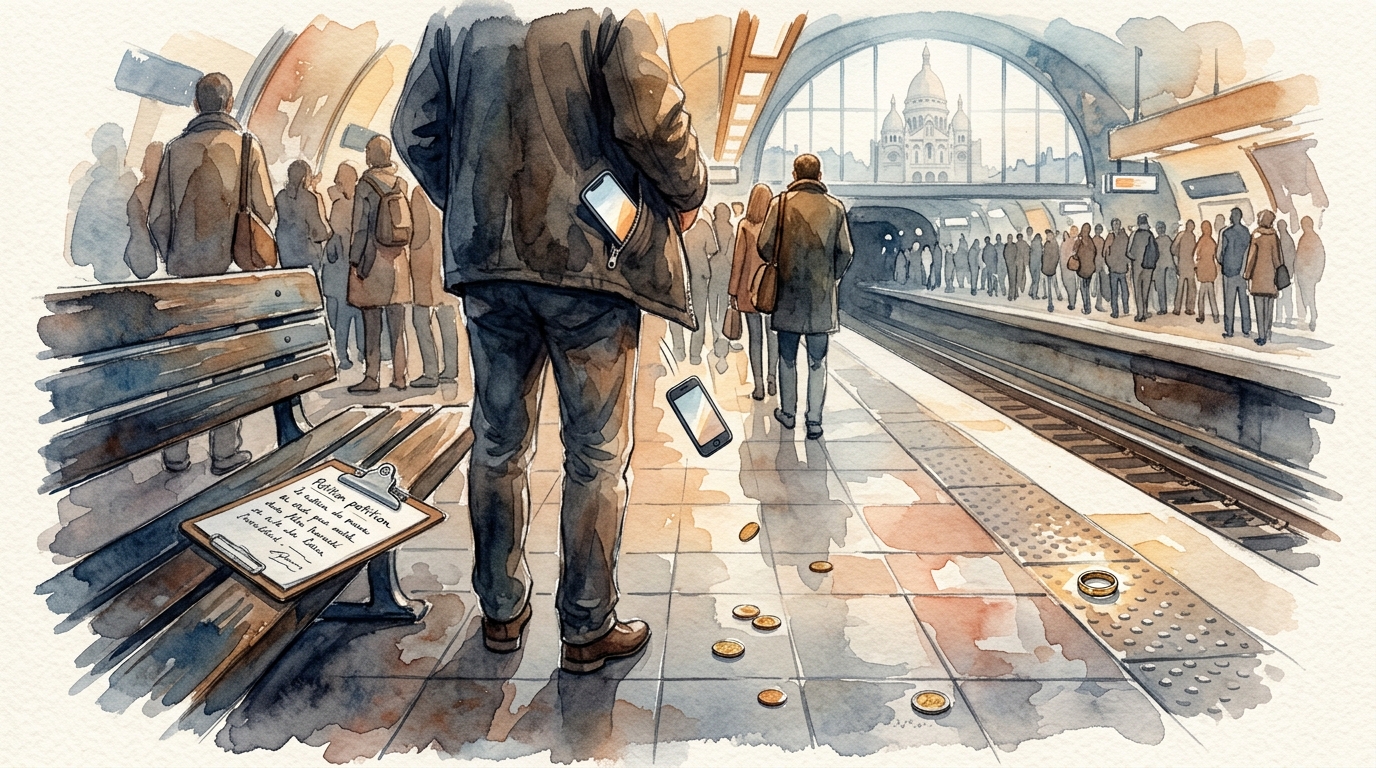
You're walking up the steps toward Sacré-Cœur. A man steps into your path, smiling, and before you can react, he's tying a braided string around your wrist. It tightens. Now he wants €20 for this "gift of friendship." Refuse, and his friends close in. While you're distracted, an accomplice is checking your pockets. Fodor's travel forums document fresh reports of this scam continuing to plague Montmartre's millions of annual visitors. The friendship bracelet operators in Montmartre are persistent. We watched one work the same tourist for three straight minutes before moving on.
Defense: Keep your hands in your pockets walking up those stairs. Don't make eye contact. If someone grabs your wrist, say "Non" firmly and pull away immediately.
2. The Gold Ring Trick (Paris, Rome)
Someone "finds" a gold ring on the ground right in front of you. "Is this yours?" They pick it up, admire it, then offer it to you as a lucky charm. Once it's in your hand, they demand money for it. The ring is worth about €0.50 in brass. Rick Steves identifies the gold ring trick as one of Europe's most enduring street scams, common across Paris and beyond.
How to dodge it: Don't touch anything a stranger picks up off the ground. Walk past without engaging.
3. Coordinated Pickpocket Teams (Barcelona, Rome, Paris)
This isn't a lone thief. It's a team: one creates a distraction (bumps into you, asks for directions, drops something), a second lifts your wallet or phone, and a third blocks your view or receives the handoff. A 2025 Radical Storage analysis of over 13,000 theft-related reviews ranked Paris, Rome, and Barcelona as the world's three worst cities for tourist theft. Pickpocketing accounts for over 48% of all reported crimes in Barcelona alone.
Defense: Use a money belt or front-pocket wallet. Keep your phone in a zipped pocket. Be extra alert on metro platforms, near major landmarks, and in any crowd that forms suddenly.
If a group of strangers creates a sudden commotion near you (a fight, a spill, a loud argument), check your pockets immediately. Staged distractions are the number one setup for coordinated pickpocket teams across Europe.
4. Bar Entrapment (Prague, Istanbul, Budapest)
It starts with a friendly conversation. Maybe it's a young woman, maybe a fellow "tourist." They suggest a great bar nearby. You sit down, order drinks, and the bill arrives: €300 to €600 for a few beers. Bouncers appear. You're escorted to an ATM. Daily News Hungary documented a case where tourists were charged €630 for a single beer in Budapest.
Defense: Never go to a bar suggested by someone you just met on the street. If you do enter a bar, check for a visible menu with prices before ordering anything.
5. Fake Police (Barcelona, Rome, Prague)
Two people approach you. One is a "tourist" who asks for directions. Moments later, another flashes a badge and claims to be plainclothes police investigating counterfeit currency. They ask to inspect your wallet. By the time they hand it back, bills are missing. Rick Steves warns that real police never ask to see your wallet on the street.
Defense: Real police carry official IDs and won't demand to see your cash. Ask to walk to the nearest police station instead. Scammers will disappear.
6. The Petition/Clipboard Scam (Paris, Rome, Milan)
A person approaches with a clipboard, often pretending to be deaf, asking you to sign a petition for a charity. Once you stop to sign, they point to a "minimum donation" line and pressure you for cash. Meanwhile, an accomplice may be reaching for your bag. Rick Steves forum travelers report this scam running continuously near Sacré-Cœur and the Eiffel Tower, with the same operators working the same locations year after year.
Defense: Don't stop. A polite head shake and continued walking is all it takes. These scammers target tourists who look lost or approachable. Walk with purpose, avoid breaking stride, and keep your bag zipped and in front of you.
7. Bird Poop / Mustard Scam (Buenos Aires, London, Rome)
Something wet hits your shoulder. A "helpful" stranger points it out and starts wiping it off with a napkin. While you're distracted and grateful, their partner lifts your phone, wallet, or camera bag. The "bird poop" is usually mustard or a similar condiment squirted by an accomplice. Lonely Planet lists this distraction technique among the world's most common travel scams, noting variations from Buenos Aires to Barcelona.
What to do: If something lands on you, step away from anyone offering to help. Clean it yourself in a shop or restroom.
8. ATM Shoulder-Surfing and Skimmer Devices
Someone stands too close while you enter your PIN. Or the ATM itself has been fitted with a card-reading overlay and tiny camera. Both are widespread across European tourist zones. The FTC's 2026 testimony to Congress highlighted that consumer fraud losses hit $15.9 billion in 2025, with card-skimming as a persistent vector.
Defense: Use ATMs inside bank lobbies during business hours. Cover the keypad with your hand. If anything on the card slot looks loose or bulky, don't use it.
Travel Scams in North Africa and the Middle East: Pressure and the Hard Sell
Scams in this region rely on a different playbook. Instead of stealth, they use social pressure, hospitality norms, and physical positioning to trap you into paying. Begging and "help" scams are the most common type reported in the Middle East, Central Asia, and the Caribbean, affecting 34% of travelers in these regions.
9. The Camel Hostage (Giza, Egypt)
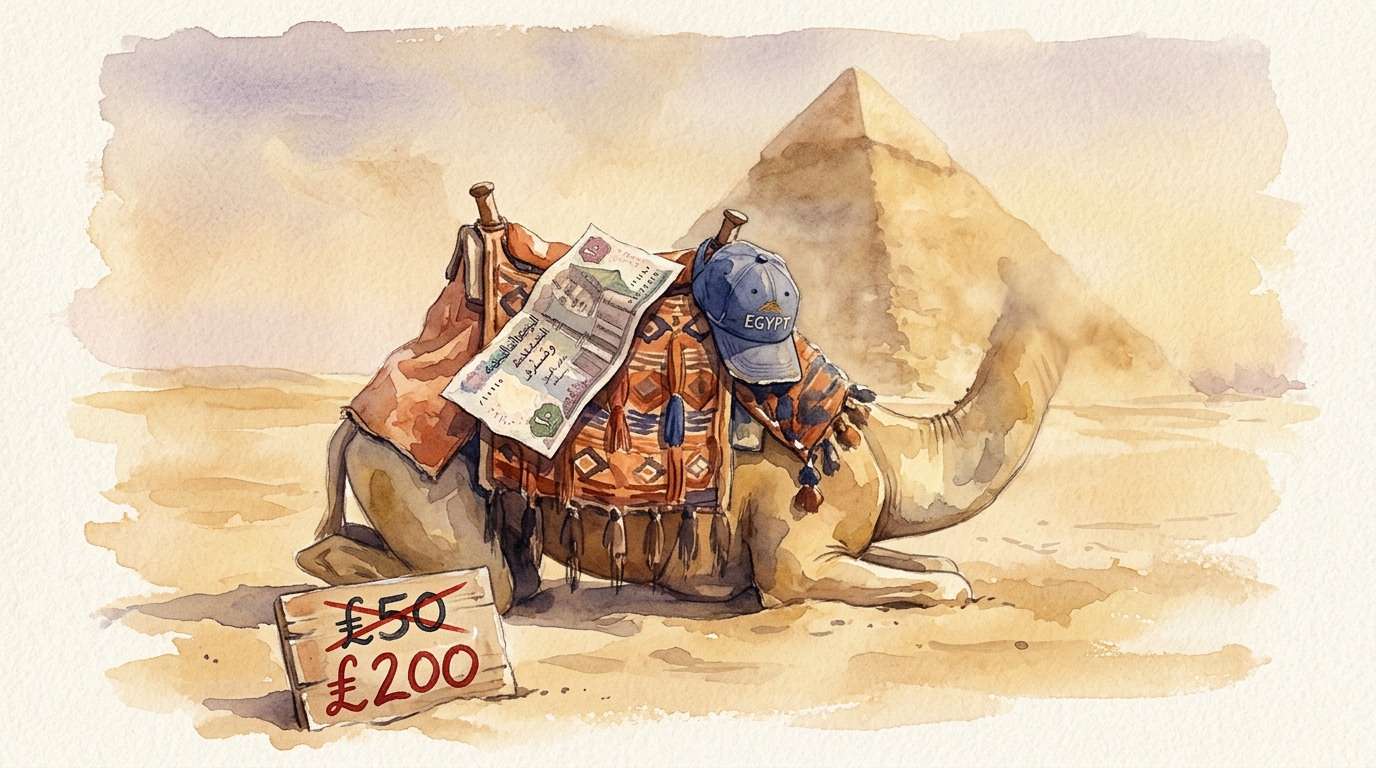
The handler quotes you 50 Egyptian pounds for a camel ride near the Pyramids. You climb on. Ten minutes later, you're deep in the desert and the handler refuses to let you down until you pay $50 to $100. You're three meters off the ground on an animal you can't control. Travel Off Path's 2026 editorial analysis ranked Egypt as the number one destination globally for tourist scams.
Defense: Only book camel rides through your hotel or a licensed tour operator. Agree on the total price in writing before mounting. Better yet, skip the ride and walk the site.
10. The Forced Gift (Egypt, Morocco)
Someone hands you a "free" item: a spice sample, a small souvenir, a piece of fabric. The moment it touches your hands, they demand payment. Refuse, and they'll follow you, escalating their voice to draw a crowd and create social pressure. The U.S. State Department's Egypt travel advisory warns visitors about aggressive vendor tactics at tourist sites, and Lonely Planet flags forced gifting as a classic pressure scam across North Africa and the Middle East.
The fix: Don't accept anything from strangers. Keep your hands by your sides. If someone places something in your hands, put it on the ground and walk away.
11. Overpriced Horse/Camel Ride Bait-and-Switch (Petra, Giza)
The quoted price is per direction, not round trip. Or it's per person, not per camel. Or the "short ride" turns into a long detour with mandatory photo stops at shops. The price triples by the end. Travel Off Path's 2026 editorial analysis describes the bait-and-switch pricing model as one of the most common tactics at sites like Giza and Petra.
Defense: Negotiate everything upfront: total price, duration, route, number of passengers, and what happens if you want to stop early. Confirm whether the price is per person or per group. Pay at the end, not the start. If the vendor refuses these terms, there are always others who will agree.
For any negotiated service in North Africa or the Middle East (guides, transport, rides), write the agreed price on your phone's notepad and show it to the provider before starting. It's not rude. It's smart. And it eliminates "I said per hour, not total" disputes.
I was in Egypt for four days and left three days early. Not because it wasn't beautiful. Because I couldn't walk ten meters without someone trying to scam me. It was exhausting.
r/solotravel, 5,940 upvotes
Tourist Scams in South and Southeast Asia: Vehicle Damage and Fake Closures
Asia's tourist scams revolve around transportation and rentals. Taxi scams dominate in Northeast Asia, Southeast Asia, and North Africa. A UK insurer study analyzing Reddit complaints found Turkey (4,224 comments), India (2,301), and Thailand (2,169) as the top three countries for taxi scam grievances.
12. The Jet Ski Mafia (Phuket, Pattaya, Thailand) Still active as of early 2026
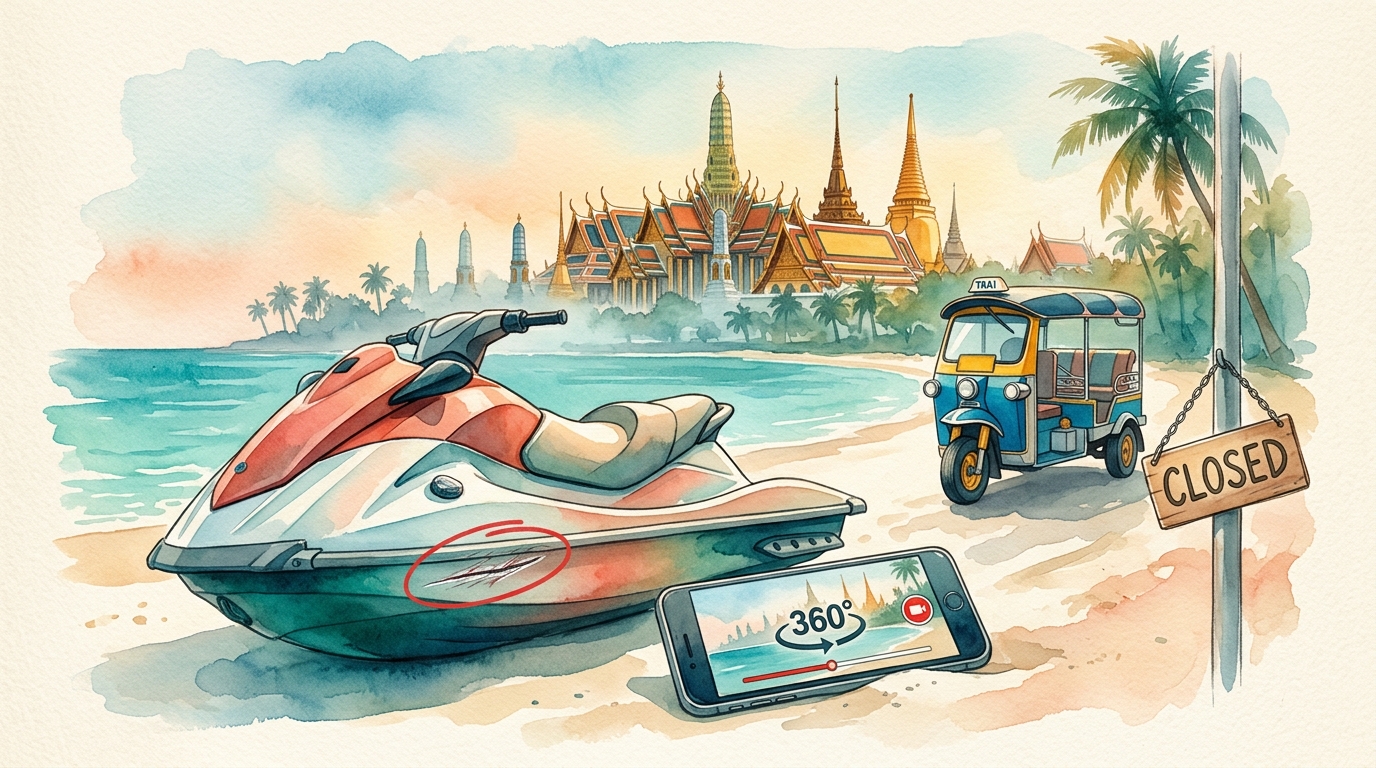
You rent a jet ski at the beach. When you return it, the operator "discovers" a scratch on the hull that was there before you touched it. A man in a uniform appears (not real police). They demand 10,000 to 50,000 THB ($280 to $1,400) for "repairs." They might hold your passport until you pay. The U.S. Embassy in Thailand lists this as a known scam on its official advisory page.
Defense: Film a full 360-degree video of the jet ski before riding, including the underside and intake area where hidden scratches live. Never hand over your passport as collateral; offer a photocopy instead. If they insist on the original, walk away. Call the Tourist Police at 1155 if pressured. This tip applies equally to rental car damage claims, which follow the same playbook worldwide.
13. "Grand Palace is Closed" (Bangkok)
Tuk-tuk drivers and "helpful" locals stationed near the Grand Palace tell you it's closed for a ceremony. They offer to take you to "better temples" for a low fare. The tour includes mandatory stops at gem shops and tailors where the driver earns commission. The Grand Palace's own website warns visitors about this scam. The palace is open almost every day. We've seen the Grand Palace scam firsthand - the "helpful" local even pointed us toward a specific tuk-tuk driver who was clearly in on the arrangement.
Defense: Ignore anyone outside the gates telling you it's closed. Walk straight to the entrance and check for yourself. Use Google Maps to confirm hours before you leave your hotel.
14. The Fake Tourist Office (Delhi, Jaipur, Agra)
Your taxi driver from the airport tells you the road to your hotel is blocked by a protest. Or your hotel is "closed for renovation." He drives you to an "Official Government Tourist Office" that looks legitimate but isn't. Inside, agents sell you overpriced hotel rooms and tour packages. Hundreds of TripAdvisor Delhi forum posts identify this as the number one scam in New Delhi, with fake offices operating openly around Connaught Place.
Defense: Your hotel is not closed. It's a lie, 100% of the time. Show the driver your booking confirmation. Insist on the original destination. If he refuses, exit the vehicle and use a ride-hailing app like Uber or Ola.
15. The "Poo Shoe" Scam (India)
While you're walking, someone squirts animal dung or a similar substance onto your shoe. A "shoe cleaner" appears instantly, points out the mess, and offers to clean it. The fee starts reasonable but escalates. Refuse to pay the inflated price, and they'll make a scene. TripAdvisor's India forum is full of reports of this scam near popular Delhi markets, particularly around Palika Bazaar and Connaught Place.
How to dodge it: If your shoe suddenly gets dirty near someone offering cleaning services, that's not a coincidence. Walk away and clean it yourself later.
16. Motorbike Rental Damage Claim (Bali, Indonesia)
You rent a scooter. When you return it, the owner points to scratches that were already there and demands 500,000 IDR ($30) or more. Some operators use a spare key to "steal" the bike while you're at lunch, then charge you for a replacement. Bali Holiday Secrets' 2026 guide lists this among the island's most persistent cons.
Defense: Photograph and video every angle of the vehicle before riding. Note the odometer reading. Rent only from shops recommended by your accommodation, not random roadside stalls.
17. Fake E-Visa Websites (Vietnam)
Search "Vietnam e-visa" on Google and the top results often include unofficial sites that look nearly identical to the government portal. They charge $50 to $100 for a visa that costs $25 through the official site. An Air Traveler Club analysis of 47 third-party visa sites found an average fee of $79 for a service the Vietnamese government provides for $25.
The fix: The only legitimate Vietnam e-visa site ends in .gov.vn. Bookmark evisa.xuatnhapcanh.gov.vn directly. Never trust a Google ad for visa services.
Travel Scams in the Americas: Currency Tricks and Fake Agencies
So much for the physical world of Southeast Asian motorbike scams and Egyptian camel hostages. The Americas bring a different kind of risk. Scams here tend to exploit the gap between local currency complexity and tourist confusion. North America leans toward overpriced food and drinks (46% of travelers report it), while Latin America runs more targeted financial cons. If you're planning your first international trip, Latin America's currency traps deserve extra attention.
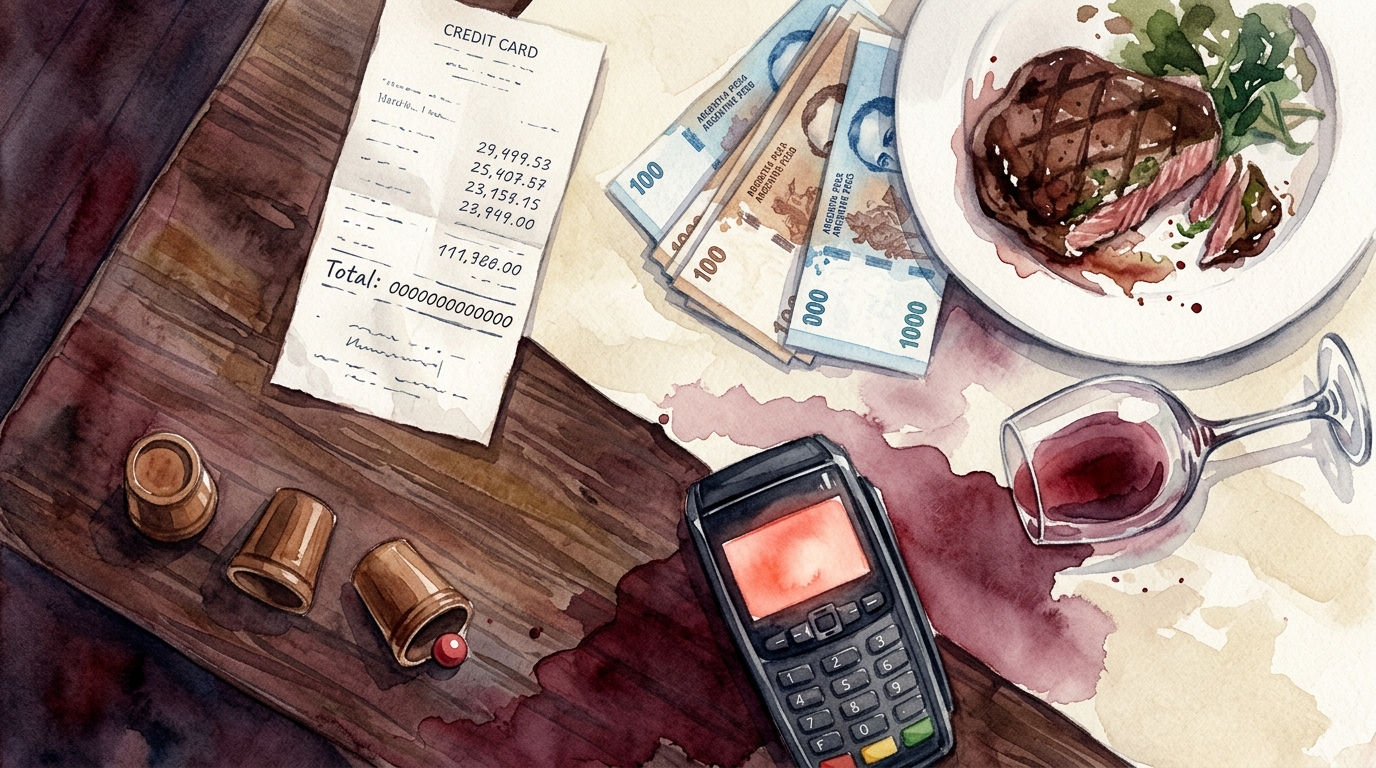
18. Credit Card Decimal Manipulation (Buenos Aires)
Your dinner costs 30,000 Argentine pesos. The server processes your credit card for 300,000 pesos instead. With Argentina's inflation-battered currency, the extra zero can mean the difference between a $30 meal and a $300 charge. Consumer Rescue's 2026 report documented a Seattle couple charged nearly $30,000 for a vegetarian meal through this method.
Defense: Watch the terminal screen when the amount is entered. Count the zeros. Ask for the receipt immediately and compare it to the menu price before you leave the restaurant. Use a currency app like XE to double-check conversions on the spot. Use a card with no foreign transaction fees so you're not also paying a markup on a fraudulent charge. If you spot the overcharge after leaving, contact your bank immediately to dispute it.
19. Fake Tour Agency (Cancun, Mexico)
Timeshare touts and unlicensed tour sellers operate along Cancun's Hotel Zone and in downtown areas. They offer "free" excursions or deep discounts that require sitting through a high-pressure timeshare presentation. Some fake agencies take full payment and never deliver the tour. The Cancun Sun reported that local authorities launched a crackdown on fake vacation, taxi, and real estate fraud in the area.
Defense: Book excursions through your hotel's concierge desk or directly through operators with verified reviews on Google Maps. Never pay cash upfront to a street vendor for a tour.
20. ATM Skimmer Traps (Mexico)
Outdoor ATMs at convenience stores are the primary target. A thin card reader copies your magnetic stripe while a pinhole camera catches your PIN. Mexico's consumer watchdog CONDUSEF issued a warning after a spike in cloned cards along Cancun's Hotel Zone.
Defense: Use ATMs inside bank branches only. Cover the keypad. Check your accounts daily while traveling.
21. The Street Shell Game (Paris, Rome, New York, Barcelona)
In Times Square, on the boardwalk in Atlantic City, and across Latin American tourist plazas, the setup is always the same: three cups, one ball, a fast shuffle. The crowd around the operator includes confederates who "win" to make it look easy. When you bet, you lose. Every time. The scam runs globally - Wanted in Rome reported a surge in shell game operations during the 2025 Jubilee, with organized groups traveling across European cities to run the con.
What to do: It's not a game. It's a performance designed to take your money. Don't watch, don't engage, don't stop walking.
Digital Travel Scams in 2026: AI, QR Codes, and Fake Bookings
These aren't somewhere out there. They're already in your pocket. Booking.com's head of internet safety reported a 500% to 900% increase in travel scams over 18 months, driven almost entirely by AI tools that let scammers create professional-looking fraud at scale. The FTC reported $15.9 billion in total consumer fraud losses in 2025, up from $12.5 billion in 2024.
22. QR Code Phishing ("Quishing") Reports increasing since 2024
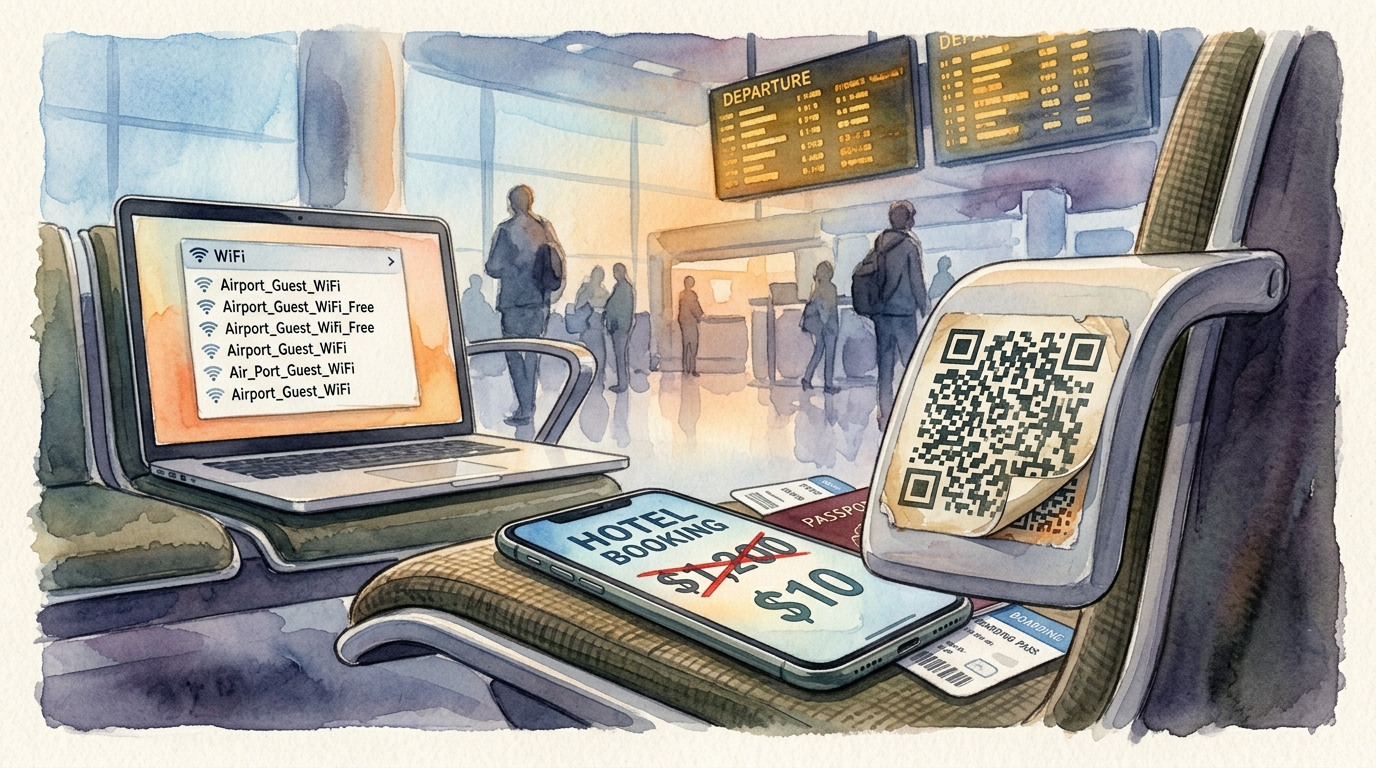
Someone slaps a fake QR code over the real one at a restaurant menu, parking meter, or tourist attraction ticket booth. Scanning it takes you to a phishing site that captures your credit card details or installs malware. Keepnet Labs data shows QR-based phishing emails surged from 47,000 in August to over 249,000 in November 2025. CNBC reports 26 million Americans have been directed to malicious sites through fake QR codes. We've spotted tampered QR codes at a café in Lisbon - a sticker peeling at the corner was the only giveaway.
Defense: Before scanning any QR code, check if it's a sticker placed over another code. Use your phone's built-in QR scanner (it shows the URL before opening). If the URL looks unfamiliar, don't tap through.
23. AI-Cloned Voice Flight Cancellation Calls
Your phone rings. It sounds exactly like an airline customer service agent. They tell you your flight has been canceled and offer to "rebook" you if you provide your booking confirmation and credit card. The voice is AI-generated. McAfee's research found that AI voice cloning now requires as little as three seconds of audio to create a convincing replica. One in five people fall for AI-generated phishing attempts, per a SoSafe survey.
Defense: Airlines don't call you to rebook. Full stop. If you get a call about a cancellation, hang up. Open the airline's official app or type their URL directly into your browser. Check your booking status yourself. Never share payment information, confirmation codes, or frequent flyer numbers with an inbound caller.
If someone calls about a flight cancellation and asks for your credit card number to "process the rebooking," it's a scam. Every major airline handles rebooking through their own app, website, or airport desk. No exceptions.
24. Fake WiFi Hotspots at Airports and Hotels
An "evil twin" network mimics the airport's legitimate WiFi. It has a stronger signal, so your phone connects automatically. A fake login page captures your email and password. TravelPulse research found that 25% of travelers have been hacked via public WiFi while abroad. An Australian man was sentenced to over seven years in prison for running fake WiFi networks on domestic flights and at major airports.
Defense: Disable auto-connect on your phone. Confirm the exact network name with airport staff. Use a VPN on any public network. Better yet, use your phone's mobile data or an eSIM.
AI has made it so that the average person can no longer tell the difference between a scam and a real communication from a travel company.
McAfee 2025 Travel Safety Report
25. AI-Generated Fake Booking Sites
Scammers now build professional-looking hotel and flight booking sites in minutes using AI. The sites feature AI-written reviews, AI-generated room photos, "24/7 support" badges, and checkout pages that look identical to Expedia or Airbnb. Newsweek reports the FTC received over 58,000 reports of travel, vacation, and timeshare fraud in 2024, totaling $274 million in losses.
Defense: Book directly through airline and hotel websites or through established platforms you've used before. Check the URL carefully: look for misspellings like "b00king.com" or unusual domain extensions (.xyz, .info, .club are common on scam sites). If a deal is 40% below every other listing for the same property, treat it as a warning sign, not a bargain. Reverse-image-search the property photos to check if they appear on other, unrelated listings. Keep all your travel documents and booking confirmations saved in one place so you can cross-reference if something feels off.
How to Avoid Travel Scams: The Spotter's Cheat Sheet
Recognition alone won't protect you. You need a system: know what dominates where, carry the right tools, and follow a consistent checklist every time you arrive somewhere new. Here's how the regions compare, followed by a universal defense protocol.
| Region | Dominant Scam Type | Typical Loss | Risk Level |
|---|---|---|---|
| Western Europe | Coordinated pickpocketing | $100-500 | High |
| Eastern Europe | Bar entrapment | $300-800 | Medium |
| North Africa / Middle East | Pressure selling / hostage rides | $50-200 | Medium |
| South / Southeast Asia | Vehicle damage claims, taxi fraud | $200-1,400 | High |
| Americas | Credit card fraud, fake agencies | $300-30,000 | High |
| Digital / Global | AI-generated phishing, fake bookings | $500-5,000 | High |
The takeaway: street scams are annoying but usually cost under $500. Digital scams are where the catastrophic losses happen, sometimes draining thousands before you even realize your information was compromised.
- Research destination-specific scams before every trip (this article is a start)
- Save your hotel's address and phone number offline before arriving
- Photograph rental vehicles from every angle before using them
- Use only ATMs inside bank branches, never standalone machines
- Disable WiFi auto-connect and use a VPN on public networks
- Book through official airline/hotel sites or established platforms only
- Keep a photocopy of your passport separate from the original
- Register with STEP (Smart Traveler Enrollment Program) for U.S. citizens
If you use trip planning tools like TripProf, you'll find destination-specific safety intel and scam alerts in the Security Brief and Scam Awareness sections of each trip guide. Having that information pre-loaded on your phone (and available offline) means you're not Googling "is this a scam?" in the moment.
- If you're targeted mid-scam Stay calm. Say no firmly. Walk toward other people or into a shop. Don't escalate physically.
- If you've already paid Document everything: take photos, note the location, save receipts. File a report with local tourist police.
- If your card was compromised Call your bank immediately to freeze the card. Monitor transactions for the next 60 days. File a report with the FTC (U.S.) or your local consumer protection agency.
- If your passport was taken Go to your nearest embassy or consulate immediately. Bring a photocopy of your passport and a police report.
Frequently Asked Questions
What are the most common travel scams in Europe?
Pickpocketing by coordinated teams is the most widespread scam across Western and Southern Europe, particularly in Barcelona, Paris, and Rome. Bar entrapment runs a close second in Eastern European cities like Prague and Budapest, where tourists are lured into venues and presented with inflated bills enforced by security staff.
How do you avoid getting scammed in Southeast Asia?
Photograph every rental vehicle before and after use. Never hand over your passport as collateral. Use ride-hailing apps (Grab, Bolt) instead of street taxis. Verify attraction hours on official websites, not from strangers near the entrance. If anyone says a popular site is "closed today," it probably isn't.
What country has the most tourist scams?
Egypt consistently ranks number one for tourist scam frequency, with persistent harassment at the Pyramids and across tourist zones. India and Thailand are close behind, based on Reddit complaint volume analyzed by UK insurers in 2026. Spain leads Europe in absolute numbers, with over one million tourists scammed in five years.
Are travel scams getting worse with AI in 2026?
Yes. Booking.com reported a 500% to 900% increase in travel scams driven by AI over 18 months. Scammers can now build convincing fake booking websites in minutes, generate realistic listing photos, and clone voices for phone scams. The FTC reported $15.9 billion in total consumer fraud losses in 2025, up 27% from 2024.
Can travel insurance cover losses from scams?
It depends on the policy. Most full-coverage travel insurance plans cover theft of personal belongings (pickpocketing, bag snatching) up to a specified limit, typically $500 to $2,500. However, losses from fraud (such as paying for a fake tour, falling for a credit card decimal scam, or booking through a fake website) are usually not covered unless the policy explicitly includes a fraud protection rider. Always read the fine print and file a police report at the scene, as insurers require it for claims.
What should I do if I get scammed while traveling?
Document everything immediately: photos, receipts, location, descriptions of people involved. File a report with local police (even if you think nothing will happen, you need it for insurance claims). Contact your bank if payment cards were involved. Report to the FTC at consumer.ftc.gov (U.S. citizens) and your travel insurance provider.
What is the QR code scam at restaurants?
Scammers place a fake QR code sticker over the restaurant's real one. When you scan it to view the menu, it redirects to a phishing page that looks like a payment portal and captures your credit card details. Always check if the QR code appears to be a sticker placed on top of something else, and use your phone's built-in scanner to preview the URL before opening.
Key Takeaways
- Scams are regional, not random. Europe runs pickpocket teams. Asia runs vehicle damage claims. The Americas run currency cons. Knowing the pattern for your destination is your best first defense.
- Digital scams are growing faster than street scams. AI-generated fake booking sites, cloned voices, and QR phishing are responsible for larger financial losses than any street hustle.
- Photograph everything you rent. Jet skis in Thailand, scooters in Bali, rental cars anywhere. A 30-second video before you ride saves you from $1,000 damage claims later.
- Never hand over your passport. Offer a photocopy. If someone demands the original as collateral, walk away from the transaction.
- Use official sources for visas and bookings. Government sites end in .gov. Airline sites end in their actual domain. Everything else deserves scrutiny.
- If it starts on the street with a stranger's suggestion, it ends at your wallet. Friendly locals who steer you toward bars, shops, or "better" attractions are earning commission on your spending.
- Prepare before you land. Research your destination's common scam patterns, save emergency contacts offline, and have security briefings accessible on your phone.
- Report scams even if you can't recover the money. Reports to the FTC, local police, and your bank build the data that helps authorities shut down operations and warn future travelers.
Sources
- Scams.info: Most Common Travel Scams Statistics
- McAfee: How Criminals Are Using AI to Clone Travel Agents
- Fodor's: The 10 Most Common AI Travel Scams of 2026
- FTC: Congressional Testimony on Consumer Fraud Losses 2025
- Booking.com via Bitdefender: 900% Surge in Travel Scams Warning
- AXA Schengen: Tourist Scams in Europe Statistics
- Keepnet Labs: QR Code Phishing Trends and Quishing Statistics
- CNBC: Quishing Scams and QR Code Consumer Risks
- Travel Off Path: Countries Scamming Tourists The Most Heading Into 2026
- Khao Sod English: Thailand Ranks Third in Reddit Taxi Scam Complaints
- Radical Storage: The World's Pickpocket Capitals
- U.S. Embassy Thailand: Common Scams to Avoid
- Rick Steves: Tourist Scams in Europe
- Daily News Hungary: Foreign Tourists Scammed in Budapest Bar
- Consumer Rescue: Tourist Scams That Could Ruin Your Vacation in 2026
- Newsweek: Online Travel Scams Before Booking in 2026
- Air Traveler Club: Avoid Fake Vietnam E-Visa Websites
- TravelPulse: 25% of Travelers Hacked Via Public WiFi Abroad
- eSecurity Planet: Man Sentenced for Fake Airport WiFi Networks
- Wanted in Rome: Shell Scam Exploits Tourists in Rome
- FTC Consumer Advice: Avoid Scams When You Travel
- Fodor's: Friendship Bracelet Scam Paris
- Bali Holiday Secrets: Bali Scams Guide 2026
- Grand Palace Bangkok: Official Scam Warning
- Cancun Sun: Cancun Scam Crackdown
- McAfee: Stay Vigilant Against Travel Scams
- FTC: New FTC Data Show Big Jump in Reported Losses to Fraud
- Barcelona City Council: Crime Statistics in Barcelona 2023
- Lonely Planet: The Latest Travel Scams and How to Avoid Them
- U.S. State Department: Egypt Travel Advisory
- TripAdvisor: Beware of Indian Tourism Delhi Center Scam
- TripAdvisor: Common Tourist Scams in India
Last updated: July 3, 2026
Keep Reading
More travel tips and guides picked for you
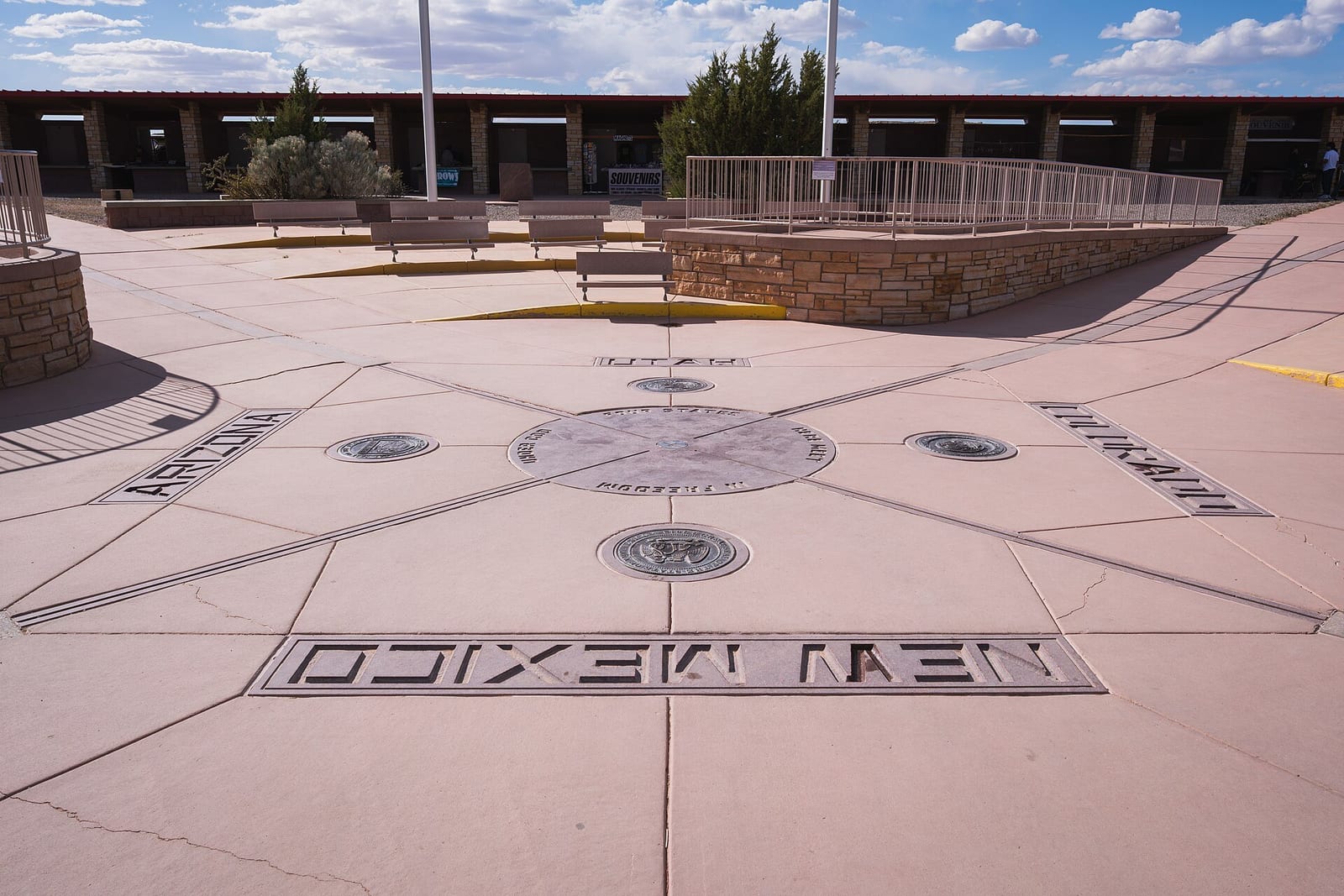
What counts as visiting a state? Layovers, drive-throughs and the rules 50-staters use
Only 2% of Americans name a plane change as the minimum that counts as visiting a state, while 27% set the bar at driving through. Here's a three-tier rubric, a lookup table for the edge cases from Four Corners to D.C., and one trip counted three ways.

The fake SBB ticket website stealing credit card and Twint data from travelers
Zurich cantonal police confirmed a fake SBB ticket website is stealing credit card and Twint payment details from travelers who find it through an ordinary Google search. Here is how to spot it and what to do if you already paid.

UK ETA scam warning: fake websites are charging Austrians up to €900
Fake UK ETA websites are charging Austrian and EU travellers hundreds of euros for a form that costs £20. Here's how the real one works, and how to spot a scam before you pay it.