How to Defend Against Rental Car Damage Scams: The Complete Before-and-After Checklist
Key Highlights
- 1
- 2
- 3
+5 more in the takeaways below
You return the rental car with a full tank, drop the keys at the counter, and head to your gate feeling good about the trip. Three weeks later, an email lands in your inbox: $1,638 in damage charges for a car you barely drove. No photos you recognize. No walk-around you remember agreeing to. Just a bill and a threat to send it to collections.
This isn't a rare horror story. A 2025 claims analysis of 1,710 rental car incidents found that 58% of structural damage claims were not caused by the renter. That means more than half the people getting billed for dents and scratches didn't cause them. The rental car damage scam problem is real, it's well-documented, and fighting back requires knowing exactly what to do before you pick up the keys and after you hand them back.
We've rented cars across 15+ countries, and the one habit that's saved us more than once is a 90-second phone video at pickup. It feels paranoid. And it's the only thing standing between you and a four-figure bill for a scratch that was already there.
More than half the people getting billed for dents and scratches didn't cause them.
More than half of rental car damage claims aren't the renter's fault - the rental car damage scam is an industry-wide problem. Protect yourself with a 90-second video walk-around at pickup and return, pay with a credit card that includes rental car coverage, and never drop off at an unstaffed location. If you're hit with a bogus charge, dispute it through your credit card within 60 days and demand written proof under federal debt collection law.
The Numbers Behind the Rental Car Damage Problem
Fake and inflated rental car damage charges aren't a fringe complaint. They're a documented, industry-wide pattern backed by lawsuits, government investigations, and hard data.
A survey by iCarhireinsurance found that 41% of renters discovered undocumented damage at checkout, and 16% later found unexpected charges on their credit card statement. Meanwhile, U.S. rental companies pulled in more than $2 billion in optional insurance and add-on fees in 2024 alone. There's a financial incentive to keep the damage claims flowing.
The enforcement record shows this isn't speculation. Enterprise paid a $50,000 penalty to the New Jersey Attorney General for billing consumers for damage that didn't occur during the rental period. And the industry's billing problems extend to government contracts too: Avis Budget Group paid $10.1 million to settle False Claims Act allegations for overcharging the U.S. government on rental vehicle fees. These aren't isolated incidents. They're the ones that made it to court.
AI Scanners Changed the Game (and Not in Your Favor)
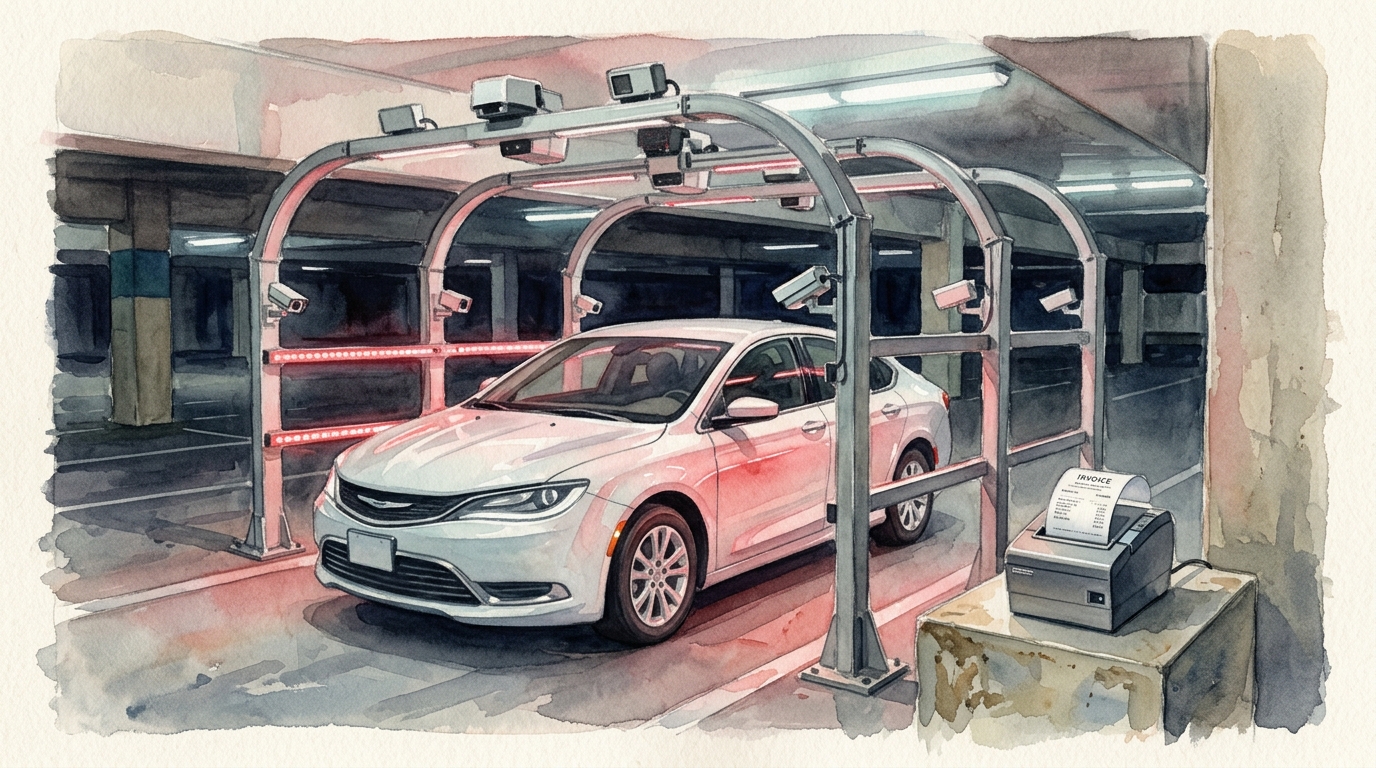
Until 2025, damage disputes were a he-said, she-said situation between you and the counter agent. Now there's a third player: the machine. Hertz announced a partnership with UVeye in April 2025, deploying AI scanners at 10 U.S. airport locations by mid-2025, with plans for 100 locations by year-end. Sixt installed ProovStation AI scanners at Fort Lauderdale, Atlanta, Charlotte, Miami, and Maui.
Here's the catch: these systems photograph your car at pickup and return, then use algorithms to flag "new" damage. The technology itself isn't the problem. The problem is what happens next.
Hertz is the only major U.S. rental company that auto-charges customers based on AI scanner findings without mandatory human review. Sixt and other companies require staff to verify flagged damage before billing.
Real-world results have been ugly. The Points Guy documented a $2,200 charge for a 24-hour rental flagged by an AI scanner. Jalopnik reported a $440 bill for a 1-inch wheel scuff at Hertz Atlanta. Sixt wrongly billed a customer $1,428 based on scanner output. One Hertz customer was charged $1,638 for a car they never drove. Another received a $6,562 bill for an allegedly totaled rental.
To be fair, Hertz says the system works for most rentals. Fortune reports that more than 675,000 vehicles have been scanned, with over 97% resulting in no billable damage. But "most" isn't "all," and when the 3% who do get flagged face four-figure bills with no human review, the system's overall accuracy is cold comfort.
The outcry was loud enough to reach Congress. In August 2025, Rep. Nancy Mace opened an investigation into Hertz's AI scanner practices, demanding answers on how UVeye makes damage assessments and why customers can't reach a human to dispute charges.
Your Before-and-After Inspection Checklist
The single best defense against a rental car damage scam is documentation you control. Not the rental company's paperwork. Not the agent's word. Your own timestamped, geotagged evidence that proves the car's condition at pickup and return.
This checklist takes about 90 seconds per walk-around. That's three minutes total for your entire rental, and it could save you thousands.
At Pickup: Before You Drive Away
- Shoot a continuous video walk-around Start at the front bumper and walk slowly around all four sides. Get the roof, the hood, and the undercarriage edges. Video captures more than photos and is harder to dispute because it shows continuous footage with no gaps.
- Zoom in on every existing scratch, dent, and scuff Pause on each imperfection for 2-3 seconds. Narrate what you see: "Driver side rear quarter panel, six-inch scratch near the wheel well." Audio timestamps your observations.
- Photograph the dashboard and odometer This establishes the starting mileage. If the rental company's records show higher mileage, damage may have occurred after your return.
- Photograph all four tires and wheels close-up Wheel scuffs are the most common AI scanner flag. Get tight shots of every rim from multiple angles.
- Check the rental agreement damage form If the form lists damage, make sure it matches what you see. If it doesn't list something you found, have the agent add it or refuse the car. Take a photo of the signed form.
- Email the photos/video to yourself immediately This creates a server-side timestamp that the rental company can't dispute. Cloud backups with metadata (Google Photos, iCloud) also work.
At Return: Before You Walk Away
- Repeat the full video walk-around (same route as pickup)
- Photograph the dashboard showing final mileage and fuel level
- Get a close-up of every wheel and tire again
- Return the car to a staffed location during business hours
- Ask for a signed receipt confirming the car was returned in acceptable condition
- If an agent inspects the car, stay present and photograph what they photograph
- Email the return photos/video to yourself on the spot
That last point about staffed locations deserves emphasis. Reddit threads are filled with stories of renters who dropped off after hours, only to get damage bills days or weeks later with no way to prove the car's condition at the time of return. As one travel insurance expert put it: never give up control of your evidence trail by returning to an empty lot.
Tools That Help You Build an Evidence Trail
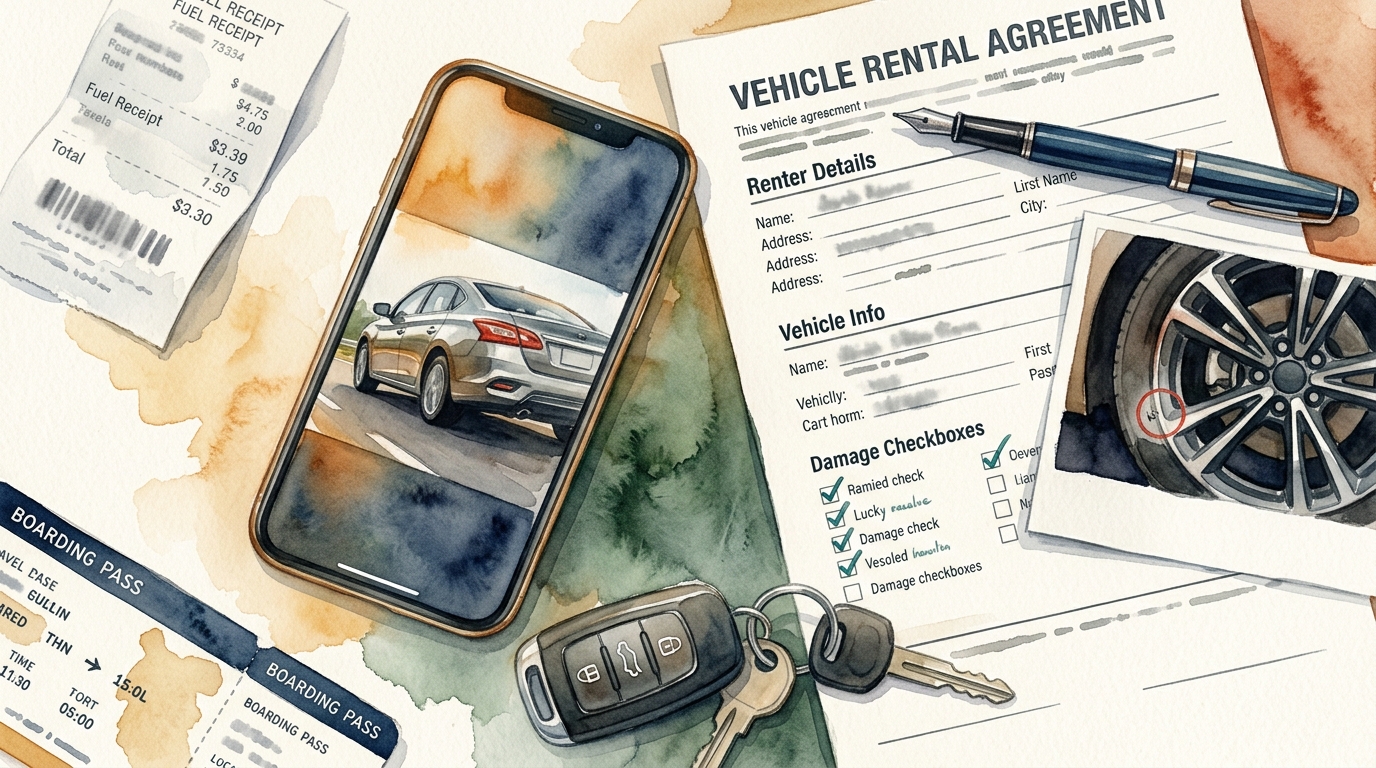
Your phone camera works fine for basic documentation, but dedicated tools add layers of protection that matter when you're disputing a $2,000 charge.
| Tool | Type | Key Feature | Cost | Platform |
|---|---|---|---|---|
| Proofr | App | Timestamped, geotagged, tamper-proof before/after photos with exportable PDF report | $9.90/mo (3-day free trial) | iOS only |
| Phone camera + email | DIY | Video walk-around emailed to yourself creates server-side timestamp | Free | Any |
| Consumer Rescue Checklist | Printable PDF | Structured inspection form with damage diagram you fill out at pickup/return | Free | |
| Google Photos / iCloud | Cloud backup | Auto-embeds GPS coordinates, date, and time in photo metadata | Free | Any |
Proofr is worth a closer look if you rent frequently. Created by a 21-year-old college student who saw the AI scanner problem coming, the app runs an eight-point scan in under a minute, auto-detects damage, and generates a PDF report you can present to the rental company. The catch: it's iOS only for now, and testers have noted it can miss paint chips in tricky lighting conditions. Still, having any structured, timestamped evidence puts you in a stronger position than 90% of renters who walk away without a single photo.
How to Fight Back When You Get a Bogus Charge
You did everything right. You documented the car. You returned it on time. And you still got a damage bill in your email. Here's what to do, in order.
Step 1: Don't Panic, Don't Pay Immediately
Rental companies count on the shock factor. A $1,400 email with threatening language about collections is designed to make you pay first and ask questions never. Don't. You have time and you have rights.
Step 2: Request Full Documentation
Reply in writing (email, not phone) and demand the complete damage file: before-and-after photos, the specific damage location on the vehicle diagram, the repair estimate, and the inspection report from your pickup. If the company can't produce before-and-after documentation, their claim is weak.
Step 3: Dispute Through Your Credit Card
Most credit cards give you 60 days to dispute a charge. File the dispute with your card issuer, attach your pickup/return photos and video, and let the bank investigate. Many premium travel credit cards also include primary or secondary rental car damage coverage, which means your card's insurance handles the claim instead of your personal auto insurance.
Always pay for rental cars with a credit card that offers primary rental car collision/damage waiver coverage. The Chase Sapphire Preferred and Capital One Venture X offer primary coverage. The Amex Platinum's coverage is secondary domestically (primary for international rentals). Primary coverage handles claims directly, so your personal auto premiums aren't affected.
Step 4: Know Your Federal Rights
If the rental company sends the debt to a collection agency, the Fair Debt Collection Practices Act (FDCPA) protects you. You can demand written verification of the debt, and collectors must pause all collection activity until they provide proof. Send your request via certified mail within 30 days of the collector's first contact.
Step 5: Know Your State Rights
In states including Illinois, New York, California, and Pennsylvania, consumers only owe either the cost of property damage or the diminished value of the vehicle, whichever is less. This prevents companies from charging you for both repairs and the car's reduced resale value. Check your state's specific consumer protection laws before responding to a damage claim.
What Experienced Renters Actually Do
The best advice doesn't come from rental company FAQs. It comes from people who've been burned and learned from it.
Sixt sent me a $350 bill for tire damage I allegedly caused six months after I rented the car. Luckily I used my Chase travel card... so Chase simply took care of it.
- r/TravelHacks commenter (353 upvotes)
That thread, which pulled 1,505 upvotes and 286 comments, was about a $1,346 charge with zero documentation sent 2.5 months after a $650 rental. The top practical advice boiled down to three habits:
- "Video the car when I pick it up AND when I drop it off. It's faster and easier than photos." (176 upvotes)
- "Take a picture of the dashboard/odometer at drop-off. If their mileage is higher, damage occurred after you." (65 upvotes)
- "Return to a human." Never use unstaffed, after-hours drop-off locations.
One poster on another thread shared a story that resonated with nearly 500 people: "One month later we got a bill and damage report for a scratch... hit with an 1,100 Euro bill." Their only regret was not taking video at return. If you plan your pre-trip preparation carefully, add "charge phone for rental car video" to the list. Those 90 seconds of footage are your best insurance policy.
Your Pre-Rental Protection Plan
Before you even book the car, these decisions will determine how protected you are if a rental car damage scam targets you.
Choose your credit card deliberately. Use a card with primary rental car coverage, not secondary. Primary coverage means the card's insurer handles the claim directly. Secondary coverage only kicks in after your personal auto insurance, which means your premiums could rise. Check your card's specific terms for coverage limits and exclusions.
Skip the rental company's collision damage waiver (CDW). If your credit card provides coverage, the rental counter CDW is redundant. U.S. rental companies collected over $2 billion in optional insurance fees in 2024. That's money coming directly from renters who didn't know their credit card already had them covered. For more on spotting hidden fees in the travel industry, we've covered the pattern before.
Avoid Hertz locations with AI scanners if you can. As of early 2026, Hertz has deployed AI scanners at up to 100 U.S. airport locations, expanding from the initial 10 airports announced in April 2025. Until the industry standardizes human review of AI-flagged damage, the risk of false positives at scanner-equipped locations is higher. If you must rent from a scanner location, your documentation game needs to be flawless.
Take a screenshot of the rental agreement terms. Before you click "accept" on the app or website, screenshot the damage liability section. These terms sometimes change between booking and pickup. Having the original terms gives you a stronger position if the company tries to enforce different conditions later.
European renters have additional protections. In the EU, the Unfair Contract Terms Directive means rental companies can't hide damage liability clauses in fine print. If you're renting in Europe, your home country's consumer protection agency can intervene on cross-border disputes through the European Online Dispute Resolution platform. Credit card chargeback rights vary by card network, but Visa and Mastercard both offer dispute processes across the EU.
If you're planning your first international rental, understanding common first-time travel mistakes will help you avoid the errors that make damage disputes harder to win. And make sure your travel documents include your credit card's rental coverage terms, not just your passport and boarding pass.
Frequently Asked Questions
Can rental companies charge my credit card for damage after I return the car?
Yes. Most rental agreements authorize post-rental charges. You can dispute any charge through your credit card issuer within 60 days. The rental company must provide documentation proving the damage occurred during your rental period.
How do I know if my credit card covers rental car damage?
Check your card's benefits guide or call the number on the back. Look for "rental car collision damage waiver" or "auto rental coverage." Primary coverage is better than secondary. Some cards exclude certain vehicle types, countries, or rentals over 30 days.
What should I do if Hertz's AI scanner flags damage I didn't cause?
Request the before-and-after scanner images immediately. Compare them against your own pickup documentation. File a dispute with your credit card company and submit a written complaint to Hertz corporate. If it goes to collections, demand written debt verification under the FDCPA within 30 days.
Is it worth buying the rental company's insurance?
Usually not, if your credit card already provides coverage. The rental counter CDW typically costs $10-35 per day depending on the vehicle and location. Over a week, that's $70-245 for coverage your card may already include free.
Can I refuse to pay a damage claim I disagree with?
You can dispute it, but ignoring it entirely is risky. The company can send the debt to collections, affecting your credit score, and add you to a "Do Not Rent" list. Instead, dispute in writing, demand documentation, and use your credit card's chargeback process.
How long do rental companies have to file a damage claim?
There's no universal deadline. Some companies bill within days, others wait months. Sixt has billed customers six months after a rental. The longer the delay, the weaker their claim. Document the timeline of all communications.
Should I buy standalone rental car insurance from a third party?
Third-party policies from providers like Allianz or RentalCover can be cheaper than the rental counter's insurance, running $8-15 per day versus $10-35. They're worth considering if your credit card doesn't include rental coverage. Read the fine print for exclusions.
Key Takeaways
- More than half of rental car damage claims aren't caused by the renter. Documentation is your only real defense.
- Shoot a continuous video walk-around at pickup and return. It takes 90 seconds and creates evidence that's difficult to dispute.
- Always pay with a credit card that includes rental car collision coverage. This gives you both insurance protection and chargeback rights.
- Hertz is currently the only major company that auto-charges based on AI scanner results without human review. Extra caution is warranted at their scanner-equipped locations.
- If you're hit with a bogus charge, dispute through your credit card within 60 days. If it goes to collections, demand written verification under the FDCPA.
- Never return a car to an unstaffed location after hours. No witness means no defense.
- Use a dedicated inspection app like Proofr, or at minimum, email your photos to yourself immediately for a server-side timestamp.
- If you're renting abroad, tools like TripProf include destination-specific driving guides and car rental sections in their travel guides, so you know the local rules before you arrive at the counter.
The rental car industry isn't going to fix this problem on its own. Congressional investigations and lawsuits have put public pressure on Hertz and others, but no federal regulation has been passed yet. The only person who'll protect your wallet at the rental counter is you. Build the habit now: 90 seconds of video, a credit card with coverage, and the confidence to dispute any rental car damage scam charge you didn't cause.
This article is for informational purposes only and does not constitute legal or financial advice. Laws and credit card benefits vary by jurisdiction and issuer. Consult a licensed professional for advice specific to your situation.
Sources
- Repairer Driven News: CarInsuRent 2025 claims report finding 58% of structural damage claims not caused by renter
- iCarhireinsurance: 2025 survey on undocumented damage at checkout and unexpected charges
- CBT News: U.S. rental companies collected $2B+ in optional insurance and add-on fees (2024)
- CBS News: Hertz UVeye AI scanner deployment and consumer backlash
- The Drive: Hertz auto-charges without human review, protection strategies
- Fortune: Hertz AI inspection rollout at 10 U.S. airports, planned expansion to 100
- Consumer Rescue: Sixt ProovStation scanner wrongly billed customer $1,428
- The Points Guy: $2,200 charge for 24-hour rental from AI scanner
- Jalopnik: $440 charge for 1-inch wheel scuff at Hertz Atlanta
- Consumer Rescue: $1,638 charge for car never driven (Hertz)
- Consumer Rescue: $6,562 bill for alleged totaled rental (Hertz)
- U.S. House Oversight Committee: Rep. Nancy Mace investigation into Hertz AI practices
- NJ Attorney General: Enterprise $50,000 penalty for improper damage charges
- U.S. Department of Justice: Avis Budget Group $10.1 million False Claims Act settlement
- Consumer Financial Protection Bureau: FDCPA rights for debt collection disputes
- ClassAction.org: State-level consumer protection for rental car damage claims
- CoverTrip: 60-day credit card dispute window and anti-scam strategies
- Proofr: Consumer AI damage documentation app
- Consumer Rescue: Free printable rental car inspection checklist
Last updated: July 3, 2026
Keep Reading
More travel tips and guides picked for you

Airport liquid rules in 2026: which airports actually allow more than 100ml
Some UK airports now let you carry 2 litres of liquid through security. Others, and every US airport, still cap you at 100ml. Here is exactly which is which, airport by airport, and which rule to pack for when your outbound and return airports disagree.

The best group packing list apps in 2026
PackParty nails the everyone-vs-one-person split gear needs. whobrings.com skips the app. TripProf holds the whole trip. Five tools, tested against each other.

The 2026 Hand-Luggage Trap: The EU "Free Cabin Bag" Law Did Not Pass - And the Rules Just Got Stricter
Everyone shared the headline about free cabin bags coming to the EU. The law never passed, and for summer 2026 the rules tightened instead. Exact free allowances for every airline DACH travelers fly, and how to avoid a €70 gate fee.