The Real Price of Cheap Flights: What Budget Airlines Hide Behind Low Fares
Key Highlights
- 1
- 2
- 3
+5 more in the takeaways below
You found a €19 flight to Barcelona. You screenshot it, send it to the group chat, and book before anyone can object. Six weeks later, you're at the gate watching a Ryanair agent measure your bag with a metal sizer that seems smaller than the one at check-in. Your carry-on doesn't fit. That'll be €75. The €19 flight just became a €94 flight, and you haven't even boarded yet.
Budget airline hidden fees have turned the airline industry into something closer to a subscription trap than a transportation service. The base fare is the bait. Everything after it is where the real money lives. And in 2024, that "everything after" added up to $148.4 billion worldwide.
This isn't a rant. It's a breakdown. Region by region, fee by fee, here's what low-cost carriers actually charge once you factor in the stuff they don't mention on the search results page.
Global airlines earned an estimated $148.4 billion from ancillary fees in 2024, with five carriers making more from fees than fares. Budget airlines routinely advertise bag fees they almost never offer at the listed price. Gate staff at Ryanair and easyJet earn bonuses for catching oversized bags. A US Senate report found airlines collected $12.4 billion in seat fees alone over five years. Region-by-region fee tables, dark pattern tactics, and a checklist for avoiding the worst charges are all below.
The $148.4 Billion Fee Machine: How Ancillary Revenue Took Over
Here's what base fares won't tell you. In 2024, airlines worldwide earned an estimated $148.4 billion in ancillary revenue, up from $117.9 billion the year before, a 26% jump in a single year (IdeaWorksCompany). That's not a minor revenue stream. Ancillary income now represents roughly 15% of total airline revenue across the industry, up from 9.1% in 2016.
But "ancillary revenue" is a polite term for something passengers experience as bag fees, seat selection charges, priority boarding upsells, airport check-in penalties, and credit card surcharges. The industry calls it a la carte pricing. Travelers call it getting nickel-and-dimed.
How bad is it? The 2025 IdeaWorks Yearbook ranks airlines by how much of their total revenue comes from fees rather than ticket sales. Five airlines now earn more from ancillary charges than from actually flying you somewhere:
| Airline | Region | Ancillary Revenue % | Status |
|---|---|---|---|
| Frontier | US | 62.0% | Fees > Fares |
| Spirit | US | 58.7% | Fees > Fares |
| Volaris | Mexico | 55.3% | Fees > Fares |
| Breeze Airways | US | 54.0% | Fees > Fares |
| Allegiant | US | 52.9% | Fees > Fares |
| Wizz Air | Europe | 44.6% | High |
| Viva Aerobus | Mexico | 43.7% | High |
| easyJet | Europe | 38.6% | High |
| Pegasus | Turkey | 33.9% | Moderate |
Look at that table. Frontier makes 62 cents of every dollar from fees, not flights. When more than half your revenue comes from charges passengers don't see until after they've committed to buying, the "low fare" on the search results page is marketing fiction.
Meanwhile, the US Senate's "The Sky's the Limit" report (November 2024) found that American, Delta, United, Spirit, and Frontier collected $12.4 billion in seating fees alone between 2018 and 2023. United's seat fee revenue hit $1.3 billion in a single year, overtaking its checked bag revenue for the first time. The report also revealed that Spirit and Frontier paid gate agents a combined $26 million between 2022 and 2023 specifically to catch passengers with bags that didn't meet size requirements.
If your flight gets cancelled, you might eventually get that base fare refunded. But the fees? Good luck.
Europe: Where a "Free" Cabin Bag Costs £23
European low-cost carriers wrote the playbook that the rest of the world copied. Ryanair, easyJet, and Wizz Air dominate intra-European travel with advertised fares that look impossibly cheap. They are impossibly cheap, because the actual price is hidden behind a wall of add-ons.
The Bag Fee Bait-and-Switch
A December 2025 Which? investigation surveyed nearly 1,500 bag prices across eight busy routes. The findings were damning:
- easyJet advertises cabin bag fees starting at £5.99. Which? checked 520 flights and found that price on zero of them. The cheapest actual price was £23.49.
- Ryanair advertises cabin bag fees from £12. That price appeared on just 2 out of 634 flights checked (0.3%).
- Wizz Air advertises fees from €10. Found on only 2 out of 338 flights (0.6%).
Euronews reports that Which? has shared its easyJet findings with the UK Advertising Standards Authority, which is now investigating. But these advertised-but-unavailable prices have been the norm for years. The "from" price exists to win the Google Flights comparison. The actual price exists to pad the airline's revenue.
Fee-by-Fee Breakdown: European LCCs
| Fee Category | Ryanair | easyJet | Wizz Air |
|---|---|---|---|
| Cabin bag (overhead) | £6-£60 | £5.99-£30 (real avg ~£30) | €10-€29.50 |
| Checked bag (20kg) | €20.99-€59.99 | £6.99-£9.49 (15-23kg online) | £20-£198 (peak) |
| Airport check-in | £55/€55 | Free | €35.50 |
| Seat selection | €8-€10.50 | Varies by row | €14-€16 |
| Oversized bag at gate | €70-€75 | ~£48 | Varies |
Currencies reflect each airline's primary pricing market. Ryanair and easyJet price UK routes in GBP; Wizz Air prices primarily in EUR. Actual charges vary by departure country.
That Wizz Air checked bag peak of £198 isn't a typo. During high-demand summer routes, a single 20kg checked bag can cost more than the flight itself. If you're traveling as a couple with one checked bag each on a peak-season Wizz Air route, you could pay nearly £400 in baggage alone. At that point, a full-service carrier with included bags is cheaper. If you're weighing train versus plane for European trips, our guide to Europe's new rail routes breaks down when trains beat budget flights on total cost.
The Bag Bounty: Gate Staff Get Paid to Catch You
Here's something most passengers don't know: the person measuring your bag at the gate has a direct financial incentive to find it too big.
The Irish Times reported in August 2025 that Ryanair raised its gate staff bonus from €1.50 to €2.50 per oversized bag caught, while removing the previous €80 monthly cap. That means unlimited earning potential for staff who flag non-compliant luggage. Passengers who get caught face charges of up to €75.
Ryanair isn't alone. GB News obtained a leaked email showing that Swissport ground handlers working easyJet flights at seven UK airports earn £1.20 per oversized bag caught. The scheme has been running since November 2023.
Anecdotal reports from passengers suggest inconsistencies in bag sizer dimensions, though airlines maintain that all sizers meet published specifications:
Confirmed: Ryanair pay gate staff bonus for every oversized bag. My friend works for their ground handler. The sizer at the gate is definitely tighter than the one at the check-in desk. Same bag, different result.
r/Ryanair, 605 upvotes
CEO Michael O'Leary has defended the practice, saying only about 200,000 passengers per year (0.1% of Ryanair's 200 million annual travelers) get caught (Euronews). But that "small" number still generates millions in fee revenue, and the Reddit threads are full of travelers reporting bag sizers at the gate that seem smaller than the ones at check-in counters.
United States: Where the Fee Model Was Perfected
If European LCCs wrote the fee playbook, American ultra-low-cost carriers turned it into a science. Spirit, Frontier, and Allegiant have built entire business models around the assumption that the base fare is just the entry price to a fee gauntlet.
The US ULCC Fee Structure
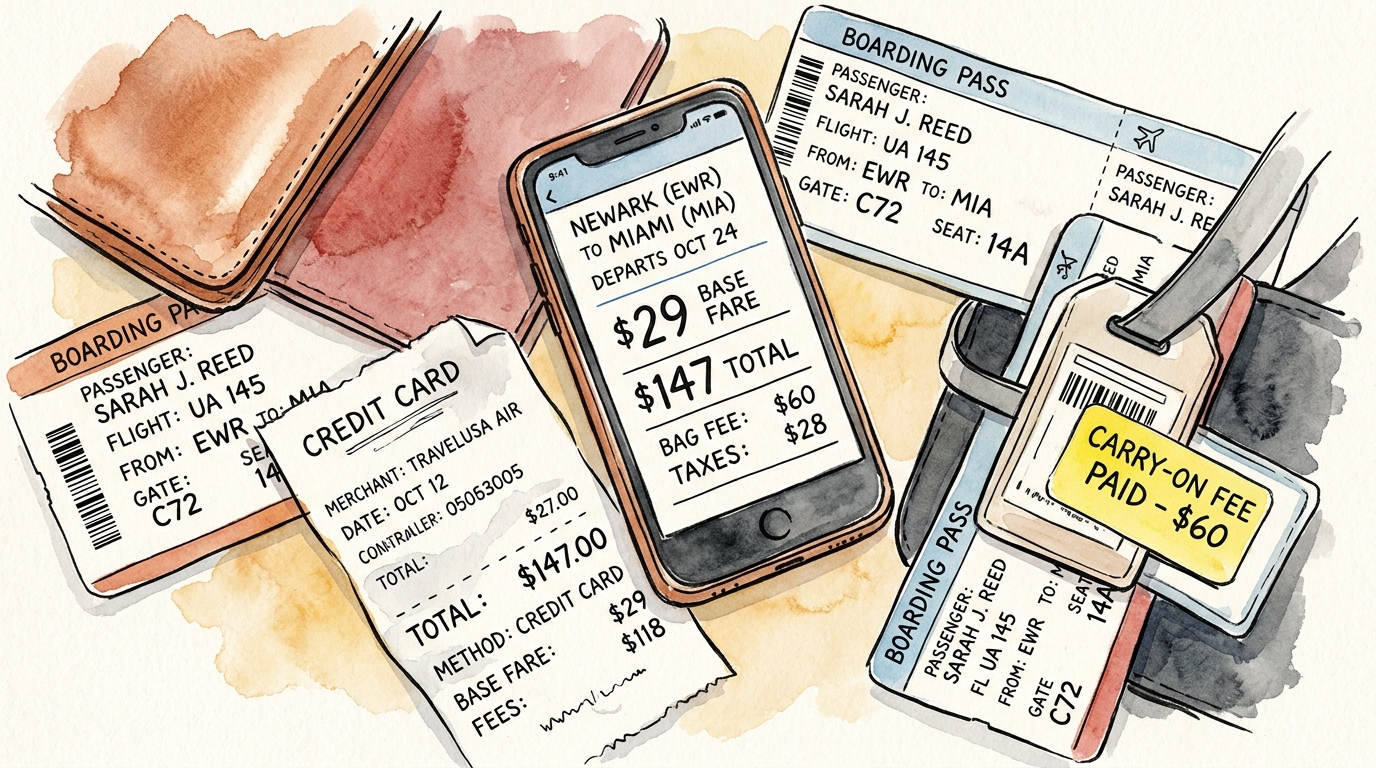
Notice the dynamic pricing pattern. Spirit charges $37-$55 for a carry-on if you pay when booking, but that jumps to $70 at online check-in and $99 at the gate. Every step closer to departure makes the same service more expensive. Frontier uses similar escalating fees. The message is clear: pay now, or pay more later.
The Senate investigation also raised questions about whether Spirit and Frontier use personal data to manipulate seat pricing, though both airlines denied the practice. What's undeniable is the math: a $29 Spirit fare with a carry-on ($55), a checked bag ($55), and a seat assignment ($20) becomes a $159 flight. That's often more than a Delta or Southwest ticket that includes all three.
Spirit and Frontier generated a combined $1.46 billion in baggage and seat fees alone in 2023, according to the US Senate investigation.
The Regulatory Failure
Regulators tried to fix this. In April 2024, the Biden administration finalized a rule requiring airlines and ticket agents to disclose all fees alongside the fare before purchase. The DOT estimated this would save consumers over $500 million annually.
It never took effect. In January 2025, a federal appeals court blocked the rule after Airlines For America, the industry trade group, sued. The court found the DOT had used data from a study published after the public comment period, violating procedural requirements (Airways Magazine). The rule is back at the DOT for potential reworking, but as of March 2026, there's no timeline for revival.
So for now, the fee gauntlet remains fully operational. If you're a first-time international traveler, budget airlines in the US are where the most expensive rookie mistakes happen.
Comparing flights by base fare only. A $29 Spirit flight with bags and a seat often costs more than a $89 Southwest flight where bags fly free. Always calculate the total trip cost before booking.
Mexico and Latin America: The US Model Goes South
Volaris and Viva Aerobus, Mexico's two dominant ultra-low-cost carriers, rank among the global top 10 for ancillary revenue share. Volaris earns 55.3% of revenue from fees; Viva Aerobus sits at 43.7% (IdeaWorks 2025 Yearbook). Both follow the same playbook as Spirit and Frontier: rock-bottom base fares, then escalating charges for every add-on.
Volaris charges roughly $25-$60 for a carry-on and $30-$70 for a checked bag, depending on the route and when you purchase. The airline's "basic" fare includes literally nothing except the seat and a small personal item. Want to pick which seat? Pay. Want to bring a jacket that doesn't fit under the seat? Pay. Want to print your boarding pass at the airport? Pay.
For travelers flying between the US and Mexico, the fee structures compound. A Volaris flight from Los Angeles to Guadalajara might show a base fare of $49, but the round-trip cost for one person with a carry-on and checked bag easily crosses $200. The same route on a legacy carrier with included bags often costs $220-$280, turning the "budget" option into a false economy that also comes with less legroom and no change flexibility.
The pattern repeats across Latin American LCCs like JetSMART (Chile) and Sky Airline (Peru): advertised fares that wouldn't cover the cost of airport coffee, padded with fees that double or triple the total.
Asia-Pacific: Strict Enforcement, Questionable Scales
Asia-Pacific budget carriers like AirAsia, Jetstar, IndiGo, and Scoot operate with some of the strictest baggage enforcement in the world. The standard carry-on limit across most Asian LCCs is 7kg, and they weigh bags at the gate far more consistently than their European or American counterparts.
The Scale Problem
When your entire fee model depends on catching bags over the weight limit, the accuracy of your scales matters enormously. And there's growing evidence that some airlines' scales aren't reliable.
In September 2025, New Zealand's Ministry of Business, Innovation and Employment ordered Jetstar to stop using its portable baggage scales at Wellington Airport after an inspection found they weren't level and didn't meet approval conditions. Jetstar attributed the issue to "minor wheel misalignments" and said all scales across New Zealand were verified compliant by October 2025.
I weighed my bag at home: 20.2kg. At the Jetstar counter it showed 23kg. Charged $75 for 3kg over. When I landed and weighed it at the hotel, it was 20.2kg again.
OzBargain Forums, passenger report
Whether scales are deliberately miscalibrated or just poorly maintained, the financial incentive runs in one direction: every gram over the limit generates revenue. Passengers have no practical way to challenge a gate weight reading when their flight boards in 20 minutes.
India's Dark Pattern Crisis
India's budget airline market has become a case study in dark pattern design. A December 2025 nationwide survey by LocalCircles found that 80% of Indian air passengers reported encountering hidden charges that weren't disclosed upfront. The same survey found 56% of respondents said airline apps "very frequently" used fake urgency messages to pressure purchases.
The Indian government responded. In March 2026, the Ministry of Civil Aviation mandated that airlines allocate at least 60% of seats free of charge on every flight. Previously, only about 20% of seats came without an extra fee. The directive also requires airlines to seat passengers booked under the same reservation together at no charge.
Airlines predictably pushed back. IndiGo, Air India, and SpiceJet objected through the Federation of Indian Airlines, arguing the rule would force fare increases. But the LocalCircles survey data showed the problem was real: 70% of passengers reported experiencing bait-and-switch tactics where the final transaction terms differed materially from what was advertised.
The Hidden Fee Playbook: How Budget Airlines Make You Pay More
Budget airline hidden fees don't just exist. They're engineered. The booking interfaces are designed to push you toward spending more, using psychological tactics that the design industry calls dark patterns.
Here's what the playbook looks like in practice:
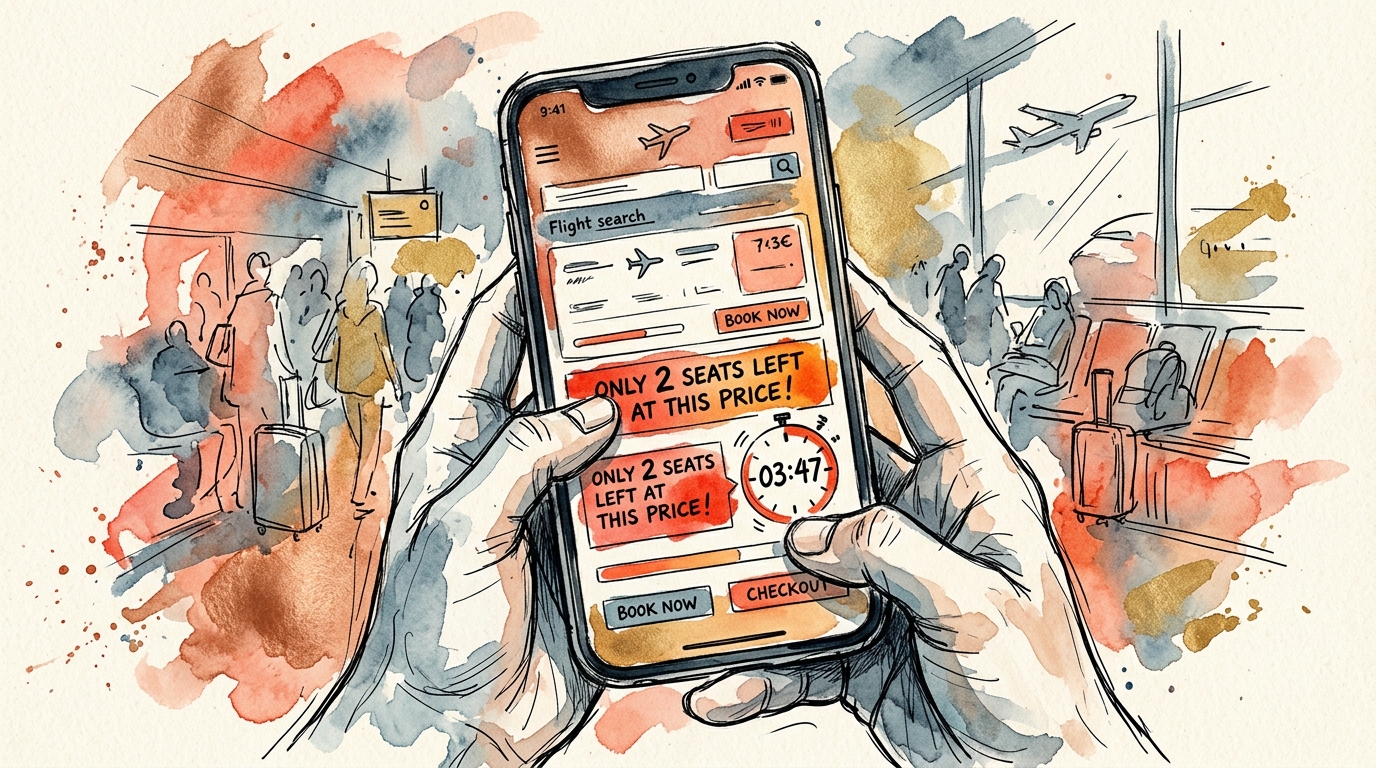
Fake scarcity. "Only 2 seats left at this price!" This warning appears on flights that have dozens of empty seats. The message is technically about that fare class, not the plane itself, but most passengers read it as "the flight is almost full" and rush to buy without comparing options.
Drip pricing. The base fare shows on the search page. The bag fee appears on the next screen. The seat fee on the screen after that. By the time you've invested five minutes entering passenger details, you're psychologically committed to completing the purchase, even when the total has doubled.
Pre-selected add-ons. Insurance, priority boarding, and SMS notifications arrive pre-checked in your cart. You have to actively deselect them. Most people don't notice at least one.
Confusing opt-outs. "Would you like to protect your trip? Click YES to add insurance, or click NO, I understand I won't be covered." The "no" option is written to make you feel irresponsible for declining.
Escalating prices by channel. Bag fees at booking are cheaper than at check-in, which are cheaper than at the airport, which are cheaper than at the gate. This creates a fear cycle: buy now or pay more later, even if you're not sure you need it.
SmarterTravel's breakdown of hidden fees puts it bluntly: a $89 fare to Miami becomes roughly $200 once you add bags, seat selection, and priority boarding. The base fare was less than half the real price. And that pattern holds across carriers: the advertised fare is a starting bid, not a final price.
These tactics aren't limited to budget carriers anymore. Legacy airlines have adopted lite fares that strip out bags and seats, effectively creating budget-carrier pricing inside a full-service brand. The difference is that a legacy airline with a lite fare at least discloses the total before checkout. Budget carriers scatter fees across multiple screens specifically so you lose track of the running total.
If you've been through the chaos of a cancelled flight on one of these carriers, you already know how hard they make it to get money back. Our flight cancellation refund guide walks through the process for every major airline.
The Real Math: What a "Cheap" Flight Actually Costs
Theory is one thing. Let's run actual numbers on a real-world scenario: two travelers flying round-trip on a budget carrier versus a full-service airline.
Scenario: London to Barcelona, Round Trip for Two
| Cost Item | Ryanair (budget) | BA (full-service) |
|---|---|---|
| Base fare (per person) | £29 | £89 |
| Cabin bag overhead (per person) | £30 | Included |
| Checked bag 20kg (per person) | £40 | Included |
| Seat selection (per person) | £10 | Included |
| Airport transfer (Stansted vs Heathrow) | ~£36 (Stansted Express, return) | £0 (closer to London) |
| Total for two, round trip | £326 | £356 |
Prices are illustrative, based on a London-Barcelona route searched in March 2026. Fares fluctuate by date and season. BA fare assumes a standard Euro Traveller booking with included bags.
The budget option saves £30 total. For two people. Round trip. That's £15 per person for the privilege of worse legroom, no included bags, a remote airport, and the stress of measuring your bag at every gate. And this scenario assumes you don't get caught with an oversized bag (£75 penalty), don't need to check in at the airport (£55), and don't accidentally leave anything pre-selected in the cart.
The math gets even worse in the US. A $29 Spirit base fare with a carry-on bag ($55), one checked bag ($55), and a seat ($20) totals $159 per person one way. Southwest's equivalent route, with two free checked bags and no change fees, often lists at $109-$139. Spirit's "cheaper" fare costs more.
For anyone planning a summer 2026 trip on a tight budget, this comparison is worth doing before you book. The cheapest fare on Google Flights almost never means the cheapest trip. Tools like TripProf can help you track the full cost across multiple trip expenses so the "savings" from a budget flight don't quietly get eaten by fees elsewhere.
How to Actually Avoid Budget Airline Hidden Fees
We've been hit by the Ryanair bag sizer ourselves. Once at Stansted, once at Bergamo. Both times the bag fit at home. Both times it "didn't fit" at the gate. But none of this means budget airlines are always a bad deal. Sometimes the base fare really is cheap enough that even with fees, it wins. The key is knowing exactly what you'll pay before you commit.
- Weigh and measure your bag at home before every flight (buy a £10 luggage scale)
- Check in online 24-48 hours before departure to avoid airport check-in fees
- Screenshot the airline's published bag dimensions and bring them to the gate
- Decline all pre-selected add-ons during booking (uncheck insurance, SMS, priority)
- Compare the total trip cost, not just the base fare, across budget and full-service options
- Buy bags at booking time, not at the airport or gate (saves $10-$40 per bag)
- Use the airline's own app for boarding passes to avoid printing fees
- Consider whether a nearby full-service airport saves more than a distant budget hub
Pack a collapsible bag inside your carry-on. If you're buying souvenirs and your bag is getting tight, you can redistribute weight into the collapsible bag and wear it as a personal item on the return flight.
For group trips, the fee math gets complicated fast. If four friends book a budget carrier and everyone's fee situation is different (one has a carry-on, one doesn't, one picked a seat, one didn't), tracking who owes what becomes a headache. Our guide to splitting trip costs can help keep things fair.
The core strategy is simple: treat the base fare as a deposit, not the price. Add bags, seats, airport transfers, and potential penalty fees before deciding whether the budget carrier actually saves money. On short European routes, trains are often cheaper when you factor in city-center departures and included luggage. On US routes, Southwest and JetBlue sometimes undercut ULCCs on total cost.
What's Changing (and What Isn't)
Regulators around the world are slowly catching up. India's 60% free seat mandate is the most aggressive move yet. The EU is moving toward requiring airlines to allow at least one cabin bag in the overhead bin for free, but as of early 2026, the regulation still awaits final Council approval. In the interim, Airlines for Europe member carriers voluntarily guarantee a free personal item up to 40 x 30 x 15 cm. That's a small under-seat bag, not a full carry-on. The UK's Advertising Standards Authority is investigating easyJet's bag fee advertising after the Which? findings.
But the US is moving backward. The DOT's fee transparency rule remains blocked in court. The Trump administration has made no public commitment to revive it. And the airline industry's lobbying power means that voluntary transparency is about as likely as a free checked bag on Spirit.
The shift to mandatory digital boarding passes at Ryanair (November 2025) did eliminate one fee: the old €20 charge for printing a boarding pass at the airport. But it also means passengers without smartphones or the Ryanair app face new barriers.
The industry trend is clear. IdeaWorksCompany projects ancillary revenue will reach $157 billion in 2025. Airlines will keep dropping base fares and raising fees, because it works. The only realistic defense is informed passengers who calculate total costs before booking.
Frequently Asked Questions
Are budget airlines actually cheaper when you add all the fees?
Often not. Once you add a carry-on bag, checked bag, seat selection, and airport transfers, budget carriers frequently cost the same or more than full-service airlines on the same route. Always compare the total trip cost, not just the base fare.
What hidden fees do Ryanair, Spirit, and Wizz Air charge?
Common charges include cabin bag overhead fees (£6-£60 on Ryanair), airport check-in penalties (€55 on Ryanair, €35.50 on Wizz Air), seat selection (€8-€16), boarding pass fees, and gate bag penalties up to €75 or $99. Prices vary by route and booking channel.
Can airlines charge for hand luggage in Europe?
Yes, for overhead bin access. Airlines for Europe member carriers voluntarily guarantee a free personal item (up to 40 x 30 x 15 cm) under the seat, and the EU is working toward making free cabin bags mandatory, though the regulation awaits final approval. Placing a larger bag in the overhead bin can cost £6-£60 depending on the carrier and route.
Why does the bag sizer at the gate seem smaller than at check-in?
Multiple passenger reports describe gate sizers that appear tighter than check-in sizers. Airlines deny intentional discrepancies. Gate staff at Ryanair earn €2.50 per oversized bag caught, creating a financial incentive for strict enforcement at boarding.
How much of airline revenue comes from fees?
Industry-wide, ancillary revenue represents about 15% of total airline revenue. For ultra-low-cost carriers, it's far higher: Frontier earns 62% from fees, Spirit 58.7%, and Wizz Air 44.6%, per the 2025 IdeaWorks Yearbook.
What are dark patterns in airline booking?
Dark patterns are interface design tricks that push you toward spending more. Common examples include fake scarcity warnings ("Only 2 seats left!"), pre-selected insurance and add-ons, drip pricing that reveals fees across multiple screens, and escalating prices the closer you get to departure.
How do I avoid hidden airline fees?
Weigh and measure bags at home, check in online to avoid airport fees, decline all pre-selected add-ons, buy bags at booking (not the gate), and always compare total costs including bags and transfers across both budget and full-service carriers.
Key Takeaways
- Budget airline base fares are marketing tools, not real prices. Five airlines now earn more from fees than from actually flying passengers.
- Advertised bag fees are almost never available. A Which? investigation found easyJet's "from £5.99" cabin bag fee on zero out of 520 flights checked.
- Gate staff at Ryanair (€2.50/bag) and easyJet (£1.20/bag) earn bonuses for catching oversized luggage, creating a direct financial incentive for strict enforcement.
- The US DOT's fee transparency rule was blocked by a federal court in January 2025 and remains dead as of 2026. No regulatory fix is coming soon.
- Always compare total trip cost, not base fare. Add bags, seats, airport transfers, and potential penalties before deciding which airline is actually cheapest.
- Use a trip planning tool like TripProf to track all travel expenses in one place so budget flight "savings" don't disappear into hidden costs.
- On short European routes, trains with included luggage and city-center departures often beat budget flights once all fees are factored in.
- Pack a luggage scale and a screenshot of the airline's bag dimensions. Knowledge is your best defense against gate fees.
Sources
- IdeaWorksCompany: Airline Ancillary Revenue Skyrockets to $148.4 Billion Worldwide for 2024
- IdeaWorksCompany: 2025 Yearbook of Ancillary Revenue (excerpt)
- IdeaWorksCompany: Mission Possible: Airlines Earn Record Ancillary Revenue
- Which?: The Hidden Cost of Flying: Budget Airlines' Bag Prices Exposed
- Euronews: Budget Airlines Rarely Offer Their Lowest Advertised Cabin Bag Fees
- Euronews: Ryanair Offers Oversized Baggage-Spotting Bonuses for Staff
- The Irish Times: Ryanair to Raise Bonuses for Catching Passengers with Oversized Bags
- NBC News: Senate Report Slams Airlines for Raking in Billions in Seat Fees
- UPI: Senate to Hear Testimony from Airline Executives on $12.4 Billion in Junk Seating Fees
- Skift: Appeals Court Blocks Airline Junk Fee Rule
- Airways Magazine: DOT Transparency Rule Grounded by Court Decision
- GB News: EasyJet Staff Get Bonuses for Spotting Oversized Bags
- LBC: Staff at Seven UK Airports Offered Bonuses for Catching Oversized Bags
- BusinessToday India: 80% Flyers Hit by Airlines' Dark Patterns, Nationwide Survey Finds
- LocalCircles: Airline Dark Patterns Survey
- Gulf News: India Caps Airline Seat Charges with 60% Seats at No Extra Cost
- RNZ: Jetstar Ordered to Stop Using Faulty Baggage Scales
- NerdWallet: Spirit Airlines Fees: What to Know Before You Fly
- FinanceBuzz: Spirit Airlines Baggage Fees (2026)
- SmarterTravel: Hidden Airline Fees in 2025: How to Avoid Charges
- MoneySavingExpert: Ryanair Digital Boarding Passes
- Simple Flying: Ryanair to Pay Staff More for Spotting Oversized Bags
- Ryanair: Official Fees Page
- Wizz Air: Official Services and Fees Page
- easyJet: Cabin Bag and Hold Luggage
- Frontier Airlines: Bag Options
- Allegiant Air: Checked and Carry-on Bag Information
- Volaris: Baggage Policy
- Airlines for Europe (A4E): A4E Member Airlines to Implement Guaranteed Personal Item Size
- US Senate: Senate Permanent Subcommittee Report on Airline Junk Fees
- US DOT: Final Rule: Enhancing Transparency of Airline Ancillary Service Fees
- Stansted Express: Train Ticket Prices and Ticket Types
- Frontier Airlines: Seating Options
- Allegiant Air: Optional Services and Fees
- JetSMART: Optionals: Terms and Prices
- Qeepl: Complete Guide to Sky Airline Baggage Policy
Last updated: July 3, 2026
Keep Reading
More travel tips and guides picked for you
Christmas markets from London by train: what 3 nights really costs per person in 2026
Three nights at a Christmas market from London cost £426 to £704 per person. We priced Eurostar fares, central hotels and food for Lille, Brussels, Bruges and Cologne.
Wizz Air and Ryanair are cutting Vienna flights: what to book instead
Wizz Air has fully left Vienna and Ryanair has cut five aircraft over Austria's aviation tax. Here's exactly what changed, why it happened, and how to still book a cheap flight this winter.
Mallorca's tourist tax hike got cancelled. Here's what a 2026 trip really costs
The Balearic tourist tax hike everyone's still warning about got cancelled in February. Here's what a week on Mallorca actually costs in 2026, flights, hotel, tax, and food, with real numbers.