Europe's Train Revolution: Every New Route, Night Train, and Budget Rail Hack for 2026
Key Highlights
- 1
- 2
- 3
+5 more in the takeaways below
You're staring at a flight search screen, watching a London-to-Rome round trip tick past €400. Fuel surcharges, rerouted airspace, a baggage fee for a carry-on that's 2cm too wide. Meanwhile, a train from Paris to Berlin launched today for €79.99, and a startup just sold Amsterdam-to-Berlin seats for €19. The math is shifting. And in 2026, European rail isn't just catching up to flying. On dozens of routes, it's pulling ahead.
Europe's rail network is having its biggest year in decades. New routes from European Sleeper, GoVolta, and Czech Railways connect Paris-Berlin, Amsterdam-Berlin, and Prague-Copenhagen. Night trains are back with private cabins and en-suite showers. Meanwhile, the fuel crisis has driven airlines to cancel flights and raise fares on key routes. We break down every new route, the real cost of trains vs flights, and how to plan a rail-first trip across Europe in 2026.
The Flight Crisis Making Trains Look Better Than Ever
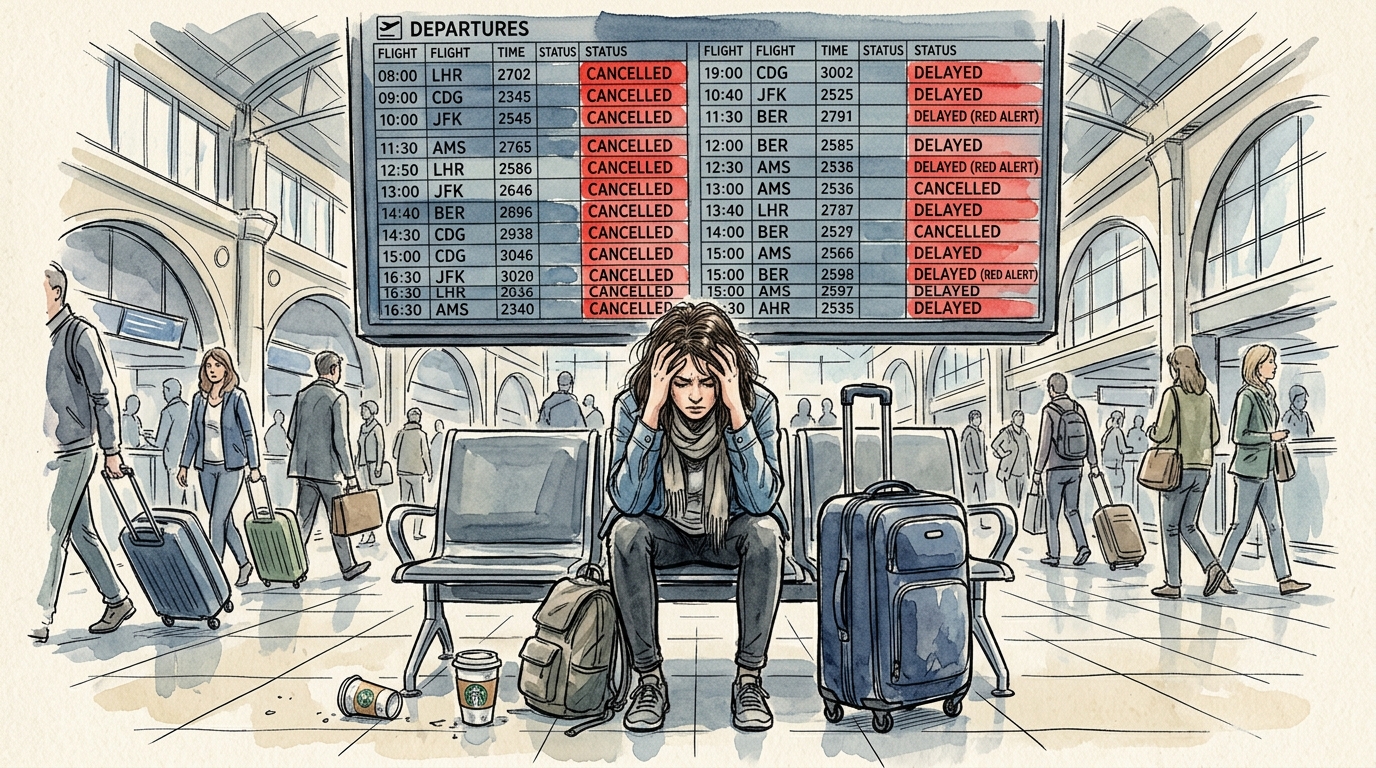
Here's what happened: Middle East airspace closures forced airlines to reroute thousands of flights, adding hours and fuel costs to routes between Europe and Asia. Then oil spiked. Jet fuel costs jumped 58.4% in a single week in early March. Airlines didn't absorb it.
Air France and KLM raised long-haul fares by an average of $57 per flight from March 11. SAS cancelled over 1,000 April flights outright because of fuel costs. Cathay Pacific's fuel surcharges jumped 105% across the board. If you've noticed your summer flight quotes looking uglier than last year, this is why.
And demand was already building before the crisis. EU rail passenger transport hit a record 443 billion passenger-kilometers in 2024, exceeding pre-pandemic levels by 10.7%. Rail accounts for just 0.4% of transport CO2 emissions in the EU despite carrying 7% of passenger-kilometers. As flight costs rise, the calculus shifts further.
Short-haul European flights aren't immune either. Budget carriers still advertise €15 base fares, but tack on fuel surcharges, baggage fees, and seat selection and the real price doubles or triples. A Cheapism analysis found the gap between advertised and actual airline prices widened significantly in early 2026.
Meanwhile, rail prices haven't moved. Trains don't burn jet fuel. They run on electricity, and most European rail operators locked in energy contracts years ago. That stability matters when you're budgeting a two-week trip. You know what a €35 Paris-to-Amsterdam Eurostar ticket costs. You don't know what a Ryanair fare will cost by June.
And the sentiment is shifting fast. A Hitachi Rail survey of 11,000 people across six countries found that 62% would swap short-haul flights for trains if alternatives existed. Those alternatives are arriving. Right now. If your summer 2026 travel budget is already stretched, trains aren't just the green option anymore. They're the practical one.
Every New Train Route Launching in 2026
More new cross-border rail routes are launching in 2026 than in any single year since the early 2000s. Some restore connections that disappeared a decade ago. Others are entirely new. Here's the full picture, with dates and prices where we have them.
| Route | Operator | Launch Date | Starting Price | Frequency |
|---|---|---|---|---|
| Paris-Berlin (night) | European Sleeper | March 26, 2026 | €79.99 (shared couchette) | 3x/week |
| Amsterdam-Berlin | GoVolta | March 19, 2026 | €19 (avg ~€30) | 3x/week → daily from July |
| Amsterdam-Hamburg | GoVolta | March 20, 2026 | €19 | 3x/week |
| Prague-Berlin-Copenhagen | ČD / DB / DSB | May 1, 2026 | TBA | 2x daily (3x in summer) |
| Brussels-Milan (night) | European Sleeper | Sept 9, 2026 | TBA | 3x/week |
| Paris-Berlin-Hamburg (night ext.) | European Sleeper | July 13, 2026 | From €79.99 | 3x/week |
| Budapest-Belgrade | MÁV / Serbian Rail | Mid-March 2026 (pending) | TBA | ~6x daily planned |
| Paris-Munich (expansion) | DB / SNCF | December 2026 | From ~€30 | 5x daily (up from 1) |
| Amsterdam-Paris | GoVolta | December 2026 | TBA | TBA |
Two standouts deserve a closer look.
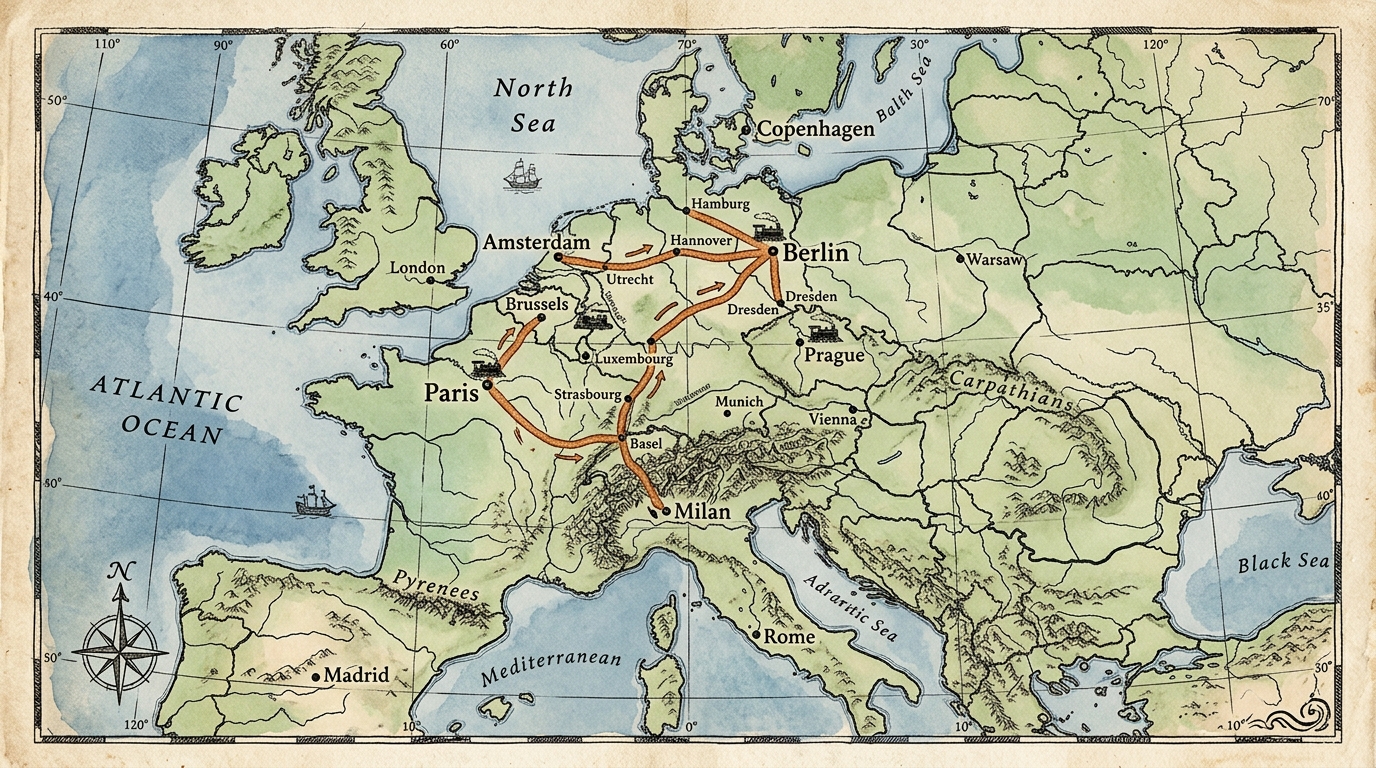
European Sleeper's Paris-Berlin night train launched its first departure on March 26, 2026. The route runs Paris Nord → Aulnoye-Aymeries → Mons → Brussels Midi → Liège → Berlin Hbf, with a Hamburg extension starting July 13. Shared couchettes start at €79.99 and private compartments for up to five people at €279.99. Women-only compartments are available. The catch: it's only three nights per week, so plan ahead.
GoVolta's Amsterdam-Berlin service is doing something different. This Dutch startup isn't trying to be fast. It's trying to be cheap. The trains top out at 160 km/h (compared to ICE's 300 km/h), but with 100 promo seats at €10 per departure and average fares around €30, they're undercutting the existing Amsterdam-Berlin ICE tickets by 50-70%. GoVolta calls itself "the easyJet of railways" and plans an Amsterdam-Paris route by December.
The Night Train Renaissance
Night trains were left for dead in the 2010s. SNCF and DB axed most of their sleeper services, calling them unprofitable. The Paris-Berlin overnight disappeared entirely in December 2025 when ÖBB and SNCF pulled out. But something happened. Demand came back. And private operators stepped in where state railways wouldn't.
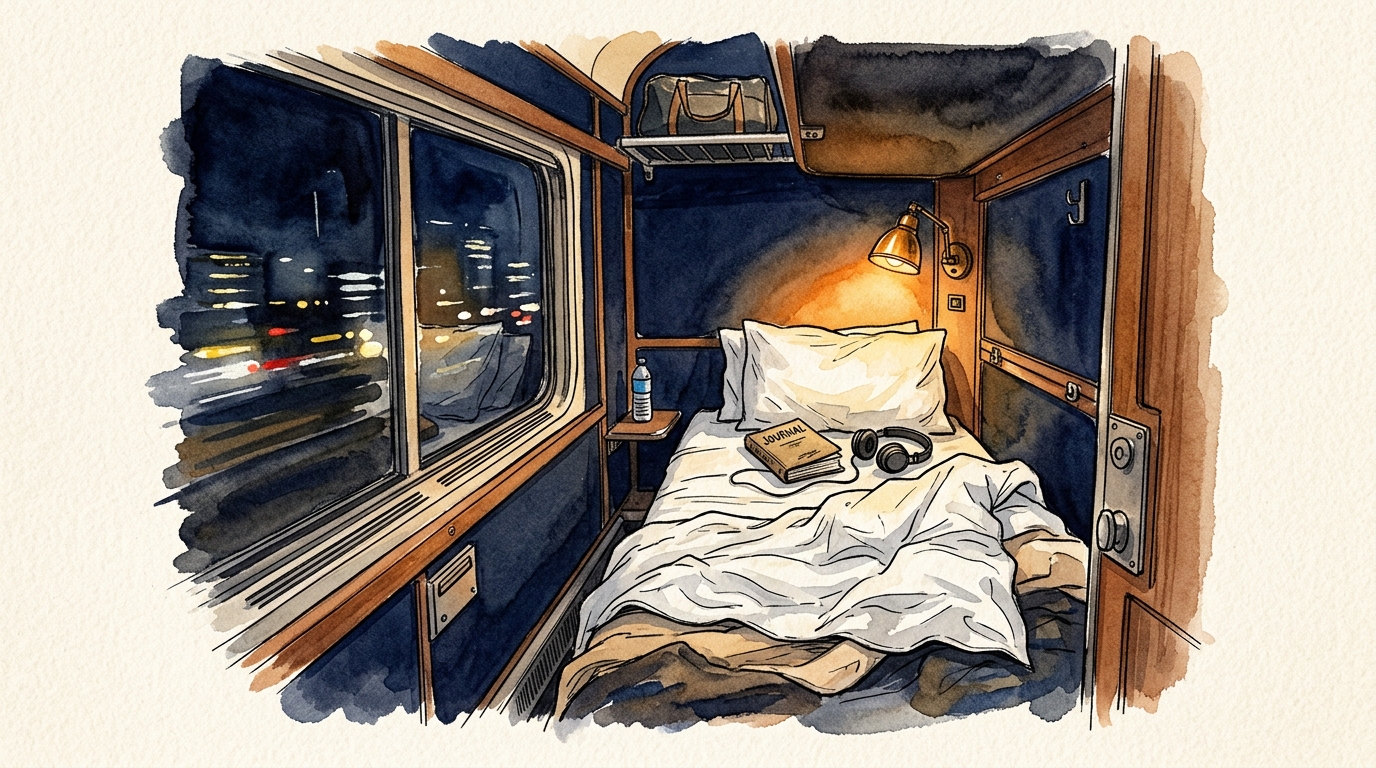
The biggest investment comes from ÖBB Nightjet, which has poured over €700 million into new seven-car train sets from Siemens Mobility. 22 new-generation trains are already in service or being delivered, with the fleet continuing to expand across routes to Italy, Germany, and Switzerland. These aren't your grandmother's sleeper cars. The new-generation Nightjet introduced Mini Cabins: private pods for solo travelers with a 190cm bed, reading lamp, storage, and a sliding table for the complimentary breakfast. The deluxe sleeper cabins come with en-suite showers. Free Wi-Fi throughout.
Night train fares work like airline pricing: book early or pay double. European Sleeper's €79.99 couchettes sell out first. For Nightjet, the cheapest Sparschiene fares open 6 months ahead. Set a calendar reminder for when your route goes on sale.
European Sleeper is expanding aggressively. Their Brussels-Milan night train, originally planned for June, was pushed to September 9, 2026, running via Aachen, Cologne, Zurich, and Lugano. The Amsterdam extension got bumped to 2027. Delays are normal for a startup railway, but the ambition is real: they want to connect the entire western European corridor by night within three years.
What's it actually like to sleep on a 2026 night train? Honestly, it depends on what you book. A shared six-berth couchette is noisy and tight. You're sharing with strangers, the bunks are narrow, and the rocking can keep you up. Private compartments are a different story. A two-person Nightjet sleeper with the door locked, blackout curtains, and fresh sheets is better than most budget hotel rooms. And you wake up in a different city. The value is simple: skip a hotel night, cover 800+ km, and arrive at 8am ready to go.
For a full map of current and planned night train routes across Europe, Back-on-Track's interactive map is the best resource. It shows both operating services and announced routes through 2028.
Train vs Flight: The Real Cost Comparison
Airline ads show the base fare. They don't show the taxi to the airport, the checked bag fee, the priority boarding upsell, and the metro from the arrivals terminal to your hotel. Trains skip most of that. They leave from the city center, arrive at the city center, and your suitcase rides for free. So what does the math look like when you account for everything?
| Route | Train (advance) | Flight (incl. bags + transfers) | Train Time | Flight (door-to-door) |
|---|---|---|---|---|
| Paris → Amsterdam | €35-50 | €70-130 | 3h 20min | 4h 30min+ |
| London → Paris | £44-78 | £55-120 | 2h 20min | 4h+ |
| Amsterdam → Berlin | €19-55 (GoVolta/ICE) | €80-150 | 6h (GoVolta) / 5h 30min (ICE) | 4h 30min+ |
| Rome → Milan | €19-45 (Italo/Trenitalia) | €75-140 | 2h 55min | 4h+ |
| Barcelona → Madrid | €9-60 (Ouigo/Renfe) | €60-120 | 2h 30min | 3h 45min+ |
| Paris → Berlin (night) | €79.99+ | €90-180 | Overnight (~11h) | 5h+ |
Flight costs above include one checked bag and airport-to-city-center transfers, based on March 2026 searches on Google Flights and Omio. Train prices are advance fares from operator websites. Actual prices vary by date and booking lead time.
Look at Paris-Amsterdam. The Eurostar takes 3 hours 20 minutes, city center to city center. A flight takes 1 hour 15 in the air, but add the RER to CDG (45 min), check-in and security (60-90 min), boarding and taxiing (30 min), and the train from Schiphol to Amsterdam Centraal (20 min). Door to door, flying takes 4.5 hours minimum. The train wins by over an hour and costs half as much when booked in advance. Eurostar alone carried a record 20 million passengers in 2025, with London-Amsterdam ridership surging 18.3%.
Rome to Milan is even more lopsided. Italo sells advance tickets from €19 for a 2-hour-55-minute ride. The flight is 1 hour 10 in the air, but Fiumicino is 45 minutes from the center of Rome, and Linate/Malpensa adds another 30-50 minutes on the Milan side. With baggage fees and transport, flying costs three to four times more and saves zero time.
Where flying still wins: anything over 8 hours by train, or routes where rail infrastructure is poor. London to Barcelona? Fly. Stockholm to Rome? Fly. But for the classic multi-city Europe trip where your cities are 2-6 hours apart by rail, trains beat flights on cost, convenience, and total time for the majority of popular routes.
There's also a hidden cost that never shows up in price comparisons: stress. Trains don't cancel due to fog. They don't lose your luggage. You don't arrive two hours early to stand in a security line. When planning your summer 2026 itinerary around less crowded destinations, trains give you the flexibility to hop off at a smaller city on a whim. Try doing that with a Ryanair boarding pass.
How to Save Money on European Trains
Trains can be cheap. They can also be shockingly expensive if you don't know what you're doing. A last-minute Paris-to-Amsterdam Eurostar costs €149. That same route booked two months out costs €35. The difference is strategy.
Booking windows matter more than anything. According to Seat61's booking horizon guide, most European operators open sales 3-6 months in advance, and that's when the cheapest fares appear. Germany opens 12 months ahead for domestic routes. France and Italy open 4-6 months out. Poland, just 60 days. The pattern is simple: book early, pay less.
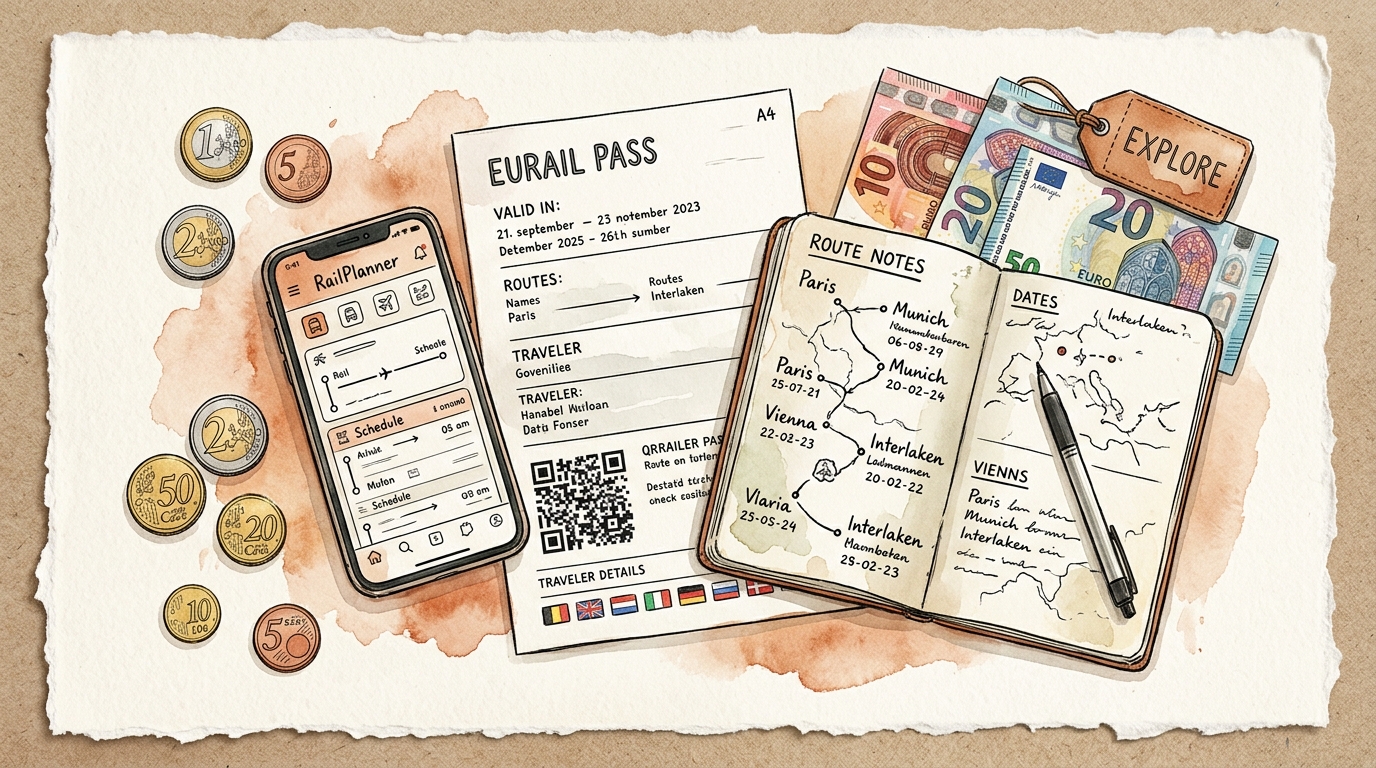
When a Eurail/Interrail pass makes sense (and when it doesn't). The Eurail Global Pass starts at €211 for 4 travel days in 1 month (2nd class adult). That works out to about €53/day. If your average journey is 5+ hours in Western Europe, the pass saves money. If you're doing short hops (1-2 hours) or staying in one country, point-to-point tickets booked in advance are almost always cheaper. Right now, there's a 15% discount on all passes through March 31, 2026.
A Eurail pass gets you on most trains, but high-speed routes in France, Italy, and Spain require a separate seat reservation (€10-30 per leg). Budget these in. On a two-week trip with eight train legs, reservations can add €100+. The new Interrail Plus Pass (in beta for 2026) bundles reservations for an extra €99, which might be worth it for reservation-heavy itineraries.
Budget operators are where the real savings hide. These four are worth knowing:
- GoVolta (Netherlands/Germany): Amsterdam to Berlin from €19, Amsterdam to Hamburg from €19
- Ouigo (France): Paris to Lyon, Marseille, Bordeaux, Strasbourg from €10
- Italo (Italy): Rome to Milan, Naples, Florence, Venice from €19
- Ouigo España (Spain): Madrid to Barcelona from €9
These aren't second-rate services. Italo runs the same tracks as Trenitalia at the same speed. Ouigo uses TGV trains. GoVolta is slower, sure, but the seats are comfortable and the price is a fraction of ICE.
The split-ticket approach. Sometimes buying two separate tickets for a longer route costs less than a single through ticket. Paris to Barcelona via Lyon, for example, can be cheaper as Paris → Lyon (Ouigo, €10) + Lyon → Barcelona (Renfe/SNCF, €30) than as a single booking. Seat61.com is the best resource for finding these splits.
The Infrastructure Upgrades You'll Actually Notice
New routes get the headlines. But the real story might be the infrastructure that makes existing routes faster, more comfortable, and more reliable. Three upgrades stand out in 2026.
Austria's Koralmbahn is the biggest single improvement. This new 127 km railway line between Graz and Klagenfurt, featuring the 33 km Koralmtunnel, opened in December 2025 and slashed travel time from 3 hours to just 41 minutes. That's not an incremental improvement. That's a completely new connection. It also cut Vienna to Venice from 7h 40min to 7h 10min, with Vienna-Trieste now possible in 6h 38min (2 hours 40 minutes faster than before). From March 2026, Westbahn launched services on this new southern route too, adding competition and lower prices.
Denmark's new Talgo 230 trains. Danish State Railways (DSB) put its first Talgo 230 EuroCity trains into service on the Copenhagen-Hamburg route in November 2025, with more arriving through 2026. These trains triple passenger capacity from 136 to 492 seats. From May through August 2026, there will be ten daily departures in each direction between Copenhagen and Hamburg. That's proper high-frequency service on a route that used to feel like an afterthought.
Digital passes replacing paper. The Eurail Global Pass is now 100% digital. You show a QR code on your phone instead of fumbling with a paper ticket and passport. The Interrail Plus Pass beta goes further, bundling seat reservations directly into the digital pass. If you've ever stood at an Italian ticket machine trying to print a reservation for a train leaving in 4 minutes, you'll understand why this matters.
Comfort improvements are spreading too. The new-generation Nightjet trains offer free Wi-Fi, barrier-free access, and improved air conditioning. The ComfortJet trains running Prague-Copenhagen carry 555 passengers with a full restaurant car, children's cinema, and radio-frequency-transparent windows for better phone signal. These aren't luxury perks. They're bringing European trains up to the standard travelers now expect.
And one more thing worth noting for anyone planning around Europe's new Entry/Exit System: trains crossing EU borders won't face the same automated biometric checks at airports. Your passport gets checked manually, usually while you sleep on night trains. Less friction, fewer queues, more time actually enjoying the trip.
How to Plan a Rail-First Europe Trip
Forget "should I take the train or fly?" as a per-leg question. The better approach for a multi-city Europe trip is to design the whole itinerary around rail connections from the start. Here's how.
Step 1: Map your route with the right tools. Seat61.com is the single best resource for European train travel. It covers booking windows, operators, and route-by-route advice in exhaustive detail. The Eurail/Interrail Rail Planner app shows connections and lets you check if your pass covers a route. Trainline aggregates prices across operators so you can compare fares in one place.
Step 2: Use night trains as "free hotels." A night train from Zurich to Hamburg costs roughly €60-90 in a couchette. A budget hotel in either city costs €80-120. The night train covers 800 km and saves you a hotel night. On a two-week trip, fitting in two or three overnight trains can save €200-350 in accommodation while moving you between regions. Just don't schedule more than two consecutive nights on trains. Sleep quality varies, and you'll need real rest.
Step 3: Build in buffer days. Rail trips work best when you're not rushing. Budget one buffer day per week for delays, spontaneous detours, or just wandering a city you didn't expect to love. If you've dealt with a cancelled flight this year, you know the value of having schedule flexibility built in.
Step 4: Organize the logistics. A rail-first trip involves more moving parts than a fly-and-stay holiday: multiple booking confirmations, different operators, varying reservation requirements, and timetable changes. Planning tools like TripProf help organize multi-city rail itineraries with documents, expenses, and daily schedules in one place, so you're not digging through email threads at 6am in Brussels trying to find your ComfortJet reservation.
A sample two-week rail skeleton: Paris (2 nights) → night train to Berlin (1 night on train) → Berlin (3 nights) → Prague via ComfortJet (1 day) → Prague (2 nights) → Vienna via ÖBB (1 day) → Vienna (2 nights) → night train to Zurich (1 night on train) → Zurich (1 night). Total train cost: roughly €350-500 if booked in advance. Total hotel nights saved: 2.
Check the Interrail 2026 timetable update page for the latest schedule changes, and verify any new route timing before booking. Timetables change frequently in a year with this many launches.
Frequently Asked Questions
Is the Eurail Global Pass worth it in 2026?
It depends on your trip length and route. The pass pays off if you're taking 4+ long-distance journeys (5+ hours each) in a month. For shorter hops or single-country travel, advance point-to-point tickets are usually cheaper. The current 15% discount through March 31 helps tip the math.
Can I take the European Sleeper Paris-Berlin train tonight?
The service launched March 26, 2026, but it only runs three nights per week (departing Berlin Mon/Wed/Fri, departing Paris Sun/Tue/Thu). Check europeansleeper.eu for available dates. Tickets sell out fast on newly launched routes.
How much cheaper is GoVolta than ICE on Amsterdam-Berlin?
GoVolta's average fare is around €30, with promo seats from €10. A standard ICE ticket on the same route typically costs €50-80. The trade-off: GoVolta takes about an hour longer because the trains run at 160 km/h instead of 300 km/h.
Are European night trains safe for solo travelers?
Yes. European Sleeper offers women-only compartments. Nightjet offers lockable private Mini Cabins for solo travelers. Shared couchettes are generally safe but less private. Book a private cabin if you want peace of mind and better sleep.
How far in advance should I book European train tickets?
For the cheapest fares, 2-4 months ahead is the sweet spot. Booking windows vary by country: Germany opens 12 months out, France and Italy 4-6 months, and Poland only 60 days. The golden rule: book as soon as tickets go on sale for your route.
Do I need seat reservations with a Eurail pass?
On some trains, yes. High-speed routes in France, Italy, Spain, and Sweden require mandatory reservations (€10-30 each). Regional and most German trains don't require them. The new Interrail Plus Pass beta bundles most reservations for an extra €99.
Will the Budapest-Belgrade train actually run in 2026?
Freight trains started in February 2026, and passenger services were planned for mid-March but are still pending final safety approvals. When it opens, the journey time drops from 8+ hours to about 3 hours 15 minutes. Check Seat61's Budapest-Belgrade page for the latest status.
Key Takeaways
- 2026 is European rail's biggest expansion year in decades. New routes connect Paris-Berlin, Amsterdam-Berlin, Prague-Copenhagen, Brussels-Milan, and Budapest-Belgrade, with more coming monthly.
- Night trains are genuinely back. ÖBB's €700M+ Nightjet modernization and European Sleeper's expansion mean private cabins, en-suite showers, and fares from €29.90 on overnight routes across the continent.
- The fuel crisis makes trains the practical choice, not just the green one. With jet fuel prices up 58% in a single week and airlines like SAS cancelling 1,000+ flights, rail's price stability is a real budgeting advantage when airfare costs are unpredictable.
- Book 2-4 months ahead for the best prices. Dynamic pricing on trains works exactly like airlines: early bookers pay €19-35 for routes that cost €100+ last-minute.
- Budget operators are worth knowing. GoVolta, Ouigo, Italo, and Ouigo España offer fares from €9-19 on major routes, competitive with the cheapest flights before baggage fees.
- Use night trains to save on hotels. Two overnight trains in a two-week trip can save €200-350 in accommodation while covering long distances. Tools like TripProf help organize the logistics of a multi-leg rail itinerary.
- For routes under 6 hours, trains beat flights on total travel time. City-center-to-city-center, with no check-in, no security lines, and no luggage fees, rail wins the door-to-door comparison on most popular European corridors.
- Check the new Interrail Plus Pass beta. If your itinerary crosses reservation-heavy countries like France and Italy, the bundled reservation option at €99 extra could simplify planning significantly.
Sources
All prices and facts in this article were verified against these sources in March 2026:
- European Sleeper: Paris-Berlin route details, pricing, and schedules
- Euronews Travel: GoVolta launch coverage and pricing
- Euronews: Airline fare increases and SAS cancellations
- Fortune: Jet fuel price spike data
- CNN: Middle East airspace closures impact
- Reuters: Middle East flight disruption data
- Hitachi Rail / GlobeNewsWire: 62% survey results
- ÖBB Nightjet: New-generation train features
- Seat61: Nightjet fleet investment details
- České dráhy: Prague-Copenhagen ComfortJet details
- ÖBB Infrastruktur: Koralmbahn specifications
- RailTech: Brussels-Milan delay to September
- International Railway Journal: Danish Talgo 230 fleet data
- Eurail.com: Pass pricing and digital format
- Interrail Plus Pass: Beta pass details
- Seat61: Booking window guide by country
- Main Line for Europe: Paris-Munich expansion
- Back-on-Track: European night train map
- Italo: Italian budget train pricing
- Telex: Budapest-Belgrade reopening status
- Eurostat: EU rail passenger transport record 2024
- Railway Pro: Eurostar 2025 ridership data
- Transport & Environment: Rail CO2 emissions data
- Railvolution: ÖBB Nightjet fleet investment
- Ouigo: Barcelona-Madrid pricing
Last updated: July 3, 2026
Keep Reading
More travel tips and guides picked for you
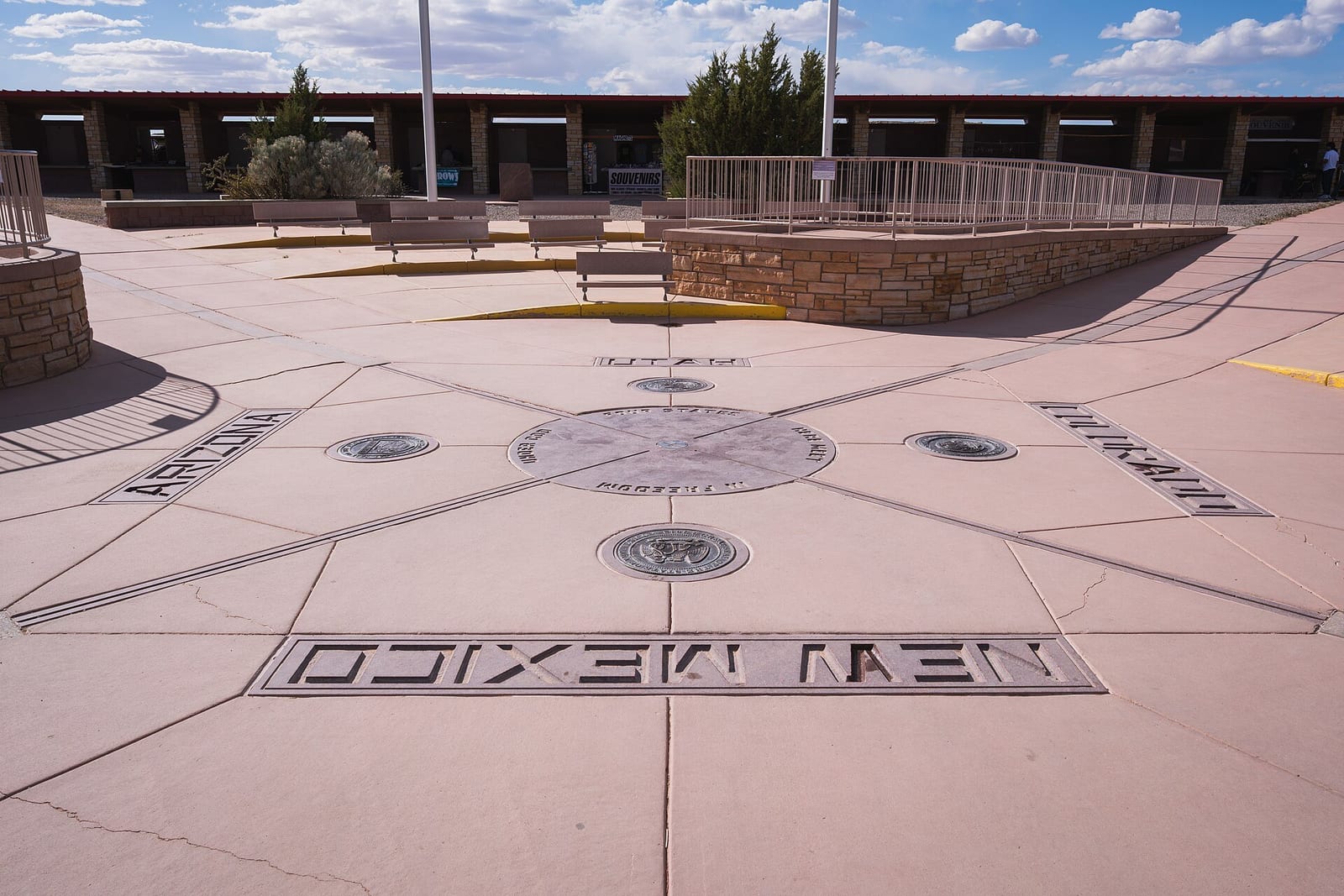
What counts as visiting a state? Layovers, drive-throughs and the rules 50-staters use
Only 2% of Americans name a plane change as the minimum that counts as visiting a state, while 27% set the bar at driving through. Here's a three-tier rubric, a lookup table for the edge cases from Four Corners to D.C., and one trip counted three ways.

The fake SBB ticket website stealing credit card and Twint data from travelers
Zurich cantonal police confirmed a fake SBB ticket website is stealing credit card and Twint payment details from travelers who find it through an ordinary Google search. Here is how to spot it and what to do if you already paid.

UK ETA scam warning: fake websites are charging Austrians up to €900
Fake UK ETA websites are charging Austrian and EU travellers hundreds of euros for a form that costs £20. Here's how the real one works, and how to spot a scam before you pay it.