Skip the Crowds: Where to Go in Europe Instead (Summer 2026)
Key Highlights
- 1
- 2
- 3
+5 more in the takeaways below
You're on the Spanish Steps in Rome. It's July, it's 34°C, and you can't move. The person behind you is pressing a selfie stick into your shoulder blade. The person ahead just paid €2 to see the Trevi Fountain through a ticketed gate. And the restaurant across the street is charging €22 for a plate of cacio e pepe that costs €8 two neighborhoods over.
That's European summer travel in 2026.
But what if you could see Europe without the crowds this summer? What if you swapped the most overcrowded cities on your itinerary for places that deliver the same food, the same architecture, the same Mediterranean warmth — minus the mobs, the inflated prices, and the new tourist taxes gnawing at your budget? Five specific swaps follow. Each includes how to get there, what it costs, and what to do when you arrive.
Skip Barcelona for Valencia (~€65/day vs ~€95). Drop Rome for Bologna (Italy's real food capital, half the crowds). Trade Paris for Lyon (2hr TGV, gastronomic capital of France). Replace Amsterdam with Ghent (medieval canals, no tourist tax). Ditch Santorini for Naxos (actual beaches, no cruise ships). Each swap saves money, cuts crowds, and connects by direct train or short ferry.
Why Europe's Most Popular Cities Hit Different in 2026
Europe welcomed 793 million international tourists in 2025, a 4% jump from 2024 and 6% higher than pre-pandemic levels. That record tide hasn't slowed. The Middle East crisis that erupted in late February 2026 is redirecting millions of travelers toward Europe, with the WTTC estimating US$600 million per day (~€550M) in tourism spending lost from the region and flowing elsewhere.
So what does that mean for your summer trip? More people fighting for the same restaurant tables, museum slots, and train seats in the same five cities.
And those cities are fighting back. On your wallet.
Barcelona's tourist tax roughly doubled, reaching up to €12 per night for top-tier hotels as of April 2026. Venice charges €5-10 per day-tripper on 60 selected peak days between April and July (book 4+ days ahead for the lower rate). Rome introduced a €2 ticketed access fee for the Trevi Fountain. Greece slapped a €20 cruise passenger levy on peak summer arrivals.
None of that means skip Europe. It means skip the bottleneck.
Hundreds of European cities serve up the same culture, food, and coastline as the famous five. We picked the following five because they're cities we actually send friends to. You just need to know the swaps.
Five Cities Worth Swapping Into Your Itinerary
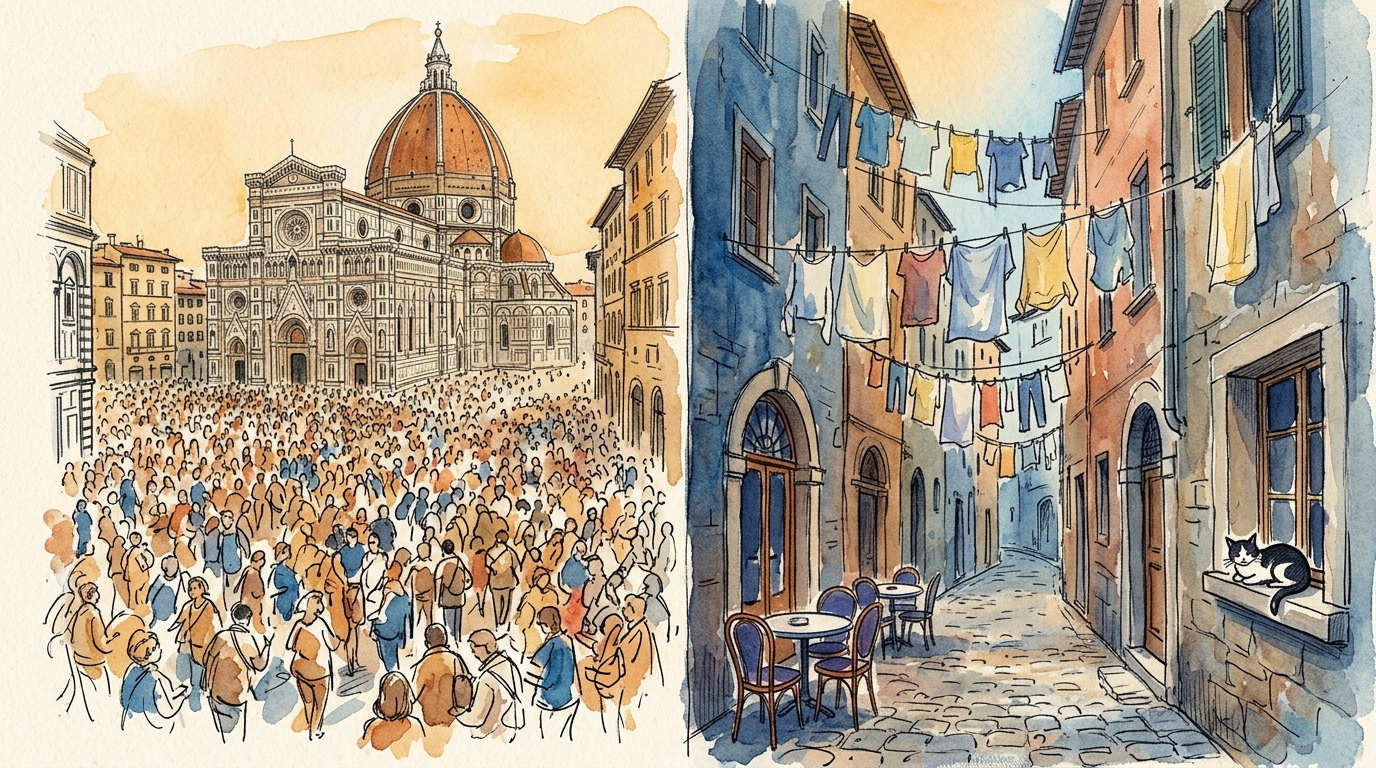
Each swap pairs a city that's probably on your itinerary already with an alternative that delivers the same core experience: Mediterranean beaches, world-class food, Gothic architecture, canal walks. All of it at a fraction of the cost and crowd level. Here's the overview.
| Instead of... | Go to... | Getting There | Daily Budget |
|---|---|---|---|
| Barcelona | Valencia | 3hr train (€15-30) | ~€65 vs ~€95 |
| Rome | Bologna | 2hr fast train (€20-35) | ~€70 vs ~€100 |
| Paris | Lyon | 2hr TGV (€25-50) | ~€80 vs ~€130 |
| Amsterdam | Ghent | 30min from Brussels (€10) | ~€65 vs ~€110 |
| Santorini | Naxos | 2hr ferry (€20-35) | ~€55 vs ~€90 |
Budget estimates are for mid-range travelers (private room, eating out twice a day, one paid activity) based on Nomadic Matt's 2026 Europe cost data. Now the detail.
1. Valencia for Barcelona
Barcelona's beach-and-culture formula made it one of Europe's most visited cities. In 2026, the formula has a surcharge. Spain ordered Airbnb to remove over 65,000 unlicensed listings nationwide, with Barcelona leading the crackdown and planning to eliminate all 10,000 licensed short-term rentals by 2028. Hotel tourist taxes roughly doubled, and Barcelona has announced plans for a day-trip entry fee targeting its historic center during peak months.
Valencia delivers the same Mediterranean package. None of the markup.
The City of Arts and Sciences is one of the most striking modern architecture complexes in Europe, and entry to the grounds is free. Malvarrosa beach is wider and cleaner than Barceloneta. And the food? Valencia is where paella was invented. You're not eating a tourist adaptation. You're eating the original, for about €12 at a neighborhood spot off Carrer de Russafa.
Book a train from Barcelona Sants to Valencia Joaquín Sorolla on Renfe. The AVE high-speed takes 3 hours. Book 30+ days ahead for fares as low as €15 one way.
A decent hotel runs €55-70/night in summer 2026, lunch is €10-12, and a proper paella dinner with wine is €14-18. That's roughly €65/day mid-range. Barcelona? Closer to €95 before you've even touched the tourist tax.
2. Bologna for Rome
Every summer, Rome gets crushed. In 2026, the city is making you pay in new ways: a €2 ticketed entry to the Trevi Fountain basin, a tiered accommodation tax adding €3-7 per night depending on your hotel category, and lines for the Colosseum that'll eat half your morning in July.
Bologna doesn't need a Colosseum. It has something better: the best food in Italy. Ask any Italian.
The city's porticos, 40 kilometers of covered walkways, became a UNESCO World Heritage site in 2021. You can walk the entire historic center under arched colonnades, rain or shine. Tortellini in brodo, tagliatelle al ragù, mortadella: these dishes STARTED here. What you've been eating everywhere else is the copy.
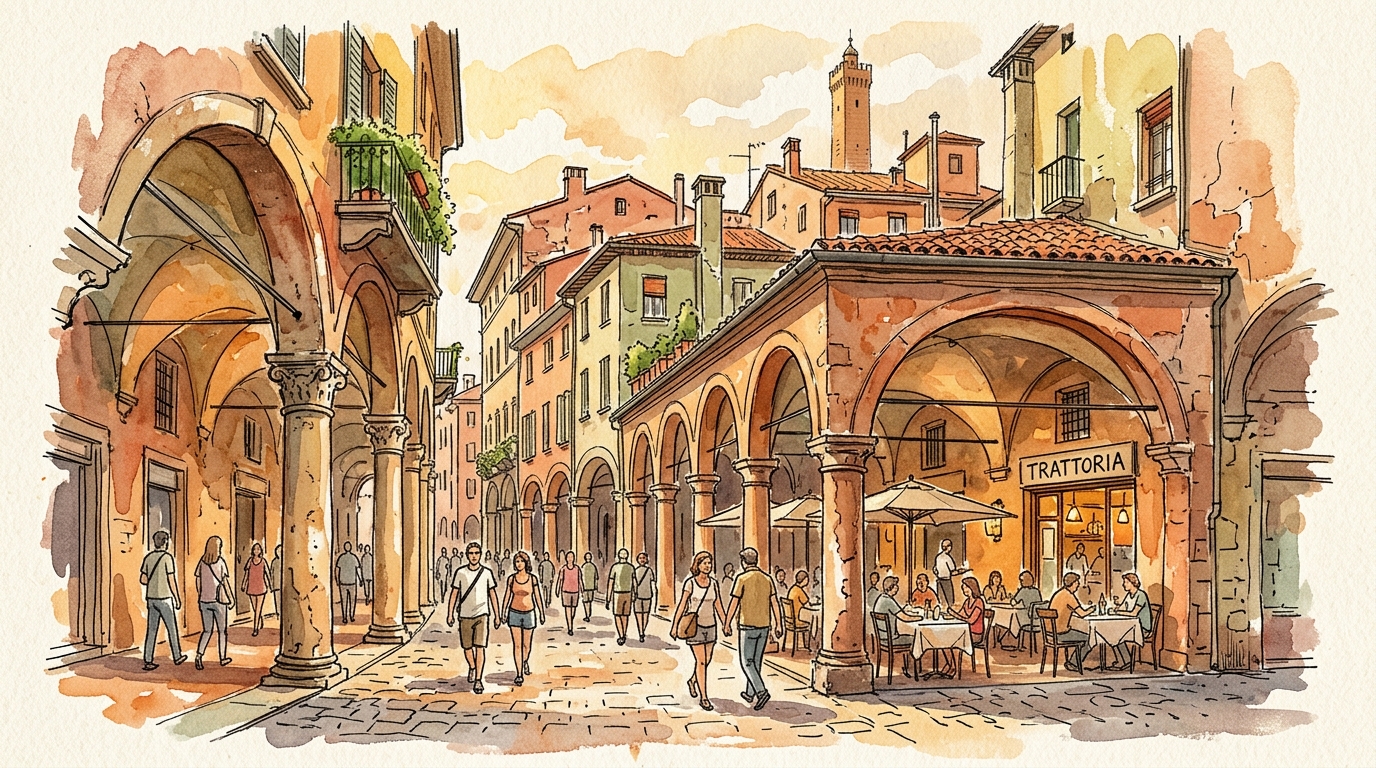
Getting there: the Frecciarossa from Roma Termini takes about 2 hours and costs €20-35 booked ahead on Trenitalia. Or fly directly. Bologna's Marconi airport has cheap connections across Europe.
A central hotel is €60-80/night, a full lunch at a trattoria runs €12-15, and an evening aperitivo with snacks at Mercato delle Erbe is about €8. That's ~€70/day against Rome's €100+. If you're planning your first international trip, Bologna is a gentler introduction to Italy than Rome's chaos.
3. Lyon for Paris
Paris in summer 2026 is still dealing with the hangover from the 2024 Olympics. Accommodation prices haven't fully settled, short-term rental crackdowns continue, and the city's most famous districts are as packed as ever.
If your main draw is French food, architecture, and that particular art de vivre feeling, there's a city two hours south that does it all better for less money, and we'd argue the food alone makes it worth the swap.
Lyon is France's gastronomic capital. Officially.
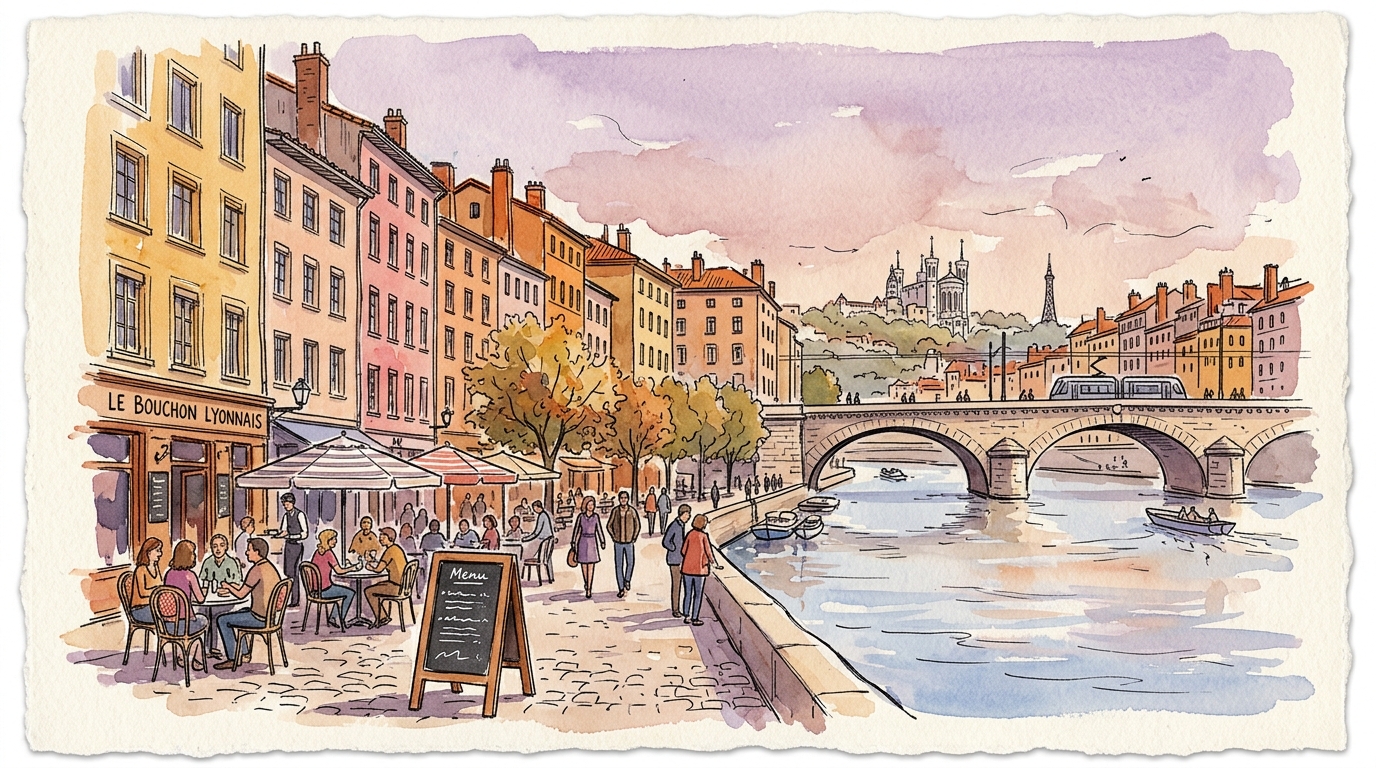
The city's bouchon restaurants serve dishes like quenelle de brochet and saucisson brioché that you won't find on Parisian menus. The Presqu'île peninsula, wedged between the Rhône and Saône rivers, is loaded with Renaissance architecture and pedestrian streets. The Musée des Beaux-Arts is one of France's largest art museums — with a fraction of the Louvre's queues.
The TGV from Paris Gare de Lyon takes 2 hours flat. Book through SNCF Connect: fares start around €25 when you're 30 days out.
Lyon runs roughly €80/day mid-range: €65-85/night for a central hotel, €12-16 for a bouchon lunch, and €6-8 for a riverside glass of Côtes du Rhône. Paris? Closer to €130. You're not getting better food for the difference.
4. Ghent for Amsterdam
Amsterdam's tourism problem is well-documented. The city charges one of Europe's highest tourist taxes, has restricted new hotel construction, and actively campaigns to discourage certain types of visitors. If you're going for the canals, the museums, and the cycling culture — Ghent has all three. For less.
It's a 30-minute train from Brussels, which is itself a 2-hour Eurostar from London or 1.5-hour Thalys from Amsterdam. Ghent's medieval center has canals, a castle you can walk the battlements of (Gravensteen, €12 entry), a loud student population that keeps bars open late, and Belgium's best food scene outside Brussels.
And the beer. Ghent has craft breweries like Dok Brewing Company and world-class lambic bars. A pint runs €4-5 versus Amsterdam's €6-8.
Ghent isn't Bruges. Bruges is beautiful but swamped with cruise ship day-trippers. Ghent is the one locals recommend: same beauty, half the crowds, twice the personality.
Central hotels start around €60/night, a full Belgian meal is €15-20, and most of the city is walkable. Figure ~€65/day against Amsterdam's ~€110.
5. Naxos for Santorini
Picture this. You're at a beachside taverna in Agios Prokopios, the waiter just brought a plate of grilled octopus that was still in the water an hour ago, and the only crowd is a family of four at the next table. That's Naxos on an average Tuesday in July.
Santorini's caldera views are genuinely stunning. But in peak summer, you're sharing them with cruise ships that dump thousands of day-trippers into a town built for hundreds. Starting in 2026, Greece charges those cruise passengers a €20 levy. The money isn't making the experience any roomier.
Naxos is Santorini's bigger, quieter neighbor. Biggest island in the Cyclades, with actual sandy beaches (Santorini's are volcanic rock), mountain villages you can hike between, and tavernas where the fish arrived that morning. Nobody's queueing for a sunset photo here. You just watch it happen.
The ferry from Santorini takes about 2 hours and costs €20-35 on Blue Star or SeaJets. From Athens, direct ferries run daily: 5-6 hours on the slow boat, 3.5 hours on the fast catamaran (~€45).
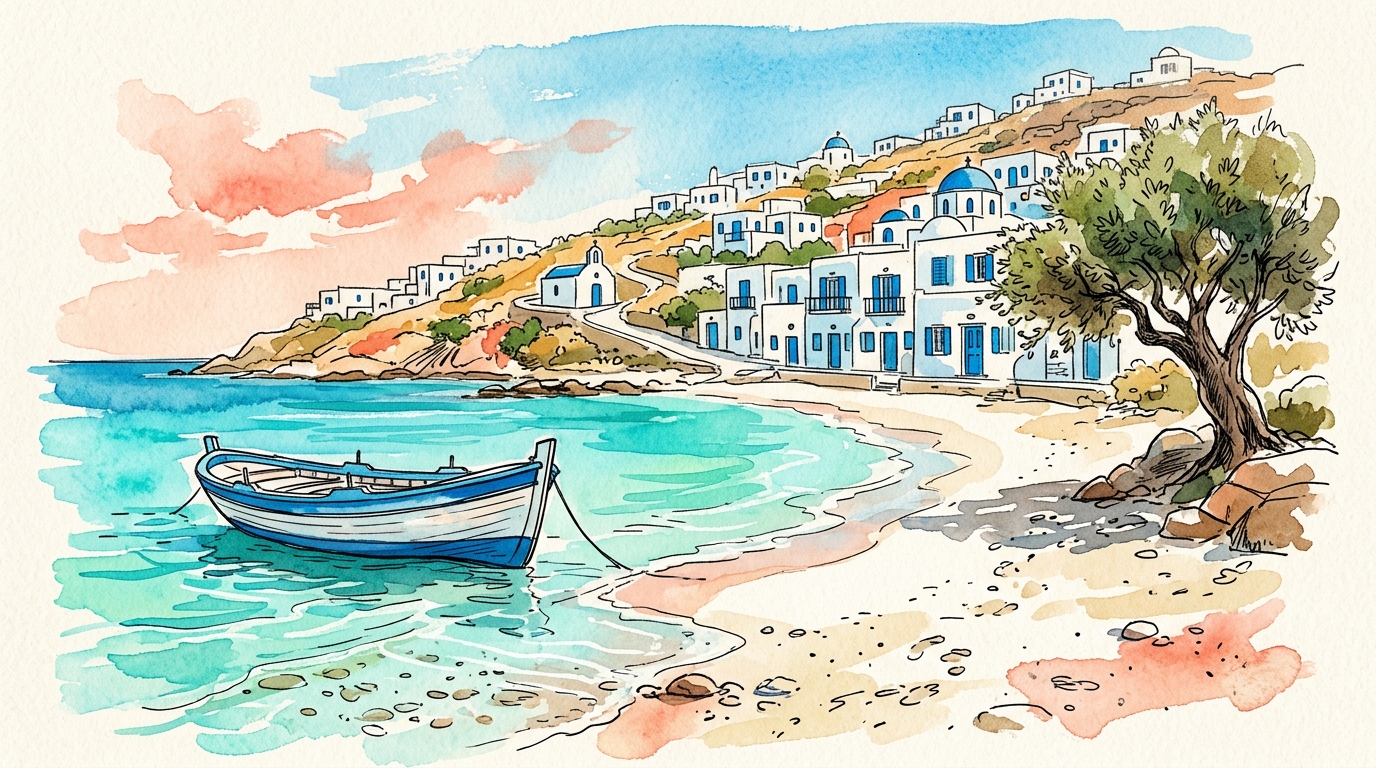
Naxos runs about €55/day: studios near Agios Prokopios beach go for €40-60/night, a full fish dinner with local wine is €18-22, and most things are walkable or reachable by the island bus (€2-4 per ride).
How to Build Your Route Around Alternatives
The simplest approach: fly into the famous city, train or ferry out to the alternative. Open-jaw tickets (fly into one city, out of another) usually cost the same as round-trips on budget carriers, and they save you the backtrack.
Take a 2-week Southern Europe route. Fly into Barcelona, spend a day there if you want, then train to Valencia for three nights. Fly from Valencia to Bologna for three nights. Train to Florence for two, then down to Naples, where a well-planned 3 days in Naples stopover covers Spaccanapoli, the bay castles, and a Pompeii day trip before you fly home.
That's five cities, two countries, no backtracking, and three of the five are crowd-free alternatives where you'll eat some of the best food on the continent, hit a beach, and dodge every inflated tourist tax along the way. If you're working out the logistics, our guide to planning a multi-city Europe trip covers flight hubs, train booking strategy, and how many cities actually fit into your timeframe.
Planning tools like TripProf let you build a day-by-day itinerary for each city and track multi-currency expenses as you go. If heat is as much of a problem as crowds, Europe's cooler-summer destinations are worth a look too. Useful when your route crosses three countries and four currencies in two weeks.
Don't forget the new EES biometric border checks now rolling out at Schengen entry points. Budget an extra 20-30 minutes at your first EU airport for fingerprint and facial image scans. After that, movement between Schengen countries is passport-free. Our travel document checklist for 2026 covers the full breakdown.
And if you're splitting costs with friends, remember that each country on your route means a new currency to track. Sort that out before you leave, not at the airport bar on the way home.
Frequently Asked Questions
Is it still worth visiting Paris or Rome in summer 2026?
Yes, if you specifically want those landmarks. But go in early June or late September to miss the worst of it. Mid-July through August can be uncomfortably hot and packed in both cities, and 20-30% more expensive than shoulder season.
Are these alternative cities safe for solo travelers?
All five alternatives (Valencia, Bologna, Lyon, Ghent, Naxos) are considered very safe for solo travelers, including women. They're well-connected, walkable cities that are used to tourists, with lower petty crime rates than the capitals they replace.
How much money do you actually save?
On average, 30-40% less per day. Over a 2-week trip, that's roughly €400-600 (~$430-650) saved per person. Enough to extend your trip by a few days or upgrade your accommodation.
Can I combine a famous city with its alternative?
That's the best approach. Spend 1-2 days in Barcelona for the Sagrada Familia and a Boqueria walk, then train to Valencia for 3-4 nights of beach and paella. You get the highlights of both without overpaying for a full week in the crowded city.
What are the new tourist taxes in Europe for 2026?
Barcelona's hotel tax roughly doubled, reaching up to €12/night for top-tier hotels (as of April 2026). Venice charges €5-10 per day-tripper on 60 peak days. Rome has a €2 Trevi Fountain entry fee plus a tiered accommodation tax. Greece levies €20 per cruise passenger in peak months. Edinburgh starts a 5% hotel tax in July 2026. The city still earns it though, see what 3 days there actually looks like before writing it off on tax alone.
Do I need ETIAS to visit Europe in summer 2026?
Not yet. ETIAS (the €20 online travel authorization) has been delayed to late 2026. But the EES biometric border system IS live. Expect fingerprint and facial image scans at your first Schengen entry point, adding about 20-30 minutes.
Which European countries are cheapest to visit in summer 2026?
Portugal, Greece (mainland and less-popular islands), and Poland offer the strongest value, with mid-range daily budgets of €50-70 per person including accommodation, food, and transport.
Key Takeaways
- Europe's biggest cities are more expensive and crowded than ever in summer 2026, with new tourist taxes in Barcelona (up to €12/night), Venice (€5-10/day), and Rome (€2 Trevi Fountain access).
- Five practical swaps: Valencia for Barcelona, Bologna for Rome, Lyon for Paris, Ghent for Amsterdam, Naxos for Santorini.
- Each alternative saves 30-40% on daily costs. Over two weeks, that's €400-600 back in your pocket.
- Every swap connects to the original city by direct train or short ferry. Most trips are under 3 hours.
- Use open-jaw flights (fly in to one city, out from another) to avoid expensive backtracking.
- Don't skip the famous cities entirely. Spend 1-2 days for the highlights, then move to the alternative for 3-4 days.
- Budget extra time at your first EU airport for the new EES biometric border checks rolling out in 2026.
- Planning a multi-city route with swaps? Tools like TripProf let you build day-by-day itineraries and track expenses across currencies, so you can see exactly what each city costs your group.
Sources
- UN Tourism World Tourism Barometer — 2025 international arrival statistics
- World Travel & Tourism Council — US$600M/day Middle East tourism impact
- TimeOut — New tourist taxes and charges across Europe 2026
- NPR — Rome Trevi Fountain €2 access fee (February 2026)
- Euronews — Venice day-tripper fee dates and pricing
- CBS News — Spain orders Airbnb to remove 65,000 listings
- UNESCO — Porticoes of Bologna World Heritage listing
- Nomadic Matt — Cost of traveling Western Europe (updated 2026)
Last updated: July 23, 2026
Keep Reading
More travel tips and guides picked for you

Gibraltar eclipse 2027: where to watch 4.5 minutes of totality, and where to sleep when the Rock is full
The Moon covers the Sun over Gibraltar for 4 minutes 28 seconds on 2 August 2027. Levanter cloud can pile up on the Rock's sunrise side, the airport is now a Schengen border, and Rock hotels are filling. Here's how seven bases compare for a UK group, and what the core trip costs.
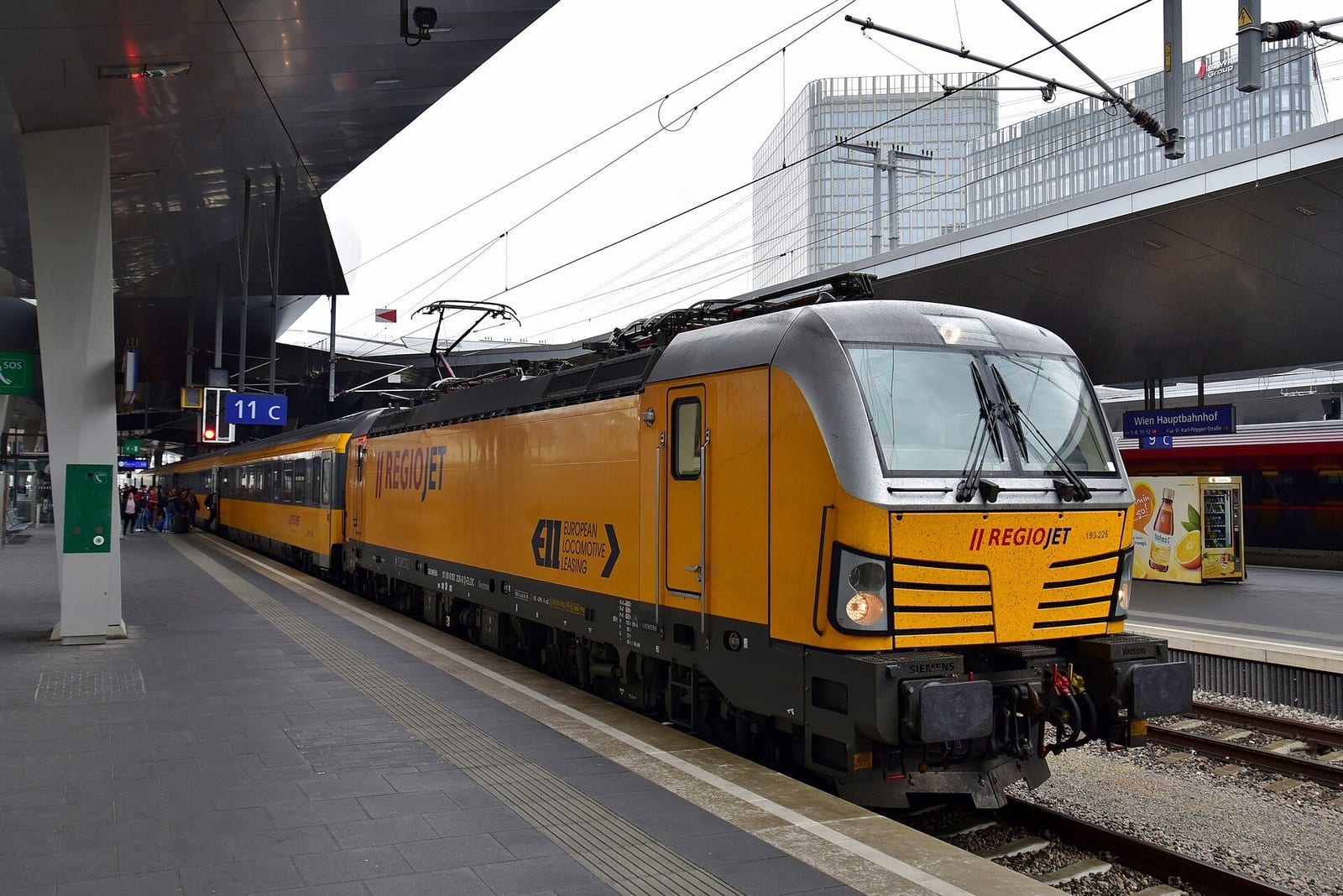
8 best day trips from Vienna by train, ranked by travel time
No car needed. Eight real day trips from Vienna by train, ranked from a 21-minute hop to a full day at Hallstatt, with real 2026 prices, journey times, and an honest downside for each stop.

The ETIAS Canada delay: what actually changes for your Europe trip
ETIAS's 2026 launch date is gone, with no replacement confirmed. Here's exactly what changes for Canadians heading to Europe right now, and how to spot the fake ETIAS Canada sites already cashing in on the confusion.