Every New Fee, Tax, and Rule Change Hitting Japan Tourists in 2026
Key Highlights
- 1
- 2
- 3
+6 more in the takeaways below
Your 2026 Japan trip just got more expensive. Not by a little. A tripled departure tax, overhauled Kyoto accommodation levies, dual pricing at castles, and a completely new tax-free shopping system all land this year. The total extra cost for a two-week trip? Anywhere from $50 to $500+ per person, depending on how you travel.
Japan is rolling out at least six major fee changes in 2026. The departure tax triples to 3,000 JPY ($20) in July. Kyoto's accommodation tax now hits 10,000 JPY/night for luxury stays. Himeji Castle charges non-residents 2,500 JPY (up from 1,000). Mount Fuji costs 4,000 JPY per climber on all trails. Visa fees jumped 5x for non-exempt countries in April. And starting November, tax-free shopping flips to a pay-first, refund-at-airport model. Budget travelers feel the least pain; luxury travelers absorb the biggest hit. We break down every change with exact amounts, timelines, and ways to minimize the damage.
All USD conversions use an approximate rate of 150 JPY = $1, current as of April 2026. Actual rates fluctuate.
The Departure Tax: From 1,000 to 3,000 JPY
Japan's International Tourist Tax, widely called the "Sayonara Tax," has been 1,000 JPY (~$7) per person since it launched in January 2019. On July 1, 2026, it triples to 3,000 JPY (~$20). That's a 200% increase, and it applies to everyone leaving Japan by air or sea, including Japanese nationals.
You won't pay this at the airport. The tax is baked into your airline or ferry ticket price, which means you've already paid it by the time you board. For a family of four, that's an extra 8,000 JPY ($53) that wasn't there last year.
Where does the money go? The Japanese government earmarked the revenue for overtourism countermeasures, decarbonization of tourist infrastructure, and promotion of outbound Japanese travel. Whether that justifies tripling the fee is another conversation.
For context, Japan's new departure tax is comparable to similar levies worldwide. The UK charges Air Passenger Duty starting at GBP 13 (~$16) for short-haul economy flights. Thailand charges 700 THB (~$20) per international departure. Australia's Passenger Movement Charge is AUD 60 (~$40). At 3,000 JPY ($20), Japan sits in the middle of the pack, though the 200% jump in a single year is unusually steep.
If you're flying out of Japan before July 1, 2026, you still pay the old 1,000 JPY rate. The new rate applies based on departure date, not booking date. Worth factoring in if your dates are flexible.
Visa Fees: The First Increase Since 1978
On April 1, 2026, Japan raised visa issuance fees at embassies and consulates worldwide for the first time in 48 years. Single-entry visas jumped from 3,000 JPY to 15,000 JPY (~$100). Multiple-entry visas went from 6,000 JPY to 30,000 JPY (~$200). That's a fivefold increase - the first revision to these fees since 1978.
But here's the critical detail most articles bury: if you hold a passport from a visa-exempt country, this doesn't affect you for short tourist stays. Citizens of the US, UK, most EU countries, Canada, Australia, and about 70 other nations can still enter Japan visa-free for up to 90 days. The fee increase primarily hits travelers from countries that require a visa, such as China, India, the Philippines, and several Southeast Asian nations.
The Wego Travel Blog confirmed the fee schedule, noting this was the first revision since 1978. The Consulate-General of Japan in Detroit published the updated fee table effective April 1, 2026.
Kyoto's Accommodation Tax: A Five-Tier Overhaul
Kyoto completely restructured its accommodation tax on March 1, 2026, expanding from three tiers to five and raising the maximum tenfold. The top tier now charges 10,000 JPY (~$66) per person, per night for rooms priced at 100,000 JPY or more. That's not a typo. For a couple in a high-end ryokan, the tax alone adds 20,000 JPY ($132) per night.
Here's the full breakdown, confirmed by The Points Guy:
| Nightly Room Rate | Tax Per Person/Night | Old Tax (Pre-March 2026) |
|---|---|---|
| Under 6,000 JPY | 200 JPY ($1.30) | 200 JPY |
| 6,000 - 19,999 JPY | 400 JPY ($2.60) | 200 JPY |
| 20,000 - 49,999 JPY | 1,000 JPY ($6.60) | 500 JPY |
| 50,000 - 99,999 JPY | 4,000 JPY ($26) | 1,000 JPY |
| 100,000+ JPY | 10,000 JPY ($66) | 1,000 JPY |
Budget travelers barely notice: 200 JPY per night is negligible. Mid-range travelers spending 20,000-50,000 JPY per night now pay double what they used to (1,000 JPY vs. 500 JPY). But luxury travelers get hammered. A four-night stay in a 120,000 JPY/night ryokan? That's 40,000 JPY ($264) in accommodation tax alone, per person.
The Japan Travel guide reports the city expects roughly 13.2 billion JPY in annual revenue from the higher rates, funding tourism management and cultural preservation.
Kyoto isn't alone. Here's what other major cities charge:
| City | Tax Range (per person/night) | Free Threshold |
|---|---|---|
| Tokyo | 100 - 200 JPY | Under 10,000 JPY |
| Osaka | 200 - 500 JPY | Under 5,000 JPY |
| Fukuoka | 200 - 500 JPY | None |
| Kanazawa | 200 - 500 JPY | None |
| Kyoto (new) | 200 - 10,000 JPY | None |
The rates in Tokyo, Osaka, and Fukuoka remain unchanged for 2026, though Tokyo has announced plans to move to a 3% rate-based system starting in fiscal 2027. Osaka also changed its tax billing format in March, though rates remain unchanged.
Himeji Castle and the Rise of Dual Pricing
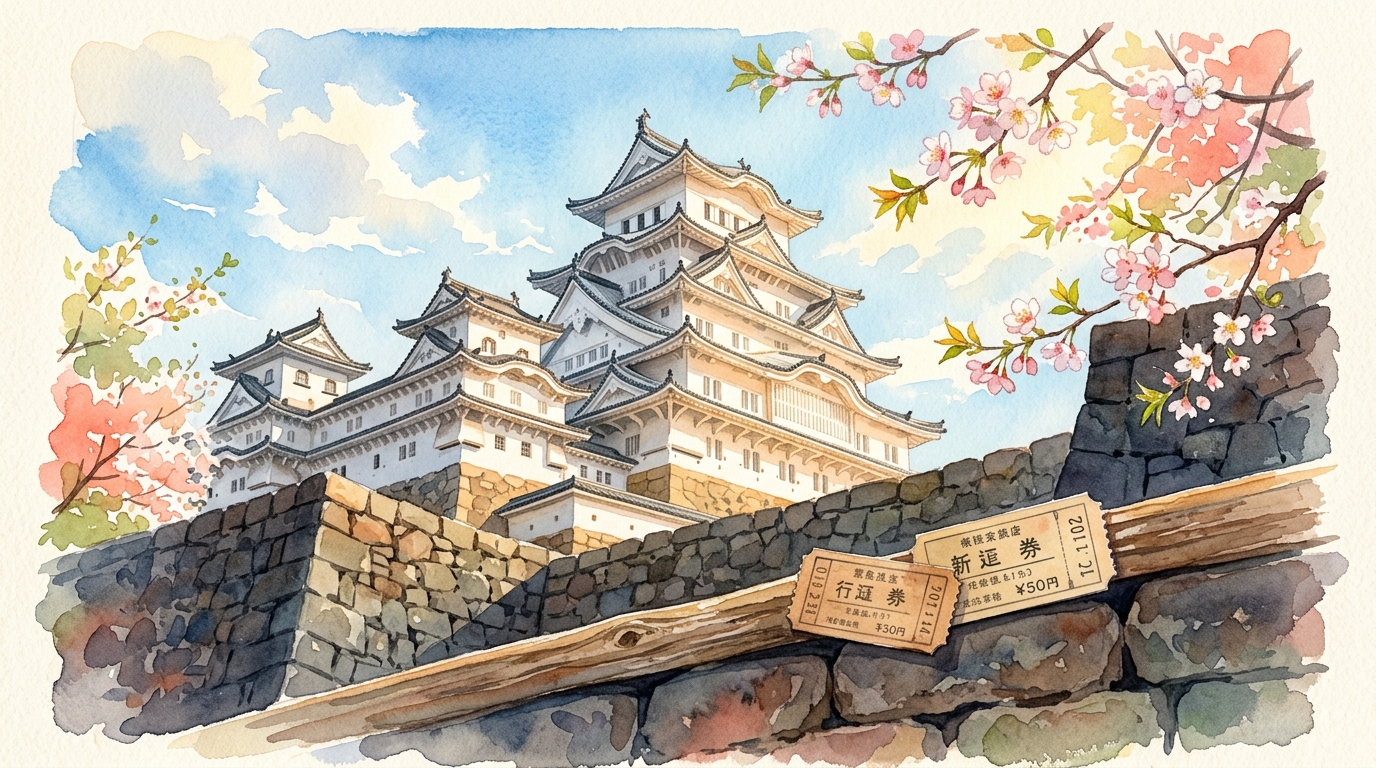
Starting March 1, 2026, Himeji Castle raised its admission to 2,500 JPY for non-residents, while Himeji City residents continue paying 1,000 JPY. Visitors under 18 now enter free, down from the previous 300 JPY. It's the highest castle admission in Japan.
This is dual pricing, and it's becoming a national conversation. The Japan Times reported that the Japan Tourism Agency launched an expert panel in March 2026 to draft national guidelines for dual pricing at tourist facilities. Expect more attractions to follow Himeji's lead.
The castle needs the money. Maintenance and preservation are projected to cost around 28 billion JPY over the next decade. And with record tourist numbers straining infrastructure, the logic is straightforward: visitors who benefit from the sites should help fund their upkeep.
Fair? Depends who you ask. But the practical advice is simple: budget an extra 1,500 JPY per person for Himeji, and expect similar surcharges at other popular attractions in the coming years. If you're visiting with kids, the free admission for under-18s actually saves you 300 JPY per child compared to 2025.
The Japan Tourism Agency's dual pricing panel is drafting national guidelines. More attractions, temples, and gardens will likely adopt tiered pricing for non-residents by 2027. Keep checking admission prices before you visit.
Mount Fuji: 4,000 JPY on All Four Trails
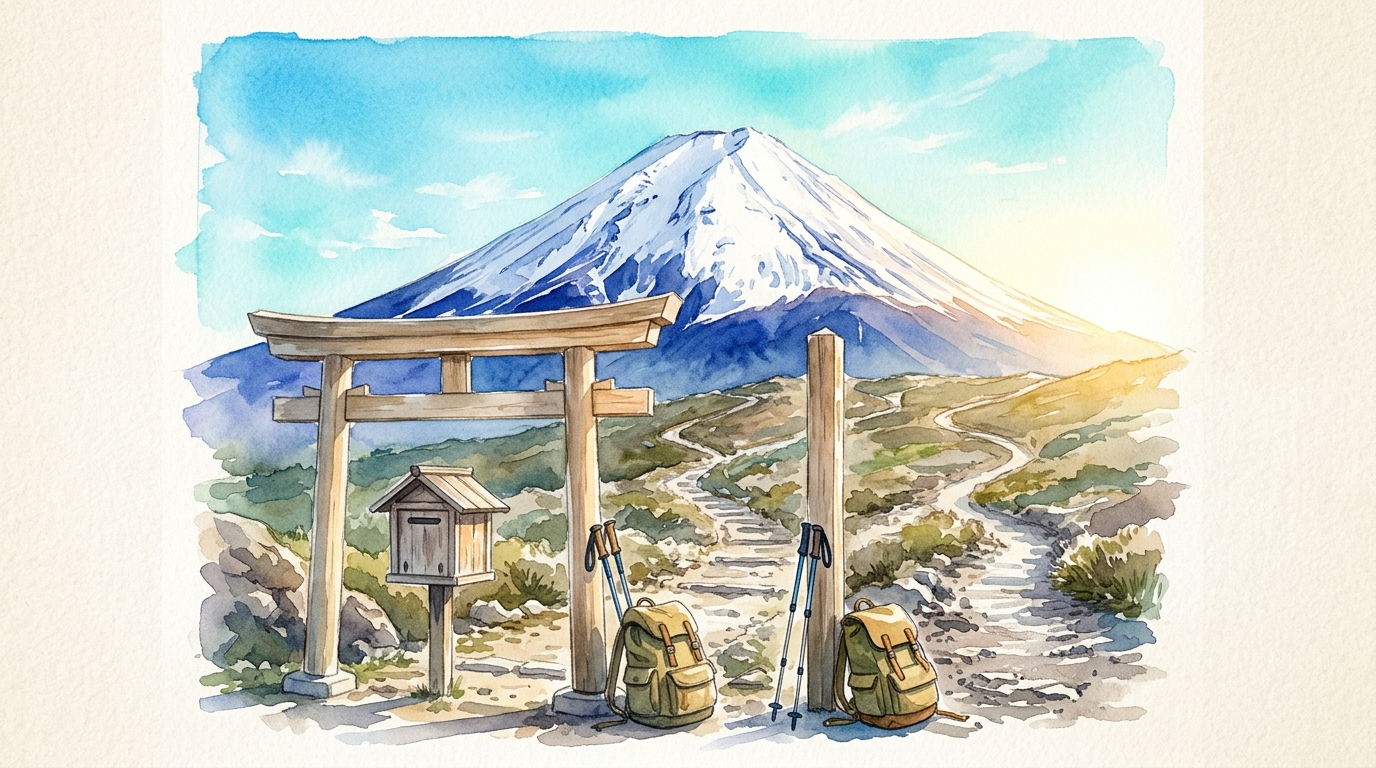
Mount Fuji now charges a mandatory 4,000 JPY (~$27) climbing fee on all four trails: Yoshida, Fujinomiya, Gotemba, and Subashiri. The fee is collected at gates installed at each fifth station trailhead during the official climbing season (typically July through early September).
Japan Guide confirmed the uniform fee across all routes. The Yoshida Trail, by far the most popular, also enforces a daily cap of 4,000 climbers and requires online reservations booked in advance during the registration period (usually opening in May).
This doubles the 2,000 JPY fee that the Yoshida Trail introduced in 2024. The Shizuoka-side trails (Fujinomiya, Gotemba, Subashiri) adopted the same 4,000 JPY rate starting in 2025. If you're climbing with a partner, that's 8,000 JPY before you factor in mountain hut stays (typically 8,000-12,000 JPY per person), gear rental, and transport to the fifth station. The fee applies during the official climbing season only. Outside that window, gates are closed and climbing is discouraged (though not physically impossible on some routes).
One practical note: same-day purchases are possible at the trailhead, but the Yoshida Trail's daily cap means you risk being turned away if you haven't reserved in advance. The other three trails are less crowded but also less equipped with facilities. If you're comparing Japan's climbing costs to other countries, this is in line with what you'd pay at popular peaks worldwide - though it's a sharp jump from what Japan charged just two years ago. For more on navigating the biggest changes to travel in 2026, we've covered the global picture separately.
Tax-Free Shopping: The Biggest Change You're Not Prepared For
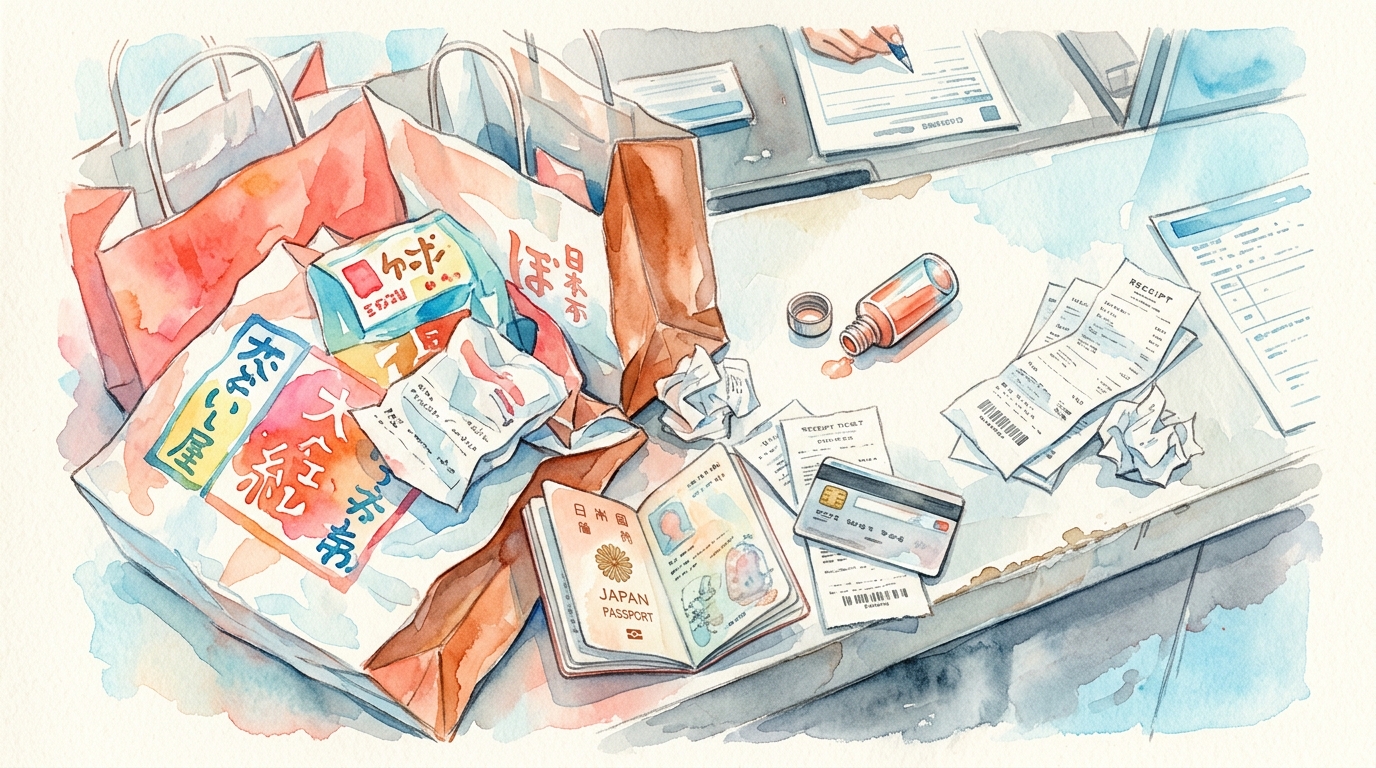
This is the one that will catch the most travelers off guard. On November 1, 2026, Japan's entire tax-free shopping system flips from instant exemption to pay-first-refund-later. And the difference isn't just procedural - it changes how you shop, what you carry to the airport, and whether you actually get your money back.
How It Works Now (Until October 31, 2026)
Anyone who's navigated the Don Quijote tax-free counter knows the process is already confusing enough under the current system. Walk into Don Quijote, Uniqlo, or any tax-free store. Show your passport. The 10% consumption tax is removed at the register. You walk out paying less. Consumables (food, cosmetics) get sealed in tamper-proof bags you can't open until departure.
How It Works After November 1, 2026
You pay the full price including the 10% consumption tax. Your passport is scanned and the purchase is registered electronically. At the airport before departure, you present your passport and purchases at electronic kiosks for customs verification. Japan Travel confirmed the refund is then processed to your credit card (1-2 weeks) or bank account (2-4 weeks).
What Gets Better
The Japan National Tourism Organization confirmed several improvements: no more sealed packaging for consumables, the 500,000 JPY daily purchase cap is eliminated, and the product category separation between consumables and general goods disappears.
What Gets Worse
You need more cash upfront since you're paying full price. You must keep all tax-free purchases with you through airport customs. And here's the risk nobody's talking about enough: if any item from an eligible receipt is missing at customs, the tax-free status of ALL items on that receipt is invalidated. Used that face cream from your Don Quijote haul? Refund denied on the entire receipt.
Refund kiosks at Narita, Haneda, and Kansai will face massive queues during peak travel periods. If your flight is in two hours and the customs line is 90 minutes, you might have to forfeit your refund. Allow at least an extra hour at the airport if you have tax-free purchases to process.
Smart shoppers should batch their tax-free purchases on fewer receipts, keep all items unused and in their packaging, and photograph every receipt. If you're visiting before November 2026, enjoy the instant exemption while it lasts. For those who rely on tools like TripProf to track expenses across currencies, the new system makes careful, receipt-by-receipt tracking even more important.
The 2026 Timeline: When Each Change Hits
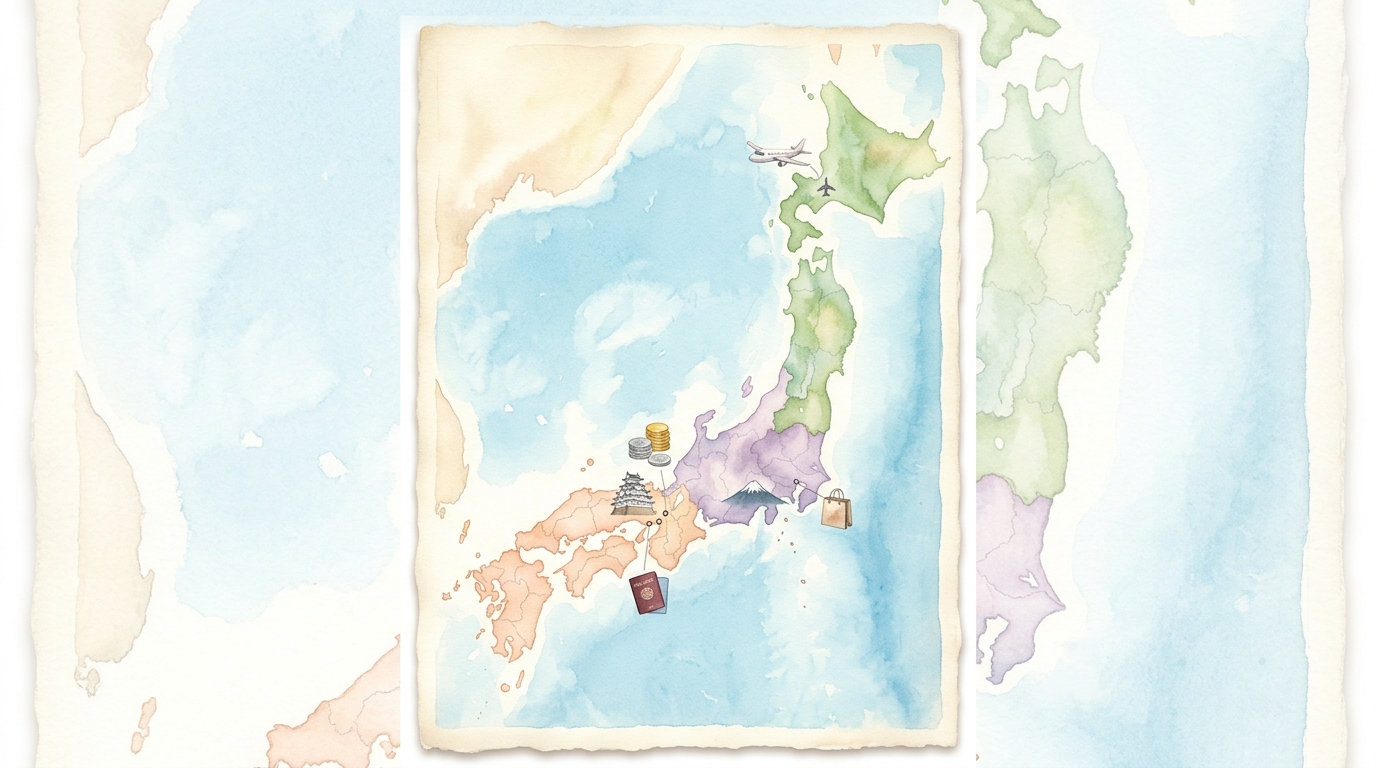
Not every fee kicks in at once. Some are already in effect; others don't arrive until the second half of the year. Here's the month-by-month breakdown so you can plan around the most expensive changes:
- March 1, 2026 Kyoto's five-tier accommodation tax takes effect. Himeji Castle dual pricing begins (2,500 JPY for non-residents). Osaka changes accommodation tax billing to separate line items for new bookings.
- April 1, 2026 Visa issuance fees increase 5x at all Japanese consulates (single-entry: 15,000 JPY, multiple-entry: 30,000 JPY). Visa-exempt countries unaffected for tourist stays.
- July 1, 2026 International departure tax triples from 1,000 JPY to 3,000 JPY per person, included in airline/ferry tickets.
- July - September 2026 Mount Fuji climbing season with 4,000 JPY mandatory fee on all four trails. Online reservation required for Yoshida Trail.
- November 1, 2026 Tax-free shopping system switches to pay-first, refund-at-airport model. No overlap period with old system.
- Fiscal 2028 (planned) JESTA (Japan Electronic System for Travel Authorization) expected to launch, requiring pre-entry screening for visa-exempt travelers. Fee estimated at 2,000-3,000 JPY.
The strategic window is clear. If you want the lowest-cost Japan trip in 2026, travel before July 1 (old departure tax) and finish any big shopping before November 1 (old tax-free system). Time Out noted that the staggered rollout gives travelers a narrow window to avoid the worst of the increases.
The Real Cost: Before vs. After 2026
Every article covers one or two fees. Nobody tallies the total. So we did. Here's what a realistic two-week Japan trip (Tokyo, Kyoto, Osaka, Hiroshima) costs in new fees and taxes across three budget levels, comparing a trip taken in December 2025 versus one in December 2026:
| Fee Category | Budget | Mid-Range | Luxury |
|---|---|---|---|
| Departure tax increase (per person) | +2,000 JPY ($13) | +2,000 JPY ($13) | +2,000 JPY ($13) |
| Kyoto accommodation tax (4 nights, per person) | +0 JPY (was 200, stays 200) | +2,000 JPY (was 2,000 now 4,000) | +36,000 JPY (was 4,000 now 40,000) |
| Tokyo accommodation tax (5 nights) | 0 (unchanged) | 0 (unchanged) | 0 (unchanged) |
| Osaka accommodation tax (3 nights) | 0 (unchanged) | 0 (unchanged) | 0 (unchanged) |
| Himeji Castle surcharge | +1,500 JPY | +1,500 JPY | +1,500 JPY |
| Mount Fuji (if climbing) | +2,000 JPY | +2,000 JPY | +2,000 JPY |
| Tax-free shopping refund risk* | ~0 (minimal shopping) | ~5,000 JPY at risk | ~20,000 JPY at risk |
| Total Extra Cost (per person) | ~5,500 JPY ($36) | ~12,500 JPY ($83) | ~61,500 JPY ($410) |
*Tax-free shopping "risk" represents the potential loss if you fail to claim your refund at the airport under the new system. It's not a guaranteed cost, but it's a realistic one given the strict "all items must be present" rule.
The verdict: budget travelers absorb about $36 extra per person. Annoying, not devastating. Mid-range travelers face roughly $83 in additional costs. Luxury travelers? Up to $410 more per person, almost entirely driven by Kyoto's new top-tier accommodation tax.
How to Minimize the Damage
You can't avoid every fee, but you can avoid the worst ones. Here's what actually works:
- Time your trip strategically Depart Japan before July 1 to pay the old 1,000 JPY departure tax. Complete big shopping before November 1 to use the current instant tax-free system.
- Rethink Kyoto accommodation Stay in nearby Osaka or Otsu (20-30 minutes by train) and day-trip to Kyoto. Osaka's accommodation tax maxes out at 500 JPY versus Kyoto's 10,000 JPY.
- Check visa-exempt status Over 70 countries have visa-free agreements with Japan for stays up to 90 days. If yours is on the Ministry of Foreign Affairs list, the visa fee increase doesn't affect you.
- Batch tax-free purchases carefully Under the new November system, keep all items from each receipt intact and unused. One missing item invalidates the entire receipt's refund.
- Use a no-foreign-transaction-fee card The new tax-free refund goes to your credit card. Using a card with no FX fees (like those covered in our Revolut vs Wise comparison) means you don't lose an additional 1-3% on the refund.
- Book Mount Fuji early The Yoshida Trail's 4,000 daily hiker cap fills fast. Reservations open around May. Late bookers get pushed to less popular trails or shut out entirely.
One more thing: if you're planning a multi-city Japan trip, keeping track of all these different taxes, receipts, and refund deadlines across multiple currencies is the kind of logistical headache that makes a dedicated expense tracker worth its weight in yen.
What About JESTA?
You might have seen headlines about "JESTA," Japan's planned Electronic System for Travel Authorization. Think of it as Japan's version of the US ESTA or the EU's ETIAS. It will require travelers from the 71 countries that currently enjoy visa-free entry to apply online and pay a screening fee (estimated at 2,000-3,000 JPY) before boarding a flight to Japan.
But don't panic yet. Time Out Tokyo reported that JESTA is scheduled for rollout during fiscal 2028 (April 2028 - March 2029). The system was originally planned for 2030 but was brought forward by two years. No application portal exists yet. No pilot program has launched.
When it does launch, it will affect travelers from the same countries that currently enter visa-free, including the US, Canada, UK, Australia, and most of Europe. If you're familiar with applying for a US ESTA ($21) or a UK ETA (GBP 10), the process will be similar. Factor it into your 2028+ planning, not your current trip budget.
Frequently Asked Questions
How much more does a Japan trip cost in 2026 versus 2025?
For a two-week trip, expect roughly 5,500 JPY ($36) more per person on a budget, 12,500 JPY ($83) at mid-range, and up to 61,500 JPY ($410) for luxury travelers. The biggest variable is Kyoto accommodation tax, which increased up to tenfold for high-end stays. If you're visiting with a solid pre-trip checklist, you can plan around the most costly changes.
Do Americans need a visa for Japan in 2026?
No. US citizens can enter Japan visa-free for stays up to 90 days. The April 2026 visa fee increase (from 3,000 to 15,000 JPY for single-entry) only affects nationals of countries that require a visa. Americans, Europeans, Canadians, Australians, and about 70 other nationalities are unaffected for short tourist stays.
Is Japan still worth visiting with the new tourist taxes?
Absolutely. The additional costs are real but modest for most travelers. A budget traveler pays roughly $36 more per person for a two-week trip. Japan remains competitively priced compared to Western Europe, and the weak yen continues to offset many of these fee increases for dollar and euro holders.
How does the new tax-free shopping refund system work?
Starting November 1, 2026, you pay the full price including 10% consumption tax at the register. Your passport is scanned and the purchase is registered. At the airport before departure, you present your passport and items at electronic customs kiosks. The refund processes to your credit card in 1-2 weeks. All items from each receipt must be present and unused, or the entire receipt's refund is denied.
Which Japanese cities charge accommodation tax?
As of April 2026, roughly 17 prefectures, cities, and towns charge accommodation tax, including Tokyo (100-200 JPY/night), Osaka (200-500 JPY/night), Kyoto (200-10,000 JPY/night), Fukuoka (200-500 JPY/night), Kanazawa (200-500 JPY/night), and Kutchan in Hokkaido (2% of room rate). Kyoto's rates are by far the highest after the March 2026 overhaul.
What is dual pricing and which attractions use it?
Dual pricing charges different admission fees to local residents versus non-residents (including foreign tourists). Himeji Castle adopted this in March 2026, charging residents 1,000 JPY and non-residents 2,500 JPY. The Japan Tourism Agency is drafting national guidelines, so more sites will follow. Dual pricing is already common across Southeast Asia but new to Japan's major attractions.
When does the Japan departure tax increase take effect?
July 1, 2026. The tax triples from 1,000 JPY to 3,000 JPY per person. It's included in your airline or ferry ticket price automatically. The rate is determined by your departure date, not when you booked your ticket. Every person leaving Japan pays it, including Japanese nationals.
Can I still get tax-free shopping at Don Quijote?
Yes, but the process changes on November 1, 2026. Until then, Don Quijote (and all participating stores) will continue offering instant tax exemption at the register. After November 1, you'll pay full price at Don Quijote and claim the refund at the airport. The store will still scan your passport and register the purchase, but you won't see the discount until after departure.
Key Takeaways
- Japan's departure tax triples to 3,000 JPY ($20) on July 1, 2026, adding $13 per person versus 2025 rates.
- Kyoto's accommodation tax is the biggest cost increase for luxury travelers, reaching 10,000 JPY/night for rooms over 100,000 JPY. Consider staying in nearby Osaka and day-tripping.
- Visa-exempt travelers (US, EU, UK, Canada, Australia, and 65+ other countries) are unaffected by the 5x visa fee increase.
- The tax-free shopping switch to pay-first-refund-later on November 1 is the most disruptive change. Keep all receipts, keep all items, and allow extra time at the airport.
- Himeji Castle's dual pricing (2,500 JPY for non-residents) is a preview of what's coming to more attractions across Japan.
- Mount Fuji's climbing fee is now 4,000 JPY on all trails, and the Yoshida Trail requires advance online reservation.
- Budget travelers face roughly $36 in extra per-person costs for a two-week trip. Use a multi-currency expense tracker to avoid surprises.
- JESTA (Japan's ESTA equivalent) won't be required until fiscal 2028 at the earliest. Don't worry about it for 2026 or 2027 travel.
- Make sure your travel insurance covers trip disruptions, which matters even more when fees and taxes are nonrefundable.
Sources
- Japan Travel Guide MATCHA: Japan Departure Tax Set to Rise to 3,000 Yen From July 2026
- Travel Voice: Japan departure tax rise in Tax Reform Outline for FY2026
- Nippon.com: Japan's departure tax history and projected increases
- Envoy Global: Japan Update Visa Fees Effective April 2026
- Wego Travel Blog: Japan Is Raising Visa and Travel Fees in 2026
- The Points Guy: Kyoto to increase hotel taxes by up to tenfold in 2026
- Japan Travel: Kyoto Lodging Taxes to Increase From March 2026
- Time Out: Himeji Castle raises entry tickets to 2,500 for tourists
- Japan Times: Japan Tourism Agency to launch panel on dual pricing
- Japan Guide: Climbing Mount Fuji: fees, trails, and regulations
- Japan Travel: Tax-free Shopping in Japan: 2026 Changes
- Japan National Tourism Organization: Changes Are Coming to Tax-Free Shopping in Japan
- MATCHA: Accommodation Tax in Japan 2026: Tokyo, Kyoto, Osaka, and More
- Time Out Tokyo: Japan moves to implement JESTA authorisation system from 2028
- Japan Travel: JESTA: What Travelers Need to Know
- Japan Travel (Himeji): Entry fee increases for Himeji Castle from 2026
- Japan Travel: Tokyo to Introduce 3 Percent Flat Lodging Tax From 2027
- Euronews: Planning a trip to Japan? Expect higher fees and tourist taxes in 2026
- Mount Fuji Official: Official Website for Mt. Fuji Climbing
- Ministry of Foreign Affairs of Japan: Visa Fees
Last updated: July 3, 2026
Keep Reading
More travel tips and guides picked for you
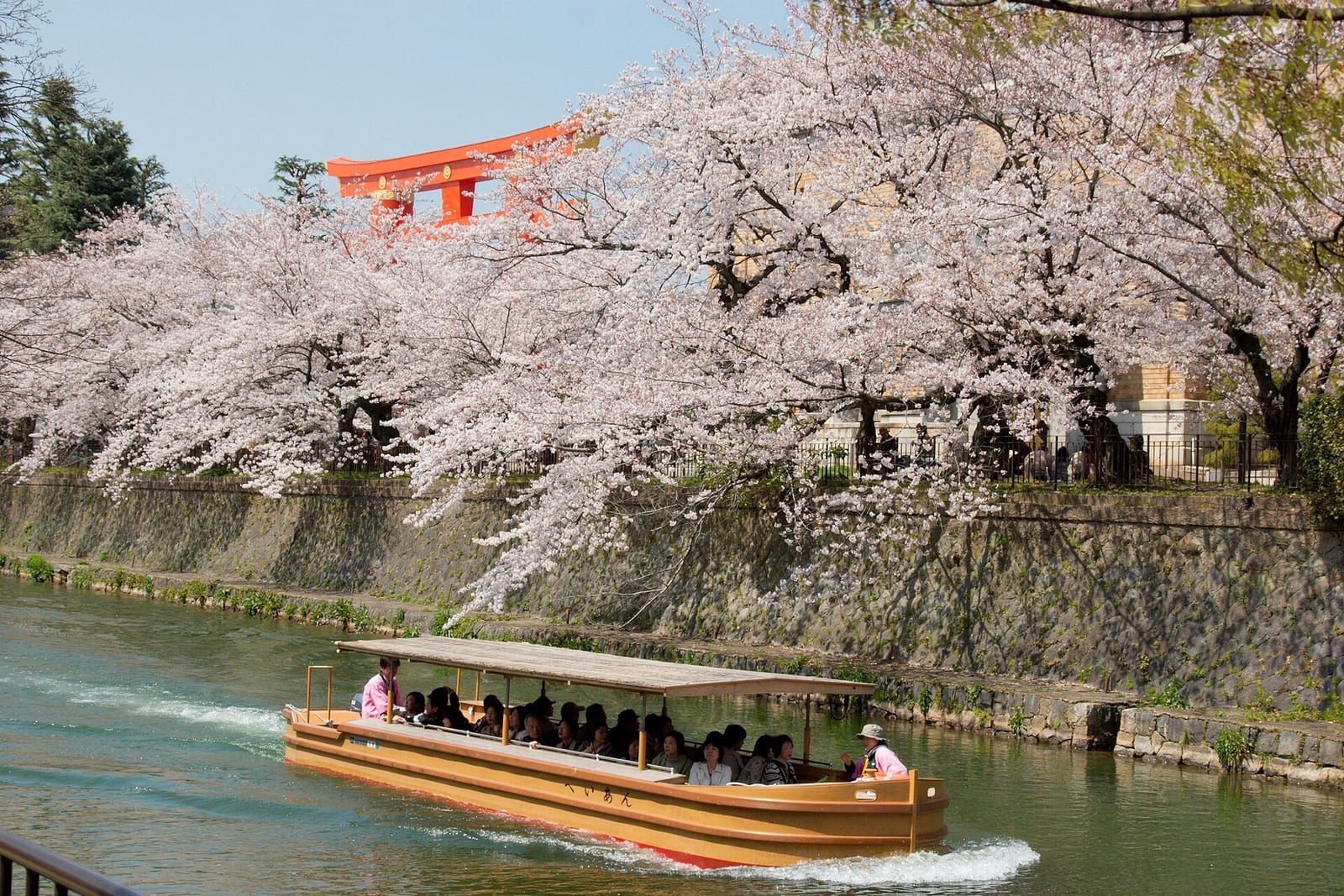
Japan Cherry Blossom Trip 2027: What It Costs and When to Land
A cherry blossom week in Japan costs about $2,600 per person from New York and $2,200 from Los Angeles, flights included. We priced it line by line and tested 36 seasons of bloom records to find the date to land.
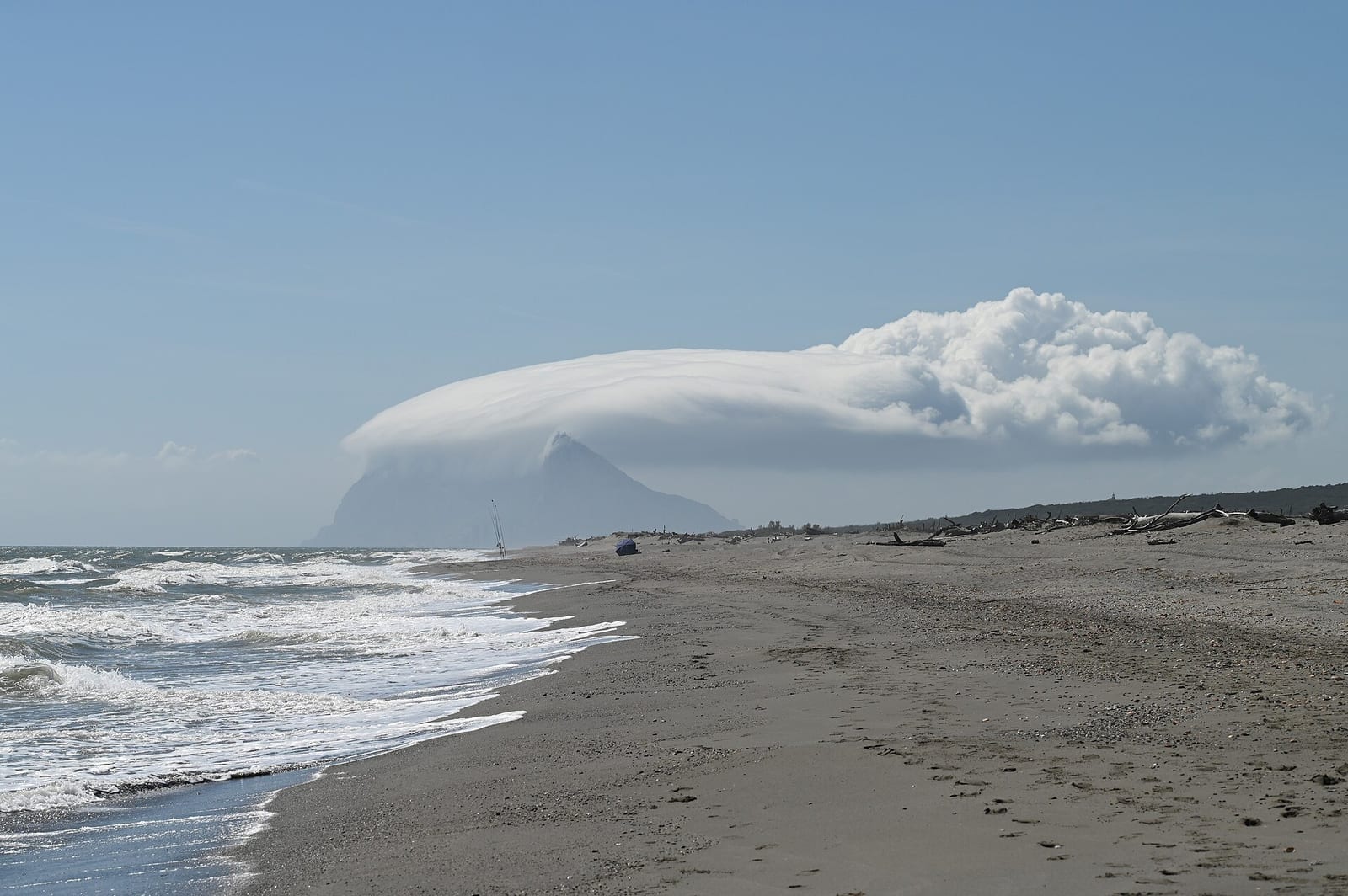
Gibraltar eclipse 2027: where to watch 4.5 minutes of totality, and where to sleep when the Rock is full
The Moon covers the Sun over Gibraltar for 4 minutes 28 seconds on 2 August 2027. Levanter cloud can pile up on the Rock's sunrise side, the airport is now a Schengen border, and Rock hotels are filling. Here's how seven bases compare for a UK group, and what the core trip costs.
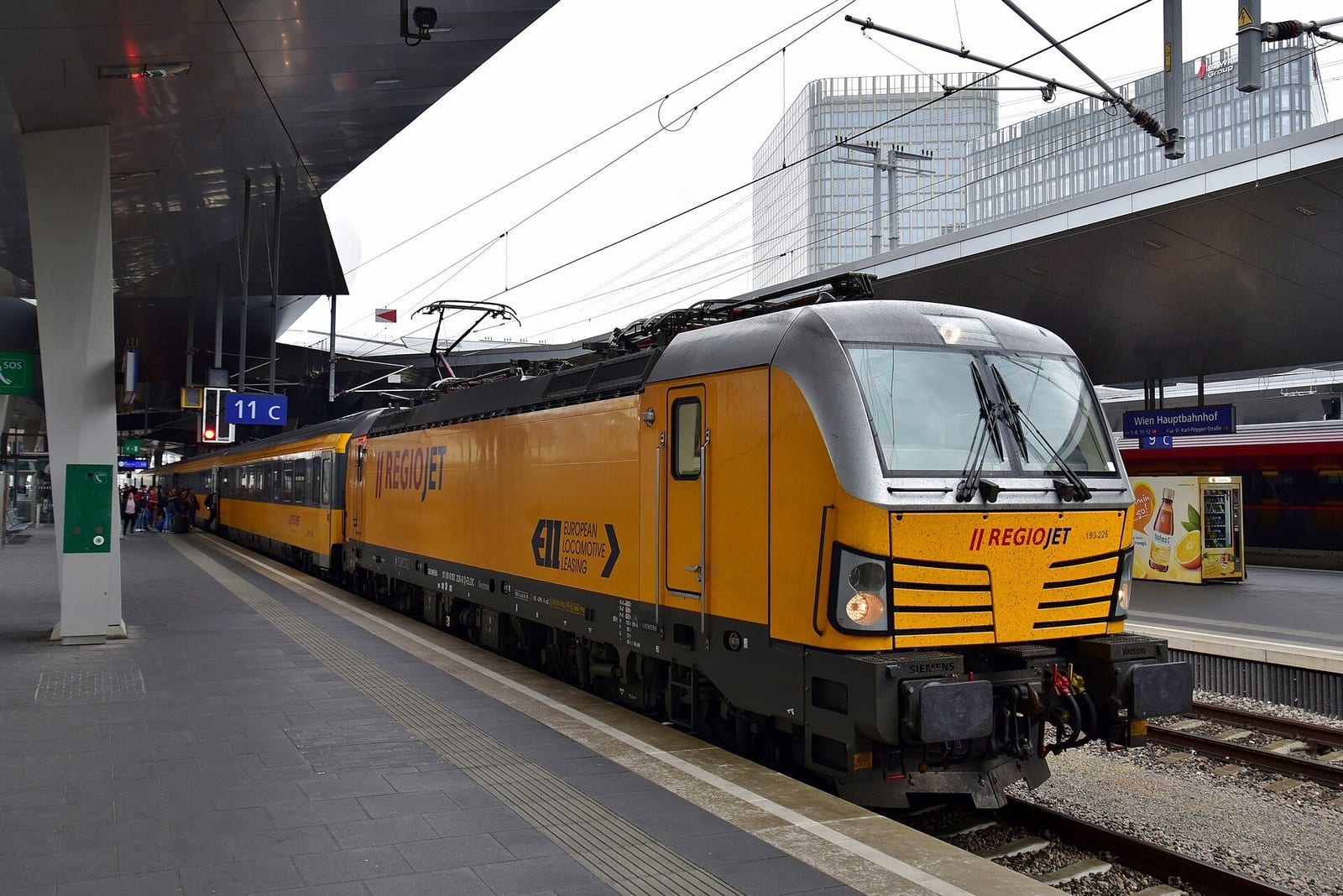
8 best day trips from Vienna by train, ranked by travel time
No car needed. Eight real day trips from Vienna by train, ranked from a 21-minute hop to a full day at Hallstatt, with real 2026 prices, journey times, and an honest downside for each stop.