Revolut vs Wise vs Your Bank Card Abroad: The Real Cost of Every Swipe, Tap, and ATM Withdrawal in 2026
Key Highlights
- 1
- 2
- 3
+5 more in the takeaways below
You're standing at an ATM in Rome, pulling out €200 for the weekend. The machine dispenses cash. You feel nothing. But back home, your bank statement tells a different story: a 3% foreign transaction fee, a $5 ATM operator charge, and a currency conversion markup you never agreed to. That one withdrawal just cost you $15 in fees you didn't see coming. Multiply that across a two-week trip, and you're looking at $100+ vanishing into the financial ether.
The best travel card abroad with no fees isn't a myth, but finding the right one requires cutting through a lot of marketing noise. Here's what every option actually costs in 2026, down to the dollar.
Traditional bank debit cards charge 2-3% on every foreign purchase plus ATM fees. Revolut and Wise both slash those costs dramatically but have different limits and quirks. For a $3,000 European trip, your regular bank card bleeds roughly $90-120 in fees; Revolut Standard or Wise costs $5-17; and Charles Schwab's Investor Checking costs nearly $0. The smartest move: carry two cards from different networks and always decline dynamic currency conversion at the terminal.
What Your Bank Actually Charges You Abroad
Most travelers don't discover foreign transaction fees until they're already home, scrolling through their bank statement with a sinking feeling. The standard debit card from a major US bank charges 1-3% on every foreign purchase, and the big three are all at the top of that range.
Here's what the major banks charge on debit cards in 2026:
- Chase: 3% foreign transaction fee on every non-USD purchase. No fee-free debit option exists.
- Wells Fargo: 3% foreign transaction fee plus a $5 ATM operator fee at international machines.
- Bank of America: 3% on most debit cards, with limited exceptions on premium accounts.
That 3% doesn't sound catastrophic until you do the math. On a $2,000 spending trip, you're handing over $60 just for the privilege of using your own money in a different currency. Add ATM withdrawal fees (which stack on top) and you're pushing past $80 easily.
Rick Steves breaks it down simply: a $300 credit card purchase costs anywhere from $0 to $9 in bank fees depending on which card you carry. That's a 0-3% swing on a single restaurant dinner.
For over a decade, 2-3% foreign transaction fees have been the industry standard, and the number has barely moved. Banks have no incentive to lower these fees because most customers don't notice them until it's too late. But there are cards that charge nothing at all. Here's what they charge.
Wise Card: What You Actually Pay in 2026
Wise (formerly TransferWise) built its reputation on one promise: the mid-market exchange rate with no hidden markup. The Wise card costs $9 for a physical card (digital is free), has no monthly fee, and converts your money at the rate you'd see on Google.
The conversion fee varies by currency pair but typically falls in the 0.33-0.57% range for major currencies like USD to EUR. Compare that to the 3% your Chase card charges, and the difference is stark: on a $1,000 conversion, Wise costs you roughly $3-6 versus $30 at your bank.
Where Wise gets tricky is ATM withdrawals. Through April 30, 2026, the structure gives you 2 free withdrawals per month up to $100 total. After that, you'll pay $1.50 per withdrawal plus 2% on anything above the $100 threshold. That $100 limit is tight if you're traveling somewhere cash-heavy.
Starting May 1, 2026, Wise is restructuring ATM fees for US cards. The free monthly limit rises from $100 to $250, and the two-withdrawal cap is removed. However, the excess fee increases to $1.95 per withdrawal plus 1.95% on amounts above $250. Check Wise's ATM fee page for your card's region before your trip.
From May 1 onward, the free limit jumps to $250/month with no withdrawal-count cap, but the excess fee changes to $1.95 + 1.95%. In plain numbers: if you withdraw $400 from ATMs in a month starting May 1, the first $250 is free and the excess $150 costs about $4.88 ($1.95 + 1.95% of $150). Under the old structure, the same $400 would cost about $7.50.
One thing Wise gets right that Revolut doesn't: no weekend markup. The mid-market rate applies 24/7, 365 days a year. If you're buying Saturday street food in Bangkok or Sunday museum tickets in Paris, you're still paying the real exchange rate.
Revolut: Free Doesn't Mean Free
Revolut Standard is genuinely free for everyday international spending, but only up to a point. You get $1,000 per month in fee-free weekday currency exchange at the mid-market rate, which covers most short trips. The three catches that cost you money: a 1% markup on weekends, 0.5% on exchange above the monthly cap, and a 2% fee on out-of-network ATM withdrawals after your free allowance.
Revolut's Standard plan costs $0 per month, which makes it look like the obvious winner on paper. And for most weekday spending, it is. Here are the three catches that trip people up.
Catch #1: The weekend markup. Standard plan users pay a 1% markup on currency exchanges made between Friday 5PM and Sunday 6PM ET, because forex markets are closed and Revolut builds in a buffer. Premium ($9.99/month) and Metal ($16.99/month) users skip this fee entirely. If you're doing a weekend city break and most of your spending falls on Saturday and Sunday, that 1% adds up quickly.
Catch #2: The $1,000 monthly cap. Once you've exchanged more than $1,000 in a calendar month on the Standard plan, every additional conversion costs 0.5% above the interbank rate. On a longer trip, you'll hit that wall faster than you expect.
Catch #3: ATM limits. The Standard plan includes free ATM withdrawals at in-network ATMs, with a 2% fee at out-of-network machines after your free allowance. Premium bumps the free limit to $800/month, and Metal takes it to $1,200/month.

Revolut's ecosystem is genuinely impressive for travel: you can hold and exchange 36 currencies, get instant notifications on every transaction, and freeze your card from the app if it goes missing. The app also shows your remaining free exchange and ATM allowances in real time, so you always know where you stand relative to your monthly limits.
But "free" has fine print, and the fine print bites on weekends and during longer trips. If your trip spans a month boundary (say, you leave on March 25 and return April 8), your $1,000 exchange limit resets on April 1, effectively giving you $2,000 in free exchanges. Worth keeping in mind when planning departure dates.
The Head-to-Head: Revolut vs Wise vs Your Bank
For a US traveler in 2026, Revolut Standard is cheapest for weekday card spending under $1,000/month (0% markup). Wise wins on weekends and rate predictability (0.33-0.57% with no weekend surcharge). Charles Schwab Investor Checking is the unbeatable ATM card: 0% foreign fees, unlimited worldwide ATM reimbursement. No single card wins every category, which is why the two-card strategy in the next section matters.
Here's the real comparison for US-issued cards in 2026, focused on what you'll actually pay when traveling:
| Feature | Chase/BofA Debit | Wise Card | Revolut Standard | Schwab Checking |
|---|---|---|---|---|
| Monthly fee | Varies | $0 | $0 | $0 |
| Card cost | Free | $9 (digital free) | Free | Free |
| FX markup (weekday) | 3% | 0.33-0.57% | 0% (up to $1K) | 0% |
| FX markup (weekend) | 3% | 0.33-0.57% | 1% | 0% |
| Free ATM allowance | None abroad | 2 pulls, $100/mo | In-network only | Unlimited |
| ATM fee after limit | $5 + 3% | $1.50 + 2% | 2% | Rebated |
| Currencies held | USD only | 40+ | 36 | USD only |
Fees verified as of April 2026. Card issuers may change terms at any time -- check each provider's pricing page before applying.
Numbers on a grid only tell part of the story -- real trips don't happen in spreadsheet rows. So let's model an actual trip.
The $3,000 Trip: Real Numbers, Real Fees
Picture a two-week European vacation. You're spending roughly $3,000 total, broken down like this: $2,000 on card purchases (restaurants, transport, museum tickets, groceries), $500 on ATM withdrawals (four pulls of about $125 each for cash-only spots), and $500 on weekend spending (Saturday markets, Sunday brunch, a Friday night dinner).
Here's what each card actually costs you:
| Card | Card Spend Fee | ATM Fee | Weekend Fee | Total Lost on $3,000 |
|---|---|---|---|---|
| Chase / BofA Debit | $60 (3% on $2,000) | ~$35 ($5 operator + 3%) | $15 (3% on $500) | ~$105-125 |
| Revolut Standard | $5 (0.5% above $1K cap) | $0-10 (in-network free, 2% out) | $5 (1% on $500) | ~$5-20 |
| Wise Card | $10.75 (0.43% on $2,500) | ~$11 (2% on $400 excess + $1.50 x2) | $2.15 (0.43%, no weekend markup) | ~$14-24 |
| Revolut Premium | $5 (0.5% above $1K cap) | $0 (free up to $800) | $0 (no weekend markup) | ~$5-15 (incl. $9.99 sub) |
| Schwab Investor Checking | $0 (0% foreign fee) | $0 (all fees rebated) | $0 | ~$0 |
The Chase/BofA column is the one that stings: $105-125 gone on a single trip is two nice dinners in Florence, vanished into bank fees. Schwab sits at the opposite extreme with effectively zero cost, but it only works as a debit card -- you can't hold multiple currencies or pre-convert in the app the way Revolut and Wise allow.
Between the two fintechs, Revolut Standard edges out Wise on pure cost ($5-20 vs. $14-24) thanks to the $1,000 free exchange window on weekdays. But Wise's advantage shows up on weekends: that $500 in Saturday and Sunday spending costs $2.15 on Wise versus $5 on Revolut Standard. If your trip is weekend-heavy -- a Friday-to-Sunday city break, for example -- Wise actually comes out cheaper.
Revolut Premium lands in an interesting middle ground. The $9.99 monthly subscription eliminates the weekend markup entirely and raises the free ATM limit to $800, which means it pays for itself on any trip where you'd otherwise hit both the weekend and ATM fees. For frequent travelers taking two or more international trips a year, Premium is often the better math.

The gap between your regular bank card and a purpose-built travel card isn't marginal. It's $80-125 per trip. Take two international trips a year and you're burning $160-250 annually on fees that are completely avoidable.
A few caveats on these numbers:
- The Revolut figures assume you stay under the $1,000 monthly exchange cap on weekdays -- realistic for two weeks, tight for longer.
- Wise's 0.43% average conversion rate is typical for USD-to-EUR but could be higher for exotic currencies like Thai baht or Turkish lira.
- None of these calculations include ATM operator fees (the local machine's own charge), which typically run $2-5 per withdrawal in Europe.
One scenario these numbers don't cover: if you're a student traveler on a tight budget, even the $14-24 Wise costs might feel significant. In that case, opening a free Schwab account before your trip is the single highest-return financial move you can make.
The DCC Trap: The Fee Nobody Warns You About
Dynamic currency conversion is the sneakiest fee in international travel, and it hits you regardless of which card you carry. Here's how it works: you insert your card at an ATM or hand it to a merchant, and the machine asks if you'd like to pay in US dollars instead of the local currency. It sounds convenient. It's a trap.
When you accept DCC, the ATM operator or merchant converts the currency for you at their own exchange rate, which includes a markup of 3-6% above the ECB rate in most European countries. In extreme cases, markups can reach 12% or more at tourist-area ATMs.
ATM asked me to convert to USD and I said yes. That one button cost me an extra $40 on a $300 withdrawal.
-- Paraphrased from multiple r/travel and r/digitalnomad threads
That Reddit complaint is depressingly common. The DCC markup typically ranges from 3% to 6%, but some European ATM networks, particularly the Euronet machines you'll find in tourist areas across Prague, Budapest, and Athens, have been documented charging markups pushing toward 12-13%.
When any ATM or card terminal asks "Would you like to pay in your home currency?" always select NO. Choose the local currency every time. This applies to Revolut, Wise, Schwab, and every other card. Accepting DCC can add 3-12% on top of whatever fees your card already charges.
EU regulations now require DCC providers to disclose their markup as a percentage above the ECB reference rate, but disclosure doesn't mean the markup is reasonable. The ATM screen might show "Exchange rate: 1 EUR = 1.08 USD, markup 4.2%" and most travelers, tired and distracted, just hit "Accept" without processing what 4.2% actually means on a €500 withdrawal.
Note: Charles Schwab will not reimburse fees if you accept DCC, because the DCC markup is classified as a currency conversion charge, not an ATM withdrawal fee. So even the best travel debit card can't save you from this one.

The Two-Card Strategy (And Why Most Advice Gets This Wrong)
Every comparison article wants you to pick one card. "Revolut OR Wise?" "Schwab OR Revolut?" That framing misses the point entirely. The right answer for most international travelers is two cards from different networks.
Here's why: fintech cards occasionally get declined. Revolut's fraud detection can freeze your card mid-trip if it flags unusual spending patterns - and their customer support response time isn't always fast enough when you're standing at a hotel front desk at midnight. Wise cards sometimes don't work at certain European toll booths or automated gas stations. And any single card can be lost, stolen, or demagnetized.
- Pick a primary spending card Revolut Standard or Wise for daily purchases. Both save you 2-3% versus your bank on every transaction.
- Pick a backup ATM card Charles Schwab Investor Checking is the best pure ATM card: 0% foreign fees and unlimited worldwide ATM reimbursement. You'll need to open a linked brokerage account (also free, no minimum balance).
- Split them across networks If your Revolut is on Visa, make sure your backup is Mastercard, or vice versa. Some merchants in Europe only accept one network.
- Order cards 3 weeks before departure Physical card delivery takes 1-2 weeks for both Revolut and Wise. Schwab's debit card ships in 7-10 business days. Don't wait until the week before your flight.
- Notify all cards of your travel dates Both Revolut and Wise handle this automatically through location services. For Schwab and traditional banks, set travel notifications in the app or call customer service.
If your first international trip taught you anything, it's that backup plans aren't optional. The two-card strategy costs nothing extra (both Revolut Standard and Schwab are free) and eliminates the single point of failure that leaves travelers stranded.
Pre-Trip Card Setup Checklist
Getting the right card is half the battle. Setting it up correctly before departure is the other half. Here's what to do in the 3-4 weeks before your trip:
- Order your Wise physical card ($9) or activate the free digital version
- Open Schwab Investor Checking (requires linked brokerage, both free) and wait for debit card
- Load your Wise account with your trip budget in USD
- Pre-convert some funds to EUR/GBP on Wise (avoids conversion at the point of sale)
- Enable location-based security on Revolut and Wise apps
- Set up transaction notifications on all cards (you'll catch fraudulent charges immediately)
- Download offline versions of your banking apps before departure
- Save customer service numbers for each card somewhere accessible without internet
One thing travelers consistently overlook: make sure you have a working eSIM or international data plan sorted before you leave. Revolut and Wise both require internet access to approve transactions in some cases, and losing data connectivity at the wrong moment means your card stops working.
If you're traveling with others, now is also the time to decide who's covering shared expenses. Our guide to splitting trip costs fairly covers the logistics, but the short version: designate one person's travel card for group purchases and settle up later through an expense tracker. It's cleaner than four people fighting over the bill at every restaurant.
For a more complete checklist covering passports, documents, and everything else, check our travel document checklist for 2026. Tools like TripProf can help you organize your pre-trip prep in one place, from documents to checklists to expense tracking, so nothing slips through the cracks.
What About Credit Cards?
This article focuses on debit cards and multi-currency cards, but credit cards deserve a mention. Many premium travel credit cards charge 0% foreign transaction fees and offer purchase protection, travel insurance, and rewards points that debit cards don't. Cards like the Capital One Venture X, Chase Sapphire Preferred, or the no-annual-fee Capital One SavorOne all charge 0% foreign transaction fees.
The catch: credit cards work for purchases, not ATM cash. Cash advances on credit cards carry fees of 3-5% plus immediate interest charges - with no grace period. So credit cards complement a travel debit card rather than replacing one.
An ideal international wallet in 2026 looks like this:
- Primary purchases: A no-foreign-fee credit card (for purchase protection and rewards)
- Backup purchases: Revolut or Wise (for when credit isn't accepted)
- ATM cash: Schwab Investor Checking or Wise (for fee-free or low-fee withdrawals)
- Emergency reserve: $200 in local currency, exchanged at home before departure
If you've been burned by hidden fees on budget airlines, you already know the pattern: the headline price is never the real price. The same principle applies to your bank card abroad. The sticker says "free checking" but the fine print says "3% on everything international."
Frequently Asked Questions
Is Revolut or Wise better for traveling abroad?
Neither is universally better. Revolut Standard wins on weekday spending under $1,000/month (0% conversion fee vs. Wise's 0.33-0.57%). Wise wins on weekends (no markup vs. Revolut's 1%) and ATM transparency. For trips under two weeks with moderate spending, both perform similarly. Carry both if you can.
Does Revolut charge fees on weekends?
Yes, on the Standard plan. Revolut adds a 1% markup on currency exchanges between Friday 5PM and Sunday 6PM ET because forex markets are closed. Premium and Metal plans remove this weekend markup entirely.
How much does my bank charge for using my debit card abroad?
Most major US banks (Chase, Wells Fargo, Bank of America) charge a 3% foreign transaction fee on every purchase and ATM withdrawal made in a foreign currency. Some banks add flat ATM fees of $2-5 per withdrawal on top of the percentage.
What is dynamic currency conversion and how do I avoid it?
DCC is when an ATM or merchant offers to charge you in your home currency instead of the local currency. The conversion uses a markup of 3-12%, much worse than what your card's own network charges. Always select "local currency" or "charge in [local currency]" when given the option.
Should I convert currency before or during my trip?
During your trip, using a travel card like Wise or Revolut. Pre-converting at airport exchange desks or currency kiosks typically costs 5-15% in markups. With Wise, you can pre-convert USD to EUR within the app at the mid-market rate before you leave, which locks in the rate without the markup.
Which card has the best ATM withdrawal limits?
Charles Schwab Investor Checking is the clear winner: 0% foreign transaction fee and every ATM fee worldwide is reimbursed at the end of each month, with no monthly cap. Revolut Premium offers $800/month free. Wise's free limit increases from $100 to $250/month on May 1, 2026, though the excess fee also rises to $1.95 + 1.95%.
Do I need a travel card if my credit card has no foreign transaction fee?
Yes, for cash. Credit card cash advances charge 3-5% fees plus immediate interest. A no-fee debit card or multi-currency card is the only way to access ATM cash without getting gouged. Many European markets, small restaurants, and transit systems still require cash or debit-only payments.
Key Takeaways
- Your regular bank card is the most expensive way to spend abroad. At 3% per transaction, a $3,000 trip costs you $90-125 in avoidable fees.
- Revolut Standard is excellent for weekday spending under $1,000/month but charges 1% on weekends and 0.5% above the monthly cap.
- Wise charges 0.33-0.57% on conversions with no weekend markup, making it more predictable but slightly more expensive than Revolut on small weekday purchases.
- Charles Schwab Investor Checking is the best pure ATM card, with 0% fees and unlimited worldwide ATM reimbursement.
- Always decline dynamic currency conversion. Saying "yes" to paying in your home currency at a foreign terminal can add 3-12% to any transaction.
- Carry two cards from different networks. This protects against declines, fraud freezes, and merchant network preferences.
- Order your travel cards 3+ weeks before departure. Physical cards take time to ship, and you'll want to test them before you're standing at a foreign ATM.
- Track your actual spending across currencies during the trip -- expense tracking apps like TripProf, Splitwise, or a simple spreadsheet keep you honest about where money went.
The best travel card abroad with no fees isn't a single card. It's a system: two cards, different networks, paired with the discipline to always choose the local currency at every terminal. Set it up once, and every trip after that costs you less.
Sources
- NerdWallet: What Banks Charge for Debit Foreign Transaction Fees
- WalletHub: 2026 Chase Foreign Transaction Fees
- WalletHub: 2026 Wells Fargo Foreign Transaction Fees
- WalletHub: 2026 Bank of America Foreign Transaction Fees
- US News: Foreign Transaction Fees by Bank
- Wise: Card Fees and Pricing
- Wise: Fees and Pricing Overview
- Wise Help Centre: ATM Withdrawal Fees
- Wise Help Centre: ATM Withdrawal Structure and Fees (May 2026)
- Revolut US: Pricing Plans
- Revolut Help: Currency Exchange Fees and Limits
- Revolut US: Premium Plan Features
- Charles Schwab: Ways to Save Money When Traveling Abroad
- Charles Schwab: Investor Checking FAQs
- Mastercard: Dynamic Currency Conversion Guide 2025
- Signature Payments: DCC 2026 Guide
- Monito: Euronet ATM Charges and Fees
- Rick Steves: Card Fees (and How to Avoid Them) in Europe
- NerdWallet: Best No Foreign Transaction Fee Credit Cards of 2026
- Wise Blog: Airport Currency Exchange Fees
Last updated: September 13, 2026
Keep Reading
More travel tips and guides picked for you

Christmas markets from London by train: what 3 nights really costs per person in 2026
Three nights at a Christmas market from London cost £426 to £704 per person. We priced Eurostar fares, central hotels and food for Lille, Brussels, Bruges and Cologne.

Wizz Air and Ryanair are cutting Vienna flights: what to book instead
Wizz Air has fully left Vienna and Ryanair has cut five aircraft over Austria's aviation tax. Here's exactly what changed, why it happened, and how to still book a cheap flight this winter.
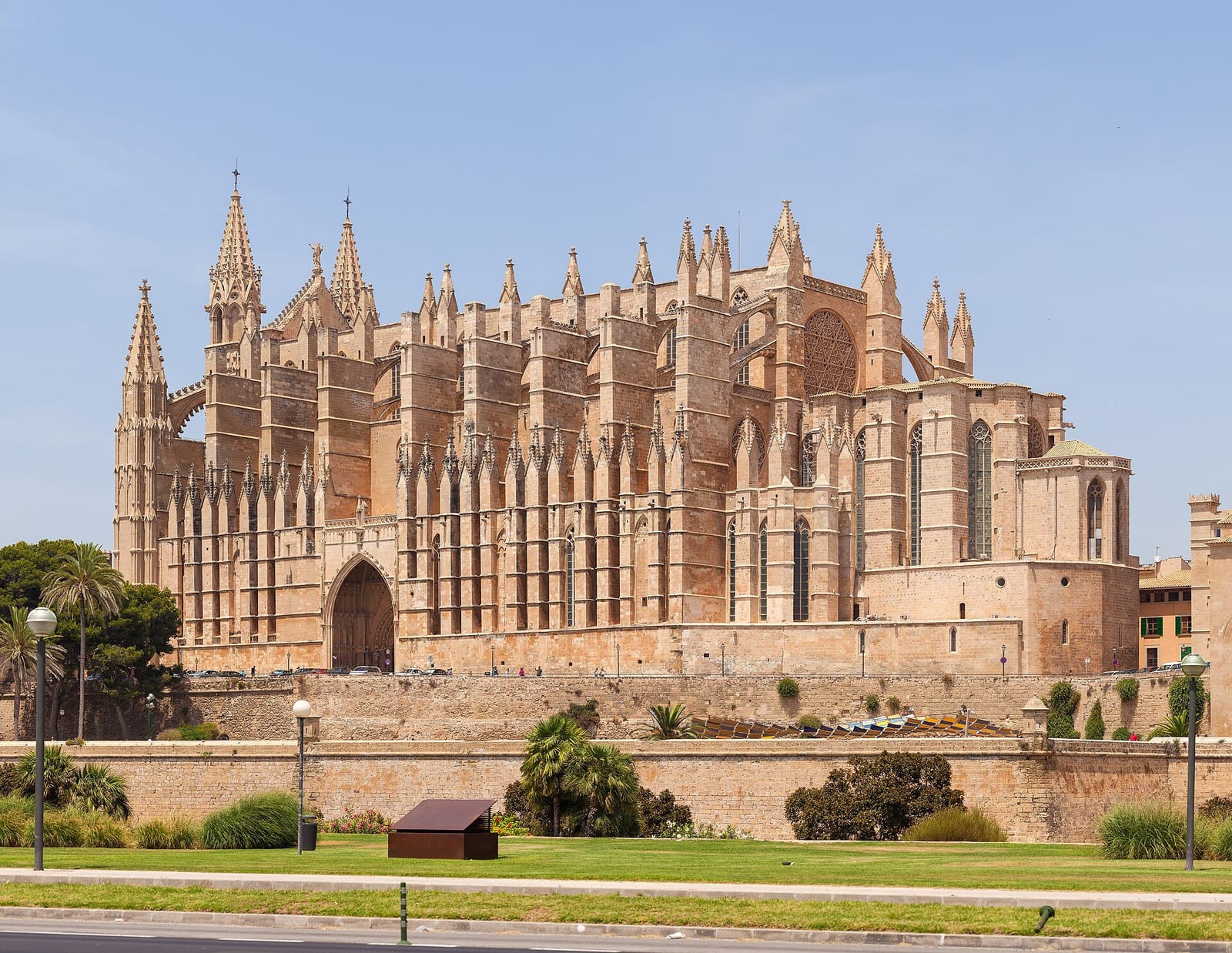
Mallorca's tourist tax hike got cancelled. Here's what a 2026 trip really costs
The Balearic tourist tax hike everyone's still warning about got cancelled in February. Here's what a week on Mallorca actually costs in 2026, flights, hotel, tax, and food, with real numbers.