eSIM vs SIM Card vs WiFi: The Only Travel Connectivity Guide You Need

Key Highlights
- 1
- 2
- 3
+5 more in the takeaways below
You land in Rome, pull out your phone, and watch the signal bar flatline. No maps, no translation app, no way to message your Airbnb host. You could pay $12/day for carrier roaming that drains your wallet, hunt for a SIM card shop that closed an hour ago, or cling to cafe WiFi that drops every three minutes. The right connectivity choice can save you hundreds of dollars per trip. The wrong one can leave you stranded.
Travel eSIMs cost roughly $5.50/GB vs $8.57/GB for traditional roaming, saving 35%. They work on most phones from 2018 onward, activate instantly before you leave, and don't require swapping physical cards. But eSIMs aren't ideal for everyone: older phones can't use them, group travelers may benefit more from pocket WiFi, and EU residents already get free roaming across 32 countries. This guide covers all five connectivity options honestly, with a cost comparison table and a decision framework by traveler type.
The Real Cost of Staying Connected Abroad
International connectivity isn't just a convenience anymore. It's how you navigate unfamiliar streets, translate menus, book last-minute transport, and let people know you're safe. Yet the cost gap between the cheapest and most expensive options is staggering: a 10-day European trip can cost anywhere from $25 to $600+ for mobile data, depending entirely on which method you choose.
Those numbers from Juniper Research tell only part of the story. The hidden costs are what really hurt: carrier day passes that auto-activate whether you use data or not, pocket WiFi deposits you forget to claim back, and "unlimited" plans that throttle you to unusable speeds after a few gigabytes.
Travel eSIM revenue hit $1.8 billion in 2025, an 85% jump from $989 million the year before. That growth isn't happening by accident. Travelers figured out they were overpaying, and the market responded.
But before you assume eSIM is automatically the answer, you need to understand what each option actually costs, what it does well, and where it falls short. Here are all five, with real numbers.
eSIM vs SIM Card vs WiFi: All Five Options Compared
Every travel connectivity option falls into one of five categories: travel eSIM, local physical SIM card, pocket WiFi hotspot, carrier international roaming, and free public WiFi. Each has a clear use case, and none is universally "best." The right choice depends on your phone, your destination, your budget, and how many people need to connect.
| Option | Cost (10 days, Europe) | Setup Time | Phone Calls | Best For |
|---|---|---|---|---|
| Travel eSIM | $15-40 | 5-10 min (pre-trip) | VoIP only (WhatsApp, FaceTime) | Solo/couple travelers, phones from 2018+ |
| Local SIM card | $20-50 | 30-60 min on arrival | Yes, local number included | Extended stays, need local phone number |
| Pocket WiFi | $80-180 | Pre-order + pickup | No | Groups of 5+, mixed device ages |
| Carrier roaming | $100-600+ | None | Yes, your own number | Short trips, money isn't the priority |
| Free WiFi only | $0 | None | VoIP when connected | Ultra-budget, WiFi-heavy destinations |
Prices verified as of April 2026. Cost estimates for a 10-day Europe trip based on Juniper Research averages, carrier pricing pages (AT&T, Verizon), and provider comparison data. Actual costs vary by destination and provider.
That cost range for carrier roaming isn't a typo. Verizon's TravelPass charges $12/day in most countries, and AT&T's International Day Pass also runs $12/day. For a family of four on a two-week trip, that's $672 in roaming fees before anyone checks Instagram.
Travel eSIMs: Why They're Winning (and When They're Not)
A travel eSIM is a digital SIM profile you download to your phone before you leave home. No physical card, no store visit, no language barrier at a kiosk. You scan a QR code or tap "install" in an app, and your phone connects to local networks the moment you land. The global eSIM market is valued at $2.12 billion in 2026, projected to reach $7.62 billion by 2034 at a 17.3% CAGR, according to Fortune Business Insights.
ABI Research projects that eSIM-enabled device shipments will exceed 633 million in 2026, and 441 mobile operators worldwide now support eSIM. The technology is no longer experimental.
Top eSIM Providers for Travel in 2026
The eSIM provider landscape has matured significantly. Here are the strongest options for international travelers, with verified pricing for European coverage:
| Provider | Europe Plan | Coverage | Standout Feature |
|---|---|---|---|
| Airalo | $4/1GB, $15.50/5GB | 42 countries | Widest plan variety, most destinations |
| Holafly | From $11.70/3 days unlimited | 40+ countries | Unlimited data (throttled after ~4.5GB/day) |
| Nomad | $14/5GB, $22/20GB | 35 countries | Best per-GB value at scale ($29/50GB) |
| Saily | From ~$5/1GB | 35+ countries | Built by NordVPN team, security focus |
| Ubigi | $12/10GB (7-day), $15/10GB (30-day) | 37 countries | Strong per-GB pricing ($1.20/GB) |
Prices verified as of April 2026. Visit provider sites for current rates.
A few things the marketing pages won't tell you: most travel eSIMs are data-only. You won't get a phone number for calls or SMS. That's fine if you use WhatsApp or FaceTime, but it matters if you need to receive verification codes via text. Top-ups after your initial plan expires often cost more per GB than buying a larger plan upfront. And "unlimited" plans from providers like Holafly typically have fair-use caps that throttle speeds after roughly 4-5GB per day.
Coverage maps look impressive, but performance varies wildly by country. eSIM providers that work great in Western Europe may deliver patchy connections in rural Southeast Asia or Mexico. Check Reddit reviews for your specific destination before buying.
When NOT to Use an eSIM
eSIMs aren't the right choice if your phone was made before 2018, if you need a local phone number for ride-hailing apps that require SMS verification, if you're traveling with a group of five or more people with mixed device ages, or if your destination has poor eSIM provider coverage. You also can't use one if your phone is carrier-locked. Dial *#06# on your phone to check: if you see a 32-digit EID number, your device supports eSIM.
Installed before leaving, just turned it on when I landed - zero hassle. Data-only eSIM plus WhatsApp calling is the best combo.
- r/solotravel user, February 2026
Local SIM Cards: The Old Reliable
Picture this: you walk out of the arrivals hall, spot a mobile carrier kiosk, hand over your passport, and walk out 20 minutes later with a working local SIM card that gives you a local number, fast data, and the ability to receive calls from local businesses. That's the local SIM experience at its best. At its worst, the kiosk is closed, you don't speak the language, your phone is locked, and you just lost an hour.
Local SIMs typically cost $20-50 for a generous data plan in most European and Asian countries. In Thailand, tourist SIMs at the airport typically cost approximately $10-15 for 15GB. In Japan, airport SIM vending machines sell 10-day data-only plans for approximately $20-30, though prices vary by provider.
- Local phone number for calls and SMS
- Often cheapest per-GB option
- Works on any unlocked phone, any age
- Easy top-ups at convenience stores
- Requires store visit on arrival (time cost)
- Phone must be unlocked
- Need to swap/store your home SIM
- New SIM per country on multi-country trips
Multi-city trips expose local SIM's biggest weakness. If you're visiting France, Italy, and Spain in two weeks, you'd need three separate SIMs (three purchases, three activations, three different data plans). A single regional eSIM covers all three for less money and zero time wasted at kiosks. If you're spending three weeks in one country, though, a local SIM often beats an eSIM on price-per-GB and gives you something an eSIM can't: a real local phone number. Check our multi-city Europe planning guide for more on handling logistics across multiple destinations.
Carrier International Roaming: Convenient, Expensive, Sometimes Worth It
Nobody thinks to ask this question until the phone bill arrives: "What happens to my phone bill if I just... use it abroad?" The answer is usually painful. Without an international plan add-on, data roaming charges can run $5-20 per megabyte, which translates to thousands of dollars per gigabyte. Even with carrier add-ons, the math rarely works in your favor.
Here's what the three major US carriers charge in 2026:
| Carrier | Plan | Cost | What You Get |
|---|---|---|---|
| Verizon | TravelPass | $12/day (210+ countries) | 5GB high-speed, then 3G speeds |
| AT&T | International Day Pass | $12/day (210+ destinations) | Uses your domestic data plan |
| T-Mobile | Magenta (included) | Free (2G) / $35 for 5GB high-speed | Free data at 256kbps (barely usable) |
| Google Fi | Unlimited Premium | $65/month | 50GB high-speed in 200+ countries |
Prices verified as of April 2026. Carrier rates change frequently; check provider sites before purchasing.
T-Mobile's "free international data" deserves an asterisk the size of a billboard. At 256kbps, you can send text messages through WhatsApp. That's about it. Loading a Google Maps route takes 30+ seconds. Posting a photo to social media? Good luck. T-Mobile's high-speed data passes ($35 for 5GB/10 days or $50 for 15GB/30 days) are the realistic option if you want to actually use your phone.

Google Fi is the interesting outlier. At $65/month for the Unlimited Premium plan, you get 50GB of high-speed data across 200+ countries with 5G in 92+ destinations. If you travel internationally more than once or twice a year, switching to Fi as your primary carrier can save you hundreds. One catch: you need to activate it in the US, and Google enforces a roughly 50-day abroad limit. Google sends a warning email around 50 days of international use, then suspends data roaming after roughly 90 consecutive days abroad. Return to the US for a week and the clock resets.
If you're on AT&T or Verizon with an eSIM-compatible phone, keep your carrier SIM for calls and texts, then add a travel eSIM as your data line. You'll keep your number and avoid roaming charges on data. Your phone's dual-SIM settings let you choose which line handles data.
Pocket WiFi: The Group Travel Workhorse
A pocket WiFi device is a small, battery-powered mobile hotspot you rent or buy. It creates its own WiFi network that multiple devices can connect to: phones, tablets, laptops, e-readers. For groups traveling together, especially families with kids on different devices, a single pocket WiFi can replace five separate data plans.
The math looks reasonable at first: $8-15/day for a rental device. But the real cost is higher. Most rental companies charge $10-30 for shipping and return fees, and you'll put down a $100-250 deposit that takes weeks to get back. Insurance adds another $1.50-3 per day. A two-week European trip with pocket WiFi realistically costs $150-250 all-in.
- Connects 5-10 devices simultaneously
- Works with any WiFi-capable device, any age
- No phone modifications needed
- Dedicated battery (doesn't drain your phone)
- Another device to charge, carry, and not lose
- Group must stay physically together
- Hidden fees: shipping, insurance, deposit
- Slower speeds shared across multiple users
The "must stay together" problem is the real dealbreaker for many groups. When half the group wants to explore the market while the other half sits in a cafe, whoever has the pocket WiFi in their bag becomes the connectivity bottleneck. Everyone else is offline. For groups where people split up frequently, individual eSIMs are a better investment even at higher total cost. But for families with young kids who stick together and use tablets, a pocket WiFi at $10-12/day beats paying for four separate eSIMs. If you're weighing connectivity options for a group trip, our guide to group travel planning apps covers the broader logistics.
Free WiFi: The Trap That Looks Like a Deal
Free WiFi is everywhere: airports, hotels, cafes, train stations. It costs nothing and requires zero planning. It's also the worst option for your security, your productivity, and, honestly, your sanity.
The security numbers are sobering. A 2025 VikingCloud report found that 82% of North American hotels experienced a successful cyberattack last summer. Guest WiFi was identified as a top vulnerability by 56% of hotel IT executives surveyed. And it's not a new problem: a Cornell University and FreedomPay study found that 31% of hospitality organizations have experienced a data breach, with 89% of those hit more than once.
Even ignoring security, free WiFi is unreliable by design. Hotel WiFi drops when the lobby fills up. Cafe WiFi comes with a social contract to buy something every hour. Airport WiFi often caps you at 30-60 minutes before demanding an email address or payment. You can't navigate with it on the street, use it on a bus, or rely on it in an emergency.
Never access banking apps, enter passwords, or use credit cards on public WiFi without a VPN. Fake "hotel WiFi" networks set up by hackers look identical to real ones. If you must use free WiFi, a VPN is non-negotiable. Not optional, not "nice to have."
That said, free WiFi has one legitimate use: as a supplement. Download your eSIM data for navigation and messaging, then switch to hotel WiFi in the evenings for streaming or large downloads. This hybrid approach keeps your eSIM data usage low and your bill small. Just don't make free WiFi your primary connectivity strategy. It's a backup, not a plan. Before your trip, make sure you've handled the logistics that don't require WiFi: our travel document checklist covers what to prepare before you leave.
The EU Exception: "Roam Like at Home" Explained
If you have an EU-based mobile plan, you already have the best travel connectivity deal on the planet: free roaming across 32 countries. The EU's "Roam Like at Home" regulation lets EU residents use their domestic data, calls, and texts anywhere in the EU, Iceland, Liechtenstein, and Norway at no extra charge. As of January 2026, Ukraine and Moldova joined the zone, bringing the total to 32 countries.
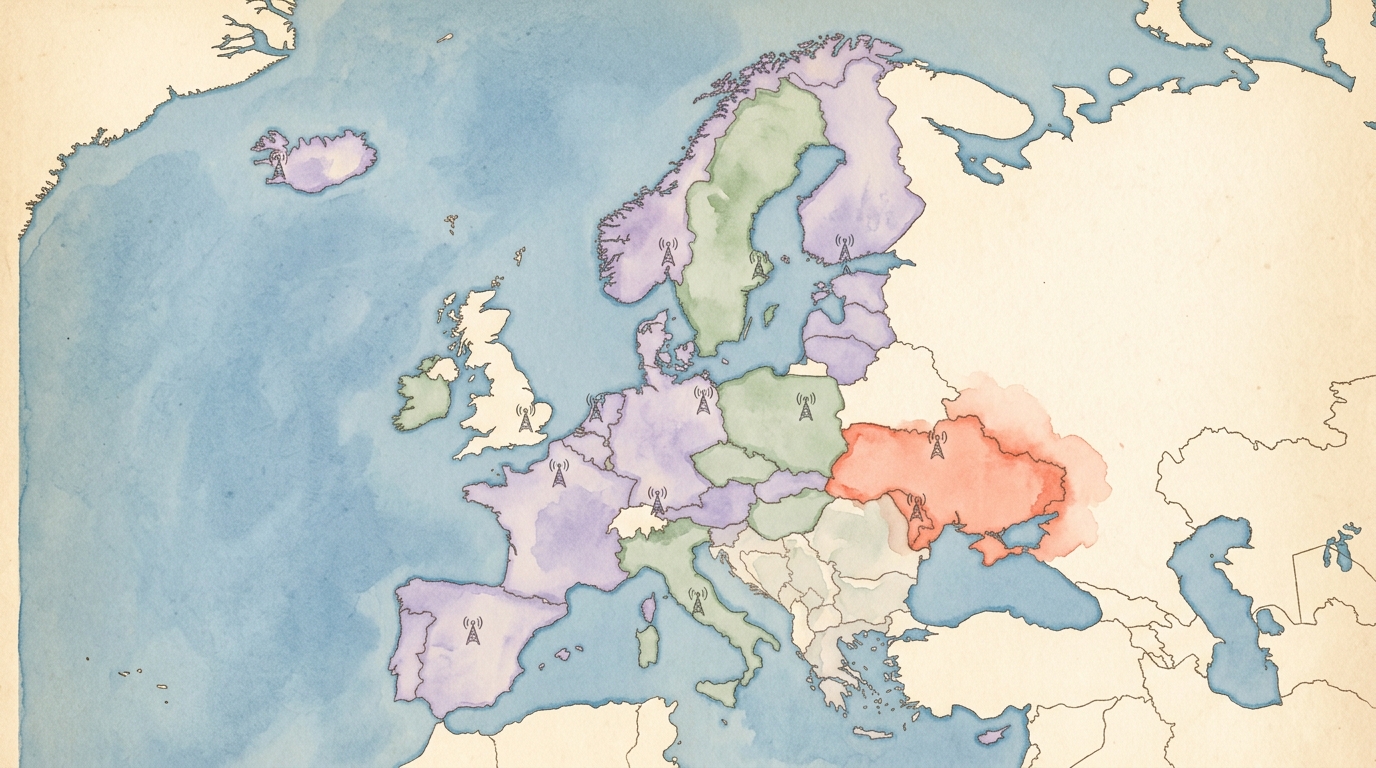
Brussels extended the regulation through at least 2032, with wholesale data caps dropping to €1.10/GB in 2026 and €1.00/GB from 2027. Western Balkans integration is in progress, with full roaming fee elimination between the EU and the Western Balkans region targeted for 2028.
Here's what most guides get wrong: this only applies to EU residents with EU SIM cards. If you're an American visiting Paris, "Roam Like at Home" does nothing for you. You still need an eSIM, a local SIM, or a carrier roaming plan. The regulation protects EU consumers traveling within the EU, not tourists visiting the EU from outside.
Even for EU residents, there are limits. Operators can apply a "fair use" policy if you spend more time roaming than at home. And while data roaming is free, there's a cap on how much free data you get based on your plan's retail price divided by the wholesale cap. A cheap €10/month plan might only include 9GB of roaming data before surcharges kick in.
The EU wholesale roaming data cap drops to €1.00/GB from January 2027, down from €1.10/GB in 2026. This means EU carriers can offer even more generous roaming data allowances to their customers.
Does Your Phone Support eSIM? Here's How to Check
Device compatibility is the single biggest barrier to eSIM adoption. If your phone doesn't support it, the rest of this guide's eSIM advice is irrelevant. The good news: most phones sold since 2020 support eSIM. The bad news: "most" isn't "all," and there are regional exceptions that trip people up.
Quick Compatibility Check
The fastest way to check: open your phone's dialer and type *#06#. If you see a 32-digit EID (Embedded Identity Document) number, your phone supports eSIM. No EID, no eSIM.
Here's the brand-by-brand breakdown:
- Apple iPhone: iPhone XR (2018) and newer all support eSIM. iPhone 13 and later support dual active eSIMs. iPhone 14 and newer US models have no physical SIM tray at all.
- Samsung Galaxy: S20 and newer, plus all Z Flip and Z Fold models.
- Google Pixel: Pixel 3a and newer for all carriers (Pixel 2 supported eSIM only on Google Fi).
- Phone supports eSIM (check with *#06# for EID)
- Phone is carrier-unlocked (contact your carrier to verify)
- eSIM downloaded and installed before departure
- Data roaming enabled in phone settings
- eSIM set as data line (keep home SIM for calls/texts)
- Offline maps downloaded as backup (Google Maps or Apple Maps)
- VPN installed for public WiFi use
Regional exception to know about: iPhones sold in mainland China, Hong Kong, and Macau use dual physical SIM trays instead of eSIM. If you bought your iPhone in one of those markets, you may not have eSIM support regardless of model.
The Decision Framework: Which Option Fits Your Trip?
Forget the "eSIM is always best" advice you'll find on affiliate-heavy review sites. The right connectivity option depends on how you travel, not what's trendiest. Here's a decision framework by traveler type:
Solo traveler, 1-2 weeks, multiple countries: Travel eSIM. Buy a regional plan (Europe, Asia) before departure. Budget: $15-40. You'll be connected the second you land, and one plan covers border crossings.
Couple traveling together, eSIM-compatible phones: Two separate eSIMs. You'll want independent connectivity when you split up for the afternoon. Budget: $30-80 total.
Family of 4 with young kids on tablets: One pocket WiFi device plus one eSIM for the parent who might split off. The kids' tablets connect to the hotspot. Budget: $100-160.
Extended stay (1+ month, single country): Local SIM card. Better per-GB rates, a local phone number, and easy top-ups at any convenience store. Budget: $15-40/month.
Digital nomad, frequently changing countries: Google Fi Unlimited Premium ($65/month) as your primary carrier, with a backup travel eSIM for countries where Fi coverage is weak. Budget: $65-80/month.
EU resident traveling within Europe: Just use your regular phone. "Roam Like at Home" means your existing plan works in 32 countries at no extra cost.
Budget backpacker, older phone: Local SIM cards at each destination, supplemented by free WiFi at hostels. It's more work, but it's the cheapest path if your phone doesn't support eSIM. Budget: $10-25 per country.
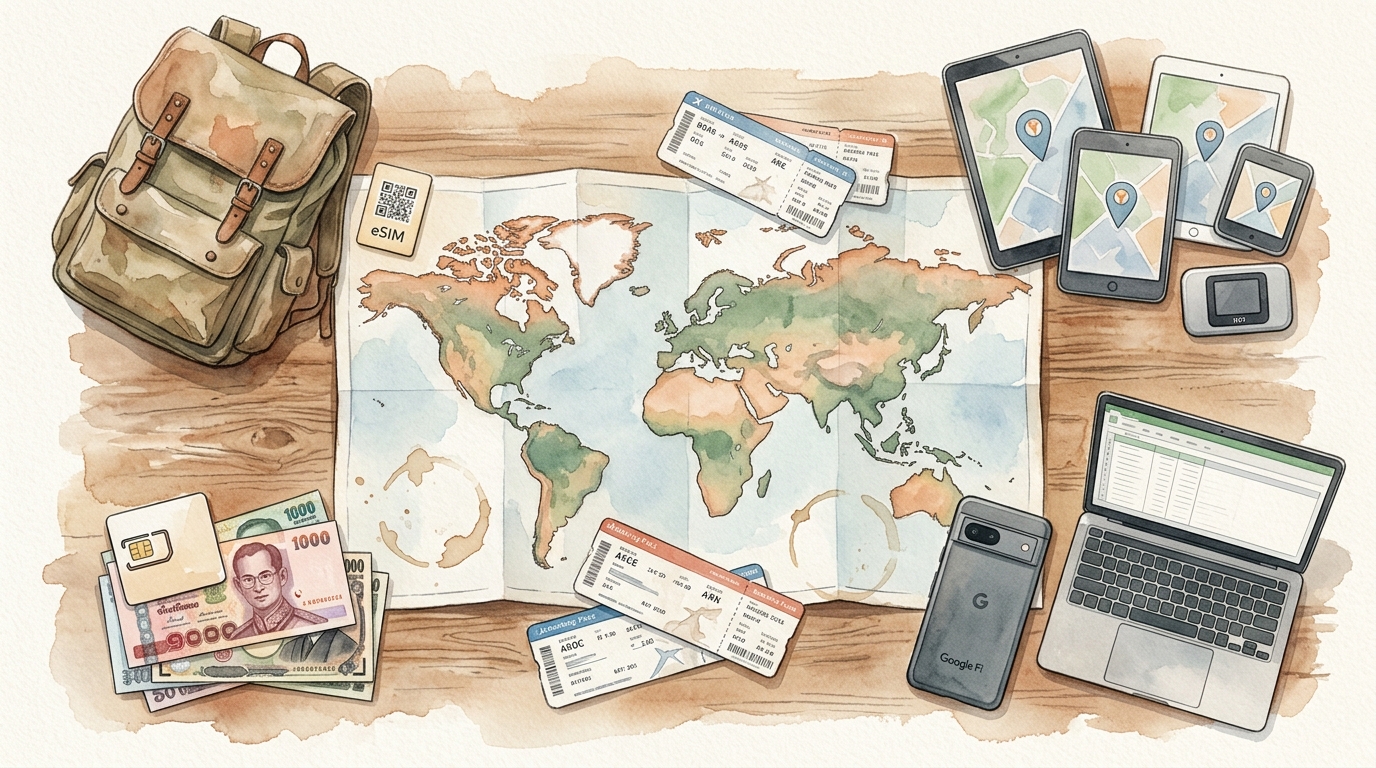
What do experienced travelers actually do? A hybrid approach. They keep their home carrier SIM active for calls and texts, add a travel eSIM for data, download offline maps as a backup, and use hotel WiFi for heavy downloads in the evening. This combination gives you full coverage with minimal risk.
If you're still building your international travel toolkit, our guide on mistakes first-time international travelers make covers the other essentials beyond connectivity.
Troubleshooting: When Your eSIM Stops Working Abroad
"No Service" after landing is the single most common eSIM complaint on Reddit and travel forums. Before you panic, try these fixes in order:
- Toggle Airplane Mode on and off This forces your phone to re-register on local networks. Wait 30 seconds after turning Airplane Mode off.
- Check that Data Roaming is enabled Go to Settings > Cellular/Mobile Data > your eSIM line > turn on Data Roaming. This is off by default on many phones and is the #1 cause of "No Service" issues.
- Make sure the eSIM is set as your data line If you have dual SIMs, your phone might be trying to use your home carrier for data. Switch the data line to your travel eSIM in Settings > Cellular.
- Restart your phone A full restart (not just sleep/wake) clears network caches and re-initializes the radio. This fixes roughly half of all connection issues.
- Manually select a network Go to Settings > Cellular > Network Selection > turn off Automatic. Choose a network from the list. Sometimes automatic selection picks the wrong carrier.
- Contact your eSIM provider's support Most providers (Airalo, Holafly, Nomad) have in-app chat support. They can check if your profile activated correctly and push a network refresh.
Two preventive measures that save headaches: always install and test your eSIM at home before you leave (most providers let you install the profile days in advance), and screenshot your eSIM provider's support contact information so you can reach them even without data. A good planning app lets you store essential travel information offline, so your emergency contacts and travel insurance details are accessible even when your connection isn't.
Frequently Asked Questions
Does my phone support eSIM?
Open your phone's dialer and type *#06#. If a 32-digit EID number appears, your phone supports eSIM. Generally, iPhones from XR (2018) onward, Samsung Galaxy S20+, and Google Pixel 3a+ all support eSIM. US-model iPhone 14 and newer are eSIM-only with no physical SIM slot.
Can I keep my regular phone number while using a travel eSIM?
Yes. On dual-SIM phones, keep your home carrier as the voice/text line and set the travel eSIM as your data line. Your regular number stays active for calls and texts, while all internet traffic goes through the cheaper eSIM data plan.
Is an eSIM cheaper than international roaming?
Significantly. Travelers using eSIMs spend an average of $5.50/GB versus $8.57/GB for traditional roaming, a 35% saving according to Juniper Research. For a 10-day European trip, an eSIM costs $15-40 compared to $120+ for carrier day passes from Verizon or AT&T.
What happens to unused eSIM data when my plan expires?
Most travel eSIM plans don't roll over unused data. When your plan period ends, remaining data is lost. Buy a plan sized to your actual usage rather than overbuying "just in case." Some providers like Airalo let you top up mid-trip, but top-up rates are typically higher per GB than the original plan.
Is hotel WiFi safe for banking?
Not without a VPN. Hotel WiFi networks are frequent targets for hackers using man-in-the-middle attacks and fake hotspots. A 2025 VikingCloud report found that 82% of North American hotels experienced a cyberattack. If you must use hotel WiFi for sensitive tasks, use a VPN to encrypt your traffic. Better yet, do banking on your eSIM's cellular data.
Do I need to unlock my phone to use an eSIM?
Yes. Carrier-locked phones will only accept eSIM profiles from the locking carrier. Contact your carrier to request an unlock before your trip. In the US, carriers are legally required to unlock phones after the contract period or device payment plan is fulfilled. Allow 2-3 business days for processing.
Which is better for groups: pocket WiFi or multiple eSIMs?
It depends on group behavior. Pocket WiFi works best for groups of 5+ who stay physically together (families with kids, tour groups). Individual eSIMs are better for groups that split up during the day. A family of four sticking together saves with one $10-12/day pocket WiFi versus four separate eSIMs at $15-40 each.
Key Takeaways
- For most travelers in 2026, a travel eSIM is the best default choice. At $5.50/GB versus $8.57/GB for traditional roaming, the savings are real and setup takes minutes, not hours.
- Carrier roaming is the most expensive option by a wide margin. Verizon and AT&T charge $12/day. Google Fi's $65/month Unlimited Premium is the only carrier plan that makes financial sense for frequent travelers.
- Local SIM cards still win for extended single-country stays. If you're spending a month somewhere and need a local phone number, a physical SIM from a local carrier gives you the best per-GB rate and full phone functionality.
- Pocket WiFi is only worth it for groups of 5+ who stay together. The hidden fees (shipping, deposit, insurance) make it expensive for small groups or couples.
- Free WiFi is a supplement, not a strategy. Security risks are real, reliability is poor, and you lose connectivity the moment you step outside.
- EU residents traveling within Europe don't need any of this. "Roam Like at Home" covers 32 countries at no extra charge, now including Ukraine and Moldova.
- The hybrid approach is what experienced travelers actually use: home SIM for calls, travel eSIM for data, offline maps as backup, hotel WiFi for heavy downloads. Planning apps like TripProf can keep essential trip info (documents, itineraries like our 3-day Prague itinerary, emergency contacts) accessible offline, so a connectivity hiccup doesn't become a crisis.
- Always set up and test your connectivity solution before you leave home. Whether it's an eSIM installation, a phone unlock, or downloading offline maps, every minute spent preparing at home saves ten minutes of frustration at your destination.
Sources
- Juniper Research: Travel eSIM Users to Grow 440% Globally Over the Next 5 Years. juniperresearch.com
- Juniper Research: Travel eSIMs Surge as Roaming Alternative, Up 85% in 2025. juniperresearch.com
- Fortune Business Insights: eSIM Market Size, Share, Growth & Forecast Analysis [2034]. fortunebusinessinsights.com
- ABI Research: eSIM-enabled Device Shipments Will Exceed 633 Million in 2026. abiresearch.com
- GSMA: eSIM Compliance Report 2024. gsma.com
- European Commission: Roaming Charges Within the EU. europa.eu
- Council of the EU: EU Mobile Roaming Benefits Extended to Moldova and Ukraine. consilium.europa.eu
- TelecomLead: EU Extends Roam-like-at-home Regulations Until 2032. telecomlead.com
- Verizon: TravelPass International Roaming Plan. verizon.com
- AT&T: International Day Pass. att.com
- T-Mobile: International Roaming Plans. t-mobile.com
- Google Fi: Unlimited Premium Plan. fi.google.com
- Google Fi: International Coverage and Rates. fi.google.com
- Apple Support: Set Up eSIM on iPhone. support.apple.com
- VikingCloud: Peak Season, Peak Risk, The 2025 State of Hospitality Cyber Report. vikingcloud.com
- Cornell University & FreedomPay: Hospitality Data Breach Report. hotelmanagement.net
- Simology: Pocket WiFi vs eSIM, Which Is Better and Cheaper for Travel. simology.io
Last updated: September 2, 2026
Keep Reading
More travel tips and guides picked for you

What counts as visiting a state? Layovers, drive-throughs and the rules 50-staters use
Only 2% of Americans name a plane change as the minimum that counts as visiting a state, while 27% set the bar at driving through. Here's a three-tier rubric, a lookup table for the edge cases from Four Corners to D.C., and one trip counted three ways.

The fake SBB ticket website stealing credit card and Twint data from travelers
Zurich cantonal police confirmed a fake SBB ticket website is stealing credit card and Twint payment details from travelers who find it through an ordinary Google search. Here is how to spot it and what to do if you already paid.

UK ETA scam warning: fake websites are charging Austrians up to €900
Fake UK ETA websites are charging Austrian and EU travellers hundreds of euros for a form that costs £20. Here's how the real one works, and how to spot a scam before you pay it.
Plan Your Next Trip
Ready-made itineraries for this destination

3 Days in Prague for First-Timers: A Walkable Itinerary
A grounded 3-day Prague itinerary for first-timers: Old Town and the Jewish Quarter on foot, Prague Castle's Circuit B, Petřín and Vyšehrad, plus the ticket details that matter on the ground.

4 Days in Milan With Friends: A Route Built for a Group
A realistic 4-day Milan itinerary built for a group of friends: the Duomo-to-La Scala cluster and the Last Supper's booking window, a Roman Milan day that ends in a Navigli canal aperitivo, and a Porta Nuova finish at the Vertical Forest, with group booking and split-cost tips throughout.