Europe's Entry/Exit System: What It Means for Your Trip (2026)

Key Highlights
- 1
- 2
- 3
+2 more in the takeaways below
Seven-hour border queues. Fingerprint scans. A system IATA warned is causing "significant delays and serious safety risks". If you're planning a trip to Europe in 2026, you've probably seen the headlines about the new Entry/Exit System and wondered if you should just... not go.
Don't cancel anything. Europe's Entry/Exit System (EES) changes less about your trip than the headlines suggest. Here's what it actually means for travelers hitting multiple countries this year.
EES records your fingerprints and photo at the first Schengen border you cross. It's free, there's no advance application, and you won't get scanned again moving between Schengen countries. The real risk isn't the system itself. It's longer queues at your first entry point. Allow extra connection time and download the Frontex pre-registration app.
What the Europe Entry/Exit System Actually Is (And What It Isn't)
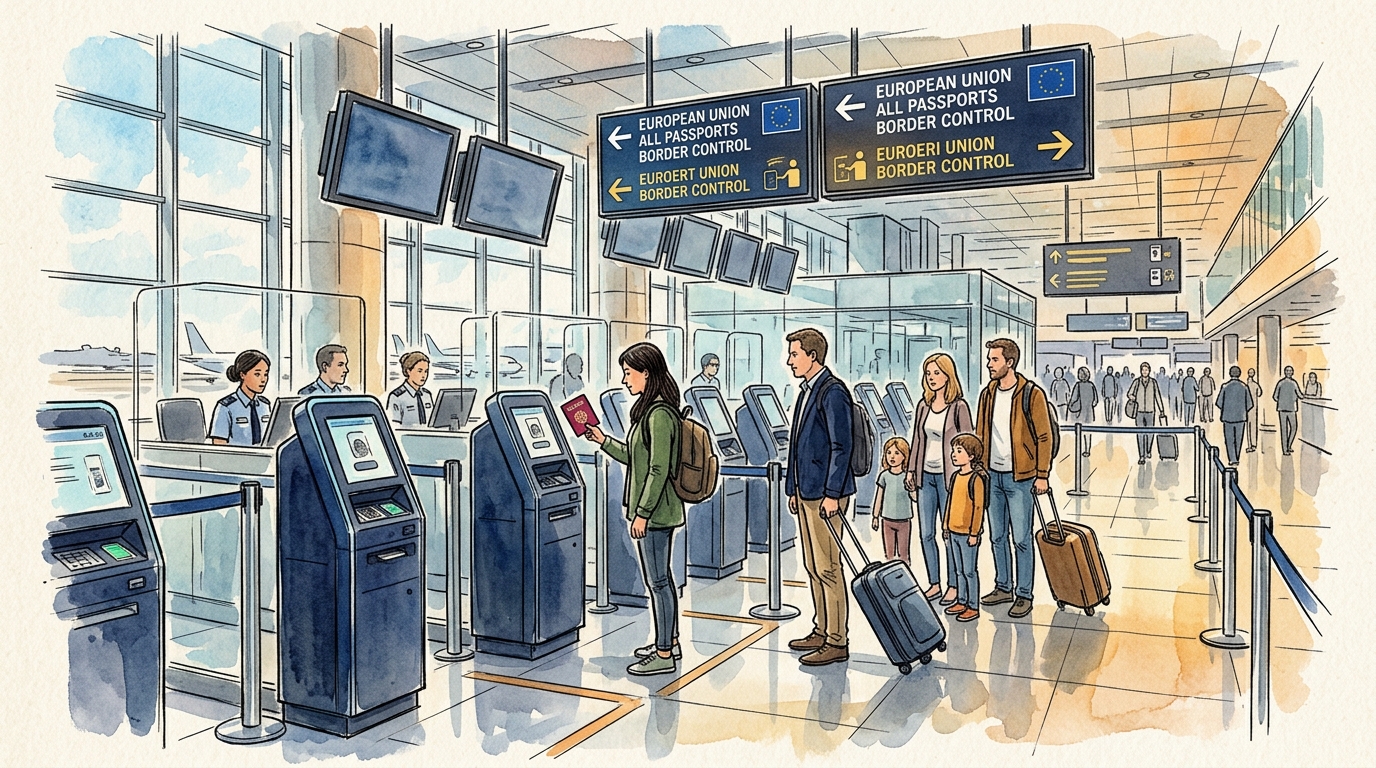
Europe's Entry/Exit System replaces the passport stamp. Starting April 9, 2026, every non-EU traveler entering the Schengen Area gets their fingerprints and face scanned at the border. The system records when you enter, when you leave, and calculates your remaining days under the 90/180-day rule automatically.
No advance application. No fee. No visa.
A lot of travelers confuse EES with ETIAS. They're completely different systems.
| Feature | EES (Entry/Exit System) | ETIAS (Travel Authorization) |
|---|---|---|
| What it does | Records border crossings with biometrics | Pre-screens travelers before travel (like US ESTA) |
| Active now? | Yes (fully operational since 10 April 2026) | No (no launch date announced) |
| Cost | Free | €20 (free for under-18 and over-70) |
| Pre-trip action | None required | Must apply online before travel |
| Biometrics | Fingerprints + facial scan | None |
| Who's affected | All non-EU short-stay travelers | Visa-exempt nationals only (US, UK, CA, AU, etc.) |
ETIAS still isn't active, and now has no start date: the official EU page says it "is currently not in operation" and that a specific date will be announced several months in advance. The Q4 2026 target the EU set in March 2025 has been dropped. Right now, EES is the only new system you'll encounter at the border.
Kids under 12 skip the fingerprints but still need a photo scan. And the whole process is supposed to take about a minute per person.
Supposed to.
How the Entry/Exit System Works Across Multiple Countries
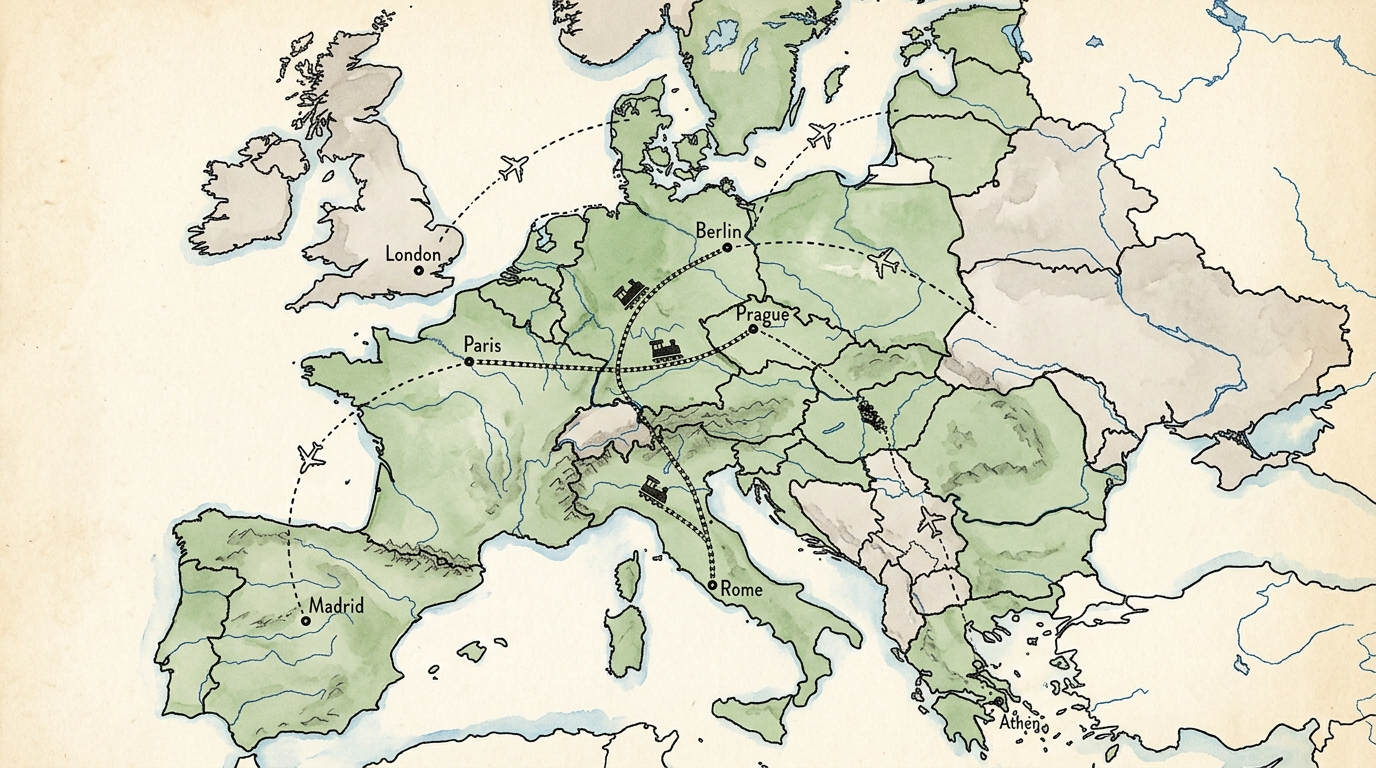
Here's the part most articles either get wrong or make unnecessarily confusing. EES only happens at external Schengen borders. Fly from New York to Paris? Paris records your entry. Take the train to Amsterdam, drive to Brussels, fly to Barcelona? Nothing. No scans, no checks, no queues.
You interact with EES exactly twice per trip: when you enter the Schengen Area and when you leave.
So if your itinerary is Paris → Berlin → Prague → Rome → fly home from Rome, you'll do EES at Paris CDG on arrival and at Rome Fiumicino on departure. The four countries in between? You won't see a border officer.
If you leave the Schengen Area mid-trip (say, you fly to London or Dublin, which aren't in Schengen) and then re-enter, you'll go through EES again at re-entry. Every external border crossing counts. Plan accordingly if your route includes the UK, Ireland, or any non-Schengen stop.
The 90/180-day rule now gets enforced digitally. No more squinting at faded passport stamps. The system tracks your total days across all 29 Schengen countries automatically, and since October 2025 it's processed roughly 17 million travelers and 30 million border crossings, flagging about 4,000 overstay cases along the way.
Building a multi-city route through Europe? Our guide to planning multi-city Europe trips covers itinerary building, transport, and budgets.
The Delay Problem (And How to Dodge It)
The phase-in was rough. Border processing times jumped up to 70% at some airports, and the first UK travellers hit queues and confusion as biometric kiosks came online over the holidays. That phase is done. The Commission declared EES fully operational at every external Schengen border on 10 April 2026, and the six months of rollout headlines you may remember describe a system that has since settled down.
We went through EES at Stockholm Arlanda in January. The fingerprint scan and photo took about three minutes total, but we arrived mid-afternoon on a weekday with no crowd to speak of. Morning arrivals at the same airport that week were reporting 40-minute waits. Timing matters.
So what can you actually do?
Pad your first connection. If your first Schengen entry is a connecting flight, you need buffer. Two hours minimum for your first EES trip, ninety minutes once you've registered before. Don't book that 75-minute Frankfurt layover. And if you're worried about airport chaos in general, we've got a full survival guide for that.
Mornings between 8-10am and evenings 6-9pm are worst at major hubs. Midday arrivals face shorter queues.
Try the "Travel to Europe" app. Frontex built it for pre-registration. Scan your passport and take a selfie up to 72 hours before arrival. It won't skip the fingerprint scan at the border, but it cuts the data-entry time. As of March 2026, it works at airports in Sweden and Portugal, expanding to France, Italy, and the Netherlands.
Don't panic about summer 2026. The European Commission has allowed member states to partially suspend EES for up to 90 days after April 9, with a possible 60-day extension. If queues get terrible at peak season, airports can scale back.
Your Entry/Exit System Checklist Before Flying
Four things to sort before your trip. None takes more than ten minutes.
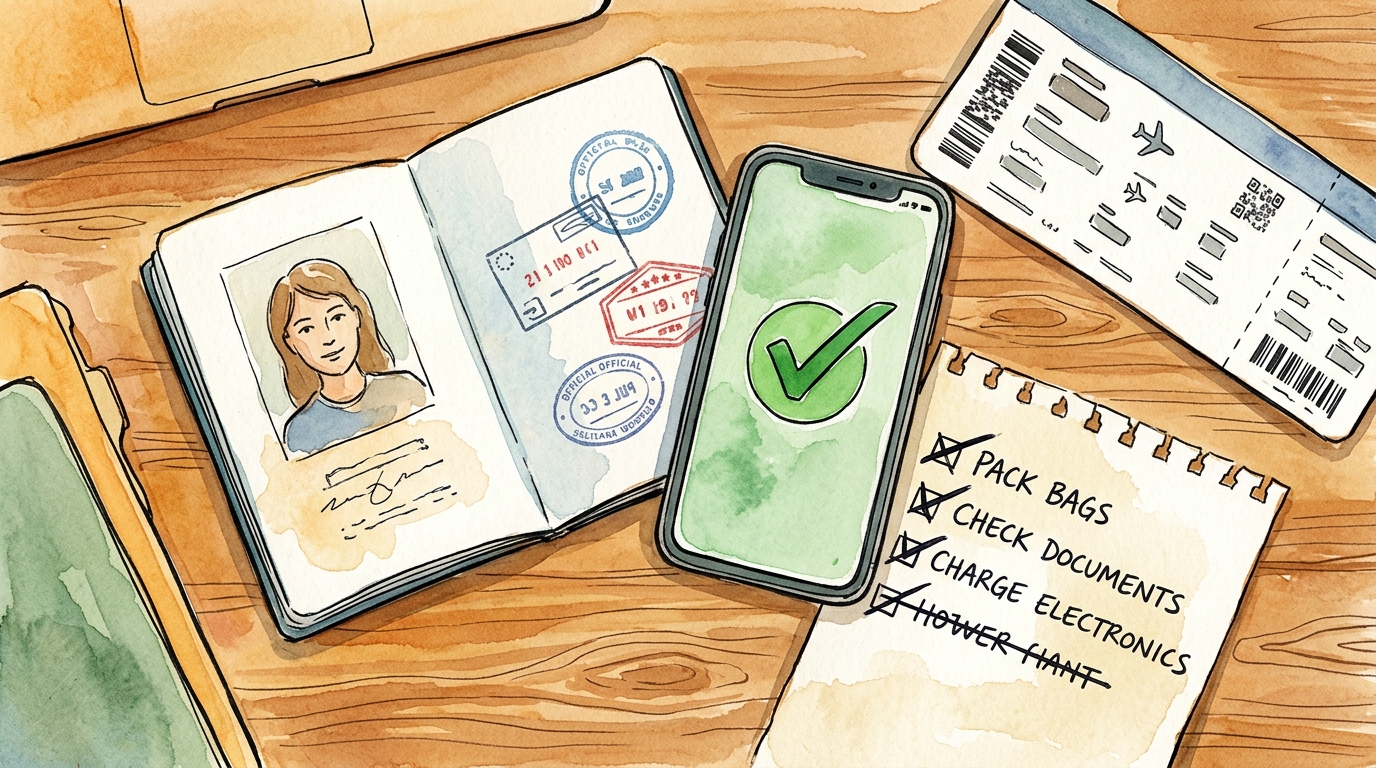
- Check your passport. Schengen Area rules require validity for at least 3 months beyond your planned departure date, plus two blank pages. Our travel document checklist covers the full requirements (note: the UK has different rules if your route includes a London stop).
- Download the "Travel to Europe" app. Available on iOS and Android from Frontex. Pre-register up to 72 hours before arrival.
- Pad your first connection. Add at least 2 hours when connecting through a Schengen hub. Don't book that 75-minute Frankfurt layover for your first EES trip.
- Know your 90-day count. If you've visited Europe in the last 180 days, those days count toward your cap. Schengen calculators track this, or tools like TripProf that manage your travel documents and itinerary keep it organized in one place.
EES is just one piece of the puzzle. Check our guide to common first international trip mistakes for the full picture of what first-timers get wrong (and how to avoid it).
Frequently Asked Questions
Do I need to register for EES before my trip?
No. Registration happens at the border with no advance application needed. You can optionally pre-register via the "Travel to Europe" Frontex app to save time, but it's not required and won't skip the fingerprint scan.
Will I get fingerprinted at every European country I visit?
No. EES only applies at external Schengen borders. You register at your first entry point and again at your final exit. Moving between Schengen countries (Paris to Rome, Berlin to Prague) involves zero additional border checks.
What's the difference between EES and ETIAS?
EES records your biometrics at the border (active now, free). ETIAS is a pre-travel authorization like the US ESTA (not active, no launch date announced, costs €20). They're separate systems.
What happens if I overstay the 90-day limit?
EES enforces the 90/180-day rule digitally across all 29 Schengen states. Overstay penalties include fines and potential refusal of future entry. The system has flagged roughly 4,000 cases since October 2025.
Should I avoid traveling to Europe this summer?
No. The EU has allowed airports to partially suspend EES checks during summer peaks if needed. Book longer connections, arrive midday when possible, and use the pre-registration app. Don't let headlines stop your trip.
Key Takeaways
- EES replaces passport stamps with biometric scans (fingerprints + photo) at external Schengen borders starting April 9, 2026. It's free with no advance application.
- Multi-city travelers only interact with EES twice: at first entry and last exit. Internal Schengen travel is completely unaffected.
- The rollout has been rough, but 17 million travelers have already been processed. Pad your first Schengen connection by at least 2 hours and arrive midday when you can.
- Download the "Travel to Europe" Frontex app, check your passport expiry (3+ months past departure), and review your travel document checklist before you fly.
- Track your 90-day Schengen count carefully. EES enforces it digitally now. TripProf keeps your documents and itinerary organized in one place.
Sources
- EU Official EES Page — system overview, biometric requirements, exemptions
- IATA/ACI Europe/A4E Joint Statement (Feb 2026) — 70% processing time increase, delay data
- Connexion France — 17 million travelers, 4,000 overstay cases
- European Commission — EES vs ETIAS differences
- Frontex — "Travel to Europe" pre-registration app
- International Airport Review — summer flexibility and partial suspension rules
- European Commission — ETIAS fee increase to €20
Last updated: August 5, 2026
Keep Reading
More travel tips and guides picked for you
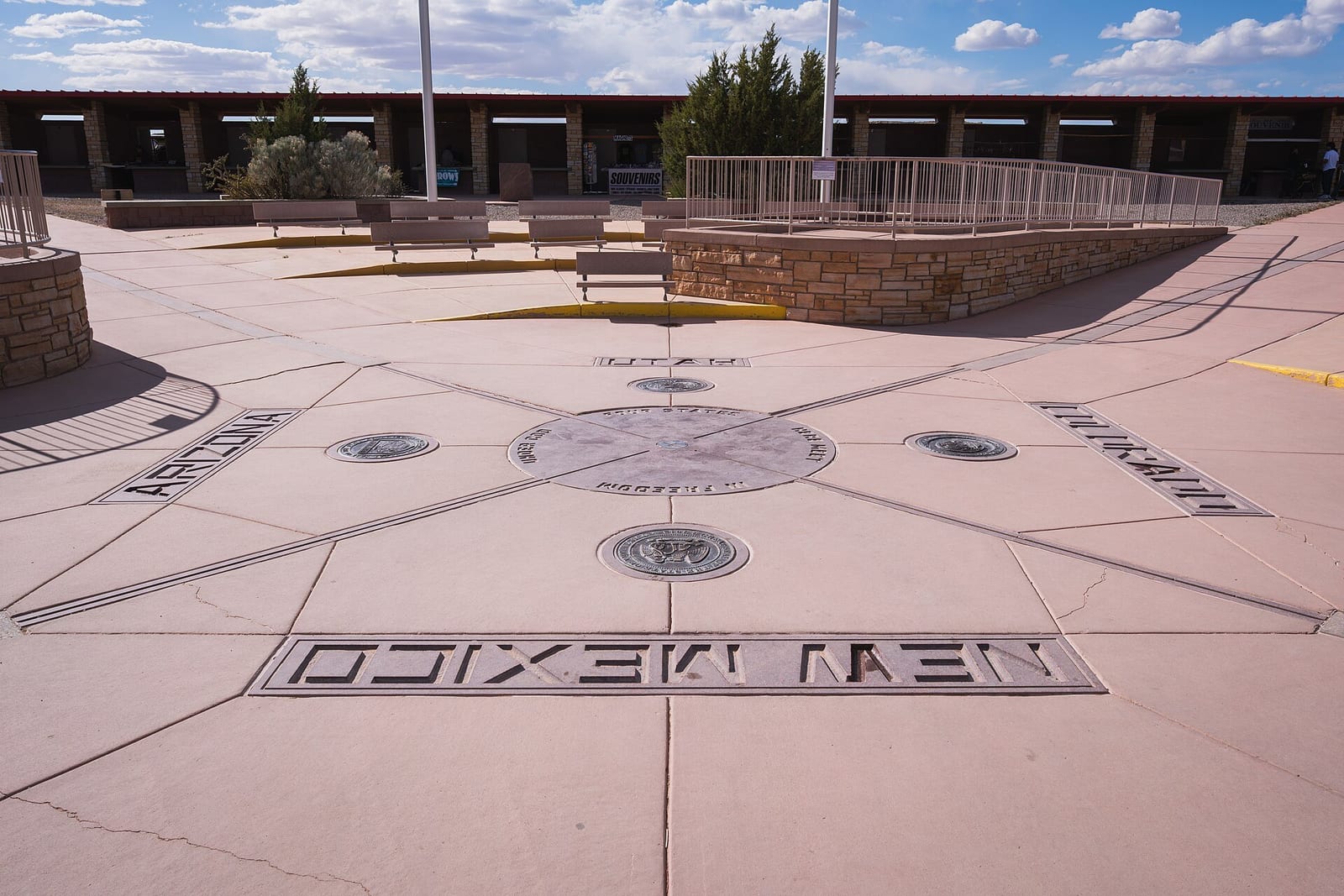
What counts as visiting a state? Layovers, drive-throughs and the rules 50-staters use
Only 2% of Americans name a plane change as the minimum that counts as visiting a state, while 27% set the bar at driving through. Here's a three-tier rubric, a lookup table for the edge cases from Four Corners to D.C., and one trip counted three ways.

The fake SBB ticket website stealing credit card and Twint data from travelers
Zurich cantonal police confirmed a fake SBB ticket website is stealing credit card and Twint payment details from travelers who find it through an ordinary Google search. Here is how to spot it and what to do if you already paid.

UK ETA scam warning: fake websites are charging Austrians up to €900
Fake UK ETA websites are charging Austrian and EU travellers hundreds of euros for a form that costs £20. Here's how the real one works, and how to spot a scam before you pay it.