Mallorca's tourist tax hike got cancelled. Here's what a 2026 trip really costs
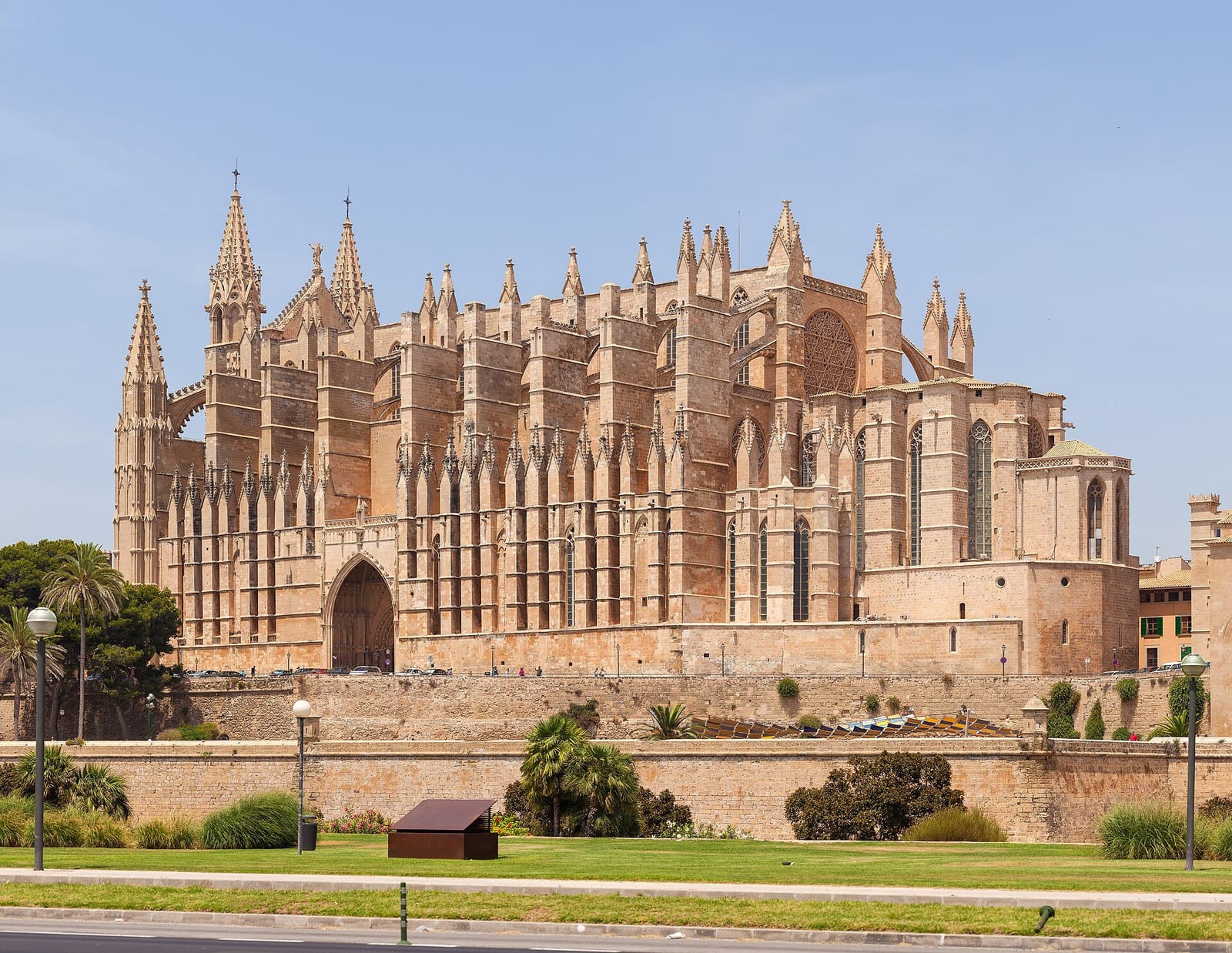
Photo: Thomas Wolf, www.foto-tw.de · CC BY-SA 3.0 de, via Wikimedia Commons
Key Highlights
- 1
- 2
- 3
+3 more in the takeaways below
The Balearic government proposed raising Mallorca's high-season tourist tax by half, then rejected the whole plan in February. Germany still sent more visitors to the island than any other country last year, and the average tourist there is now spending 239.81 euros a day, up 6.48% on last year. So what does a real week on Mallorca cost once you strip out the tax panic and the search-result guesswork?
Add up flights, a double room, the tax that survived, and food, and a peak-season week lands close to 1,125 euros per person. That number moves a lot depending on when you book, which is the part most guides skip.
- Tax hike cancelled: the Balearic government rejected the 2026 ecotasa increase in February, rates stayed at 1.10 to 4.40 euros a night.
- Hotels got pricier anyway: Balearic room rates averaged 190 euros a night in the first half of 2026, up 9% year on year.
- Flights average 231 euros round trip from Germany, but the range runs from 163 to 318 euros depending on timing.
- New drinking rules in the party zones cap all-inclusive alcohol and ban happy hours, which changes the math on a Ballermann trip specifically.
- Herbstferien travelers pay peak-season tax through the end of October, even though flights get cheaper.
What a week on Mallorca actually costs in 2026
Four line items make up almost all of what a week here costs: the flight, the room, the tax, and food. Here is a peak-season week, per person, sharing a double room.
| Item | Cost per person |
|---|---|
| Flight (round trip) | 231 |
| Accommodation (7 nights) | 665 |
| Tourist tax (7 nights) | 19 |
| Food and drink (7 days, estimate) | 210 |
That is roughly 1,125 euros a person before excursions, car hire, or souvenirs. The flight figure is Kayak.de's 12-month average round trip fare from Germany to Palma, 231 euros, with a typical range of 163 to 318 euros. The room rate splits the Balearics' 190 euro average daily hotel rate for the first half of 2026 between two people sharing. The tax uses the midpoint of the confirmed 2026 rate band. Food is our own planning estimate, not an official figure, because no statistical agency publishes a Mallorca-specific daily food number.
Germany sent 4.57 million tourists to Mallorca in 2025, 34% of everyone who visited, more than any other country. If you're planning a trip with a group, this is exactly the kind of budget worth building together before anyone books flights. Our group trip questionnaire covers the other decisions that determine the final number, like who wants a beach hotel and who wants an apartment in Palma's old town.
The tax hike that got cancelled
Search results are still full of warnings about a Mallorca tourist tax doubling in 2026. It didn't happen.
In autumn 2025, regional president Marga Prohens proposed raising the high-season ecotasa as high as six euros a person per night, with steeper fees for cruise passengers. On February 6, 2026, the Balearic government's ministerial council rejected it. Finance minister Antoni Costa pointed to visitor growth of just 0.7% in peak months and a falling environmental pressure indicator as reasons the increase wasn't needed.
Travelscout24 quotes Costa directly: "Wir kommen zu dem Schluss, dass wir auf dem richtigen Weg sind" (we conclude that we're on the right path). The rate stayed where it already was.
The current 2026 rate, confirmed unchanged by category, runs from 1.10 euros a night at budget hostels to 4.40 euros at five-star hotels, VAT included, for stays between May 1 and October 31. A three-star hotel or apartment sits at 2.20 euros, a four-star superior at 3.30. From November 1 through April those same categories drop to between 0.28 and 1.10 euros, and children under 16 pay nothing at all. From the ninth consecutive night in the same hotel, the nightly rate is cut in half.
Book a three-star hotel instead of a five-star resort and the tourist tax alone saves a couple about 30 euros over a week, on top of the usual room-rate gap.
We'd stop reading anything that still quotes a "confirmed 2026 doubling." That story is nine months old and it was never approved.
Why hotels got more expensive anyway
The tax stayed flat, but hotels didn't. Balearic hotels averaged 190 euros a night across the first six months of 2026, a 9% jump over the same period in 2025, according to the Hotel Barometer compiled jointly by STR and Cushman & Wakefield.
Spain overall rose to 163.40 euros a night in the same period. The Balearics are running well above the national average, not just tracking it.
Demand explains most of that gap. Spain's official EGATUR tourism survey put average daily visitor spending in the Balearics at 239.81 euros per person in July 2026, up 6.48% on the year. Average spending per trip reached 1,487.33 euros, up 7.75%. Visitor numbers to the Balearics are growing in the low single digits this year. Spending is growing several times faster. Hoteliers are pricing rooms for guests who are showing up willing to pay more, not for a much bigger crowd. We'd bet that trend outlasts the current season, since a hotelier who successfully raises rates on flat volume has little reason to cut them back.
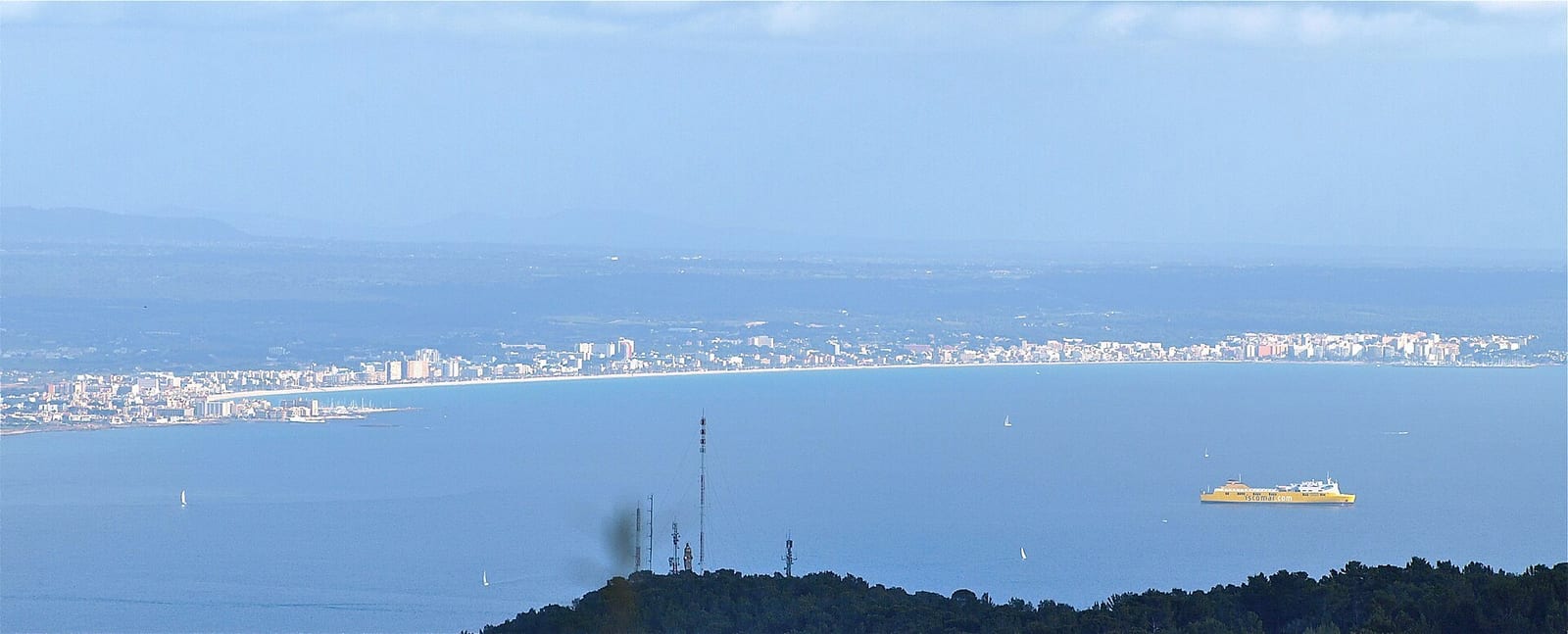
Photo: Chixoy · Public domain, via Wikimedia Commons
For German travelers specifically, the picture is uneven. German arrivals to Mallorca actually dipped just under 2% in 2025, and the decline carried into the first months of 2026. But German visitors are spending more per person, which is exactly the pattern that lets hotels raise the average rate without losing the market that matters most to them.
The new rules that change a Ballermann trip specifically
If your itinerary includes Playa de Palma, Magaluf, or the strip locals call the Ballermann, the 2026 rules change how far a euro goes there, not just the tax.
Under the Balearic government's excess-tourism decree, still in force as of July 2026, shops and bars in the designated zones cannot sell alcohol between 9:30 pm and 8 am. Flat-rate drinking packages, happy hours, and two-for-one promotions are all banned outright.
All-inclusive hotels in these zones can serve a maximum of three alcoholic drinks per meal, and nothing outside mealtimes. Drink in the street or on the beach in a party zone and the fine runs from 500 to 1,500 euros, the same kind of on-the-spot penalty covered in our roundup of tourist fines and rules across Europe.
Booking an all-inclusive package on Playa de Palma expecting unlimited drinks all day. The hotel is legally capped at three drinks per meal now. Anything past that gets charged individually, and it adds up fast on a week-long stay.
None of this touches the rest of the island. A quiet week in Deia or the Tramuntana mountains has none of the drink caps or the fines, and it costs roughly the same on food and transport as anywhere else on Mallorca.
What actually moves the number
Three levers move that number more than anything else on this list: when you fly, which zone you sleep in, and how many nights you stay. We'd rank timing above all of it, since it's the one lever that costs nothing to use.
- Fly outside July and August. Kayak's own data shows 25% of users found round trips for 163 euros or less, a price that mostly shows up in shoulder months rather than peak summer.
- Watch the season cutoff on the tourist tax. High-season rates run through October 31. A trip that starts November 1 pays the low-season rate instead, sometimes a quarter of the peak price.
- Stay past eight nights if you can. The tourist tax halves from the ninth consecutive night in the same hotel, which rewards one longer trip over two shorter ones.
Timing matters most for anyone traveling during Herbstferien. German autumn school holidays run from October 5 through November 6 in 2026 depending on the state; Hessen, Saarland, and Rheinland-Pfalz start earliest on October 5, and Bavaria starts latest on November 2. Book a trip in the first three weeks of that window and you're still paying the full high-season ecotasa. Wait for a state whose holiday starts closer to November, or push a trip into the final week, and the tax drops on its own.
A cheaper week and a pricier week
Same island, same length of stay, but a cheaper week and a pricier week land worlds apart.
- Fly Tuesday, shoulder season: around 163€ round trip
- Three-star hotel, low season rate: roughly 400 to 500€ for 7 nights, double occupancy
- Tourist tax at the low-season rate: under 10€ for the week
- Self-catering apartment cuts food spend close to a third
- Fly in August at the high end of Kayak's range: up to 318€
- Five-star resort at the current 190€ average or above
- Tourist tax at the top of the range: 4.40€ a night, 31€ for the week
- All-inclusive with the new three-drink cap, so extra rounds get billed separately
The gap between those two weeks is easily 700 to 900 euros per person, and almost none of it comes from the tax everyone is still worried about. It comes from when you book the flight and which star rating you pick.
Once you have real numbers instead of guesses, the next problem is usually keeping them straight across a group. That's the exact gap our piece on splitting trip costs fairly is built to close. We built TripProf's expense tracker for exactly this: enter the flight, the room, and the tax once, and everyone in the group sees the same running total instead of five different mental estimates.
Frequently Asked Questions
Did Mallorca's tourist tax go up in 2026?
No. A proposed increase to as much as six euros a night was rejected by the Balearic government on February 6, 2026. The 2026 rate stayed at 1.10 to 4.40 euros per person, per night, in high season.
How much is the tourist tax for a family of four for a week?
Children under 16 are exempt entirely. For two adults at the mid-range rate, expect around 19 to 30 euros total for a seven-night high-season stay, depending on the hotel category.
Is Mallorca more expensive than last year?
Rooms are, by about 9%. Flights and the tourist tax are roughly flat. The overall increase in visitor spending is driven mainly by hotel rates and how much travelers are choosing to spend once there, not by any new fee.
Are the Ballermann drinking rules new for 2026?
No, the restrictions on happy hours, all-inclusive drink limits, and late-night alcohol sales in designated party zones were already in force and remained in effect through the 2026 season.
When is the cheapest time to visit Mallorca?
The cheapest time tends to be shoulder months outside July and August, when lower flight prices meet lower hotel demand. Traveling from November 1 also drops the tourist tax to its low-season rate.
Do I need a visa to visit Mallorca from Germany?
No. Mallorca is part of Spain, which is in the Schengen area along with Germany, so no visa or border check applies for German travelers.
Key Takeaways
- The tax hike never happened. The Balearic government rejected the proposed 2026 ecotasa increase in February; rates are unchanged at 1.10 to 4.40 euros a night.
- Hotels are the real cost driver. Balearic room rates averaged 190 euros a night in H1 2026, up 9% year on year, well ahead of the tax.
- Flights swing the total more than anything. Kayak's average round trip from Germany is 231 euros, with a 163 to 318 euro typical range depending on timing.
- The Ballermann rules cap drinking, not the whole island. A quiet week away from the party zones sidesteps the fines and the all-inclusive drink limits entirely.
- Herbstferien travelers should watch the calendar. High-season tourist tax runs through October 31, so early-window trips pay more than a trip that starts in November.
- Once you have the real numbers, TripProf can turn them into an actual trip budget your group can track together, split fairly, and adjust as bookings come in.
Sources
- ADAC: reporting on the proposed 2026 Balearic tourist tax increase and its rejection
- Travelscout24: the Balearic government's February 2026 decision not to raise the ecotasa
- Majorca Daily Bulletin: Balearic and Spain-wide hotel price data from the STR and Cushman & Wakefield Hotel Barometer
- Kayak.de: average and typical round trip flight prices, Germany to Palma de Mallorca
- Majorca Daily Bulletin: German visitor share and 2025 to 2026 trend data for Mallorca
- Mallorca Global Mag: EGATUR tourism spending survey data for the Balearic Islands, July 2026
- HolidayCheck: current 2026 alcohol and party-zone rules on Mallorca
- ADAC: 2026 Herbstferien dates by German federal state
- Mallorca.com: 2026 tourist tax rate table by accommodation category and season
Keep Reading
More travel tips and guides picked for you
Wizz Air and Ryanair are cutting Vienna flights: what to book instead
Wizz Air has fully left Vienna and Ryanair has cut five aircraft over Austria's aviation tax. Here's exactly what changed, why it happened, and how to still book a cheap flight this winter.

The best value destinations for Swiss francs right now
The Swiss franc is near decade highs, and Switzerland just got confirmed as Europe's second priciest country. Here are eight real destinations, ranked by an official price index, where that gap is worth planning a trip around.

Hotel resort fees and the FTC's rule: what changed, and how to get your money back
Since May 2025, US hotels, rentals and ticket sellers must show the total price, fees included, before checkout. Here's what changed, who's already been caught hiding fees anyway, and how to get refunded.