Europe's Overtourism War: Tourist Taxes, Airbnb Bans, and the Protests Reshaping Travel in 2026
Key Highlights
- 1
- 2
- 3
+5 more in the takeaways below
You're budgeting for a week in Barcelona this summer, and the math keeps getting worse. The hotel tourist tax just doubled. Venice wants up to €10 just to walk through the door. The Louvre now charges non-Europeans 45% more than locals. And in Tenerife and Lanzarote, protesters are chanting that you're not welcome. Europe isn't closing its borders to tourists. But it's rewriting the terms of entry.
Europe's overtourism backlash hit a turning point in 2026. Venice expanded its day-tripper fee to €10. Barcelona doubled its tourist tax. The Louvre introduced dual pricing for non-EU visitors. Anti-tourism protests are planned across 16+ cities on June 15. For travelers: higher costs per night, new entry fees, fewer Airbnbs, and a growing push toward off-peak visits. Planning ahead now saves real money.
The EU Parliament Vote That Changed the Conversation
On March 18, 2026, the European Parliament's Transport and Tourism Committee approved a resolution that frames overtourism as one of Europe's most urgent economic and social challenges. The committee vote was clear: 33 in favor, 4 against, 4 abstentions. Rapporteur Daniel Attard (S&D, Malta) presented data showing that 80% of travelers visit just 10% of destinations, while European tourism supports 12.3 million jobs and 10.5% of GDP.
It's non-binding, for now. A full Parliament vote is expected in April 2026. But the direction is unmistakable: the EU wants to spread tourists more evenly across the continent, not simply manage the damage in overcrowded cities.
The practical measures in the resolution read like a roadmap for the next five years. An integrated ticketing system for cross-border rail, air, and maritime transport would make it easier to reach secondary destinations. New EU-wide rules on short-term rentals take effect May 20, 2026, requiring platforms to share registration data with authorities. The resolution also calls for investment in EV charging infrastructure, cycling tourism networks, and gastronomy and heritage tourism in undervisited regions.
The resolution also endorses "tourism skills cards" to help the industry retain workers, and environmental tax best-practice sharing between member states. Think of it as the EU saying: we've studied the problem, we have a framework, and now it's time for cities and countries to act. Whether the full Parliament approves it in April or waters it down, the political signal is already sent.
None of this bans anyone from visiting Paris or Barcelona. But it signals that Europe's political establishment now views unchecked tourism concentration as a problem worth legislating, not just complaining about.
The Tax Map: What You'll Actually Pay in 2026
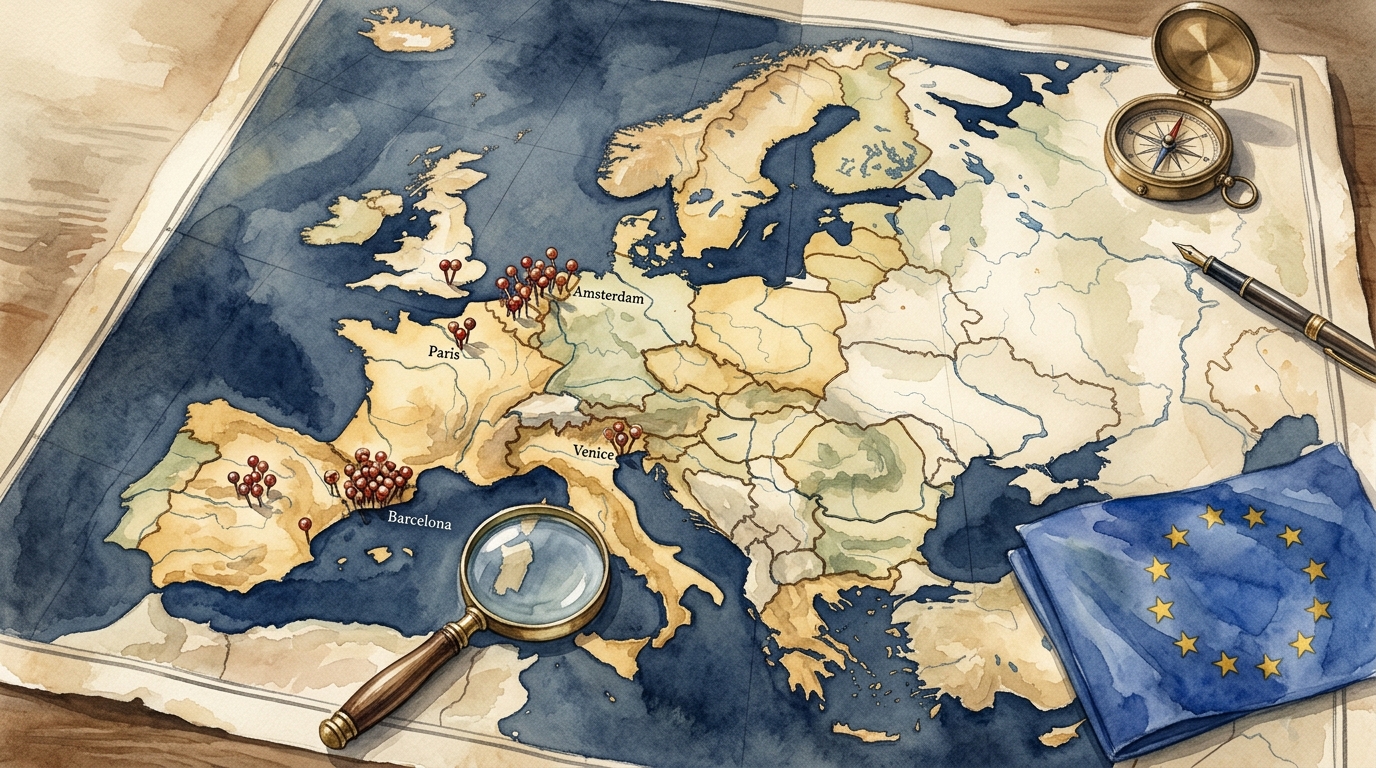
Tourist taxes aren't new in Europe. What's new is the speed, scale, and aggression of the increases. Nearly every major destination raised fees in 2025 or 2026, and several introduced entirely new charges. Here's what the landscape looks like right now.
| Destination | Tax / Fee | Who Pays | Status |
|---|---|---|---|
| Venice | €5-10/day (day-trippers) | Non-residents visiting on 60 selected days (Apr-Jul) | Active |
| Barcelona | €10-15/person/night (hotels) | All overnight guests, rate varies by hotel star rating | Active Apr 2026 |
| Rome (Trevi Fountain) | €2 entry fee | Non-resident visitors to the basin area | Active Feb 2026 |
| Amsterdam | 12.5% of room rate | All overnight guests (highest in Europe) | Active |
| Edinburgh | 5% of room rate (capped at 5 nights) | All overnight guests, first UK city with a tourist tax | July 2026 |
| Greece (cruise ports) | €5-20/person | Cruise passengers; €20 peak at Mykonos/Santorini | Active |
| Louvre, Paris | €32 non-EU / €22 EU | Museum visitors (dual pricing by residency) | Active Jan 2026 |
| Tenerife (El Teide) | €10-15 eco-tax | Hikers and summit visitors | 2026 |
| Milan | €3-10/night | Hotel guests within 30km of Olympic venues, by star rating | Active |
| Norway | 3% on accommodation | Guests, at municipal discretion | 2026 |
Sources: Euronews, Edinburgh City Council, Euronews (Greece), CNN
Let's put real numbers on this. A couple spending five nights in a Barcelona hotel (4-star) will pay roughly €120-150 in tourist taxes alone. Add the Louvre's new non-EU price on a Paris day trip, Venice's entry fee for two days, and the cruise port levy at Santorini, and you're looking at an extra €200-300 per trip in fees that didn't exist three years ago.
Venice's day-tripper fee jumps from €5 to €10 if you don't book at least four days in advance. The fee applies on 60 selected days from April through July, between 8:30am and 4:00pm. Overnight guests, residents, and students are exempt.
The most striking development is the Louvre's dual pricing. Non-EEA visitors now pay €32 for a ticket that costs EU residents €22. The 45% increase is part of a broader French policy of "differentiated pricing" rolling out across major cultural sites including Versailles and the Paris Opera. Officials expect the Louvre change alone to generate an additional €17.5 million annually.
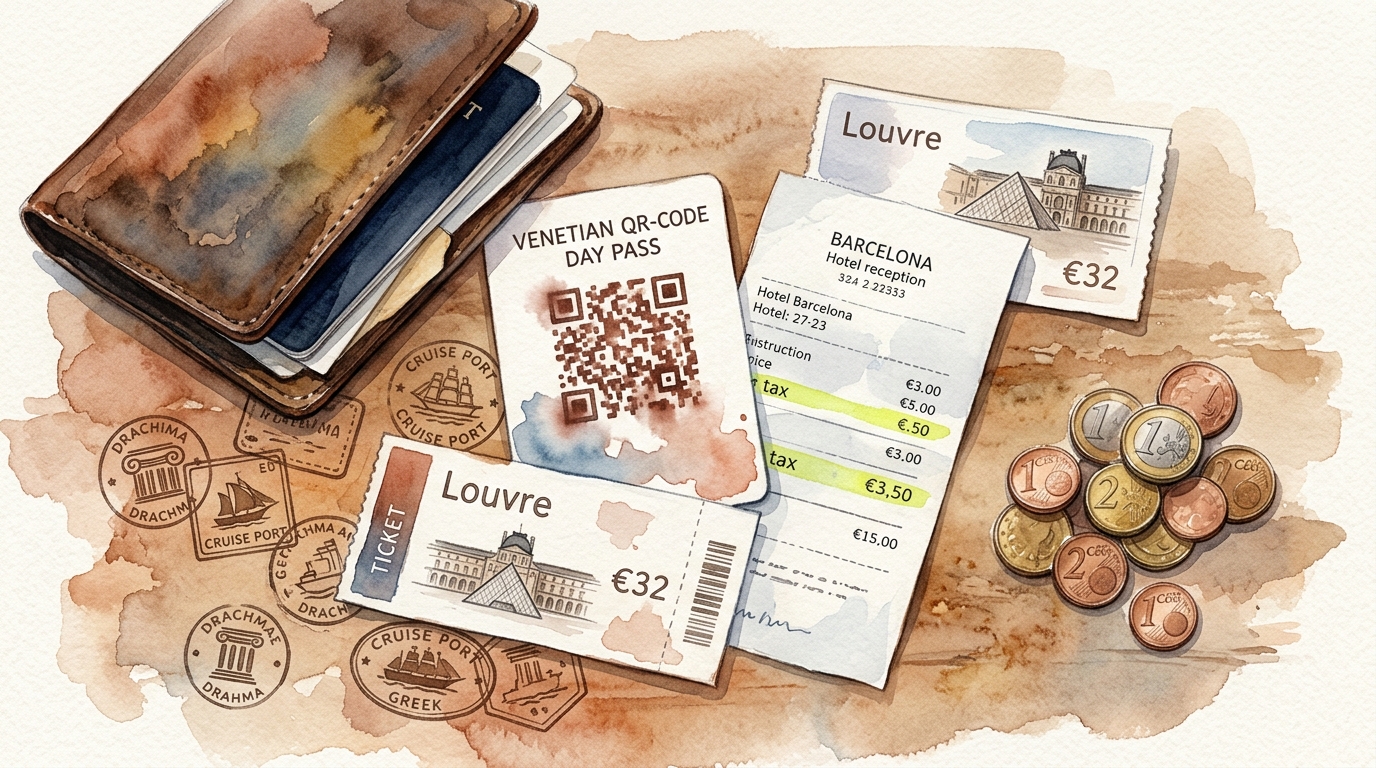
Edinburgh will become the first UK city to charge a tourist tax when its 5% visitor levy launches on July 24, 2026, capped at five consecutive nights. And if you're cruising the Greek islands, expect to pay €20 per person at Mykonos and Santorini during peak season (June through September), with lower rates of €12 in shoulder months and €5 or less at other ports.
Brussels also raised its hotel tax to €5 per night in January 2026 (€4 for homestays), up €1 from the prior year. Small increases like these fly under the radar individually, but stack up across a multi-city itinerary.
Rome's Trevi Fountain fee deserves a closer look. Since February 1, 2026, non-resident visitors pay €2 to enter the basin area where you toss the famous coin. The fee applies during daytime hours, with free access after dark. City officials expect the charge to generate approximately €6.5 million per year. You can still see the fountain from above the barriers for free, but the close-up, coin-tossing experience now has a price tag.
For context on what other rules and fines to watch for in Europe this year, the list keeps growing.
The Streets Are Talking: Protests from Barcelona to the Canary Islands
Tourist taxes are the quiet part. The loud part is happening in the streets. On June 15, 2026, coordinated anti-tourism protests are planned in 16+ cities across Spain, Italy, Portugal, and France. Barcelona, Mallorca, Bilbao, Ibiza, Valencia, Venice, Naples, Palermo, and Lisbon are all on the list.
The protests are organized by the Southern European Network Against Touristisation (SET), a coalition founded in 2017 that held a strategy workshop in Barcelona with 120 delegates from more than a dozen cities. Their tactics range from peaceful marches to the water pistol attacks on tourists that made international headlines in Barcelona in 2024.
Your Airbnb used to be my home.
Protest sign, Barcelona anti-tourism march
The Canary Islands have become ground zero for the movement. The archipelago received 7.8 million visitors in the first half of 2025 alone, while the islands are home to just 2.2 million residents. Under the banner "Canarias tiene un limite" (The Canaries have a limit), thousands protested across all seven islands. TimeOut reported that both Tenerife and Lanzarote have been placed on travel "No Lists" by publications citing overtourism, environmental fragility, and infrastructure strain.
What makes these protests different from isolated incidents in past years is the coordination. This isn't one angry city. It's a networked, multi-country movement with shared grievances: housing prices pushed beyond reach, neighborhoods hollowed out by short-term rentals, public infrastructure strained by visitor volumes that dwarf local populations.
The emotional weight is real. On Reddit's Rick Steves Travel Forum, threads about anti-tourist sentiments in Spain run hundreds of comments deep, with travelers sharing stories of hostile interactions and a growing sense of unease. Multiple users describe feeling like a "walking ATM" - welcomed for their money, resented for their presence. For first-time international travelers, this kind of friction can be genuinely disorienting.
The Airbnb Crackdown: City by City
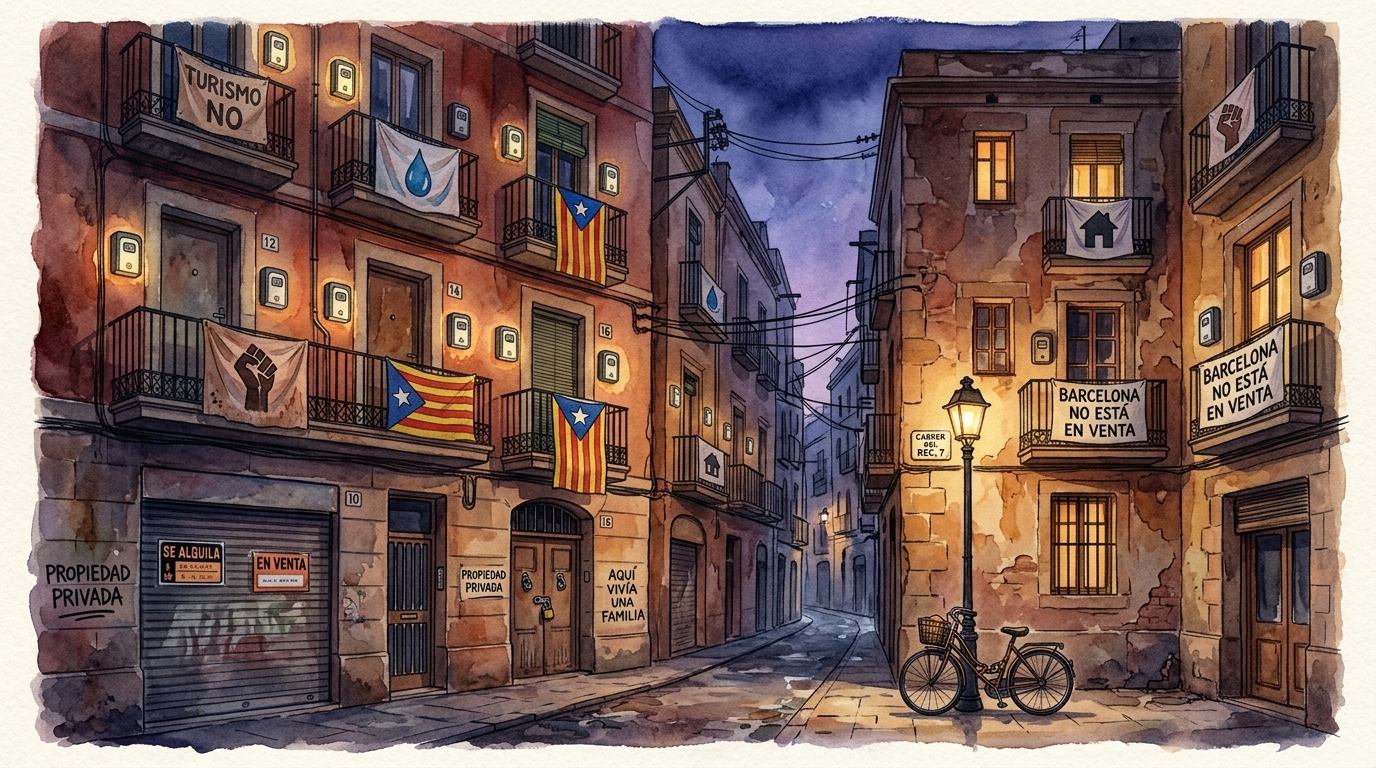
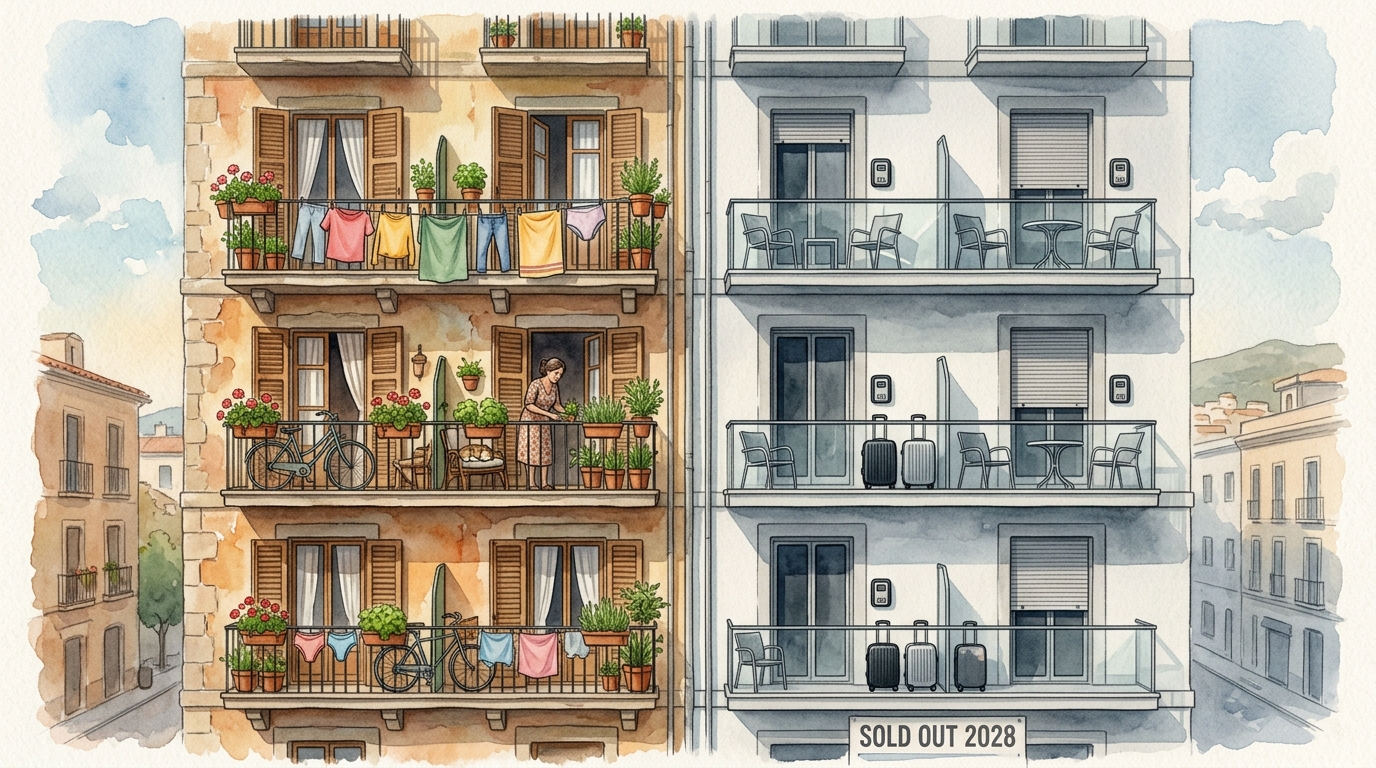
Short-term rental restrictions have moved from political talking points to enforceable law. The most aggressive example is Barcelona, which will phase out all 10,000 short-term rental licenses by November 2028. Spain's Constitutional Court upheld the policy, and the government has already fined Airbnb €65 million for advertising properties without proper licenses. The city's rents have risen more than 60% in the past decade.
But Barcelona isn't operating in isolation. Here's what other major cities are doing.
- Florence, Feb 2025 Banned self-check-in keyboxes (fines up to €400). No new short-term rental licenses in the UNESCO-listed historic center as of 2026.
- Amsterdam, Apr 2026 Cut short-term rental nights in central districts from 30 to 15. Banned new hotels unless another closes. Cruise ships capped at 100/year, down from 190, with a full ban by 2035.
- Barcelona, Nov 2028 All 10,000 short-term rental licenses expire. No renewals. Constitutional Court upheld the ban.
- Athens, 2026 One-year moratorium on new short-term rental licenses in three central districts. National short-term rental climate fee of €8/night (Apr-Oct).
- Lisbon, ongoing Tourist tax of €4/night capped at seven nights. Approximately 20,000 short-term rentals represent 8% of the city's housing stock. Rents doubled since 2015.
The pattern is consistent: cities are choosing housing for residents over accommodation for visitors. And the EU's new short-term rental rules taking effect on May 20, 2026, will give local authorities better data to enforce existing restrictions by requiring platforms to share host registration numbers.
Dubrovnik tells a cautionary tale about what happens without action. Only 30% of Old Town housing is still occupied by locals, and the city has now prohibited new private rental permits in the historic core. Athens tells a similar story: rents up more than 50% since 2019, and roughly 20,000 short-term rental listings competing directly with long-term housing. Lisbon's tourist tax of €4 per night (capped at seven nights) barely dents the problem when short-term rentals make up 8% of the city's entire housing stock.
If you're planning a European trip and counting on finding a cheap Airbnb in a city center, that assumption is getting riskier every year. The savings dynamics between direct booking and third-party platforms are shifting fast.
"Quality Tourism": Progress or Just a Euphemism?
Every official statement about overtourism now includes the phrase "quality tourism." Spain's government used it when tourist numbers hit record highs. The EU resolution references it. City councils across Southern Europe invoke it when defending higher taxes. But what does it actually mean for the person booking a trip?
The data tells a clear story. The European Travel Commission reports that travel expenditure across Europe rose 9.7% in 2025, while visitor arrivals grew just 3.2%. The pattern is even sharper in Spain, where government data shows international tourist spending reached €15.4 billion in the first two months of 2026 alone, up 6.9% year-over-year, while visitor numbers increased just 2%.
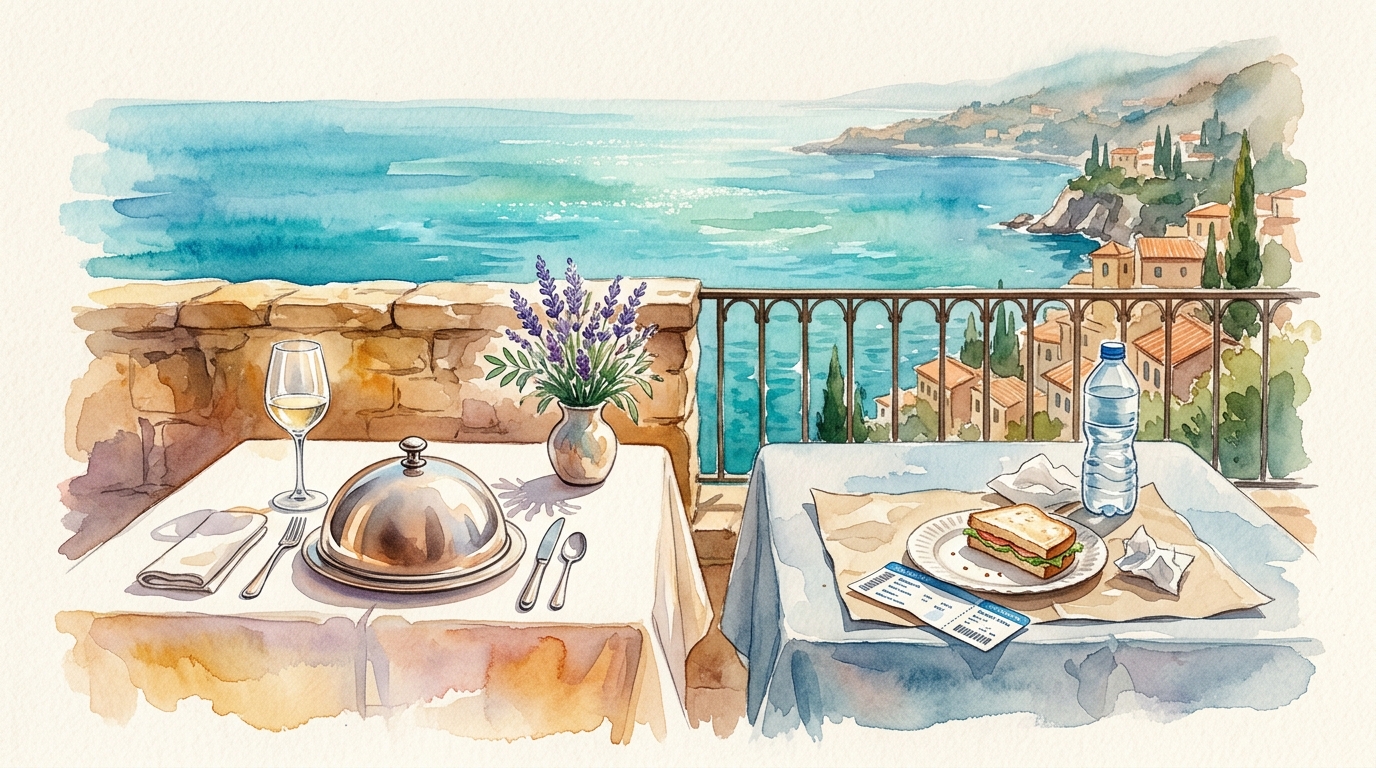
Translation: Europe wants fewer tourists spending more money. That's what "quality tourism" means in practice. And it's already happening.
For high-spending visitors, this shift is mostly invisible. The taxes are small relative to a luxury hotel bill. The entry fees are trivial compared to a week's restaurant spending. But for budget-conscious travelers already squeezed by airline fees and the dollar's weakness against the euro, these incremental costs add up fast.
Shoulder season travel (April-May, September-October) often means lower tourist taxes, fewer crowd management fees, and better availability. Venice's day-tripper fee only applies April through July. Greece's cruise port levy drops from €20 to €12 outside peak months. Planning around these windows saves real money.
Honestly, the shoulder season advice isn't just about saving money. April in Lisbon or October in Rome is a better trip than July in either city, crowds or no crowds.
Skyscanner's 2026 travel trends report, based on data from over 22,000 travelers, found that 32% experienced negative effects from overtourism and 34% are now actively seeking quieter destinations. Separately, Hilton's 2026 Trends Report found that rest is the top travel motivation for 56% of leisure travelers. The message from both datasets: travelers are responding to the crowding problem on their own, choosing Albania over the Amalfi Coast and Ljubljana over Prague.
The question is whether "quality tourism" is a genuine effort to make travel sustainable or a polite way of saying budget travelers aren't wanted. The answer, honestly, is both. Cities genuinely need the revenue to repair infrastructure strained by visitor volumes. But the mechanism they've chosen - higher prices - inherently favors wealthier visitors. A quarter of Barcelona's new tourist tax revenue is earmarked for affordable housing programs, which is a concrete benefit. But whether that money actually reaches residents depends on political follow-through, not just collection.
What This Means If You're Planning a Trip to Europe
Here's where the political debates and protest movements translate into your actual trip planning. The changes are real, they're happening now, and they require adjustments that didn't matter even two years ago.
Budget an extra €150-300 for taxes and fees. A multi-city European trip in 2026 will cost meaningfully more in entry fees, tourist taxes, and access charges than the same trip in 2023. Factor this in at the planning stage, not at the hotel checkout.
Book accommodation further ahead. With short-term rental supply shrinking in Barcelona, Florence, Amsterdam, and Athens, the remaining options fill up faster and cost more. Hotel availability in cities with "zero growth" hotel policies (Amsterdam, parts of Florence) won't expand to meet demand.
Consider the destinations nobody's protesting about. The EU resolution specifically aims to redirect travelers toward lesser-known regions. That's not just policy, it's practical advice. If you're flexible on destination, places like Slovenia, Portugal's Alentejo region, Romania's Transylvania, and Poland's Tri-City (Gdansk-Sopot-Gdynia) offer comparable experiences at a fraction of the cost and friction. We've put together a full guide to where to go in Europe without the crowds this summer.
Pre-book everything that now requires a ticket. The Trevi Fountain, Venice day access, and an increasing number of churches, museums, and viewpoints now require advance booking. Showing up and paying at the door is either more expensive (Venice) or impossible (Trevi Fountain at peak times). Check requirements city by city before you go, and keep in mind that Europe's new Entry/Exit System may add time at borders too.
Travel in shoulder season or off-peak days. Almost every new fee structure rewards visitors who come outside peak periods. Venice only charges day-trippers from April through July. Greece's cruise levy halves in spring and fall. Barcelona's tourist tax bites hardest at luxury properties during summer, so if you're going anyway, this 4-day Barcelona itinerary spreads the days across quieter neighborhoods alongside the big-ticket sights. Tools like TripProf can help you compare destination costs and timing to find the sweet spots that work with your budget.
If you're visiting multiple countries, review your travel insurance policy carefully. Some policies have specific exclusions for government-imposed fees and access restrictions. Confirm coverage details before you fly.
The Bigger Picture: Is Europe Building Two-Tier Tourism?
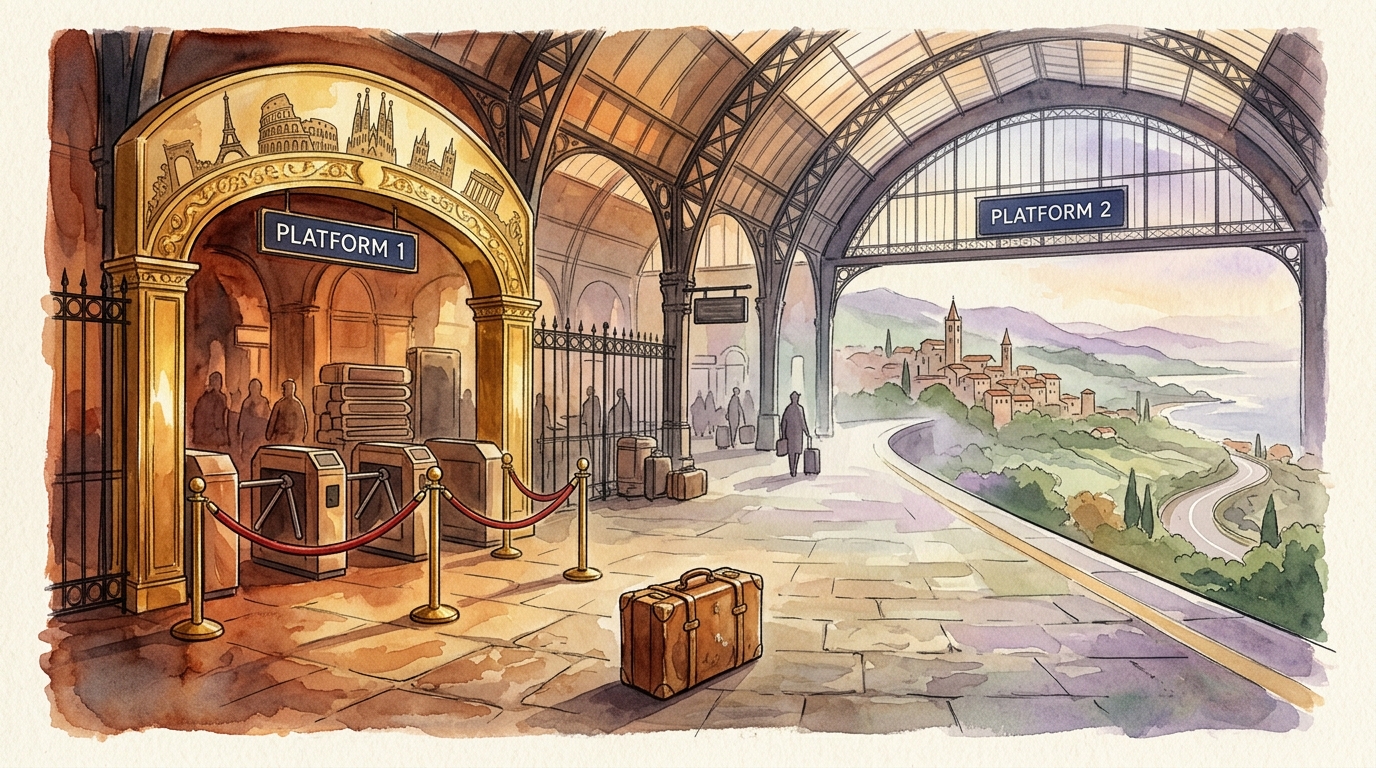
Step back from the individual taxes and restrictions, and a structural shift comes into focus. Europe is building a system where the experience you get depends heavily on how much you're willing to pay and how far ahead you plan.

The Louvre's dual pricing is the clearest example. For the first time, a major European cultural institution charges different prices based on where your passport was issued. France 24 reports the policy has drawn backlash from travelers who call it a "foreigner tax," while French officials frame it as a way for global visitors to contribute more to maintaining institutions they disproportionately use.
UN Tourism data shows Europe welcomed 793 million international tourists in 2025, 4% above 2024 and 6% above pre-pandemic 2019 levels. Growth of 3-4% is forecast for 2026. The continent isn't shrinking its tourism industry. It's restructuring who benefits and who pays.
The dollar's decline against the euro amplifies this for American travelers specifically. The US dollar weakened roughly 13% against the euro in 2025, and the slide continued into early 2026. For Americans, Europe is simultaneously more expensive due to exchange rates and more expensive due to new taxes and fees. That's a double squeeze that previous generations of travelers didn't face.
Meanwhile, the cruise industry is absorbing hit after hit. Amsterdam's 100-ship-per-year cap and planned 2035 ban. Greece's port levies. Barcelona's dock-area restrictions. For more on the environmental and economic tensions around cruising, our deep dive into the real costs of cruise ships in 2026 covers the full picture.
None of this means Europe is "anti-tourist." Tourism remains a pillar of the European economy. But the era of showing up anywhere, anytime, at low cost, with no advance planning, is ending. The new rules reward travelers who book ahead, visit in shoulder season, explore secondary destinations, and stay longer. In a way, they reward the kind of thoughtful travel planning that makes trips better anyway.
Frequently Asked Questions
Is Europe becoming anti-tourist?
No. Europe welcomed a record 793 million international tourists in 2025 and expects 3-4% growth in 2026. What's changing is how tourism is managed. New taxes, entry fees, and rental restrictions target overcrowding in specific hotspots, not tourism as a whole. The EU Parliament resolution explicitly aims to spread visitors across the continent, not reduce them.
How much extra will tourist taxes cost me in Europe in 2026?
For a typical two-week, multi-city trip, expect an additional €150-300 in tourist taxes, entry fees, and access charges compared to 2023. The exact amount depends on your destinations, accommodation type, and whether you visit during peak season. Barcelona alone can add €10-15 per person per night in hotel taxes.
What did the EU Parliament vote on regarding overtourism?
The Transport and Tourism Committee approved a non-binding resolution on March 18, 2026, calling for measures to redistribute tourists to lesser-known regions, implement short-term rental regulations, expand cross-border rail connectivity, and share best practices on environmental taxes. The full Parliament vote is expected in April 2026.
Will Barcelona really ban all Airbnbs by 2028?
Yes. Barcelona will not renew any of its roughly 10,000 short-term rental licenses when they expire in November 2028. Spain's Constitutional Court upheld the policy, and the government fined Airbnb €65 million for advertising unlicensed properties. The ban covers whole-home rentals of 31 days or fewer.
Is Venice's day-tripper fee actually reducing crowds?
The evidence so far is mixed. Venice's 2025 pilot collected €5.42 million from over 720,000 payers (Venice city administration 2025 pilot data), but crowd levels on fee days weren't dramatically lower than on free days. The city expanded the program to 60 days in 2026 and raised the last-minute price to €10, suggesting officials view it more as a revenue tool than a crowd reduction measure.
Are anti-tourism protests dangerous for travelers?
The vast majority of protests are peaceful marches. Isolated incidents like water pistol spraying in Barcelona have made headlines but pose no physical danger. If you're traveling on or around June 15, 2026, expect possible disruptions in Barcelona, Venice, Lisbon, Palermo, and other cities where SET-coordinated demonstrations are planned. Monitor local news and avoid protest routes if you prefer to steer clear.
Which European cities are pricing out budget travelers?
Amsterdam (12.5% room tax for hotel guests, or a separate €15/person cruise levy), Barcelona (up to €15/person/night hotel tax), and Venice (€10 day-tripper fee) currently have the highest combined tourism charges. Paris's dual pricing at museums disproportionately affects non-EU visitors. Budget travelers increasingly report feeling like "walking ATMs." Shifting to lesser-known destinations in Northern and Eastern Europe offers significantly lower costs.
Key Takeaways
- The EU Parliament's March 2026 overtourism resolution signals a continent-wide policy shift toward redistributing tourists, not just taxing them.
- Budget an extra €150-300 per multi-city European trip for new taxes, entry fees, and access charges that didn't exist three years ago.
- Short-term rental supply is shrinking fast: Barcelona bans all 10,000 Airbnbs by 2028, Florence froze new licenses in its historic center, and Amsterdam cut rental nights in half.
- Shoulder season travel (April-May, September-October) saves real money because most new fee structures charge less or don't apply outside peak months.
- The Louvre's dual pricing (€32 non-EU vs. €22 EU) sets a precedent that other institutions may follow. Pre-booking is becoming standard at major landmarks.
- Coordinated anti-tourism protests on June 15, 2026, across 16+ cities show this is a structural movement, not isolated complaints.
- Planning tools like TripProf help you compare destination costs, check current tax rates, and find timing that works with your budget, which matters more in 2026 than any year before.
- Europe isn't closing its doors. But the days of cheap, spontaneous, peak-season trips to overcrowded hotspots are numbered. The travelers who plan ahead will pay less and enjoy more.
Sources
- European Parliament: MEPs advocate for smart management of tourism (March 2026)
- UN Tourism: International tourist arrivals up 4% in 2025 (January 2026)
- Euronews: All of 2026's new tourist taxes explained (February 2026)
- Euronews: Venice daytripper fee to return in 2026 (September 2025)
- CNN: Louvre museum to hike entrance fee by 45% for non-European visitors (November 2025)
- NPR: Trevi Fountain fee takes effect (February 2026)
- Fortune: Amsterdam bans new hotels and plans to ban cruises (July 2024)
- AFAR: Anti-tourism protests to take place in Europe June 15
- Idealista: Barcelona sets 2028 deadline to phase out tourist apartments (June 2025)
- Euronews: Spain fines Airbnb €65 million (December 2025)
- Euronews: Greece introduces new €20 cruise tax (July 2025)
- France 24: French museum fare hikes for non-European tourists spark outcry (January 2026)
- CNN: Italy bans Airbnb self-check-ins (December 2024)
- Edinburgh City Council: Visitor Levy for Edinburgh
- European Travel Commission: Spending outpaces arrivals
- Morningstar: What a weaker US dollar means for investors in 2026
- Skyscanner: US Travel Trends 2026
- Euronews: Canary Islands record-breaking tourist numbers (May 2025)
- Maritime Executive: Amsterdam cruise ship limits and terminal relocation
- ETIAS: EU moves to curb overtourism
- Artnet: Louvre hikes ticket prices by 45%
- Catalan News: Protests against tourism monoculture set for June 15
- TimeOut: Thousands of locals are protesting in the Canary Islands
- Spain Government (La Moncloa): International tourists spending in Spain (February 2026)
- Hilton: 2026 Trends Report (2026)
- US News: Croatia's tourist pearl Dubrovnik seeks to reclaim city for locals (March 2024)
- Investing.com: Skyrocketing rents threaten Greece's economic rebound
Last updated: September 2, 2026
Keep Reading
More travel tips and guides picked for you
Michelin's Great Lakes Cities, Ranked by What They Paid
Six Great Lakes cities are paying wildly different amounts for a shot at a Michelin star, and half won't say what they spent. Here's how all six rank, and why Fort Worth's zero-star result after paying proves it buys nothing.

Where to spend Diwali 2026: six real celebrations worth the trip
Diwali 2026 falls on 8 November. From Ayodhya's record-breaking lamp display to Leicester's Golden Mile and a month of Global Village in Dubai, here are six real celebrations worth planning a trip around, with dates, costs, and honest downsides.

The Best Apps to Book a Food Tour (and Where You'll Overpay)
Airbnb Experiences, EatWith, Devour Tours, GetYourGuide and Traveling Spoon, compared on real prices and honest downsides, plus the two minute check that stops you paying twice for the same tour.