The Ugly Truth About Cruise Ships: Hidden Costs, Pollution, and What Nobody Tells You
Key Highlights
- 1
- 2
- 3
+5 more in the takeaways below
You're scrolling through your feed and there it is: a 7-night Caribbean cruise, $499 per person. The photos show infinity pools, sunset decks, and lobster tails. You do the math. A family of four for under $2,000? That's cheaper than a week in Orlando. You screenshot it and send it to the group chat.
Don't book yet.
That $499 fare is real, technically. But it's also the beginning of a pricing structure designed to extract $1,500+ more from you before you step off the gangway. And the costs that don't show up on your credit card statement are even bigger: dumped wastewater, exploited crews, and carbon emissions that dwarf entire national car fleets. Here's what the brochure leaves out.
A $499/person cruise fare typically balloons to $1,500-$2,500 per person once you add mandatory gratuities ($16-20/day), wifi ($20-35/day per device), drinks, excursions, and port taxes. Environmentally, Europe's 218 cruise ships emit as much SOx as 1 billion cars. Crew members work 12+ hour days for wages as low as $2.50/hour, enabled by flag-of-convenience registration. Passengers have almost zero rights when itineraries change. Cruises can still be good value if you go in knowing the real numbers.
The Real Price Tag: What That "$499 Cruise" Actually Costs
The advertised fare covers your cabin, basic food in the main dining room, and the pool. Everything else costs extra. And "everything else" adds up fast.
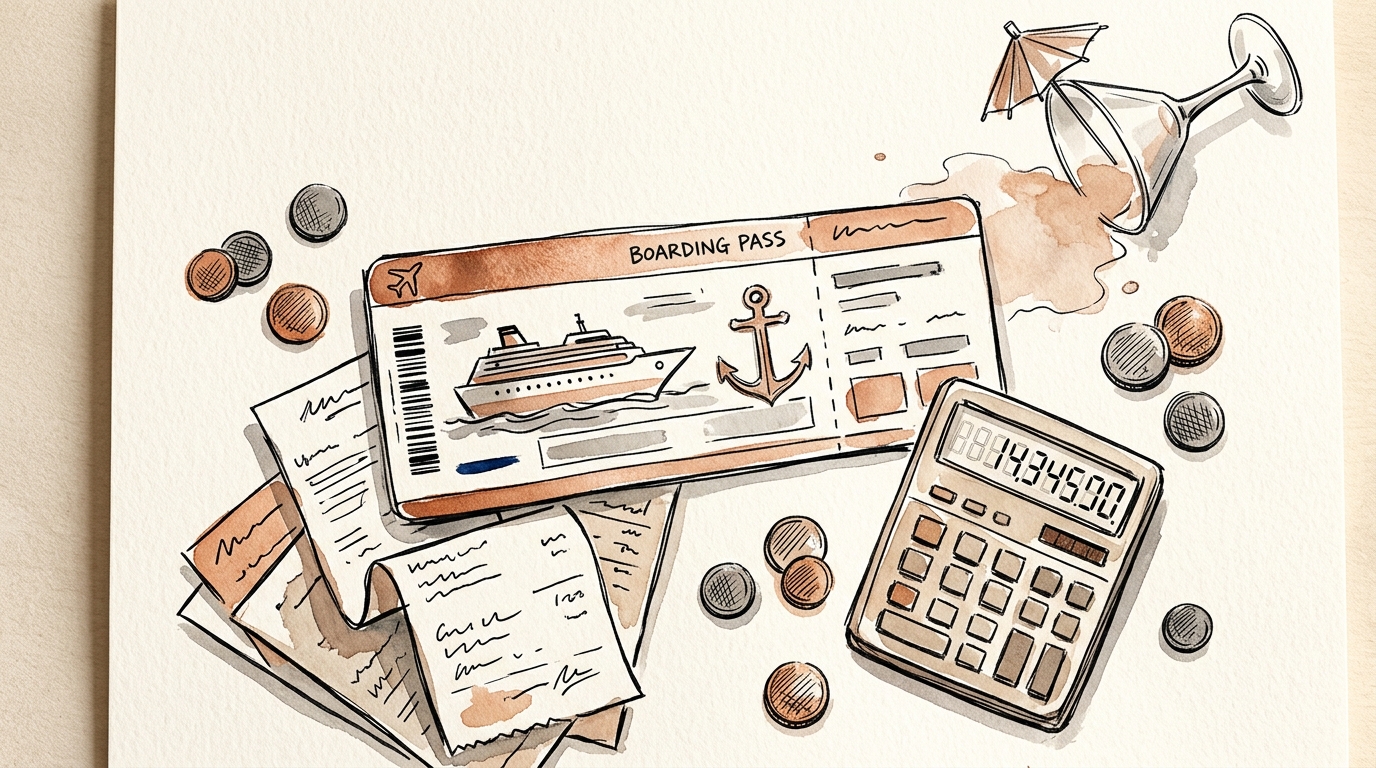
Gratuities you can't skip. Carnival raised its daily gratuity to $17/person/day for staterooms and $19 for suites starting April 2, 2026. Princess bumped theirs to $18-$20/person/day in March. These charges appear on your onboard account automatically. A family of four on a 7-night cruise in a standard cabin? That's $476 in gratuities alone on Carnival. On Princess, it's $504.
Run the full numbers on that "$499 per person" fare for a family of four on a 7-night Caribbean cruise:
| Expense | Per Person | Family of 4 |
|---|---|---|
| Advertised cruise fare | $499 | $1,996 |
| Automatic gratuities (7 nights × $17/day) | $119 | $476 |
| Port fees and taxes | $150-250 | $600-1,000 |
| WiFi (1 device, basic plan) | $140-175 | $280-350 |
| 2 shore excursions (ship-booked) | $200-300 | $800-1,200 |
| Drink package or bar tab | $200-400 | $400-800 |
| Specialty dining (2 meals) | $60-100 | $240-400 |
| Realistic total | $1,368-1,843 | $4,792-6,222 |
That "$2,000 family cruise" is really $5,000-$6,000. Cruise Critic puts the average all-in cruise cost at roughly $286 per person per day, or about $2,000 per person for a week. That's four times the advertised fare.
And the prices keep climbing. Cruise Critic reported that WiFi prices spiked across major lines in 2026. Disney now charges $30/device/day for basic internet and $49 for streaming. Carnival's premium multi-device package hits $90/day. Want your kids to watch Netflix in the cabin while you're at dinner? That's $630 for the week.
The drink math is just as brutal. Cocktails run $10-14 each onboard. A couple having two drinks per day spends $196-$392 over seven nights. Drink packages look like a deal at $60-90/person/day, but they're mandatory for both adults if one buys, and they don't always work everywhere. NCL's drink packages stopped working on its private island Great Stirrup Cay as of March 2026.
What's Coming Out of the Smokestacks
A single cruise ship burns up to 250 tons of fuel per day. That's not a typo. And the exhaust pouring from those funnels is far dirtier than anything on the road.
Transport & Environment found that Europe's 218 cruise ships emitted as much sulphur oxide (SOx) as 1 billion cars in 2022. That's not a fringe activist group. T&E is a Brussels-based research organization whose data underpins EU transport policy. And it gets worse at the company level: a separate T&E analysis showed Carnival Corporation's fleet emitted nearly 10 times more SOx than all 260 million European cars combined in 2017.
SOx causes acid rain and respiratory disease. The marine fuel sulfur limit is 100 times weaker than Europe's standard for road diesel. So while your Peugeot runs on ultra-low-sulfur fuel, the ship you're vacationing on burns something closer to tar.
But emissions aren't just about what goes up. Look at what goes down.
Friends of the Earth reports that an average cruise ship with 3,000 passengers produces 30,000 gallons of sewage and 255,000 gallons of greywater daily. U.S. law allows raw sewage dumping once a ship is more than three nautical miles from shore. Oceana estimates over a billion gallons of sewage go into the ocean from cruise ships each year.
Some companies got caught doing worse. Princess Cruise Lines paid $40 million in 2016 for using a "magic pipe" to bypass waste treatment systems and dump oily waste directly into the sea for eight years. Three years later, parent company Carnival paid another $20 million for violating its probation, covering over 620 pollution incidents across 76 vessels.
The industry's "green" claims don't hold up either. The Dutch Advertising Board ruled that MSC Cruises' claims about LNG fuel being "one of the cleanest shipping fuels" were misleading. MSC didn't appeal.
The Mediterranean became a Sulphur Emission Control Area on May 1, 2025, capping fuel sulfur at 0.1%. And Norway is phasing in zero-emission requirements for ships in its World Heritage fjords, starting with smaller vessels in 2026 and all ships by 2032.
Add it all up and Friends of the Earth calculates that a cruise passenger generates roughly 8x more carbon per day than a land-based vacationer (421 kg CO2/day vs. 52 kg). That gap holds even when you account for flights, hotel air conditioning, and car rentals on shore.
There's proof bans work. After Venice prohibited large cruise ships in 2021, SOx emissions around the port dropped 80%. Venice went from the most cruise-polluted port in Europe to 41st.
The People Below Deck
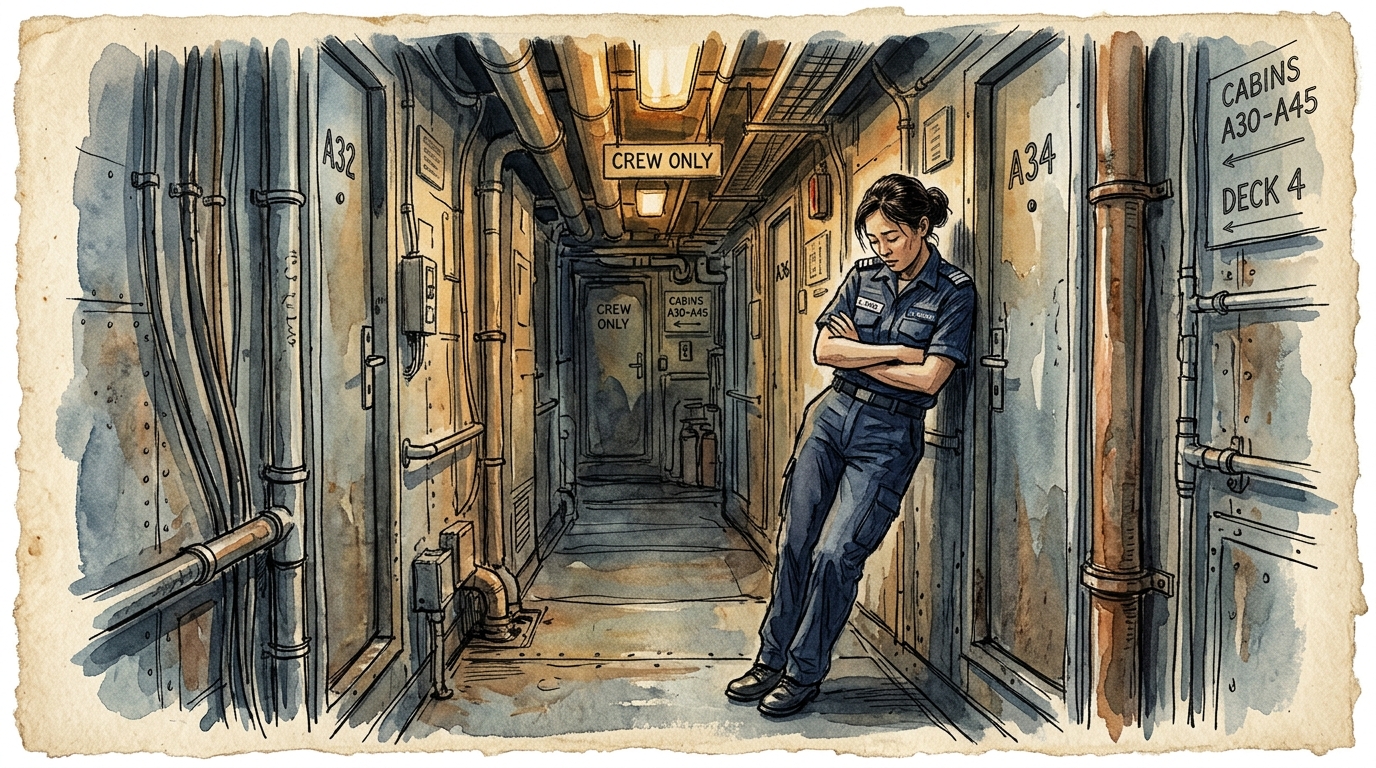
Your cabin steward smiles. They bring towel animals at turndown. They remember your name. What you probably don't know: they're working 10-12 hour shifts, seven days a week, for months without a day off, in a windowless cabin below the waterline that they share with another crew member.
In February 2026, the Australian Maritime Safety Authority boarded the Carnival Encounter in Darwin after a whistleblower reported what the union called "horrifying" conditions. The allegations: wages as low as $2.50 per hour, no safe drinking water (crew had to buy bottled water at $0.70 each), skin infections from overcrowded cabins, and workers forced to continue shifts while sick.
Carnival rejected the claims, saying its wages "meet or exceed international maritime standards." That sounds reassuring until you realize what those standards allow.
Here's the trick. Almost every major cruise ship flies the flag of the Bahamas, Panama, or Bermuda. Not because the company is based there, but because registering under a "flag of convenience" lets them sidestep U.S. and EU labor laws entirely. No minimum wage requirements. No overtime. No 40-hour workweek. Snopes confirmed that the practice is real and widespread across the industry.
The Bahamas is the number one cruise ship registry in the world. Carnival, Royal Caribbean, Disney, Norwegian, MSC: they all use it. The result is that the person making your bed earns $1,500-$3,500 per month working 70-84 hour weeks. Do the hourly math on that and you'll land somewhere between $4 and $12/hour. The automatic gratuity you pay? There's no public audit showing exactly how it's distributed.
When the standoff escalated in March 2026, Carnival Adventure denied access to SafeWork NSW inspectors who arrived to inspect conditions in Sydney. Let that sit for a moment. A company refused to let government safety inspectors onto its ship.
Your Rights (or Lack of Them)
You booked a 7-night Eastern Caribbean itinerary. You're excited about Cozumel and Grand Cayman. Three days before departure, the cruise line swaps both ports for "at sea" days. Your refund? Zero. Your recourse? Almost none.
Royal Caribbean's own FAQ states that the company "may, at any time and without prior notice, cancel, advance, postpone or deviate from any scheduled sailing or port of call." Every major cruise line has nearly identical language buried in its contract of carriage. Cruise Critic notes that cruise lines aren't required to issue compensation unless the change is the line's fault.
Sound like a raw deal? It gets worse when you get sick.
2025 was a record year for gastrointestinal outbreaks on cruise ships. The CDC's Vessel Sanitation Program tracked 20 outbreaks, the highest number since it began tracking in 1994. That's up from 18 in 2024 and 16 in 2012 (the previous record year). And 2026 started strong: a norovirus outbreak on the Star Princess in March 2026 sickened 153 people (104 passengers and 49 crew) during an 8-day Caribbean voyage.
If you need the ship's doctor, prepare for sticker shock. A basic consultation runs $100-$200 during office hours and $300-$600 after hours. X-rays cost $100-$200 each. An overnight stay in the ship's infirmary can hit $1,000-$3,000 per day. And if you need emergency evacuation? Allianz Travel Insurance puts helicopter medevac costs at $12,000 to $25,000 for basic transport, but evacuations from remote ocean locations can exceed $85,000. Your health insurance likely won't cover any of it because ship doctors operate outside every network.
Ship medical centers don't accept insurance. You pay upfront before leaving the ship. Buy standalone travel medical insurance with evacuation coverage (at least $100,000). Check that your policy explicitly covers cruise ships. If you're planning a trip involving a cruise, include your travel documents and insurance details in your pre-trip checklist so nothing gets left behind.
The contract of carriage you agree to when booking also limits where you can sue (typically Miami or a specific jurisdiction the cruise line chooses), shortens the statute of limitations to one year or less, and often requires mandatory arbitration. You're giving up rights you'd have at any hotel on land.
Here's a comparison that puts it in perspective. If a hotel changed your reservation from an ocean-view room to a parking lot view, you'd get a refund or a free upgrade. On a cruise, they can swap your dream port for an "at sea" day and owe you nothing. If you got food poisoning at a resort restaurant, the resort's insurance would cover your medical costs. On a ship, you're paying $200 cash for the doctor visit and filing your own insurance claim later. If a hotel refused to let safety inspectors inside, it would make national news and likely get shut down. On a cruise ship flying a Bahamian flag? Different rules apply.
This isn't speculation. Cruise Critic confirms that passenger rights on cruises are dramatically weaker than equivalent protections on land. Knowing this before you book changes how you evaluate the deal. If you've already made a first-timer mistake by not reading the fine print, at least you won't make it twice.
The Private Island Illusion
Royal Caribbean has Perfect Day at CocoCay. Norwegian has Great Stirrup Cay. MSC has Ocean Cay. Disney has two private destinations in the Bahamas. These islands look incredible in the marketing. What they actually are: floating extensions of the ship's revenue engine, built on land where zero tourist dollars reach local economies.
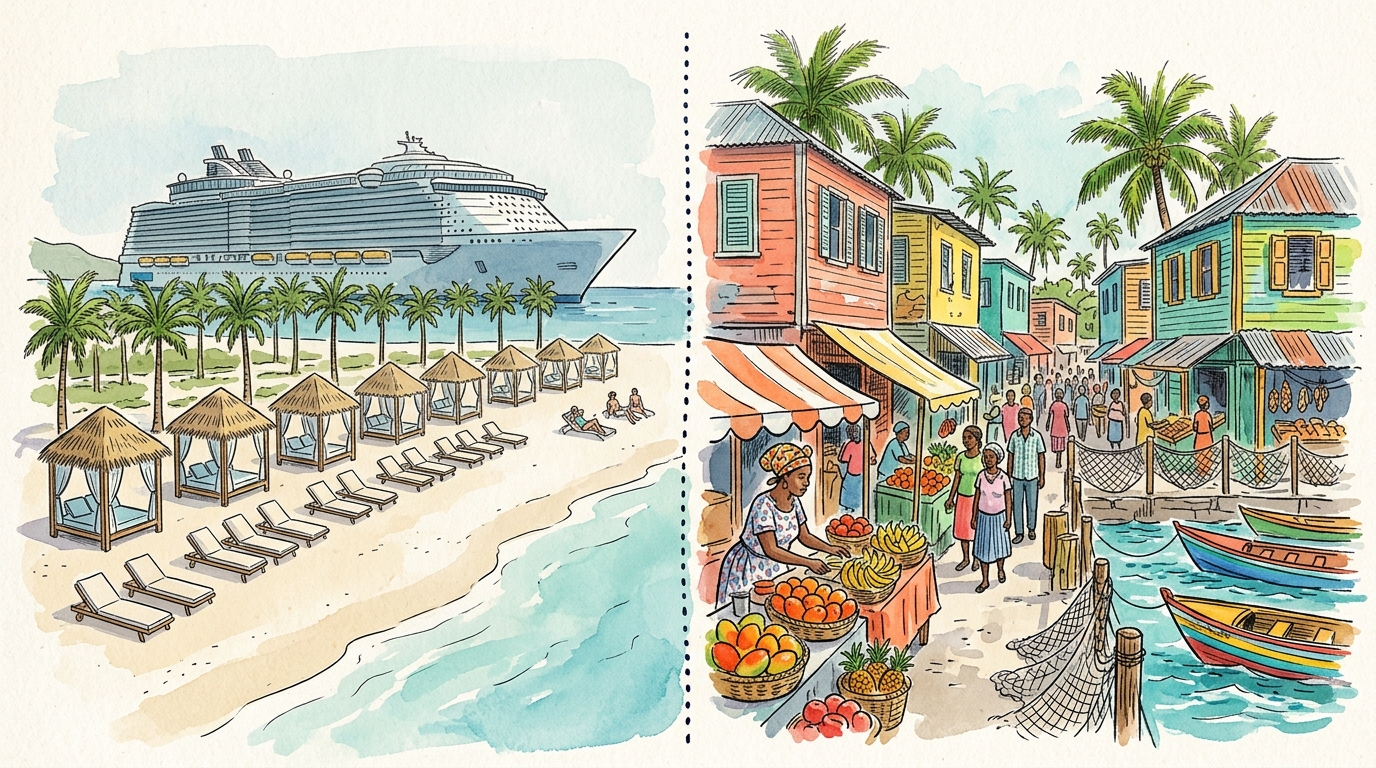
When your ship docks at a cruise line's private island, every dollar you spend goes straight back to the company. The shops, bars, cabanas, water sports, and food are all cruise line operations. There's no local market. No family-run restaurant. No taxi driver making a living. The "destination" is a controlled retail environment with a beach attached.
This model is expanding rapidly. And the environmental cost of building these islands is significant. The development of Disney's Lighthouse Point on Eleuthera faced opposition from community groups concerned about coral reef damage, though Disney ultimately donated 190 acres for public use and created approximately 200 local jobs. Friends of the Earth has documented how cruise port construction threatens marine ecosystems across the Caribbean.
Compare this to what happens when ships dock at real ports. In Cozumel, taxi drivers earn fares, restaurant owners serve meals, local guides run tours, and shopkeepers make sales. The economic multiplier effect of tourism spending in actual communities is exactly what private islands are designed to eliminate.
The pricing psychology is clever, too. Cabana rentals on CocoCay run $299-$1,599 per day depending on the type and season. Water slides and adventure parks that look free in the marketing materials charge $40-$80 per person. The food and drinks that were "included" on the ship? Many of them cost extra on the island. So you've arrived at a "free" port day that can cost your family $500 before lunch.
And here's the environmental angle most passengers miss: building these islands involves dredging, coral removal, and ecosystem disruption on a massive scale. Friends of the Earth's annual cruise report card consistently gives major lines failing grades on environmental stewardship, citing wastewater dumping, air pollution, and habitat destruction from port development.
So what's the pitch? "Exclusive beach experience included in your cruise fare." Translation: we've removed the destination from the equation so we can keep 100% of your spending.
How to Cruise Smarter (If You Still Want To)
Look, this article isn't about telling you never to cruise. Cruises can be genuinely good value for families who want a low-friction vacation with built-in childcare, multiple dining options, and no luggage hauling between hotels. The point is going in with your eyes open instead of discovering the real cost on Day 3 when your onboard account hits four figures.
Here's what experienced cruisers do differently:
1. Budget for the real price, not the fare. Take the advertised fare and multiply by 2.5-3x. That's your actual cost. Build your budget from there. If you're planning a group trip, this is where splitting costs transparently matters most, because cruise add-ons make tracking expenses genuinely complicated.
2. Skip the ship's shore excursions. Book directly with local tour operators. You'll pay 30-60% less for the same experience, and your money goes to local communities instead of the cruise line. Yes, you risk the ship leaving without you. But that risk is tiny if you return 90 minutes before departure.
3. Get travel medical insurance with evacuation coverage. Don't rely on your regular health insurance. Buy a standalone travel medical policy that explicitly covers cruises, with at least $100,000 in emergency evacuation. It typically costs $50-$150 for a 7-day trip. Worth it when a medevac runs six figures.
4. Use your phone's hotspot instead of ship WiFi. In port, buy a local SIM card or use an eSIM for $5-15, and your phone becomes a hotspot. That's $20-35 saved per device per day. On sea days, embrace the disconnect. Your group chat can wait.
5. Bring your own entertainment for sea days. Instead of paying $30-$49/device/day for WiFi, download shows, podcasts, and books before boarding. Bring a Kindle loaded with reading. Pack a deck of cards. Sea days are actually great when you're not stress-refreshing your inbox. If you need to stay connected for work or family emergencies, buy the minimum single-device plan and use it only in the evening.
6. Read the contract of carriage before booking. Nobody does this. You should. It tells you exactly what the cruise line can change without compensating you (spoiler: almost everything). It tells you where you'd have to sue. It tells you the liability limits for your belongings. Five minutes of reading could save you from a nasty surprise.
7. Consider alternatives for the same budget. A $5,000 family cruise budget buys a week in an all-inclusive resort where the price actually includes everything. Or two weeks in Portugal. Or a European train trip through four countries. The cruise isn't always the best value when you count the real cost.
8. Choose newer ships with cleaner tech. If environmental impact matters to you, look for ships running on LNG (lower SOx, though not zero emissions), or lines investing in shore power connections. Norway's fjord zero-emission requirements are pushing the industry toward cleaner vessels. The Mediterranean's new Emission Control Area status is forcing sulfur reductions too.
The best-informed cruisers aren't the ones who hate cruising. They're the ones who know exactly what they're paying for, book accordingly, and enjoy the experience without regret.
Frequently Asked Questions
How much does a cruise really cost when you add up all the hidden fees?
Plan for 2.5-3x the advertised fare. A $499/person cruise typically costs $1,400-$1,800 per person once you add mandatory gratuities ($17/day), WiFi ($20-35/day), drinks, shore excursions, and port taxes. Cruise Critic estimates the average all-in cost at roughly $286/person/day.
Are cruise ships bad for the environment?
Yes. Transport & Environment found that Europe's 218 cruise ships emit as much SOx as 1 billion cars. Ships dump 30,000 gallons of sewage daily, and raw ocean dumping is legal beyond 3 nautical miles from shore in the U.S.
What are the hidden costs of a cruise that nobody warns you about?
The biggest surprises: automatic gratuities ($16-20/person/day), WiFi ($140-245/device/week), ship-booked shore excursions (30-60% markup over local operators), medical visits ($100-600 per consultation), and specialty dining surcharges ($30-200 per meal).
Do cruise ship workers get the gratuities passengers pay?
Cruise lines say they distribute gratuities to crew, but there's no independent public audit verifying the distribution. Crew wages run $1,500-$3,500/month, and Australian authorities investigated allegations of Carnival crew earning as little as $2.50/hour in 2026.
Can cruise ships change your itinerary without a refund?
Yes. Every major cruise line's contract of carriage allows itinerary changes at any time without compensation. Royal Caribbean's policy explicitly states the company may "cancel, advance, postpone or deviate from any scheduled sailing or port of call" without prior notice. You're only refunded for ship-booked shore excursions at skipped ports.
Why are cruise ships registered in the Bahamas and Panama?
"Flag of convenience" registration lets cruise companies avoid U.S. and EU labor laws, minimum wage requirements, and certain taxes. Snopes confirmed that all major cruise lines register ships under foreign flags specifically to reduce labor costs and regulatory obligations.
What happens if you get norovirus on a cruise?
You'll be isolated in your cabin, and you'll still be charged for your full cruise fare. The CDC tracked 20 gastrointestinal outbreaks on cruise ships in 2025, the highest number since tracking began in 1994. Medical treatment onboard starts at $100-$200 per visit and your health insurance won't cover it.
Key Takeaways
- Budget for reality, not the brochure. Multiply the advertised cruise fare by 2.5-3x to get your actual cost after gratuities, WiFi, drinks, excursions, and port fees.
- Book shore excursions independently. Local operators charge 30-60% less than ship-booked tours, and your money supports the communities you're visiting.
- Buy standalone travel medical insurance. Ship doctors don't accept insurance. Medevac costs can exceed $100,000. A $50-150 travel medical policy is non-negotiable.
- Understand your (lack of) passenger rights. Cruise lines can change itineraries without compensation, limit your legal options, and restrict where you can sue. Read the contract of carriage.
- Know the environmental math. Cruise vacations generate roughly 8x more carbon than equivalent land-based trips. If you still cruise, choose newer ships with cleaner fuel technology.
- Track every onboard expense. Cruise ships are designed to make spending invisible with room-charge cards. Tools like TripProf let you log expenses in real time so you don't get surprised at checkout.
- Consider land-based alternatives. The same $5,000 family cruise budget covers an all-inclusive resort, a European rail trip, or a multi-city adventure where you control every cost.
- If you cruise, cruise informed. The industry isn't going to change its pricing model or its labor practices voluntarily. Your power is knowing the real numbers before you book. Now you do.
Sources
- Transport & Environment: European cruise ship SOx emissions data (2022)
- Transport & Environment: Carnival Corporation SOx vs. European car fleet (2017)
- CDC Vessel Sanitation Program: Cruise ship gastrointestinal outbreak tracking
- NPR: Princess Cruises $40M fine for illegal dumping
- NPR: Carnival $20M probation violation fine
- CBS News: Star Princess norovirus outbreak (March 2026)
- TravelPulse: Carnival Australia crew investigation (2026)
- Friends of the Earth: Cruise ship waste dumping data
- Oceana: Annual cruise sewage dumping estimate
- Cruise Critic: Hidden costs of cruising and average all-in costs
- Cruise Critic: Carnival gratuity increases (2026)
- Maritime Executive: MSC greenwashing ruling
- International Maritime Organization: Mediterranean Emission Control Area
- UNESCO: Norway fjord zero-emission regulations
- Snopes: Cruise ship flag-of-convenience fact check
- Royal Caribbean: Official itinerary change policy
- Allianz Travel Insurance: Emergency medical evacuation cost data
- Cruise Critic: Cruise itinerary change policies
- Fox News: Princess Cruises gratuity increases (March 2026)
- IBTimes Australia: Carnival Adventure inspector denial (March 2026)
- The Points Guy: Why cruise ships fly foreign flags
- Friends of the Earth: Cruise passengers emit 8x more carbon than land vacationers
- University of Colorado Boulder: Cruise ship fuel consumption data
- Friends of the Earth: Annual cruise ship environmental report card
- Cruise Critic: CocoCay cabana pricing guide
Last updated: July 3, 2026
Keep Reading
More travel tips and guides picked for you
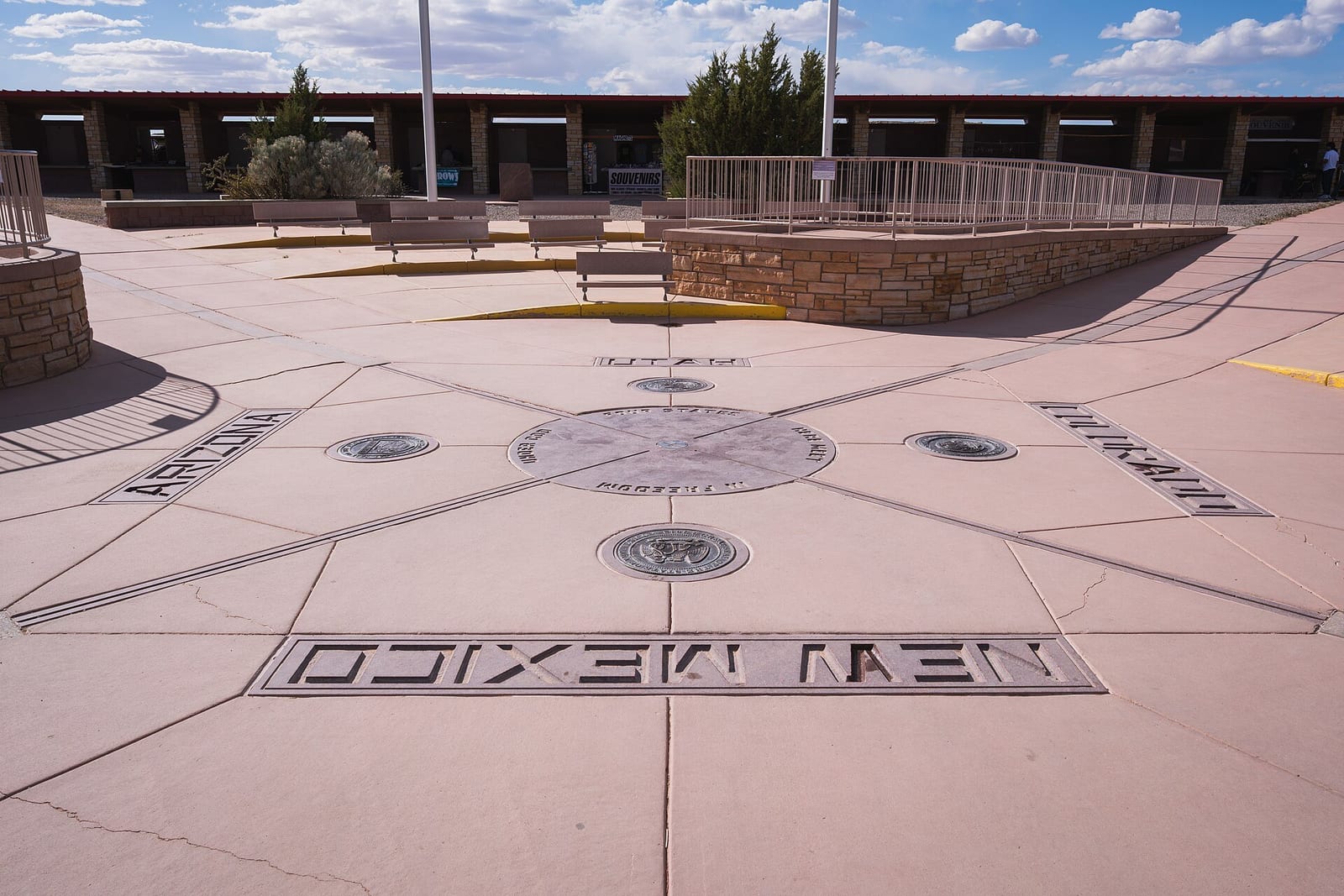
What counts as visiting a state? Layovers, drive-throughs and the rules 50-staters use
Only 2% of Americans name a plane change as the minimum that counts as visiting a state, while 27% set the bar at driving through. Here's a three-tier rubric, a lookup table for the edge cases from Four Corners to D.C., and one trip counted three ways.

The fake SBB ticket website stealing credit card and Twint data from travelers
Zurich cantonal police confirmed a fake SBB ticket website is stealing credit card and Twint payment details from travelers who find it through an ordinary Google search. Here is how to spot it and what to do if you already paid.

UK ETA scam warning: fake websites are charging Austrians up to €900
Fake UK ETA websites are charging Austrian and EU travellers hundreds of euros for a form that costs £20. Here's how the real one works, and how to spot a scam before you pay it.