What a Northern Lights Trip Actually Costs in 2026-2027
Key Highlights
- 1
- 2
- 3
+4 more in the takeaways below
You're standing outside your guesthouse in Tromso at 11pm, checking your phone every four minutes for a northern lights alert. It's minus 8 degrees Celsius. Your flight cost more than your hotel. Your friend group already spent 40 minutes arguing about whether Lofoten is worth the extra flight. Then the sky over the fjord turns green, and none of that math matters anymore. Getting to that moment costs more than most people think, and less than most people fear.
A realistic five to seven night trip, counting lodging plus a guided tour or gear rental but excluding flights, runs from around $300 in Rovaniemi to around $1,100-1,150 in Fairbanks. That's lodging plus one tour or a week of gear rental, not flights or a rental car: Rovaniemi's floor works out to about $228 in lodging plus an $81 tour, call it $300; Fairbanks runs about $750 in lodging plus roughly $400 for a week of gear (including round-trip shipping), call it $1,100 to $1,150. Solar Cycle 25 peaked in October 2024, but the comparable prior cycle's biggest storms hit two to three years later, which puts 2026-2027 in the window that actually matters, not a missed one. Skip the paid apps. NOAA's free forecast is the one worth trusting.
Is 2026-2027 Still a Good Aurora Window, or Did You Already Miss It?
No, you did not miss it. Solar Cycle 25's sunspot activity peaked in October 2024 at a smoothed sunspot number of 161, which technically puts the sun in a declining phase through 2025, 2026, and 2027. But the biggest aurora storms of a solar cycle almost never land on the sunspot peak itself. History says the strongest displays tend to show up two to three years later, and that math points straight at this season and next.
Look at what happened the last time a cycle rolled through this exact phase. Solar Cycle 23's sunspot activity peaked in November 2001, at a smoothed sunspot number of 180.3. Almost two years later, in late October and early November 2003, the sun produced the most extreme sequence of geomagnetic storms of the modern space age. Wikipedia's account of the 2003 Halloween solar storms puts the timing bluntly: the storms "occurred from mid-October to early November 2003, peaking around October 28-29," and they hit "approximately three years after" the cycle's initial 2000 activity surge, not during it. The X-class flares that triggered them pushed the aurora as far south as Texas and southern Europe. That entire event happened during the cycle's declining phase, years after anyone was calling it "peak season."
Cycle 25 peaked in October 2024. Add the same two-to-three-year lag and you land on 2026 and 2027, not some future season you'll read about after the fact on someone else's blog.
This is one historical analog, not a guaranteed law of the sun. But it's the best comparison available, and NOAA has never claimed the show is over just because the sunspot count is falling.
Treating "past solar max" as "game over." When NASA and NOAA jointly announced the Sun had reached maximum in October 2024, they said "scientists anticipate that the maximum phase will last another year or so before the Sun enters the declining phase". Even the space agencies weren't calling it finished in real time. Judging a whole season by the sunspot count alone ignores exactly the kind of storm that made 2003 famous.
But none of that helps you on the actual night you're standing outside in the cold. That's the part most aurora sites skip, and it's where most of the wasted money and disappointment comes from.

How to Actually Read a Forecast Tool (Not Just Stare at an App)
The number that matters is the Kp index, a scale from 0 to 9 that NOAA's Space Weather Prediction Center uses to describe geomagnetic activity. At Kp 0 to 2, "the aurora will be far north, quite dim in intensity, and not very active". At Kp 3 to 5, it "will move further from the poles, it will become brighter and there will be more auroral activity." At Kp 6 to 7, "the aurora will move even further from the poles and will become quite bright and active." Most nights in Tromso or Abisko only need Kp 2 to 4 to put on a real show, because those towns already sit inside the auroral oval.
NOAA's own 30-Minute Aurora Forecast runs on something called the OVATION model, "an empirical model of the intensity of the aurora developed at the Johns Hopkins University, Applied Physics Laboratory." It uses "the solar wind velocity and interplanetary magnetic field measured at the L1 orbit position at 1.6 million km (1 million miles) upstream from earth" as its input, and the forecast lead time is simply how long that solar wind takes to travel from L1 to Earth. That's genuinely useful physics. It also means the tool gives you a real 30 to 90 minute heads-up, not a guess, and definitely not a multi-day guarantee. Any app promising to tell you next Tuesday's aurora with confidence is not being straight with you.
| Tool | Type | Cost | Best For |
|---|---|---|---|
| NOAA 30-Minute Aurora Forecast | Official (OVATION model) | Free | The number that actually predicts tonight |
| NOAA Aurora Dashboard | Official, experimental | Free | Everything NOAA tracks on one page |
| Planetary K-index | Official | Free | The raw 3-day Kp outlook |
| My Aurora Forecast & Alerts | Third-party app | Free Ads | Push alerts, 4.7/5 across roughly 69K App Store ratings |
| AuroraMe | Third-party web/app | Free | One combined verdict from Kp, cloud, moon, and darkness |
| UAF Geophysical Institute Forecast | University | Free | Best specifically for Fairbanks and interior Alaska |
None of these third-party apps beat NOAA's own data, they just repackage it in a friendlier layout. My Aurora Forecast & Alerts holds a 4.7 out of 5 across roughly 69,000 App Store ratings as of mid-2026, which says more about how obsessively people check it than about how accurate any single alert is. AuroraMe's pitch is the most useful for a first trip: it folds the Kp index, cloud cover, moon brightness, hours of darkness, and magnetic latitude into one verdict instead of five numbers you have to cross-reference yourself. The University of Alaska Fairbanks Geophysical Institute has been doing this since the 1970s, when Syun-Ichi Akasofu's team first modeled the solar wind, and its forecast page is still "the most-visited website at UAF, garnering more than 2 million page views a year."
- Check the 3-day Kp outlook first. If the forecast Kp is under 2 for your whole trip, temper your expectations before you spend on a tour.
- Check the 30-minute forecast right before you go out. This is the number with real physical lead time behind it.
- Check local cloud cover, not the citywide number. Aurora is invisible through cloud. A clear patch 20 minutes outside town beats a "clear" reading for the wrong grid square.
- Check the moon phase. A near-full moon washes out a faint aurora almost as effectively as city light pollution does.
Timing inside the season matters almost as much as timing across the solar cycle. NOAA states it plainly: "the best Seasons for aurora watching are around the spring and fall equinoxes." Norway's own tourism board agrees, noting that "spring (March/April) and autumn (September/October) have the highest level of aurora activity." March 2026 is already gone, so the two windows ahead of you are late September through October 2026, and March through mid-April 2027.
What a Real Trip Costs, Hub by Hub
Six nights of lodging alone runs from about $230 in Rovaniemi, Finland to more than $750 in Fairbanks, Alaska, using each city's cheapest verified nightly rate as the floor, not a marketing number. Add a guided tour or gear rental and the gap gets even wider. Here's the full hub-by-hub breakdown most aurora content skips.
| Hub | Lodging From | 6 Nights (floor) | Reliability Signal |
|---|---|---|---|
| Rovaniemi, Finland Cheapest | $38/night | ~$230+ | "Every second clear night" nationally |
| Tromso, Norway | $56/night | ~$340+ | No official %, "always a good chance" Sept-April |
| Reykjavik, Iceland | $69/night | ~$415+ | Capital region has worse cloud cover than the rest of Iceland |
| Lofoten (Svolvaer), Norway | $63/night | ~$380+ | Not independently verified this season |
| Abisko, Sweden | $53/night | ~$320+ | Reputation for clear skies, no published % |
| Yellowknife, Canada Best Odds | $89/night | ~$535+ | "98% chance over 3 nights" if skies are clear |
| Fairbanks, Alaska Priciest | $125/night | ~$750+ | "Four out of five" clear nights show aurora |
One caveat on that table: these are floors, each hub's cheapest verified rate on Kayak or Booking.com, multiplied by six nights. Real trips run higher. Tromso rates swing from around $120 a night in July to roughly $430 in February, and Rovaniemi's average spikes to nearly $678 a night in December, driven by Christmas tourism, not aurora demand. Plan your dates around that noise, not through it.
All prices in this guide reflect rates checked in July 2026. Hotel, flight, and tour pricing moves fast, especially in aurora season, so treat every number here as a planning baseline, not a quote, and re-check before you book.
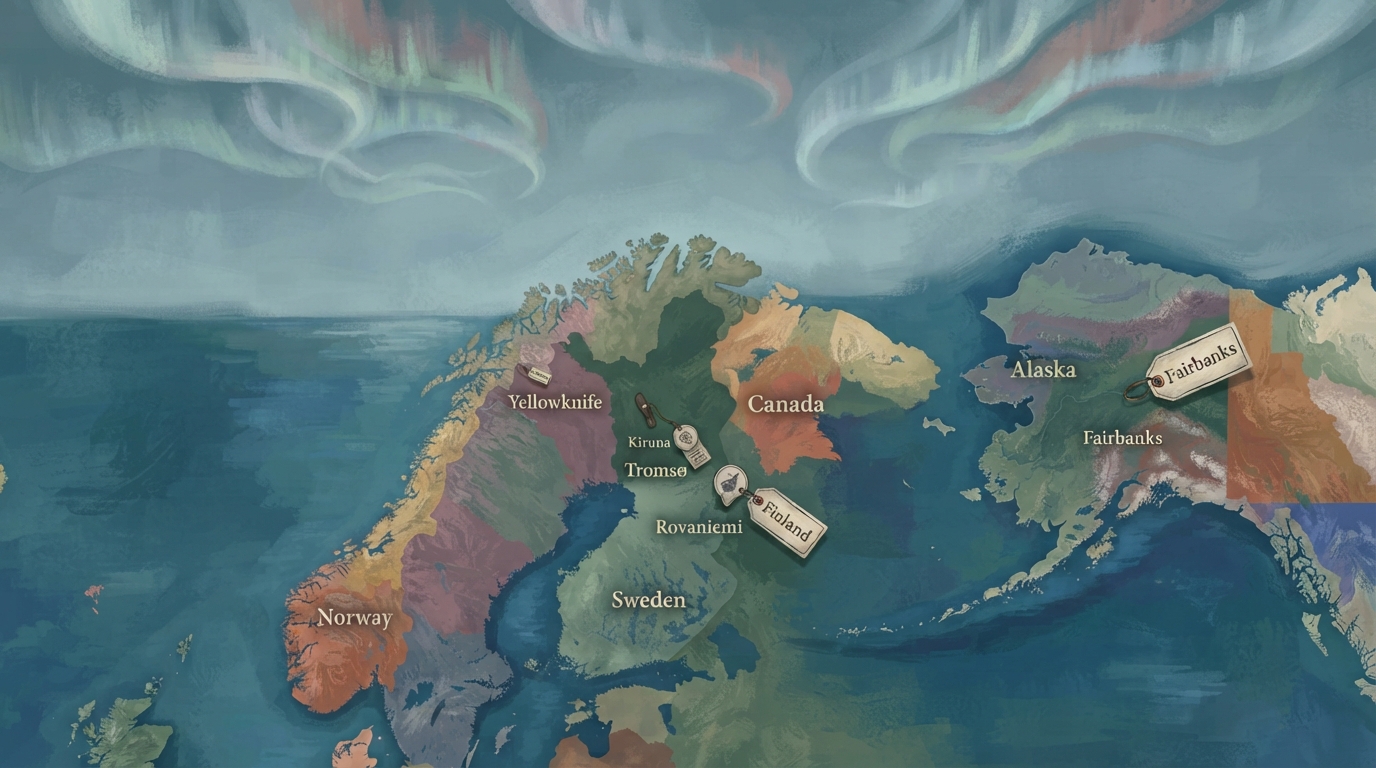
Add a guided tour and the gap between hubs gets more interesting. In Iceland, a straightforward group bus tour out of Reykjavik runs from 9,990 ISK, about $80 at current exchange rates, for roughly four hours. In Rovaniemi, package tours range from budget options from around €75 up to "guaranteed sightings" tours that run roughly $200-plus (verify current price before booking). Abisko's own snowmobile and national-park photo tours start around EUR109 (about $118), while Kiruna-based day trips to Abisko run $198 to $275.
Yellowknife and Fairbanks barely have an equivalent tour industry. Most viewing there is DIY: you drive to a dark pull-off outside town yourself, the same rent-a-vehicle math that shows up on any self-driven road trip. That shifts the real cost from tour tickets to car rental and cold-weather gear instead, which is exactly why the gear section further down matters more for those two hubs. Budget extra for a rental car if you're driving yourself to viewing spots; that cost isn't priced into the ranges in this guide.
One more thing worth budgeting for before you even land: you're likely spending across at least three different currencies on a trip like this (Norwegian kroner, Swedish kronor, Icelandic kronur, or Canadian dollars, depending on the hub), and a bad exchange rate quietly erases the savings you just found on a cheap hotel. If you haven't compared what your bank actually charges for that, our breakdown of Revolut, Wise, and standard bank cards abroad is worth five minutes before you book anything.
Tromso vs Lofoten vs Abisko vs Rovaniemi: Which One's Worth the Extra Money
Stay in Tromso if you want the biggest tour selection and easiest flights. Add Lofoten only if scenery matters more than better odds, because Lofoten doesn't actually improve your chances. Most Tromso trip planners hit this exact fork halfway through booking: stay put the whole time, or carve out a day or two for Lofoten's fjords. The honest answer depends on whether you're chasing better odds or better photos, because those are two different trips.
- Biggest aurora tour industry of any hub in this guide
- No domestic flight add-on to budget for
- Easiest direct flights from most of Europe
- Widerøe domestic flights run $45 to $110+ one-way per leg depending on season - budget for the higher end in aurora season
- A round-trip add-on realistically lands around $150-250, on top of Lofoten's own $63+/night lodging
- You're trading a day of Tromso tour options for scenery, not better aurora odds
Widerøe's own Svolvaer route page shows one-way fares from roughly $45 in shoulder season up to $110+ for winter dates between Tromso, Bodo, and Svolvaer, so budget for the higher end in aurora season.

Abisko complicates things further, because it isn't a Tromso alternative so much as a different country reached a different way. The Stockholm-to-Abisko overnight train runs from around $89 (€72) one-way, which makes the trip itself part of the experience rather than a logistics problem. Swedish tourism material is confident about Abisko's microclimate without putting a number on it: Abisko "often enjoys clear skies even when nearby areas are cloudy, earning it a reputation as one of Sweden's most reliable spots" for viewing. No agency has published a verified clear-sky percentage for it. Treat that reputation as directionally useful, not a guarantee.
Rovaniemi sits apart from all three. It's not competing on scenery or a single dramatic microclimate story. It's competing on being genuinely cheap, with hotel rates starting under $40 a night and a swap to nearby Kemi costing as little as $6 to $16 one-way by train or bus. If budget is the binding constraint, Rovaniemi is the pragmatic default. If you've already committed to Norway, add Lofoten deliberately, with the flight cost built into the plan, not discovered at checkout.
Reykjavik vs Yellowknife vs Fairbanks: The Long-Haul Comparison
Reykjavik gets picked constantly because it's the easiest long-haul flight from North America and Europe, not because it has the best odds of the three. That distinction matters. Reykjavik also sits at a lower magnetic latitude than Iceland's aurora hotspots further north, like Akureyri, so it typically needs a Kp of 2 to 3 for a reliable show, higher than towns already inside the auroral oval. Iceland's own meteorological office tracks cloud cover on an 0-to-8 scale precisely because coastal weather there is unpredictable enough to need it, and that Atlantic-meets-Arctic unpredictability is one more reason a clear night in the capital is less of a sure thing than in Tromso or Abisko.
The real fight in this comparison isn't Tromso versus Reykjavik. It's clear sky versus convenient flight, and you can only optimize for one of them at a time.
Yellowknife makes the boldest claim of the three, from the source that should know: the Northwest Territories' own tourism board says the region sees "up to 240 nights of active Northern Lights per year" and puts your odds at "98% probability... to see Aurora over three nights" if the sky cooperates. That's a destination-marketing claim, not an audited weather statistic, but it's backed by flat, obstruction-free terrain that genuinely helps. Lodging starts around $89 a night, and a full winter clothing rental through Aurora Village runs $70 for one day up to $145 for four, plus tax, if you don't want to pack an Arctic-grade parka in your checked bag.
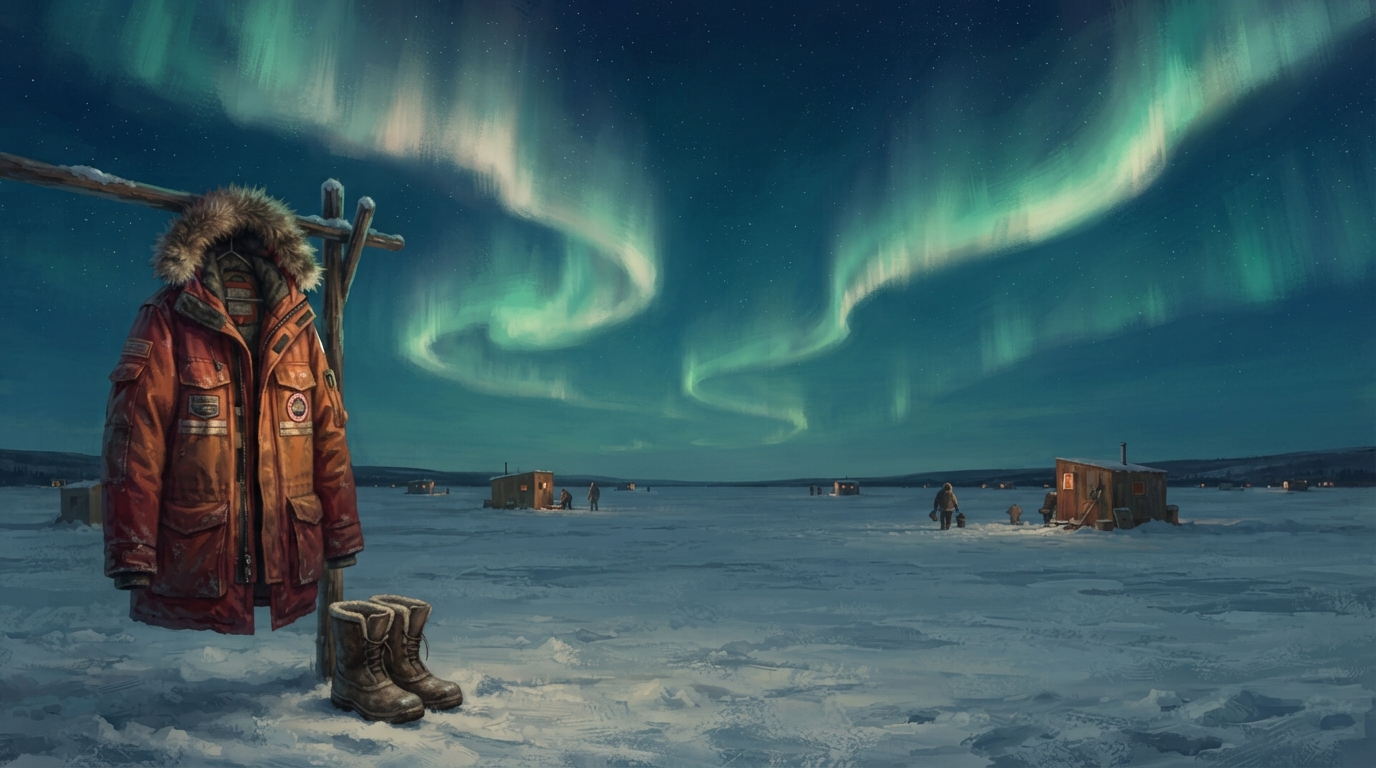
Fairbanks makes a similar case with more caution built in. Explore Fairbanks states the aurora is visible "an average of four out of five nights when the sky is clear and dark enough," and a three-night minimum stay pushes your odds past "more than 90 percent." It's also the priciest hub in this whole comparison by lodging alone, starting around $125 a night, with no packaged-tour market to fall back on the way Iceland and Finland have. Most Fairbanks viewing is a rental car and a thermos, not a bus tour. Gear rental through 6th Avenue Outfitters runs $38-48 a day for a kit rated to minus 40°F, plus a flat $30 shipping fee each way.
If you're driving yourself to a viewing spot, tell someone your route and expected return time, keep at least half a tank so you can idle for heat if you're stuck, and don't park anywhere you can't confirm is safe to pull off in the dark.
Passport rules matter here too: US citizens need only a valid passport for Iceland or Canada right now, no eTA or ETIAS required as of mid-2026. That's likely to change for Iceland, since ETIAS officially still targets Q4 2026, though recent reporting suggests a slip into 2027. Check current status before you fly rather than trusting this snapshot, and our travel document checklist is a reasonable place to confirm it.
What Actually Inflates the Total Beyond the Tour Ticket
The line item people underestimate isn't the tour, it's the gear. A single-use Arctic-grade parka is a bad purchase for a five-night trip, which is why every hub in this guide has a rental market for it. In Reykjavik, a full winter kit (parka, boots, crampons, fleece layers) runs about $171 for the first day through IcelandCover, dropping to roughly $28 a day from day four on, plus a flat delivery fee. Yellowknife and Fairbanks have their own outfitters running the same rent-versus-buy math (see the hub-by-hub costs above), the kind of math that comes up on any group ski trip. None of that includes flights, still the most origin-dependent line item in this budget, and the one we won't fake a number for. If you're still deciding which of these hubs is worth the trip in the first place, our roundup of where the northern lights are actually worth chasing in 2027 covers the dated reason each one's having a moment this season.

- Insulated parka rated to at least minus 20°C / minus 4°F, rented or owned
- Wool or synthetic base layers, never cotton against skin in these temperatures
- Waterproof, insulated boots with real tread
- Hand and toe warmers, more than you think you'll need
- A headlamp for the walk back from a dark viewing spot
- A portable battery pack, since cold weather drains phone batteries fast
- Offline maps downloaded before you lose signal outside town
- A route plan and a person who knows it, if you're driving yourself to a dark viewing spot
A fashion parka rated for a European winter is not built for an Arctic one - the wind off the water in Tromso cuts through it fast, and you'll end up standing further back from the good viewing spots than everyone in real gear. Rent the right gear. It's cheaper than being cold for a week.
Our own packing guide covers the layering logic in more depth if you're building this list from scratch. Connectivity is the other quiet cost. Rural stretches of Lapland, Lofoten, and the Northwest Territories have patchy signal at best, and an international roaming plan from your home carrier is usually the most expensive way to solve that. If you haven't compared the actual options, our eSIM versus SIM versus WiFi guide breaks down what actually works in remote areas like these. If your phone goes missing altogether, our guide on what to do when your phone is stolen abroad covers the steps to take.
Rent gear locally instead of buying it for one trip. Every hub in this guide (Reykjavik, Yellowknife, Fairbanks) has a rental outfitter, and the daily rate drops sharply after the first day or two, which means a 5-night trip costs a fraction of what a single Arctic-grade parka would cost new.
If you're splitting this trip with friends, the currency juggling gets real fast: Norwegian kroner in Tromso, Swedish kronor in Abisko, euros in Finland, Icelandic kronur in Reykjavik, Canadian dollars in Yellowknife. Tools like TripProf, or dedicated expense-splitting apps, track multi-currency expenses and convert everything back to a shared home currency automatically, which matters more on a trip like this than on a standard single-country vacation, especially if you're splitting tour tickets and gear rental across four or five people.
Frequently Asked Questions
How much does a trip to see the northern lights actually cost?
Lodging alone for six nights runs from around $230 in Rovaniemi to over $750 in Fairbanks, using each hub's cheapest verified nightly rate. Add a guided tour (roughly $80 to $200-plus) and gear rental ($28-48 a day if you skip buying an Arctic parka); a realistic total, lodging plus one tour or a week of gear rental and excluding flights, lands around $300 for a lean Rovaniemi trip and around $1,100-1,150 for a fully outfitted Fairbanks trip. Flights, and any rental car if you're driving yourself to viewing spots, vary the most by far and aren't included in that range.
Is 2026-2027 still a good time, or did the window close?
It's still good. Solar Cycle 25 peaked in October 2024, but the last comparable cycle's biggest storms hit roughly two to three years after its own 2001 peak, during the 2003 Halloween storms. That same lag lands on 2026 and 2027. The sunspot count is falling, but the storms that produce the most dramatic aurora displays don't reliably peak alongside it.
What's the cheapest place to see the northern lights in 2026-2027?
Rovaniemi, Finland. Hotel rates start around $38 a night, the lowest floor of any hub in this guide, and a regional swap to nearby Kemi by train or bus costs as little as $6 to $16 one-way. Iceland's guided bus tours (from about $80) are also cheaper than most equivalent Norwegian tours.
Tromso or Lofoten or Abisko or Iceland, which is better value?
Tromso for the biggest tour selection and easiest flights. Abisko if you want Sweden's clear-sky reputation without Norway's price tag, and don't mind an overnight train. Lofoten adds real cost (a $150-250 domestic flight add-on) for scenery, not better odds, so add it deliberately. Reykjavik wins on flight convenience but sits in a region with worse cloud cover than Iceland's interior.
What aurora forecast app is actually accurate?
None of them beat NOAA's own 30-Minute Aurora Forecast, which runs the OVATION model directly off solar wind data. My Aurora Forecast & Alerts and AuroraMe repackage the same NOAA numbers into a friendlier interface, which is useful, but the underlying physics comes from one place. Skip anything claiming multi-day certainty.
What Kp number do I need from a given hub?
Tromso, Abisko, and Rovaniemi sit inside the auroral oval, so Kp 2 to 4 is usually enough. Reykjavik and Yellowknife typically want Kp 3 or higher for a strong show. Anything below Kp 2 for your whole trip window means tempering expectations regardless of destination.
What's the best month this season?
NOAA and Norway's own tourism board both point to the equinox windows: late September through October, and March through mid-April. Since March 2026 has already passed, the two realistic windows left are fall 2026 and spring 2027.
Key Takeaways
- Solar Cycle 25 peaked in October 2024, but the last comparable cycle's biggest storms hit two to three years after its peak, not during it, which puts 2026-2027 squarely in the window that matters.
- NOAA's free 30-Minute Aurora Forecast, built on the OVATION model, beats any paid app. Third-party apps just repackage the same solar wind data with a friendlier interface.
- Rovaniemi is the cheapest hub in this comparison at roughly $230 for six nights of lodging alone; Fairbanks is the priciest at over $750.
- Adding Lofoten to a Tromso trip costs a real $150-250 in domestic flights. Budget for it deliberately instead of discovering it at checkout.
- March 2026 has already passed. The two viewing windows left this season are late September through October 2026, and March through mid-April 2027.
- ETIAS isn't required yet for Norway, Sweden, Finland, or Iceland as of mid-2026, but the launch timeline keeps slipping. Check current status before you fly.
- Gear rental beats buying a one-trip parka in every hub that offers it, typically $28-70 a day depending on location and rental length. If you're tracking costs and splitting gear or tour tickets across a group, tools like TripProf can keep multi-currency expenses straight without a separate spreadsheet.
Pick your hub based on your actual budget and risk tolerance, not a headline about solar maximum. Watch the Kp number the night you're there, and let the sky do the rest.
Sources
- Solar Cycle 25 (Wikipedia, tracking NOAA/NASA data): sunspot peak timing and smoothed sunspot number
- Solar Cycle 23 (Wikipedia): prior cycle's peak timing and smoothed sunspot number
- 2003 Halloween Solar Storms (Wikipedia): timing of the storms relative to Cycle 23's peak
- NASA Science: NASA, NOAA Sun Reaches Maximum Phase: official October 2024 solar maximum announcement
- NOAA: Tips on Viewing the Aurora: Kp index scale and equinox seasonality
- NOAA: Aurora 30-Minute Forecast: OVATION model and L1 solar wind data
- Visit Norway: Northern Lights: Norway's official viewing season and peak months
- University of Alaska Fairbanks Geophysical Institute: Aurora Forecast: forecast history and usage
- UAF Centennial: Forecasting the Aurora: origin of the forecast model
- My Aurora Forecast & Alerts (App Store): app rating and review count
- AuroraMe: combined forecast methodology
- AFAR: Europe Delays ETIAS Travel Authorization Until 2027: current ETIAS status as of July 2026
- European External Action Service: Travelling to Europe (ETIAS): current passport-only entry status for US travelers to Schengen countries
- Kayak: nightly hotel rate ranges for Tromso, Svolvaer, Abisko, Rovaniemi, and Reykjavik
- Booking.com: nightly hotel rate ranges for Yellowknife and Fairbanks
- Omio (Stockholm-Abisko): Stockholm-Abisko overnight train fare
- Omio (Rovaniemi-Kemi): Rovaniemi-Kemi regional train and bus fares
- Widerøe: Svolvaer Destination: Tromso-Bodo-Svolvaer domestic flight fares
- Bustravel.is: Reykjavik northern lights bus tour pricing
- GetYourGuide (Rovaniemi): Rovaniemi guided tour pricing
- GetYourGuide (Abisko): Abisko-area guided tour pricing
- Visit Sweden: Abisko and Northern Lights: Abisko's clear-sky microclimate reputation
- Visit Finland: The Best Times to See Northern Lights: national aurora visibility statistics
- Visit Tromso: Northern Lights: Tromso's official viewing-season guidance
- Icelandic Meteorological Office: Instructions for Cloud Cover Forecasts: Iceland's official cloud-cover scale
- IcelandCover: winter gear rental pricing in Reykjavik
- Spectacular NWT: Northwest Territories' official aurora-frequency and visibility claims
- Aurora Village: Yellowknife winter clothing rental pricing
- Explore Fairbanks: Aurora Season: Fairbanks aurora visibility statistics
- 6th Avenue Outfitters: Fairbanks-area cold-weather gear rental pricing
Last updated: September 19, 2026
Keep Reading
More travel tips and guides picked for you
Christmas markets from London by train: what 3 nights really costs per person in 2026
Three nights at a Christmas market from London cost £426 to £704 per person. We priced Eurostar fares, central hotels and food for Lille, Brussels, Bruges and Cologne.
Wizz Air and Ryanair are cutting Vienna flights: what to book instead
Wizz Air has fully left Vienna and Ryanair has cut five aircraft over Austria's aviation tax. Here's exactly what changed, why it happened, and how to still book a cheap flight this winter.
Mallorca's tourist tax hike got cancelled. Here's what a 2026 trip really costs
The Balearic tourist tax hike everyone's still warning about got cancelled in February. Here's what a week on Mallorca actually costs in 2026, flights, hotel, tax, and food, with real numbers.