The Complete Pre-Trip Countdown: 15 Things Every Traveler Must Do Before a 2026 Trip
You're eight weeks out from your trip and feeling good about it. Flights booked, hotel confirmed, maybe even a restaurant list started. Then three days before departure, you discover the UK now requires an electronic authorization you've never heard of, your passport expires two months after you land (too close for comfort in most countries), and your phone plan charges $10 per megabyte abroad. That confident feeling? Gone. We've been there — standing at a Heathrow counter being told our authorization wasn't in the system.
The difference between a smooth departure and a frantic one isn't luck. It's timing. Knowing when to do each preparation task matters just as much as knowing what to do. This is your 2026 pre-trip countdown checklist, structured by deadline so nothing falls through the cracks.
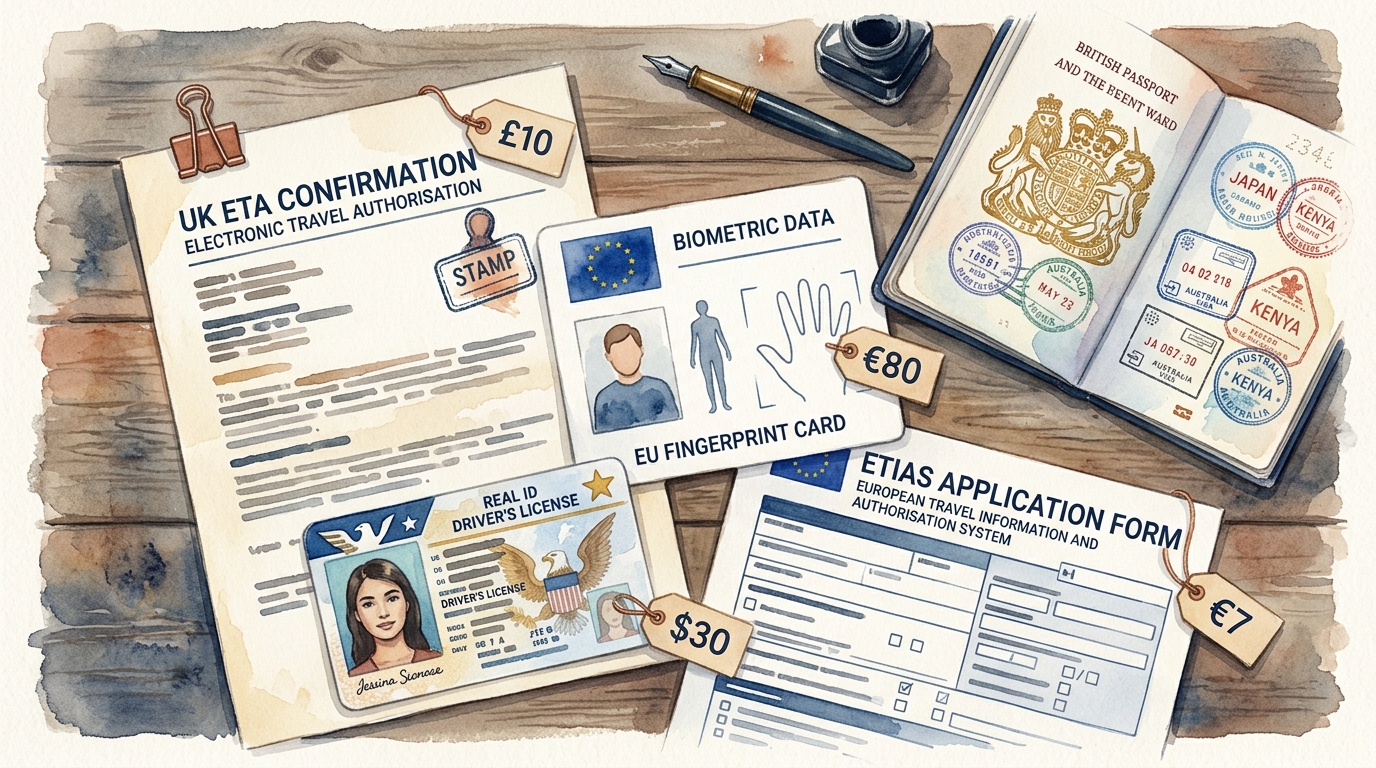
Start trip prep 8 weeks out, not 8 days. New 2026 rules (UK's mandatory ETA, Europe's biometric Entry/Exit System, US Real ID enforcement, and the upcoming ETIAS) add steps that didn't exist before. This countdown covers 15 tasks organized by when you should actually do them.
2026 Travel Rule Changes You Can't Ignore
Before we start the countdown, here's what's changed. If you're traveling internationally in 2026, at least one of these affects you. Miss them and you could be denied boarding, fined at a border, or stuck in a two-hour biometric queue you didn't budget time for.
The UK Electronic Travel Authorization (ETA) is now fully enforced. Since February 25, 2026, Americans and citizens of 85 visa-exempt nationalities need an approved ETA before flying to the UK. Airlines are legally required to deny boarding without one. The cost rose from £16 to £20 on April 8, 2026, and the authorization is valid for two years or until your passport expires.
Europe's Entry/Exit System (EES) becomes fully operational on April 10, 2026. It replaces passport stamps with biometric recording (fingerprints and facial scan) at Schengen borders. Over 45 million border crossings have been registered since the phased launch began in October 2025. Expect longer lines at airports during the transition, especially in summer. For a deeper breakdown, read our guide to Europe's Entry/Exit System.
ETIAS (Europe's travel authorization, similar to the US ESTA) launches in late Q4 2026. The fee has been increased from the originally planned €7 to €20 per application, with exemptions for travelers under 18 and over 70. It'll be required for 60+ visa-exempt countries entering 30 Schengen nations. There's a six-month grace period after launch, so it won't bite immediately, but apply early once the system opens. We cover everything in our ETIAS explainer for Americans.
For US domestic flyers: Real ID enforcement is here. The TSA began enforcing Real ID on May 7, 2025, and travelers without a compliant ID can pay a $45 TSA ConfirmID fee for a 10-day travel window. The process can take up to 30 minutes and isn't guaranteed to work. A valid US passport is accepted as an alternative.
8 Weeks Before Your Trip: Foundation Tasks
Eight weeks is your safety net. Everything you do now gives you time to fix problems. Everything you leave until later becomes a potential emergency. Start here, and the rest of the countdown gets progressively easier.
1. Check Your Passport (and Everyone Else's)
Most countries require at least six months of passport validity beyond your travel dates. If yours is cutting it close, renew now. US State Department routine processing takes 4-6 weeks, but door-to-door time including mail can stretch to 8-10 weeks. Expedited service costs an extra $60 and takes 2-3 weeks, plus mail time.
Don't just check your own. If you're traveling with family or a group, verify everyone's expiration dates today. One expired passport discovered at week two means someone might not be coming.
Checking only the expiration date. Some countries also require a minimum number of blank pages (often two). If your passport is full of stamps, you may need a new one even if it hasn't expired.
2. Apply for Travel Authorizations
The days of just showing up with a passport are ending. Research whether your destination requires an ETA, ETIAS, ESTA, eVisa, or traditional visa. Apply at 8 weeks because processing times vary wildly: the UK ETA typically processes within 72 hours, but traditional visas for countries like India or China can take 3-6 weeks. Some authorizations link to your passport number, meaning a passport renewal invalidates them. If you're renewing and applying simultaneously, renew first.
One trap that catches even experienced travelers: multi-country trips may require separate authorizations for each stop. A trip through the UK and the Schengen zone, for example, needs a UK ETA and (starting late 2026) an ETIAS. They're different systems run by different authorities. For a complete document breakdown by destination, see our 2026 travel document checklist.
3. Book Travel Insurance
Buy it now, not the night before. Most policies cover trip cancellation from the moment of purchase, so the earlier you buy, the more pre-trip incidents you're protected against. US traveler insurance penetration hit 40% in 2025, up from 28% pre-pandemic, and for good reason: the average medical claim pays out $1,816, while trip cancellation claims average $2,800.
Even for a short trip, one ER visit abroad without coverage can cost thousands. Our travel insurance guide breaks down what's actually covered in 2026.
4 Weeks Before Travel: The Logistics Layer
Your documents are in order. Now it's time to handle the systems that keep you connected, solvent, and informed while abroad. These aren't glamorous tasks, but skipping any one of them creates exactly the kind of problem that ruins a Tuesday in a foreign city.
4. Sort Out Your Phone Connectivity
International roaming charges from your home carrier will drain your wallet faster than any tourist trap. The fix: an eSIM. Providers like Airalo start at around $4.50 for 1 GB on a 7-day plan, while Holafly offers unlimited data from $5.90/day for select destinations. Saily sits in between with plans from $1.99.
Install and activate your eSIM before you leave home, while you still have reliable WiFi. Test it. If your phone doesn't support eSIM (check your settings), a physical SIM bought at your destination's airport works too, but you'll be offline between landing and finding the shop. For the full comparison, read our eSIM vs SIM card vs WiFi guide.
5. Handle Your Money
Three things to do at the four-week mark. First, check whether your debit and credit cards charge foreign transaction fees. Many do, typically 1-3% per purchase. Cards from Wise and Revolut are built for travel spending with minimal markups. We compared them in detail in our Revolut vs Wise guide.
Next up: update your contact information with your bank. Most major issuers like Chase and Capital One no longer require travel notifications, but they do need a working phone number and email to reach you if they flag a transaction. If you can receive SMS abroad (through your eSIM or roaming), fraud resolution becomes much faster.
Third, order a backup card if you only have one. A single card getting frozen abroad is a surprisingly common trip-wrecker. Carry it in a different bag from your primary card. If your wallet gets stolen, you still have access to money. Also withdraw a small amount of local currency before you leave, or plan to use an ATM at your destination airport. Many smaller vendors, transit systems, and taxis in Europe and Asia still prefer or require cash.
6. Register with Your Embassy
If a natural disaster, coup, or health emergency hits your destination, your embassy contacts registered citizens first. Everyone else finds out through the news — or doesn't find out at all. US citizens should register with the Smart Traveler Enrollment Program (STEP). It's free, takes five minutes, and means your nearest embassy knows you're in-country during emergencies. They'll send you safety alerts specific to your destination and dates.
Other countries have similar programs: Canada has Registration of Canadians Abroad, the UK has a travel notification service, and Australia has Smartraveller. If you're a dual citizen, register with both.

2 Weeks Out: Digital Security and Health
You're connected and funded. Now protect yourself from the things that go wrong when you're far from your usual doctor and your usual network security.
7. Lock Down Your Digital Life
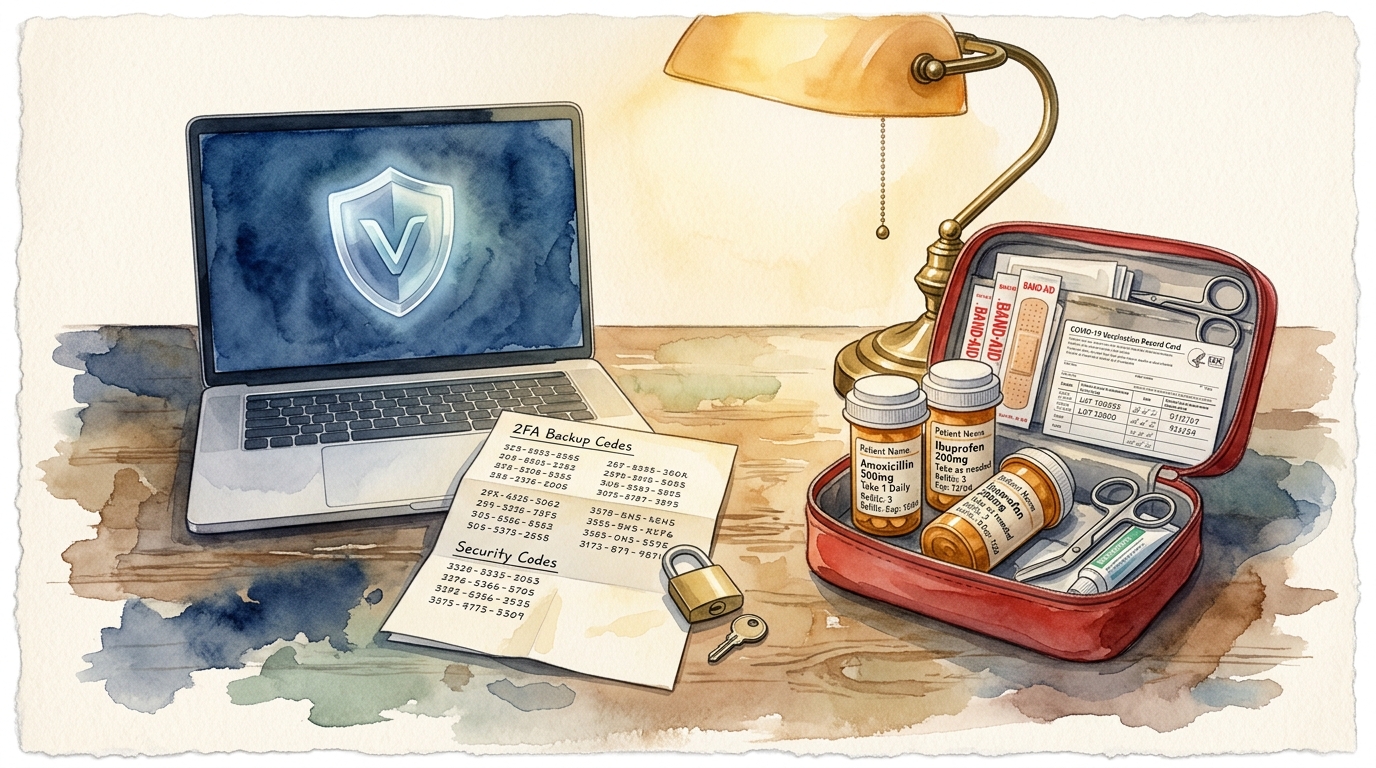
Public WiFi in airports, hotels, and cafes is a data interception playground. Before you travel, do three things: install a VPN (providers like NordVPN and ProtonVPN cover 129+ countries), download your 2FA backup codes for every important account, and enable Find My Device on your phone and laptop.
The backup codes matter more than you'd think. If your phone gets stolen and your authenticator app goes with it, those codes are the only way back into your email, bank, and social accounts. Print them and store a copy separately from your devices. SMS-based two-factor authentication can fail abroad when roaming doesn't relay text messages properly.
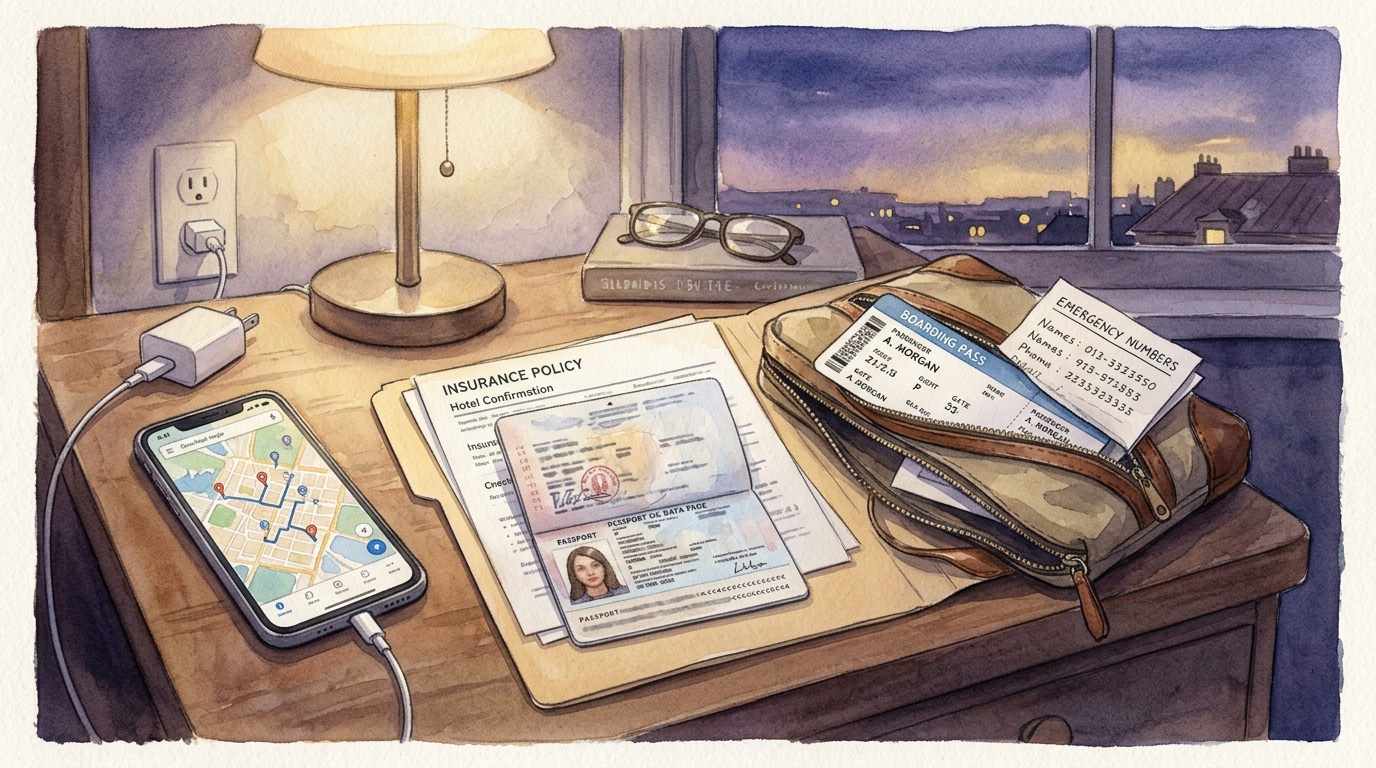
Take screenshots of your hotel confirmation, flight details, and travel insurance policy number. Save them in an offline-accessible folder on your phone. When the airport WiFi fails (and it will), you'll still have everything you need.
8. Handle Health Prep
Two weeks out is the latest you should start this, and here's why: some vaccines (like Japanese Encephalitis or Rabies) need multiple doses spaced weeks apart. If you skip this step and discover a requirement at the airport pharmacy, you're out of luck. Check the CDC's Travelers' Health destination pages for your specific countries.
Fill all prescription medications for the full trip duration, plus a buffer of 3-5 extra days in case of delays. Carry them in original labeled containers — customs officers in many countries will question unlabeled pills, and in some (like Japan and parts of the Middle East), certain common medications are restricted or outright banned. Bring a basic first-aid kit: band-aids, antiseptic, pain relief, anti-diarrheal medication, and any allergy medicine you use. It costs almost nothing at home and a small fortune at a hotel gift shop abroad.
9. Know Your Rights (The DOT Refund Rule)
Here's something most travelers don't know yet: US airlines are now required to issue automatic cash refunds for cancelled or significantly changed flights. "Significant" means a delay of 3+ hours domestic or 6+ hours international, a change in departure/arrival airport, or a class downgrade. Refunds must come within 7 business days for credit card payments or 20 calendar days for cash/debit. No more fighting for vouchers you didn't ask for.
1 Week Out: The Home and Packing Sprint
The trip is real now. This week is about two things: getting your home ready to be empty and getting your bag ready to be full. Most people only think about the second one.
10. Secure Your Home
Burglaries spike during summer travel months, and according to FBI data cited by the National Council for Home Safety and Security, homes without security systems are 300% more likely to be targeted. You don't need to install a full alarm system, but you should do the basics: set light timers so rooms illuminate at different times throughout the evening, pause mail and newspaper delivery, and ask a trusted neighbor to grab any packages left on your doorstep.
Don't announce your absence on social media until you're back. Burglars have been known to monitor social media posts to identify empty homes. Save the vacation photos for your return. If you live in an apartment, let your building management know you'll be away so they can watch for anything unusual.
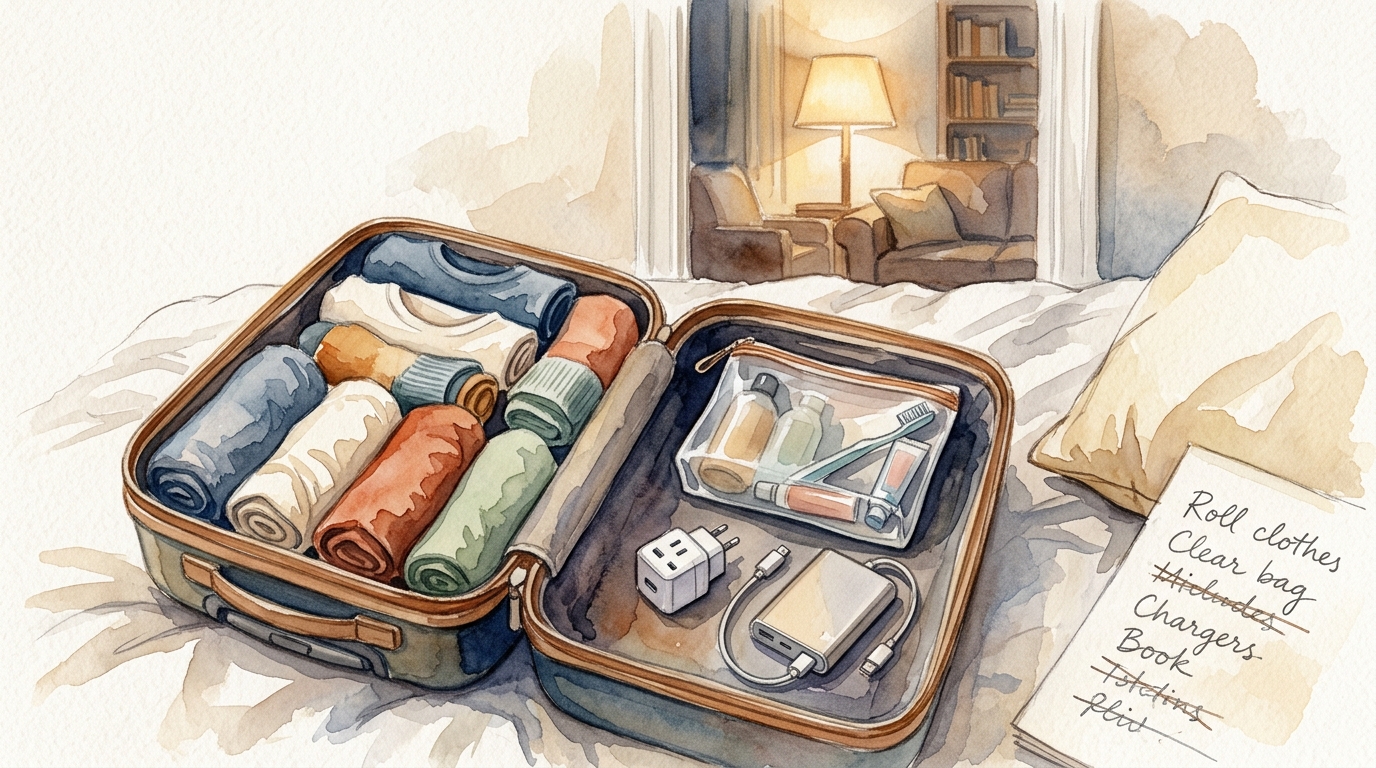
11. Pack Smart (Not Last-Minute)
A survey of 2,000+ travelers found that 51% forget an important item when packing, and the average person forgets two essentials per trip. The fix isn't packing more. It's packing with a list.
Dedicated packing apps generate customized packing lists based on your destination, weather, trip length, and planned activities. Tools like TripProf take this further by connecting your packing checklist to your trip details, dietary needs, and destination guides, so your preparation is personalized rather than generic. For technique-level packing advice, our packing hacks guide covers what actually saves space.
| Packing Category | What to Check | Common Mistake |
|---|---|---|
| Documents | Passport, visa, ETA, insurance card, boarding pass | Only digital copies, no offline backup |
| Tech | Charger, adapter, power bank, eSIM activated | Wrong plug adapter for destination |
| Money | 2 cards, small amount of local cash, backup card stored separately | All payment methods in one wallet |
| Health | Prescriptions (in original containers), first-aid kit, sunscreen | Unlabeled medication at customs |
| Comfort | Neck pillow, eye mask, refillable water bottle, snacks | Buying everything at airport markup |
The takeaway: separate your essentials into two bags. Keep documents, medications, a change of clothes, and chargers in your carry-on. If your checked bag goes missing (and airlines mishandled over 2.7 million bags in 2024), you can still function for 24-48 hours.
The Day Before: Final Checks
Everything should be packed. Everything should be booked. Tomorrow you're leaving. Today is for the last-mile details that take five minutes each but save hours of trouble later.
12. Download Everything Offline
Assume you won't have reliable internet for the first 6-12 hours of your trip. Your eSIM might take a few minutes to activate after landing, the airport WiFi might require a local phone number to verify, and your data plan might not kick in until you're outside the terminal. Download everything you'll need while you're still on home WiFi.
Your minimum offline kit: airline app with boarding pass loaded, offline maps for your destination in Google Maps or Maps.me, eSIM profile (if you haven't activated it yet), accommodation confirmation as a PDF, and any translation apps you'll need. Google Translate lets you download entire language packs for offline use. Do this at home, not at the gate.
Downloaded a trip planning app? Make sure to grab your guides and itinerary for offline access before leaving home WiFi. Having your destination's emergency numbers, embassy address, and transport directions available without internet isn't paranoia. It's the kind of preparation that only matters once, but matters a lot when it does.
13. Do a Document Photo Backup
Photograph your passport's data page, your visa or travel authorization confirmation, your travel insurance policy, your credit/debit card numbers (front only, stored in a secure note), and your hotel reservation. Email these to yourself and share them with a trusted contact at home. If your bag gets stolen with your physical documents, you'll have everything you need to visit your embassy and get replacements.
- Passport valid 6+ months beyond return date
- Travel authorization applied for and approved (ETA, ETIAS, ESTA, visa)
- Travel insurance policy purchased and saved offline
- eSIM installed and tested
- Bank notified (or contact info updated)
- Prescriptions filled for full trip + buffer days
- 2FA backup codes printed and stored separately
- Home secured: lights on timers, mail paused, neighbor alerted
Airport Day: The Last Three Moves
You're out the door. The countdown is almost at zero. Three things separate a calm traveler from a stressed one at this point.
14. Arrive Earlier Than You Think You Need To
With Europe's EES now recording biometrics at border control and the UK checking ETAs at check-in, processing times are longer than they were even a year ago. Airport associations have reported wait times regularly reaching two hours at peak times during the EES rollout. For international flights, arrive three hours early. For domestic flights with TSA lines, two hours is the minimum.
If you're flying domestically without Real ID, budget an extra 30 minutes for the TSA ConfirmID process. It's not fast, and it's not guaranteed. Our airport survival guide covers the full TSA situation in 2026.
15. Have Your Documents Layered, Not Buried
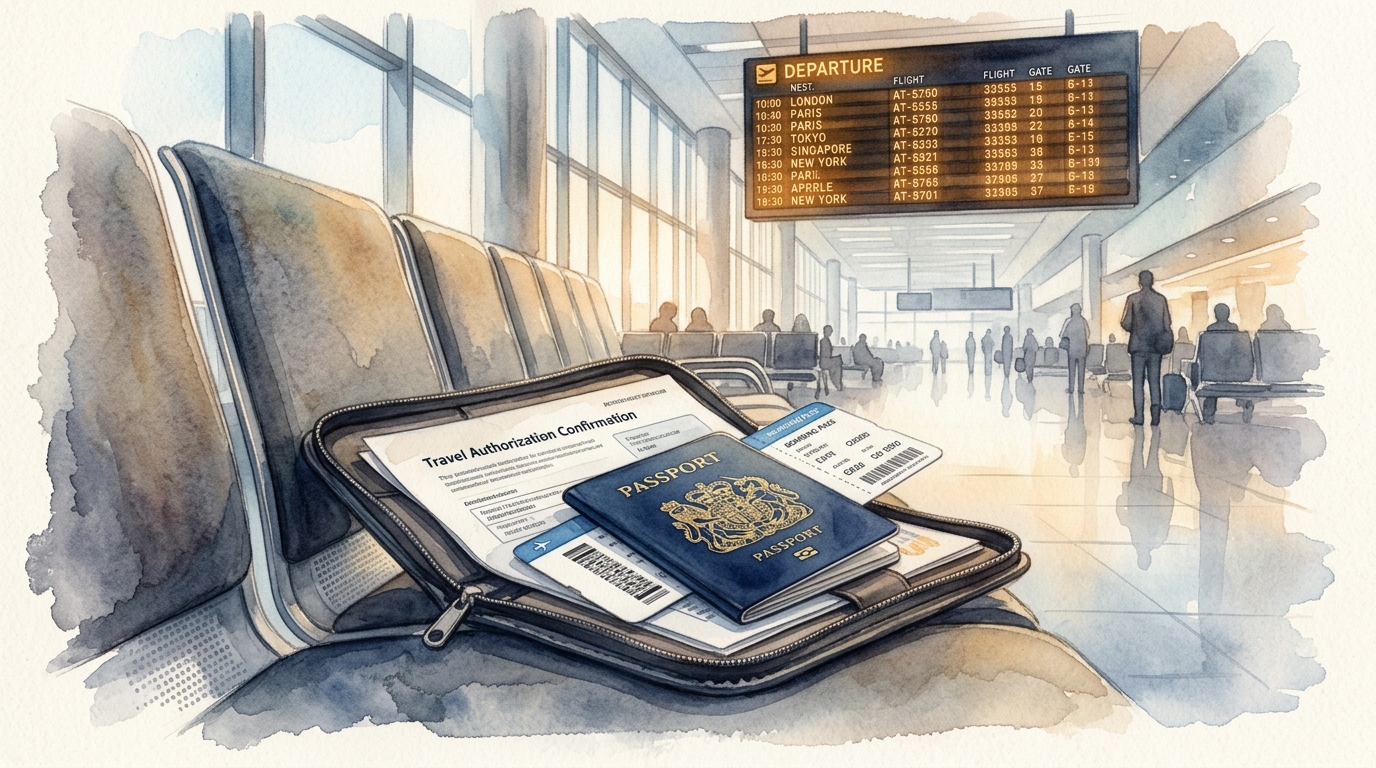
Don't dig through your bag at the check-in counter. Have your passport, boarding pass, and any travel authorization confirmation accessible in a front pocket or document organizer. At international arrivals, you may need your return flight confirmation, hotel address, and proof of travel insurance. Keep them all within arm's reach.
A simple document organizer or even a zippered pouch does the job. Layer your documents in the order you'll need them: boarding pass on top (for security and gate), then passport (for immigration), then hotel and insurance confirmations (for arrival questions). With EES biometric processing now active at European borders, you'll be holding your passport for longer than a quick stamp, so having it somewhere easy to grab and hold matters more than it used to.
What should she be thinking about now? My 19-year-old daughter is going to Peru for her first international trip and I want to make sure she's actually prepared, not just excited.
- r/travel user, parent of first-time traveler
That father's question captures something real. Preparation isn't about anxiety. It's about freedom through readiness. When the logistics are handled, you're free to actually enjoy the trip.
The Full Countdown at a Glance
- 8 weeks before Check passport validity, apply for travel authorizations (ETA, ETIAS, visa), book travel insurance
- 4 weeks before Set up phone connectivity (eSIM), handle bank cards and money prep, register with your embassy via STEP
- 2 weeks before Lock down digital security (VPN, 2FA codes, Find My Device), handle health and vaccinations, learn your refund rights
- 1 week before Secure your home, pack with a checklist, separate essentials into carry-on
- Day before Download everything offline, photograph all documents, run the final checklist
- Airport day Arrive early (3 hours international), keep documents layered and accessible, stay calm
Frequently Asked Questions
How far in advance should I start preparing for an international trip?
Start 8 weeks before departure, though 6 weeks is workable if you don't need a passport renewal. The 8-week mark accounts for the slowest step: US State Department routine processing at 4-6 weeks plus mail time.
Do I need a UK ETA as an American in 2026?
Yes. Since February 25, 2026, all Americans need an approved UK ETA before traveling to the UK. It costs £20 (as of April 8, 2026), is valid for two years, and airlines will deny boarding without it.
What is ETIAS and do I need it for Europe in 2026?
ETIAS is Europe's travel authorization system, launching in late Q4 2026. It costs €20 per application, is valid for three years, and will be required for visa-exempt travelers entering the Schengen zone. A six-month grace period means enforcement won't begin immediately.
How long does it take to renew a US passport in 2026?
Routine processing takes 4-6 weeks, with total door-to-door time reaching 8-10 weeks including mail. Expedited service costs $60 extra and takes 2-3 weeks processing. During peak season (January-March and May-August), expect times closer to the maximum.
Should I get travel insurance even for a short trip?
Yes. The average medical claim abroad pays out $1,816, and that's the average. A single emergency room visit without coverage in the US or Western Europe can easily exceed $5,000. Trip cancellation claims average $2,800, often covering non-refundable flights and hotels.
What's the best way to get phone data abroad?
An eSIM. Providers like Airalo, Saily, and Holafly offer plans starting at $1.99-$5.90 for basic data. Install before departure while on home WiFi. If your phone doesn't support eSIM, buy a local SIM at your destination airport.
Do I need Real ID to fly domestically in the US in 2026?
Technically no, but it'll cost you. Without Real ID or a passport, you'll pay a $45 TSA ConfirmID fee per 10-day travel window, face additional screening, and potentially wait up to 30 minutes with no guarantee of clearance.
Do EU citizens need an ETA for the UK?
Yes, since February 2026. EU, EEA, and Swiss nationals must apply for a UK ETA (£20) before traveling to the UK, even for short visits. Apply online through the UK government portal at least 3 days before departure.
Key Takeaways
- Start trip preparation 8 weeks out, not 8 days. Passport renewals alone can take 8-10 weeks door-to-door.
- New 2026 rules (UK ETA, EES biometrics, Real ID enforcement, ETIAS) add steps that didn't exist before. Research your specific destination's requirements early.
- Travel insurance is worth buying at the 8-week mark. The earlier you buy, the more pre-trip cancellation coverage you get.
- Digital security prep (VPN, 2FA backup codes, offline documents) is no longer optional. One stolen phone without backup codes can lock you out of every account you own.
- Tools like TripProf consolidate your trip preparation into one place, connecting destination guides, checklists, documents, and expenses so nothing slips through the cracks.
- The DOT's automatic refund rule means airlines must give you cash back for significant delays. Know this before you accept a voucher.
- Arrive earlier than pre-2026 habits suggest. EES biometric processing and ETA checks have added time at international borders.
- The best preparation isn't just about avoiding problems. It's about traveling with confidence, knowing that every logistic is handled so you can focus on the trip itself.
Sources
- UK Home Office: Electronic Travel Authorisation factsheet, March 2026: gov.uk/eta
- U.S. Embassy UK: Changes to UK entry requirements, February 2026: uk.usembassy.gov
- European Commission: Entry/Exit System fully operational April 10, 2026: home-affairs.ec.europa.eu
- Euronews: EES rollout and airport wait times: euronews.com
- AFAR: ETIAS delayed to late 2026: afar.com
- ETIAS.com: EU raises ETIAS fee to €20: etias.com
- TSA: ConfirmID $45 fee and Real ID enforcement: tsa.gov
- U.S. Department of Transportation: Automatic airline refund rule: transportation.gov
- U.S. State Department: Passport processing times: travel.state.gov
- U.S. State Department: Smart Traveler Enrollment Program (STEP): travel.state.gov
- Emergency Assistance Plus: Travel insurance statistics 2026: emergencyassistanceplus.com
- HelloSafe: 2026 Travel Insurance Barometer, USA market: hellosafe.com
- Capital One: Credit card travel notice guide: capitalone.com
- Security.org: Best VPN for travel 2026: security.org
- National Council for Home Safety and Security: Burglary statistics (FBI data): alarms.org
- NBC New York: Social media and burglary survey: nbcnewyork.com
- Radical Storage: Travel packing statistics and forgotten items: radicalstorage.com
- Airalo: eSIM plans and pricing: airalo.com
- Holafly: eSIM unlimited data plans: holafly.com
- Saily: eSIM pricing: saily.com
- CDC: Travelers' Health destination pages: cdc.gov
- BTS: Mishandled baggage reports for US air carriers: bts.gov
- TSA: Real ID full enforcement announcement, April 2025: tsa.gov
- UK Government: Electronic Travel Authorisation application portal: gov.uk
Keep Reading
More travel tips and guides picked for you
15 Biggest Changes to Travel in 2026 (vs. Last Year)
New entry fees, airline policy overhauls, a fuel-driven airfare surge, and tourist taxes popping up across Europe and Japan. These are the 15 biggest changes reshaping travel in 2026, and what they mean for your next trip.
Your RTO Costs $17K a Year. Here's What That Buys You Abroad
The average return-to-office worker spends $12,000-17,000/year on commuting, meals, and wardrobe. That same money covers a full year in Chiang Mai or Ho Chi Minh City. Here's the city-by-city breakdown.

Europe's Airbnb Crackdown 2026: What the EU's New Short-Term Rental Regulation Means for Your Next Trip
Starting May 2026, EU Regulation 2024/1028 forces platforms to verify hosts and share data with authorities. Barcelona is eliminating all tourist apartment licenses. Amsterdam cut its limit to 15 nights. Here's what travelers need to know about fewer listings, higher prices, and how to protect your booking.