Europe's Airbnb Crackdown 2026: What the EU's New Short-Term Rental Regulation Means for Your Next Trip
Key Highlights
- 1
- 2
- 3
+5 more in the takeaways below
Your group trip to Barcelona is three months out. You've found the perfect four-bedroom apartment: rooftop terrace, walking distance to La Rambla, kitchen big enough for six. Then the host messages you: "Sorry, my license won't be renewed. I have to cancel." That scenario is already happening to real travelers, and it's about to get a lot more common across Europe.
Starting May 20, 2026, EU Regulation 2024/1028 forces all 27 member states to register short-term rental hosts and share booking data with authorities. Barcelona is phasing out all 10,101 tourist apartment licenses by 2028. Amsterdam cut its limit to 15 nights. Paris dropped to 90 nights with six-figure fines. For travelers: fewer listings, higher prices, and real cancellation risk. Book licensed properties, have a backup plan, and consider alternatives to Airbnb for your next European trip.
What's Actually Changing: The EU Regulation Everyone Missed
While most travelers have heard vague rumblings about "Airbnb bans" in Europe, the real story is more specific and more consequential. On May 20, 2026, EU Regulation 2024/1028 takes full effect across all 27 EU member states. It doesn't ban short-term rentals outright. What it does is give local governments the enforcement tools they've been missing for years.
Here's what the regulation requires:
- Every host must register and receive a unique identification number, displayed on every listing.
- Platforms must verify that registration numbers are valid before a listing goes live.
- Booking data gets shared with authorities monthly: host identity, property address, number of nights booked, total revenue earned.
- Non-compliant listings get removed. Platforms that fail to act become legally responsible.
Think of it this way: before this regulation, enforcement was like trying to catch speeders without radar guns. Cities knew illegal rentals existed but had no reliable way to track them. Hosts could list properties on multiple platforms without registering anywhere, and local officials had to manually hunt down violations one by one.
The scale of the problem is staggering. Eurostat reports that platform-booked short-stay accommodations hit 951.6 million nights across the EU in 2025, up 11.4% from the previous year and 32.4% higher than 2023. That's nearly a billion nights of tourism flowing through platforms with minimal oversight. The new regulation changes that overnight by requiring platforms to hand over booking data directly to government authorities every month.
The regulation doesn't dictate how strict each country's rules should be. It just makes enforcement possible. The cities that were already cracking down are about to crack down much harder.
City-by-City Breakdown: Where the Rules Hit Hardest
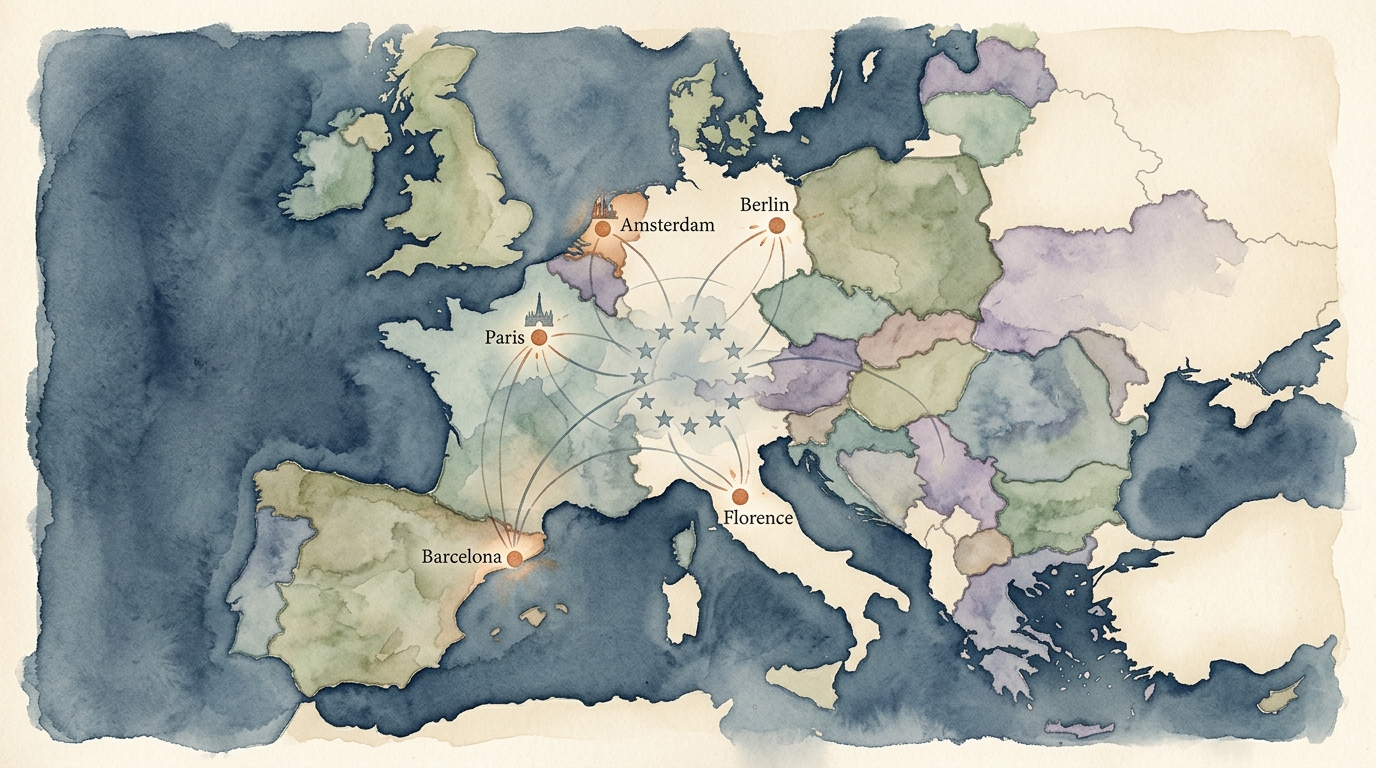
Not every European city is handling this the same way - some are tightening rules, others are eliminating tourist apartments entirely. If you're planning a trip to any of these destinations, the specifics matter.
Barcelona: The Full Phase-Out
Barcelona is going further than any major European city. All 10,101 HUT (tourist apartment) licenses will expire in November 2028 and won't be renewed. Spain's Constitutional Court upheld this decision in March 2025, giving the city full legal authority to follow through. No new tourist licenses have been issued since a 2014 moratorium, and fines for operating without a license reach up to €600,000.
The motivation is housing. Rents in Barcelona have increased 62.1% over the past decade, and the city wants those 10,000+ apartments returned to the residential market. On top of the license phase-out, Spain's consumer affairs ministry fined Airbnb €65 million in December 2025 for advertising 65,122 listings that lacked valid licenses.
What this means for you: if you're booking an Airbnb in Barcelona for 2027 or 2028, there's a growing chance your host's license will expire before your stay. Even now, the supply of legal listings is shrinking. And since July 2025, all short-term rentals across Spain require an NRU (Unique Registration Number), making it easier for authorities to identify and shut down non-compliant properties nationwide.
Paris: Six-Figure Fines and a Tighter Cap
Paris reduced its annual short-term rental limit from 120 to 90 nights under the Loi Le Meur framework, enacted in November 2024 and effective from January 1, 2025. That applies to primary residences only. Second homes face even stricter rules: they can only be rented to students or business visitors, with extensive paperwork and higher property taxes.
Enforcement has teeth. In February 2026, two Paris property owners who failed to register their listings were fined €80,000 and €150,000 respectively. France's supreme court ruled in January 2026 that Airbnb may not qualify for hosting provider liability protections, potentially making the platform co-liable for listings that violate local laws. The cases were sent back to lower courts for final determination. The city has roughly 75,000 short-term tourist rentals in the metro area and officials have said they aim to "take back 20,000 apartments" through enforcement.
By May 20, 2026, all French rentals must register through a national online service under the Loi Le Meur framework. Hosts who exceed the 90-night cap face civil fines of up to €15,000, and false registration can cost up to €20,000.

Amsterdam: 15 Nights in Central Districts
Amsterdam has one of the strictest frameworks in Europe. As of April 1, 2026, the annual rental limit in central neighborhoods dropped from 30 to just 15 nights per year. That covers seven neighborhoods in Centrum and the Oude Pijp area in Zuid.
The rules are specific: maximum 4 guests at a time, a vacation rental permit required at €76 per year, and fines up to €21,750 as of early 2026. Hosts must notify the municipality before each stay. And here's the catch: if a host already rented for 15 nights between January and March 2026, they're done for the year.
For travelers, Amsterdam's 15-night cap means far fewer listings will be available, especially in the neighborhoods most visitors want to stay in. A host who rents their place for two weeks in summer has used up their entire annual allowance. That leaves the rest of the year with zero availability from that property. Hotels and licensed aparthotels become the more reliable option in central Amsterdam.
Berlin: Half-a-Million-Euro Fines
Germany's capital can fine short-term rental violators up to €500,000 under its Zweckentfremdungsverbot (housing misuse) law. Primary residences can be rented with a permit, but secondary residences are limited to 90 days per year. Friedrichshain-Kreuzberg alone issued 717 penalty notices totaling €3.1 million in fines over three years.
Starting May 20, 2026, the Bundesnetzagentur (Germany's federal network agency) will automatically receive all booking data from platforms. That makes it nearly impossible for unlicensed hosts to operate undetected. A mandatory registration number must appear on every listing, and missing it carries fines up to €250,000.
One red flag to watch for: if your Berlin listing doesn't show a registration number, that's a warning sign for both the host and you. Berlin's enforcement is district-level, meaning some neighborhoods crack down harder than others. Friedrichshain-Kreuzberg and Mitte are the strictest.
Florence, London, and Beyond
Florence banned all new short-term rentals in its UNESCO-protected historic center in October 2023. Existing pre-2023 listings can still operate, but no new ones can be created. London enforces a 90-night annual cap on entire-home listings, with platforms automatically blocking calendars once the limit is reached. Fines for exceeding it without planning permission can hit £20,000.
Vienna, Edinburgh, and Lisbon are all tightening restrictions too. The trend is continental, not isolated to a few cities.
How This Changes Prices and Supply for Travelers
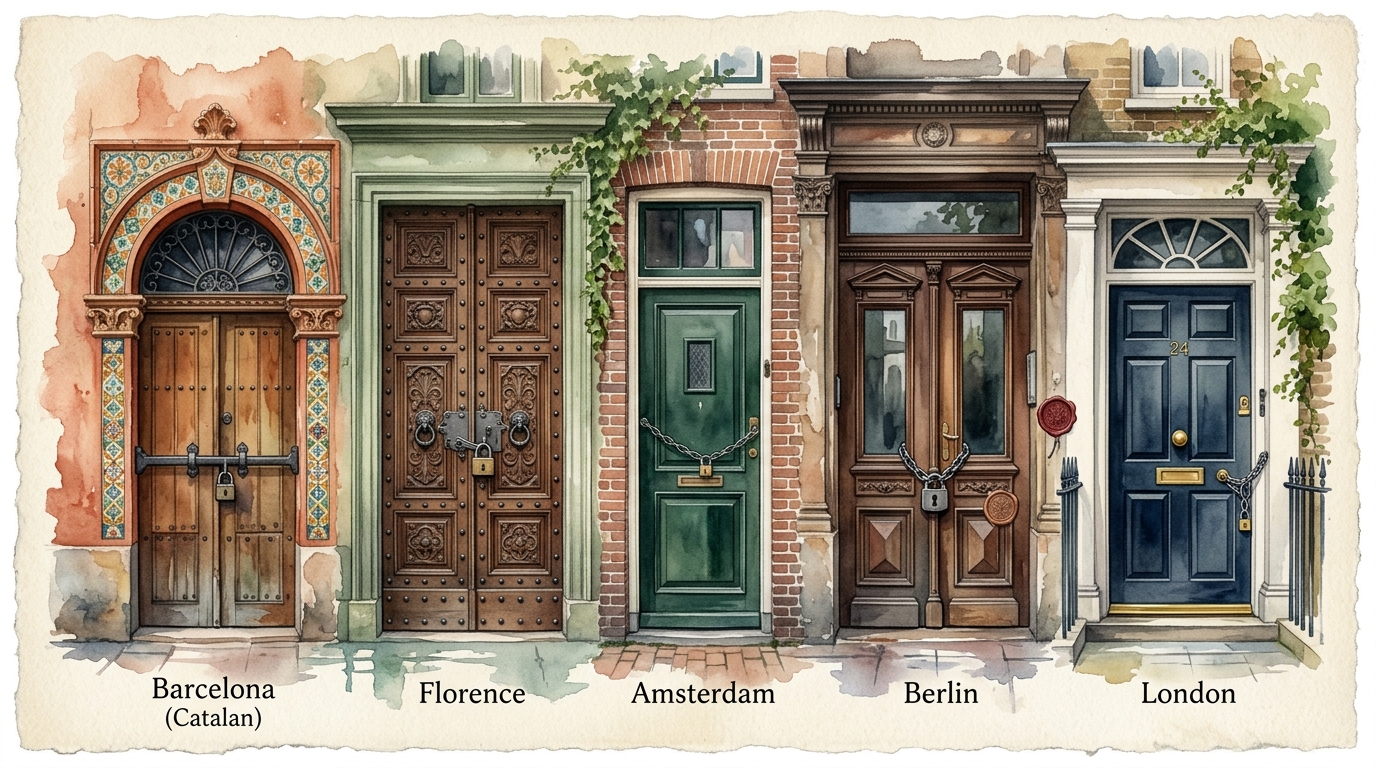
When thousands of listings disappear from a market, the remaining ones get more expensive. It's already playing out across Europe's most visited cities.
A Euronews analysis of 20 European cities found that average Airbnb nightly prices already sit at €284, compared to €244 for hotels. That gap has widened as regulated cities see their short-term rental supply shrink. In Barcelona, where no new licenses have been issued since 2014, the remaining legal listings can charge premium rates. In Amsterdam, cutting the annual limit from 30 to 15 nights effectively halves the total nights available from private hosts in central neighborhoods.
Spain is also considering a 21% VAT on tourist rentals under 30 days. Currently, short-term rentals in Spain are VAT-exempt. If the proposal passes, a €150-per-night Barcelona apartment would effectively cost €181.50 after tax. Hotels already charge the reduced 10% VAT rate.
| City | Annual Night Cap | Max Fine | Key Change (2026) |
|---|---|---|---|
| Barcelona | Full phase-out by Nov 2028 | €600,000 | All 10,101 licenses expiring |
| Paris | 90 nights | €150,000+ | National registration system launches |
| Amsterdam | 15 nights (central) | €21,750 | Cut from 30 to 15 nights (Apr 2026) |
| Berlin | 90 days (secondary homes) | €500,000 | Automatic data sharing with authorities |
| Florence | No new licenses (historic center) | Varies | Existing ban continues |
| London | 90 nights | £20,000 | Platform auto-blocks at limit |
The bottom line: the "Airbnb is always cheaper" assumption no longer holds in regulated European cities, especially for solo travelers or couples. Where Airbnb still wins on price is for larger groups splitting a multi-bedroom apartment. But that advantage is fading as supply contracts.
There's also a secondary cost that doesn't show up in nightly rates: uncertainty. When you book a hotel, you know it'll be there when you arrive. When you book a short-term rental in a city actively revoking licenses, there's a non-trivial chance your accommodation disappears before check-in. That risk has a price, even if it doesn't appear on the receipt. If you're comparing options for your next trip, our Airbnb vs Booking.com guide covers when each platform actually makes sense.
The Group Travel Problem: What Happens When You Need a Kitchen and Four Bedrooms
Here's where the crackdown hits hardest. A couple visiting Paris for a weekend can easily switch to a hotel. But a group of six friends who booked a three-bedroom apartment with a shared kitchen? That's a different problem entirely.
Group travelers rely on short-term rentals for features hotels don't typically offer: multiple bedrooms, full kitchens, common living spaces, laundry facilities. When cities eliminate or restrict those listings, groups don't just lose convenience. They lose the accommodation type that makes group travel affordable.
As a rough example, consider the math. Six friends splitting a €250-per-night apartment in Barcelona pay roughly €42 each. Six friends booking three hotel rooms at €150 each pay €150 per person - more than triple the cost. And you lose the kitchen, the shared space, and the feeling of traveling together rather than just sleeping in the same building.
The alternatives exist, but they require more research. Licensed aparthotels operate under commercial tourism licenses that won't be revoked by residential housing regulations. Serviced apartments in cities like Berlin and Amsterdam offer multi-room layouts with hotel-style legal protections. Some property management companies hold portfolio licenses covering dozens of units, making them more resilient to regulatory changes than individual hosts renting out spare rooms.
Look into licensed aparthotels (apart-hotels with tourist licenses that won't be revoked), serviced apartments, or booking directly with property managers who hold proper permits. These options give you multi-bedroom layouts with the legal security that a random Airbnb listing might not have.
The real risk for groups isn't higher prices. It's last-minute cancellations. As enforcement ramps up, hosts who lose their licenses or exceed their night caps will be forced to cancel existing bookings. That can happen weeks or even days before your trip. We've seen group trips fall apart when the apartment got cancelled three weeks out, and scrambling for six hotel rooms in peak-season Barcelona is not something you want to experience. If you've built a group itinerary around a specific apartment's location, a cancellation doesn't just inconvenience you. It can derail the whole trip.
If you're planning group travel across multiple European cities, tools like group planning apps can help coordinate backup accommodation options so one cancelled booking doesn't collapse the entire itinerary.

How to Protect Yourself: A Traveler's Checklist for 2026
You don't need to avoid Airbnb entirely. But you do need to book smarter in regulated European cities. The travelers who get burned are the ones who book the cheapest listing without checking whether it's legal. A little due diligence before you pay goes a long way. Here's what that looks like in practice.
- Check for a registration number Every legal short-term rental in the EU must display a registration number by May 2026. If a listing doesn't have one, don't book it. That number is your proof the host is operating legally.
- Verify the license is current Registration numbers can expire or be revoked. In Barcelona, for example, check the host's HUT number against the city's official registry. In Paris, confirm the host hasn't exceeded their 90-night cap. This overview of European travel rules can help you understand what to look for.
- Book with flexible cancellation In a market where hosts might lose permits mid-booking, flexible cancellation policies protect you. Look for free cancellation up to 48 hours before check-in at minimum.
- Have a backup accommodation plan Identify two or three hotel or aparthotel options near your rental before you leave. If your Airbnb gets cancelled, you won't be scrambling at inflated last-minute rates.
- Get travel insurance that covers cancellations Most policies cover host-initiated cancellations, but read the fine print. Our travel insurance guide breaks down what's actually covered and what isn't.
- Save all confirmation documents offline Download your booking confirmation, the host's registration number, and payment receipts. If a dispute arises, you'll need them. A travel document checklist helps you track what to save.

The Bigger Picture: Why Cities Are Doing This
It's easy to feel frustrated as a traveler when your accommodation options shrink. But the regulations didn't come from nowhere. European cities are responding to a housing crisis that short-term rentals have made worse.
Barcelona's rents increased 62.1% over the past decade. Florence saw rental prices jump 42% since 2016, the same period when Airbnb listings grew from 6,000 to over 14,000 in the historic center, 75% concentrated in just 5% of the city's area. Spain removed over 53,000 unauthorized tourist apartments from nationwide registers.
The EU's position isn't anti-tourism. It's that short-term rental platforms went from a side hustle for homeowners to an industrial-scale operation, and local regulations couldn't keep up. Consumer rights minister Pablo Bustinduy put it bluntly when announcing Spain's €65 million fine: there are "thousands of families who are living on the edge" because of housing shortages, while some companies profit from "business models that expel people from their homes."
Understanding the "why" matters for travelers too. Cities that feel respected by tourists tend to be friendlier places to visit. Booking a licensed, legal rental isn't just protecting yourself from fines or cancellations - it's participating in a tourism model that doesn't push local residents out of their own neighborhoods. And if you want to stay on the right side of local regulations during your trip, our guide to things not to do in Europe in 2026 covers the rules that catch tourists off guard.
We want to show that from now on, it is not a great investment.
Paris official, as reported by Fortune, March 2026

Timeline: What's Coming and When
The regulatory changes aren't all landing at once. Here's what's already happened and what's still ahead, so you can plan accordingly.
- October 2023 Florence bans new short-term rentals in its UNESCO-protected historic center.
- November 2024 France enacts the Loi Le Meur law. Paris's 90-night cap takes effect January 1, 2025.
- March 2025 Spain's Constitutional Court upholds Barcelona's license phase-out.
- December 2025 Spain fines Airbnb €65 million for advertising 65,122 unlicensed listings.
- April 1, 2026 Amsterdam cuts its central district limit from 30 to 15 nights per year.
- May 20, 2026 EU Regulation 2024/1028 takes full effect. All member states must have registration systems and data-sharing infrastructure operational.
- November 2028 Barcelona's 10,101 tourist apartment licenses expire. No renewals.
The May 20, 2026 deadline is the inflection point. After that date, platforms like Airbnb must actively verify registration numbers and share data with authorities across all 27 EU countries. Enforcement that was previously voluntary becomes systematic and automated. If you're traveling to Europe in late 2026 or beyond, expect the landscape to look noticeably different from what it was even a year earlier.
Frequently Asked Questions
Can I still book an Airbnb in Europe in 2026?
Yes, short-term rentals aren't banned across Europe. The EU regulation standardizes registration and enforcement, but each city sets its own rules. In most European cities, legal Airbnb listings with valid registration numbers will continue to operate. The cities with the tightest restrictions are Barcelona (full phase-out by 2028), Amsterdam (15 nights in central areas), and Paris (90-night cap with aggressive enforcement).
What happens if my Airbnb host gets fined or loses their license during my stay?
If a host loses their license, they're required to cancel existing bookings. Airbnb will refund you in full, but finding comparable last-minute accommodation in a regulated city at the same price is unlikely. Book with flexible cancellation policies and have a backup plan ready.
Are hotels actually cheaper than Airbnb in Europe now?
In many cities, yes. A Euronews comparison of 20 European cities found average Airbnb prices at €284 per night versus €244 for hotels. However, Airbnb can still be cheaper for groups splitting a multi-bedroom property, and prices vary significantly by city.
Does the EU regulation apply to Booking.com and VRBO too?
Yes. EU Regulation 2024/1028 applies to all online short-term accommodation rental platforms, not just Airbnb. Booking.com, VRBO, and any platform facilitating stays of fewer than 30 days must verify registration numbers and share data with authorities.
What's a registration number and how do I check if it's real?
A registration number is a unique identifier assigned to a property by local authorities, confirming it's legally allowed to operate as a short-term rental. By May 2026, every EU listing must display one. Most cities maintain public registries where you can verify numbers. In Spain, look for the NRU (Unique Registration Number). In France, check the national registration portal. For a broader overview of how registration systems work across Europe, Euronews maintains an up-to-date guide.
Will these rules affect my trip to the UK?
The UK is no longer in the EU, so Regulation 2024/1028 doesn't apply. However, London independently enforces a 90-night annual cap on entire-home Airbnb listings. Edinburgh and other UK cities have their own restrictions. Always check local rules regardless of EU membership status.
Should I avoid European Airbnbs entirely and just book hotels?
Not necessarily. Legal, registered Airbnbs remain a good option, especially for longer stays and groups. The key is to verify the listing has a valid registration number, use flexible cancellation policies, and have a backup. For our full breakdown on when each platform makes sense, see our Airbnb vs Booking.com comparison.
Key Takeaways
- EU Regulation 2024/1028 takes full effect May 20, 2026, requiring host registration, platform verification, and monthly data sharing across all 27 member states.
- Barcelona is phasing out all 10,101 tourist apartment licenses by November 2028. Amsterdam cut its central district cap to 15 nights. Paris dropped to 90 nights with fines exceeding €100,000.
- Always check for a registration number on any European short-term rental listing. No number means no legal protection if something goes wrong.
- Group travelers face the biggest disruption: fewer multi-bedroom apartments available, and higher risk of last-minute cancellations from hosts who lose permits.
- Hotels are now price-competitive with Airbnb in many European cities. Consider licensed aparthotels for group-friendly layouts with legal security.
- Book with flexible cancellation policies and have backup accommodation identified. Keep confirmation documents, registration numbers, and backup options organized in one place so a cancelled booking doesn't derail your trip.
- Understand the local rules at your destination before you book. Regulations vary dramatically from city to city.
- The regulations aren't going away. Plan for a European accommodation landscape that looks permanently different from what it was five years ago.
Sources
- EUR-Lex: EU Regulation 2024/1028 full text
- EUR-Lex Summary: Online short-term accommodation rental services, data collection and sharing
- Eurostat: Tourism nights booked via platforms hit nearly 1 billion (April 2026)
- Euronews: Spain fines Airbnb €65 million (December 2025)
- Rental Scale Up: Barcelona short-term rental ban analysis
- Fortune: Paris is ground zero for Europe's backlash against illegal Airbnbs (March 2026)
- HomeSelect Paris: Airbnb rental regulations Paris 2026, Loi Le Meur details and fine structure
- NL Times: Amsterdam to cut legal vacation rentals to 15 nights in eight neighborhoods
- Hostaway: Airbnb rules in Amsterdam 2026
- EU Perspectives: Cities across Europe tighten rules for Airbnb
- CNN Travel: Florence proposes ban on new Airbnbs due to overtourism
- GuestReady: The Airbnb 90-day rule in London
- Euronews: Airbnb or hotel for a European trip? Cost comparison
- BDO Global: Spain considering 21% VAT on short-term tourist housing rentals
- EU Tourism Platform: Rethinking rentals and how the EU is addressing data gaps in tourism
- Euronews Travel: All the new travel rules in Europe for 2026
- Idealista: Barcelona sets 2028 deadline to phase out tourist apartments
Last updated: July 3, 2026
Keep Reading
More travel tips and guides picked for you

What counts as visiting a state? Layovers, drive-throughs and the rules 50-staters use
Only 2% of Americans name a plane change as the minimum that counts as visiting a state, while 27% set the bar at driving through. Here's a three-tier rubric, a lookup table for the edge cases from Four Corners to D.C., and one trip counted three ways.

The fake SBB ticket website stealing credit card and Twint data from travelers
Zurich cantonal police confirmed a fake SBB ticket website is stealing credit card and Twint payment details from travelers who find it through an ordinary Google search. Here is how to spot it and what to do if you already paid.

UK ETA scam warning: fake websites are charging Austrians up to €900
Fake UK ETA websites are charging Austrian and EU travellers hundreds of euros for a form that costs £20. Here's how the real one works, and how to spot a scam before you pay it.