Your RTO Costs $17K a Year. Here's What That Buys You Abroad

Key Highlights
- 1
- 2
- 3
+4 more in the takeaways below
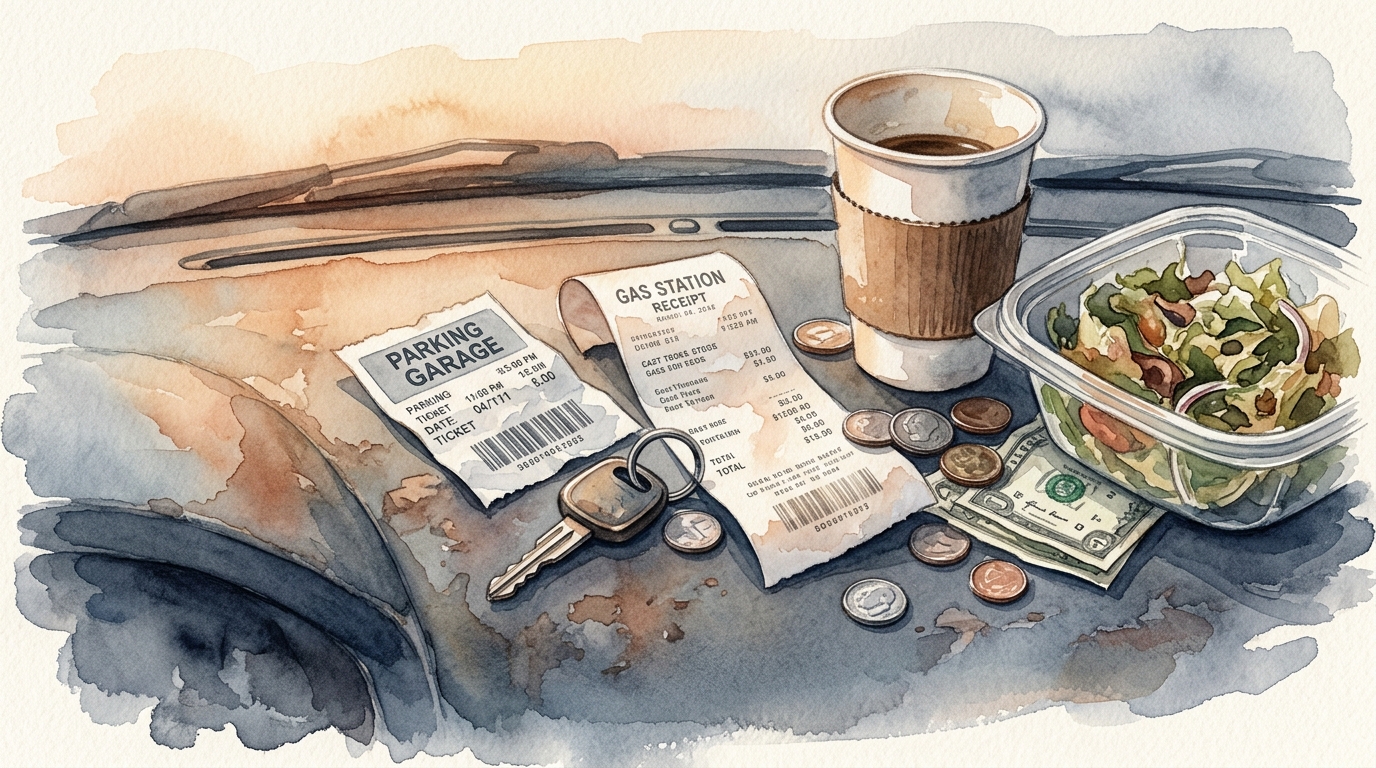
Your company wants you back five days a week. You've tallied the gas, parking, lunches, coffee, and the wardrobe you retired in 2020. The return-to-office costs add up fast: north of $12,000 a year. After taxes, closer to $17,000 in gross income just to sit in an open-plan office. That's not a line item. That's a budget, and it's enough to fund an entire year of living abroad.
The average American spends $12,000+ per year on return-to-office costs (commuting, food, clothing, childcare) before taxes. After taxes, you need roughly $17,000 in gross earnings to cover it all. That same money funds 10-14 months in Chiang Mai, a full year in Ho Chi Minh City, or 8-10 months in Medellin. With 65+ countries offering digital nomad visas and coworking running $80-250/month across Southeast Asia and Latin America, the question isn't whether you can afford to work abroad. It's whether you can afford not to.
The Real Cost of Going Back: $55 a Day Adds Up Fast
The return-to-office conversation usually focuses on culture, collaboration, and productivity. What it rarely mentions is the bill. An Owl Labs survey found that in-office workers spend an average of $55 per day just showing up: $18 on lunch, $15 on commuting, $13 on breakfast and coffee, and $9 on parking. Pet owners add another $20 in daycare or dog-walking fees.
Multiply $55 by 245 working days and you're looking at $13,475 before you've bought a single pair of office-appropriate shoes.
A 2026 SensaPay study broke down the damage state by state. Hawaii leads at $9,651 in commute and food costs alone (excluding childcare and clothing), followed by Nevada at $9,398 and California at $8,844. New York comes in at $8,639. These numbers cover two categories. Add wardrobe expenses and the gap widens: California workers spend roughly $2,000 a year on office clothing, Nevada around $1,385.
Then there's the number nobody puts on a spreadsheet: time. A MyPerfectResume analysis using Census and Bureau of Labor Statistics data calculated that American workers lose 223 hours per year to commuting. That's six full work weeks, valued at $8,158 based on the average hourly wage of $36.53. You're not just spending money to go to the office. You're donating an extra month and a half of labor, unpaid.
The Tax Multiplier Nobody Talks About
Here's the part that turns a large expense into a staggering one. Every dollar you spend on commuting, lunch, and office clothing comes from after-tax income. A detailed breakdown from Business Case Guy did the math: to cover $13,297 in net RTO expenses, someone in the 25% federal-plus-state bracket needs to earn $17,729 in gross income, paying $4,432 in taxes before they can spend the remaining $13,297 on getting to work and feeding themselves there. The formula is straightforward: $13,297 / (1 - 0.25) = $17,729. Plug in your own effective rate and the number shifts, but for a median earner in a high-tax state, 25% is conservative.
Put another way, RTO costs you the equivalent of a $17,729 pay cut. Except nobody's calling it that. Your salary stays the same on paper, but your disposable income drops by the price of a decent used car, every single year.
RTO expenses aren't tax-deductible for W-2 employees. Unlike business owners who can write off commuting costs, salaried workers eat the full expense from after-tax income. A $12,000 RTO cost at a 25% effective rate requires earning $16,000+ in gross salary just to break even.
LendingTree estimates the average annual commute cost at $9,470 when you factor in time lost at the average wage. A Clever Real Estate analysis of government data puts direct commuting expenses at $8,466, roughly 19% of individual income. Layer on the other costs and you're staring at a number that would make a landlord in Southeast Asia laugh. (And if you do move abroad, picking the right card keeps foreign transaction fees from eating into the savings.)
Why RTO Is Getting Worse, Not Better
If you're hoping the trend will reverse, the data says otherwise. CNBC reports that five-day office weeks are the least popular work arrangement, yet employers keep mandating them anyway. Archie's 2026 RTO tracker shows 55% of Fortune 100 companies now require five-day attendance, up from just 5% in 2021. The average required in-office days climbed from 2.6 to 3.9 per week.
Some of this is genuine belief in office culture. Some of it isn't. A BambooHR survey of 1,500+ U.S. managers, reported by Fortune, found that 25% of C-suite executives designed RTO mandates hoping employees would voluntarily quit. 18% of HR professionals admitted the same. It worked at Paramount Skydance, where 600 employees accepted buyouts rather than return full-time, costing the company $185 million in severance.
I resigned mid-meeting. I asked if the company would cover commuting costs. HR laughed and said, 'That's part of being a team player.'
- r/remotework user
The talent drain is real. A University of Pittsburgh study analyzing 3 million workers across 54 S&P 500 companies found that skilled employees are 77% more likely to leave after RTO mandates. And 80% of companies with RTO policies reported losing talent as a direct result. The workers leaving aren't the ones who can't find other jobs. They're the ones who can.
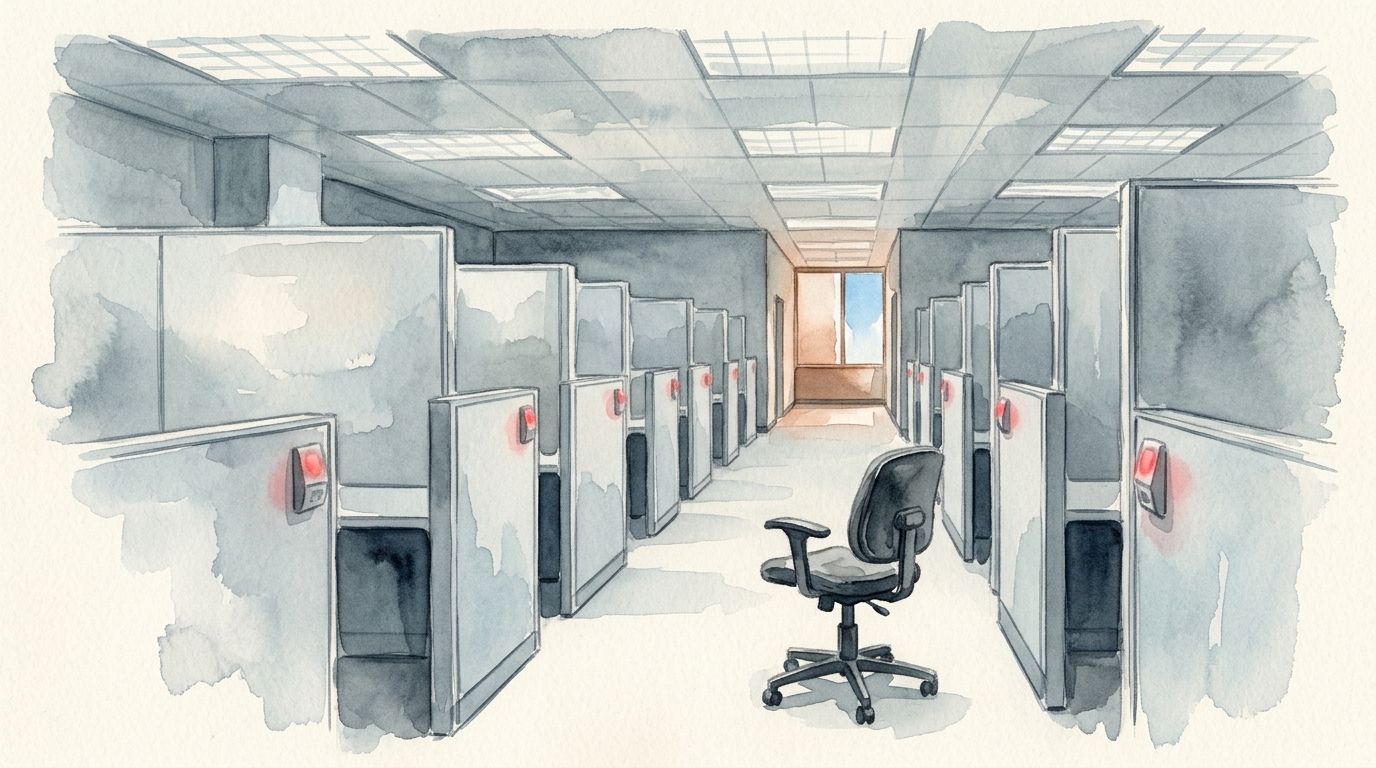
Meanwhile, enforcement is getting stricter. 37% of companies now actively monitor attendance (up from 17% in 2024), and 47% of those requiring five-day attendance plan to discipline or terminate non-compliant employees. Badge tracking, desk sensors, and login audits have become the norm at firms like Amazon and JPMorgan Chase.
What $17K Actually Buys You Abroad
Now flip the question. Instead of spending $17,000 to sit in traffic and eat $16 salads at your desk, what if you spent that money on living in another country entirely? Not as a tourist burning through savings, but as a remote worker - stable income, laptop, coworking membership.
Tens of thousands of remote workers already do this. Here's what the numbers look like in five popular digital nomad cities, with all-in monthly costs covering rent, food, coworking, transport, insurance, and entertainment.
| City | Monthly All-In | Annual Cost | vs. $17K RTO |
|---|---|---|---|
| Chiang Mai, Thailand | $800-1,200 | $9,600-14,400 | Saves $2,600-7,400 |
| Ho Chi Minh City, Vietnam | $900-1,300 | $10,800-15,600 | Saves $1,400-6,200 |
| Medellin, Colombia | $1,200-1,800 | $14,400-21,600 | Breaks even to saves $2,600 |
| Mexico City, Mexico | $1,600-2,400 | $19,200-28,800 | Above RTO savings |
| Lisbon, Portugal | $1,950-2,550 | $23,400-30,600 | Above RTO savings |
Sources: City cost data compiled from Nomads.com, MidlifeNomads, and LivingInVietnam. All figures reflect 2026 estimates for a single remote worker including rent, food, coworking, transport, insurance, and entertainment.
The first three cities on that list cost less than what you'd spend just getting to and from a cubicle. You're not sacrificing comfort. You're redirecting the same money toward rent, food, and a coworking space in a place where $1,000 goes three or four times further. And even Mexico City and Lisbon start to make financial sense once you account for the fact that you'd be paying your home rent on top of RTO expenses if you stayed put.

Chiang Mai: The $800/Month Baseline
Nomads.com data for 2026 shows Chiang Mai holding its position as the cheapest serious nomad destination. A furnished condo runs $280-540/month, coworking memberships start at $85, and a street food meal costs $1-3. Sit-down restaurants range from $2-7. TravelingLifestyle named it the cheapest digital nomad destination of 2026, and the numbers back that up. A budget-conscious worker can genuinely live here for under $1,000 a month, including a scooter rental ($80/month) and weekend trips to the mountains.
Ho Chi Minh City: Fast Internet, Faster Growth
Vietnam's largest city combines affordability with infrastructure. Nomads.com reports average WiFi speeds of 80 Mbps, and LivingInVietnam's 2026 guide breaks down a typical month: rent at $400-700 for a one-bedroom in Districts 1, 2, or 7, food at $150-300 depending on how often you eat out, and transport under $50 if you grab a scooter. Coworking day passes start around $5, monthly memberships at $95. The nomad scene is active, with weekly meetups and language exchanges built around coworking hubs.
Medellin: The Sweet Spot
Medellin sits right at the breakeven line, which makes it the most interesting comparison. Nomads.com's 2026 data puts hot desks at $80-200/month. MidlifeNomads' breakdown shows rent in Laureles at $500-700/month for a furnished one-bedroom, comida corriente lunches at $3-6, and casual dinners at $8-15. We've seen comida corriente lunches in Laureles for as little as $3 - and they're better than any $16 desk salad. At the lower end of the range ($1,200/month), you're spending less on an entire life abroad than you'd spend just commuting and eating lunch in most US states. If you need a low-fee card for spending abroad, that's a separate conversation worth having before you go.
Get your connectivity sorted first. An eSIM or local SIM in Southeast Asia or Latin America typically costs $10-20/month for generous data plans, compared to $50+ for international roaming on a US carrier.
The Visa Question: 65+ Countries Want You
The biggest mental barrier to working abroad isn't the budget. It's the paperwork. But governments noticed the remote work shift too, and they responded. VisaHQ tracks 65+ countries offering dedicated digital nomad visas in 2026, with income thresholds ranging from $684 to $4,400 per month. If you're earning enough to be affected by an RTO mandate, you likely qualify for several.

| Country | Min. Monthly Income | Duration | Highlight |
|---|---|---|---|
| Colombia | ~$1,100-1,400 | Up to 2 years | Lowest threshold in the Americas |
| Thailand (DTV) | THB 500K savings (~$15,000) | Up to 5 years | Savings-based Destination Thailand Visa |
| Spain | ~$3,105 | 1 year (renewable up to 3 years) | Top-rated European program |
| Portugal | ~$3,510 | 1 year (renewable) | EU residency path |
| Mexico | ~$3,700+ | Up to 4 years | Temporary resident visa option |
Income thresholds as of April 2026. Requirements change frequently. Verify with official consulate or embassy sources before applying.
Global Citizen Solutions' 2026 guide notes that European programs tend to require $2,700-4,400/month in proven income, while Latin American and Southeast Asian options drop as low as $684/month. The common requirements across most programs: proof of remote employment or freelance income, health insurance, and a clean criminal record. Most applications take 2-8 weeks. If you're unsure about the documents you'll need, sort that out well before your target move date.
Freelancermap's compliance guide flags one critical nuance: these visas generally don't exempt you from US tax obligations. You'll still file with the IRS and may owe state taxes depending on your residency status. But the point isn't to dodge taxes. The point is that the money you're already losing to RTO could fund a better life somewhere else, within completely legal frameworks.
One accommodation note for anyone eyeing Europe: several cities have cracked down on short-term rentals in 2026, which can affect pricing and availability. Lisbon, Barcelona, and Amsterdam all have new restrictions. Monthly rental contracts or local housing platforms tend to work better (and cheaper) than Airbnb for stays over 30 days.
The Coworking Math: $85 vs. Your Commute
One objection comes up every time someone floats the work-abroad idea: "But I need an office." Fair. Most remote workers do better with some structure, a decent desk, and WiFi that doesn't drop during a Zoom call. Coworking abroad costs a fraction of commuting to an office you don't own.

| Region | Hot Desk (Monthly) | Dedicated Desk (Monthly) |
|---|---|---|
| SE Asia (Thailand, Vietnam) | $80-150 | $150-250 |
| Latin America (Colombia, Mexico) | $100-250 | $200-350 |
| Southern Europe (Portugal, Spain) | $150-300 | $250-450 |
Compare those numbers to the average US commute cost of $9,470 per year. Even the most expensive coworking option on that table ($450/month for a dedicated desk in Lisbon) comes to $5,400 annually. Your commute alone costs nearly double that, and it doesn't include a desk, WiFi, free coffee, or a community of other remote workers.
You're on a video call from Punspace in Chiang Mai. Behind you: a wall of tropical plants. Your coworking membership cost less than two days of your old commute.
The spaces themselves have matured significantly since the early co-living era. In Chiang Mai, Punspace and CAMP offer fiber internet, standing desks, and meeting rooms. Medellin's Selina and Tinkko are built around nomad networking. Ho Chi Minh City has dozens of options in Districts 1 and 2, many with day passes if you prefer cafe-hopping some days and structured work on others. The honest answer: most coworking spaces abroad are better equipped than whatever your company calls an 'open-plan collaborative workspace.'
What About My Apartment Back Home?
This is the question that separates the spreadsheet from reality. If you're locked into a lease, you can't just vanish to Thailand. But here's the calculation most people skip: you might already be paying rent and RTO costs simultaneously. If your rent is $1,500/month and your RTO expenses are $1,000/month, you're spending $30,000 a year on housing-plus-office. Subletting your apartment (where legal) and moving to Chiang Mai at $1,000/month total drops that to $12,000.
Even without subletting, a trial run makes the math work. Take a month of remote work abroad during vacation or between leases. Your RTO costs that month: $0. Your living costs in Ho Chi Minh City that month: $1,000-1,300 all in. You've just saved the equivalent of one to two months of commuting expenses while testing whether the lifestyle fits. Tools like expense trackers make it easy to see exactly where your money goes during the experiment.
The food comparison deserves its own spotlight. That $16 desk salad you buy near the office five days a week? In Chiang Mai, $16 covers four to five full restaurant meals. In Medellin, it buys three sit-down dinners with drinks. The cities worth staying for the food alone happen to overlap almost perfectly with the cheapest nomad destinations. You're not downgrading your meals. You're upgrading them while spending less.
If you're worried about the logistics of a first-time international move, plenty of people have walked the path before you. A list of common first-trip mistakes covers the basics that catch newcomers off guard.

The Real Risks (and How to Handle Them)
Working abroad isn't a financial cheat code with zero downsides. There are real risks, and pretending they don't exist would be dishonest.
Tax complexity. You're filing your 1040 from Lisbon and realize your home state still considers you a resident. Now you owe state income tax on top of federal, even though you haven't set foot in your apartment since March. US citizens owe federal taxes on worldwide income regardless of where they live, and some states follow you until you formally establish residency elsewhere. The Foreign Earned Income Exclusion (FEIE) can shelter up to $132,900 in 2026, but it applies to earned income, not investment gains. Consult a tax professional who specializes in expat situations before making the move.
Employer policies. Not every company allows remote work from abroad. Some have data residency requirements, insurance restrictions, or flat-out bans. Check your employment agreement. Some workers negotiate "workcation" policies: 30-90 days of international remote work per year, enough to test the waters without burning bridges.
Health insurance. Your US employer plan likely doesn't cover you abroad. Budget $100-250/month for international health insurance, or look into local plans in countries like Thailand and Colombia where quality private care costs a fraction of US prices. Make sure you understand what travel insurance actually covers before relying on it as your only safety net.
Loneliness and routine. The novelty wears off. Building a social network in a new city takes effort, and the time zone gap with US colleagues (especially Pacific to Southeast Asia) can isolate you from team rhythms. Most successful long-term nomads pick 2-3 bases and rotate, building community in each.
Don't quit your lease, sell your car, and fly to Bali on a Monday. Do a 2-4 week trial in one city. Track every expense. Compare it honestly to your RTO costs. Then decide.
Before You Make the Move: Pre-Flight Checklist
- Check your employment contract for location clauses, data residency requirements, and remote work policies
- Research digital nomad visa requirements for your target country (income thresholds, health insurance, application timelines)
- Consult a tax professional about FEIE eligibility, state tax obligations, and any foreign tax treaties
- Arrange international health insurance with emergency evacuation coverage (your employer plan likely won't work abroad)
- Set up a VPN and test all your work tools (VPN, video calls, VoIP) from your target destination's typical internet speeds
- Run a 2-4 week trial trip before committing to a full move, tracking every expense and comparing honestly to your RTO costs
- Notify your bank and credit card providers to avoid fraud holds, and set up a low-fee international card
The Bigger Picture: RTO as a Financial Crossroads
The return-to-office debate is usually framed as a binary: go back or find a new job. But there's a third option that gets surprisingly little airtime. Keep the job, keep the salary, lose the commute, and redirect the savings toward a higher quality of life somewhere else.
The 223 hours you'd spend commuting become hours spent in a coworking space with a view of the Andes, or at a cafe in the Old Quarter of Hanoi. The $17,000 you'd spend on gas, parking, $16 salads, and dry cleaning becomes rent, food, and a gym membership in a city where the average meal costs $3. That's not escapism. It's arithmetic.
The trend is moving toward more RTO mandates, not fewer. Innovative Human Capital's analysis found that some workers face costs eating up nearly 20% of discretionary income. At the same time, digital nomad infrastructure gets better every year: faster WiFi, more coworking spaces, clearer visa pathways, and thriving communities of remote workers who've already figured out the logistics.
Next year, that $13,475 will probably be higher. Gas prices won't drop. Parking garages won't get cheaper. Your $16 desk salad might be $18. But a coworking hot desk in Chiang Mai will still cost $85 a month, and a plate of khao soi will still run $2. The workers who run these numbers will see the gap. And increasingly, they'll act on it.

Frequently Asked Questions
How much does returning to the office cost per year?
Direct RTO costs average $12,000-15,000 per year for full-time in-office workers, covering commuting, meals, parking, and wardrobe. When you include the tax impact (these are after-tax expenses), the gross income required to cover them can reach $17,729 in a 25% tax bracket. Add the opportunity cost of 223 hours of commute time and the total economic impact exceeds $20,000.
Is RTO a hidden pay cut?
Effectively, yes. Your salary stays the same, but your disposable income drops by $12,000-17,000 annually. Unlike a formal pay cut, RTO costs aren't reflected in your compensation package, making them invisible on paper but very real in your bank account. Since these expenses aren't tax-deductible for W-2 employees, the impact is amplified.
Can I work remotely from another country on a US salary?
Yes, but check your employer's policy first. Many companies allow 30-90 days of international remote work annually. For longer stays, 65+ countries offer digital nomad visas with income thresholds starting as low as $684/month. You'll still owe US federal taxes on worldwide income, though the Foreign Earned Income Exclusion may apply.
What countries offer digital nomad visas in 2026?
Over 65 countries have active digital nomad visa programs as of 2026, including Colombia, Spain, Portugal, Thailand, Mexico, Croatia, Greece, and the UAE. Income requirements range from $684/month to $4,400/month (some European programs). Most require health insurance, proof of remote income, and a clean background check.
How much does a digital nomad spend per month?
Monthly budgets vary widely by destination. In Southeast Asia (Chiang Mai, Ho Chi Minh City), expect $800-1,300/month all-in. Latin America (Medellin, Mexico City) ranges from $1,200-2,400. Southern Europe (Lisbon, Barcelona) runs $1,950-3,000+. These figures include rent, food, coworking, transport, insurance, and entertainment.
Is it cheaper to live abroad than commute to work?
In many cases, yes. The average American spends $9,470/year on commuting alone. A full year of living in Chiang Mai costs $9,600-14,400 total, covering everything from rent to food to entertainment. Your US commute costs more than an entire life in Thailand's most popular nomad city.
Do I need to tell my employer if I work from abroad?
Yes. Working from another country can trigger tax, data privacy, and employment law obligations for your employer. Most companies have international remote work policies or will create one if asked. Some industries (finance, healthcare, defense) have strict data residency rules that may limit where you can work. Always disclose your location and get written approval.
Key Takeaways
- RTO costs $12,000-17,000+ per year when you include commuting, meals, wardrobe, and the tax multiplier on after-tax expenses.
- That same budget covers 8-14 months of living in popular digital nomad cities like Chiang Mai, Ho Chi Minh City, or Medellin.
- 65+ countries offer digital nomad visas with income thresholds most US workers already exceed, starting as low as $684/month.
- Coworking abroad costs $80-300/month compared to $9,470/year in average US commuting costs. Even premium dedicated desks run cheaper than your gas bill.
- Start with a trial run before committing. A 2-4 week test in one city lets you compare real costs to your RTO expenses without burning any bridges. TripProf can help you organize the logistics in one place, from documents to daily budgets.
- Handle the risks honestly: check employer policies, get international health insurance, understand your tax obligations, and consult a professional before making permanent moves.
- The RTO trend is accelerating, with 55% of Fortune 100 companies now requiring five-day attendance. The financial pressure on workers will increase, making the abroad option more relevant every year.
Sources
- Owl Labs "State of Hybrid Work 2025" survey: daily RTO cost breakdown ($55/day). Owl Labs
- SensaPay 2026 study: state-by-state RTO costs and wardrobe expenses. YourTango
- MyPerfectResume analysis: 223 hours/year lost to commuting, valued at $8,158. AllWork.Space
- Gross income calculation: $17,729 needed to cover $13,297 in net RTO costs. Business Case Guy
- LendingTree: average annual commute cost of $9,470. LendingTree
- Clever Real Estate analysis of government commute data, $8,466 average (19% of income). Clever Real Estate / ConsumerAffairs
- BambooHR survey: 25% of executives designed RTO to trigger quits. Fortune
- Paramount Skydance: 600 employees quit, $185M in severance. Fortune
- Archie 2026 RTO tracker: Fortune 100 five-day mandate statistics. Archie
- University of Pittsburgh study: skilled employees 77% more likely to leave post-RTO (3M workers, 54 S&P 500 companies). Fortune
- CNBC: five-day office weeks as least popular arrangement. CNBC
- Chiang Mai cost of living 2026 data. Nomads.com
- Ho Chi Minh City cost of living and expat guide. LivingInVietnam
- Medellin cost of living breakdown for nomads. MidlifeNomads
- Mexico City cost of living for remote workers. MidlifeNomads
- Lisbon cost of living for digital nomads. MidlifeNomads
- Digital nomad visa overview: 65+ countries. VisaHQ
- Digital nomad visa requirements and income thresholds. Global Citizen Solutions
- Digital nomad visa compliance guide. Freelancermap
- Innovative Human Capital: RTO impact on discretionary income. Innovative Human Capital
- Greenback Tax Services: 2026 FEIE threshold ($132,900). Greenback Tax Services
Last updated: July 3, 2026
Keep Reading
More travel tips and guides picked for you

What counts as visiting a state? Layovers, drive-throughs and the rules 50-staters use
Only 2% of Americans name a plane change as the minimum that counts as visiting a state, while 27% set the bar at driving through. Here's a three-tier rubric, a lookup table for the edge cases from Four Corners to D.C., and one trip counted three ways.

The fake SBB ticket website stealing credit card and Twint data from travelers
Zurich cantonal police confirmed a fake SBB ticket website is stealing credit card and Twint payment details from travelers who find it through an ordinary Google search. Here is how to spot it and what to do if you already paid.

UK ETA scam warning: fake websites are charging Austrians up to €900
Fake UK ETA websites are charging Austrian and EU travellers hundreds of euros for a form that costs £20. Here's how the real one works, and how to spot a scam before you pay it.