Slowmad Food Guide: 7 Cities Worth a Month-Long Stay for the Food Alone
Key Highlights
- 1
- 2
- 3
+5 more in the takeaways below
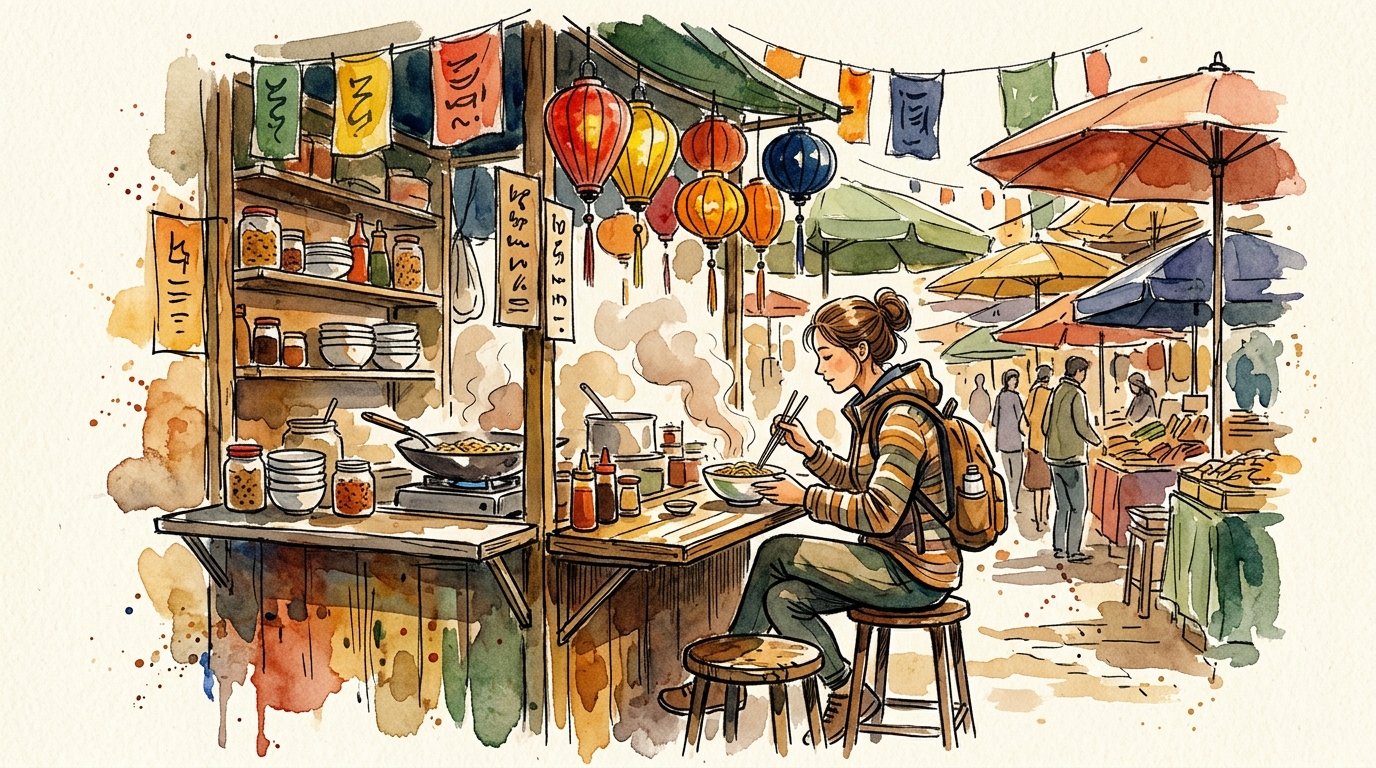
You're three weeks into Chiang Mai. You know which noodle cart sets up at 6pm on the corner of Nimmanhaemin Soi 9, that the khao soi lady adds extra coconut milk if you show up before the lunch rush, and the night market vendor who saves you the last pork skewers because you've been there every Tuesday. That kind of knowledge doesn't happen on a five-day trip. It takes a month. And for a growing number of remote workers, that's exactly the point.
The best cities for food nomads in 2026 aren't necessarily the ones with the most Michelin stars. They're the places where a month-long stay transforms you from tourist to regular, where the food is so good, so affordable, and so deeply woven into daily life that eating becomes the reason you don't leave.
Here are seven cities where the food alone justifies unpacking for a month. The visa section focuses on digital nomad visas, but these cities work equally well for sabbaticals, early retirement, or gap-year travel - check tourist visa durations if remote work isn't your situation.
Seven cities worth a month for the food: Chiang Mai (street food from 70 THB/$2 per meal), Crete (2026 European Region of Gastronomy), Tbilisi (full meals for 30 GEL/$8), Mexico City, Lisbon, Seoul, and Oaxaca. Each offers affordable eating, long-stay visa options, and food cultures that reward time over money. Covers costs, visa logistics, and how to eat like a local in each city.
What Makes a City Worth a Month for Food?
Not every city with great restaurants qualifies as a slowmad food destination. A place earns that distinction when three things overlap: the local food culture rewards repetition, the cost of eating out doesn't destroy your budget, and the visa situation lets you stay long enough to actually settle in.
Repetition matters because the best meals as a nomad aren't the ones you find on TripAdvisor. They're the ones you stumble into on week two, return to on week three, and get a free appetizer at on week four because the owner recognizes you. That takes time. It takes getting past the tourist-trap phase that catches most short-stay visitors.
Cost matters because nomads eat out constantly. The Hilton 2025 Trends Report found that dining experiences are travelers' second-highest budget priority after accommodation, with nearly one in five people now traveling specifically to seek out restaurants and culinary experiences. But you don't need a luxury budget. You need a city where $15-25 a day covers three real meals, not three sad sandwiches.
And visa duration matters because a 30-day visa waiver is fine, but a digital nomad visa that stretches to six or twelve months changes your entire relationship with a city's food scene. You stop rushing. You start cooking with ingredients from the same vendor every Saturday. You learn what's seasonal. With over 55 countries now offering dedicated digital nomad visas, the options for long-stay food immersion are wider than they've ever been.
1. Chiang Mai, Thailand
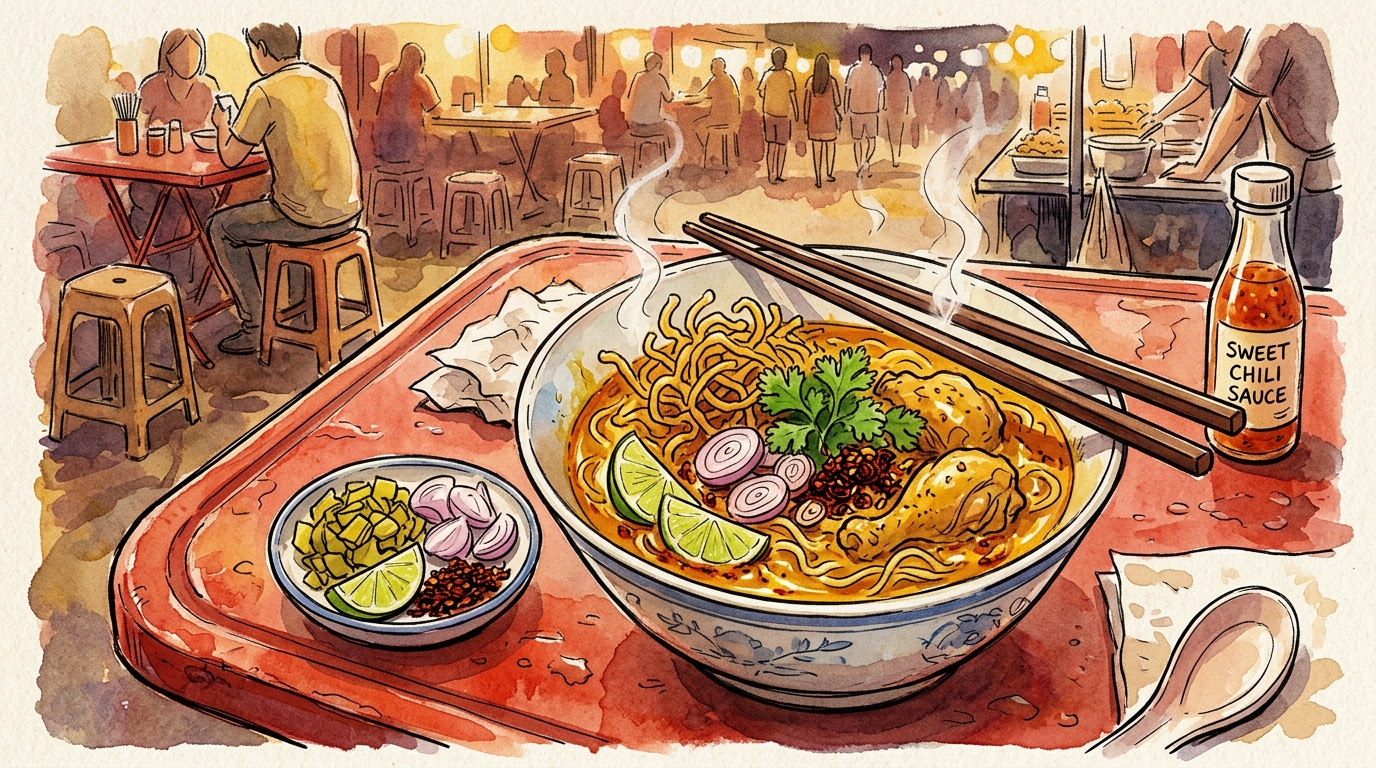
Chiang Mai has been on every nomad list for a decade. The food is the reason it stays there. A meal at an inexpensive restaurant runs around 70 THB ($2) according to Numbeo. Street food dishes like pad thai or grilled skewers cost 30-70 THB ($1-2) per plate. A full day of eating, including coffee from one of the city's surprisingly excellent specialty roasters, rarely tops $15. Monthly living costs sit around $1,000-$1,500 for most nomads, and a significant chunk spend more on coworking memberships than on food.
The city's food identity goes deeper than pad thai. Northern Thai cuisine is its own tradition: khao soi (curry noodle soup with crispy egg noodles on top), sai oua (herb-packed sausage), nam prik ong (tomato-pork chili dip). The night markets aren't tourist performances. They're where locals eat dinner. Warorot Market has been feeding Chiang Mai since 1910, and the aunties running the stalls aren't interested in your Instagram story.
Thailand's Destination Thailand Visa (DTV) is a 5-year multiple-entry visa with 180-day stays per entry, extendable for another 180 days. It costs THB 10,000 (~$275) and requires proof of THB 500,000 in savings. Remote work for foreign employers is allowed. For most nomads, though, the standard visa-exempt entry of 60 days (extendable to 90) is enough for a solid month-long food education.
Chiang Mai was recently ranked the most affordable city in the world for digital nomads living on a $2,000 monthly budget. The food-to-cost ratio is hard to beat anywhere else on this list.
2. Heraklion, Crete
Crete was officially named European Region of Gastronomy 2026 by IGCAT, and it earned the title. The jury met with more than 60 leading stakeholders across the island before awarding the designation. Cretan food isn't trying to be fancy. It's olive oil pressed from trees older than most European countries, wild greens foraged from hillsides, cheese made in the same mountain villages for centuries, and lamb cooked slowly enough that it falls apart when you look at it. The Cretan Diet forms the heart of the Mediterranean diet and has been linked to some of the highest longevity rates documented in nutritional science.
Eating out in Heraklion costs less than most of Western Europe. A meal at an inexpensive restaurant runs about 13 euros according to Numbeo, while a three-course dinner for two at a mid-range spot costs around 50 euros. Farmers' markets sell produce at prices that'll make anyone from Northern Europe emotional. And because Crete's food culture is so tied to the land and seasons, a month-long stay in spring or fall gives you a completely different plate than summer tourists get.
Greece offers a Digital Nomad Visa for up to 12 months, requiring a minimum monthly income of 3,500 euros (increasing by 20% for a spouse). Crete specifically has been marketing itself to remote workers. Chania and Heraklion both have growing coworking scenes. Since Greece is part of the Schengen Area, the nomad visa is especially valuable for non-EU citizens who'd otherwise be limited to 90 days. The 2026 gastronomy designation means extra food festivals, producers opening their doors, and a generally heightened food consciousness across the island.
3. Tbilisi, Georgia
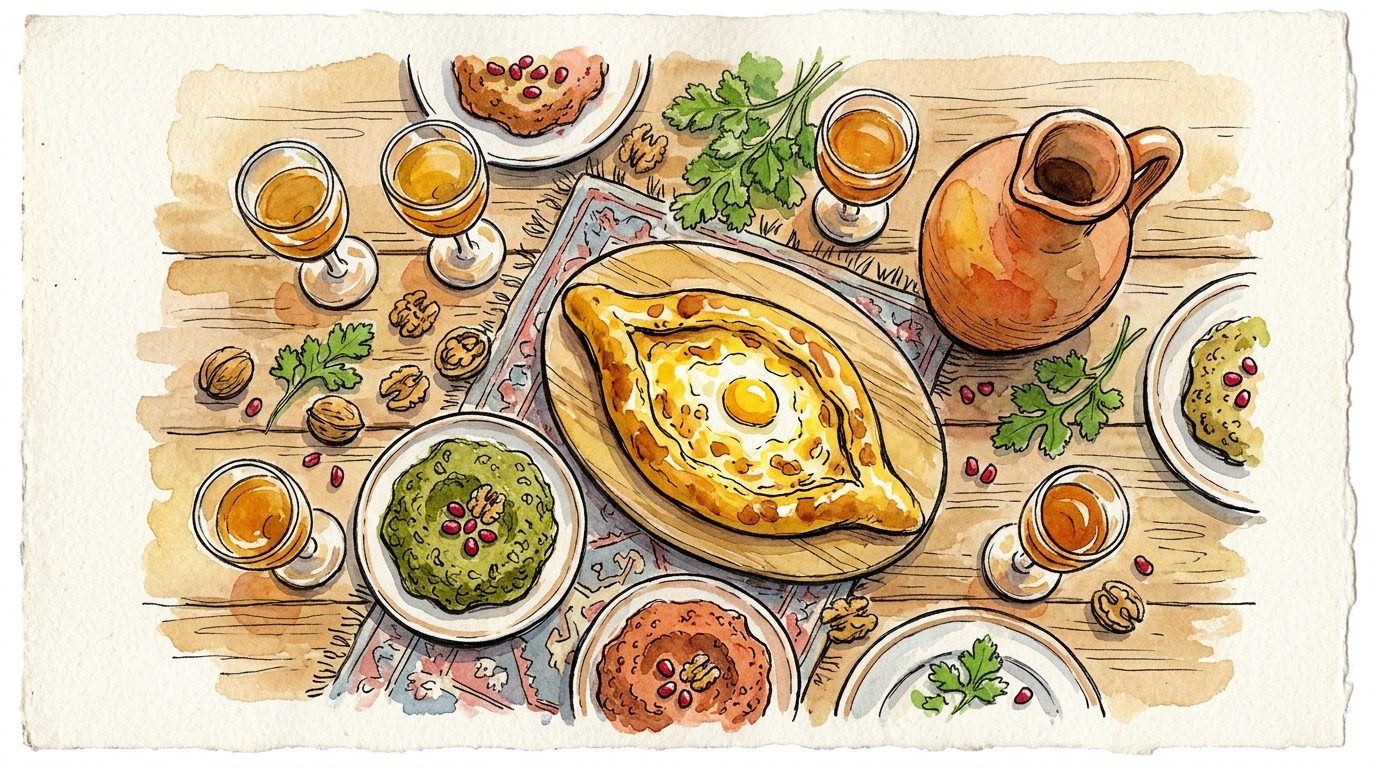
Georgia is one of the world's great underrated food countries. Tbilisi is where you eat your way through a cuisine most travelers haven't discovered yet, for almost nothing. Khinkali (soup dumplings that demand a specific eating technique unless you want broth down your shirt), khachapuri (cheese-filled bread in regional variations that people argue about with real passion), and pkhali (walnut-paste vegetable dishes) barely scratch the surface.
A meal at an inexpensive restaurant in Tbilisi costs around 30 GEL ($8) according to Numbeo. A full Georgian spread for two with wine runs about 60-80 GEL ($17-22). Monthly living costs sit around $800-$1,200 for budget-minded nomads. Georgia offers visa-free entry for one year to citizens of 95+ countries, which eliminates the visa headache entirely. You don't need a special permit. You just show up and stay. Note: since January 2026, valid travel health insurance is required for the duration of your stay.
The wine culture deserves its own mention. Georgia has been making wine in clay qvevri vessels for over 8,000 years, a practice inscribed on UNESCO's Intangible Cultural Heritage list in 2013</ >. The natural wine movement that swept through Brooklyn and Berlin? Georgia was doing it millennia before it had a name. A month in Tbilisi gives you time to visit the Kakheti wine region, taste chacha (grape brandy) at a family supra (feast), and understand why Georgians consider hospitality a competitive sport.
If Southeast Asia and the Mediterranean set the baseline for slowmad food value, Latin America is where things get interesting.
4. Mexico City
Mexico City doesn't do casual food. Even the street taco vendors operate with a precision and pride that makes you rethink everything you thought you knew about "street food." A month here is a graduate-level food education, and the tuition is shockingly cheap. Mexican cuisine itself was inscribed on UNESCO's Intangible Cultural Heritage list in 2010, one of the first three food traditions to receive the designation, alongside French gastronomy and the Mediterranean diet.
Tacos al pastor from a trompo stand cost 18-20 pesos ($1) each. A full comida corrida (set lunch menu with soup, main, drink, and dessert) at a neighborhood spot runs 80-120 pesos ($4.50-6.50). The markets are their own category. Mercado de la Merced alone could keep you eating for a month without repeating a dish.
What makes Mexico City exceptional for a longer stay is the depth. Every neighborhood has its own food identity. Coyoacan's markets are different from Roma Norte's restaurants, which are different from the fondas in the Centro Historico. A week gives you the highlights. A month gives you the neighborhoods. You start understanding why the esquites vendor on your corner uses a different chile than the one three blocks away.
U.S. citizens get up to 180 days visa-free in Mexico, with EU citizens receiving similar terms. Monthly living costs average $1,600-$2,400 for a comfortable nomad setup, though Roma Norte rents have climbed 40-60% since the nomad wave hit, a trend raising real affordability concerns for locals. The infrastructure is mature: coworking spaces, fast internet, and a community that's been building here for years. If you're planning a multi-city route, Mexico City is the obvious anchor for a Latin American food circuit.
5. Lisbon, Portugal
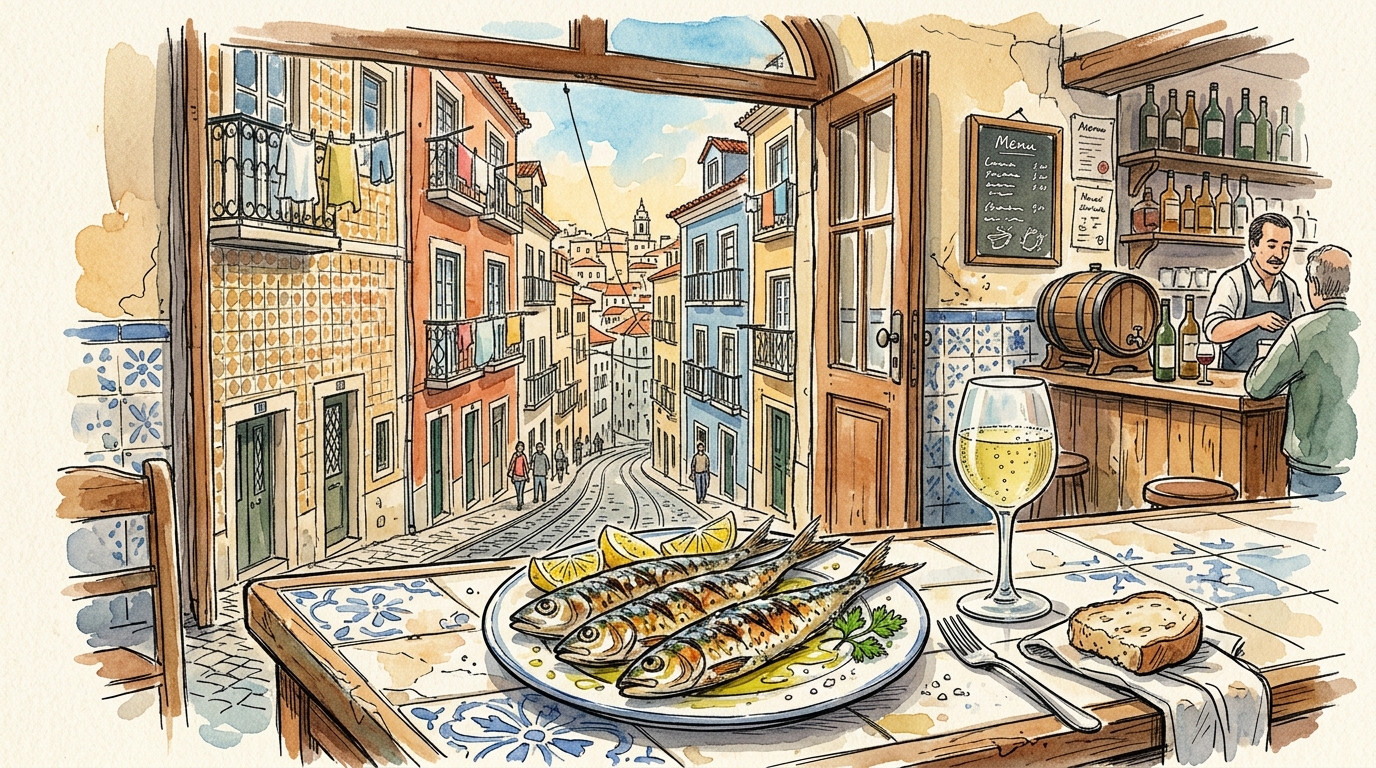
Lisbon walks a line that few European capitals manage: the food is genuinely excellent, the prices haven't fully caught up with the quality, and the city's pastry culture alone justifies a month-long stay. A pastel de nata from a neighborhood bakery costs around 1.50 euros. Lunch specials (pratos do dia) at traditional tascas serve three-course meals with a drink for 8-12 euros between noon and 2pm. The Timeout Market gets all the press, but the real eating happens in the tascas of Alfama and the cervejarias near Cais do Sodre.
Portugal offers one of Europe's most established digital nomad programs. The D8 Digital Nomad Visa requires a minimum monthly income of 3,680 euros (four times the 2026 minimum wage) and grants an initial year of residency, renewable into a two-year permit. Lisbon's nomad scene is well-developed. Internet speeds are solid, coworking is everywhere, and the city is compact enough to walk between neighborhoods.
The food cost equation works here. You can eat well on 25-40 euros per day if you mix market shopping with tasca lunches and the occasional splurge dinner. That's not budget eating. That's eating the way Lisboetas actually eat. For anyone dealing with the new EES border rules for Schengen stays, Portugal's nomad visa sidesteps the 90-day limit entirely.
6. Seoul, South Korea
Seoul's food culture specifically rewards staying longer. Banchan, the side dishes that arrive free with every Korean meal, change based on the season, the restaurant's mood, and how well they know you. First-timers get the standard five or six dishes. Regulars get the extra jeon (pancake), the special kimchi, the side the owner made that morning because they felt like it. That distinction only exists for people who come back.
A meal at a neighborhood gukbap (rice soup) restaurant costs 7,000-9,000 KRW ($5-7). The convenience store meal culture is its own art form. Korean chains like GS25 and CU stock rotating seasonal menus, freshly made hot food, and exclusive snacks you genuinely can't find elsewhere. Triangle gimbap, cup tteokbokki, and fried chicken that has no business being that good for $3. Street food in Gwangjang Market and Namdaemun Market is dense, cheap, and better than most sit-down restaurants in other countries, with individual items running 1,000-5,000 KRW ($0.75-3.75).
South Korea's Workcation Visa (F-1-D) allows stays of up to two years, making it the longest digital nomad visa in East Asia. The income threshold is steep - roughly 88.1 million KRW (~$66,000) annually, which prices out most early-career nomads. For those who qualify, the two-year duration is unmatched in Asia. Monthly living costs average $1,350-$2,100 for most nomads. The food savings from eating locally are dramatic: $15-20 per day covers three meals and snacks if you eat where Koreans eat.
7. Oaxaca, Mexico
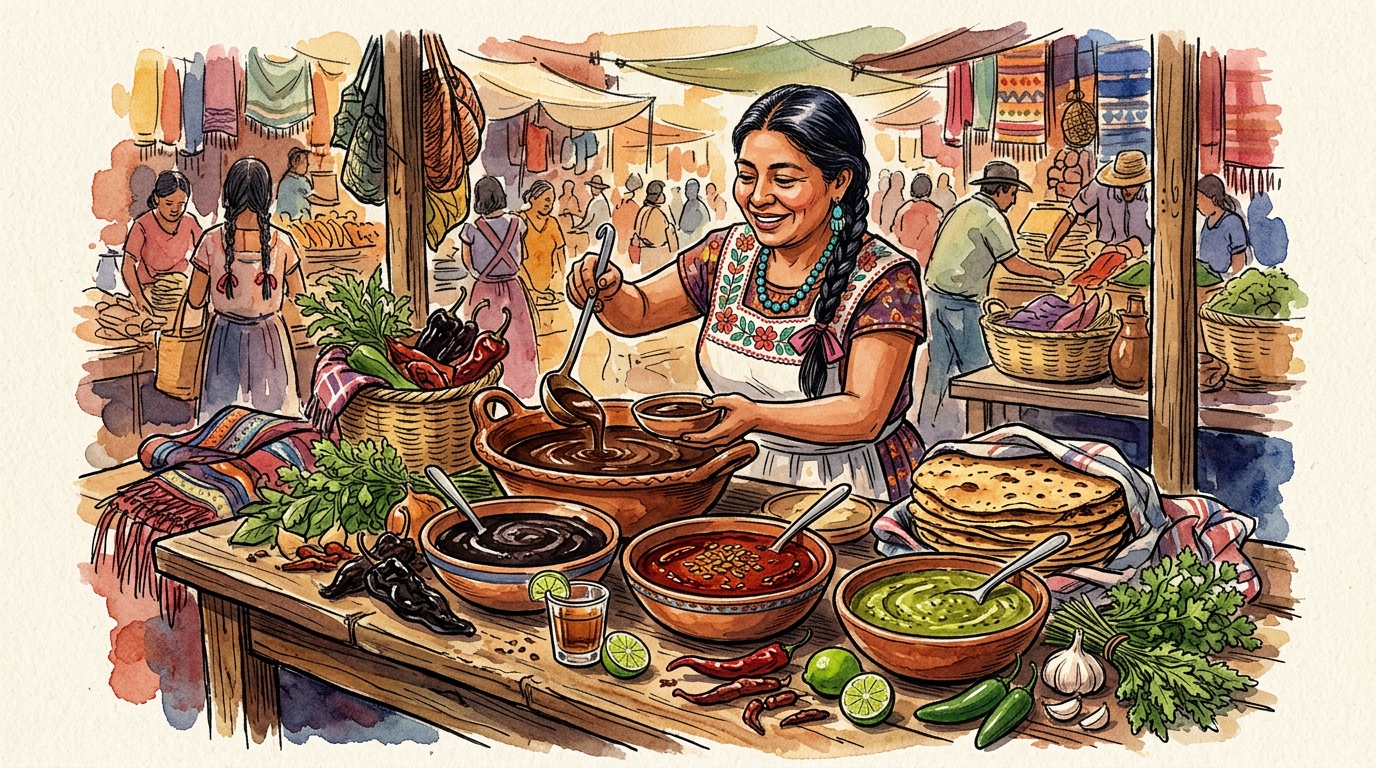
Oaxaca earns its own spot separate from Mexico City because the food traditions here are distinct, older, and more tightly connected to indigenous cooking techniques you won't find anywhere else. Seven varieties of mole. Chapulines (toasted grasshoppers) sold by the bag in the markets. Tlayudas the size of your torso. Mezcal distilled in palenques that have been family-run for generations. Pre-Hispanic Oaxacan cuisine was declared Intangible Cultural Heritage by the state legislature in 2008, on top of Mexico's broader UNESCO recognition.
The food scene in Oaxaca operates on a different clock than most nomad cities. The mercados are the social infrastructure. Breakfast is tamales and atole at 7am in the Mercado 20 de Noviembre. Lunch is the main event, a two-hour affair. Dinner is lighter, often just tlayudas and mezcal. Adapting to that rhythm takes a week. Loving it takes two. After a month, eating any other way feels wrong.
Market meals in 2026 cost 60-100 pesos ($3-6), with mid-range restaurants charging 200-350 pesos ($12-20) per person. Monthly living costs run $1,000-$1,600, with food being remarkably affordable. The mezcal tastings will cost you more than the food, but that's a budgeting problem you learn to accept. For those tracking food spending across a longer trip, TripProf's expense tracker helps keep the mezcal budget from quietly absorbing the grocery budget.
Here's how all seven cities stack up on the numbers that matter most: what you'll spend on food each day, what a month costs overall, and how long you can legally stay.
| City | Daily Food Budget | Monthly Living Cost | Visa Duration |
|---|---|---|---|
| Chiang Mai | $6-15 | $1,000-$1,500 | DTV: 5-yr, 180-day stays |
| Heraklion, Crete | $14-28 | $1,200-$1,800 | DN visa: up to 12 months |
| Tbilisi | $5-12 | $800-$1,200 | 1 year visa-free (95+ countries) |
| Mexico City | $8-18 | $1,600-$2,400 | 180 days visa-free (US/EU) |
| Lisbon | $25-44 | $1,950-$2,550 | D8 visa: 1 yr, renewable |
| Seoul | $15-20 | $1,350-$2,100 | F-1-D: up to 2 years |
| Oaxaca | $8-15 | $1,000-$1,600 | 180 days visa-free (US/EU) |
Visa requirements and income thresholds change frequently. Always verify current rules with the relevant embassy or immigration authority before making plans.
But here's what the table doesn't show: food quality doesn't track with price. Tbilisi at $5-12 per day delivers meals that rival cities three times the cost. The best value isn't the cheapest city. It's the one where the food-to-cost ratio makes you forget you're budgeting.
How to Actually Eat Like a Local (Not a Tourist Who Read a Blog Post)
You've picked a city. Knowing it has great food is step one. Knowing how to access it as someone who just arrived is the harder part. Here's what works, based on patterns that repeat across every slowmad food destination.
Go where the line is at noon, not at 7pm. Lunch is the main meal in most of these cultures. The best restaurants and stalls peak at midday. If you're eating your biggest meal at dinner, you're on a tourist schedule and missing the best food.
Learn five phrases in the local language. "This is delicious," "what do you recommend," "I'll have the same as them," "is this spicy," and "thank you." That last one, said with eye contact and genuine warmth, changes how vendors treat you. By week two, you're getting the off-menu items. If you're worried about solo travel burnout, these small daily interactions are what keep a month from feeling lonely.
Shop at the same market on the same day each week. Vendors notice. By the third visit, they'll steer you toward what's actually good that day, not what they need to sell. This is how you start eating seasonally without trying. (And if you're packing for a month-long food trip, our packing hacks guide covers what to bring and what to leave behind.)
Don't obsess over the Airbnb kitchen. In cities where eating out costs $5-8 per meal, cooking rarely saves money after you factor in groceries, condiments, and the time spent shopping. Cook when you want to, not because you think you should.
Honorable Mentions
Seven cities made the cut, but several others came close. Bangkok matches Chiang Mai on price and exceeds it on sheer variety, though the pace can wear down slower travelers. Ho Chi Minh City offers some of the best street food value in Southeast Asia, with pho and banh mi under $2 nearly everywhere. Istanbul straddles two continents and two culinary traditions, with breakfast spreads that could anchor an entire morning. Buenos Aires delivers world-class steak, empanadas, and a cafe culture that rewards regulars, all at prices that remain favorable against the dollar.
Frequently Asked Questions
What are the cheapest cities where nomads can eat well on local food in 2026?
Tbilisi ($5-12 per full meal), Chiang Mai ($2-4 per street food meal), and Oaxaca ($3-6 per market meal) offer the lowest food costs without sacrificing quality. All three have deep food cultures where eating cheaply means eating authentically.
How do you find authentic local food as a digital nomad instead of tourist traps?
Eat at lunch, not dinner. Go where locals line up between 12-2pm. Shop at the same market weekly so vendors remember you. Learn five food phrases in the local language. Avoid any restaurant with photos on the menu near a major tourist site.
Which nomad cities have the best street food scenes?
Chiang Mai, Mexico City, and Seoul lead for street food variety and affordability. Seoul's convenience store food culture adds another dimension no other city matches.
Is it cheaper to cook or eat out as a digital nomad?
In Southeast Asia, Mexico, Georgia, and much of Southern Europe, eating out at local spots is often cheaper than cooking once you factor in groceries, condiments, and time. Cooking saves money mainly in expensive cities like London or Tokyo.
What visa lets you stay longest to explore a city's food scene?
Georgia's one-year visa-free policy for 95+ nationalities is the easiest option. South Korea's Workcation Visa offers up to two years, and Greece's Digital Nomad Visa extends to 12 months, renewable into a two-year residence permit.
What is Crete's European Region of Gastronomy 2026 designation?
IGCAT (International Institute of Gastronomy, Culture, Arts and Tourism) awards this annual title to regions demonstrating outstanding food culture, sustainable food systems, and culinary innovation. Crete's 2026 designation brings extra food festivals, producer events, and international attention to the island's cuisine.
Key Takeaways
- The best slowmad food destinations reward staying a month, not visiting for a week. The food gets better as you become a regular.
- Tbilisi and Chiang Mai offer the lowest daily food costs ($5-15/day) without sacrificing quality or depth.
- Crete's 2026 European Region of Gastronomy status makes it a timely pick, with extra food events and producer access throughout the year.
- Georgia's one-year visa-free policy and Mexico's 180-day allowance eliminate the visa stress that shortens most food-focused stays.
- Eating out beats cooking in most slowmad destinations. Stop buying kitchen supplies you'll abandon.
- Lunch, not dinner, is when the best food happens in most of these cities. Adjust your schedule to match.
- Tools like TripProf can help track food expenses and plan around dietary needs across multi-city nomad routes.
- Seoul's Workcation Visa (up to 2 years) and Portugal's D8 visa give the longest legal stays for food-obsessed nomads in East Asia and Europe respectively.
Sources
- Precedence Research - Culinary tourism market projections ($85.04B by 2034)
- Immigrant Invest - Digital nomad visa country count (55+ countries, 2026)
- Hilton 2025 Trends Report - Dining as second-highest travel budget priority
- Numbeo (Chiang Mai) - Restaurant and cost of living prices (March 2026)
- Expatistan (Chiang Mai) - Chiang Mai cost of living and food prices (March 2026)
- ThaiEmbassy.com - Destination Thailand Visa (DTV) details
- Scandasia - Chiang Mai ranked cheapest city for nomads
- IGCAT - Crete European Region of Gastronomy 2026 award
- Numbeo (Heraklion) - Restaurant prices in Heraklion (2026)
- Get Golden Visa (Greece) - Greece Digital Nomad Visa requirements
- PubMed Central - Mediterranean diet and longevity research
- Numbeo (Tbilisi) - Restaurant and cost of living prices (March 2026)
- Wander-Lush - Georgia travel budget guide (2026)
- The Georgian Guide - Georgia visa-free entry policy (2026)
- U.S. Embassy in Georgia - Georgia mandatory travel health insurance requirement (2026)
- UNESCO - Qvevri wine-making Intangible Cultural Heritage (2013)
- UNESCO - Traditional Mexican cuisine Intangible Cultural Heritage (2010)
- Lovotrip - Mexico food costs and street food guide (2025)
- Machupicchu.org - Mexico City budget guide (2026)
- Mexperience - Mexico visitor visa time limits
- Get Golden Visa (Portugal) - Portugal D8 Digital Nomad Visa
- Global Citizen Solutions - Portugal D8 income requirements (2026)
- Eating Europe - Average meal costs in Lisbon
- Devour Tours - Cost of food in Lisbon
- Pureum Law Office - South Korea Workcation Visa (F-1-D)
- Seoulz - Korea Digital Nomad Visa 2026 income requirements
- Seoul Korea Asia - Korean convenience store food trends (2026)
- Machupicchu.org - Oaxaca budget guide (2026)
- Oaxaca Autentico - Oaxacan cuisine cultural heritage
- Nomads.com (Chiang Mai) - Chiang Mai cost of living (March 2026)
- Inter-American Dialogue - Mexico City rent escalation and gentrification analysis
- Nomads.com (CDMX) - Mexico City cost of living (March 2026)
- Nomads.com (Seoul) - Seoul cost of living (March 2026)
- Nomads.com (Oaxaca) - Oaxaca cost of living (March 2026)
- Nomads.com (Lisbon) - Lisbon cost of living (February 2026)
Last updated: July 3, 2026
Keep Reading
More travel tips and guides picked for you

Michelin's Great Lakes Cities, Ranked by What They Paid
Six Great Lakes cities are paying wildly different amounts for a shot at a Michelin star, and half won't say what they spent. Here's how all six rank, and why Fort Worth's zero-star result after paying proves it buys nothing.

Where to spend Diwali 2026: six real celebrations worth the trip
Diwali 2026 falls on 8 November. From Ayodhya's record-breaking lamp display to Leicester's Golden Mile and a month of Global Village in Dubai, here are six real celebrations worth planning a trip around, with dates, costs, and honest downsides.
The Best Apps to Book a Food Tour (and Where You'll Overpay)
Airbnb Experiences, EatWith, Devour Tours, GetYourGuide and Traveling Spoon, compared on real prices and honest downsides, plus the two minute check that stops you paying twice for the same tour.