20 Dirty Marketing Tricks That Secretly Shape Every Travel Decision You Make
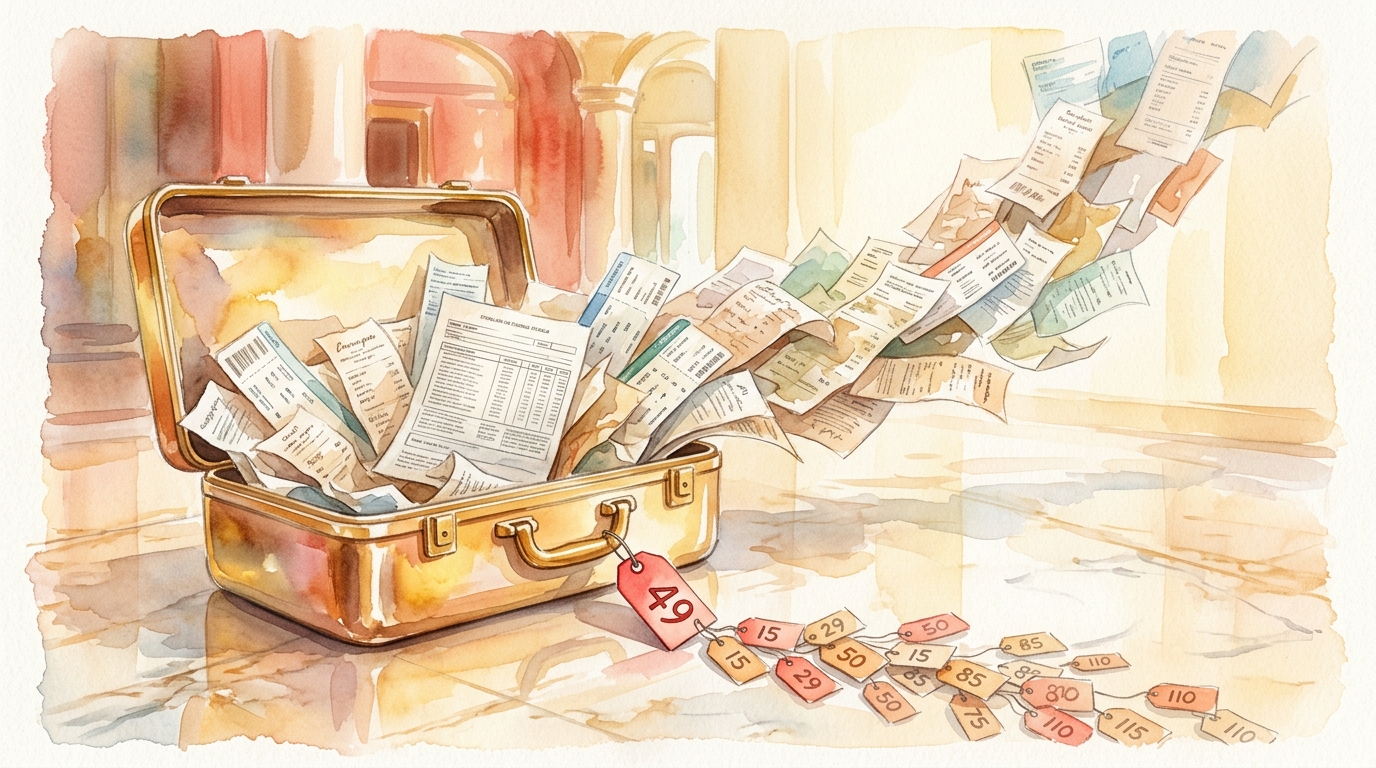
You searched for a $200 flight to Barcelona. You found one. Then fees happened: $45 for a carry-on, $38 for a seat assignment, $12 in "service charges," and a resort fee at the hotel that nobody mentioned until checkout. By the time your trip was booked, that $200 flight had become a $450 ordeal. We've seen this play out on our own bookings more times than we can count. None of it was an accident. Every extra dollar was engineered by people who study how you think, click, and hesitate.
The travel industry uses at least 20 documented psychological tricks to inflate what you pay -- from drip pricing and fake scarcity warnings to fabricated discounts and pre-selected insurance you never asked for. Knowing these tricks won't make you immune, but it will make you harder to fool.
The Price Illusion: Travel Pricing Tricks That Cost You More
The most profitable trick in travel isn't hidden. It's right there on the search results page: the price you see first is designed to be wrong. Not by mistake, but by strategy. Travel companies have spent decades perfecting ways to show you a low number early and stack the real costs later, after you've already invested time and emotional commitment into a booking. Here are the five tricks that make it work.
1. The Anchoring Trap (Drip Pricing)
Drip pricing is the practice of advertising a low base price, then gradually revealing mandatory fees throughout the checkout process. A Harvard Business School study on consumer reactions to drip pricing (Santana, Dallas & Morwitz, 2020) found that consumers exposed to drip pricing consistently select options with lower base prices but higher total costs, and stick with those choices even after seeing the real number, driven by the psychological cost of starting over. It works because of anchoring bias: once your brain locks onto that first low number, every added fee feels like a small deviation from the "real" price rather than what it actually is, which is the real price itself. A separate large-scale field experiment by UC Berkeley with StubHub found that users who saw hidden fees at checkout spent 21% more than those shown all-inclusive prices upfront.
The FTC's Rule on Unfair or Deceptive Fees, which took effect on May 12, 2025, now requires hotels and event ticketing platforms to display total prices upfront, including all mandatory fees. That's a start. But airlines, car rentals, and most international bookings remain outside its scope.
2. Bait-and-Switch Fare Classes (Unbundling)
That $99 fare to Miami? It's Basic Economy. No carry-on. No seat selection. No changes. No loyalty points. Thrifty Traveler reported that American Airlines has been displaying basic economy prices prominently in search results while burying the restrictions until after you click through. Once you discover what you've actually bought, upgrading to a fare that includes the basics costs $150-200 more. Airlines worldwide collected a record $157 billion in ancillary revenue in 2025 per IdeaWorksCompany, up from $67.4 billion in 2016. That's not inflation. That's unbundling turned into an art form.
3. Fabricated Discounts (Strikethrough Pricing)
"You've seen it: a hotel room 'was $289, now $179.'" But was it ever actually $289? The FTC's Guides Against Deceptive Pricing require that any former price shown in a strikethrough comparison must have been the "actual, bona fide price" offered regularly for a "reasonably substantial period." Many travel platforms ignore this entirely, inflating reference prices to manufacture the illusion of a deal. If you've ever noticed the "original" price on a booking site suspiciously matching the current price on the hotel's own website, you've caught this trick in action.
4. The Decoy Effect (Three-Tier Pricing)
Airlines and hotels routinely present three options: a bare-bones tier, a premium tier, and a middle tier that looks like the obvious sweet spot. That middle option isn't accidental. Research on the decoy effect from The Decision Lab shows that introducing a strategically worse third option shifts 60-70% of buyers toward the middle tier. The cheap option is designed to feel inadequate. The expensive option is designed to feel excessive. The middle option is designed to feel smart. You're not choosing freely. You're being guided.

5. Hidden Resort and Destination Fees
On a recent trip, the $42 nightly resort fee turned a $150 room into $192 -- and that fee never appeared in the original search results. Resort fees are mandatory daily charges tacked onto your room rate for amenities like pool access, Wi-Fi, and a gym you'll never use. In Las Vegas, these fees average $42.36 per night as of 2026, a 6% increase from the prior year. NerdWallet reports the national average sits at $33 per day among hotels that charge them. On a five-night stay, that's $165 that never appeared in your search results. The FTC's junk fees rule now requires these to be disclosed upfront for short-term lodging, but enforcement is still ramping up.
Before booking any hotel, search "[hotel name] resort fee" to find the actual nightly surcharge. Then add it to the advertised rate before comparing prices. Some hotels will waive resort fees for loyalty program members or direct bookers who ask.
The Urgency Factory: Fake Scarcity and Booking Pressure Tactics
Price tricks get you to the checkout page. Urgency tricks get you to click "confirm" before your rational brain catches up. These four tactics exploit a simple truth about human psychology: we're far more motivated by the fear of losing something than by the prospect of gaining it. Behavioral economists call it loss aversion. Travel companies call it revenue optimization.
1. Emotional Urgency Manufacturing (Fake Scarcity)
"Only 2 rooms left at this price!" Maybe. Or maybe there are 200 rooms and only 2 are allocated to that particular rate bucket on that specific platform. Research published on ResearchGate by Teubner and Graul found that scarcity cues on platforms like Booking.com significantly increase booking intentions through two psychological pathways: urgency (the fear of missing out) and inferred value (if it's scarce, it must be good). Booking.com's own system shows messages like "booked 12 times in the last 24 hours" and "last booked 3 minutes ago," stacking multiple urgency triggers simultaneously.
Only 1 room left on our site! 14 other people are looking at this property right now. Last booked 3 minutes ago.
Typical Booking.com listing, combining three urgency triggers at once
2. Confirmation Shaming
"No thanks, I'll risk traveling unprotected." That's the button you see after declining travel insurance. The phrasing isn't informational. It's confirmation shaming, a dark pattern designed to make you feel irresponsible for opting out. The guilt-loaded language reframes a rational decision (skipping a $47 insurance add-on for a domestic weekend trip) as reckless behavior. It works because nobody wants to identify as the person who "chose" to be unprotected.
3. Nudge Architecture (Pre-Selected Add-Ons)
Pre-ticked checkboxes for travel insurance, breakfast packages, or airport transfers are a textbook dark pattern. You're not opting in. You're failing to opt out. A former MakeMyTrip engineer publicly admitted in 2026 to coding the dark patterns that auto-added insurance to ticket purchases. South Korea's Fair Trade Commission began enforcing new e-commerce rules banning pre-selected add-ons in February 2025. The EU's consumer protection directives also prohibit this practice, but enforcement varies wildly across member states.
4. Sneak Into Basket (Stealth Additions)
Worse than pre-ticked boxes, some platforms add items to your cart without any checkbox at all. You arrive at checkout and find insurance, a "priority processing fee," or a seat upgrade that you never selected. The difference between this and nudge architecture is consent: pre-ticked boxes at least give you something to untick. Sneak-into-basket doesn't even pretend. This is the practice that drew Spain's CNMC to fine Booking.com EUR 413 million for abusing its dominant position, the largest penalty ever issued by the Spanish competition authority, though the fine was suspended pending appeal in March 2025.
The Invisible Tax: Hidden Structural Fees in the Travel Industry
Some travel marketing tricks aren't about psychology. They're structural — baked into the way the industry extracts money at points where you have no practical alternative.
1. OTA Rate Parity Stranglehold
For years, Booking.com and Expedia required hotels to sign "rate parity" clauses preventing them from offering lower prices on their own websites. If a hotel room cost $200 on Booking.com, it had to cost at least $200 on the hotel's direct site, even though the hotel was paying 15-25% commission to the OTA on every booking. Over 15,000 European hotels have joined a class-action lawsuit against Booking.com over these clauses. In September 2024, the EU Court of Justice ruled that parity clauses violate EU competition law. Booking.com had already begun removing these clauses from July 2024 after being designated a gatekeeper under the Digital Markets Act. But the damage spans two decades of suppressed competition.
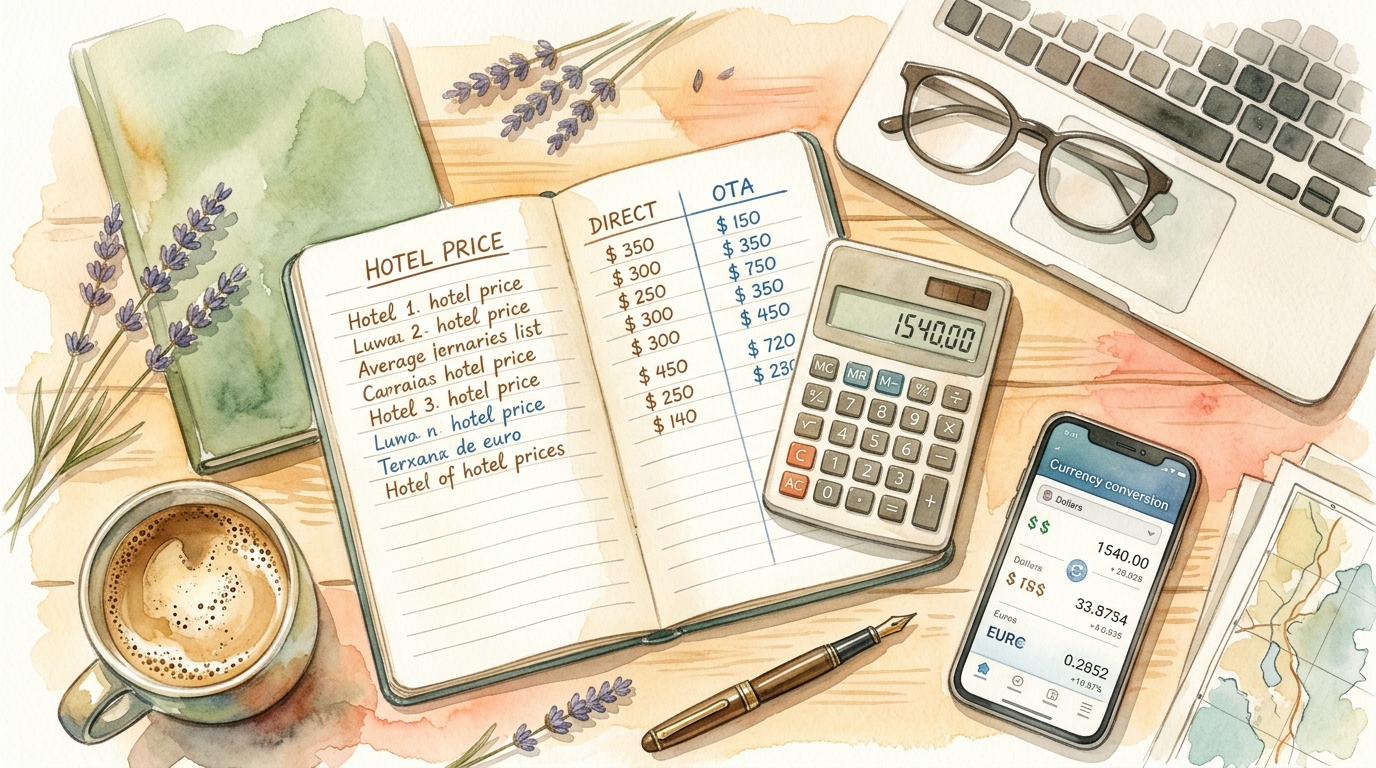
Assuming the price on a booking site is the best available. Now that rate parity clauses are being dismantled in Europe, always check the hotel's direct website and call the front desk. Many properties offer 10-15% lower rates, free upgrades, or loyalty perks for direct bookers. Our comparison of direct vs. third-party booking breaks down when each option wins.
2. The Illusion of Competition (Duopoly Disguise)
You comparison-shop across Hotels.com, Orbitz, Travelocity, Vrbo, and Trivago, thinking you're getting competitive quotes. They're all owned by two companies: Expedia Group and Booking Holdings. Together with Airbnb and Trip.com, the top four OTAs captured 96% of the sector's $58 billion revenue in 2024 according to Skift's analysis. That "competition" across a dozen brand names? It's two corporate siblings sharing your search data and optimizing against each other in ways that benefit both.
3. The Solo Traveler Penalty
In May 2025, Thrifty Traveler exposed that Delta, United, and American Airlines were charging solo flyers significantly more than paired travelers on identical domestic routes. One example: a United flight from Chicago O'Hare to Peoria cost $269 for one passenger but dropped to $181 per person when two were booked together. An American Airlines flight from Charlotte to Fort Myers showed $422 for a solo traveler versus $266 per person for two. This isn't a surcharge anyone discloses. The solo travel market hit $482 billion in 2025, and airlines are quietly taxing the fastest-growing segment of travelers.
The Loyalty Trap: How Reward Programs Keep You Locked In
Getting you to book is one thing. Keeping you locked into a single airline, hotel chain, or booking platform is where the long game begins. These tricks exploit a psychological principle called the sunk cost fallacy: the more you've invested, the harder it is to walk away, even when the returns keep shrinking.
1. Loyalty Point Devaluation (Sunk Cost Exploitation)
You saved 80,000 miles for a business class flight to Tokyo. Last year, that would have covered it. This year, the same seat costs 120,000 miles. Nobody emailed you about the change. The U.S. Department of Transportation launched its first-ever investigation into airline loyalty programs in September 2024, demanding that American, Delta, Southwest, and United disclose how they price awards, how point values have changed over six years, and what they receive from banks for selling miles. The investigation specifically examines whether dynamic pricing of reward seats constitutes an unfair or deceptive practice.
Hotels are doing the same thing. Marriott's algorithm now ties reward prices closely to post-inflation cash rates, and PointsCrowd reports that minimum redemption thresholds are quietly disappearing, meaning your points buy less every year without any formal announcement.
2. Keeping You Captive (Roach Motel Pattern)
Booking a flight takes three clicks. Canceling it requires a phone call, a 45-minute hold, and a "cancellation specialist" trained to talk you out of it. This is the roach motel pattern: easy to get in, hard to get out. In 2022, New York Attorney General Letitia James fined Fareportal $2.6 million for deceptive marketing practices including fabricated urgency messages and hidden cancellation fees. "Free cancellation" policies often come with their own trap: you can cancel for free within 24 hours, but the window is buried in fine print, and the confirmation email arrives just late enough that you might miss it.
3. Junk Insurance Pressure (Fear-Based Upselling)
Travel insurance can be genuinely valuable for international trips, medical emergencies, or expensive bookings. But the way it's sold on booking platforms is designed to exploit fear, not inform decisions. The language escalates deliberately: "Are you sure you want to proceed without protection?" followed by "You could be liable for up to $50,000 in medical costs." For domestic weekend trips and short-haul flights, the math rarely justifies the $30-80 premium, especially when your credit card likely includes basic travel protections. If you need insurance, our guide to what travel insurance actually covers in 2026 helps you figure out when it's worth it.
The Influence Machine: How Behavioral Targeting Shapes Your Travel Decisions
The first four categories operate at the transaction level. This last group works upstream, shaping which destinations you consider, which properties you notice, and what "normal" pricing looks like before you ever open a booking app. These tricks are harder to spot because they don't feel like tricks — they feel like your own preferences.
1. Geotargeted Price Discrimination
The same flight can cost different amounts depending on where you're searching from. Airlines and OTAs use your IP address, device type, and GPS data to estimate your willingness to pay. Surfshark's analysis of airline pricing found that travelers searching from wealthier regions like the U.S. and Western Europe consistently see higher fares than those browsing from countries like India, Mexico, or Thailand. Some travelers use VPNs to access lower regional pricing, but airlines are increasingly sophisticated at detecting this, using device fingerprinting and payment card verification to close the loophole.
2. Mouse Stalking and Behavioral Tracking
Booking platforms track more than your searches. They monitor how fast you scroll, where your cursor hovers, how long you pause on a price, and whether you've visited the same listing before. Nudgify's research on behavioral targeting documents how these signals feed algorithms that adjust urgency messaging, pricing displays, and upsell timing in real time. If the system detects hesitation, you might suddenly see "price has increased by $12 since your last visit" or "3 people are looking at this right now." These messages are triggered by your behavior, not by market conditions.

3. Retargeting and Cookie Stalking
You looked at a flight to Lisbon once. Now every website you visit shows you Lisbon flights, Lisbon hotels, Lisbon experiences. This isn't the universe telling you to book. It's retargeting, where tracking pixels placed by travel sites follow you across the internet, showing ads for exactly what you browsed. Sojern, a major travel ad platform, reports that dynamic remarketing delivers 5x stronger conversion rates than generic ads. The psychological effect is real: repeated exposure makes a destination feel like destiny rather than what it actually is, an ad you can't escape. If the same psychological manipulation used in airport design surprises you, retargeting will feel just as calculated.
4. The Photo Manipulation Pipeline
Those impossibly blue waters on Instagram? Saturated. That golden-hour temple photo? Carefully timed, heavily filtered, shot from the one angle that hides the construction site next door. A study cited by Full Frame Insurance found that 83% of American travelers reported that misleading travel photos damaged their vacation experience. Separately, Talker Research found that nearly 7 in 10 Americans feel social media creates unrealistic expectations of travel, with 59% arriving at destinations that looked better online than in person. The consequence isn't just disappointment: 67% of travelers who felt deceived said they were less likely to visit similar destinations in the future.
5. Timed Influencer Campaigns (Undisclosed Sponsorship)
That travel creator's "honest review" of a Maldives resort? It might be a paid partnership presented as an organic trip. Influencer.com research found that nearly 1 in 3 consumers have booked vacations inspired by influencer content. The FTC requires disclosure of paid partnerships with #ad or #sponsored tags, but enforcement is inconsistent, and "gifted" trips (where the hotel comps the stay without direct payment) often fall into a gray zone. The result: you're making destination decisions based on what is effectively advertising, without the context to evaluate it as such. Knowing how regional scams target tourists is one thing, but spotting an undisclosed sponsorship requires a different kind of skepticism.
When you see a travel creator at a luxury property, check their posting pattern. If they've tagged 3-4 different luxury brands in the same month, it's likely a paid or gifted arrangement, even without a disclosure tag. Search for the same destination on Google Maps reviews for unfiltered photos from real guests.
How to Fight Back: A Practical Defense
Knowing the tricks matters, but only if you change your behavior. Here's a concrete process for booking smarter in 2026.
- Calculate the real total before comparing Add resort fees, baggage fees, cleaning fees, and taxes to every option before comparing prices. If the platform won't show you the total upfront, that's your first red flag.
- Check the hotel's direct website With EU rate parity clauses now banned, many European hotels offer lower direct rates. Call the front desk and ask if there's a rate they can offer that beats the OTA price.
- Use incognito mode and clear cookies This won't stop all behavioral tracking, but it prevents the most basic cookie-based retargeting and repeat-visit price inflation.
- Search for solo AND paired fares If you're traveling alone, search for both 1 and 2 passengers to see if paired pricing is lower per person. If it is, consider booking through a travel companion who can use the second seat, or use the price difference as evidence when calling the airline directly.
- Untick everything at checkout Before entering payment info, scan every checkbox. Insurance, breakfast, priority boarding, airport transfers: if you didn't actively choose it, untick it.
- Reverse-image search influencer photos Drop that stunning travel photo into Google Images or TinEye. If the colors look nothing like other photos of the same place, the saturation has been manipulated.
Planning tools like TripProf can help you organize expenses and compare the true cost of your options, with multi-currency tracking and budget breakdowns that strip away the pricing fog that booking platforms create. But no app replaces the habit of questioning every number you see on a screen.
| 8 of 20 Travel Marketing Tricks: Quick Reference | |||
|---|---|---|---|
| Trick | How It Works | Your Defense | Difficulty to Spot |
| Drip Pricing | Fees added at checkout | Calculate total before comparing | Easy |
| Fake Scarcity | "Only 1 left!" messages | Close the tab, check back later | Easy |
| Basic Economy Bait | Stripped fare shown first | Always check what's included | Medium |
| Pre-Selected Add-Ons | Insurance/extras pre-ticked | Untick everything at checkout | Easy |
| Solo Traveler Penalty | Higher per-person fares for one | Search for 2 passengers to compare | Hard |
| Geotargeted Pricing | Different price by location | Use incognito + VPN to compare | Hard |
| Loyalty Devaluation | Points buy less over time | Cash out points quickly, don't hoard | Medium |
| Strikethrough Pricing | Fake "was $X" discounts | Track prices over time with alerts | Medium |
The hardest tricks to detect aren't the checkout-page fees. Those are annoying but visible. The real danger lives in the decisions you make before you ever compare prices: which destination you pick (influenced by manipulated photos and undisclosed sponsorships), which platform you trust (controlled by a duopoly), and how urgently you book (manufactured by fake scarcity). If you only look at our guide to the real price of cheap flights, you'll catch half the tricks. This article gives you the other half.
Frequently Asked Questions
How do booking sites use fake scarcity to pressure you into buying?
Platforms display messages like "Only 2 rooms left!" to trigger loss aversion. These often refer to limited inventory on that platform, not at the property overall. Research by Teubner and Graul found scarcity cues significantly increase booking intentions by creating urgency and inflating perceived value.
What is drip pricing and how much extra does it cost travelers?
Drip pricing advertises a low base price then gradually adds mandatory fees during checkout. A UC Berkeley field experiment with StubHub found users spent 21% more under hidden-fee pricing than those shown all-inclusive prices upfront.
Do airlines track your browser history to raise prices?
Airlines and OTAs use cookies, IP addresses, device fingerprinting, and behavioral signals to adjust what they show you. Repeated searches can trigger different urgency messaging, and your location data directly affects prices. Using incognito mode and clearing cookies between searches is a basic defense.
Why are "free cancellation" hotel bookings often not really free?
"Free cancellation" policies have narrow windows (often 24-48 hours) buried in fine print. Some require cancellation weeks before check-in. Others charge a non-refundable deposit while labeling the remaining balance as "free cancellation." Always read the full terms.
How do travel influencers manipulate your destination choices?
Nearly 1 in 3 consumers have booked vacations based on influencer content, per Influencer.com. Many creators receive free stays or payment without disclosure. Their photos are heavily edited and negative aspects omitted. Check Google Maps reviews for unfiltered photos before booking.
What are the worst hidden fees in travel and how to spot them?
Common hidden fees include resort fees ($33/night average), Airbnb cleaning fees averaging $100-200 depending on property size (NerdWallet), now folded into nightly rates in Airbnb's search display since 2025, basic economy fare add-ons, and OTA "service" fees. Always proceed to final checkout before comparing. You can also check our guide to card fees abroad for payment-related hidden costs.
Is it cheaper to book directly with hotels or through booking sites?
In Europe, where rate parity clauses have been ruled illegal, hotels increasingly offer lower direct rates because they save 15-25% in OTA commission. In the U.S., prices are often identical, but direct bookings frequently come with perks like upgrades and flexible cancellation.
Key Takeaways
- The price you see first on any travel platform is almost never the price you'll pay. Always calculate the full cost, including all fees, before comparing options.
- Urgency messages ("Only 1 left!") refer to platform-specific inventory, not actual availability. Close the tab, wait an hour, and check again.
- The FTC's junk fees rule (May 2025) requires upfront pricing for hotels and events, but airlines and most international bookings remain unregulated.
- Expedia Group and Booking Holdings own most of the OTA brands you think are competitors. True comparison shopping means checking the hotel's direct website, too.
- Solo travelers can face significantly higher fares on domestic U.S. routes. Always search for two passengers to expose the price gap.
- Loyalty program points are losing value faster than airlines advertise. The DOT is investigating, but until regulations catch up, spend points sooner rather than hoarding them.
- Tools like TripProf's expense tracker help you compare true trip costs across options, stripping out the pricing fog that platforms deliberately create.
- The hardest tricks to spot aren't fees. They're the manipulated photos, undisclosed sponsorships, and behavioral tracking that shape your decisions before you ever reach a checkout page. Our guide to the ugly truth about cruise ships covers another category of hidden industry practices.
Sources
- Harvard Business School: Consumer Reactions to Drip Pricing
- UC Berkeley Haas School of Business: StubHub Drip Pricing Field Experiment
- Federal Trade Commission: FTC Rule on Unfair or Deceptive Fees (May 2025)
- IdeaWorksCompany: Airlines Earn Record $157B Ancillary Revenue (2025)
- TechCrunch: Spain Fines Booking.com EUR 413 Million (2024)
- HOTREC: 15,000+ European Hotels Class Action Against Booking.com
- Skift: 10 Biggest Online Travel Agencies (2025)
- Thrifty Traveler: US Airlines Charging Solo Travelers Higher Fares (2025)
- NerdWallet: How to Avoid Hotel Resort Fees
- NerdWallet: Airbnb Cleaning Fees Analysis
- View from the Wing: DOT Investigation into Airline Loyalty Programs (2024)
- Cloudbeds: Guide to OTA Commission Rates (2026)
- K&L Gates: FTC Guides Against Deceptive Pricing (2025)
- Teubner and Graul: Scarcity Cues and Booking Intentions on Hospitality Platforms
- The Decision Lab: The Decoy Effect
- Influencer.com: State of Influencer Marketing in Travel
- Surfshark: VPN for Airline Tickets Analysis
- Las Vegas Jaunt: Las Vegas Resort Fees 2026
- PointsCrowd: Key Changes to Hotel Loyalty Programs 2025-2026
- Sojern: Evolution of Retargeting in Travel
- Full Frame Insurance: How Photos Shape Travel Plans
- Talker Research: Influencer Content Drives Travel Dysmorphia in Younger Americans
- Built In: Confirmshaming: What It Is and Why You Should Avoid It
- Deceptive Design: Hard to Cancel (Roach Motel Pattern)
- New York Attorney General: Fareportal $2.6M Settlement for Deceptive Marketing (2022)
- Legally Single: Solo Travel Market Hits $482B
Keep Reading
More travel tips and guides picked for you
How US Tariffs Are Reshaping Travel in 2026: What Every Traveler Needs to Know About Higher Costs, Fewer Crowds, and Hidden Deals
Tariffs are inflating travel gear prices, pushing airline fees up, and driving international tourists away from the US. But that exodus is creating rare domestic deals at Hawaii, Las Vegas, and Orlando. Here's how to play the tariff economy to your advantage.
Every US Airline's New Checked Bag Fees After the April 2026 Hikes (and How to Never Pay Them)
Delta, United, and JetBlue all raised checked bag fees in April 2026 as jet fuel surged 85%. Here's what every major airline charges now, and seven strategies to avoid paying a cent.
Why Flights Are So Expensive Right Now (And What You Can Actually Do About It)
Jet fuel prices nearly doubled after the Iran conflict and Strait of Hormuz closure. Airlines are cutting flights and passing costs to you. Here's what's driving prices up, when they might come down, and six practical strategies to save hundreds on your next booking.