How US Tariffs Are Reshaping Travel in 2026: What Every Traveler Needs to Know About Higher Costs, Fewer Crowds, and Hidden Deals
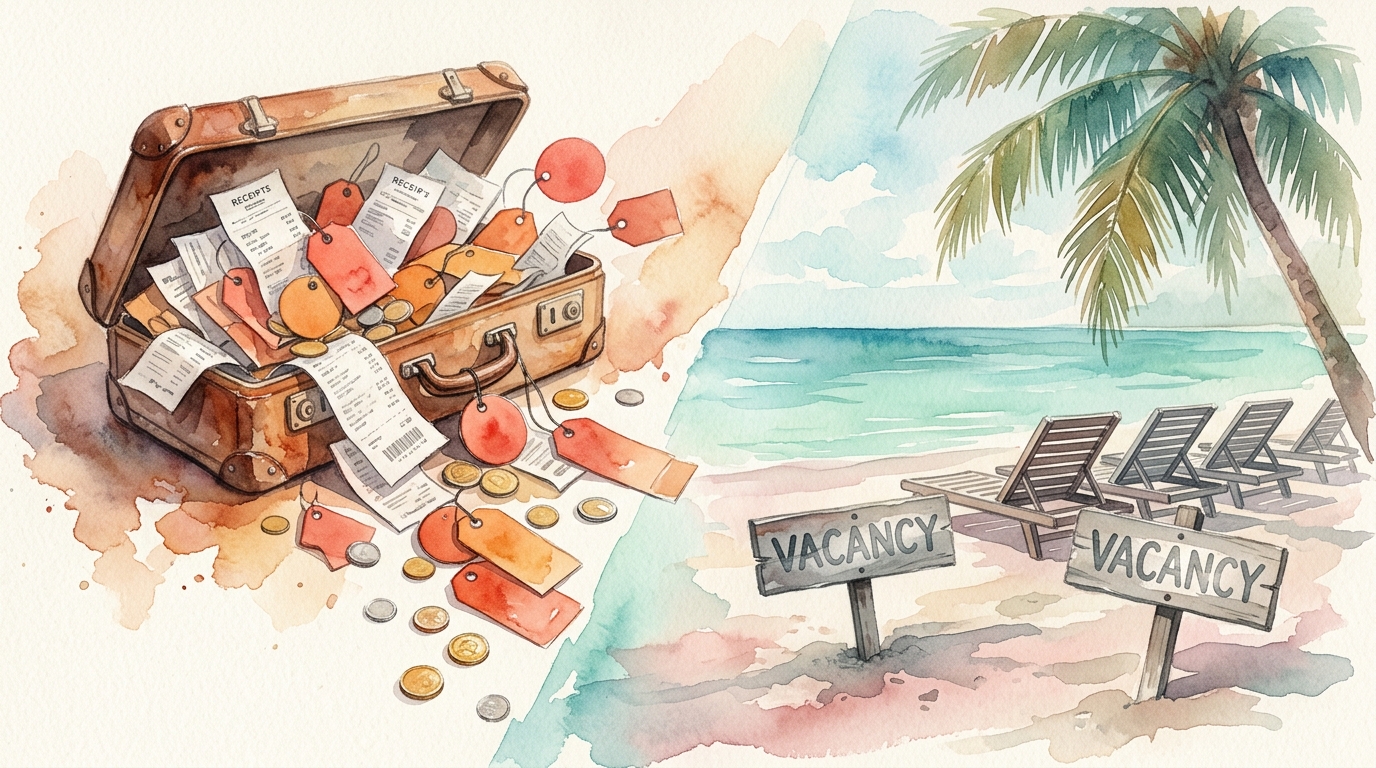
Your suitcase costs more. Your checked bag costs more. The sunscreen you packed costs more. And when you land, fewer tourists are competing for the same hotel rooms, restaurant tables, and flight seats you want. That's the paradox of traveling in 2026: tariffs are quietly inflating every line item on your travel budget while simultaneously creating deals that haven't existed in years.
US tariffs are raising the cost of travel gear (luggage up 15-20%, swimwear up 58%, sunscreen up 34%) and pushing airline fees higher ($10 more per checked bag across major carriers). But they're also driving international tourists away from the US, creating softer hotel rates, cheaper domestic flights, and rare peak-season deals at destinations like Hawaii. For Americans heading abroad, a weaker dollar and anti-American sentiment add new wrinkles. Here's how to turn all of this to your advantage.
The Tariff Tax on Your Travel Gear
Before you even leave home, tariffs have already hit your wallet. Suitcases, backpacks, and travel accessories now carry tariffs up to 25%, and retail prices have climbed 15-20% since late 2025. The 25% tariffs on Canadian and Mexican imports, combined with 36-40% tariffs on goods from Southeast Asian manufacturing hubs like Vietnam, Cambodia, and Thailand, mean that the bag you're wheeling through the airport costs more than the same model did 18 months ago.
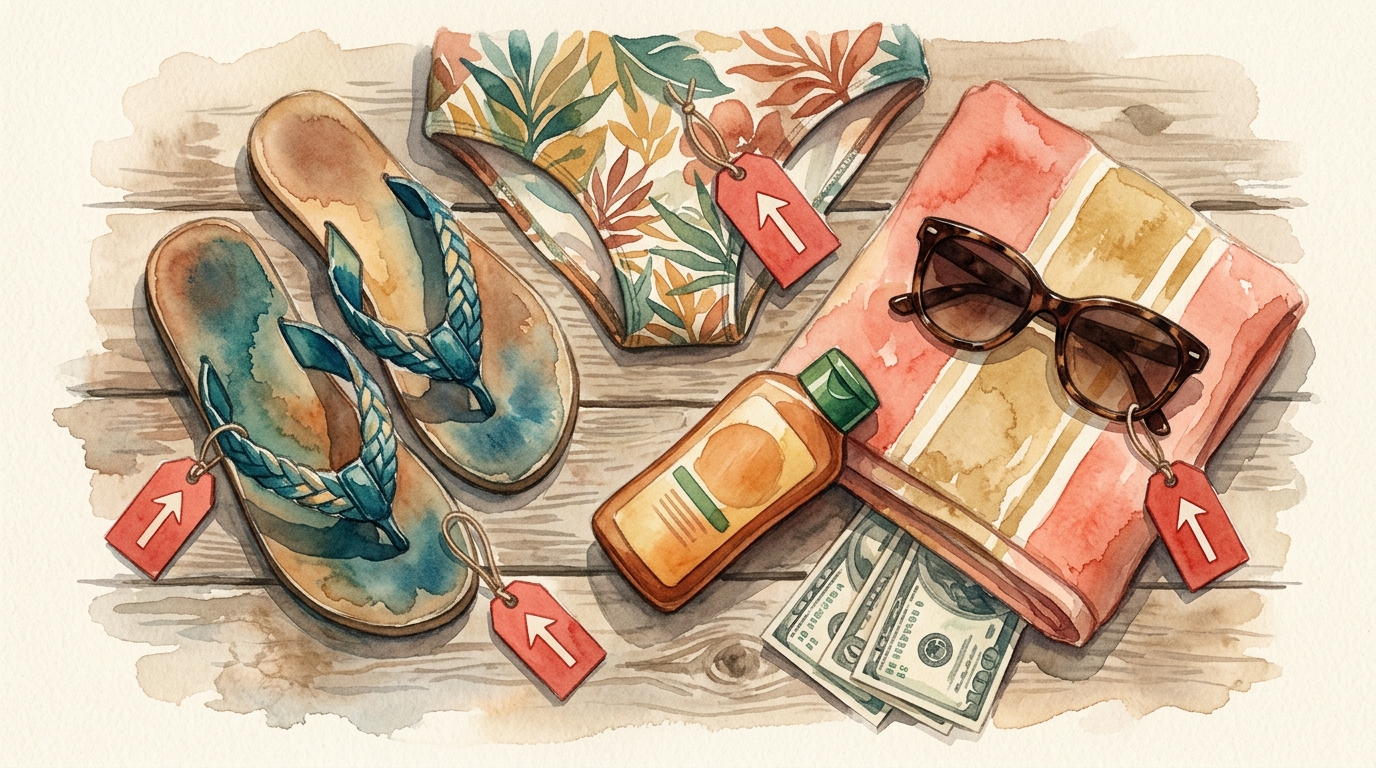
But luggage is just the start. The US Chamber of Commerce calculated how tariffs affect summer essentials, and the numbers are hard to ignore:
Beach towels are up 39%, sunglasses up 40%, and coolers up 55%, according to an Empower analysis of US Chamber data. If you're packing for a beach vacation, you're paying the tariff tax before you've even booked a flight.
Buy travel gear now, not later. Tariff rates on SE Asian imports are set at 36-40% and show no signs of decreasing. If you've been putting off replacing that worn-out suitcase or buying a new swimsuit, prices are only trending one direction.
Why Flying Costs More (and It's Not Just Fuel)
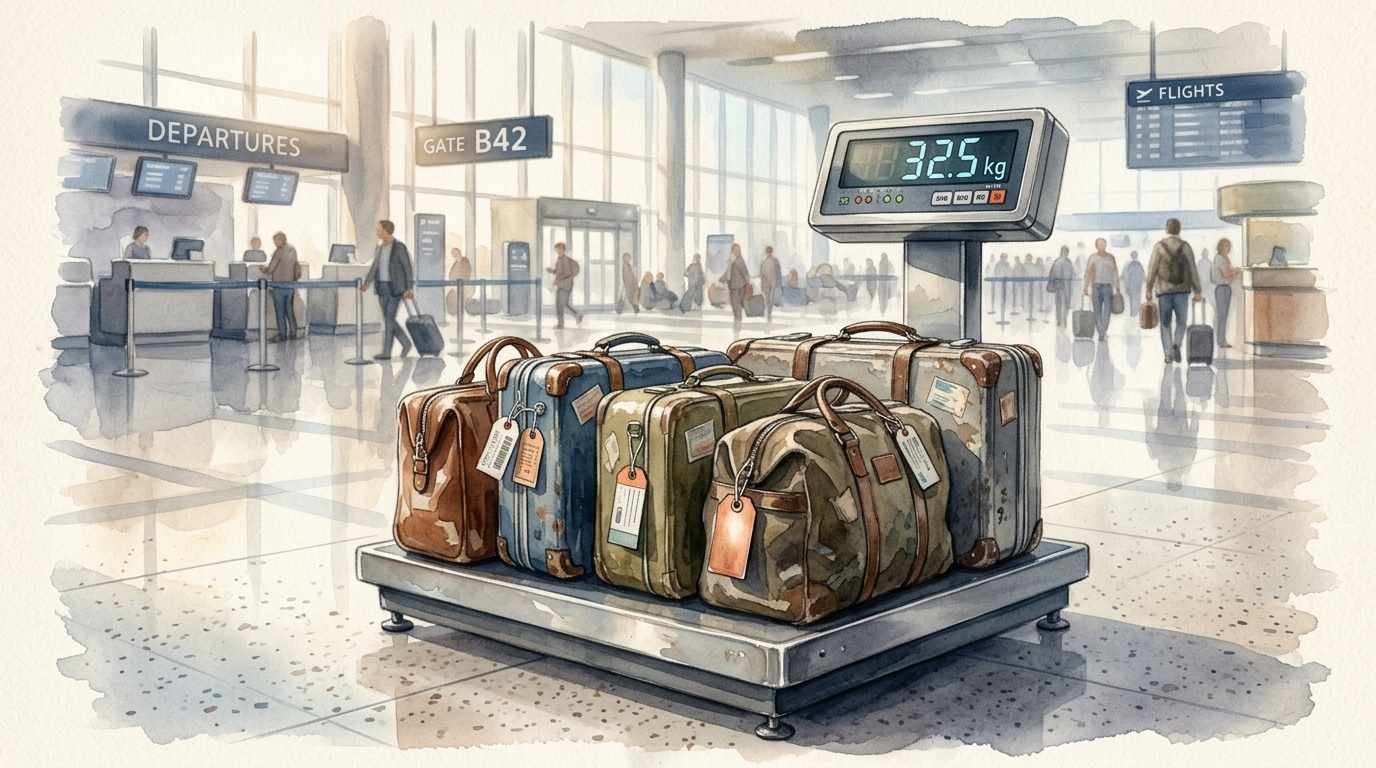
Jet fuel prices spiked sharply after the US-Israel strike on Iran in late February 2026, and airlines responded exactly how you'd expect. Delta, United, JetBlue, Southwest, and Frontier all raised checked bag fees by $10 per bag within the span of a few weeks. Every single one. Even European carriers like Ryanair followed suit. Delta now charges $45 for a first checked bag and $55 for a second on domestic routes. United pushed even higher: $50 for a first bag (or $45 if you prepay online).
But tariffs add a less obvious layer of cost pressure. Aluminum and steel tariffs raise the price of aircraft components, and CNBC reports that Boeing and Airbus face higher procurement costs across their supply chains. Those costs don't show up as a line item on your boarding pass, but they filter into ticket prices over time as airlines replace and maintain their fleets.
If you're flying this summer, our breakdown of every airline's new checked bag fees has the full comparison. And for context on what's driving base fares up, here's why flights are so expensive right now.
| Airline | 1st Bag (New) | 2nd Bag (New) | Increase |
|---|---|---|---|
| United | $50 ($45 prepay) | $60 | +$10 |
| Delta | $45 | $55 | +$10 |
| JetBlue | $45 | $55 | +$10 |
| Southwest | $45 | $55 | +$10 |
| Frontier | $49-$99* | $59-$109* | +$10 |
*Frontier's fees vary by when and where you pay. The pattern across every major US carrier is the same: $10 more per bag, effective April 2026. If you're checking two bags round-trip, that's an extra $40 per person compared to early 2026 prices.
The Tourism Exodus: Why Fewer People Are Visiting the US
International visitors are staying away from the United States. The decline hasn't been this sharp since the early pandemic years. The World Travel & Tourism Council projects international visitor spending in the US will fall from $181 billion in 2024 to less than $169 billion in 2025, a $12.5 billion decline, and the trend is accelerating into 2026 (Hotel Dive/WTTC). Goldman Sachs economists warn that in a worst-case scenario, reduced travel and boycotts could cost the US economy up to $90 billion.
The country-by-country data tells the story:
- Canada: down 21% year-over-year A full-scale consumer boycott has slashed cross-border travel. A YouGov/Flight Centre survey found 62% of Canadians say they're less likely to visit the US in 2026. The boycott has already cost an estimated $4.5 billion in direct losses.
- Germany: down 24% The world's third-largest economy is sending dramatically fewer travelers stateside, with Newsweek reporting a 24% decline by April.
- Mexico: down 17% in Q1 The 25% tariffs on Mexican imports have soured the relationship, and Mexican travelers are redirecting to Canada instead.
- Europe-wide: bookings softening Air France-KLM and Lufthansa report transatlantic bookings from Europe down 2.4% for May-June, while American travelers heading to Europe rose 2.1%.
This isn't just about tariffs. Reports of European tourists being detained for weeks at US borders and an increasingly hostile entry process have chilled demand from traditionally friendly markets. New York lost over 176,000 overseas visitors in 2025, with the state comptroller directly blaming tariffs and federal policies.
The Upside: Deals You Wouldn't Have Found Last Year
Here's where the story flips. Every tourist who cancels a US trip leaves behind an empty hotel room, an unsold flight seat, and a restaurant table with no reservation. For Americans traveling domestically, this creates rare opportunities.
Hawaii is the clearest example. The University of Hawaii Economic Research Organization projects 9.48 million visitors in 2026, a 1% drop from 2025, and airlines have added record capacity to West Coast-Hawaii routes. The result: more seats chasing fewer passengers. West Coast round-trip fares are running $400-700, down from $500-900 in summer 2025. Flying midweek cuts another 10-20% off those prices.
It's not just Hawaii. Hotels with softening occupancy across popular US destinations are rolling out flash sales, package deals, and extended-stay discounts. Properties that were fully booked at premium rates last summer are now competing for guests.
Las Vegas and Orlando, which lost a combined 450,000+ airline seats from Canadian routes in Q1 alone, are particularly soft. If you've wanted to visit either destination during peak summer, 2026 might be your year to get a deal that simply didn't exist before.
The math works in reverse too. Americans heading to Europe are finding a warmer welcome than expected. While sentiment toward the US government has soured, European tourism boards still want American visitor dollars, especially with the euro buying more against the weakened greenback. Newsweek data shows American travelers heading to Europe rose 2.1% in May-June bookings, and many European hotels are rolling out specific promotions targeting the transatlantic market. The irony is thick: the same tariffs pushing Europeans away from the US are making Europe a better value for Americans willing to make the trip.
Book US domestic travel in April or early May for summer trips. Hotels are offering early-bird deals to fill rooms left empty by the international visitor decline. Once properties see their summer bookings solidify, the discounts disappear.
For more strategies on keeping your summer trip affordable in a volatile year, check our guide to staying on budget despite the fuel crisis.
Traveling Abroad as an American in 2026: The Sentiment Problem
You're at a cafe in Copenhagen, card in hand, and the waiter asks where you're from. That question carries more weight in 2026 than it has in years. Anti-American sentiment across Europe has surged, and it's not abstract polling data: it's showing up in consumer behavior, app downloads, and the way travelers are received.
Pew Research Center data shows that no European country currently has a majority favorable view of the United States. The numbers in Scandinavia are particularly sharp: nearly half of Danes have deliberately avoided buying American products since January 2026. In Sweden, 70% of consumers have boycotted or are considering boycotting US goods. In Germany, one in three consumers now refuses to buy American products outright.
Does this hostility extend to individual American tourists? A Global Rescue survey of over 1,000 experienced travelers found that 53% report moderate to high concern about anti-American sentiment when traveling internationally. Only 12% expressed no concern at all. Travel advisors are seeing it too: 73% of advisors say clients are voicing concerns about how they'll be perceived abroad.
Concern about anti-American sentiment is no longer fringe, it's mainstream. This signals a meaningful shift in how travelers are evaluating personal risk tied to global perception.
— Dan Richards, CEO of Global Rescue
The reality on the ground is more nuanced than the polling suggests. Most Europeans distinguish between American individuals and American government policy. But the discomfort is real, and pretending it doesn't exist won't help. A few practical steps: learn basic phrases in the local language, avoid loud political conversations in public spaces, and lead with curiosity rather than defensiveness. The article on Europe's overtourism backlash has more context on how tourist-local dynamics are shifting across the continent.
Hotel Prices: The Hidden Tariff Pass-Through
Hotels don't manufacture their own sheets, TVs, or furniture. Nearly all hotel textiles are imported, with a significant share coming from China, and those goods now face tariffs of at least 54% on most items. Steel and aluminum tariffs raise construction and renovation costs. Even the food at hotel restaurants costs more: tariffs on Mexican avocados and tequila have squeezed profit margins at hotel bars and dining rooms.
Supply costs eat up 15-25% of a typical hotel's operating budget, and when those costs rise, the increase eventually reaches your room rate. Hotel Dive reports that imported bedding, electronics, and construction materials are all getting more expensive, with hotels facing a choice between absorbing costs (shrinking margins) or passing them on (higher rates).
The twist: hotels in tourist-heavy US markets are simultaneously dealing with lower demand from international visitors. That tension between rising costs and falling occupancy is creating an unusual pricing environment where deals and increases coexist depending on the market and timing. A resort in Orlando might offer flash sales to fill Canadian-tourist-shaped holes in its bookings while also raising its rack rate to cover higher supply costs.
What does this mean in practice? If you're booking a hotel in a tourist-heavy US market this summer, don't accept the first rate you see. Call the property directly, ask about package deals, and check if they offer extended-stay discounts. Hotels with 60-70% occupancy are far more willing to negotiate than hotels running at 90%. The international visitor decline has created a window where front-desk managers have flexibility they haven't had in years.
The Weaker Dollar: Good News and Bad News
Bluntly: this is the worst exchange rate environment for American travelers in a decade. In April 2025, one dollar bought roughly 0.92 euros. By April 2026, that same dollar buys around 0.82-0.84 euros. On a two-week European trip with a $5,000 budget, that difference costs you an extra $500-600 in purchasing power. It adds up fast.
The US Dollar Index dropped 9.4% in 2025 and continued sliding into 2026, touching a four-year low. For American travelers heading abroad, this is a direct hit: your dollars buy fewer euros, fewer pounds, fewer yen at every ATM and restaurant.
Honestly, if you can swing a domestic trip this summer instead of Europe, your wallet will thank you.
But the same weak dollar makes the US cheaper for everyone else, which should theoretically attract more international visitors. The problem is that tariff-driven boycotts and border concerns are outweighing the currency advantage. Canadians, Europeans, and Mexicans are staying home despite getting more bang for their buck.
For Americans traveling internationally, the weaker dollar stacks on top of tariff-inflated gear prices to make 2026 trips more expensive from every angle. One way to fight back: use a no-foreign-transaction-fee card and always pay in the local currency when given the choice. Dynamic currency conversion, where a merchant offers to charge your card in dollars, typically costs 4-7% more than letting your bank handle the conversion. That's the difference between a €50 dinner costing you $55 or $59. Our guide to Revolut vs Wise vs your bank card abroad breaks down which cards save you the most.
When an ATM or card terminal abroad asks "Pay in USD?" or "Accept conversion?", always decline and choose the local currency. The merchant's exchange rate includes a 4-7% markup. Your bank's rate is almost always better.
Coming Home: What Customs Actually Charges You
Here's a question that's been blowing up on Reddit: if tariffs are this high on imported goods, do you have to pay them on the souvenirs you bring home?
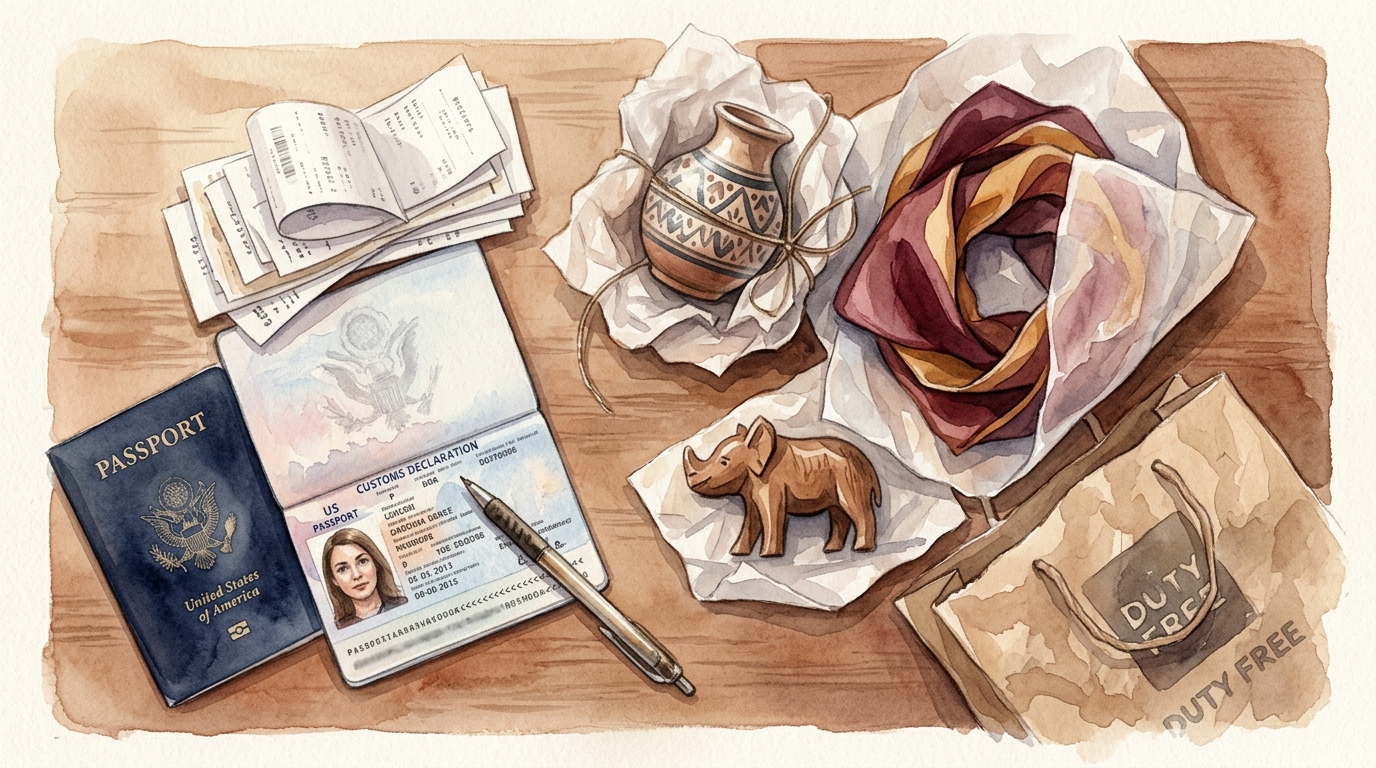
The short answer: probably not, but there are limits. US Customs and Border Protection allows a duty-free personal exemption of $800 per traveler in most cases. That means you can bring back up to $800 worth of goods (clothing, electronics, souvenirs, artwork) without paying any duty. Go over that threshold, and you'll pay duty on the excess, typically at the rate applicable to that product category.
We've seen this confusion spike in our own community: travelers asking whether the tariffs on TV sets apply to the souvenir ceramics in their carry-on. They don't.
- Declare everything All goods purchased abroad must be declared, even if they're under the $800 limit. Failing to declare can result in penalties and seizure of items.
- Keep receipts Customs officers can ask for proof of purchase price. Having receipts speeds up the process and prevents disputes over valuation.
- Know the exceptions Alcohol is limited to one liter duty-free. Cuban cigars, certain foods, and agricultural products have their own restrictions regardless of value.
- Ship separately if needed If you're buying something expensive abroad (like a watch or electronics), you can ship it home and still use your $800 exemption for items you carry.
One Reddit post with over 1,200 upvotes described a traveler who declared $4,000 in Japanese souvenirs and got pushback from a customs officer who "implied they shouldn't bring so much back." While CBP's official guidance doesn't restrict how much you can buy abroad, officers have discretion in how they process declarations. The practical advice: declare honestly, keep your receipts organized, and don't argue at the counter.
One detail worth knowing: the $800 exemption applies per person, not per family. A couple traveling together gets $1,600 combined. If you're buying something expensive that pushes one person over the limit, you can't shift the excess to a companion's allowance, but you can plan your shopping across both travelers to stay under the threshold. And duty on the amount above $800 varies by product category but is typically much lower than the 25-54% rates that apply to commercial imports. CBP publishes the full rate schedule.
Your 2026 Tariff-Era Travel Checklist
Everything above paints a complicated picture: costs up in some areas, deals emerging in others, new social dynamics to think about. Here's how to put it all together into an actual plan.
- Buy travel gear now before tariff-driven prices climb further
- Pack carry-on only when possible to dodge the $10-per-bag fee hikes
- Look at domestic destinations where international tourist declines are creating deals
- Book Hawaii and Orlando for summer 2026 while occupancy is soft
- Use a no-foreign-transaction-fee card and always decline dynamic currency conversion
- Keep all receipts from overseas purchases for a smooth customs return
- Learn basic local phrases if traveling in Europe (it goes a long way)
- Check travel insurance coverage for trip disruption and medical emergencies
Tariffs have made 2026 one of the most financially complicated years for travelers in recent memory. For the full picture of what's changed this year beyond tariffs, our roundup of the 15 biggest changes to travel in 2026 covers visa updates, new airline routes, and other shifts worth knowing about.
For travelers who like to track every expense and keep their trip organized in one place, tools like TripProf can help you set budgets per destination, split costs with travel companions, and keep all your documents accessible offline, which matters when you're dealing with customs declarations and currency conversions across multiple countries.
Frequently Asked Questions
Do I have to pay tariffs on souvenirs I bring back to the US?
No, as long as your total purchases stay under the $800 per-person duty-free exemption. Above that amount, you'll pay duty on the excess based on the product category. Declare everything honestly regardless of value.
Are flights getting cheaper because fewer people are traveling to the US?
Domestic flights to tourism-dependent destinations like Hawaii, Las Vegas, and Orlando are seeing softer prices due to reduced international demand. But base fares are under upward pressure from jet fuel costs and tariff-inflated maintenance expenses. The net effect depends on the route.
Will I face anti-American sentiment while traveling in Europe in 2026?
It's possible but context-dependent. Pew Research data shows no European country currently has a majority favorable view of the US. But most locals distinguish between American tourists and American policy. Be respectful, learn local phrases, and you'll likely be fine.
How much more will luggage and travel gear cost because of tariffs?
Luggage prices are up 15-20% due to tariffs up to 25% on travel goods. Swimwear is up 58%, sunscreen 34%, and sandals 68%, per US Chamber of Commerce analysis. Prices are expected to stay elevated as long as current tariff levels remain in place.
Is summer 2026 a good time to find travel deals in the US?
Yes, particularly at destinations that relied heavily on international visitors. Hawaii, Las Vegas, and Orlando all have softer bookings than usual. Airlines added record capacity on popular routes while demand softened, creating a buyer's market for domestic summer travel.
How do tariffs affect hotel prices?
Tariffs raise hotel operating costs through more expensive imported linens, furniture, electronics, and food. Textiles from China face tariffs of at least 54%. But in tourist-dependent markets with falling international demand, hotels are simultaneously offering deals to fill rooms.
Are customs officers being stricter with returning US travelers?
Anecdotal reports on Reddit and travel forums suggest increased scrutiny for travelers declaring high-value purchases. CBP's rules haven't changed, but officers have discretion. Keep receipts, declare everything, and stay calm.
Key Takeaways
- Tariffs have raised the cost of travel gear across the board: luggage up 15-20%, swimwear up 58%, sunscreen up 34%. Buy what you need now.
- Every major US airline raised checked bag fees by $10 in April 2026. Pack lighter or prepay online to save.
- International tourism to the US is declining sharply, with Canada down 21%, Germany down 24%, and the Canadian boycott costing an estimated $4.5 billion.
- That decline is creating rare domestic deals at destinations like Hawaii, Las Vegas, and Orlando. Book for summer while rates are soft.
- The weaker dollar makes traveling abroad more expensive for Americans. Use no-FX-fee cards and always pay in local currency.
- Anti-American sentiment is real in Europe (no country has a majority favorable US view), but personal interactions remain overwhelmingly positive for respectful travelers.
- US Customs allows $800 in duty-free purchases per person. Keep receipts and declare everything.
- Keep all receipts and customs documentation organized in one place — digital copies of everything, accessible offline, so you're prepared at the border.
Sources
- US Chamber of Commerce: Tariffs Tax on Summer Fun Items (tariff markups on consumer goods)
- Empower: Tariffs Hit the Beach (summer essentials price analysis)
- Newsweek: Tourists Avoiding US After Tariffs (visitor spending decline, country-specific data)
- Newsweek: Airline Baggage Fees Spike (checked bag fee increases)
- CNBC: Delta Checked Bag Fees (airline fee details)
- Fortune: US Economy Tourism Drop (Goldman Sachs $90 billion estimate)
- Yahoo Finance/Forbes: Canadian Boycott Costs America Billions (NTTO data, $4.5B loss figure)
- OpenJaw/OAG: Canadian Airlines Cut 450,000 US-Bound Seats (airline capacity data)
- Pew Research Center: Views of the United States (international opinion polling)
- Global Rescue: US Policy Shifts Impact Travelers (anti-American sentiment survey)
- Hawaii Guide: Hawaii Summer 2026 Travel Costs (visitor projections, fare data)
- Harris Sliwoski: Tariff Effects on Restaurants and Hotels (hotel operational costs)
- Hotel Dive: Trump Tariffs Hotel Impact (hospitality industry analysis)
- Morningstar: Weaker US Dollar 2026 (dollar index decline data)
- CNBC: Tariffs Drive Up Cost of Airplanes (Boeing/Airbus supply chain)
- Euronews: Denmark Boycott Apps (European boycott movement)
- Business Standard: Anti-US Sentiment in Europe (Sweden boycott data)
- Islands: Airlines Raising Checked Luggage Prices 2026 (fee comparison)
- CBP.gov: Know Before You Go (customs duty-free allowance)
- Flytrippers: Dynamic Currency Conversion (DCC markup data)
- NY State Comptroller: Federal Tariffs Hurt Tourism and NY Exports
- Life Hotel Supply: 2026 Hotel Supply Budget Guide (hotel operating cost breakdown)
- Travel Sentry: US Tariff Policies on Travel Goods (luggage tariff rates)
- CNBC: Leather Prices and Tariffs (luggage/travel goods price increases)
- TravelPulse Canada: 62% of Canadians Less Likely to Visit U.S. (YouGov/Flight Centre survey)
- Hotel Dive/WTTC: US to Lose $12.5B in International Visitor Spend (WTTC spending projections)
Keep Reading
More travel tips and guides picked for you
Every US Airline's New Checked Bag Fees After the April 2026 Hikes (and How to Never Pay Them)
Delta, United, and JetBlue all raised checked bag fees in April 2026 as jet fuel surged 85%. Here's what every major airline charges now, and seven strategies to avoid paying a cent.
Why Flights Are So Expensive Right Now (And What You Can Actually Do About It)
Jet fuel prices nearly doubled after the Iran conflict and Strait of Hormuz closure. Airlines are cutting flights and passing costs to you. Here's what's driving prices up, when they might come down, and six practical strategies to save hundreds on your next booking.
Revolut vs Wise vs Your Bank Card Abroad: The Real Cost of Every Swipe, Tap, and ATM Withdrawal in 2026
Your bank charges 3% on every foreign purchase. Revolut and Wise cut that to nearly zero, but each has limits and quirks. Here's exactly what a $3,000 European trip costs with each card, plus the DCC trap that hits everyone.