Rugby League World Cup 2026: A First-Timer's Guide to the Three-Country Tournament
Key Highlights
- 1
- 2
- 3
+4 more in the takeaways below
Your flight lands in Brisbane on a Thursday in November, and the guy next to you at the rental car counter is wearing a green and gold jersey with a kangaroo on it. You ask if he's here for the World Cup. He laughs. "Wrong one, mate. That one was back in July, in America. This one's rugby league, thirteen a side. Completely different sport."
The 2026 Rugby League World Cup runs October 15 to November 15 across Australia, New Zealand, and Papua New Guinea. It has nothing to do with the FIFA World Cup or the Rugby Union World Cup. You'll need three separate visa systems (a free or $20 AUD entry to Australia, roughly NZD $117-123 for New Zealand, and a $50 USD eVisa for Papua New Guinea), tickets start from $19 AUD, and picking your host city matters more than picking your team.
Wait, Is This the Football World Cup?
No. This is a different sport entirely, and mixing it up with the FIFA tournament in the United States, Canada, and Mexico is the single most common mistake first-timers make when they start googling flights. If you're actually after that one, our FIFA World Cup 2026 budget travel guide covers the June and July tournament instead.
Rugby league is played 13 a side. Rugby union, the other rugby code (the one with the Rugby World Cup and Six Nations), is played 15 a side and has a separate governing body, separate history, and a separate global calendar. Association football, what most of the world calls soccer, is 11 a side and isn't part of this at all. The two rugby codes split in 1895 over a dispute about paying working-class players for missed wages, and they've run as entirely separate sports ever since, with the full rule-by-rule split laid out in the Wikipedia comparison of the two codes.
| Tournament | Sport | Players per side | Where and when in 2026 |
|---|---|---|---|
| Rugby League World Cup (this one) | Rugby league | 13 | Australia, New Zealand, Papua New Guinea. Oct 15 to Nov 15 |
| FIFA World Cup | Association football (soccer) | 11 | USA, Canada, Mexico. June to July |
| Rugby World Cup | Rugby union | 15 | A separate tournament, separate governing body |
Practically, that means the tackle rules are different (in league, the tackled player gets up and plays the ball back with their foot, and the attacking team gets six tackles before handing over possession), the ball is in play for longer stretches, and a try is worth 4 points instead of union's 5. None of that matters much for planning a trip. What matters is that you don't book a hotel in Los Angeles thinking you're going to the same event.
RLWC2026 Basics: Dates, Scale, and Just How Big This Actually Is
The 2026 Rugby League World Cup (RLWC2026) runs from October 15 to November 15, 2026, spanning three men's, women's, and wheelchair tournaments played simultaneously. It's the first time the tournament has been held across three nations, and the first time Papua New Guinea and New Zealand have co-hosted alongside Australia. Fourteen nations and 26 teams take part in 53 matches over 31 days, according to Queensland's official tourism board.
This tournament almost didn't happen in this form. France was originally set to host in 2025, then withdrew, and the International Rugby League confirmed a reduced-size 2026 tournament in the southern hemisphere instead. Australia and Papua New Guinea were locked in together on July 24, 2024. New Zealand joined much later, with its involvement (and Christchurch as a host city) only confirmed alongside the November 2025 draw. That's part of why this tournament feels less established than a FIFA or Olympic cycle: the shape of it was still being finalized less than a year before kickoff.
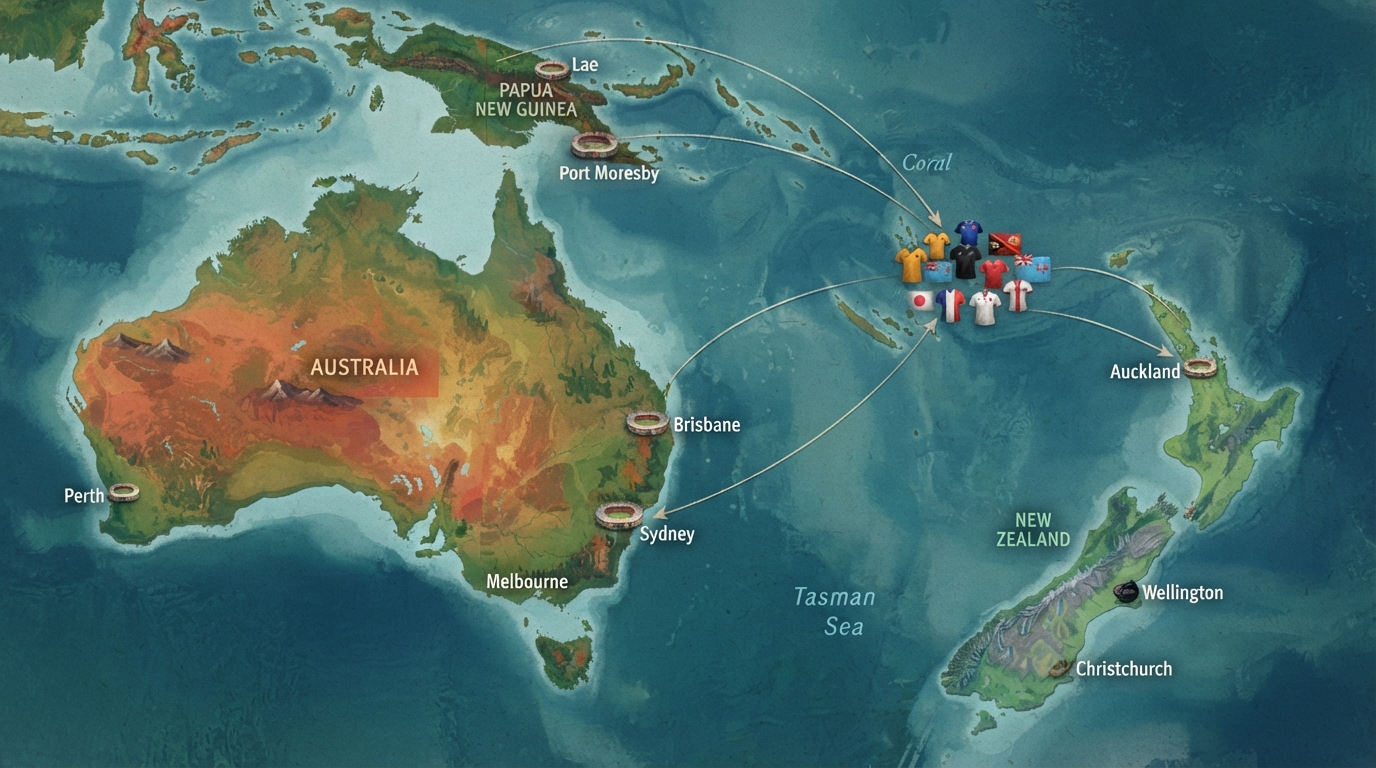
The men's tournament has 10 teams: Australia, New Zealand, England, Fiji, Samoa, Tonga, Papua New Guinea, France, Lebanon, and Cook Islands, split into one group of four and two groups of three. The top two from the four-team group go straight to the semi-finals, and Groups B and C are combined into a single table, with its top two also advancing to the semis, four teams total, with no quarter-final stage, per the official tournament breakdown. The women's tournament runs 8 teams. The wheelchair tournament, also 8 teams, is played entirely at one venue in Wollongong rather than spread across the country, with 20 matches over 15 days starting October 30 and the final on November 13, as NRL.com's coverage of the wheelchair draw lays out.
- October 15 Opening match: Australia v New Zealand, Sydney Football Stadium (Allianz Stadium)
- October 16 Women's tournament opens: Australia v Samoa, Western Sydney Stadium
- October 17 England v Tonga in Perth, one of the opening weekend's marquee fixtures
- October 30 Wheelchair tournament begins, entirely at Wollongong
- November 13 Wheelchair Final, WIN Entertainment Centre, Wollongong
- November 15 Men's and Women's Finals, both at Suncorp Stadium, Brisbane
RLWC2026 Host Cities: Nine Cities, Three Countries.
Pick your host city before you pick your dates, not after. RLWC2026 is spread across 9 cities and 11 venues in three countries, and unlike a single-stadium event, there's no "everyone flies into one airport" default here. If you're weighing how many of the nine to actually attempt, our guide on how many cities is too many for one trip is worth a read before you build the itinerary.
| City | Country | Venue | What's there |
|---|---|---|---|
| Brisbane | Australia | Suncorp Stadium (Lang Park) | Men's and Women's Finals, Nov 15 |
| Sydney | Australia | Sydney Football Stadium + Western Sydney Stadium | Opening match, semi-finals (two venues, one city) |
| Wollongong | Australia | Wollongong Showground + WIN Entertainment Centre | Entire wheelchair tournament |
| Newcastle | Australia | McDonald Jones Stadium | Group stage, semi-finals |
| Perth | Australia | Perth Rectangular Stadium (HBF Park) | Opening weekend, England v Tonga |
| Gold Coast | Australia | Robina Stadium | Group stage |
| Townsville | Australia | North Queensland Stadium | Group stage |
| Christchurch | New Zealand | Te Kaha (One NZ Stadium) | NZ's brand-new stadium, opened March 2026 |
| Port Moresby | Papua New Guinea | Santos National Football Stadium | PNG's home fixtures |
Christchurch is worth calling out on its own. Te Kaha, New Zealand's newest stadium, had its formal opening on March 27, 2026 (officially the One NZ Stadium), so RLWC2026 will be one of the first major international events the 25,000-seat (expandable to 30,000 for major events), fully-roofed venue hosts. If you're chasing New Zealand's matches specifically, you're watching a brand-new building, not a historic one.
Port Moresby is the opposite kind of story. The Santos National Football Stadium (also called PNG Football Stadium) is a 15,000-seat venue that's hosted rugby league World Cup fixtures before, going back to 1986, per Wikipedia's venue history. It's the smallest ground on the list by far, and it's also the one requiring the most planning to reach, which we'll get to.

If you only have time for one country, Australia gets you the widest match selection by a mile: seven of the nine cities and both finals. Add New Zealand if you want to see the new stadium and don't mind a short hop across the Tasman Sea. Add Papua New Guinea only if you're genuinely committed to seeing the tournament's full footprint, because it's the leg that takes the most preparation.
Visas: Three Countries, Three Completely Different Systems
This is the part no official RLWC2026 page bundles together, and it's the reason a lot of first-timers get blindsided. Australia, New Zealand, and Papua New Guinea each run three completely different systems, with their own currency, their own price, and their own processing time. Sort this out before you buy connecting flights, not after.
Apply for every visa you need at least two to three weeks before departure. Papua New Guinea's official guidance is a 10-working-day turnaround for visa applications, though some eVisas are approved faster, so don't plan around anything shorter than 10 working days. Don't leave any of the three until the week of the trip.
Here's how the three systems actually compare side by side:
| Country | Visa type | Cost | Stay allowed |
|---|---|---|---|
| Australia (EU, UK, Scandinavia, and other eligible passports) | eVisitor (subclass 651) | Free | Up to 3 months per visit, valid 12 months |
| Australia (US, Canada, Japan, South Korea, and other eligible passports) | ETA (subclass 601) | AUD $20 | Up to 3 months per visit, valid 12 months |
| New Zealand (around 60 visa-waiver countries) | NZeTA + International Visitor Levy | NZD $117-123 | Up to 3 months per visit, NZeTA valid 2 years |
| Papua New Guinea (nearly all nationalities) | eVisa | USD $50 | Up to 60 days, visa valid 6 months |
Australia splits its visitors into two lanes. If you hold a passport from an EU country, the UK, Norway, Switzerland, Iceland, or a handful of others, you'll use the free eVisitor, subclass 651, applied for online with no service charge at all. If you're American, Canadian, Japanese, or South Korean, among others, you'll use the ETA, subclass 601, which carries a AUD $20 service fee charged through the official ETA app and no separate visa application charge on top. Both allow stays of up to three months per visit and stay valid for 12 months with multiple entries.
New Zealand works differently again. Roughly 60 nationalities travel visa-waiver, but they still need to apply for an NZeTA before departure, and almost everyone also pays a mandatory International Visitor Levy. The NZeTA itself costs NZD $17 through the mobile app or NZD $23 via the website, but the levy is the bigger number: a flat NZD $100 International Visitor Levy, non-refundable even if your application gets declined. Add it up and you're paying NZD $117 to $123 total, and the NZeTA itself stays valid for 2 years even though any single visit is capped at three months.
Papua New Guinea is the strictest of the three, and this is the fee most likely to be quoted wrong online, so confirm it directly rather than trusting the first travel blog you find. Papua New Guinea's official visa policy puts the standard tourist eVisa at USD $50, valid for six months from issue, for a single-entry stay of up to 60 days (as of July 2026). Visa-on-arrival has been sharply curtailed in recent years, so the eVisa is the route to plan around. Papua New Guinea's immigration authority publishes a standard 10-working-day processing turnaround for visa applications, though some eVisas are approved faster, so don't plan around anything shorter than that. If you're transiting through a yellow fever risk country before Papua New Guinea, you'll also need proof of vaccination, a requirement UK government travel advice spells out clearly, and one more document worth adding to your travel document checklist for this trip. Build in extra time for this one specifically. Don't assume it processes as fast as an Australian ETA, because it doesn't.
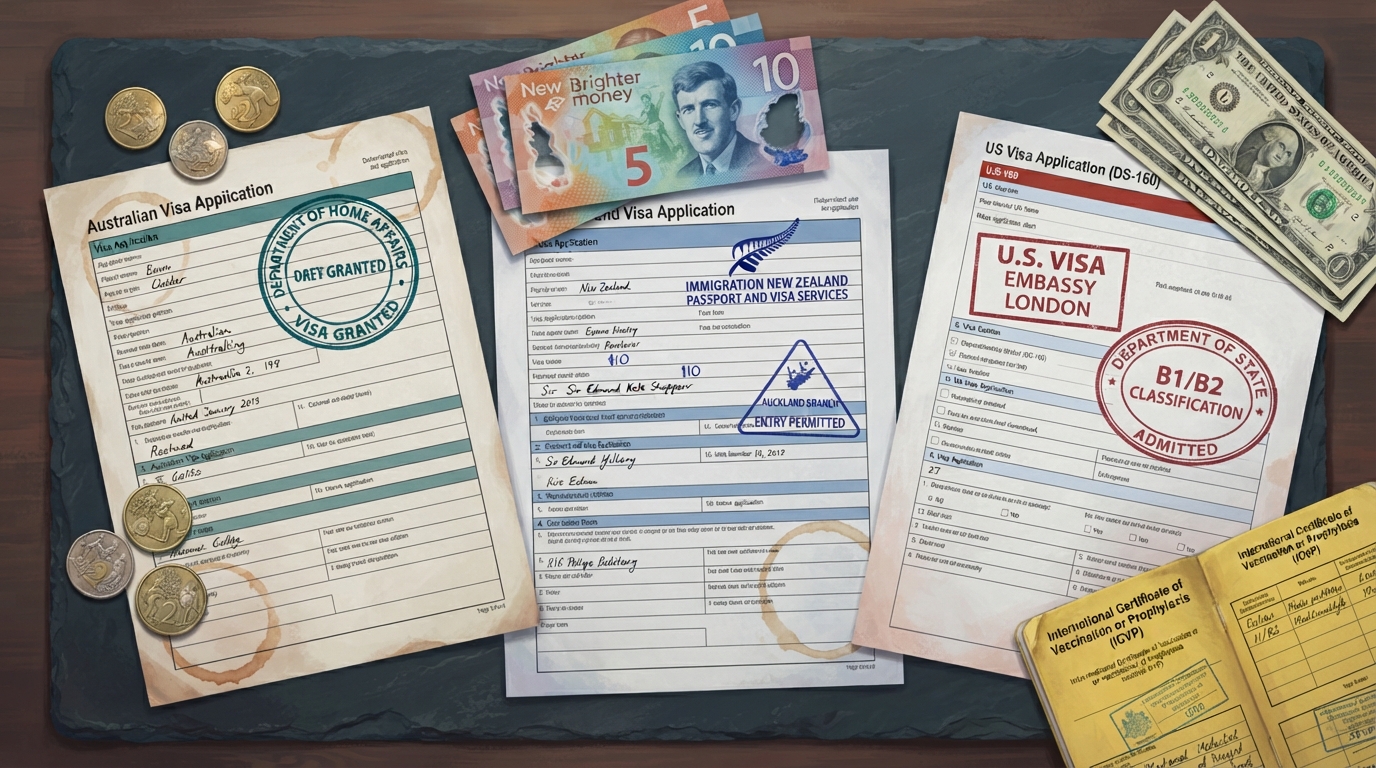
- Passport valid at least 6 months past your last departure date
- Correct Australian visa applied for (eVisitor or ETA, matched to your passport)
- NZeTA approved and International Visitor Levy paid, if visiting Christchurch
- Papua New Guinea eVisa approved, if visiting Port Moresby (apply at least 10 working days ahead)
- Yellow fever certificate, if arriving in PNG from an at-risk country
- Match tickets saved offline or printed
- Travel insurance confirmed for all countries on the itinerary
Tickets and Money: What This Actually Costs
Tickets went on sale through Ticketmaster Australia on November 23, 2025, and prices start low by World Cup standards. Group stage and semi-final tickets begin at $19 AUD for adults and $49 AUD for a family package, while Final tickets at Suncorp Stadium start at $39 AUD for adults and $109 AUD for families, as the official RLWC2026 fixtures announcement and NRL.com's coverage both confirm (checked July 2026). Every quoted price is a starting point, not the average. Additional fees and levies apply on top, and better seats cost considerably more.

So the bigger cost isn't the ticket. It's stitching a multi-country, multi-city trip together across three separate currencies: Australian dollars, New Zealand dollars, and the visa fee you'll pay in US dollars for Papua New Guinea. If you're budgeting in euros or pounds, don't flatten all three into one generic "$" figure: the AUD $20 Australian ETA, the NZD $117-123 New Zealand levy-plus-fee, and the USD $50 Papua New Guinea eVisa convert to noticeably different euro and pound amounts depending on the day's exchange rate, so check a live currency converter before you pay any of them rather than assuming they're roughly the same. Three currencies, three different real amounts, and conflating them is how budgets quietly blow out. A multi-currency card like the ones covered in our Revolut vs Wise fees breakdown makes tracking all three easier than juggling separate cash withdrawals in each country.
Accommodation swings hard by city too. Brisbane hotel floors have run roughly $60 to $70 AUD a night in recent checks on Expedia's Brisbane listings (checked July 2026, expect this number to move), and Christchurch shows a similar floor around $38 a night on Tripadvisor's Christchurch listings. Port Moresby is the outlier: budget rooms start from around $46 a night on Tripadvisor's Port Moresby listings, but the city has far less inventory than Brisbane or Christchurch, so expect prices to climb fast once tournament dates fill up. Book Port Moresby earliest of the three.
Getting Between the Three Countries
Say you've got tickets to the opening match in Sydney and a group-stage game in Port Moresby nine days later. That gap looks generous on a spreadsheet, until you remember it's not a train transfer, it's two international flights with two immigration queues on either end.
None of these legs are short hops. Brisbane to Christchurch runs about 3 hours 30 minutes to 4 hours 5 minutes depending on direction, flown by Air New Zealand and Qantas (flight schedule data for the route). Brisbane to Port Moresby is shorter, around 3 hours 10 minutes, served by Air Niugini and Qantas, per flight time data for that route. Neither is a quick regional puddle-jump. Treat each leg like a genuine international flight, because it is one, complete with its own check-in window, baggage rules, and immigration queue on both ends.
If your plan is "catch a match in all three countries," build at least a full day of slack around each border crossing. A missed connection between Brisbane and Port Moresby doesn't just cost you money. It can cost you the match you flew there for, since Santos National Football Stadium only hosts a handful of fixtures across the entire 31 days.
Is Port Moresby Safe for a Match Weekend?
Short answer: it takes more planning than the Australian or New Zealand legs, but people do travel there safely every year, including for previous World Cups. Go in informed rather than either scared off or naively casual about it.
"There is a high risk of serious crime in the capital, Port Moresby," with specific warnings against walking after dark, carrying visible valuables, or travelling alone at night, according to UK government safety and security advice. The area around Parliament House in the Waigani suburb is flagged as a particular risk outside working hours.
But none of that means skip it. It means treat Port Moresby the way you'd treat any capital city with a serious crime problem: arrange transport in advance through your hotel or a known operator rather than hailing anything off the street, don't walk between the airport and your accommodation, keep phones and cameras out of sight in public, and avoid the suburbs after dark entirely. Match days at Santos National Football Stadium bring organized transport and a controlled environment. It's the hours before and after, moving around the city on your own, where the actual risk sits.
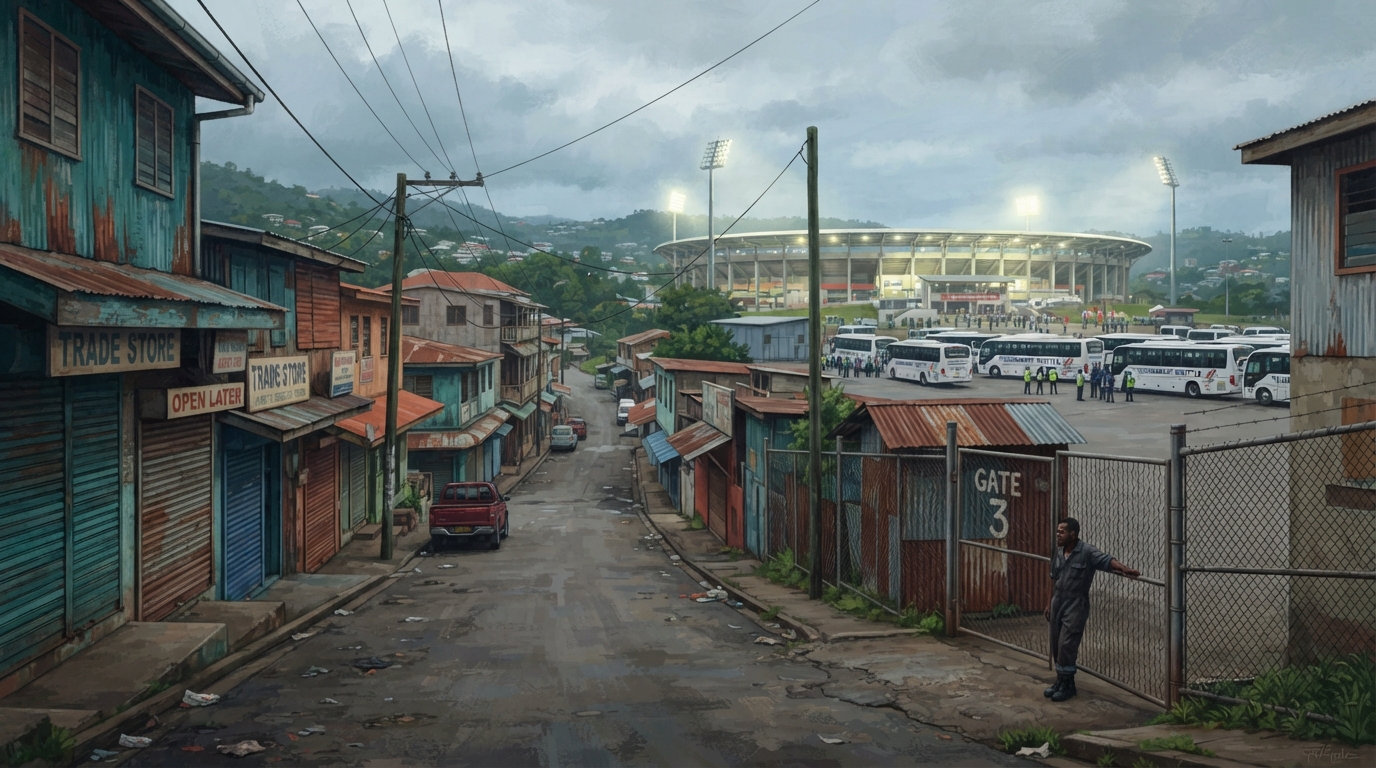
Skip Port Moresby if you're traveling solo and have zero flexibility on accommodation location. Go if you can book a hotel close to the stadium, pre-arrange every transfer, and you're comfortable with the same kind of urban-crime caution you'd apply in plenty of other major cities.
Planning the Multi-Country Trip Without It Falling Apart
A 31-day tournament across 9 cities and three currencies isn't something you plan solo over a weekend, and it's definitely not something a group plans well over a WhatsApp thread with 40 unread messages and three competing spreadsheets. If you're coordinating this with friends, decide the country list and the money-splitting method before anyone books a flight, not after. Our guide to splitting trip costs without drama covers the actual mechanics of who pays for what when a group is juggling three currencies and three sets of visa fees.
Same goes for choosing how you'll actually plan it. Some groups still try to run a multi-country sports trip off a shared document and a group chat. It works until someone books the wrong Brisbane hotel for the wrong week. If you'd rather not reinvent that wheel, our roundup of the best group travel planning apps breaks down what actually holds up across multiple cities and currencies, as opposed to a single-destination weekend trip.
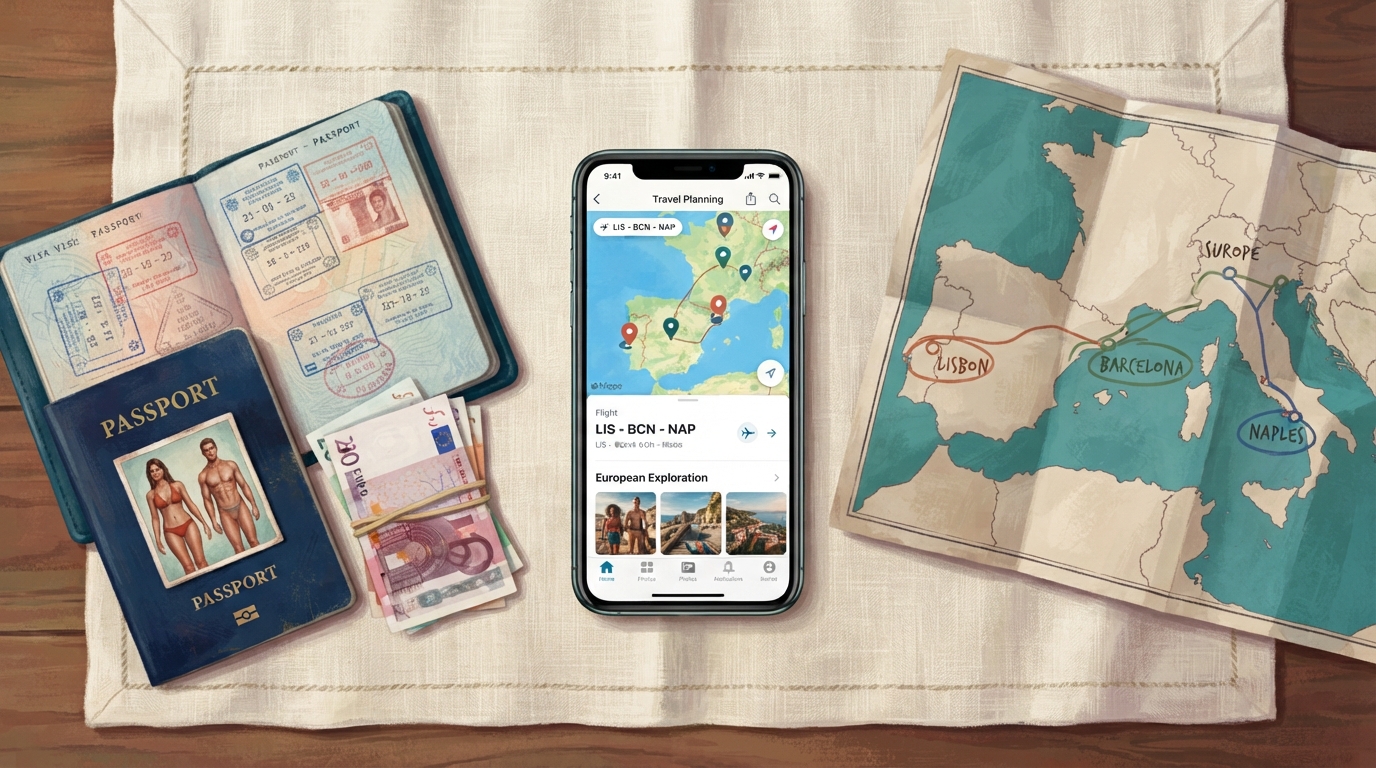
Documents are the other place this trip trips people up. You're not managing one passport and one boarding pass, you're managing visa approvals for three countries, match tickets for however many games you've booked, and hotel bookings billed in three different currencies, and losing track of any one of them mid-trip is a real problem when the next flight is international. Tools like TripProf keep passport scans, visa confirmations, and match tickets in one place per trip and track spending across AUD, NZD, and USD in the same expense log, which matters more here than on a typical single-country holiday. Our 2026 travel document checklist is a good starting point regardless of which app you end up using.
Frequently Asked Questions
Is the Rugby League World Cup 2026 the same as the FIFA World Cup?
No. RLWC2026 is rugby league, played 13 a side, held October 15 to November 15, 2026, in Australia, New Zealand, and Papua New Guinea. The FIFA World Cup is association football, played 11 a side, held in the United States, Canada, and Mexico in June and July 2026. They share a name format and nothing else.
What's the actual difference between rugby league and rugby union?
Rugby league is 13 players a side with six tackles before a turnover and a simple play-the-ball restart. Rugby union is 15 players a side with contested rucks, mauls, and line-outs. The two codes split from a shared origin in 1895 and have run as separate sports with separate World Cups ever since.
Which cities should I fly into?
Brisbane if you only want one city, since it hosts both finals on November 15. Add Sydney for the opening match and semi-finals. Only add Christchurch or Port Moresby if you specifically want to see New Zealand's or Papua New Guinea's matches, since both require their own visa process and a genuine international flight leg.
Do I need a visa for Australia, New Zealand, and Papua New Guinea?
Yes, all three, and they're not interchangeable. Australia is free (eVisitor) or AUD $20 (ETA) depending on your passport. New Zealand's NZeTA plus mandatory levy runs NZD $117-123. Papua New Guinea's eVisa costs USD $50. Apply for all three separately, well before departure.
When do tickets go on sale and how much do they cost?
Tickets went on sale November 23, 2025, through Ticketmaster Australia. Group stage and semi-final tickets start from $19 AUD for adults, with Final tickets at Suncorp Stadium starting from $39 AUD for adults. Family packages and better seating cost more.
Is it safe to travel to Papua New Guinea for a match?
It requires more planning than the Australian or New Zealand legs, but it's done every tournament cycle. UK government advice flags a high risk of serious crime in Port Moresby, particularly after dark. Pre-arrange transport, stay close to the stadium, and avoid walking around the city unaccompanied at night.
Can I realistically watch matches in all three countries?
Yes, but it takes real logistics planning. Flights between the host countries run 3 to 4 hours each way, and you'll need each country's visa sorted before you can book connecting flights with any confidence. Build a full day of buffer around each border crossing rather than same-day connections.
Key Takeaways
- RLWC2026 is rugby league (13 a side), not the FIFA football World Cup or the Rugby Union World Cup. It runs October 15 to November 15, 2026.
- The tournament spans 9 cities and 11 venues across Australia, New Zealand, and Papua New Guinea, with 53 matches across men's, women's, and wheelchair competitions.
- Brisbane hosts both finals on November 15. If you're picking one city, that's it.
- Each of the three host countries runs its own visa system, its own currency, and its own processing time. Sort all three before booking connecting flights.
- Tickets start from $19 AUD through Ticketmaster Australia, with Final tickets starting from $39 AUD.
- Port Moresby needs the most advance planning of the three legs: earliest visa application, earliest accommodation booking, and pre-arranged transport once you land.
- For a trip juggling three currencies and three visa systems, keeping documents and expenses in one place, whether that's TripProf or another tool, saves more headaches here than on a typical single-country trip.
Prices, fees, and visa requirements above were accurate as of July 2026 and can change - verify directly with the official source linked before booking or applying.
Sources
- NRL.com: 2026 Rugby League World Cup fixtures announced - dates, opening match, final
- Wikipedia: 2026 Rugby League World Cup - background, host countries, venues
- Wikipedia: 2026 Men's Rugby League World Cup - teams and pool structure
- NRL.com: Wheelchair tournament details - format, dates, venue
- Queensland Government tourism guide to RLWC2026 - tournament scale statistics
- Ticketmaster Australia: RLWC2026 tickets - official ticket sales
- RLWC2026.com: official fixtures announcement - ticket pricing
- Australian Department of Home Affairs: eVisitor subclass 651
- Australian Department of Home Affairs: ETA subclass 601
- Immigration New Zealand: International Visitor Levy
- Immigration New Zealand: NZeTA overview - validity period
- Wikipedia: Visa policy of Papua New Guinea - eVisa fee and stay length
- UK Government travel advice: Papua New Guinea entry requirements - yellow fever rule
- UK Government travel advice: Papua New Guinea safety and security - Port Moresby crime risk
- Wikipedia: Comparison of rugby league and rugby union
- Wikipedia: Te Kaha stadium, Christchurch - opening date
- Wikipedia: Santos National Football Stadium, Port Moresby - venue history
- FlightConnections.com: Brisbane to Christchurch flight schedule
- FlightConnections.com: Brisbane to Port Moresby flight schedule
- Expedia: Brisbane hotel listings
- Tripadvisor: Christchurch hotel listings
- Tripadvisor: Port Moresby hotel listings
Last updated: September 19, 2026
Keep Reading
More travel tips and guides picked for you
Japan Cherry Blossom Trip 2027: What It Costs and When to Land
A cherry blossom week in Japan costs about $2,600 per person from New York and $2,200 from Los Angeles, flights included. We priced it line by line and tested 36 seasons of bloom records to find the date to land.
Gibraltar eclipse 2027: where to watch 4.5 minutes of totality, and where to sleep when the Rock is full
The Moon covers the Sun over Gibraltar for 4 minutes 28 seconds on 2 August 2027. Levanter cloud can pile up on the Rock's sunrise side, the airport is now a Schengen border, and Rock hotels are filling. Here's how seven bases compare for a UK group, and what the core trip costs.
8 best day trips from Vienna by train, ranked by travel time
No car needed. Eight real day trips from Vienna by train, ranked from a 21-minute hop to a full day at Hallstatt, with real 2026 prices, journey times, and an honest downside for each stop.