Group Tours for Solo Travelers: Are They Actually Worth the Money in 2026?
You've been scrolling through Southeast Asia itineraries for three hours, your browser has 47 tabs open, and you just discovered that the hostel you bookmarked last week doubled its price. Then an ad pops up: "10-day Thailand group tour, $1,200, everything included." You hover over the button. Is this the shortcut you need, or a trap disguised as convenience?
Group tours for solo travelers aren't universally worth it or universally a rip-off. They make financial sense when you'd otherwise pay single supplements on hotels, when the destination is logistically complex, or when jet fuel surcharges are making flexible solo booking a gamble. They don't make sense for budget travelers in cheap, easy-to-navigate countries. The sweet spot: use a group tour for hard destinations and first-time regions, then go independent once you know the ropes.
The Real Numbers: What Group Tours Actually Cost vs. DIY
Group tours for solo travelers save money in some situations and waste it in others. The difference comes down to destination, travel style, and what you count as "included." According to one comparison analysis, group travelers spend roughly 30% less per trip than solo travelers on average, thanks to bulk-booked rates on accommodation and transport. But averages hide a lot.
Here's a real-world comparison. Travel blogger Where Goes Rose documented an 8-day Cambodia group tour costing GBP 500 vs. less than GBP 100 for the same route done independently. That's a 5x markup. Cambodia is cheap, transport is easy to figure out, and hostels cost $5/night. The group tour was paying for hand-holding that an experienced traveler doesn't need.
But flip the destination. Try independently booking a 10-day tour through Uzbekistan's Silk Road cities, arranging shared taxis between Samarkand and Bukhara, negotiating guesthouse rates in Russian, and figuring out which border crossings are actually open this week. Suddenly a $1,500 group tour from a company like Wild Frontiers looks less like a luxury and more like the only sane option.
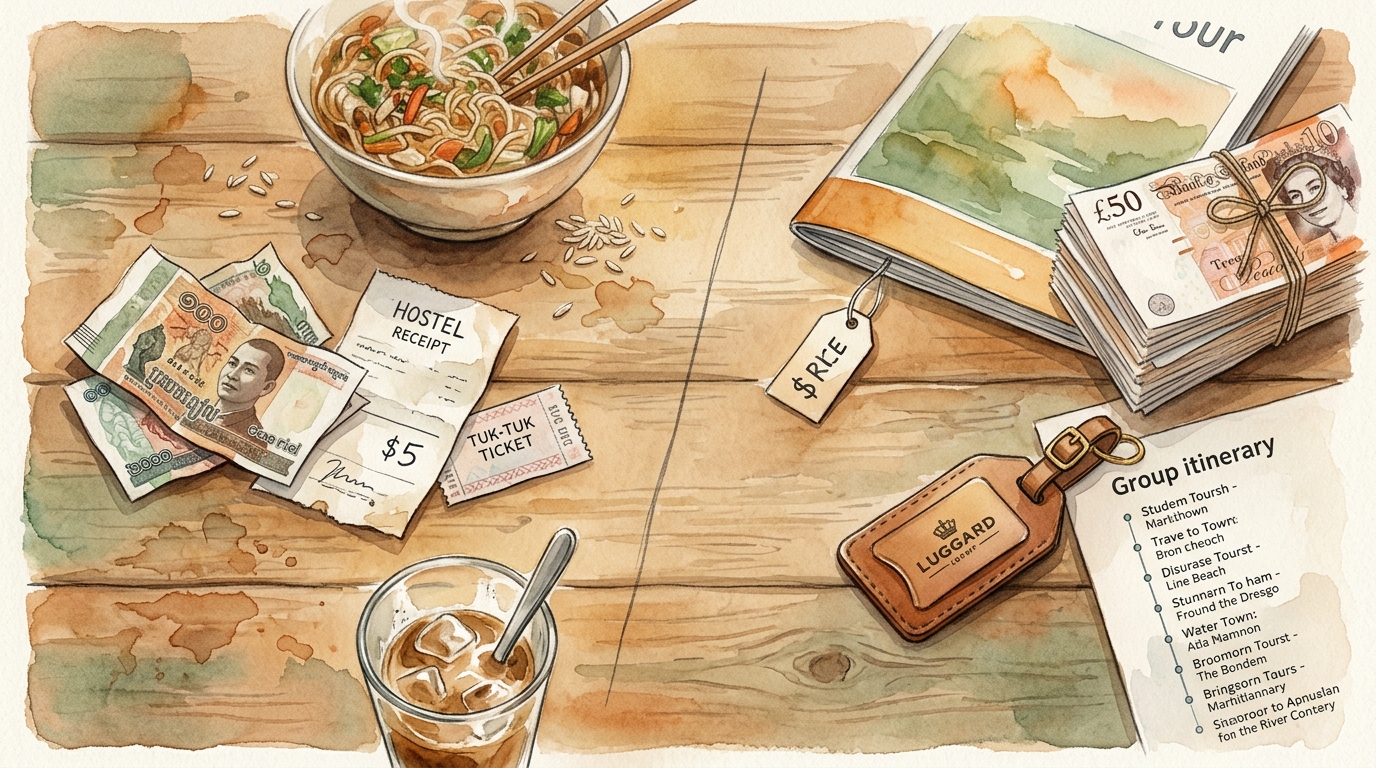
Here's the uncomfortable truth: group tours are overpriced for Southeast Asia, Central America, and most of Western Europe. They're fairly priced for Central Asia, parts of Africa, and remote destinations where independent logistics eat your time and sanity. They're a bargain when you factor in the single supplement fees that solo travelers face on hotels, which typically range from 20% to 100% of the trip cost.
Rick Steves recently changed their 2026 policy to require all solo travelers to book a private room at a flat $50/day single supplement, subsidized from the actual cost. On a 13-day Best of Scotland tour, that's $650 extra. Other operators like Intrepid and G Adventures let you avoid the supplement entirely by matching you with a same-gender roommate. The policy differences between companies can shift the total cost by hundreds of dollars, so read the fine print before comparing sticker prices.
The Hidden Cost Layer Nobody Talks About
That "$1,200 all-inclusive" price on the tour company website? It's not all-inclusive. Every experienced group traveler knows the advertised price is the starting point, not the final bill. Here's what gets added after you book.
Tips and gratuities. Most tour companies don't include tips for guides and drivers. Tour Scoop's tipping guide puts the expected range at $3-5 per person per day for the driver and $5-8 for the guide. On a 10-day tour, that's $80-130 extra. G Adventures uses a tipping kitty system collected on day one, which at least makes it predictable.
Optional excursions. Tours dangle "optional activities" that your group will do together while you sit at the hotel if you skip them. Social pressure turns "optional" into "basically mandatory" — and the pressure is real when everyone else in your group is going. Based on typical itineraries, plan for an extra 15-25% of the tour price for these.
Meals not included. Most tours cover breakfast and some dinners, but lunch is usually on you. And when the group stops at a tourist-adjacent restaurant chosen by the guide, you're paying tourist prices. In our experience, expect $15-30/day depending on the destination.
Flights. Almost no group tour includes international airfare. With jet fuel prices surging 85% since February 2026 due to the Strait of Hormuz disruption, flights alone can exceed the tour cost. If you haven't read our breakdown of why flights are so expensive right now, start there.
Comparing the tour price to the total cost of independent travel. The tour price excludes flights, tips, optional excursions, travel insurance, and most lunches. Based on the breakdowns above, add 40-60% to the sticker price for a realistic budget.
Travel insurance. Not included, but not optional either. SquadTrip's group insurance guide notes that policies typically cost 4-10% of the trip cost, and with each traveler having $1,500-$5,000 on the line, skipping coverage is a gamble. Our travel insurance guide covers what to look for.
Visa and entry fees. Some destinations charge entry fees that tours don't cover. A Kenyan eTA (electronic travel authorization) costs around $35. Bolivia's reciprocity fee for US citizens was $160 as of early 2026. These add up fast on multi-country itineraries. And if you're planning a trip to a less familiar destination, knowing the common first-trip mistakes can save you from costly surprises at the border.
Add it all up, and a $1,200 group tour actually costs $1,700-1,900 by the time you're home. That's not a dealbreaker, but you need to compare apples to apples. The tour company's website won't do this math for you.
The 2026 Factor: Why This Year Is Different
Three things happening right now make group tours more attractive for solo travelers than they were even a year ago. This isn't a permanent shift, but if you're booking travel for summer or fall 2026, these factors should influence your decision.
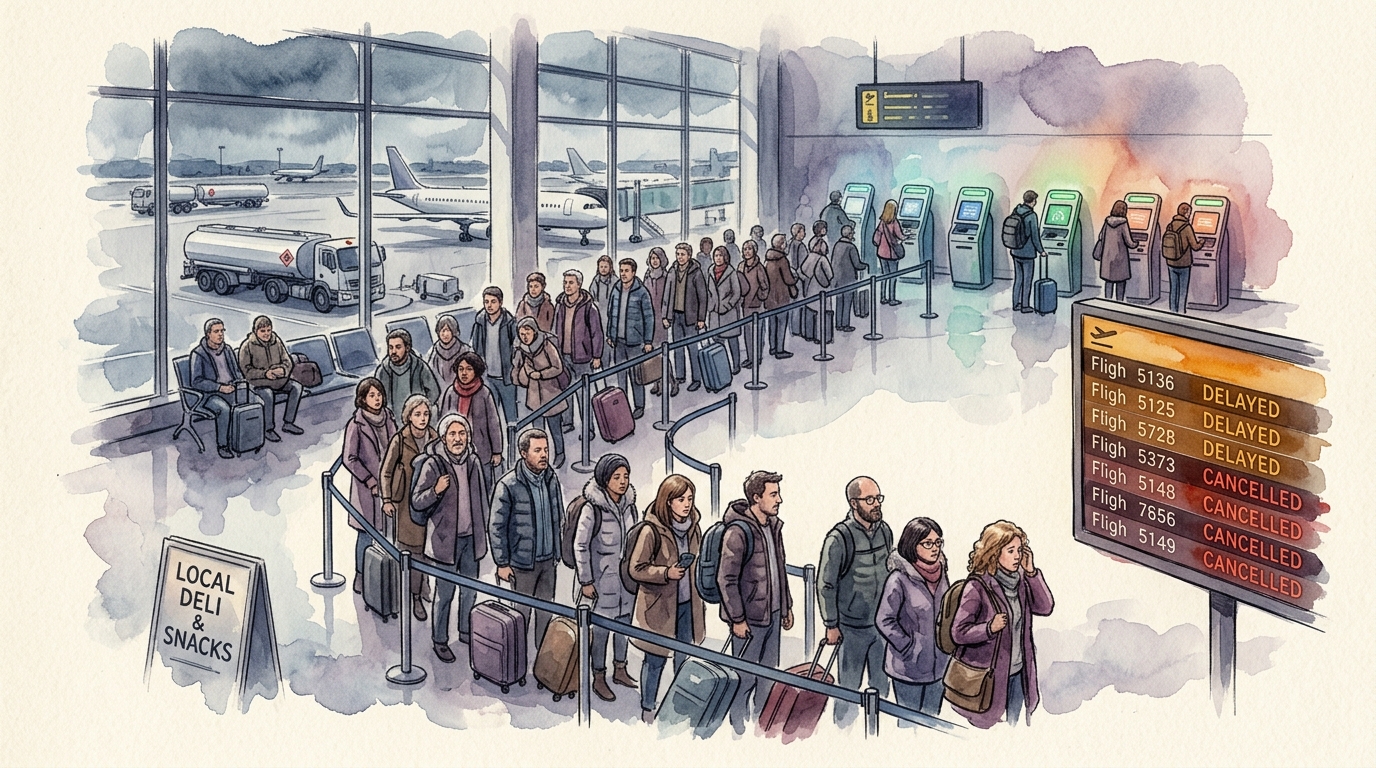
The EU Entry/Exit System goes fully live on April 10, 2026. The phased rollout started on October 12, 2025, and all 29 Schengen countries will require biometric registration for non-EU travelers. Early pilot results have been rough: three-hour delays at major airports, and Lisbon Airport had to suspend the system for three months after seven-hour queues in December. Some member states may invoke temporary suspension during peak summer if similar bottlenecks recur. Group tours handle border logistics for you, and tour operators have been pre-registering travelers to speed the process. If you're heading to Europe this summer, check our EES explainer for what to expect.
Airfare volatility is at a decade high. The conflict around the Strait of Hormuz pushed jet fuel from roughly $2.50/gallon to $4.62/gallon, and NBC News reports a global jet fuel shortage is raising the cost of air travel across the board. United Airlines is already cutting approximately 5% of planned routes. Group tour operators locked in fuel surcharge agreements months ago, meaning their packaged airfare add-ons (where available) often undercut what you'd pay booking solo today. For route planning around the disruption, see our Middle East airspace crisis guide.
Food tourism is pulling solo travelers toward guided experiences. The culinary tourism market is growing to $1.23 trillion in 2026, up from $1.06 trillion, and niche food-focused group tours are one of the fastest-growing segments. Companies like Intrepid now run small-group food tours starting around $800 for a week, with local cooks and market visits that would be genuinely hard to arrange solo. For solo travelers specifically, these food-focused tours solve the awkward "table for one" problem while giving you access to home kitchens and street-food circuits that require a local guide to find.
Which Company Actually Fits You: An Honest Comparison
Every "best group tour companies" article ranks them 1-10 like they're interchangeable. They're not. The right company depends on your age, budget, introversion level, and what you actually want from the experience. Here's the honest breakdown.
| Company | Age Range | Group Size | Starting Price | Best For |
|---|---|---|---|---|
| Intrepid Travel | All ages | Up to 14 | ~$595 | Cultural immersion, introverts |
| G Adventures | 18+ | 12-16 | ~$455 | Solo-first design, flexibility |
| Flash Pack | 30-49 / 45-59 | Up to 16 | ~$1,238 | Boutique, career-age travelers |
| Contiki | 18-35 | ~45 | ~$292 | Social/party, budget |
| EF Go Ahead | All ages | 20-40 | Varies | Educational, structured |
| Wheel the World | All ages | 8-10 | Varies | Accessible travel Inclusive |
Starting prices checked April 2026. Prices vary by destination, season, and departure date.
The numbers tell the real story. Over 50% of Intrepid's travelers go solo. Contiki reports that 57-70% of their travelers join alone. Flash Pack says 90% of participants travel solo, and 80% stay in touch after the trip. These aren't group tours that happen to accept solo travelers. They're built around them.
Between 50% and 90% of travelers on major tour companies go solo. These aren't group tours that happen to accept individual travelers. They're designed around them.
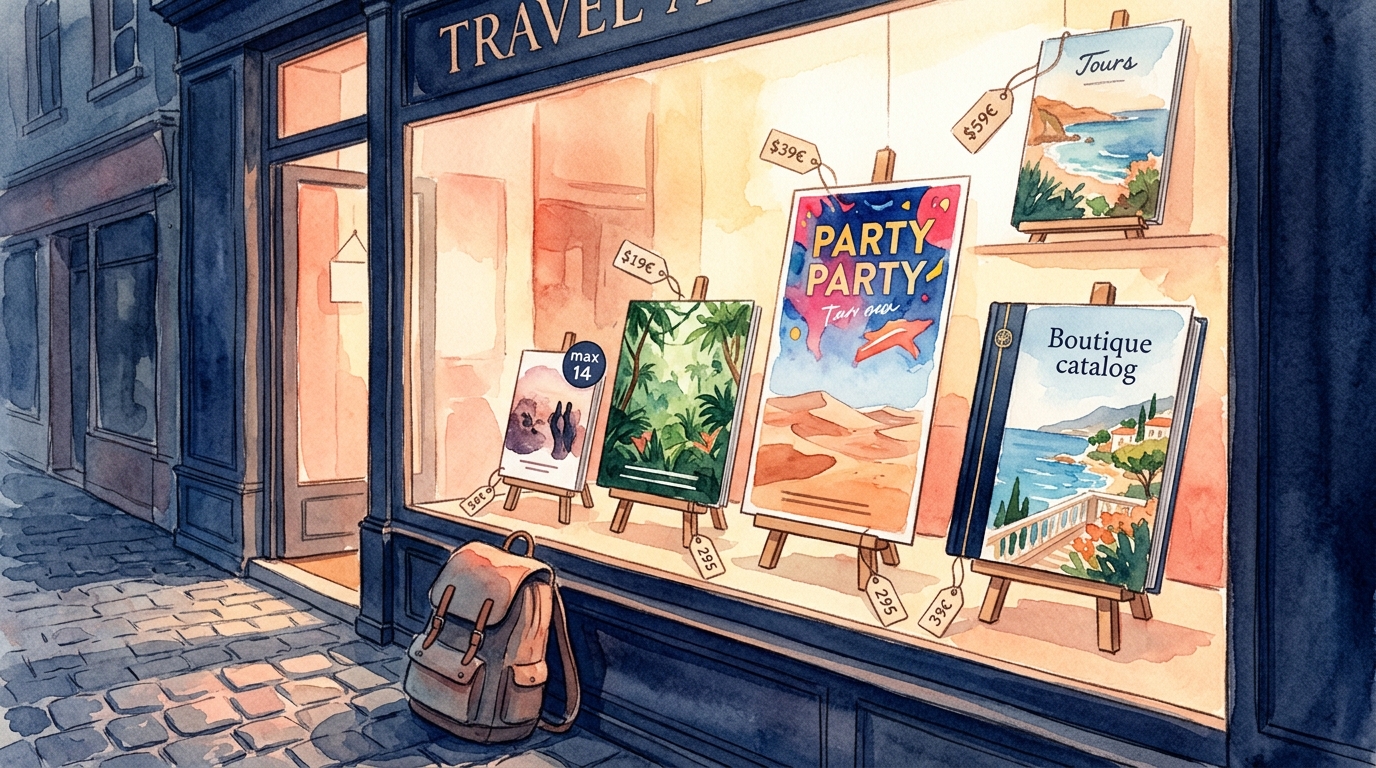
If you're an introvert: Intrepid. Small groups (max 14), plenty of free time built in, and a culture that respects solo moments within the group. G Adventures' new "Solo-ish" line also builds in a dedicated "Me Day" for exactly this reason.
If you're 30-45 and tired of feeling old on tours: Flash Pack. The age brackets (30-49 and 45-59) mean you won't be the odd one out among gap-year 21-year-olds. The price reflects the boutique positioning, but the company exists specifically because its founder felt out of place on age-generic tours.
If you want the social experience above all else: Contiki. Groups of 45 people, ages 18-35, heavy social programming. Know what you're getting into. If you're 34, you might feel like the group parent.
If you need accessibility guarantees: Wheel the World runs group tours with verified accessible accommodations (guaranteed roll-in showers, adapted transport) across 50+ destinations. This is the only company on the list where accessibility isn't an afterthought.
If you want adventure on a tight budget: G Adventures starts at around $455 for shorter trips and doesn't charge single supplements when you're willing to share a room. Their "Solo-ish" line was designed from the ground up for solo travelers, with the first three days structured around icebreaker activities and structured "We Day" and "G Day" bonding experiences. It's the closest thing to a solo-travel summer camp for adults.
A note on scams. Whichever company you choose, one advantage of group tours is having a local guide who knows which tourist traps to avoid. If you're curious about what you're dodging, our guide to the worst tourist scams by region covers the 25 most common ones worldwide. A good tour guide is your first line of defense against most of them.
The Group Dynamics Gamble: What Reddit Won't Sugarcoat
You can research the company, read the itinerary, and budget perfectly. You can't control the 13 strangers you'll spend 10 days with. This is the single biggest variable in whether a group tour is "worth it," and no company can guarantee it.
They are hit and miss and very dependent on the other people. I did one in Thailand when I was 20 and it was a horrendous experience, largely because of drama in the group.
— r/solotravel, April 2026
A popular recent thread on r/solotravel laid bare the reality. The top-voted comment came from a self-described introvert: "I myself am a huge introvert, so I just make sure I always take some time to myself away from the group." Another poster put the freedom tension perfectly: "Travel is freedom for me, and this kind of group trip is the opposite of that."
But the same thread had equally passionate defenders. One commenter nailed the peace-of-mind value: "You pay for the backup of it not being your problem if something goes wrong. Lost your passport, internal flight cancelled? You just sit there while someone else fixes it."
Every thread follows the same pattern: people who loved group tours loved the social bonding. People who hated them hated the loss of autonomy. Your personality type predicts your experience more than the company, price, or destination.
One more uncomfortable truth: trip length matters. A 7-day tour with people you click with is a highlight reel. A 4-week tour with people who drain your social battery is an endurance test. We've seen the same pattern across dozens of traveler stories: Multiple Reddit users flagged this explicitly: "It was 4 weeks though, and I found it pretty draining." Keep your first group tour under 10 days. If you love it, book longer next time.
Age mismatch is the other silent killer. A 21-year-old on a Contiki tour remembered: "the group having very few people in their 30s and they never seemed to be enjoying themselves." This is why age-bracketed companies like Flash Pack and Contiki exist. When everyone's in roughly the same life stage, the social dynamics work. When they don't match, even a beautiful itinerary can feel like being stuck at someone else's party.
Before you book, check the company's actual demographics, not just their marketing. A tour described as "all ages welcome" might skew 60+ or 22-year-old, depending on the destination and season. Email the company and ask what the typical age range is for the specific departure you're considering. Most will tell you honestly.
When to Skip Group Tours Entirely
Group tours aren't always the answer, and no honest article should pretend otherwise. Here are the situations where booking independently is clearly better.
- You're visiting a country with cheap, reliable public transport and $10-20/night hostels (Thailand, Vietnam, Portugal, Mexico)
- You've already traveled solo and know your planning style
- You want to stay in one place for more than 3 days (tours keep moving)
- You're on a strict budget under $50/day (tours can't match this)
- You hate fixed schedules and wake-up calls
- You're returning to a destination you've visited before
The destination-dependent value is real. As one Reddit user summarized: "I would never consider doing that for a 'normal' destination" but "for destinations that are more remote or where transport is not that easy, I prefer to join a tour." That's the framework. Use group tours as a tool for specific situations, not as your default travel mode.
There's also the identity question that comes up in every solo travel forum: "I feel like traveling with a group is no longer solo travel." If solo travel is part of your identity and you value the challenge of figuring things out alone, a group tour might feel like cheating. That's not a financial calculation. It's a personal one, and it's worth being honest with yourself about before you spend $2,000.
If you're feeling the fatigue of constant solo planning, that's worth addressing separately. Our piece on solo travel burnout covers the signs and what to do about them. Sometimes the answer isn't a group tour; it's a slower pace.
Another scenario where group tours fall short: if you're planning a trip with friends rather than strangers. Group tours are designed around the assumption that travelers don't know each other. If you've already got a group of 3-5 friends, you'll get better value splitting costs on apartments and car rentals directly. Our guide to splitting trip costs without drama and the best group travel planning apps cover how to manage that without the expense-tracking headaches.
And if you do go independent but want the planning taken care of, tools like TripProf give you personalized destination guides, expense tracking, and checklists in one place. You get structure without sacrificing freedom.
The Decision Framework for Solo Travelers
Stop asking "are group tours worth it?" Start asking "are group tours worth it for someone like me, going where I'm going, right now?" Here's how to decide.
- Check your destination's difficulty level If the country has reliable public transport, widespread English, and budget accommodation under $30/night, you probably don't need a tour. If it's logistically complex (think Central Asia, rural Africa, or multi-country Balkans routes), a tour saves real headaches.
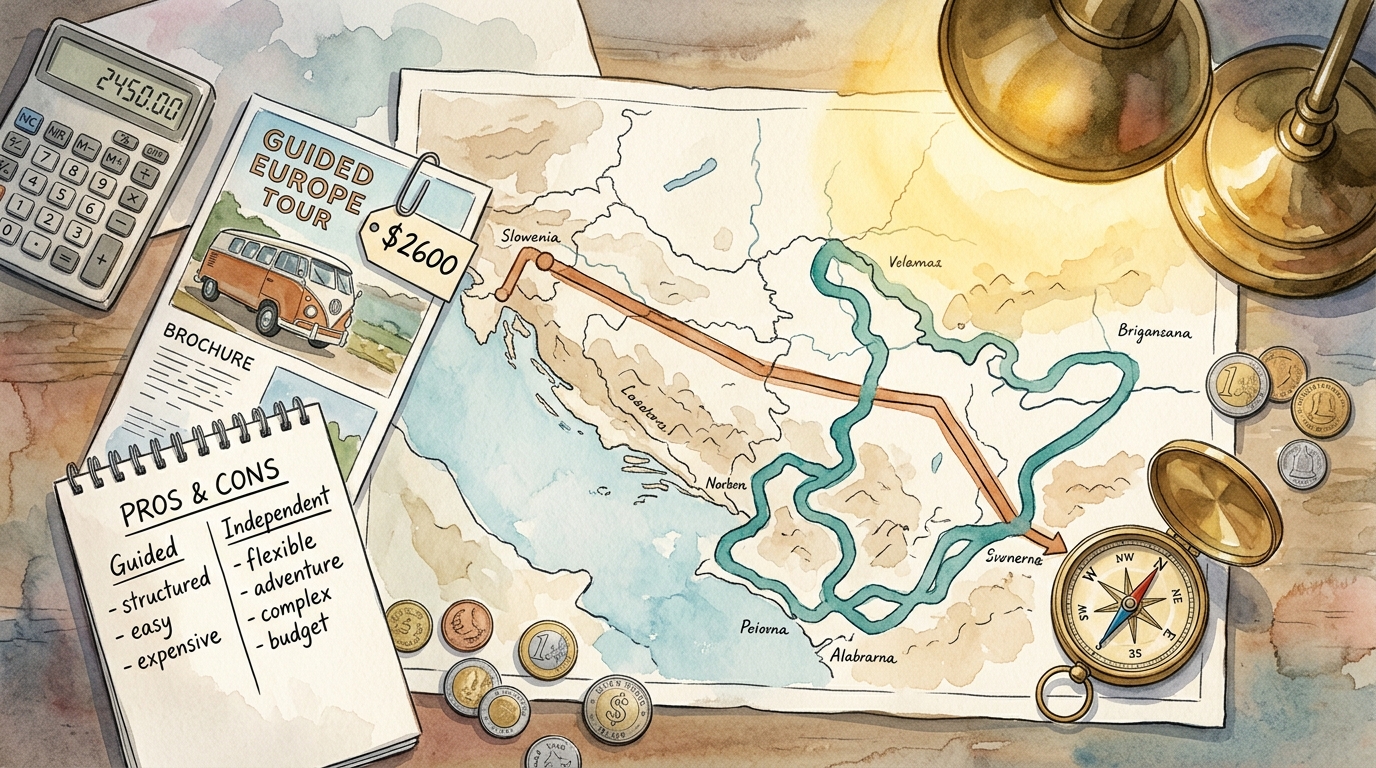
- Do the honest math Take the tour price. Add 40-60% for tips, optional excursions, excluded meals, insurance, and flights. Compare that total to what you'd spend independently, including the single supplement you'd pay on solo hotel rooms. If the gap is under 20%, the tour's convenience might be worth it.
- Ask yourself the introvert question Can you handle 7-14 days of group meals, shared transport, and mandatory social time? If the thought makes you anxious, start with a shorter tour (5-7 days) from an introvert-friendly company like Intrepid, or pick a tour with built-in free days.
- Factor in the 2026 context Are you flying through routes affected by the Middle East airspace crisis? Entering Europe through the new EES system? These disruptions tilt the value equation toward group tours, which absorb logistical chaos better than individual travelers can.
- Set your first-tour rules First group tour ever? In our view, the under-10-day rule is the single best piece of advice for first-timers. Pick a trip in a destination you're genuinely excited about, with a company whose group size is under 16. Don't commit to a 3-week tour with 45 strangers as your introduction to group travel.
Keep your first group tour under 10 days, with a company whose group size is under 16, in a destination you're genuinely excited about. A bad first experience will turn you off group tours forever.
Frequently Asked Questions
Are group tours for solo travelers worth the money?
It depends on the destination and your travel style. Group tours are worth it for logistically complex destinations, first-time international travelers, and anyone who'd otherwise pay single supplement fees of 20-100% on hotels. They're overpriced for budget-friendly countries where independent travel costs a fraction of the tour price.
What is the single supplement and how do I avoid it?
A single supplement is an extra charge for occupying a hotel room alone, since tour prices assume double occupancy. It ranges from 20% to 100% of the trip cost. Avoid it by choosing companies like G Adventures or Intrepid that offer room-sharing matching, or by selecting tours that include private rooms at no extra charge.
Which group tour company is best for introverts?
Intrepid Travel, with groups capped at 14 and plenty of built-in free time. G Adventures' Solo-ish line also includes a dedicated "Me Day" for solo exploration. Avoid Contiki if you need quiet time, as groups hit 45 people with heavy social programming.
How much more expensive is a group tour vs. independent travel?
In budget destinations like Southeast Asia, group tours can cost 3-5x more than independent travel. In complex destinations or when staying at mid-range hotels, group tours often cost about the same or less than booking independently, especially once you factor in single supplements and guide fees.
What hidden costs should I budget for on group tours?
Add 40-60% to the sticker price. Tips for guides and drivers run $8-13 per person per day. Optional excursions add 15-25%. Excluded lunches run $15-30/day. International flights and travel insurance are almost never included.
Can you still have freedom on a group tour?
On better-designed tours, yes. Intrepid and G Adventures build free afternoons and optional activities into most itineraries. Flash Pack includes unstructured exploration time. But if freedom is your top priority, group tours will always feel more constrained than independent travel.
Are group tours better for certain destinations?
Yes. Group tours add the most value in destinations with language barriers, unreliable transport, safety concerns, or complex logistics. Central Asia, rural Africa, multi-country routes, and destinations during political instability benefit most. Easy, well-touristed countries like Thailand or Portugal rarely justify the group tour premium.
Key Takeaways
- Group tours save money when single supplements, guide fees, and logistical complexity make independent travel equally or more expensive. They're overpriced in budget-friendly, easy-to-navigate countries.
- Always add 40-60% to the advertised tour price for tips, optional excursions, excluded meals, flights, and insurance before comparing to independent travel costs.
- The 2026 travel landscape (EES border chaos, jet fuel surcharges, Middle East airspace disruptions) makes group tours unusually good value for Europe and long-haul destinations this year.
- Your personality matters more than the company. Introverts should start with small-group operators (Intrepid, Flash Pack) and trips under 10 days.
- Match the company to your age bracket. Contiki (18-35), Flash Pack (30-49), and G Adventures Solo-ish (18+) exist because age mismatches ruin group dynamics.
- Use group tours strategically for first visits to complex destinations, then switch to independent travel once you know the region.
- For trips where you want structure without sacrificing freedom, tools like TripProf offer personalized planning with destination guides, checklists, and expense tracking that replace the organizational benefits of a tour.
- Read the fine print on what's included before you book. The cheapest tour isn't cheap if it excludes everything that makes the trip work.
Sources
- Grand View Research: Solo Travel Market Size and Share, Industry Report 2033
- DealSucker: Group vs. Solo Travel Cost Comparison
- Where Goes Rose: Solo Travel vs. Group Tours, Real Cost Breakdown
- GRRRLTRAVELER: How to Avoid Single Supplement Fees
- CNBC: Jet Fuel Supply Concerns Grow as Airlines Cut Flights (April 2026)
- NBC News: Global Jet Fuel Shortage Raises Air Travel Costs
- The Hill: International Jet Fuel Shortage Drives Up Airfare Costs
- European Commission via etias.com: EU Entry/Exit System Causing Three-Hour Delays
- Euronews: EU Entry/Exit System Launch Date and Traveler Preparation
- Yahoo Finance: Culinary Tourism Market Analysis Report, $1.23T in 2026
- Tour Scoop: How Much Should You Tip on a Guided Tour
- SquadTrip: Group Trip Insurance 101 (2026)
- Intrepid Travel: Solo Travel Tours and Holidays
- G Adventures: Solo-ish Adventures for Solo Travelers
- Flash Pack: Social Adventures for Solo Travelers
- Contiki: Solo Travel Tours
- Wheel the World: Accessible Group Trips
- Rick Steves: 2026 Tour Policy Updates, Single Supplement Changes
Keep Reading
More travel tips and guides picked for you
Top 10 Best Group Trip Destinations for Friends in 2026 (With Per-Person Budgets)
From $35/day in Bali to $135/day in Queenstown, these 10 group trip destinations come with real daily budgets, villa vs. hotel math, and a planning survival kit so your friend group actually makes it to the airport.
How to Split Trip Costs Fairly With Friends
Money is the #1 source of tension on group trips. Three methods, matched to the right tools, keep the math clean and the friendships intact.
Best Group Travel Planning Apps in 2026
Eight group travel planning apps compared on collaboration, expenses, documents, and memories — with honest pros, cons, and a clear recommendation for each type of group trip.