Glasgow 2026 Commonwealth Games: How to Go on a Budget
Key Highlights
- 1
- 2
- 3
+4 more in the takeaways below
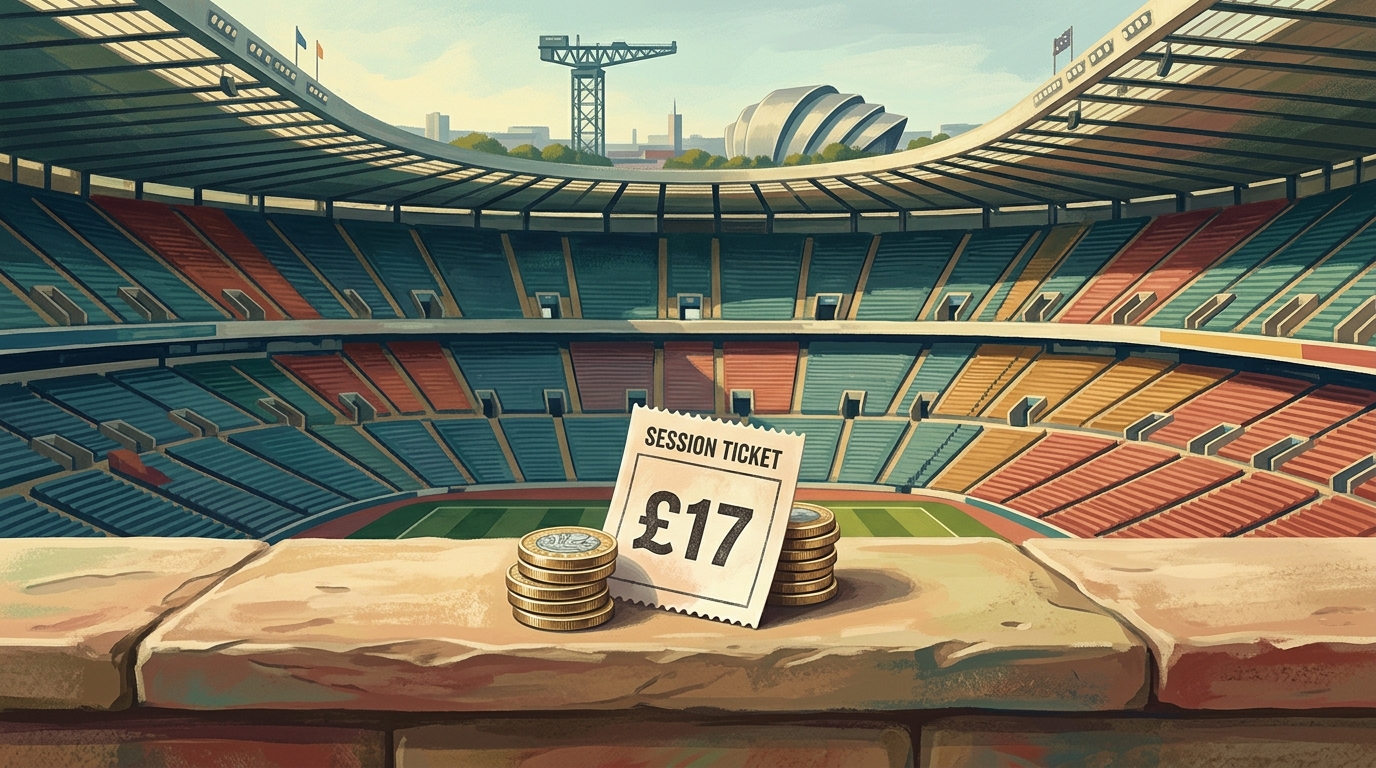
It's a Tuesday afternoon in late July. You walk out of Scotstoun Stadium having watched a Commonwealth 100m final from a seat that cost you seventeen pounds, less than the round of drinks you'd buy after. The velodrome is a fifteen-minute hop away. Your bed tonight is a city-centre flat you booked back in spring, before the rooms vanished. This is the cheap way to do Glasgow 2026.
That scene is realistic, but only if you plan now. This Glasgow 2026 Commonwealth Games budget guide breaks down exactly what the stripped-back "reset" Games costs a spectator, where the cheap tickets and beds actually are, and how to move between four walkable venues without wasting money. The compact format works in your favour, if you know how to use it.
The Glasgow 2026 Commonwealth Games run 23 July to 2 August across just 10 sports and four venues inside an eight-mile corridor. Non-medal session tickets start at £17 and medal sessions at £26, with concessions from £12. There is no athletes' village this time, so athletes fill city hotels and room stock is tight. Book accommodation early (the 2014 Games saw average room rates hit £344 a night), lean on the Subway and ScotRail to hop between venues, and use the official face-value resale platform if you missed first sale. A lean spectator day is doable for around £80 to £90.
The reset Games in one minute
Glasgow 2026 is a deliberately smaller event: 10 sports across four venues over 11 days, 23 July to 2 August 2026. Glasgow stepped in to host after the Australian state of Victoria pulled out in 2023 over spiralling costs, and the new model strips the Games back to a tight, city-centre footprint. For a spectator on a budget, fewer venues and shorter distances mean less money lost to transport and logistics.
The 10 sports are athletics, swimming, artistic gymnastics, track cycling, netball, weightlifting, boxing, judo, lawn bowls and 3x3 basketball, with para events integrated into six of them, as listed on the official Glasgow 2026 sports page. Cricket, hockey and several others from past editions are gone. That sounds like a downgrade, but for a first-time visitor it makes the whole thing legible: you can realistically catch two sessions in a day without crossing the city.
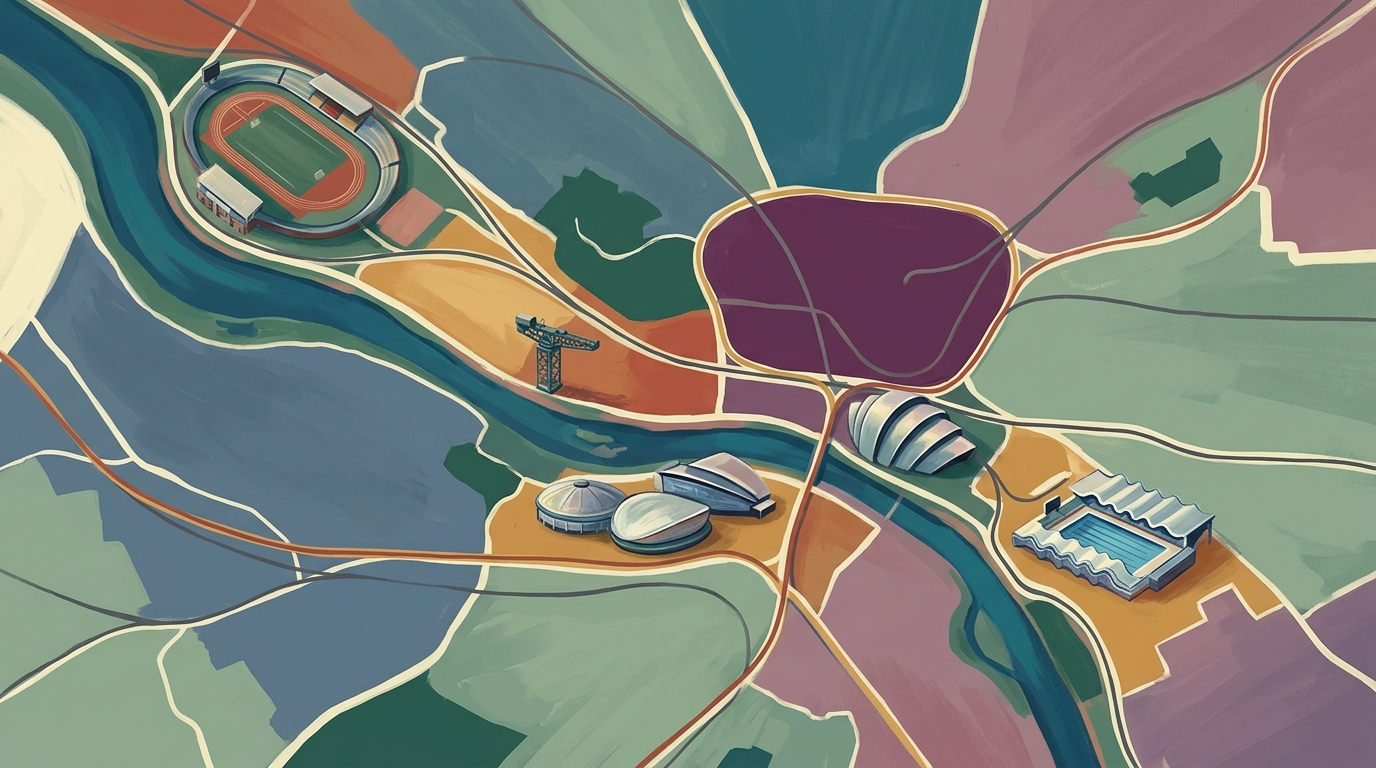
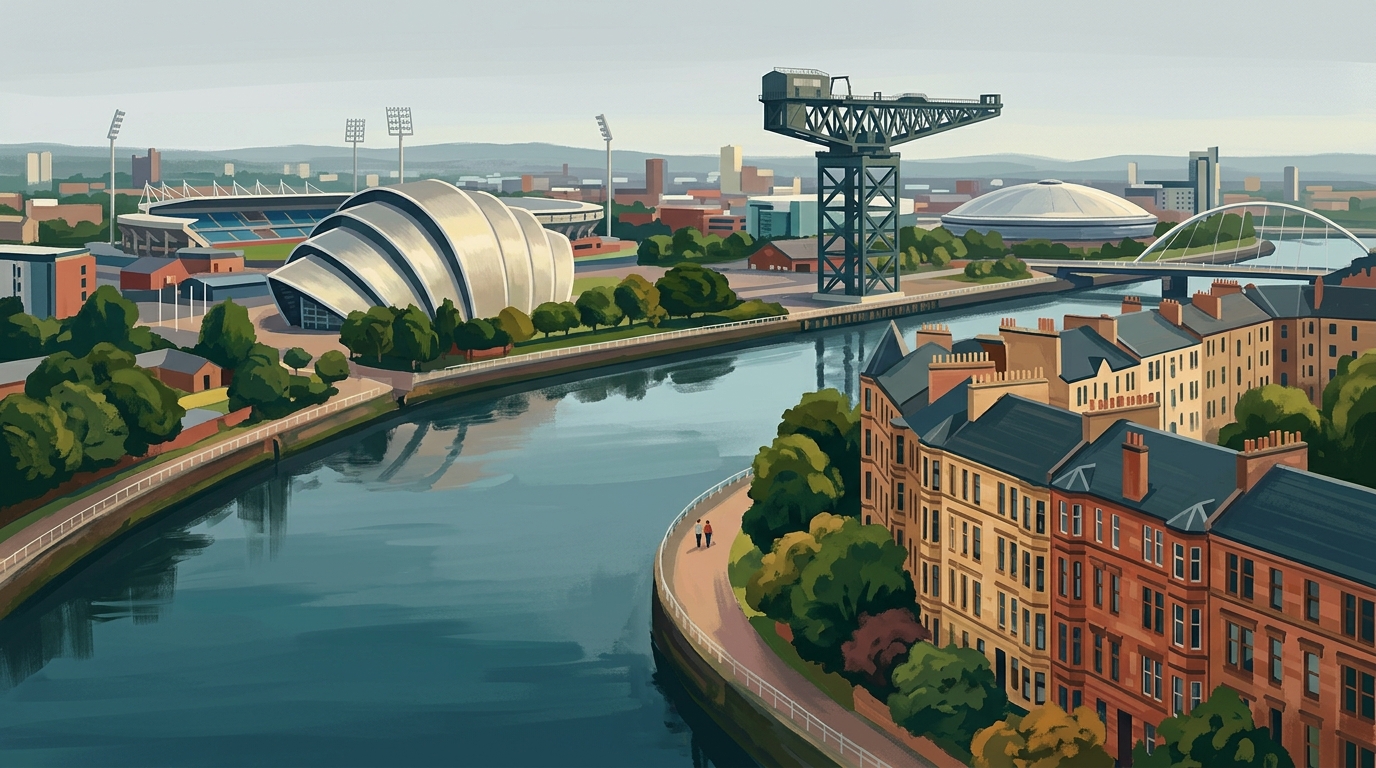
The four venues sit, in the words of the official venues page, "within a concentrated, eight-mile corridor that brings the Games closer to the fans than ever before." Here's how the sports map onto them.
| Venue | Headline sports | Why it matters for budget |
|---|---|---|
| Scotstoun Stadium | Athletics and para athletics | Train to Scotstounhill, then a 10-minute walk |
| Tollcross International Swimming Centre | Swimming and para swimming | Short rail hop plus a walk from Carntyne |
| Glasgow International Arena | Track cycling and artistic gymnastics at the Sir Chris Hoy Velodrome and Arena | Same campus as other arena sports |
| Scottish Event Campus (SEC) | Six indoor sports including netball, boxing, judo, weightlifting, bowls and 3x3 basketball | On the rail and Subway network, central |
Venues and sports: Glasgow 2026.
The single biggest change, and the one that drives every accommodation decision below: there is no athletes' village. For the first time, athletes are housed in city hotels rather than a purpose-built complex, a core part of the reduced-format model Glasgow agreed to stage (Glasgow 2026). That detail is not trivia. It means a chunk of Glasgow's hotel rooms are already spoken for before a single spectator books.
How Glasgow ended up running a stripped-back Games is worth knowing, because it explains the whole budget-friendly shape of the event. The city is hosting on short notice and a tight budget, which is exactly why the footprint is so compact.
- July 2023 The Australian state of Victoria cancels its 2026 hosting plans over rising costs, leaving the Games without a home.
- September 2024 The Scottish Government agrees to stage a reduced-format Games, confirming Glasgow as host.
- October 2025 General ticket sale opens, with around 500,000 tickets across the 11 days of competition (programme summary).
- July 2026 The reset Games run, 10 sports, four venues, no village, and the lowest spectator entry prices of any recent edition.
The takeaway for your wallet: a compact, low-cost Games passes savings down to the spectator in cheap tickets and short journeys, but it also concentrates demand on a smaller pool of beds. You benefit on price and lose on choice, so the planning job is to lock in scarce accommodation early and let the cheap tickets and transport sort themselves out later.
Tickets: what they cost and how to buy safely
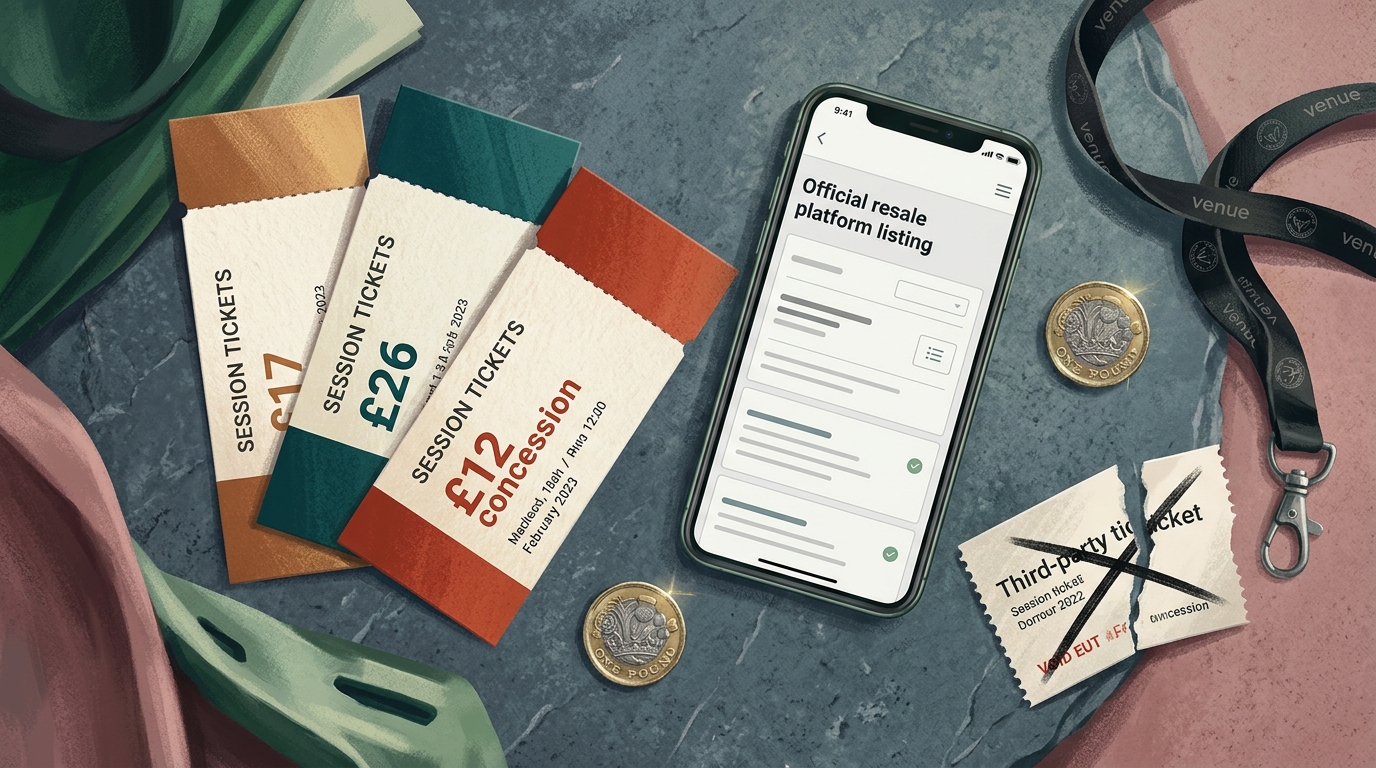
Spectator tickets are genuinely cheap by major-event standards. Non-medal sessions start at £17 (~€20) and medal sessions at £26 (~€31), with concessions from £12, according to STV News reporting on the October 2025 sale. That is the lever that makes a budget trip work: the entry price is the smallest line in your day.
| Ticket type | From (adult) | Concessions from | Note |
|---|---|---|---|
| Non-medal session | £17 (~€20) | £12 | Best value; heats, early rounds |
| Medal session | £26 (~€31) | £12 | Finals and podium moments |
| Opening ceremony | ~£45 (~€53) | ~£34 | Top seats £195 (~€229) |
Prices: STV News (Oct 2025), corroborated by the official Glasgow 2026 ticketing pages.
Opening ceremony pricing runs from "around £45 for adults and £34 for concessions" up to "£195 for adults and £146 for concessions," STV News reported in May 2026. If your goal is sport on a budget, skip the ceremony and put that £45 toward two non-medal sessions instead.
A few rules turn cheap tickets into a genuinely cheap day. First, prioritise non-medal sessions: at £17 they are roughly a third less than medal sessions, and you still watch elite athletes in the heats and early rounds, often with more of the field on show. Second, use concessions wherever you qualify, with prices from £12; for families that gap adds up fast across a week. Third, decide on dates before you decide on sports, because once your accommodation is locked, the cheapest plan is whatever sessions are running on the days you are already in town. Chasing a specific final on a specific day is what pushes budgets up.
Now the part that protects your money. Tickets are sold through one channel only. The official terms and conditions state that tickets "may only be purchased through www.glasgow2026.com, the Official Resale Platform or an Authorised Ticket Reseller," and anything bought elsewhere "will be void and/or cancelled by Glasgow 2026 without notice." Ticketmaster Sport operates the official sales.
Buying from a general resale site or a stranger in a Facebook group. Those tickets can be cancelled on the spot, leaving you outside the venue with no refund. The only safe resale is the official face-value platform on glasgow2026.com.
Can late buyers still get in? The official resale playbook
As of June 2026, some sessions are still on general sale at face value on glasgow2026.com, so check there first. For sold-out sessions, the official Resale Platform is your safe route to face-value returns. Yes, late buyers have a real, safe route in: the official face-value Resale Platform. General sale opened on 30 October 2025, but tickets are non-refundable, so as plans change, holders list their spare seats back through Glasgow 2026's own portal at the price they paid. As of June 2026, that platform is the one legitimate way to pick up returns without paying a tout markup.
Here's how to work it without overpaying:
- Start at the source. Only ever buy or resell through glasgow2026.com. Bookmark it and ignore everything else that appears in search ads.
- Target non-medal sessions. Heats and early rounds release more spare inventory and cost from £17. You see the same athletes for less.
- Check at off-peak times. Returns trickle in as schedules firm up. Look in the mornings and the day before a session, not just at launch.
- Stay flexible on sport. If swimming is sold out, bowls or 3x3 basketball may have seats at the lowest band. Flexibility is the budget traveller's edge.
Because everything trades at face value on the official platform, there is no premium for waiting, which is unusual for a major Games. The risk of buying late is missing a specific final, not getting gouged.
Where to stay without getting fleeced
Book your bed first and everything else falls into place. With no athletes' village, athletes and officials are filling city hotels, so the usual room stock is already reduced before tourists arrive. That makes early booking the single most valuable budget move you can make for these Games.
History tells you why. During the 2014 Glasgow Commonwealth Games, room rates spiked hard. Restaurant Online reported on 17 July 2014, citing trivago's price index, that "Glasgow hotel prices have risen to an average of £344 per night during the Commonwealth Games," up "by more than £200 compared to the previous week's prices of £133, representing a 158 per cent" jump.
In 2014, the average Glasgow hotel room hit £344 a night during the Games, a 158% jump on the £133 charged the week before, and the index peaked at £448 on 27 July, versus a £78 average in July 2013 (trivago, via Restaurant Online). Treat this as the precedent that explains why you book now, not a 2026 price.
To be clear: that £344 figure is from 2014, not a 2026 quote. But it is exactly why spring booking beats summer scrambling. As of June 2026, the cheaper routes for spectators are serviced apartments and aparthotels (Staycity, Native Glasgow and similar central operators) and student-residence stays aimed at groups, all of which tend to sit below peak hotel rates if you book ahead.
If you're travelling as a group, university residences are the standout value. Unite Students is offering "flexible, great-value stays for groups of 4+ people, with guests aged 13 and over," in "modern, en-suite rooms with shared kitchens and social areas," with "great value per-person pricing." Splitting a kitchen-equipped flat across four people drops your per-night cost below almost any hotel, and lets you cook instead of eating out twice a day.
This is where a planning app earns its keep. Once a group splits a flat, tracks shared groceries and travelcards, and settles up at the end, the maths gets messy fast across different cards and contributions. Tools like TripProf keep the day-by-day itinerary, shared checklists and multi-currency expense splitting in one place, so nobody ends the trip quietly resentful about who paid for what. If you're splitting a group booking, our guide to splitting trip costs fairly with friends walks through the method.
- Book accommodation as early as possible (room stock is reduced with no village)
- Compare serviced apartments and student residences, not just hotels
- For groups of four-plus, price up a kitchen-equipped flat per person
- Choose a base near a rail or Subway station, not next to one venue
- Save your booking confirmation offline before you travel
- Lock session tickets and beds in the same week so dates line up
Getting around four walkable venues
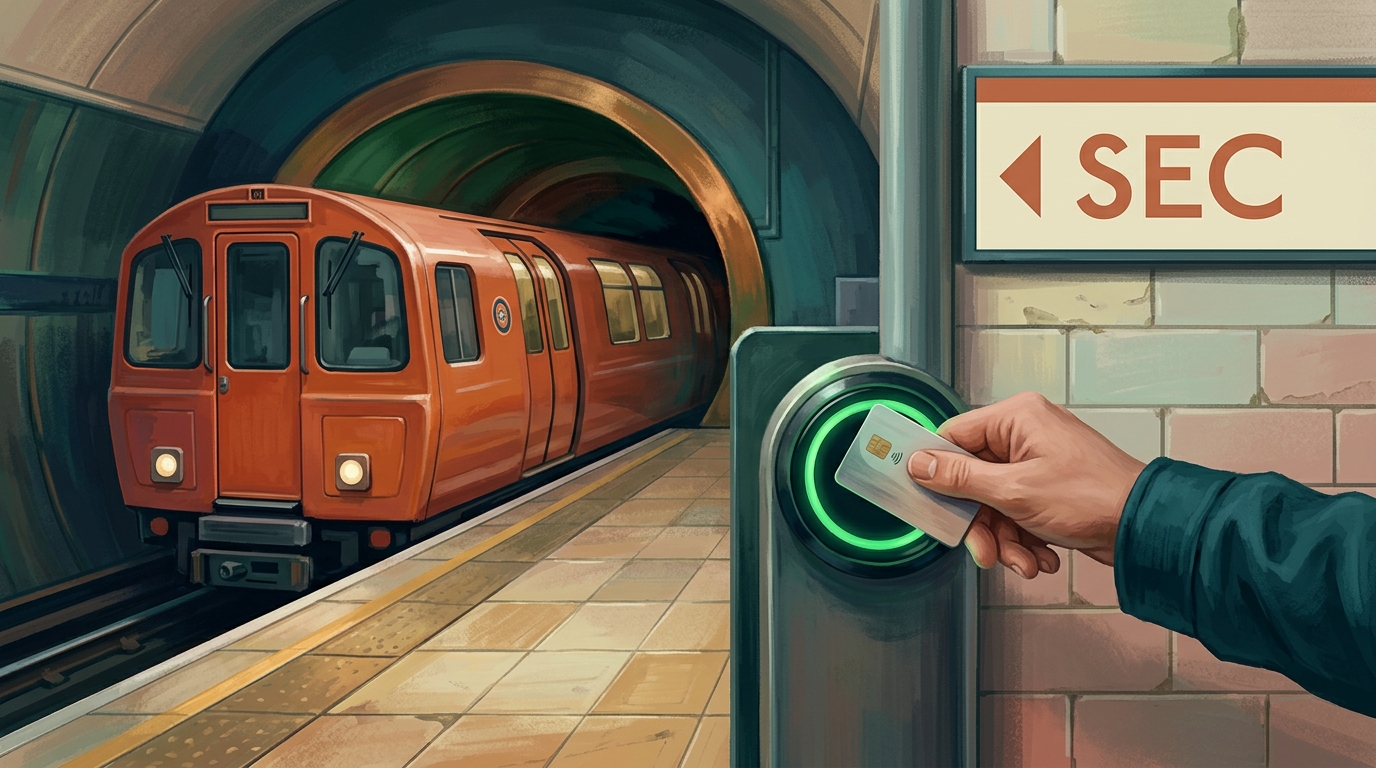
Your event ticket gets you into the venue, not onto a train, so build a few pounds of transport into each day. The good news: the compact city-centre footprint means short, cheap journeys on Glasgow's Subway, ScotRail trains and buses, with walking and cycling genuinely viable for local hops. Traffic Scotland's Games page spells it out: services run on ScotRail, the Glasgow Subway and First Bus, and "for local journeys, walking or cycling may be the best option."
The Subway is the cheapest way to cross the centre. As of 2026, fares from SPT are an adult single of £1.80 on a smartcard (£1.85 on a paper ticket) and an all-day ticket of £4.45 on paper or £3.40 on a smartcard. For venues on the rail network, ScotRail is laying on extra services for the Games, per its Commonwealth Games 2026 travel page.
| Mode | Typical cost | Best for |
|---|---|---|
| Glasgow Subway (all-day smartcard) | £3.40 | Hopping the city centre and SEC |
| Subway single (smartcard) | £1.80 | One-off short trips |
| ScotRail train | Short-hop fares | Scotstoun and Tollcross venues |
| Walking / cycling | £0 | Local journeys, beating the crowds |
Fares as of 2026: SPT and Traffic Scotland.
Load a Subway smartcard rather than buying paper tickets. The all-day smartcard fare is £3.40 versus £4.45 on paper, and you skip the queue every time you tap in during a busy Games day.
Your realistic daily spectator budget
A lean Games day in Glasgow costs roughly £80 to £90 once you stack a cheap session, a transit pass, food and a split room. The sourced building blocks are the ticket (£17 non-medal, STV News) and the Subway day pass (£3.40 smartcard, SPT); food and your share of a room are planning estimates you control. Here are three honest tiers.
| Tier | Ticket | Food + transport | Bed (your share) | Day total |
|---|---|---|---|---|
| Shoestring | £17 non-medal | ~£24 (cook + Subway) | ~£40 (group flat) | ~£81 |
| Standard | £26 medal | ~£40 | ~£70 (split apartment) | ~£136 |
| Comfort | £45+ | ~£60 | ~£120 (hotel) | ~£225 |
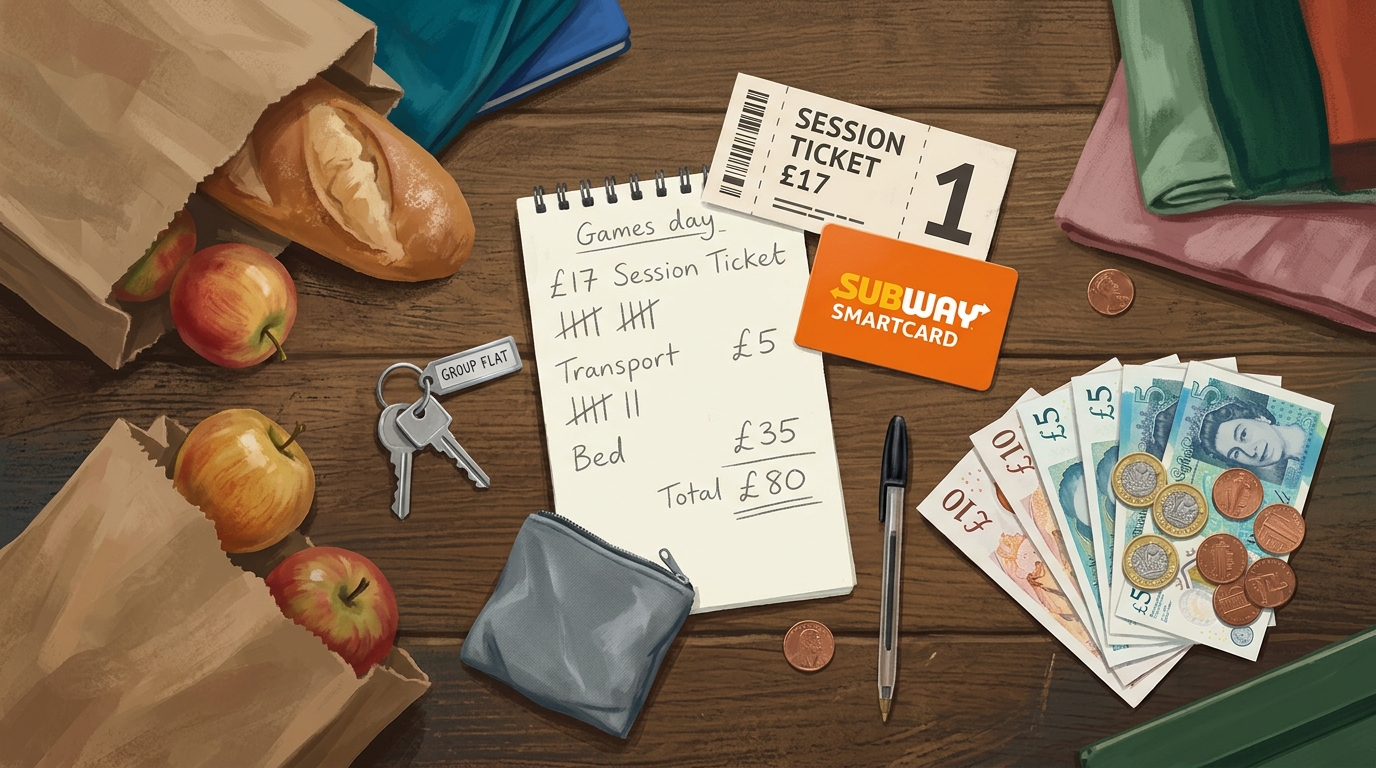
The food and accommodation numbers are estimates, not quoted prices, so treat them as a planning frame and adjust to your own bookings. The single biggest swing is the bed: a group flat at £40 a head versus a solo hotel at £120 is the difference between a shoestring and a comfort trip, which is why the accommodation section comes first.
Food is the other lever you fully control. If your base has a kitchen, a supermarket shop covers breakfasts and a packed lunch for venue days, which keeps you out of the captive food stalls inside the arenas where prices climb. Glasgow's centre is dense with cheap eats too, from bakeries to curry houses, so you are never far from a meal under a tenner. The pattern that works: cook or self-cater on session days, eat out on your rest day. Two sport-packed days plus a cheaper exploring day is a comfortable rhythm over a long weekend, and it stops the daily total creeping up without you noticing.
Plan the bed early, keep the tickets cheap, and let Glasgow's tight Games footprint do the rest. The reset Games reward the organised traveller more than almost any major event this summer. Edinburgh is under an hour away by train if you want to extend the trip, our 3-day Edinburgh itinerary covers the Old Town, Holyrood, and where to eat between sessions.
One more money note for visitors from the eurozone or beyond: pay in pounds, not your home currency, when a card terminal offers the choice, and use a card that doesn't sting you on conversion. Our breakdown of Revolut vs Wise vs your bank card abroad covers which cards actually save money on a UK trip.
Is the scaled-down Games worth the trip?
For a budget traveller, the reset format is a feature, not a compromise. Ten sports in a compact corridor means you can see world-class athletics and swimming in a single day, on £17 tickets, without the sprawl, transfers and inflated prices of a giant multi-week Games. The smaller scale is precisely what makes it affordable and easy to navigate.
The honest caveat: choice is narrower. If your heart was set on cricket, hockey or rugby sevens, they are not here. And because there is no athletes' village, Glasgow's room market is tighter than a normal summer, so the trip rewards planners and punishes last-minute bookers. If you book your bed early and target non-medal sessions, this is one of the cheapest ways to watch elite sport in Europe in 2026. If you're weighing it against other summer events, compare it with our budget guide to the August 2026 total solar eclipse in Spain and the FIFA World Cup 2026 budget travel guide.
Frequently Asked Questions
When are the Glasgow 2026 Commonwealth Games and what sports are on?
The Games run from 23 July to 2 August 2026. The programme is 10 sports: athletics, swimming, artistic gymnastics, track cycling, netball, weightlifting, boxing, judo, lawn bowls and 3x3 basketball, with para events integrated into six of them. All take place across four venues in an eight-mile city corridor.
How much do tickets cost and where do I buy them safely?
Non-medal sessions start at £17, medal sessions at £26, and concessions from £12. Buy only through glasgow2026.com, the Official Resale Platform, or an Authorised Ticket Reseller. Tickets bought anywhere else can be cancelled without a refund, so avoid general resale sites and private sellers entirely.
How bad will accommodation prices get?
Expect pressure on rooms because there is no athletes' village, so athletes fill city hotels. During the 2014 Glasgow Games, average rates hit £344 a night, a 158% spike. For 2026, book early and compare serviced apartments and student residences; group flats can drop your per-person cost well below a hotel.
Is transport included with my ticket, and how do I move between venues?
No, travel is not included. You pay separately for the Subway, ScotRail trains or buses. The four venues sit within an eight-mile corridor, so journeys are short. A Subway all-day smartcard is £3.40, and walking or cycling works well for local hops between central venues.
Can I still get tickets if I missed the first sale?
Yes. Tickets are non-refundable, so holders resell spares through the official face-value Resale Platform on glasgow2026.com. As of June 2026 it is the only legitimate resale channel, and because everything trades at face value, you pay no tout markup for buying late.
What is a realistic daily budget for a spectator?
A shoestring day runs around £80 to £90: a £17 non-medal ticket, a £3.40 Subway day pass, cooked or cheap food, and roughly £40 for your share of a group flat. A standard day with a medal session and a split apartment lands near £135. The bed is the biggest variable.
Key Takeaways
- The Glasgow 2026 Commonwealth Games run 23 July to 2 August, with 10 sports across four venues that sit within walking-and-a-short-hop of each other, making short, cheap days easy.
- Tickets are the cheap part: from £17 for non-medal sessions, £26 for medal sessions, £12 for concessions. Buy only through glasgow2026.com.
- There is no athletes' village, so hotels are tight. Book your bed first; the 2014 Games saw average rates hit £344 a night.
- Group flats and student residences (e.g. Unite Students) beat hotels on per-person cost, especially for four-plus travellers who can share a kitchen.
- Transport is not included with tickets, but the Subway (£3.40 all-day smartcard) and ScotRail make venue-hopping cheap; walking covers local trips.
- Missed first sale? The official face-value resale platform lets late buyers in with no markup. Target non-medal sessions for the most spare seats.
- Budget roughly £80 to £90 for a lean spectator day, and use a planning app like TripProf to split a group booking and track shared costs without drama.
Sources
- 2026 Commonwealth Games, Wikipedia: dates, 10-sport programme, four venues, no athletes' village, Victoria withdrawal, Glasgow confirmation, 500,000 tickets.
- Glasgow 2026 official venues page: the four venues and the "eight-mile corridor" description.
- Glasgow 2026 official tickets page: official sales channel.
- Glasgow 2026 ticket terms and conditions: authorised channels and void-ticket policy.
- STV News, October 2025: ticket prices from £17 and £26, concessions from £12, general sale 30 October.
- STV News, May 2026: opening ceremony pricing.
- Glasgow 2026 official sports page: the full 10-sport programme.
- Traffic Scotland, Commonwealth Games 2026: transport options and walking/cycling advice.
- ScotRail Commonwealth Games 2026: extra services and venue stations.
- SPT Subway tickets: 2026 Subway single and all-day fares.
- Unite Students, Glasgow Commonwealth Games 2026: group accommodation details and pricing structure.
- Restaurant Online, July 2014: 2014 hotel price spike (£344 average, 158% increase).
Last updated: July 3, 2026
Keep Reading
More travel tips and guides picked for you
Wizz Air and Ryanair are cutting Vienna flights: what to book instead
Wizz Air has fully left Vienna and Ryanair has cut five aircraft over Austria's aviation tax. Here's exactly what changed, why it happened, and how to still book a cheap flight this winter.
Mallorca's tourist tax hike got cancelled. Here's what a 2026 trip really costs
The Balearic tourist tax hike everyone's still warning about got cancelled in February. Here's what a week on Mallorca actually costs in 2026, flights, hotel, tax, and food, with real numbers.

The best value destinations for Swiss francs right now
The Swiss franc is near decade highs, and Switzerland just got confirmed as Europe's second priciest country. Here are eight real destinations, ranked by an official price index, where that gap is worth planning a trip around.