The Best Group Trip Destinations for 2027 (With Real Per-Person Budgets)

Key Highlights
- 1
- 2
- 3
+5 more in the takeaways below
Nine of you are staring at a shared spreadsheet. Someone just typed "$2,400 for four nights" next to a destination nobody's thrilled about. Two time zones over, a group of twelve friends split a five-bedroom villa in Bali to $73 a person, per night, kitchen included. Same idea, wildly different bill. Here's where the math actually favors you in 2027.
Nine destinations made this year's list of the best group trip destinations for 2027, each with a real per-person daily number instead of a guess, plus two 2027-specific shifts that change the math for anyone flying from the US.
Nine destinations, ranked from $35/day (Tbilisi, Bali) to €150-180/day mid-range (Barcelona), cover the real per-person cost of a 2027 group trip. Two 2027-specific shifts matter for the Europe legs: the dollar is forecast to soften against the euro and pound through the year, and ETIAS, the EU's new pre-travel authorization, has no confirmed launch date as of August 2026 after the EU postponed it indefinitely; treat any specific month you read, including an earlier April 2027 estimate, as provisional. For a group of six or more, a shared villa usually beats splitting hotel rooms. Tbilisi, Georgia joins the list for 2027 as the cheapest full-value entry, and it needs no ETIAS at all.
The Best Group Trip Destinations for 2027: The Money Math That Changed
Two concrete shifts affect what a 2027 group trip actually costs, and neither is hype. The US dollar is forecast to weaken against the euro and pound through the year, making Eurozone legs modestly pricier for dollar-based groups even before local inflation. And ETIAS, the EU's new pre-travel screening for visa-exempt travelers, will eventually be required for anyone flying into Budapest, Split, or Barcelona, once it launches.
ETIAS is not a visa.
It is a €20, short online form that most visa-exempt travelers (Americans, Britons, Canadians, and dozens of other nationalities) will need before entering 30 European countries, valid for up to three years or until your passport expires, whichever comes first, per the official EU ETIAS portal. The timeline has moved twice this year alone: a Forbes report in late July pointed to an April 2027 start, but on August 10 the EU dropped even that estimate and postponed the launch indefinitely, citing IT issues with the linked border system; officials now say a firm date will be announced only a few months before go-live. Nobody, including this article, can promise you an exact ETIAS date right now, the one certainty is that it will eventually apply to the Budapest, Split, and Barcelona legs below. Apply only through the official EU site; our ETIAS explainer for Americans walks through who is exempt and what to have ready.
The EU's own official warning flags dozens of copycat sites that mimic the ETIAS portal to charge inflated "service fees" or harvest personal data. There is exactly one official site: travel-europe.europa.eu. Bookmark it now, before the group needs it.
The currency math moves in the same direction. Multiple bank forecasts tracked by exchangerates.org.uk put USD/EUR sliding from roughly 0.853 in early 2027 to 0.843 by year's end, fewer euros per dollar as the year goes on. A similar drift shows up in the site's pound forecast. Individual banks disagree on the exact number and revise their calls often, but the direction across forecasters is consistently the same: a softer dollar against both currencies through 2027.
But none of this is a reason to skip Europe. It is a reason to book the euro legs of a 2027 trip earlier rather than later, and to use a no-markup card instead of your home bank's exchange rate; our guide to bank cards abroad covers which ones hold up. For a group spread across five or six currencies by the end of this list, that is less a vibe and more a logistics problem, which is exactly why tools like TripProf build multi-currency expense splitting into the same place as the itinerary instead of leaving you to stitch together a spreadsheet, a splitting app, and a group chat.
Every number below is a per-person daily figure covering lodging, food, local transport, and typical activities, split evenly across the group. Flights are excluded because they depend entirely on your home airport. "Budget" assumes a hostel dorm or a shared budget apartment and mostly local food; "mid-range" assumes a private room or a split hotel, restaurant meals, and paid attractions without rationing them. Group size moves both numbers more than the destination does, which is exactly why the villa math further down matters as much as the city you pick.
Here is how the nine destinations stack up before the specifics.
| Destination | Budget / day (per person) | Mid-range / day (per person) | The one thing to know | Source |
|---|---|---|---|---|
| Tbilisi, Georgia | $35-50 | $70-120 | New for 2027 No ETIAS needed | Caucasus Unlock |
| Bangkok, Thailand | $42-70 | $85-142 | Street food is cheap; taxis add up fast | Machu Picchu Travel |
| Budapest, Hungary | $35-65 | $70-140 | ~40-50% cheaper than Western Europe | Radical Storage |
| Mexico City, Mexico | $40-60 | $80-120 | Metro is $0.30 a ride | Machu Picchu Travel |
| Bali, Indonesia | $35 | $110-121 (villa split) | Villa math wins above 6 people | Bali.com, The Luxury Bali |
| Medellin + Cartagena, Colombia | $40-65 | $80-140 | Cartagena runs 40-60% above Medellin | Medellin guide, Cartagena guide |
| Split, Croatia | €50-80 | €100-150 | Off-season cuts rooms 40-60% | Machu Picchu Travel |
| Barcelona, Spain | €80 | €150-180 | Rising tourist tax | Radical Storage |
| Seoul, South Korea | 40,000-76,000 KRW | 110,000-195,000 KRW | Dorm beds from 20,000 KRW | K-Insider |
Three patterns stand out. Tbilisi and Bali tie for the cheapest floor, but Tbilisi's ceiling stays lower: even a comfortable mid-range week rarely tops $120 a day. Bangkok's reputation as an ultra-budget city is dated; current mid-range spending there sits closer to Mexico City than to old Southeast Asian backpacker lore. And Barcelona is the only destination on this list that is getting more expensive by policy, not by inflation.

Tbilisi, Georgia
New to this list, Tbilisi wins on pure floor price. Budget travelers report $35 to $50 a day, and Caucasus Unlock's 2026 cost breakdown puts independent mid-range travel at $70 to $120; real trip-reported averages, a blend of budget and mid-range days across Tbilisi and the regions, run lower, around $56 to $85 based on 2024 trip data. A private guesthouse room in Tbilisi runs 70 to 110 GEL a night, roughly $27 to $42, and a full khinkali dumpling meal with a glass of house wine costs $5 to $10 a person. None of that requires ETIAS or a Schengen visa: Georgia sits outside the EU entirely, which is part of why it is quietly becoming the group-trip answer to "somewhere new that still feels affordable." The old $30-to-$40-a-day reputation is dated regardless of which number you use; Wander-Lush's 2026 review independently puts Georgia's mid-range at $80 to $140 a day and notes the country "is no longer a backpacker outlier in the way it once was" after several years of rising food and lodging costs. Budget for the higher end, not the old backpacker rate. Tbilisi is also an easy add-on for a group already flying through several European hub cities, which matters more for a long-weekend itinerary than for a longer one.
Bangkok, Thailand
Bangkok's decades-old reputation as a $15-a-day city is the thing to unlearn first. A 2026 cost breakdown from Machu Picchu Travel puts a realistic budget day at $42 to $70 per person, and a mid-range day (real hotel, real restaurants, a couple of paid attractions) at $85 to $142. Street food is still genuinely cheap, a plate of pad see ew or a bowl of boat noodles runs a dollar or two, but transport, air-conditioned hotels, and rooftop bars have caught up with the rest of Southeast Asia. Bangkok still earns its spot: it is the only Asian megacity on this list where a group can eat like royalty every night and still land in the middle of the pack on the table above. Sukhumvit and Thonglor cover the modern, walkable side of the city if your group wants nightlife within stumbling distance of the hotel. Americans currently get visa-free entry to Thailand for 60 days. Thailand's cabinet approved cutting that to 30 days back in May 2026, but as of August 2026 the change is still awaiting publication in the Royal Gazette and has not taken effect, worth checking again before locking in a longer group itinerary.
Budapest, Hungary
Ask a group where to go in Europe without breaking the bank, and Budapest comes up first: a real European capital, real thermal baths and ruin bars, and a bill that would make a Parisian laugh. A 2026 guide from Radical Storage puts budget travel at $35 to $65 a day and mid-range at $70 to $140, with the city running roughly 40 to 50 percent cheaper than Western European capitals like Paris, London, or Berlin. That gap is the whole pitch for a friend group split between someone who wants a hostel bunk and someone who wants a proper hotel room: both get what they want in the same city without a fight over the group budget. One 2027 wrinkle: Hungary sits inside the Schengen zone, so this is one of the three legs on this list where ETIAS applies (see above). District VII, the Jewish Quarter, puts ruin bars, cheap eats, and most short-term rentals within walking distance of each other, which matters more for a group of eight than any single price line.

Mexico City, Mexico
A group's phone habits matter more than their itinerary in Mexico City. Machu Picchu Travel's 2026 breakdown puts budget travel at $40 to $60 a day and mid-range at $80 to $120, and the single biggest lever inside those numbers is transport choice: a Metro ride costs a flat 5 pesos, about $0.30, while Uber or Didi runs $3.50 to $5.50 for a typical cross-neighborhood trip. A group that defaults to rideshare instead of the Metro can add $10 to $15 a person, per day, without anyone noticing. Roma Norte and Condesa cover the walkable, restaurant-dense middle ground most friend groups actually want, and neither requires a car. Mexico City's high altitude also means a heavy first night out tends to hit harder than groups expect; pace it accordingly.
Bali, Indonesia
Group size flips the whole equation in Bali. A solo traveler can get by on $35 a day, per Bali.com's cost guide, but the real group-trip value is in the villa split, not the solo backpacker rate. Per The Luxury Bali's 2026 price index, a five- or six-bedroom pool villa runs $879 to $970 a night in low season (rising to $1,126-$1,219 in high season); split among a group of eight, that works out to roughly $110 to $121 a person, per night, private chef and daily housekeeping typically included. That frequently lands below what the same group would pay for six or seven separate hotel rooms once resort fees stack up (more on that math further down). Canggu skews younger and surfier, Seminyak is more polished and closer to restaurants, and either works as a group base in Bali since most activities happen by car or scooter anyway.
Medellin + Cartagena, Colombia
Pairing these two cities is the move, not picking one. Medellin runs $40 to $60 a day for budget travelers and $80 to $120 mid-range, per Machu Picchu Travel's 2026 guide, with a Metro system that makes car-free group logistics genuinely easy. Cartagena costs more: $40 to $65 budget, $90 to $140 mid-range, and runs 40 to 60 percent higher than Medellin, Bogota, or Cali in comparable tourist zones, per a separate Machu Picchu Travel breakdown. The practical split for a ten-day group trip: five or six nights in Medellin's Poblado or Laureles for the cheaper base, then three or four on Cartagena's walled-city coast for the splurge, so the group's average lands closer to Medellin's numbers than Cartagena's. A short domestic flight connects the two cities, so the mid-trip transfer barely eats into the schedule.
Split, Croatia
For the price of an inland European city, Split delivers an actual Mediterranean coastline, provided the group avoids the July and August price spike. A 2026 cost breakdown from Machu Picchu Travel puts budget travel at €50 to €80 a day and mid-range at €100 to €150, and notes that off-season visits, November through March, cut accommodation costs 40 to 60 percent compared to peak summer. Split also sits inside Schengen, so ETIAS applies here too. For a group that can be flexible on dates, this is the single biggest lever on this entire list: the same waterfront apartment that costs €150 a night in August can run €60 to €90 in the shoulder months. Split also doubles as the ferry hub for Hvar and Brac, so a group that wants one island day built in does not need to change home bases.

Barcelona, Spain
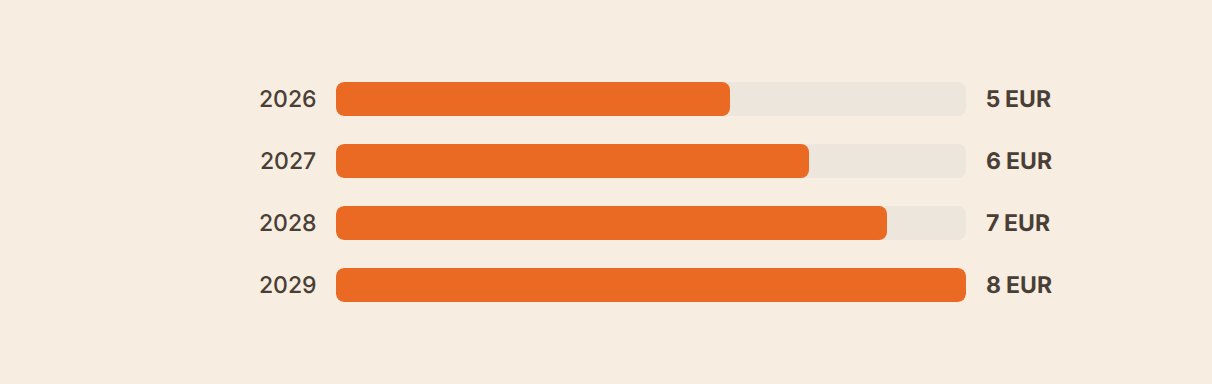
Expect Barcelona to be the priciest stop on this list, and the only one where the cost is climbing on purpose, not by accident. Radical Storage's 2026 guide puts budget travel at €80 a day and mid-range at €150 to €180. On top of that, the city's tourist tax structure changed on April 1, 2026: the Barcelona surcharge rose from €4 to €5 a night and is scheduled to keep climbing, €6 in 2027, €7 in 2028, €8 by 2029, stacking on top of Catalonia's regional rate (up to €7 a night for five-star stays), per Travel Weekly's reporting. That is a real, city-council-mandated cost, not local color, and it is worth checking again close to your travel dates; our guide to Europe's rising tourist taxes covers where else this is happening. Gracia and El Born offer a quieter, more residential base than Las Ramblas, worth the short taxi ride if your group actually wants to sleep.
Seoul, South Korea
By sticker price, Seoul is the most expensive stop on this list, and the best value once you count what's actually included. According to K-Insider's 2026 guide, budget travelers spend roughly 40,000 to 76,000 KRW a day, while mid-range runs 110,000 to 195,000 KRW. Dorm beds in guesthouses start around 20,000 to 40,000 KRW a night, and the city's subway, one of the most extensive and reliable in the world, makes it realistic to skip taxis entirely. For a group that wants K-pop, Michelin-level Korean barbecue, and genuinely walkable neighborhoods without renting a car once, Seoul is the closing argument. Hongdae and Itaewon both cluster enough guesthouses within a few blocks that a group of eight can split into two or three rooms without anyone commuting to breakfast.

Villa vs. Hotel: The Group Math That Actually Matters
Most "is a villa cheaper" comparisons quietly rig the math by pricing a villa against a single hotel room for four people. That is not how anyone actually books a group trip. The real break-even point for splitting a villa instead of hotel rooms lands around six to eight people. Below that, hotels usually win on flexibility and cancellation terms. Above it, a shared kitchen and one set of common spaces start doing real work on the bill.
Not four people. Six to eight.
The Bali numbers above make the case on their own: a $970-a-night pool villa splits to roughly $121 a person for a group of eight, well under what eight separate hotel rooms would run in the same neighborhood. That pattern holds destination to destination. Your actual break-even point depends on the specific villa, the season, and how strict its cancellation policy is, so treat six to eight people as a starting rule, not a guarantee. The gap tends to widen the longer the trip runs: a villa's cleaning fee is fixed regardless of length of stay, while six separate hotel rooms each carry their own nightly resort fee.
- Group size confirmed at 6 or more before comparing villa vs. hotel pricing
- Cleaning fee and deposit checked against the total, not just the nightly rate
- Kitchen confirmed usable, not decorative, if you're counting on cooking to save money
- Cancellation policy compared: villas are typically stricter than hotel chains
- One person owns the shared expense tracker before the trip starts, not after
Run through that list before anyone sends a deposit, not after. The one item groups skip most often is the cleaning fee.
Ask for the villa's total price including cleaning fee and deposit before comparing it to a per-night hotel rate. That fee is fixed regardless of trip length, so it matters more on a 3-night trip than a 10-night one.
The math holds whether your group ends up in a jungle villa or a city apartment; it is the group size and the length of stay that move the needle, not the destination.

Once the destination and villa are booked, splitting costs fairly becomes its own small project. Our guide to splitting trip costs without drama covers the actual methods, and if your group is still choosing tools, our comparison of group travel planning apps covers which ones handle multiple currencies well and which do not.
Frequently Asked Questions
What's the ideal group size for a group trip?
Six to eight people is the sweet spot: large enough to unlock villa pricing and split-cost savings, small enough that everyone can still agree on a restaurant without a vote. Below four, hotels usually win on cost and flexibility. Above ten, logistics like one villa, one van, one dinner reservation start working against you.
How do you split costs fairly among friends?
The cleanest method is one shared pot: everyone contributes an agreed amount upfront, and every group expense (accommodation, groceries, shared activities) comes out of that pot, with individual spending tracked separately. It removes the per-transaction math that causes most group-trip arguments.
Is a villa actually cheaper than a hotel for a group?
Usually, once the group hits six to eight people. Below that, per-person villa costs often land close to or above a hotel room split, especially once you count a villa's fixed cleaning fee against a short stay.
How far in advance should a group book a 2027 trip?
Four to six months for shoulder-season Europe or Southeast Asia trips, and up to nine months if the group wants a specific villa size in Bali or a Barcelona stay during peak summer, when both inventory and the tourist tax calculation matter most.
Do Americans need ETIAS to visit Europe with friends in 2027?
Not yet, and not on a confirmed date. The EU postponed ETIAS's launch indefinitely in August 2026 after earlier pointing to April 2027; officials say a firm date will be announced only a few months before it goes live. Check the official EU ETIAS site directly before booking, and don't lock your plans to any specific month you read online, including this one.
How does a weaker dollar affect a 2027 Europe trip budget?
It makes the same euro price tag cost more in dollars. Multiple bank forecasts point to the dollar buying fewer euros through 2027 than it does today, which mainly affects the Budapest, Split, and Barcelona legs of a trip like this, not the Asia or Latin America stops.
What's a realistic per-person daily budget for a week with friends?
Anywhere from $35 a day (Tbilisi, Bali) to €150-180 a day (Barcelona, mid-range), depending on the destination and comfort level. Budget $50 to $90 a day as a workable middle ground across most of the destinations on this list.
Key Takeaways
- Tbilisi and Bali tie for the cheapest floor on this list, both around $35 a day, but Tbilisi's mid-range ceiling stays lower and needs no ETIAS.
- Villa splitting beats hotel rooms once a group hits six to eight people; below that, hotels are usually the better deal.
- Barcelona's tourist tax is rising on a published schedule, €6 in 2027, €7 in 2028, €8 by 2029, not by inflation, so recheck it close to your travel dates.
- ETIAS is not required yet, and the EU postponed its launch indefinitely in August 2026 with no new date set. Check the official EU site close to your travel dates instead of planning around a specific month.
- The dollar is forecast to buy fewer euros through 2027, which nudges the Budapest, Split, and Barcelona legs of a Europe trip modestly pricier even before local price changes.
- Split's shoulder season, November through March, cuts accommodation costs 40 to 60 percent, the single biggest lever on this list for a flexible group.
- Coordinating a group spread across five or six currencies is a logistics problem, not a group-chat problem; a shared, multi-currency expense tracker, the kind built into apps like TripProf, keeps the trip in one place instead of four separate apps.
- Book the euro-zone legs of a 2027 trip earlier rather than later. Everything else on this list still rewards waiting for a shoulder-season deal.
Sources
- Official EU ETIAS Portal: travel-europe.europa.eu/en/etias
- Official EU Warning on Unofficial ETIAS Websites: travel-europe.europa.eu
- Forbes, "Traveling To Europe? ETIAS Is Delayed As EES Queues Bite" (July 2026): forbes.com
- Euronews, "Europe Has Officially Delayed The Roll-Out Of The ETIAS Travel Permit Indefinitely" (Aug 2026): euronews.com
- OpenJaw, "EU Delays Launch Of ETIAS Indefinitely" (Aug 2026): openjaw.com
- exchangerates.org.uk, Dollar to Euro Forecast: exchangerates.org.uk
- exchangerates.org.uk, Dollar to Pound Forecast: exchangerates.org.uk
- Caucasus Unlock, Georgia Budget Per Day: caucasusunlock.com
- Wander-Lush, Georgia Travel Budget and Costs: wander-lush.org
- Machu Picchu Travel, Bangkok Budget Guide 2026: machupicchu.org
- Radical Storage, Is Budapest Expensive: radicalstorage.com
- Machu Picchu Travel, Mexico City Budget Guide 2026: machupicchu.org
- Bali.com, Cost of Traveling in Bali: bali.com
- The Luxury Bali, Bali Villa Price Index: theluxurybali.com
- Machu Picchu Travel, Medellin Budget Guide 2026: machupicchu.org
- Machu Picchu Travel, Cartagena Budget Guide 2026: machupicchu.org
- Machu Picchu Travel, Cartagena Budget Guide 2026: machupicchu.org
- Machu Picchu Travel, Split Budget Guide 2026: machupicchu.org
- Radical Storage, Is Barcelona Expensive: radicalstorage.com
- Travel Weekly, Barcelona to Double Tourist Tax and Increase Surcharge from April: travelweekly.co.uk
- K-Insider, Seoul Travel Budget Guide 2026: k-insider.com
Keep Reading
More travel tips and guides picked for you

What a Friendsgiving trip actually costs, and how to split it fairly
Eight friends, one cabin, one long weekend before Thanksgiving: here's what a real Friendsgiving getaway costs per person, and a simple way to split it before anyone starts keeping score.

The Group Trip Questionnaire: 16 Questions to Ask Before Anyone Books
Most group trips break on four answers: flexible, easygoing, whatever works, and around $2k. Here are 16 questions that make all four impossible to give, what each answer is really for, and a copy-paste template to send before anyone books.

How Many States Have You Visited? One Retiree's Real Answer (And How to Find Yours)
A 58-year-old retiree paints his USA map for the first time and finds a very different number than he guessed. The real YouGov stats, the honest limits, and how to track your own states visited checklist.