Best Flight-Approved Power Banks for 2026: What You Can (and Can't) Bring After the New ICAO Rules
You settled into your seat, plugged your phone into a power bank, and a flight attendant told you to unplug it. Right now. That's the reality of flying in 2026. New ICAO global restrictions went into effect on March 27, 2026, and they affect every passenger on every commercial flight across 193 member states. If you don't know the new limits, your best power bank for flights could get confiscated before you board.
New ICAO rules (effective March 27, 2026) limit passengers to 2 power banks, ban in-flight charging, and require seat-pocket or under-seat storage. Under 100 Wh: no approval needed. 100-160 Wh: airline approval required. Over 160 Wh: banned. Most airlines also prohibit using power banks to charge devices in-flight. Best picks: Anker Nano 10K (~37 Wh, ~$50) for phones, Anker Prime 26K (~99.7 Wh, ~$230) for laptops. Charge everything before boarding.
What Changed on March 27, 2026: The New ICAO Power Bank Rules
The ICAO's updated Technical Instructions for the Safe Transport of Dangerous Goods by Air introduced three hard rules that apply globally. These aren't guidelines or suggestions. They're binding standards for all 193 ICAO member states, which covers virtually every commercial airline you'll fly.
Here's exactly what the new rules say:
- Maximum 2 power banks per passenger in cabin baggage. No exceptions, no workarounds.
- No charging power banks during flights. You can't plug them into the in-seat USB ports, aircraft power outlets, or any onboard power source. On airlines that have banned in-flight use (which is most of them now), you also can't use them to charge your phone or laptop.
- Storage in seat pocket or under the seat only. Overhead bins are off-limits for power banks. The logic: if a battery catches fire in a seat pocket, the crew can see it and respond immediately. In an overhead bin, a fire could spread undetected.
One rule hasn't changed: power banks are banned from checked baggage. Always have been, and the new rules reinforce this. If security finds one in your checked bag, it gets pulled and you might delay the entire flight.
Crew members are exempt from these restrictions for operational needs, but passengers aren't.
Many travelers assume the "no charging" rule only applies to charging the power bank itself. On most airlines, it also means you can't use the power bank to charge your phone or earbuds during the flight. Check your specific airline's policy before you fly.
Why This Happened: The Air Busan Fire That Changed Everything
These rules didn't appear out of nowhere. On January 28, 2025, an Air Busan Airbus A321 preparing to depart Gimhae Airport in South Korea caught fire. All 176 people on board evacuated, 27 were injured, and the aircraft was completely destroyed. Investigators later traced the fire to a lithium-ion power bank stored in an overhead compartment. A short circuit caused by a failure in the battery's internal insulation turned an ordinary carry-on item into an inferno.
That single incident triggered a global regulatory response. South Korea moved first, banning power banks from overhead bins on all domestic carriers by March 2025. Then airlines across Asia-Pacific followed. Then ICAO stepped in with binding global standards.
- January 28, 2025 Air Busan A321 destroyed by power bank fire at Gimhae Airport, South Korea. 27 injured.
- March 2025 South Korea bans power banks in overhead compartments on all domestic carriers.
- April 1, 2025 Singapore Airlines bans in-flight power bank use across all flights.
- December 2025 Qantas and Virgin Australia ban in-flight power bank use, limit to 2 per passenger.
- January 15, 2026 Lufthansa Group bans in-flight power bank use across all carriers.
- January 26, 2026 Korean Air + Hanjin Group (5 airlines) ban in-flight power bank use.
- March 27, 2026 ICAO global rules take effect: max 2, no charging, seat pocket or under-seat storage only.
- April 15, 2026 Singapore's CAAS regulation enforces 2-power-bank limit on all flights departing Changi Airport, regardless of airline.
The FAA's own data tells the broader story. In 2024 alone, the FAA recorded 89 lithium battery incidents involving smoke, fire, or extreme heat on US flights. That was a record, and a 16% increase over the previous year. Power banks, phones, and e-cigarettes were the most common sources.
The Capacity Question: mAh, Watt-Hours, and What's Actually Allowed
The single biggest source of confusion in 2026 is the difference between milliamp-hours (mAh) and watt-hours (Wh). Airlines and regulators set limits in watt-hours, but manufacturers market power banks in mAh. These are not the same thing, and confusing them can get your power bank confiscated at security.
Here's the simple formula. Multiply your power bank's mAh by its voltage (almost always 3.7V for lithium-ion), then divide by 1,000:
Wh = (mAh × 3.7) ÷ 1,000
So a 20,000 mAh power bank at 3.7V equals 74 Wh. Well under the 100 Wh limit. A 27,000 mAh power bank? That's 99.9 Wh. Still under, but barely. And a 50,000 mAh unit hits 185 Wh, which means it's completely banned from any passenger aircraft.
The three regulatory tiers haven't changed from previous years, but enforcement is much stricter now:
| Capacity | Approx. mAh Equivalent | Status | What You Need |
|---|---|---|---|
| Under 100 Wh | Up to ~27,000 mAh | Allowed | No airline approval needed |
| 100-160 Wh | ~27,000-43,000 mAh | Approval Required | Prior airline approval, max 2 per passenger |
| Over 160 Wh | Above ~43,000 mAh | Banned | Cannot fly on any passenger aircraft |
The math matters because many popular high-capacity power banks sit right at the boundary. The Anker Prime 26,250 mAh comes in at 99.75 Wh by design. That's not a coincidence. Manufacturers intentionally engineer their flagship models to slip just under the 100 Wh line.
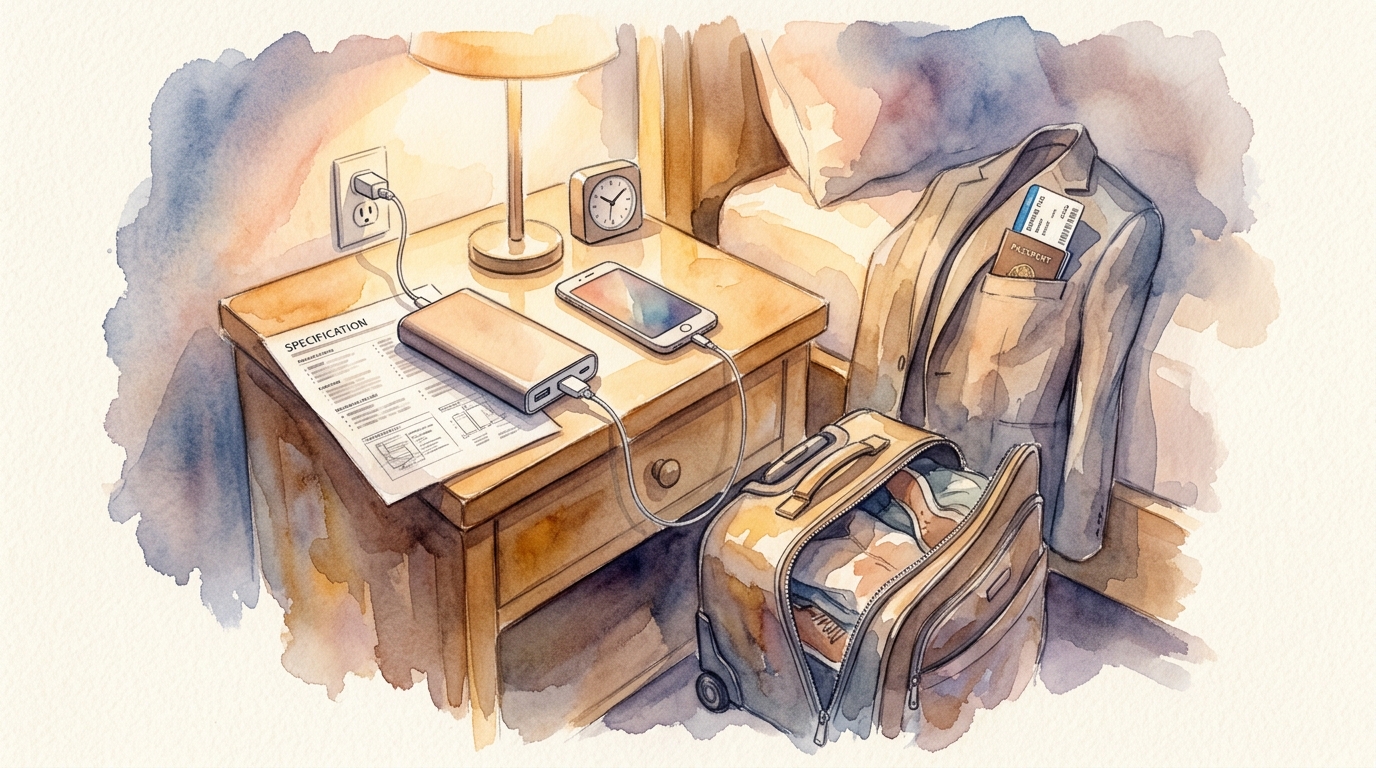
If your power bank only shows mAh, check the fine print on the back or bottom for the Wh rating. If it shows neither, look up the exact model on the manufacturer's website and print the spec sheet before you fly. An unlabeled power bank is the most common reason for confiscation at security.
Airline-by-Airline Breakdown: Who Bans What
The ICAO rules set the floor, but individual airlines and countries can go further. And many have. The patchwork of rules is the most frustrating part for travelers in 2026, especially if you're connecting through multiple countries on a single itinerary.
Here's where every major airline group stands right now:
| Airline / Group | In-Flight Use | In-Flight Charging | Max Qty | Effective |
|---|---|---|---|---|
| Lufthansa Group (LH, LX, OS, SN, EW, ITA, WK, EN) | Banned | Banned | 2 | Jan 15, 2026 |
| Korean Air + Hanjin (KE, OZ, 7C, BX, RS) | Banned | Banned | 2 | Jan 26, 2026 |
| Qantas + Jetstar | Banned | Banned | 2 | Dec 15, 2025 |
| Virgin Australia | Banned | Banned | 2 | Dec 1, 2025 |
| Singapore Airlines | Banned | Banned | 2 | Apr 1, 2025 |
| CAAS (all Singapore departures) | Banned | Banned | 2 | Apr 15, 2026 |
| Japan (all carriers) | Banned | Banned | 2 | Apr 2026 |
| T'way Air | Banned | Banned | 5 | 2026 |
| ICAO baseline (all others) | Varies | Banned | 2 | Mar 27, 2026 |
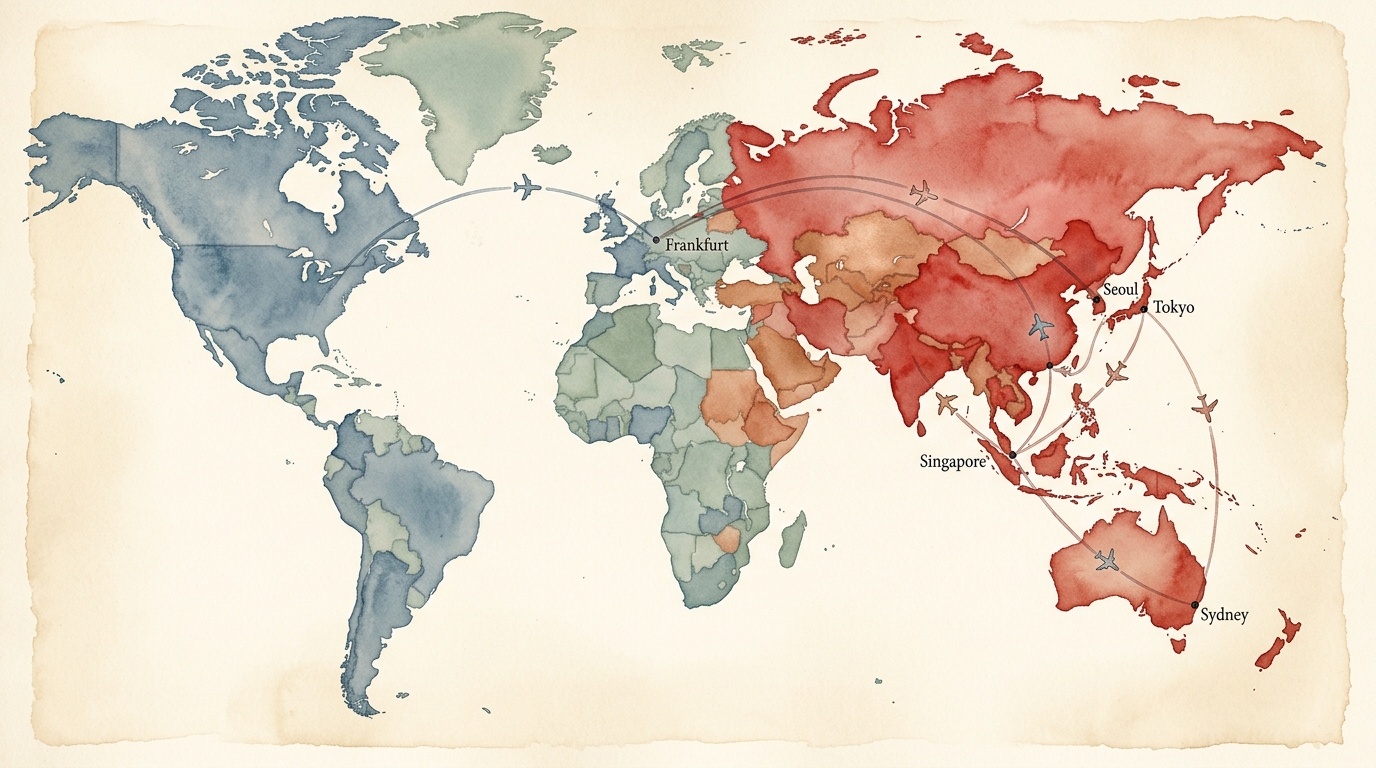
A few things stand out. T'way Air still allows up to 5 power banks per passenger, which exceeds the ICAO's 2-unit recommendation. But even T'way bans in-flight use and charging. Singapore Airlines actually banned in-flight power bank use from April 1, 2025, making it one of the earliest movers. The CAAS's April 15, 2026 regulation goes further, applying a 2-power-bank quantity limit to all flights departing Changi Airport regardless of airline. Japan's ban covers all carriers operating to, from, and within Japan, including foreign airlines in transit.
If you're planning a multi-city trip across Europe or connecting through Asian hubs, the safest approach is to assume the strictest rules apply for your entire journey: 2 power banks maximum, no in-flight use, no charging, everything in your seat pocket.
The 4 Best Flight-Approved Power Banks for 2026
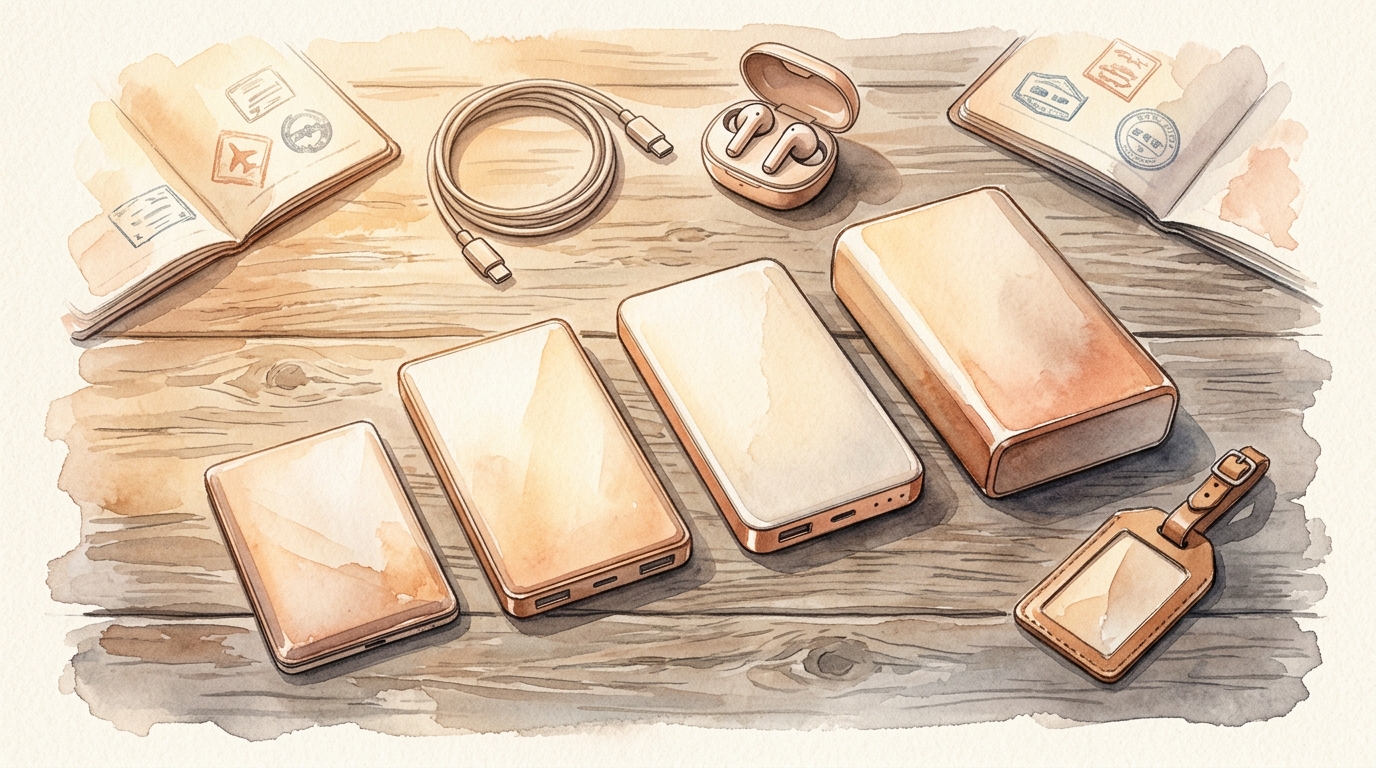
With the rules settled, the question becomes: which power banks give you the best combination of capacity, charging speed, and compliance? After testing availability, verifying specs against the new ICAO limits, and checking real-world user feedback, these four cover every travel scenario from a weekend city break to a laptop-heavy work trip.
We narrowed from a wider field of TSA-approved options by prioritizing verified spec compliance with the new 100 Wh limit, built-in cables (one less thing to forget), and availability across major US and EU retailers. We have no affiliate relationships with any manufacturer listed here.
1. Anker Nano Power Bank (10,000 mAh, 30W) — Best All-Rounder
At just ~37 Wh, this sits comfortably in the no-approval-needed zone. The Anker Nano 10K includes a built-in USB-C cable and a USB-A port, delivers 30W output via USB-C PD, and weighs 7.58 oz (215g). It charges an iPhone to 50% in about 30 minutes. The display shows remaining battery and charging status at a glance.
Price: $49.99 (frequently on sale for ~$30)
Best for: Phone-only travelers who want something light enough to forget it's in their bag.
2. Anker Prime Power Bank (26,250 mAh, 300W) — Best for Laptops
This is the power bank for travelers who need to charge a MacBook or a Surface. At 99.75 Wh, it's engineered to be the largest possible capacity without requiring airline approval. Three ports (two USB-C, one USB-A), 300W total output, and it recharges itself to 50% in 13 minutes with the right adapter. It'll push a MacBook Pro (M4 Pro) to 50% in 27 minutes.
Price: $229.99 (regularly drops to $170 on Amazon)
Best for: Remote workers, digital nomads, and anyone who needs their laptop alive after a long-haul.
3. UGREEN Nexode Pro (10,000 mAh, 45W) — Best Compact Option
UGREEN claims this is over 60% smaller than an iPhone 17 Pro Max, and at ~37 Wh it's well within the safe zone. It delivers 45W USB-C fast charging, includes a built-in braided cable that doubles as a wrist strap, and has a digital display. It charges a Galaxy S25 Ultra to 65% in 30 minutes.
Price: $54.99
Best for: Travelers who want more charging speed than the Anker Nano in an equally small package.
4. Clutch Pro USB-C (5,000 mAh): Best Ultra-Portable
If you want a power bank you can literally forget about, the Clutch Pro is it. At just 0.32 inches thin and 3.7 oz (105g), it's smaller than most wallets. The 5,000 mAh (18.5 Wh) capacity won't fully charge a modern phone, but it'll add 50-60% when you need it. Built-in USB-C cable, MagSafe-compatible magnet, and completely invisible in a pocket.
Price: $49.99
Best for: Light packers, short flights, or as a backup alongside a larger bank. If you're someone who follows smart packing strategies, this barely registers in your luggage.
| Power Bank | Capacity | Watt-Hours | Output | Price |
|---|---|---|---|---|
| Anker Nano 10K | 10,000 mAh | ~37 Wh | 30W USB-C PD | $49.99 |
| Anker Prime 26K | 26,250 mAh | 99.75 Wh | 300W (3-port) | $229.99 |
| UGREEN Nexode Pro | 10,000 mAh | ~37 Wh | 45W USB-C | $54.99 |
| Clutch Pro USB-C | 5,000 mAh | 18.5 Wh | 15W USB-C | $49.99 |
Prices are approximate and current as of April 2026. Check manufacturer sites for the latest pricing.
All four are under 100 Wh, which means no airline pre-approval needed. All have visible capacity labels on the casing. And none of them will raise a single eyebrow at airport security.
Will My Power Bank Pass? A Pre-Flight Decision Tree
You're packing the night before your flight, and you're staring at that power bank in your drawer. Maybe the label is scratched off. Maybe you don't remember the capacity. Maybe you bought it at a night market in Bangkok three years ago and it just says "SUPER POWER 50000" in Comic Sans. Here's how to figure out if it flies.
- Find the capacity label Look on the back or bottom of your power bank for a printed Wh or mAh rating. If you find Wh and it's under 100, you're good. Skip to step 4.
- Convert mAh to Wh If you only see mAh, use the formula: (mAh × 3.7) ÷ 1,000 = Wh. Under 100 Wh? You're fine. Between 100-160 Wh? Contact your airline for pre-approval. Over 160 Wh? Leave it at home.
- No label at all? Search the model number on the manufacturer's website and screenshot the spec page. Print it if you can. Without any capacity marking, security can and will confiscate it, regardless of actual capacity.
- Check your airline's specific rules Use the table above or check your airline's website directly. Some airlines (like Singapore Airlines from April 15, 2026) have stricter rules about in-flight use.
- Pack it in your carry-on Never in checked luggage. Never. Keep it accessible for security screening. On board, store it in your seat pocket or under the seat in front of you.
One more thing that catches people off guard: if you're traveling with a companion and you each have 2 power banks, that's fine. The limit is per passenger, not per booking. But if one person is carrying 3 power banks, that third one is getting confiscated even if the other person has zero.
The AirPods Problem (and What to Do About It)
Here's the angle nobody's talking about enough. If you can't use a power bank during a 14-hour flight, and your AirPods Pro battery lasts about 6 hours with noise cancellation on, what do you do for the second half of the flight?
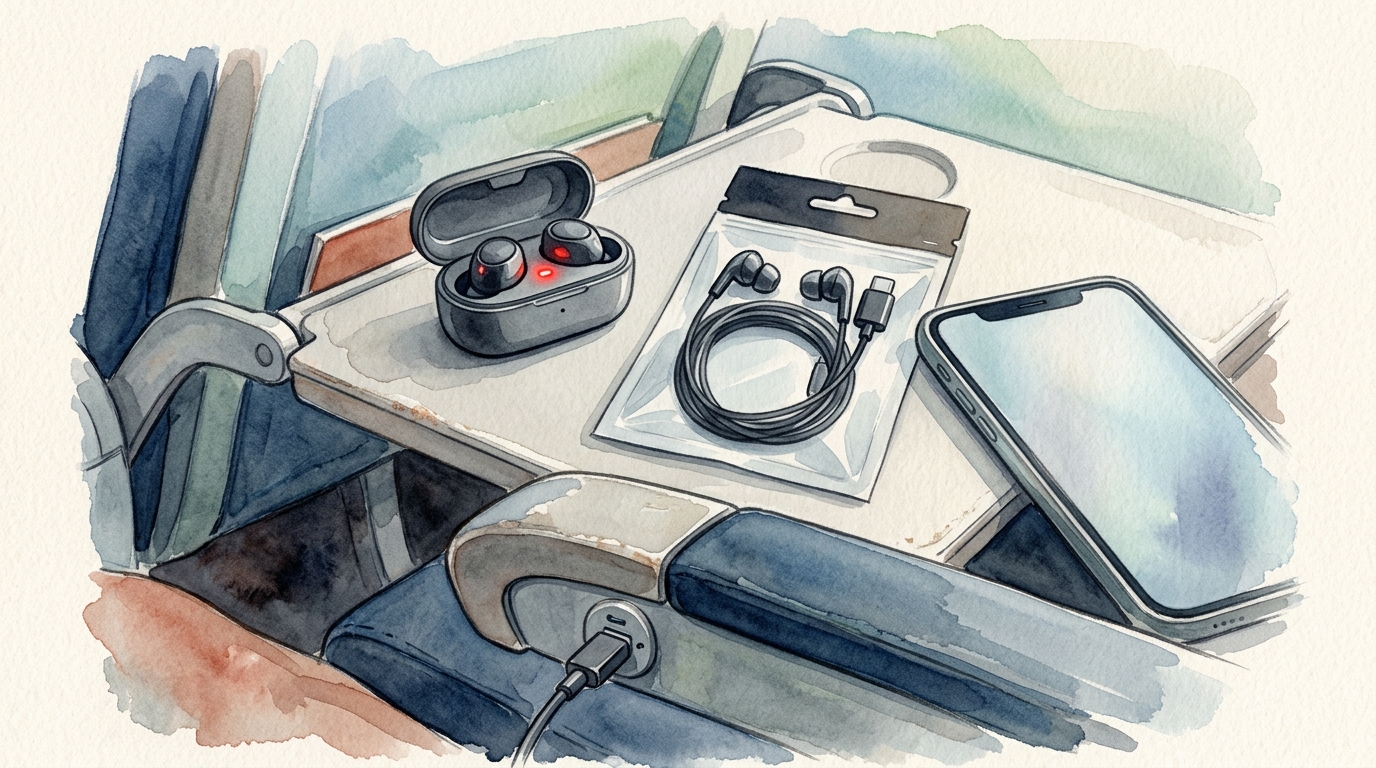
You charge your AirPods using the aircraft's USB port. That's still allowed. The ban is on charging power banks via in-seat power, and on using power banks to charge other devices (on airlines that have banned in-flight use). But plugging your phone, tablet, or earbuds directly into the aircraft's USB-C or USB-A port? That's fine on every airline.
The confusion comes from travelers who used to daisy-chain: power bank charges phone, phone charges earbuds, everything stays topped up through a long-haul. That workflow is dead. The new approach:
- Charge everything to 100% before boarding. Phone, earbuds, tablet, laptop. Make sure your travel document checklist includes a "charge all devices" item the night before.
- Use the aircraft's USB ports for your devices directly. Most modern aircraft have USB-A and increasingly USB-C ports at every seat. If you're worried about connectivity more broadly, our eSIM vs SIM card guide covers how to stay connected on the ground.
- Carry wired earbuds as a backup. A $10 USB-C wired pair weighs nothing and never dies. If you're on a long-haul and your wireless earbuds give up at hour 8, you'll be glad you packed them.
- Use your power bank during layovers. You can still use it on the ground, in the terminal, wherever. The restriction is only in the air.
For travelers who rely on their devices during transit, tools like TripProf let you download trip guides, itineraries, and documents for offline use before you board, so your phone doesn't need to stay alive the entire flight just to access your travel information.
Transit Passengers: The Rules That Stack
If you're connecting through Singapore on April 16, then catching a domestic flight within Japan, and finally flying Lufthansa to Frankfurt, congratulations: you're subject to three different sets of power bank rules on a single journey. The practical answer is simple, but people keep overthinking it.
The ICAO baseline applies everywhere. No country allows more than 2 power banks in your cabin bags (with T'way Air being a notable airline-level exception at 5). No airline in any ICAO member state allows you to charge a power bank in-flight. So if you're transiting through multiple countries, the ICAO rules are your safe default.
The new ICAO standards apply across all 193 member states, which means transit through any ICAO country triggers these baseline rules.
But departure-country rules can add extra restrictions. Singapore's CAAS regulations from April 15, 2026 apply to all flights leaving Changi, regardless of airline. That means even if you're flying a carrier that hasn't explicitly banned in-flight use, the Singapore departure rules override. Japan's Ministry of Land, Infrastructure, Transport and Tourism (MLIT) ban applies to all carriers flying to, from, and within Japanese airspace, including transit passengers.
The simple rule: assume the strictest version of the rules applies for your entire trip. Bring no more than 2 power banks, don't plan on using them in the air, and keep them where you can reach them.
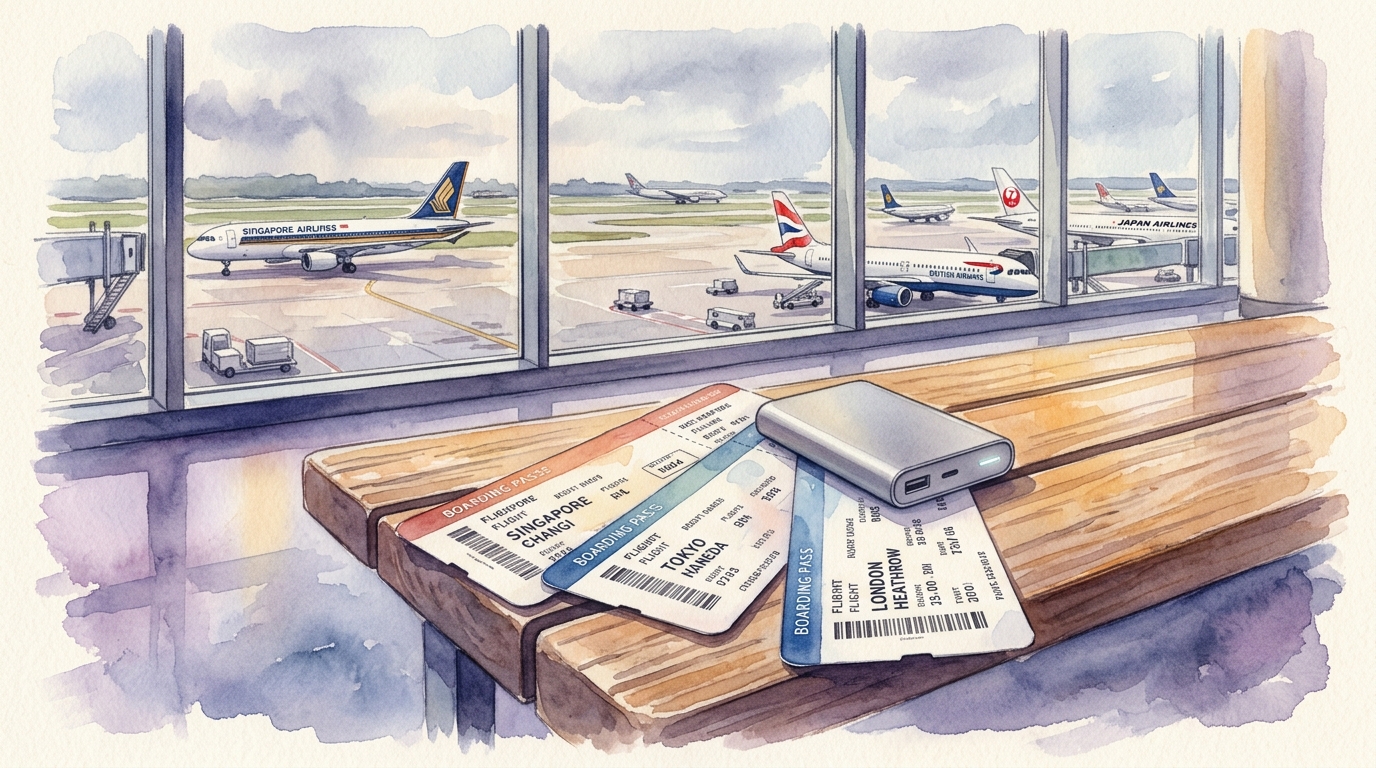
Frequently Asked Questions
Can I still charge my phone on a plane in 2026?
Yes. You can charge your phone, tablet, laptop, or earbuds directly from the aircraft's in-seat USB or power outlets. The ban is on using power banks to charge devices (on most airlines) and on charging the power banks themselves via aircraft power. Your phone plugged directly into the seat's USB port is perfectly fine.
How many power banks can I bring on a flight?
The ICAO global limit is 2 per passenger, effective March 27, 2026. This applies across all 193 member states. A few airlines like T'way Air still allow up to 5, but the global trend is toward the 2-unit standard. If you're connecting through multiple countries, assume 2.
Is a 20,000 mAh power bank allowed on flights?
Yes. A 20,000 mAh power bank at the standard 3.7V nominal voltage equals 74 Wh, which is well under the 100 Wh limit. No airline approval is needed. Just make sure it has a visible capacity label and pack it in your carry-on.
Can I use my power bank during a flight?
On most major airlines in 2026, no. Lufthansa Group, Korean Air, Qantas, Jetstar, Virgin Australia, Singapore Airlines, and all Japanese carriers have banned in-flight power bank use. A few airlines haven't explicitly banned use yet, but the global direction is clear. Check your specific airline's policy before your flight.
What happens if my power bank doesn't have a label?
Security personnel can confiscate it. Without visible capacity markings (Wh or mAh and voltage), they have no way to verify that your power bank is within the legal limit. Before your trip, look up the model online and print the manufacturer's spec sheet as backup documentation.
Can I put a power bank in checked luggage?
No. Power banks containing lithium-ion batteries are strictly banned from checked baggage on all airlines worldwide. This rule predates the 2026 changes and remains firmly in place. If a power bank is found in your checked bag during screening, it will be removed and may delay your flight.
How do I calculate watt-hours from mAh?
Use this formula: Wh = (mAh x 3.7) / 1,000. The 3.7 represents the nominal voltage of most lithium-ion batteries. For example: 10,000 mAh = 37 Wh, 20,000 mAh = 74 Wh, 26,800 mAh = 99.16 Wh. If your power bank lists a different voltage (like 3.85V), use that number instead. See the detailed conversion section above for more examples.
Key Takeaways
- The ICAO's March 27, 2026 rules set a global standard: max 2 power banks per passenger, no in-flight charging, no overhead bin storage. These apply across 193 countries.
- Most major airlines have gone further and banned using power banks to charge devices during flights entirely. Always check your specific airline before flying.
- Power banks under 100 Wh (~27,000 mAh) fly without any airline approval. Between 100-160 Wh requires pre-approval. Over 160 Wh is banned from all passenger aircraft.
- The Anker Nano 10K ($50, ~37 Wh) is the best all-around pick for phone-only travelers. The Anker Prime 26K ($230, 99.75 Wh) is the go-to for laptop charging.
- If your power bank has no visible capacity label, it can be confiscated regardless of its actual capacity. Print the spec sheet before you fly.
- Charge all your devices to 100% before boarding. Use the aircraft's USB ports for direct device charging. Carry wired earbuds as a backup for long flights.
- Transit passengers should assume the strictest rules apply for their entire journey. When in doubt, 2 power banks, no in-flight use, seat pocket storage.
- Download your trip documents, boarding passes, and travel guides for offline access before you board. This reduces battery drain during flights and ensures you're not relying on a power bank you can't use. Tools like TripProf keep everything in one place, available offline.
Sources
- ICAO: New power bank restrictions will safeguard international aviation (March 2026)
- Simple Flying: New global aviation rules on power banks come into effect (March 2026)
- Airline Ratings: New airline power bank rules, what passengers need to know (2026)
- FAA: Lithium battery incidents database (ongoing)
- Lion Technology: Lithium battery air incidents increased by 16% in 2024
- Wikipedia: Air Busan Flight 391 incident details
- Lufthansa Group: Power banks on board, updated regulations from January 2026
- Singapore Airlines: Advisory on portable power banks on Singapore Airlines flights
- CAAS Singapore: New power bank safety restrictions for flights departing Singapore
- Time Out: Japan to ban in-flight power bank usage from April 2026
- TravelPulse: Korean Air and Hanjin Group ban in-flight power bank use
- Qantas Newsroom: Qantas and Jetstar to introduce new safety measures for power banks
- SBS News: Power banks banned on planes, Qantas and Virgin explainer
- Anker: Nano Power Bank 10,000 mAh product page
- Anker: Prime Power Bank 26K 300W product page
- UGREEN: Nexode Pro Power Bank 10,000 mAh product page
- Clutch Charger: Clutch Pro USB-C product page
- UGREEN: 5 reasons airports confiscate power banks
- Aviation Week: ICAO sets two-power bank limit for passengers
Keep Reading
More travel tips and guides picked for you
Hostel Safety for Solo Female Travelers: The Honest Guide (What to Do Before, During, and After a Threat)
The guide every other article skips: how to vet a hostel before you arrive, what to actually do at 3 AM when something happens (including why you might freeze and why that is not your fault), and what good hostel accountability looks like.
How to Fly Around the Middle East Airspace Crisis: Rerouting Strategies, Alternative Hubs, and Booking Tactics for 2026
60,000+ flights grounded, fares up 300%, and the Middle East corridor is a hole in the sky. Here's how to rebook, reroute, and protect your travel plans through the worst aviation disruption since the pandemic.
How to Defend Against Rental Car Damage Scams: The Complete Before-and-After Checklist
58% of rental car damage claims aren't the renter's fault. Here's the exact 90-second inspection routine, credit card strategy, and dispute playbook that protects you from bogus charges at pickup and return.