Hostel Safety for Solo Female Travelers: The Honest Guide (What to Do Before, During, and After a Threat)
Key Highlights
- 1
- 2
- 3
+5 more in the takeaways below
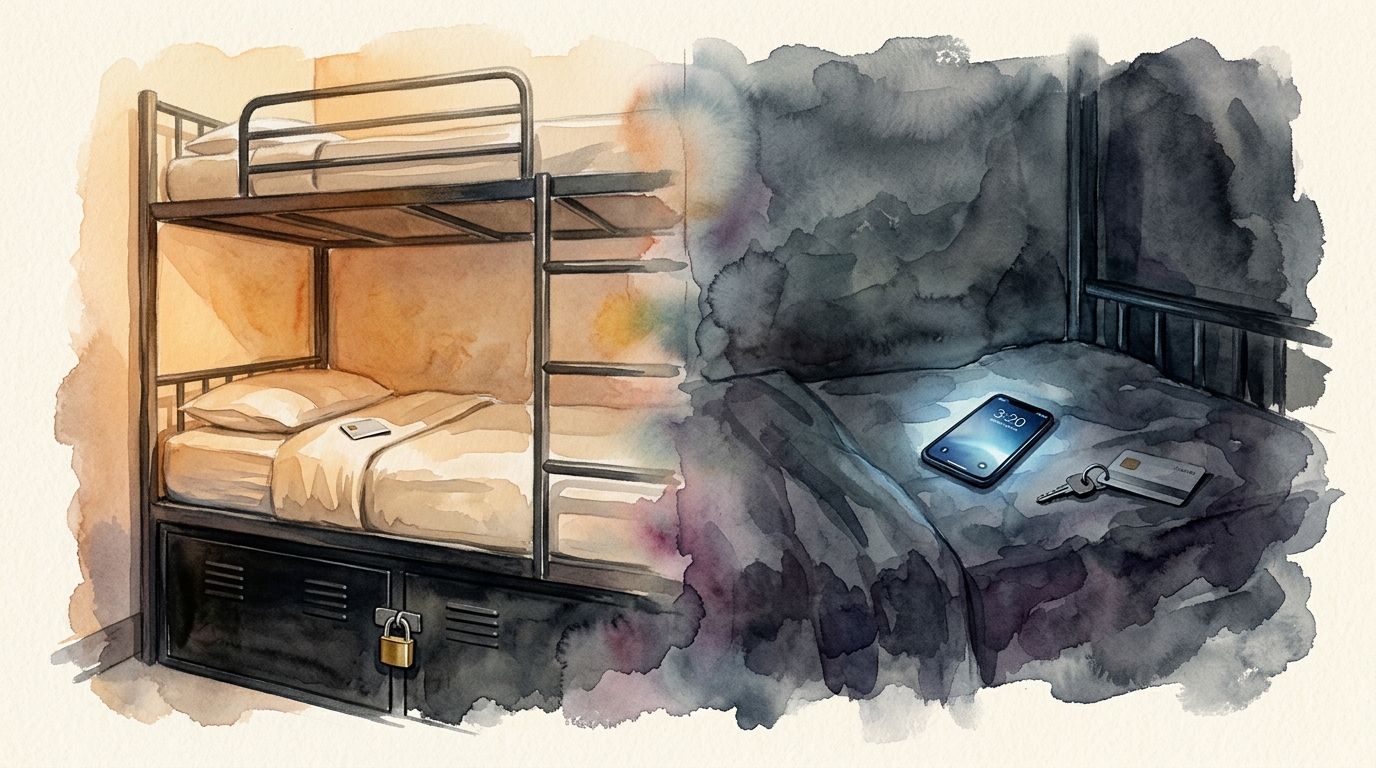
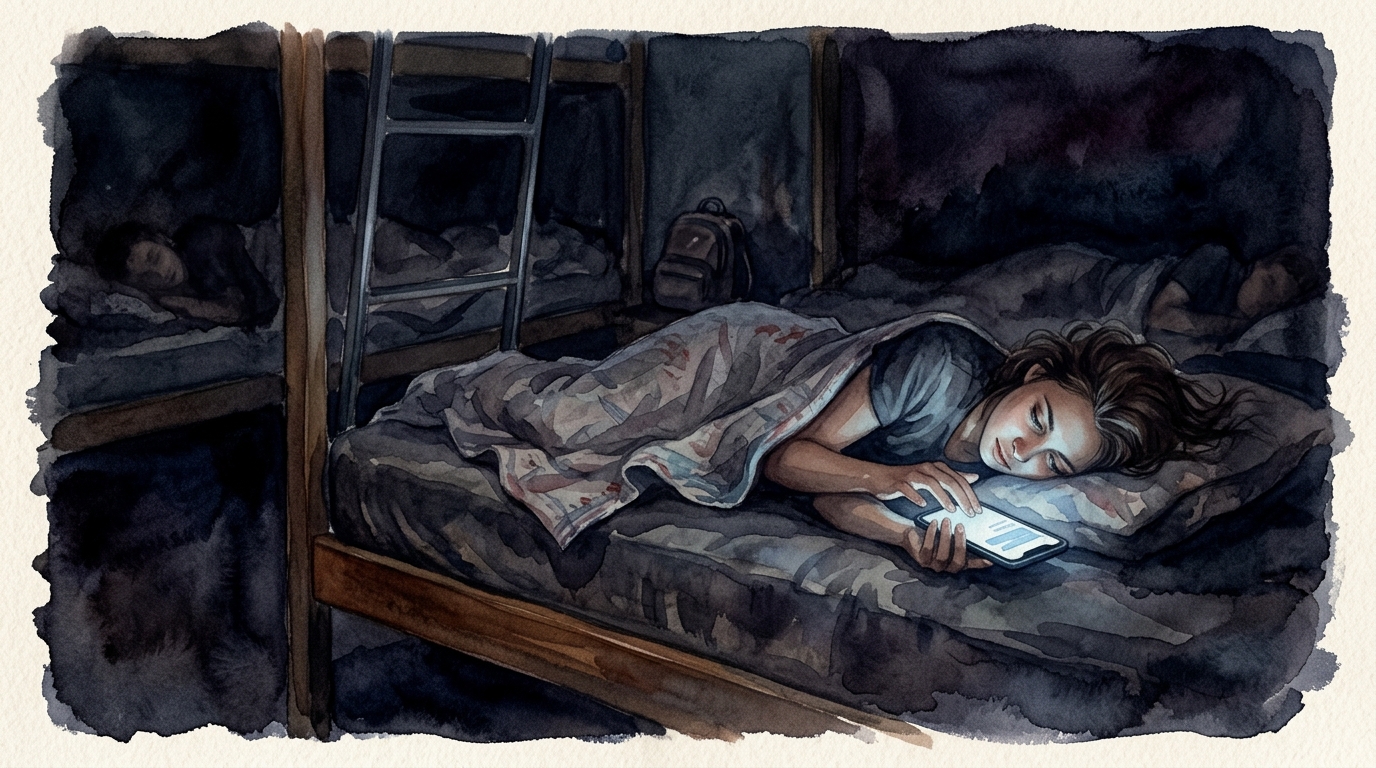
It's 3:20 AM in an Italian hostel. A 26-year-old solo female traveler wakes up from what she thought was a dream. Someone is grabbing her feet. Moving their hands under her blankets. She's not dreaming. She texts the front desk. There's no staff on-site. And for the next few minutes, she has to figure out what to do completely alone.
This guide is for her. And for every woman who's wondered whether mixed dorms are worth the risk (whether screaming is even possible) and what a hostel is actually supposed to do when things go wrong. Solo female hostel safety is the subject nobody handles completely. This guide does.
Solo female hostel safety comes down to three layers: vetting the hostel before you book, knowing what to do during an incident (including why you might freeze, and why that's not your fault), and understanding what a good hostel's response looks like. Female-only dorms cost roughly $3-10 more per night and remove most mixed-dorm risk entirely. If something happens: text or call the front desk immediately, wake a nearby woman for help, and report to police the next morning with documentation. You don't have to be brave. You just have to have a plan.
The Scale of Solo Female Travel
Solo female travel has never been more popular, or more fraught. The majority of solo travelers are women, a figure confirmed across multiple industry sources and cited by Riskline's 2025 solo female travel safety report. That's not a niche demographic. That's the majority of everyone sleeping in hostels right now.
The numbers tell two parallel stories. 35% of US female travelers express concerns about safety, and safety remains the single biggest barrier for women considering solo travel. 69% of women who have never traveled solo name safety as the reason they haven't started.
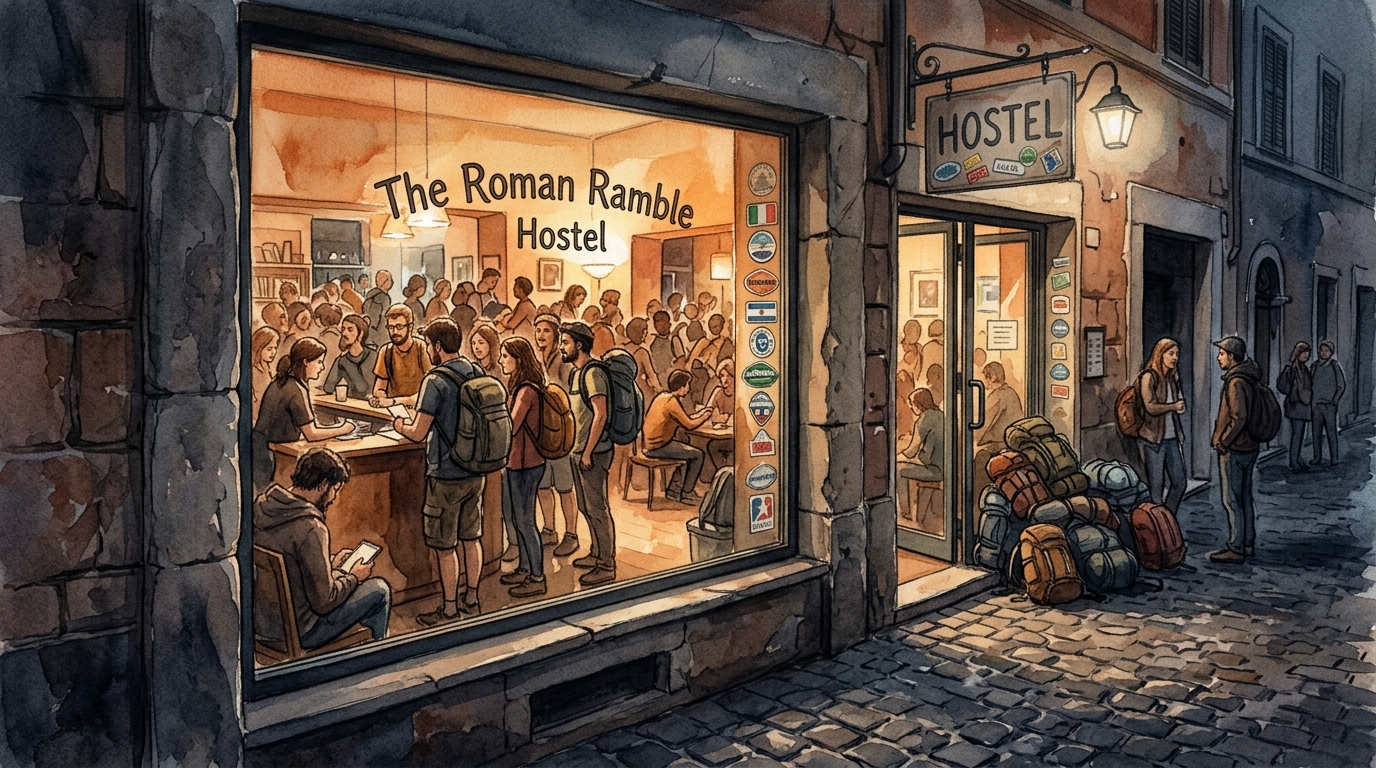
Italy consistently ranks among Europe's most-visited destinations for solo female travelers, and hostels are the primary accommodation for solo budget travelers arriving there. The overlap between popularity and risk isn't a coincidence. High-traffic destinations attract more solo women. High-traffic hostels pack more strangers into shared rooms. The math, occasionally, produces a 3:20 AM moment.
Most guides respond to this reality by handing you a list of prevention tips. Lock your stuff. Trust your gut. Book a female-only dorm. These aren't wrong. But they're incomplete. They skip the part where something has already happened, and you're lying in the dark trying to figure out what comes next.
Choosing the Right Hostel Before You Arrive
Safety in a hostel is mostly determined before you check in. The platform you use, the filters you apply, the reviews you read: all of it sets the floor for everything that follows.
The Platforms That Give You the Most Control
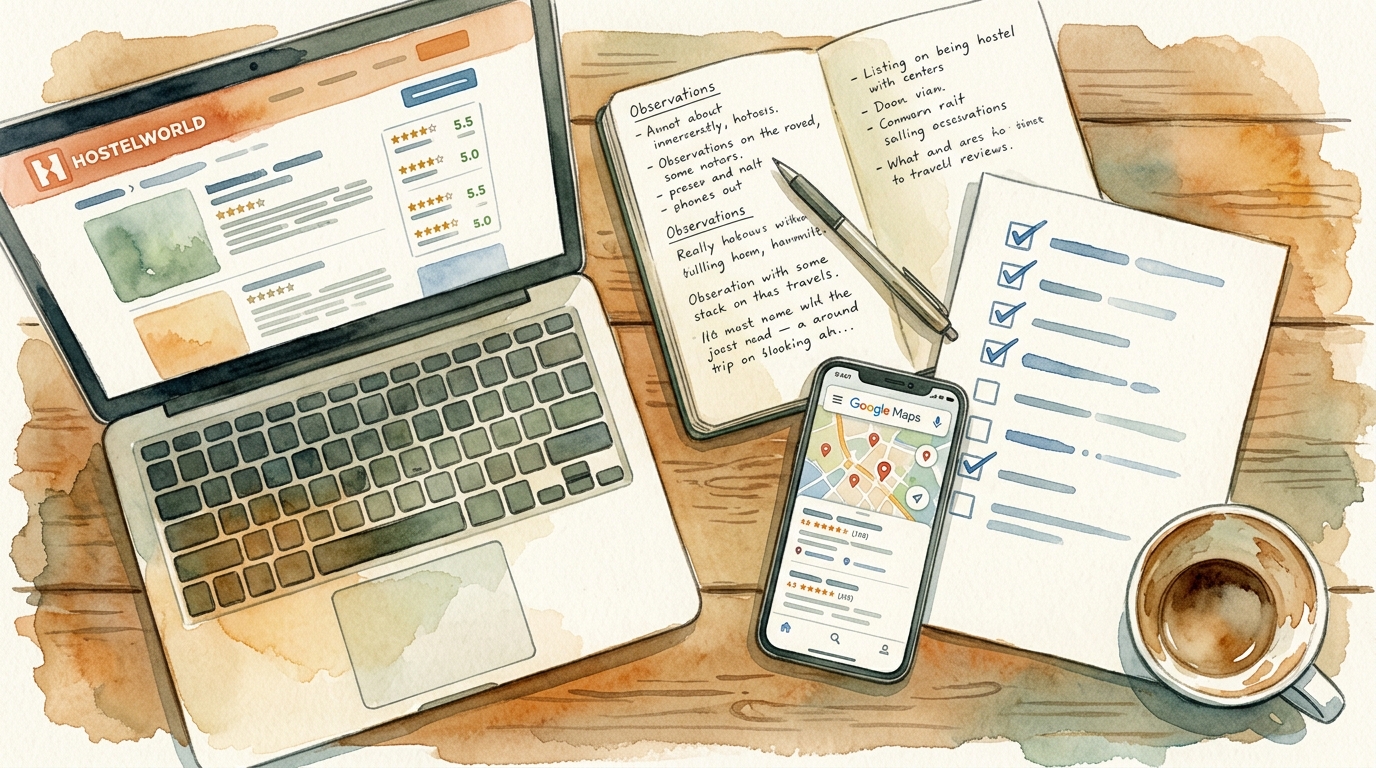
Hostelworld is the dominant booking platform and lets you filter directly for female-only dorms. More usefully, Hostelz is the only platform that allows simultaneous date-based search and female-only filtering. That's a small but meaningful difference when you're comparing options across a trip. Hostelgeeks curates female-focused hostels directly, with an editorial vetting process focused on safety, cleanliness, and the overall experience for solo female travelers before a hostel makes their lists.
Booking on a single platform isn't enough. Cross-reference on Google Maps and TripAdvisor. Different platforms surface different reviewer pools, and a hostel might score well on Hostelworld but have troubling recent reviews visible on Google. Run the hostel name through Google News. If there's been an incident reported by a local outlet, it'll appear there.
Red Flags in Reviews: What to Actually Look For
Most travelers skim reviews for the overall score. The useful signals are more specific:
- No solo female reviews visible (a significant gap in the reviewer pool)
- Staff responsiveness complaints, especially in evening or night hours
- Any mention of poor lighting in dorm corridors or bathrooms
- Mentions of broken locker mechanisms or missing lock fittings
- Rude management responses to negative reviews. How a hostel responds to complaints predicts how they'll handle an incident involving you.
- No mention of 24-hour reception or overnight staff (a silence that tells you something)
- The word "bedbug" anywhere in the reviews. Search for it specifically; it's rarely mentioned unless it's real.
A hostel can have a high aggregate score and still have structural problems that reviews only surface if you look for them. The aggregate hides variance. The individual comments don't.
Safety Infrastructure That Actually Matters
When a hostel listing or its reviews mention safety features, look for these specifically, not just "secure" as an adjective:
- In-room lockers. Not just lobby lockers. Your bag shouldn't leave the dorm to be secured.
- Keycard or PIN-code dorm entry. Any building where the dorm door opens without a key is accessible to anyone who tailgates through.
- CCTV in corridors. Not just reception areas.
- Named overnight contact. Not just "24-hour reception" but a system to reach an actual human at 3 AM.
- ID check at check-in. A hostel that doesn't verify who its guests are cannot cross-reference an incident report later.
The April 2026 Italian hostel incident that went viral on r/solotravel illustrated exactly where infrastructure gaps create risk: the hostel had no overnight staff on premises. The traveler's only option at 3:30 AM was to text, not call, because calling would have rung unanswered. The hostel's response, once reached, was exemplary. But the gap between the incident and the response was filled entirely by the traveler's own resources.
Email or message the hostel before booking: "Is there a staff member physically on-site between midnight and 7 AM, and how can guests reach them in an emergency?" A hostel worth booking will answer this directly. One that deflects or sends a non-answer just told you something important.
Female-Only Dorms: The Honest Cost-Benefit
The most common piece of advice in every hostel safety thread is: book a female-only dorm. It's correct. The question is whether it's always necessary, and what you're actually paying for.
What the Cost Difference Really Is
Female-only dorms typically cost $3-10 more per night than mixed dorms. Female-only beds sometimes cost the same as or less than mixed dorms; pricing varies by destination and season. In Southeast Asia the premium tends to be higher; in Western Europe, competition often narrows the gap significantly. The premium, when it exists, is modest: over a two-week trip, you're spending an extra $42-140 at most.
That math lands differently when you frame it the right way. You're not paying $7/night for a different type of bunk. You're paying $7/night to remove an entire category of risk from your night. The question isn't whether $7 is worth it. It's whether the person sleeping four feet from you being a stranger of any gender is worth $7 to you.
What Female-Only Actually Delivers
Beyond the obvious: women in female-only dorms frequently describe better sleep. Hostelgeeks describes it simply: fewer snorers. It's not a study, but it matches what solo female travelers consistently report in forums. Women also describe lower average noise levels at night (fewer late returns, less street-clothes-to-bed behavior), more courteous light and phone use after lights-out, and what one regular traveler described as "a caring vibe: route tips in the morning, someone who notices if you look unwell." These aren't small things on a long trip.
The practical downside is availability. Female-only dorms sell out faster, especially in popular cities during peak season. Book as early as possible. Female beds in Rome or Barcelona in June can disappear weeks out.
When Mixed Dorms Are Fine
Mixed dorms are fine when three things are true: strong safety infrastructure, small dorm size, and positive reviews from female travelers. Many solo female travelers have done dozens of mixed-dorm nights without incident, and the majority of mixed dorms are uneventful. The risk profile also depends on:
- The hostel's reputation and safety infrastructure (see previous section)
- The size of the dorm (a 4-bed mixed dorm is a different environment from a 12-bed one)
- The city and region (some destinations have lower incident rates)
- Whether the hostel has overnight staff
A useful framework: in your first night in any new city, or in any hostel where you haven't been before, default to female-only if available. Once you've had a night to assess the actual vibe, you can make a more informed call for subsequent stays.
This is one of the reasons I always book all-female dorm rooms. It's more expensive but the premium is worth it for peace of mind.
- Solo traveler, r/solotravel (April 2026)
What to Do During an Incident: The 3 AM Guide Nobody Writes
This is the section that doesn't exist anywhere else. Every other guide covers prevention. None of them cover the moment itself, because that requires confronting something uncomfortable: prevention doesn't always work, and most of us have never thought through what we'd actually do at 3 AM in a dark dorm in a foreign country.
Why You Might Not Scream (and Why That's Not Failure)
The most-upvoted comment in the April 2026 r/solotravel thread said: "This is a situation where you CAN and SHOULD make as much noise as possible." The second-most-upvoted response pushed back: "Many women simply can't. I've helped many women facing sexual harassment in Japan, and most of them froze."
Both responses were describing real things. The science here is settled: a landmark study by Möller et al. (2017) found that 70% of sexual assault survivors experienced significant tonic immobility during the assault: a physiological state of involuntary paralysis triggered by extreme fear. This isn't a character flaw. It isn't weakness. It's your nervous system doing exactly what nervous systems do under acute threat: freezing to avoid escalating danger.
RAINN documents survival responses including the freeze response (tonic immobility), where the body locks down involuntarily. The minimization trap is real. The OP of the viral post described it clearly: "I always feel like it's not THAT bad and I can just deal with it in the morning."
Knowing this in advance changes nothing about the physiological response in the moment. But it changes what you plan for, and it changes how you evaluate your own response afterward. If you freeze, you haven't done anything wrong. The person who touched you without consent did something wrong.
The 10-Minute Plan
Here is a specific sequence, not a vague "trust your instincts" list:
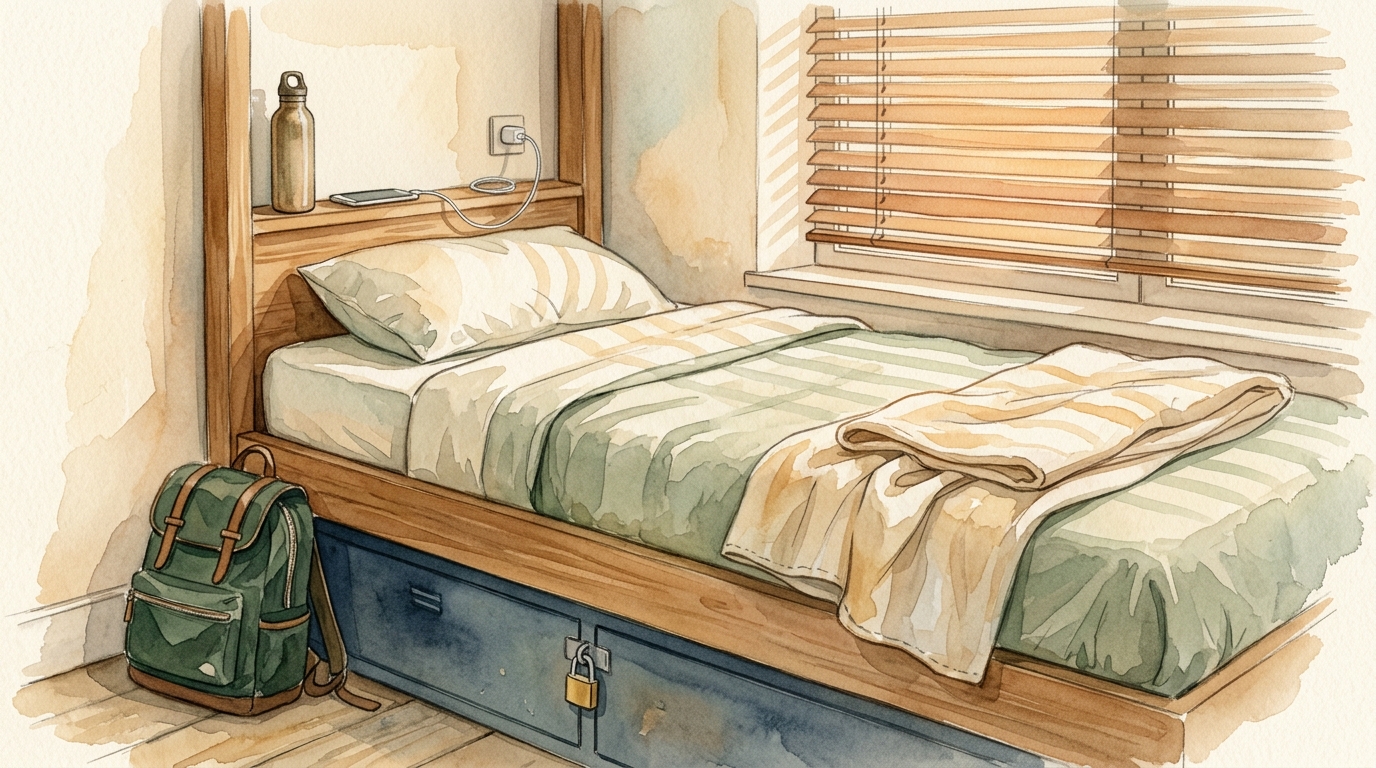
- Move if you can. Sit up. Turn on the light on your phone. Create physical distance. You don't need to announce what happened. Movement often ends the behavior immediately.
- Text or call the front desk right now. Even if it's 3 AM. Even if there's no one physically there. Create a time-stamped record of the incident while it's happening. If there's a chat app or in-property messaging system, use it. Screenshot everything.
- Wake the woman in the nearest bed. Multiple commenters in the viral thread confirmed: "I would WANT to be woken up for this." You are not being dramatic. You are not imposing. A fellow female traveler in the same dorm has immediate situational context that staff don't have.
- Do not leave the dorm alone. If you need to go to reception, take someone with you, or wait until you can communicate with the hostel remotely.
- Document everything. Note the time, what happened, which bunk the person was in, any descriptive details you can recall. Your phone's voice memo or notes app works. You don't need a formal report template. Do this while details are fresh.
The Next Morning
When daylight comes and the immediate threat has passed, there are decisions to make. They're yours to make, not the hostel's.
Talk to hostel management in person, preferably with another person present. Ask them what their procedure is. A well-run hostel will: ask for your account of events, check CCTV if available, identify the guest involved, offer to move you to a female-only dorm or private room at no additional charge, and contact police if you wish. The hostel in the April 2026 incident did exactly this: kicked the perpetrator, moved the traveler, shared his information with other hostels, and offered police accompaniment.
That response is what good looks like. Not all hostels will meet that standard.
If staff respond with minimizing framing or offer no concrete next steps: leave. You're entitled to a refund for remaining nights when safety has been compromised. Write the review. File with Hostelworld directly. Note: Hostelworld's published suspension policy applies specifically to assaults involving hostel staff. For guest-on-guest incidents, Hostelworld investigates but suspension is not automatic. File it regardless. The record matters.
Reporting to Police
Whether to report to police is a personal decision, and there are real reasons women choose not to: language barriers, uncertainty about how seriously it will be taken, not wanting the trip to become a legal ordeal. Those reasons are valid.
If you do decide to report: in Italy, call 112 (the universal emergency number for police, fire, and medical). In EU countries, 112 is the universal emergency number. Outside the EU, your hostel front desk or local embassy is your first call. Any form of physical unwanted contact, including groping, is a crime under Italian law; emergency contacts and local procedures are available via the US State Department Italy travel page. A police report also creates an official record that other travelers and other hostels can reference. The hostel in the viral incident shared the perpetrator's information with neighboring hostels precisely because they had enough detail to identify him. A police report strengthens that process.
What Good Hostel Accountability Looks Like
When a hostel handles a safety incident well, it's not doing something exceptional. It's meeting the baseline standard every traveler deserves. Understanding what a responsible response looks like helps you assess a hostel's culture before you stay, and gives you a reference point if your actual experience falls short.
The Accountability Chain
A hostel that takes safety seriously has procedures in place before anything happens. Here's what that looks like in practice:
| Stage | What a Good Hostel Does | Red Flag Response |
|---|---|---|
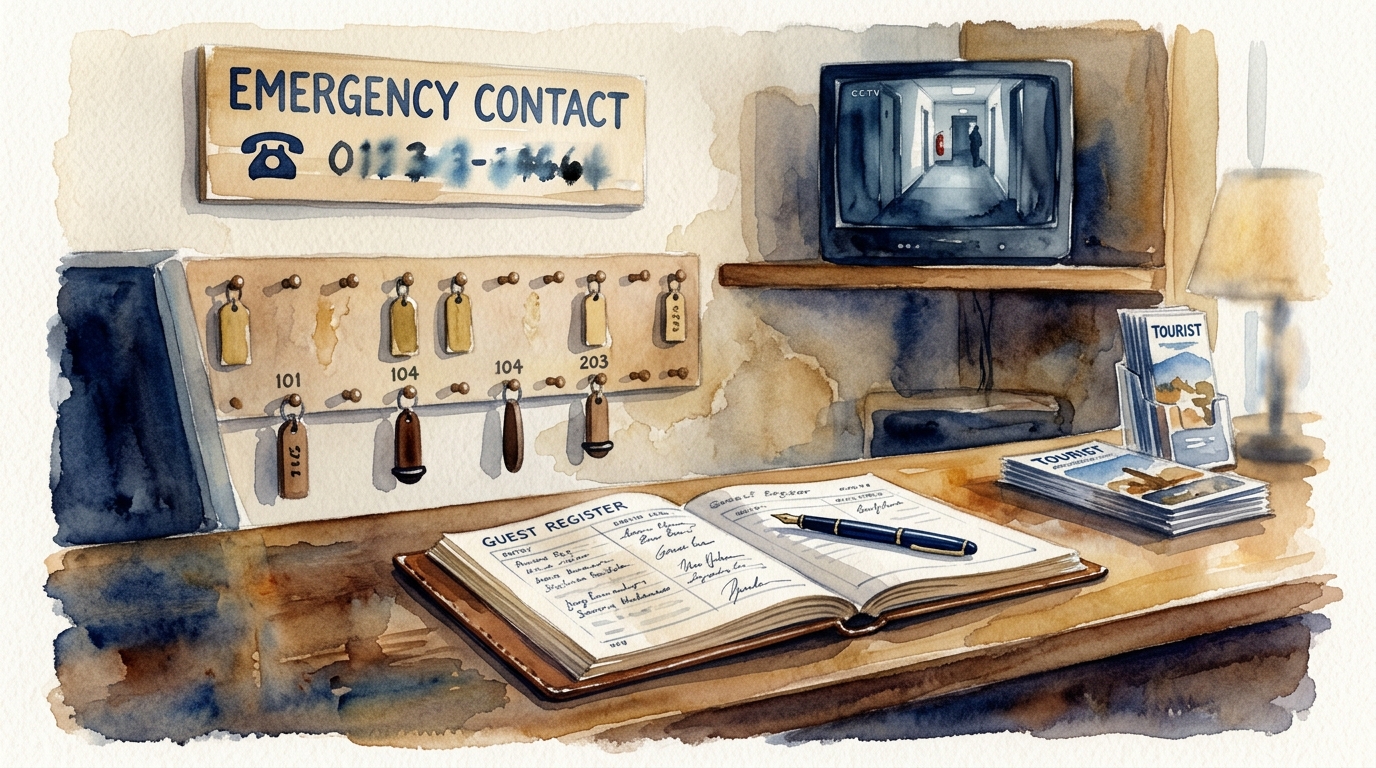
| Pre-incident | ID verification at check-in, posted emergency contact, named overnight contact | No ID check, no overnight staff, no posted emergency info |
| Immediate | Takes the report seriously, doesn't minimize, separates involved parties immediately | Suggests you misread the situation, asks you to sleep on it |
| Next steps | Offers room change at no cost, checks CCTV, documents the incident | Offers nothing, tells you to file with police yourself and leaves it there |
| Consequences | Removes the perpetrator from the premises, informs other area hostels | Takes no action, allows the guest to stay |
| Follow-up | Offers police accompaniment, provides incident documentation if needed | Disappears after the immediate conversation |
The cross-hostel information-sharing that happened in the April 2026 case (sharing the perpetrator's details with neighboring properties) represents a higher standard that most hostels don't yet practice, but that more should. It's the difference between removing one bad actor from one property and preventing him from checking into the next one down the street.
Hostelworld's Policy on Assault Reports
If you submit a review on Hostelworld that mentions assault, the platform's published assault review policy requires the review to be withheld from immediate publication and the property investigated. Note that Hostelworld's suspension policy applies specifically to assaults involving hostel staff. For guest-on-guest incidents, Hostelworld investigates but automatic suspension is not guaranteed. File the report regardless: the record matters, and the platform policy gives you a lever if direct contact with the hostel goes nowhere.
The Financial Injustice Nobody Mentions
There's a comment from the April 2026 thread that got 715 upvotes and hasn't stopped sitting with me: "The cost women have to pay to ensure they are safe in this world - even while minding their own business."
The female-only dorm premium is a tax on being a woman. It's money paid not for a better product, but for the removal of a risk that shouldn't exist. Men don't face an equivalent calculation. They don't weigh $7/night against the probability of waking up to an unwanted hand. The baseline of safety that female-only dorms provide should be the baseline of all dorms. The fact that it isn't is a structural problem with accommodation, not with the women paying to work around it.
This matters practically as well as philosophically. Budget travel is built on the premise that you're trading comfort for cost savings. The solo female traveler paying for a female-only bed isn't trading comfort for savings. She's trading money for baseline dignity. That changes the math on solo travel budgets in a way that gets almost no acknowledgment in the travel planning conversation.
If you're planning a trip and budgeting for hostel stays, build the female-only premium into your budget from the start. Don't treat it as an optional upgrade. Treat it as a non-negotiable cost of solo travel done safely. Then decide how many nights you need it versus how many you're comfortable in a vetted mixed dorm.
At $7/night average premium over a 14-night trip, female-only dorms add roughly $98 to your accommodation budget. That's less than most travelers spend on a single nice dinner. Frame it that way, then never feel guilty about booking the safer option.
So much for the structural. Here's the personal.
After the Trip: Processing What Happened
The OP of the April 2026 post ended her account with this: "I spent all day today on the verge of a panic attack or crying into my wine." That's not an overreaction. That's the expected aftermath of a scary thing happening in a place you were supposed to be safe.
A few things worth knowing for after:
Write the review. You may not feel like it, and you don't have to name anyone. But specific, factual reviews ("no overnight staff, no keycard access, inadequate response from management") are the mechanism by which other solo travelers make better decisions. The woman who checks into that hostel in three weeks is reading your review.
Recognize the normal range of responses. Anger, hypervigilance, difficulty sleeping, reluctance to book another hostel, sudden second-guessing of the whole trip: these are all documented responses to trauma and they don't indicate you're "too sensitive" or that the incident "wasn't that bad." If they persist or intensify, talking to a therapist who specializes in trauma is a legitimate option, not a last resort.
Don't let one incident decide whether you travel. This is harder to say without sounding dismissive of something real. But the evidence, both anecdotal and systematic, is that most solo female travelers continue traveling after negative experiences. The safety infrastructure and planning knowledge you build after a hard trip compounds. One badly run hostel in one city isn't the whole picture. Our guide on solo travel burnout covers the harder questions about when to push through and when to actually stop.

Pre-Trip Preparation: What to Do Before You Go
Prevention-focused advice has its place, just not as a substitute for everything else in this guide. Here's a tight, specific pre-trip list that goes beyond the generic "pack a doorstop" advice.
- Before booking: Cross-reference on at least two platforms. Search reviews for "female," "women," and "night." Email the hostel about overnight staffing.
- When you check in: Identify where the staff night contact is posted. Note the dorm room number and floor. Save the hostel's direct number in your phone immediately. Check that your locker works before you need it.
For Italy-specific travel, the US State Department Italy travel page covers safety context, emergency contacts, and neighborhood-level guidance. Rome and Florence operate differently at night.
In the dorm: sleep with your phone and any essential documents within arm's reach. Know which direction the door is before you turn out the light. If something feels wrong before you fall asleep (another guest's behavior, a lack of lighting, anything), trust that feeling and raise it with staff or request a room change while you're still alert.
On the connection front: apps like Tourlina connect solo female travelers in the same destination. Building a network of women you might be able to call at 3 AM matters more than most pre-trip advice acknowledges.
For your broader travel preparation (documents, insurance, what to have in writing before you leave home), our travel document checklist covers the essentials. And if you're weighing accommodation types more broadly, our Airbnb vs. Booking.com breakdown covers when a private rental might make more sense than a hostel entirely.
Planning tools like TripProf include a Security Brief section among their free destination guide features, covering local crime patterns, emergency contacts, and neighborhood-level safety context for your specific destination. It doesn't replace the hostel-specific research above, but it gives you a grounded picture of the broader context before you arrive.
Frequently Asked Questions
Are female-only dorms worth the extra cost?
Yes, for most solo female travelers. The typical premium is $3-10 per night (sometimes zero) and removes the primary risk factor of mixed-dorm stays. For a 14-night trip, that's $42-140 added to your budget. Book female-only dorms as a default, especially in your first night in any new hostel, and consider mixed dorms only when safety infrastructure is strong and reviews from women are positive.
What should I do if someone harasses me in a hostel dorm at night?
Create distance and light immediately. Text the front desk right now to create a time-stamped record. Wake the nearest female traveler; she would want to know. Document everything in your phone's notes while details are fresh. In the morning, report formally to staff, ask what their procedure is, and request a room change at no extra cost. Don't wait until morning to contact the desk. Do it the moment something happens.
Why can't I just scream for help? Is that normal?
Completely normal. Research by Möller et al. (2017), published in Acta Obstetricia et Gynecologica Scandinavica, found that 70% of sexual assault survivors experienced tonic immobility (involuntary physical paralysis) during an assault. This is a documented physiological response, not a choice or a failure. If you freeze rather than fight or flee, that's your nervous system responding to threat exactly as nervous systems do. It is not your fault.
What are red flags when booking a hostel as a solo female traveler?
No solo female reviews. Management responding rudely to negative reviews. Mentions of poor lighting, broken lockers, or absent overnight staff. No ID check at check-in policy. Only positive reviews with no specifics (well-reviewed hostels get detailed praise). When cross-referencing platforms, a strong Hostelworld score but strange Google reviews is itself a flag worth investigating.
Should I report hostel harassment to the police?
That decision is yours alone, and there are valid reasons women choose not to. If you do report: in Italy, call 112. In other EU countries, 112 is also the universal emergency number. Physical unwanted contact is a crime under Italian law. A police report creates an official record that strengthens any subsequent cross-hostel information-sharing and your own documentation if you choose to pursue any further action.
What does a good hostel do when harassment is reported?
Takes the report seriously without minimizing. Separates the parties immediately. Checks CCTV. Offers the affected guest a room change at no charge. Removes the perpetrator from the premises. Offers police accompaniment. Documents the incident. Notifies Hostelworld if an assault is reported. If a hostel does none of these things, that information belongs in a public review.
Is a mixed dorm safe for solo female travelers?
Mixed dorms are safe the majority of the time, in well-run hostels with strong safety infrastructure, overnight staff, keycard access, and a track record of positive reviews from female travelers. The risk is real but not inevitable. Vetting the hostel carefully, preferring smaller dorm sizes, and defaulting to female-only for first nights in unfamiliar properties significantly reduces that risk.
Key Takeaways
- Vet before you book: cross-reference on at least two platforms, search reviews for "female" and "night," email about overnight staffing. The hostel's safety profile is set before you arrive.
- Female-only dorms are worth it: $3-10/night removes an entire category of risk. Build this into your budget as a fixed cost, not an optional upgrade.
- If something happens at 3 AM: create distance, text the front desk immediately to create a record, wake a nearby female traveler. You don't need to be loud or confrontational. You need to create documentation.
- Freeze is normal: 70% of people experiencing unwanted physical contact freeze involuntarily. Not screaming is not failure. Not fighting back is not consent.
- Know what good looks like: a responsible hostel removes the perpetrator, offers you a free room change, checks CCTV, and offers police accompaniment. If yours doesn't, leave and write the review.
- The premium is real and unjust: women pay extra for what should be universal baseline safety. Name it as such, then pay it anyway and don't second-guess yourself.
- One incident isn't the whole story: most solo female travelers continue traveling after negative experiences. Getting the post-incident emotional processing right matters as much as the practical steps. Our guide on solo travel burnout addresses the longer arc.
- For destination-specific safety context before you arrive, tools like TripProf provide a Security Brief covering local crime patterns and emergency contacts as part of their free destination guide. A useful baseline before you layer in hostel-specific research.
Sources
- Riskline (2025): Solo Female Travel Safety: riskline.com/solo-female-travel-safety/
- Solo Female Travelers Club: 2026 Solo Female Travel Trends and Statistics: solofemaletravelers.club/solo-female-travel-stats/
- Möller et al. (2017): Tonic immobility during sexual assault, a common reaction predicting PTSD and severe depression. Acta Obstetricia et Gynecologica Scandinavica: pubmed.ncbi.nlm.nih.gov/28589545/
- RAINN: Fight, Flight, Freeze, and Fawn. Understanding Survival Responses: rainn.org
- Hostelgeeks: Female-Only Hostels. Everything You Need to Know: hostelgeeks.com/hostels-for-women-solo-traveler/
- Hostelgeeks: Why Female Dorms? 7 Pros and 3 Cons: hostelgeeks.com/female-dorms-pros-cons-meaning/
- Hostelz: Hostel Checklist for Solo Female Travelers: hostelz.com/articles/how-to-pick-a-hostel-for-female-solo-travelers
- Hostelz: Are Female-Only Dorms Worth It?: hostelz.com/articles/are-women-only-dorms-worth-it
- US State Department: Italy International Travel Information: travel.state.gov (Italy)
- EU Agency for Fundamental Rights (FRA): Violence Against Women: An EU-Wide Survey: fra.europa.eu
- Tourlina: Solo Female Traveler Connection App: tourlina.com
- Reddit r/solotravel: Sexual harassment in dorm room in Italian hostel (user account, April 2026): reddit.com/r/solotravel
Last updated: July 3, 2026
Keep Reading
More travel tips and guides picked for you

Airport liquid rules in 2026: which airports actually allow more than 100ml
Some UK airports now let you carry 2 litres of liquid through security. Others, and every US airport, still cap you at 100ml. Here is exactly which is which, airport by airport, and which rule to pack for when your outbound and return airports disagree.

The best group packing list apps in 2026
PackParty nails the everyone-vs-one-person split gear needs. whobrings.com skips the app. TripProf holds the whole trip. Five tools, tested against each other.
The 2026 Hand-Luggage Trap: The EU "Free Cabin Bag" Law Did Not Pass - And the Rules Just Got Stricter
Everyone shared the headline about free cabin bags coming to the EU. The law never passed, and for summer 2026 the rules tightened instead. Exact free allowances for every airline DACH travelers fly, and how to avoid a €70 gate fee.