The 25 Wildest Things That Catch First-Time Travelers Completely Off Guard
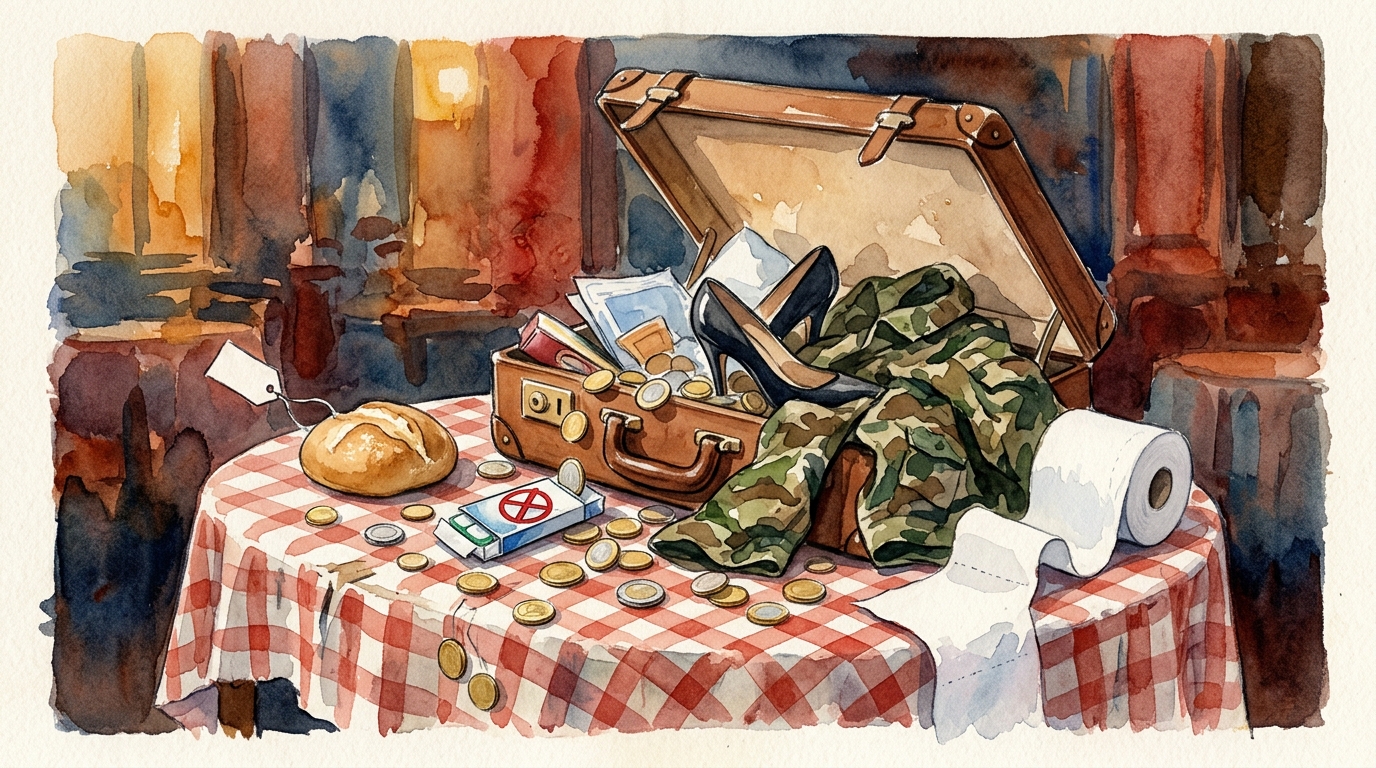
You just landed in Rome, starving after a nine-hour flight. You find a restaurant, order pasta, and the bill arrives with a mysterious "coperto" charge nobody mentioned. The waiter won't bring you water unless you ask for it by name. And the shop across the street? Closed until 4pm. Welcome to your first dose of things that shock travelers abroad.
From paying to pee in Germany to getting fined for feeding pigeons in Venice, international travel is packed with surprises that no guidebook properly warns you about. This list covers 25 verified "wait, what?" moments across six continents, organized by category, with a practical survival tip for each one. Read before you pack.
Food and Dining: Where Hunger Meets Confusion
The dining table is ground zero for culture shock. Every country has unwritten food rules that locals absorb by age five, and tourists discover the hard way at dinner.
1. Italy's "Coperto" Is Not a Scam
That extra line on your Italian restaurant bill isn't a tourist trap. The coperto is a standard cover charge of one to three euros per person for bread and table service. It's legal in every Italian region except Lazio (which includes Rome), where the label was banned in 2006. Roman restaurants still charge for bread separately, so the total is roughly the same. Look for it printed on the menu before you sit down. We've been caught off guard by this ourselves, a EUR2.50 coperto at a small Bologna trattoria that we initially thought was a billing error.
Survival tip: Check the bottom of the menu for "coperto" or "pane e coperto" before ordering. It's always listed if they charge it.
2. Water Will Cost You (Unless You Know the Magic Words)
Order "water" in most European restaurants and you'll receive a glass bottle of mineral water at three to six euros. Free tap water is standard in very few countries. France legally requires restaurants to serve free tap water on request, but in Germany, Italy, Spain, and Switzerland, you'll pay unless you specifically ask for "acqua del rubinetto," "Leitungswasser," or "agua del grifo."
What to do: Learn "tap water" in the local language before your first meal. Write it on your phone's lock screen if you have to.
3. Shops Close in the Middle of the Day (and Dinner Doesn't Start Until 9pm)
Italy's riposo, Spain's siesta, Greece's afternoon quiet hours. Across southern Europe, shops and restaurants shut down between roughly 1pm and 4pm. In Italy, most shops operate 9am to 1pm, then 3:30pm to 7:30pm, and dinner service rarely begins before 8pm. Show up at a restaurant at 6pm in Rome and you'll find locked doors and confused looks.
Survival tip: Plan your big meal for lunch (when prices are lower anyway) and eat dinner after 8pm like the locals do.
4. Your Waiter Is Not Ignoring You
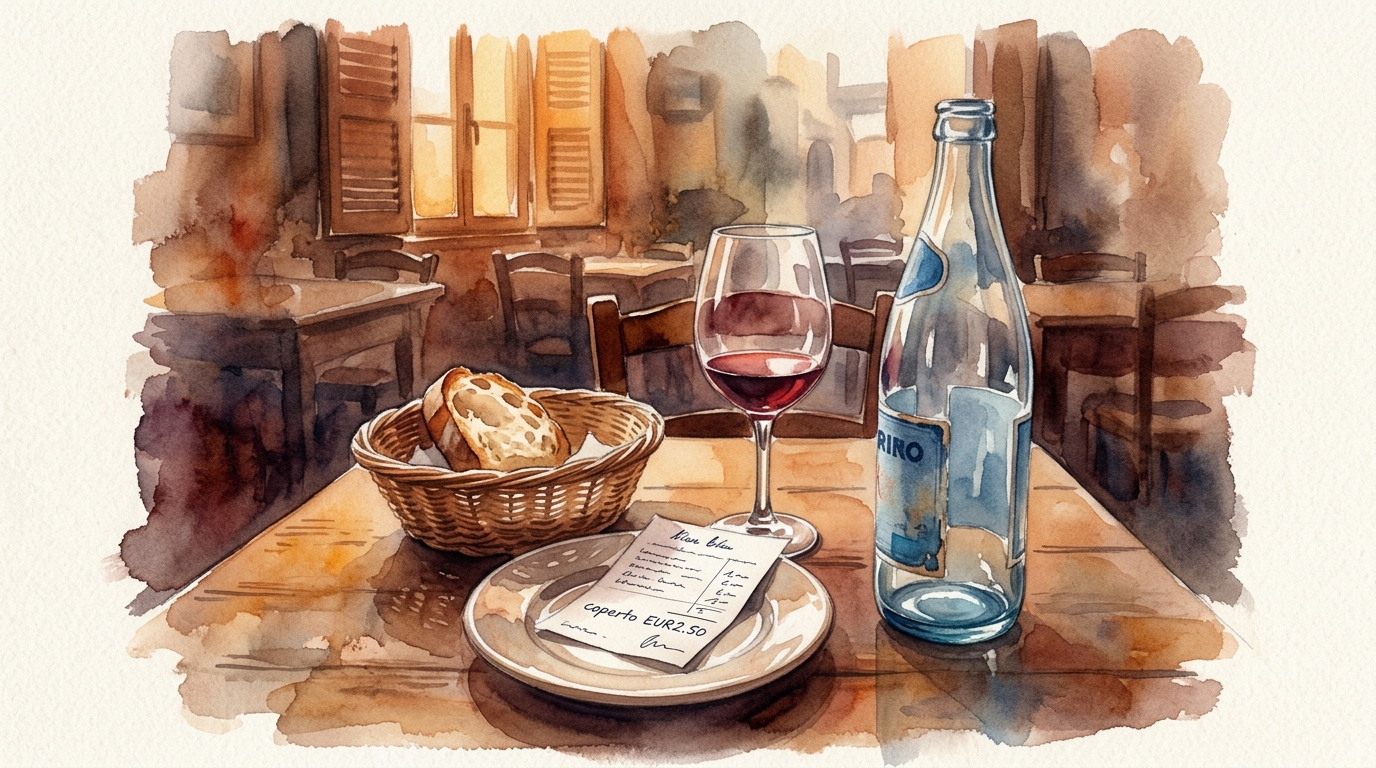
Have you ever sat in a European restaurant for twenty minutes wondering if the staff forgot about you? They didn't. In the United States, servers drop the check the moment your fork hits the plate. In Europe, that would be considered rude. Across Italy, France, Spain, and Germany, the bill never arrives until you explicitly ask for it. The table is yours for the evening. You're not being ignored; you're being respected.
The fix: Make a writing gesture in the air or say "il conto" (Italy), "l'addition" (France), or "la cuenta" (Spain). The waiter knows exactly what you mean.
5. In Morocco, Forks Are Optional
Traditional Moroccan dining means communal plates, no utensils, and eating with your right hand only. The left hand is considered unclean in many North African and Middle Eastern cultures. Bread serves as your spoon, and meals are shared from a single central dish. It's not just acceptable; offering you a fork would be like handing a local chopsticks at a Marrakech riad.
Survival tip: Watch locals for two minutes before diving in. Use bread to scoop, eat only from the portion of the plate directly in front of you, and always use your right hand.
Bathroom Shocks: Nobody Warned You About This Part
Forget the food, forget the language. Nothing tests a traveler's composure quite like realizing the bathroom works differently than anything you've encountered before.
6. You'll Pay to Pee in Most of Europe
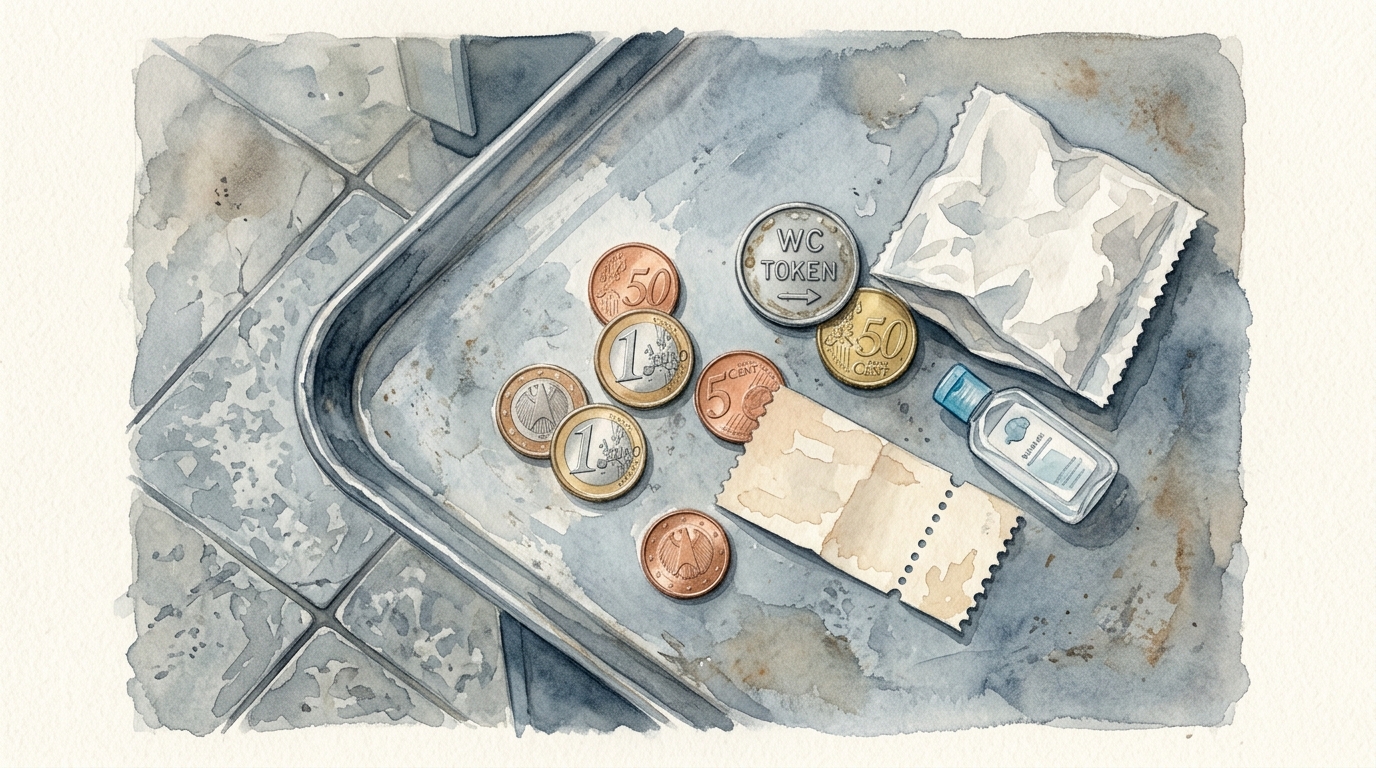
Public restrooms across Germany, Italy, and France charge EUR0.50 to EUR1.50 per use. In German train stations and Autobahn rest stops, coin-operated turnstiles guard the entrance. Venice's public toilets run EUR1.50 each. The upside? These paid facilities are generally clean and well-maintained. The downside? You need coins, and your bladder doesn't negotiate.
Pro move: Keep a handful of EUR0.50 and EUR1 coins in a separate pocket. In Germany, many paid toilets give you a voucher redeemable at nearby shops.
7. Squat Toilets Are Standard in Half the World
Across the Middle East, South Asia, East Asia, Southeast Asia, and parts of Africa, squat toilets are the default. We're talking roughly half the world's population who use them daily. From Turkey to Japan to rural Greece, the porcelain throne you're used to simply doesn't exist in many restrooms. And no, there's usually no seat to hover over.
Survival tip: Face the hooded end (the raised part), plant your feet on the footpads, and squat. It's easier in pants than in a skirt. Pack a small roll of toilet paper everywhere you go.
8. The Toilet Paper Goes in the Bin, Not the Bowl
Throughout Mexico, Central America, and much of South America, flushing toilet paper will clog the plumbing. Older pipe systems with smaller diameters can't handle paper, so every bathroom has a small bin next to the toilet for used tissue. It feels deeply wrong the first time. By day three, you won't think twice.
How to handle this: If there's a bin next to the toilet, use it. If you're unsure, look for a sign or ask at check-in. Large resorts with their own water treatment usually allow flushing.
Laws That Will Get You Fined (or Worse)
The wildest category on this list. These are real, enforced laws that catch tourists completely off guard because they seem absurd from the outside. They're not. Every single one exists for a reason, and ignoring them can cost you hundreds of euros or a conversation with local police.
9. Eating on the Sidewalk in Florence: Up to EUR500
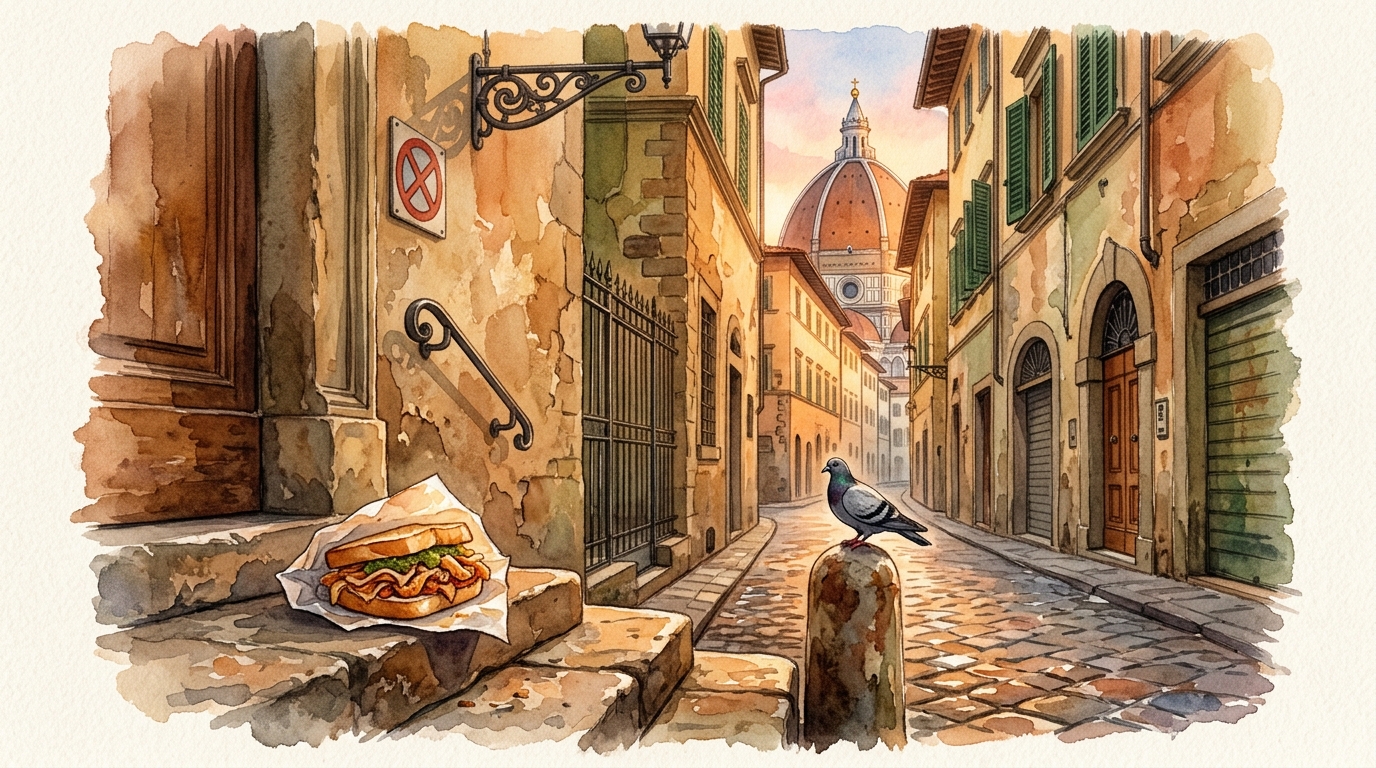
Picture this: you've just grabbed a perfect lampredotto sandwich from a street vendor near the Uffizi. You lean against a church doorway to take the first bite, and a police officer walks up with a fine. Florence's historic center has strict "decorum" rules. Stopping to eat on sidewalks, doorsteps, or roadways on specific streets during peak hours (noon to 3pm and 6pm to 10pm) carries fines of EUR150 to EUR500. The ban targets streets around the Uffizi and Via de' Neri. Grab your panino, but eat it in a piazza, not leaning against a church doorway.
Survival tip: Find a bench, a park, or a piazza. If you don't see anyone else eating where you're standing, that's your cue to move. Our guide to European tourist fines covers dozens more rules like this one.
10. Feeding Pigeons in Venice: Up to EUR700
Venice banned pigeon feeding in 2008 to protect its crumbling historic buildings from corrosive droppings. Get caught tossing breadcrumbs in Piazza San Marco and you'll face a fine of up to EUR700. The fine also applies to feeding seagulls. Those cute Instagram shots of pigeons landing on your outstretched arms? Literally illegal.
Survival tip: Keep your food to yourself and your hands in your pockets around birds. This is one law that's actively enforced.
11. Chewing Gum in Singapore: Up to S$10,000
Singapore has restricted chewing gum sales since 1992 after gum repeatedly jammed the door sensors on the Mass Rapid Transit system. Importing gum can result in fines up to S$10,000 (roughly US$7,400) or up to one year in prison for a first offense. Repeat offenders face up to S$20,000 and two years. Since 2004, therapeutic, dental, and nicotine gum can be purchased from a pharmacist. But regular bubblegum, the kind you grab at a gas station? Don't even pack it.
Survival tip: Leave the gum at home. If you need breath freshener in Singapore, buy mints instead.
Tourist fines aren't just suggestions. Venice has plainclothes officers near Piazza San Marco specifically watching for pigeon feeders. Florence patrols the Uffizi area during peak hours. And Singapore customs officers can search your luggage for gum at the border.
Every single person warned me about pickpockets in Europe. Nobody mentioned I'd get fined for sitting on the Spanish Steps.Reddit r/travel user
12. High Heels at Greek Monuments: Up to EUR900
Since 2009, Greece has banned high heels at ancient monuments including the Acropolis and the Theatre of Epidaurus. The reason is practical: narrow stiletto points create concentrated pressure that cracks and erodes ancient marble. Fines run up to EUR900. Flat shoes, sneakers, and sandals are all fine.
Survival tip: Pack comfortable walking shoes for monument visits. You'll want them anyway after three hours of climbing uneven stone steps.
13. Selfies with Buddha in Sri Lanka: Deportation Risk
Posing with your back to a Buddha statue for a selfie in Sri Lanka is a serious offense. Tourists have received suspended prison sentences for kissing and posing inappropriately with Buddha statues at a temple. A British tourist was deported in 2014 for having a Buddha tattoo on her arm. The country's courts treat disrespect toward Buddhist imagery with zero tolerance.
Never turn your back to a Buddha statue. Never point your feet toward one. Never touch one for a photo. When in doubt, observe how locals behave and follow their lead.
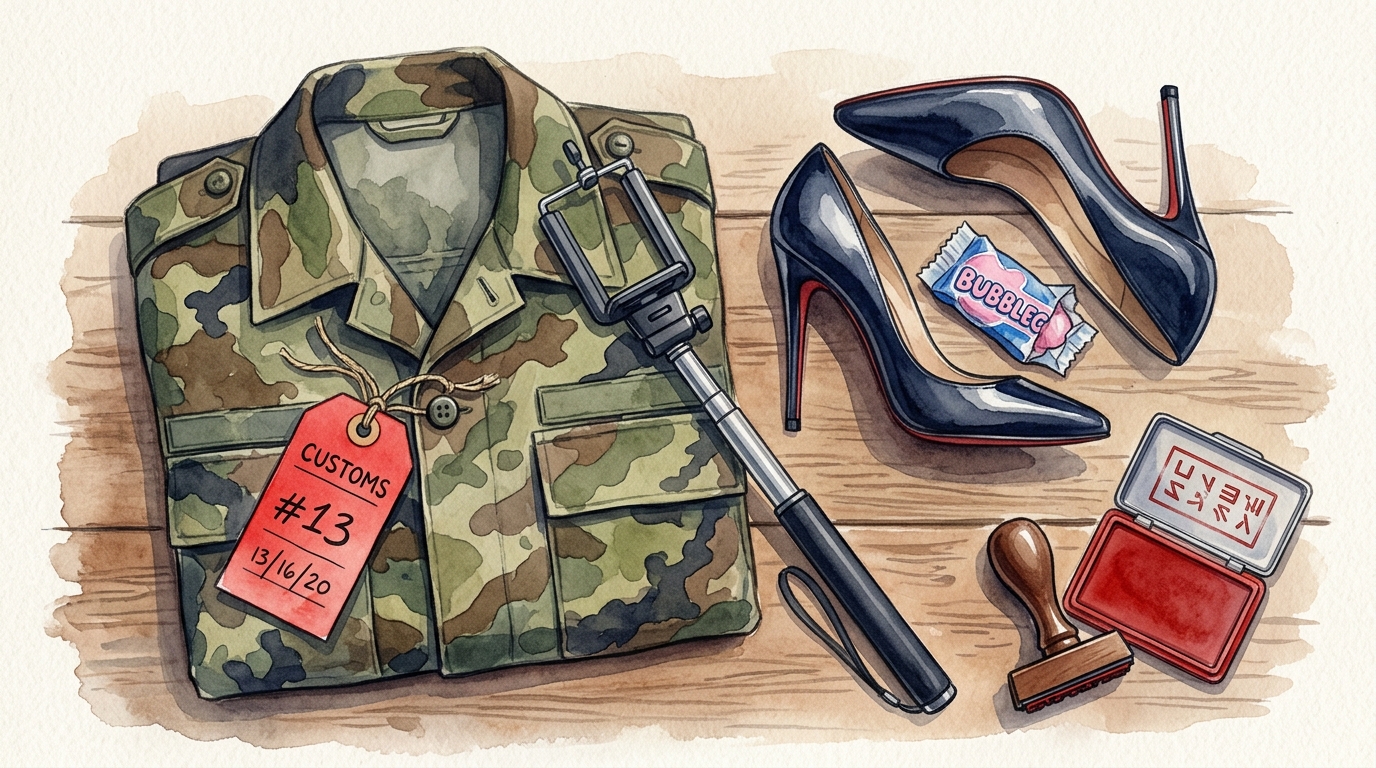
14. Wearing Camouflage in the Caribbean: Up to $2,000 Fine or Prison
In Barbados, Trinidad and Tobago, Jamaica, and several other Caribbean nations, wearing camouflage clothing is illegal for civilians. Barbados's Defence Act reserves camouflage patterns exclusively for military personnel, with violations carrying fines up to $2,000 BBD (about US$1,000), though there are ongoing discussions about updating this decades-old law, or up to one year in prison. Customs officers at the airport can confiscate camo items from your luggage before you even leave arrivals.
Survival tip: Check your wardrobe before packing for the Caribbean. Camo jackets, bags, shorts, and even phone cases can technically be confiscated.
15. Night Swimming in Benidorm, Spain: Up to EUR750
Benidorm and other Spanish coastal towns enforce beach access restrictions between midnight and 7am. Swimming at night without lifeguard coverage risks fines of up to EUR750, and obstructing beach cleaning crews who operate during these hours adds more. The rules exist because of a spike in nighttime drowning incidents and beach theft.
The fix: Stick to hotel pools after midnight. If you want a late swim, check local regulations first.
Laws at least have the benefit of being written down somewhere. The next set of surprises has no rulebook at all.
Social Norms That Will Stop You in Your Tracks
Laws you can Google. Social norms you can't. These are the unwritten rules that no guidebook properly explains, the ones you only discover by accidentally breaking them.
16. Thailand Freezes Twice a Day
At 8am and 6pm every day, Thailand's national anthem plays through loudspeakers in public spaces across the entire country. Everyone stops. Joggers stop. Vendors stop. Entire markets go silent. You stand still with your hands at your sides until it finishes. It lasts about one minute. The first time it happens, you'll think time froze. The second time, you'll find it genuinely moving.
Survival tip: When everyone around you freezes, freeze too. Stand still and wait. It takes about 60 seconds.
17. Talking on Your Phone on Japanese Trains Is Unthinkable
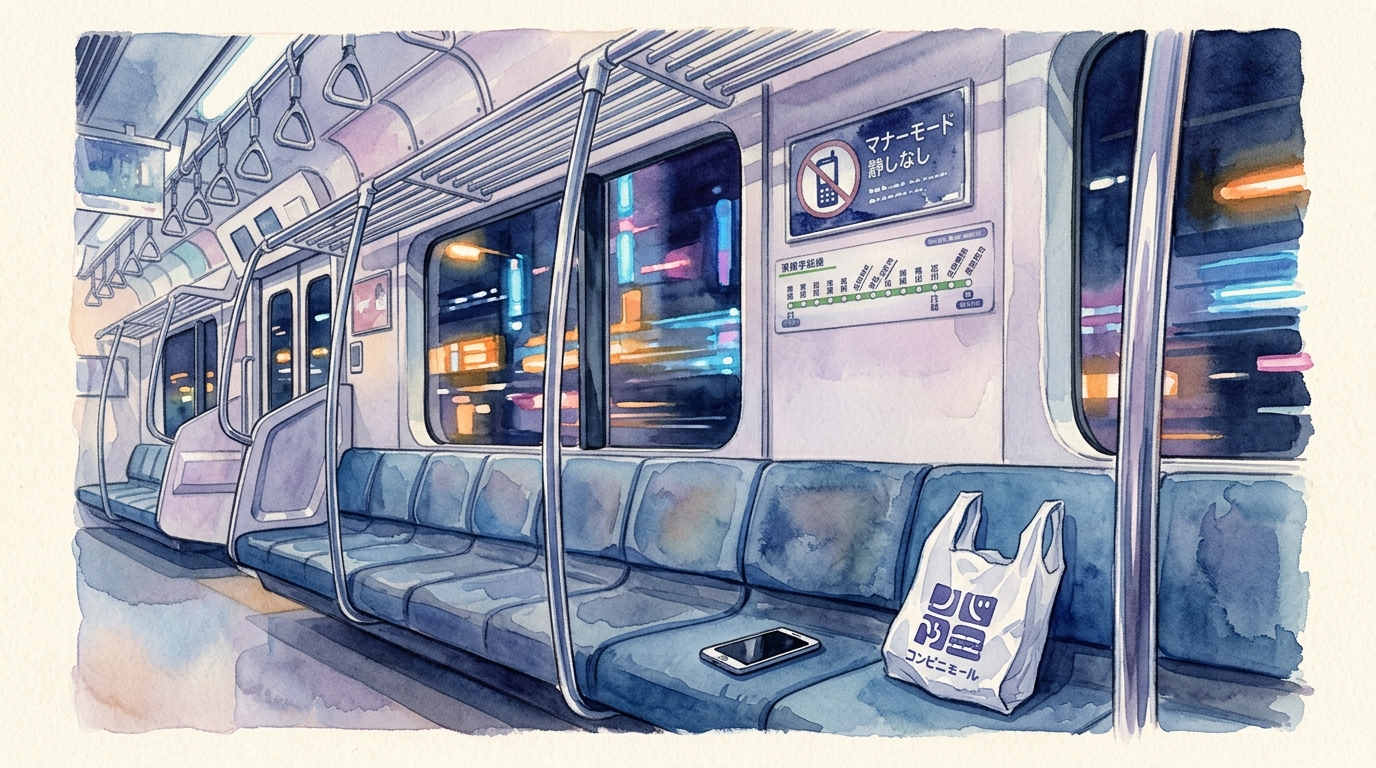
Phone calls on public transit in Japan are considered extremely rude. Signs throughout trains and buses ask passengers to switch to silent mode. Japanese service culture emphasizes collective harmony, and the sound of someone's conversation in a quiet train car violates that principle completely. You'll notice locals texting silently while the car stays pin-drop quiet. We noticed it immediately on our first ride on the Yamanote Line, the silence felt almost eerie.
What to do: Put your phone on silent the moment you board. Text instead of calling. If you must take a call, step off at the next stop.
18. Staff Will Chase You Down to Return Your Change
In Japan, leaving money on the table as a tip doesn't just cause confusion. Servers and shop staff will literally run after you to return it, believing you forgot your change. Tipping in Japan is seen as implying the service wasn't adequate unless paid extra, which can embarrass both the giver and the receiver. Even after welcoming a record 42.7 million foreign visitors in 2025, locals still firmly hope this custom won't change.
Survival tip: Don't tip in Japan. Not at restaurants, not at hotels, not in taxis. A polite "arigatou gozaimasu" (thank you very much) is the appropriate response to good service.
19. South Korean Seat Reservations Are Brilliantly Low-Tech
Walk into a busy fast-food restaurant in Seoul and you'll see phones, wallets, and jackets left unattended on tables. This isn't carelessness. Leaving personal belongings on a table is the standard way to reserve a seat in South Korea. The crime rate is low enough that nobody thinks twice about leaving a smartphone on a McDonald's table for fifteen minutes while they order food.
Pro move: Claim a seat before you order. Leave a non-valuable item (jacket, umbrella, or shopping bag) to hold it. Don't sit at a table with someone's belongings on it.
20. Staring Is Not Rude Everywhere
In Egypt and parts of South Asia, sustained eye contact and open staring at foreigners is extremely common and completely normal. It's not hostile. It's not a scam setup (usually). It's curiosity, plain and simple. In smaller Egyptian towns, a foreign visitor can draw a small crowd of people who simply want to look at you, sometimes for several minutes. For travelers used to Western norms where staring is rude, it can feel deeply unsettling.
A smile and a wave usually breaks the tension. Or just wave and keep walking. Sunglasses help if the attention feels overwhelming.
Social norms are tricky because they shift from country to country with no warning signs. Money, on the other hand, has its own set of invisible rules that hit you right in the wallet.
Money and Payment: The Financial Surprises
Your wallet works differently abroad. Not just the currency, but the entire system of paying for things, tipping, and pricing can catch you completely off guard.
21. Tipping 20% Is a Uniquely American Thing
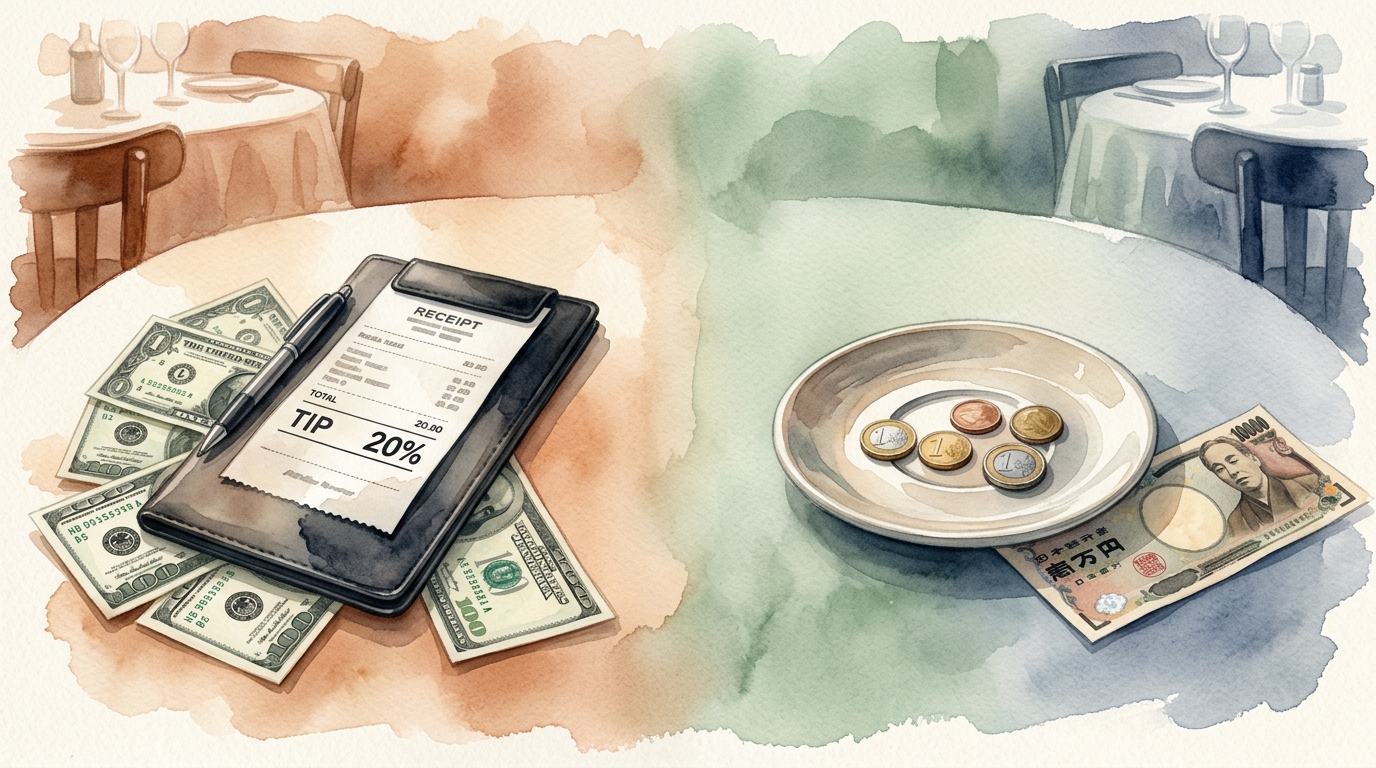
The standard 15-20% tip Americans leave at restaurants is, globally speaking, bizarre. CNBC reports that Americans tip a greater number of service providers and leave larger amounts than any other country. In most of Europe, rounding up or adding 5-10% is plenty. In Japan, tipping is considered rude. In Australia, it's appreciated but never expected. Leaving 20% at a restaurant in Tokyo will confuse your server, and in many cases, they'll chase you down the street to return it.
Survival tip: Research tipping norms before each country. When in doubt, round up to the nearest whole number.
| Country/Region | Standard Restaurant Tip | Notes |
|---|---|---|
| United States | 15-20% | Required Expected, not optional |
| Western Europe | 5-10% or round up | Appreciated, not required |
| Japan | 0% (never tip) | Never Considered insulting |
| Australia/NZ | 0-10% | Optional Nice gesture, never expected |
| Middle East | 10-15% | Service charge often included |
The key takeaway: the US is the global outlier. Everywhere else, tipping is either modest, optional, or actively discouraged.
22. The "Foreigner Price" Is Real (and Legal)
In India, Egypt, and several other countries, dual pricing charges tourists significantly more than locals for the same attractions, services, and transport. At the Taj Mahal, Indian citizens pay 50 INR for the complex entry (250 INR including the mausoleum), while foreign tourists pay 1,100 INR (1,300 INR with mausoleum), a 22x price difference at the gate. At Egypt's Pyramids of Giza, Egyptians pay around 60 EGP compared to 700 EGP for foreigners. This isn't a scam; it's official government policy designed to keep cultural sites accessible to local populations.
Survival tip: Budget for it. Check official site prices before visiting major attractions so you're not blindsided. The pricing gap is usually printed right on the ticket window.
23. Your Card Might Not Work at European Machines
Automated kiosks across Europe rely on chip-and-PIN technology. If your card only supports chip-and-signature (common with US credit cards), it may be rejected at train ticket machines, toll roads, parking garages, and self-service gas pumps. Staffed merchants can usually process your card with extra steps, but unmanned machines often can't. Apple Pay and Google Pay work at many European terminals as an alternative.
Survival tip: Set up a PIN for your credit card before you leave. Carry backup cash. And add your card to Apple Pay or Google Pay as a fallback for stubborn kiosks. If you're still figuring out which card to bring, our guide to using cards abroad compares the best options for foreign transaction fees.
Transport and Infrastructure: Getting Around Is the Adventure
How you get from A to B in another country is often the first and most persistent source of culture shock. The roads, the rules, and the vehicles themselves play by different standards.
24. Most European Rental Cars Are Manual Transmission
Think you'll just grab a car at the airport and go? Walk up to a rental car counter in Italy, Spain, or Portugal and the default vehicle will have a stick shift. In southern Europe and popular holiday destinations, automatic transmission cars can cost 30-50% more and sell out fast during peak season. In northern Europe, where electric vehicles are widespread, automatics are increasingly the default. Most Europeans learn to drive on manuals, so rental fleets in the south still reflect that. If you can't drive stick, you'll pay a premium and you'll need to book early.
Survival tip: Book an automatic at least two months in advance for summer travel. Or learn to drive manual before your trip.
25. Traffic in Cairo and Southeast Asia Follows Invisible Rules
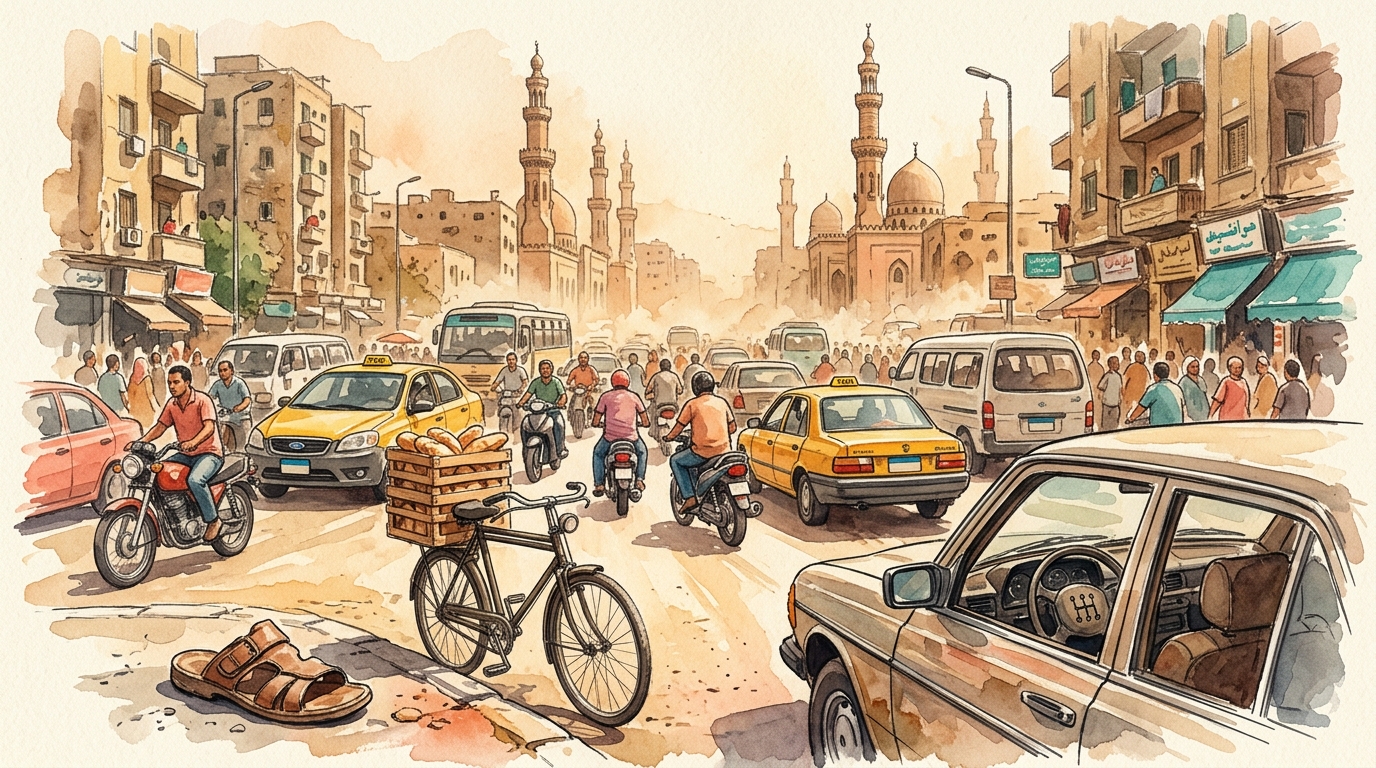
Crossing the street in Cairo, Hanoi, or Jakarta for the first time is a rite of passage. Traffic appears completely lawless: motorbikes weave through cars, lanes are suggestions, and honking replaces turn signals. But there's a system underneath the chaos. Honking means "I'm here," not "get out of the way." Vehicles flow around pedestrians who cross slowly and predictably. Stopping or running is what gets you hit.
Survival tip: Walk at a steady, predictable pace. Don't stop. Don't sprint. Make eye contact with drivers when possible, and let the traffic flow around you. If that sounds terrifying, follow a local across the street the first few times.
Most of these surprises become non-issues with thirty minutes of research before your trip. A personalized travel guide that covers local customs, tipping norms, safety rules, and practical tips can save you from almost every surprise on this list.
- Credit card PIN set up for European chip-and-PIN machines
- Automatic rental car booked (if needed in Europe)
- Local tipping norms researched for your destination
- Coins ready for paid restrooms (EUR0.50-1 in many countries)
- Local dining customs checked (cover charges, siesta hours)
- Destination-specific laws reviewed (camouflage bans, photo restrictions)
Frequently Asked Questions
Why do European restaurants charge for bread and water?
Bread is part of the coperto (cover charge) in Italy, typically one to three euros per person. Water is charged because restaurants serve bottled mineral water by default. In France, tap water is free by law if you ask for "une carafe d'eau." In most other European countries, you need to specifically request tap water or you'll get bottled.
How do you use a squat toilet abroad?
Face the hooded (raised) end, place your feet on the footpads, and squat with your weight on your heels. Many squat toilets have a water hose or bucket for cleaning instead of toilet paper. Carry your own tissue and hand sanitizer. It gets easier after the first time.
Is it rude to tip in Japan?
Yes. Tipping in Japan can be seen as implying the service wasn't adequate or that the server needs charity. Staff may chase you down to return money left on a table. Show appreciation verbally with "arigatou gozaimasu" instead. This applies at restaurants, hotels, and taxis.
What are the strangest laws tourists need to know about?
Three of the most surprising: Venice fines pigeon feeders up to EUR700, Singapore can fine you S$10,000 for importing chewing gum, and Barbados can fine you $2,000 BBD for wearing camouflage clothing. All three are actively enforced. Greece also bans high heels at ancient monuments (up to EUR900), and Florence fines people for eating on certain sidewalks (up to EUR500). The common thread is that these laws protect infrastructure, heritage, or public order, even if they sound absurd to outsiders.
Why do shops close in the middle of the day in Europe?
Southern European countries (Italy, Spain, Greece) observe midday rest periods rooted in climate and cultural tradition. Italy's riposo typically runs from around 1pm to 3:30pm. Shops close so staff can eat lunch and rest during the hottest hours. Supermarkets and tourist-area shops often stay open, but smaller businesses follow the traditional schedule.
Can you wear camouflage clothing abroad?
In many Caribbean nations (Barbados, Jamaica, Trinidad and Tobago) and some African countries, wearing camouflage is illegal for civilians. It's reserved for military personnel. Fines in Barbados reach $2,000 BBD (about US$1,000), and customs officers can confiscate camo items at the airport. Check local laws before packing military-style clothing.
Why do people stare at tourists in some countries?
In countries where foreign visitors are uncommon, staring is driven by curiosity rather than hostility. It's especially common in parts of Egypt, India, and rural areas of many developing nations. The staring isn't considered rude in these cultures. A smile or wave usually diffuses the situation.
Key Takeaways
- Research dining customs before your first meal in a new country. Cover charges, tipping norms, and meal times vary wildly and catch most first-time travelers off guard.
- Carry coins for paid restrooms across Europe, and pack toilet paper for countries where it's not provided.
- Bizarre-sounding laws (pigeon feeding, gum importing, camo wearing) are actively enforced with real fines. Ignorance isn't a defense.
- Social norms like Thailand's anthem freeze, Japan's no-tipping culture, and South Korea's phone-on-table reservations aren't obvious until you experience them. Thirty minutes of pre-trip research prevents most awkward moments.
- Your payment methods may not work at automated machines in Europe. Set up a PIN and carry backup cash.
- Dual pricing for tourists is official policy in many countries. Budget for it rather than fighting it.
- A personalized travel guide covering local customs, laws, and practical tips for your destination can save you from having to memorize all 25 of these from scratch.
- When something surprises you, observe before reacting. Watch what locals do and follow their lead.
Sources
- Explore.com: What It Really Means If Your Restaurant Bill in Italy Has a Coperto Charge
- Blue Community: Free Tap Water in European Restaurants
- Stars and Stripes Europe: Riposo in Italy, The Art of Midday Rest
- The Muse: A Crash Course in European Dining Etiquette
- Rough Guides: Morocco Customs and Etiquette
- Wikipedia: Pay Toilet (global overview)
- Wikipedia: Squat Toilet (global prevalence)
- CAP Travel Assistance: Where You Can't Flush Toilet Paper
- Fodor's Travel: Surprising Things That Can Get You Fined in Italy
- La Bella Vita: Venice Pigeon Feeding Fine
- Wikipedia: Chewing Gum Sales Ban in Singapore
- Islands.com: Wearing High Heels to See Greece's Antiquities Is Illegal
- Explore.com: The Unexpected Selfie Ban in Sri Lanka
- World Population Review: Camouflage Clothing Laws by Country (2026)
- Idealista: Spain's Beach Laws in 2025
- Thairanked: Why Everyone Stops for Thailand's National Anthem
- Japan Guide: Japanese Train Etiquette
- Interac Network: Tipping Etiquette in Japan
- Japan Times: Japan Foreign Visitors Hit Record 42.7 Million in 2025
- KoreaTravelPost: Restaurant Culture in South Korea
- CNBC: How Much People Tip Around the World
- Lonely Planet: Guide to the Taj Mahal (pricing and visitor info)
- Discovery Tours Egypt: Pyramid Entry Costs Explained
- Thrifty Traveler: Do You Need Chip-and-PIN Cards for International Travel?
- Auto Europe: Automatic Transmission Car Rental in Europe
- Rough Guides: Egypt Travel Guide
- Rough Guides: Cairo Travel Guide
Keep Reading
More travel tips and guides picked for you
Europe's Overtourism War: Tourist Taxes, Airbnb Bans, and the Protests Reshaping Travel in 2026
Europe's overtourism backlash hit a turning point in 2026. Venice expanded its day-tripper fee to EUR 10, Barcelona doubled its tourist tax, and the Louvre introduced dual pricing. Here is every new tax, restriction, and protest planned this summer.
What Not to Do in Europe 2026: Tourist Fines, Culture Rules, and the Costs Nobody Warns You About
Barcelona's tourist tax doubled today. Venice fines you for swimming in canals. Rome fines you for sitting on the Spanish Steps. Italy fines you €7,000 for buying a fake bag. Here's every fine, with exact 2026 amounts.
The Great Tourist Food Lie: "Traditional" Dishes Locals Never Actually Eat (And What to Order Instead)
Fettuccine Alfredo is not Italian. Sangria is a tourist drink. Chicago locals don't eat deep dish. Here's what "traditional" dishes are actually fake, and what locals order instead, from Rome to Reykjavik.