Where Not to Travel in 2027: New Fees, Caps and Closures

Key Highlights
- 1
- 2
- 3
+5 more in the takeaways below
You've got a Bhutan trip priced at $100 a night, penciled in for next summer. What you haven't checked: that rate expires August 31, 2027, and nobody at the Tourism Council has said what replaces it. Three time zones away, a Barcelona hotel room that cost you an extra €4 a night last year is about to cost €6. Nobody sends a warning email for this stuff.
Some 2027 travel changes are locked in: Barcelona's tourist surcharge climbs to €6 a night, Tokyo adds a 3% accommodation tax on April 1, and Bhutan's discounted $100 nightly fee expires August 31 with no replacement rate announced yet. Others are still just talk, not law: Amsterdam's 20% tax target, Bali's rumored fee jump, and Thailand's arrival fee all lack an enacted bill or date. We sort the confirmed changes from the proposed ones, destination by destination, plus the visitor caps and real closures (Cinque Terre's Blue Trail, Maya Bay) already in effect.
Confirmed vs. Proposed: The Difference That Actually Matters
Every year, travel roundups mix two very different kinds of claims: fees that are law, and fees someone floated in a government meeting. Confirmed means a legislature voted, an agency signed off, or an effective date got officially scheduled. Proposed means officials are discussing it, with no bill, rate, or date locked down. Mixing the two up gets you budgeting for a tax that might never happen, or missing one that already will. That's the real question behind every "where not to travel in 2027" list: which of these changes are locked in, and which are still just talk.
We built the flip side of this list a few weeks ago: every 2027 destination with a real reason to go. This is the other half of that picture, the fee hikes, closures, and caps that make 2027 a year to plan around, not just plan for. Confirmed, not proposed is the filter we ran every entry below through, and it's the filter most "avoid these places" lists skip entirely.
| Status | What it means | Real example | What to do |
|---|---|---|---|
| Confirmed | Voted, signed, or officially scheduled | Barcelona's surcharge hits €6/night in 2027 | Budget for it now |
| Confirmed | Enacted, with an effective date set | Tokyo's 3% accommodation tax starts April 1, 2027 | Budget for it now |
| Proposed | Discussed publicly, no bill or date | Amsterdam's tax reaching 20% by 2031 | Watch it, don't budget yet |
| Proposed | Government intent stated, no rate set | Iceland's "considerably higher" lodging tax | Watch it, don't budget yet |
Notice the pattern. The confirmed column has a specific number and a specific date attached to an official vote. The proposed column has adjectives. That's the tell you can use on any travel article you read this year, including this one: if a price hike doesn't come with a date and a governing body's name, treat it as a rumor until it does.
Where Not to Travel in 2027 Without Budgeting for New Fees
Three places have turned proposals into enacted 2027 policy already: Catalonia, including Barcelona, Tokyo, and, at a smaller scale, Santorini's own port authority. If you're booking any of these for 2027, the new rate isn't a maybe.
Barcelona runs two separate tourist tax lines, and the €6 and €4.50 figures that get repeated everywhere are ceilings that vary by hotel category, not flat per-night totals every guest pays. The city's own municipal surcharge, approved by the Barcelona City Council, rises for its top tier in €1 steps: €5 in 2026, already law, then €6 in 2027, €7 in 2028, and €8 by 2029, expected to land on April 1 again by analogy with the 2026 step, though Barcelona's own ordinance page doesn't confirm an exact 2027 date. Separately, the Catalan Parliament voted on February 25, 2026 to raise the tourist-tax ceiling for the rest of Catalonia, outside Barcelona, from €4.50 to a €6 ceiling, confirmed for April 1, 2027. Barcelona itself runs a separate, already-higher regional rate, €7 a night for luxury hotels, on top of its own municipal surcharge, which is why a 5-star hotel guest was already paying a combined €12 a night in 2026, and will pay more once its own municipal surcharge steps up again in 2027. Budget by hotel category, not by the headline number.
Tokyo's change is bigger in scope than it sounds. The Tokyo Metropolitan Government is replacing its old flat-fee lodging tax with a 3 percent charge on room rates starting April 1, 2027, and raising the tax-free floor to under ¥13,000 a night so budget travelers stay exempt. The new rule also folds in Airbnb-style short-term rentals, which were previously exempt. If you're planning a longer Japan trip and want every fee change in one place, not just Tokyo's, our full rundown of Japan's 2026 tourist fees and rules covers the rest.

Santorini's cruise passenger levy isn't new for 2027, it's been running since July 21, 2025, but it's worth knowing because no 2027 change has been announced. The current schedule charges €20 per passenger from late July through September, stepping down to €12 in the shoulder months and €4 from November through March. Santorini's port authority also capped cruise arrivals at 8,000 passengers a day the same year the levy started, and neither number has moved since. For now, expect the same fee tiers in 2027 unless Greek authorities say otherwise. For the broader European tax wave this fits into, our overview of Europe's overtourism backlash has the full continent-wide picture.
The Visitor Caps Already Limiting You
Any number you see online for a 2027 Machu Picchu cap higher than 5,600 is not sourced to anything official, and the same goes for every other cap below. Four destinations are running hard numeric limits on how many people can show up on a given day, and every single one of them has a cap that's confirmed for right now but silent on 2027. That's not a loophole, it's just how these policies get written: agencies set a cap for the current season and revisit it later.
| Destination | Current cap | 2027 status |
|---|---|---|
| Machu Picchu | 5,600 visitors/day, high season (from June 19, 2026) | No 2027 figure published |
| Santorini (cruise port) | 8,000 passengers/day | Policy explicitly covers 2025-2026 only |
| Komodo National Park | 1,000 visitors/day across Padar, Rinca, Komodo islands + 23 dive sites | No change announced since April 2026 rollout |
| Antarctica (IAATO) | 100 people ashore per landing; ships over 500 passengers can't land at all | Standing rule, no new numeric season cap set for 2026-27 |
Machu Picchu ran a 4,600-visitor daily limit through June 18, 2026, before the high season pushed it to 5,600, per El Comercio's reporting from Cusco. Same story at Komodo, where a mandatory online booking system now blocks reservations the moment the daily 1,000-visitor quota fills across Padar, Rinca, and Komodo islands plus 23 surrounding dive sites, according to Indonesia's state news agency ANTARA.
Antarctica is the odd one out because its limit isn't a headline number, it's a set of standing operational rules from the tour operator association IAATO: no more than 100 people ashore from any one ship at a time, and vessels carrying over 500 passengers don't get to land anyone. MercoPress reported 118,491 total visitors for the 2024-25 season, down slightly from 122,072 the year before, but still well past the 100,000 mark that's become routine now.

The Trails and Beaches Actually Closed
Two closures are real, confirmed, and easy to miss if you're working off an old map or an outdated packing list. Neither is a 2027 announcement exactly, they're ongoing, which is precisely why they trip people up.
Assuming a trail or beach that was open on your last trip, or on a map you saved two years ago, is still open. Closures like these don't always make international headlines when they happen, and they don't reliably make headlines when they end, either.
Cinque Terre's Blue Trail between Manarola and Corniglia has been shut for years, and it's staying that way. The Cinque Terre National Park's own trail status page states plainly that the route is "chiuso. Attualmente interdetto al transito a causa di frane," closed and currently barred to foot traffic due to landslides, with no reopening date given. Only the first 300 meters out of Manarola remain walkable, according to Cinque Terre Hike's trail guide. If your Cinque Terre plan hinges on that specific coastal leg, replan it now around the inland Volastra route instead of finding out at the trailhead.
Maya Bay, the Thai beach made famous by a 2000 film, closes every year for the same reason: monsoon-season recovery. This is a recurring annual closure, most recently confirmed for August 1 through September 30, 2026, both for ecosystem rest and because the pier used for boat access gets genuinely dangerous once the seas pick up. The pattern has repeated annually since the bay reopened with restrictions in 2022. Exact 2027 dates haven't been published yet, but count on a similar window, and don't book a September Phi Phi trip around beach access at Maya Bay specifically.
The Cap Nobody's Enforcing: Boracay
Boracay is the cautionary tale in the other direction: a cap that exists on paper but not in practice. A 2018 DENR-commissioned study set the island's carrying capacity at 19,215 people at any given time. That number is still the official figure. It's also being blown past regularly, and nobody's stopping it.
Boracay hit a peak breach of 32,780 visitors on Good Friday 2026, more than 13,000 people over the official 19,215 cap, per BusinessMirror. The same report states the carrying capacity figure is "no longer being enforced" by the Departments of Interior and Local Government, Environment and Natural Resources, or Tourism.
So the lesson here isn't "avoid Boracay." It's that a posted cap tells you nothing about actual crowd levels unless you also check whether anyone's holding the line. Boracay's isn't held. If your goal is a quieter beach trip, treat the 19,215 figure as decorative and look at recent holiday-period reporting instead.
Bhutan's Cliff Edge: The One Deadline That Actually Matters
Everything else in this article is a range or a policy status. Bhutan is a hard date, and it's the single most useful piece of booking-timing information in this whole roundup.
- September 2023 Bhutan's 50% discount on its Sustainable Development Fee begins, cutting the nightly rate from $200 to $100 per person.
- April 1, 2027 Catalonia's tourist tax ceiling for the rest of the region, outside Barcelona, rises to €6, confirmed, and Tokyo's 3% accommodation tax takes effect. Barcelona's own municipal surcharge also steps up to €6 in 2027, expected the same day by analogy with its 2026 launch, though the city hasn't confirmed an exact date.
- August 31, 2027 Bhutan's discounted SDF rate expires. The government has said only that it "may discontinue" the incentive afterward, with no replacement rate announced.
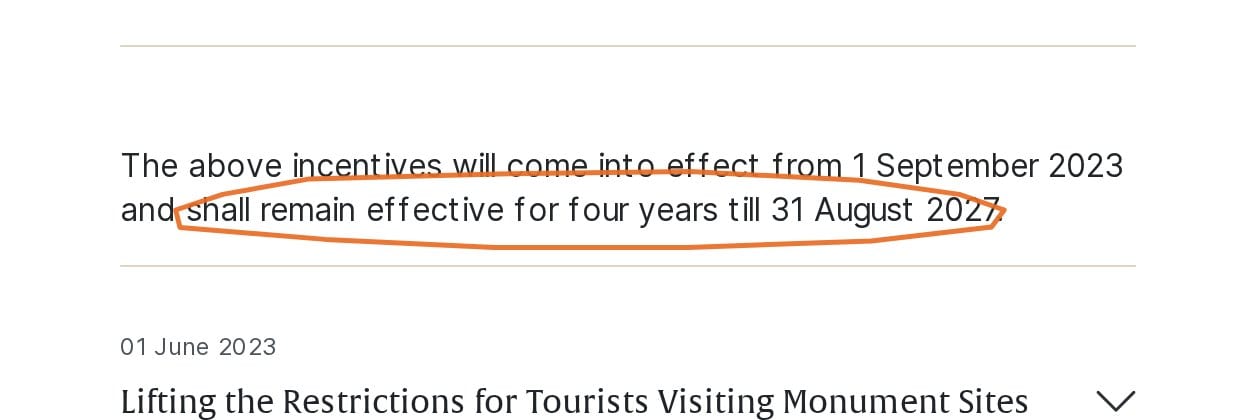
The Tourism Council of Bhutan's own announcement is unambiguous about the window and just as clear about the uncertainty after it. The incentives, it says, will "remain effective for four years till 31 August 2027," and afterward the Royal Government "may discontinue the above incentives to uphold and promote High Value Low Volume Tourism Policy." That's not a threat, it's just honest: the current $100 rate is not guaranteed past that date, and no post-2027 number exists yet. If a trip that depends on the discounted rate is even a possibility for you, that's the deadline to plan around, not the trip dates themselves.
If Bhutan is on your radar at all for 2027, book and travel before August 31 if the $100 rate matters to your budget. Waiting until closer to the date risks landing after a rate change with zero notice, since Bhutan hasn't said what, if anything, replaces the discount.
Bhutan isn't the only date worth writing down before you book. Here's the short version of everything above, the dates that actually change what you'll pay or where you can go. If you're also sorting out visas, passport validity, or new entry-authorization systems for any of these trips, our 2026 travel document checklist covers that separately.
- Bhutan's SDF discount ends August 31, 2027, check the Tourism Council of Bhutan's site before locking in a rate
- Catalonia's tourist tax for the rest of the region (outside Barcelona) steps up on April 1, 2027, confirmed; Barcelona's own municipal surcharge also rises in 2027, expected the same date
- Tokyo's 3% accommodation tax starts April 1, 2027, and now covers short-term rentals too
- Cinque Terre's Manarola-Corniglia trail has no reopening date, confirm current status before you hike
- Maya Bay's exact 2027 closure dates aren't published yet, expect an August-September window
- Venice hasn't decided if a 2027 access fee exists at all, don't assume last year's rate carries over
If you're weighing several 2027 destinations at once, planning tools like TripProf let you keep each option's checklist items and saved documents together instead of a dozen browser tabs and a screenshot folder of fee pages. And if you want every other date-driven event of 2027 in one place, not just the fee deadlines, our 2027 travel events calendar lays out the full year.
bhutan.travel · 2026-08-13
The Watch List: Proposed Changes That Aren't Law Yet
These six are the ones getting reported as done deals when they're really not. Every one of them is a real, credible discussion, and every one of them could still change shape, get delayed, or quietly disappear before it takes effect.
| Destination | Current rate | What's proposed | Legislative status |
|---|---|---|---|
| Amsterdam | 12.5% accommodation tax | 16% in 2027, then +1 point a year to 20% | Coalition proposal, not enacted |
| Bali | IDR 150,000 one-time levy | Fivefold proposal floated (to ~$50), per June 2024 DPRD report | No bill, rate, or date confirmed |
| Iceland | ISK 800/night (hotels), ISK 400 (campsites) | "Considerably higher" stated intent | No new rate or date announced |
| Thailand | No arrival fee currently collected | THB 300-500 per air arrival | Targeted early 2027, delayed multiple times |
| Venice | No fee in force (2026 trial's fee applied through July 26) | Undecided | City government hasn't set a 2027 scheme |
| Mount Fuji | ¥4,000/climber, all 4 routes (2026); Yoshida capped 4,000/day | 2027 figure unknown | Not yet published |
Amsterdam draws the most attention because the target number is dramatic: a new coalition government wants to take the accommodation tax from 12.5% to 16% in 2027, then up 1 percentage point a year until it hits 20%. That's a coalition proposal, not a passed law, and it's a separate revenue measure, not an enforcement mechanism for the city's long-standing pledge to cap annual overnight stays at 20 million. Amsterdam has already blown past that target: the city logged a record 23.7 million overnight stays in 2025, nearly 4 million over the cap, and a resident group has sued the city over it. Related pressure on the same city, but two separate tracks, not cause and effect.

Bali's situation is murkier because no proposal has become a bill. The most concrete figure on record came from a Bali DPRD Commission II proposal reported in June 2024: raising the current IDR 150,000 foreign tourist levy as much as fivefold, to about $50 per visitor, per CNN Indonesia's reporting. No bill, confirmed rupiah figure, or effective date exists as of August 2026. Iceland is similar in shape: the current lodging tax sits at ISK 800 per unit for hotels and guesthouses, ISK 400 for campsites, set by Iceland's tax authority from January 2025, and the government said in October 2025 it plans to propose a "considerably" higher rate. No new number has landed since.
Thailand's arrival fee is worth watching mainly because of its track record. The Tourism and Sports Ministry says it expects collection to begin in early 2027, after talks with airlines on the collection method are completed, with the fee itself set at THB 300-500 per air arrival. This plan has already been delayed multiple times since it was first floated years ago, and airlines have pushed back hard on collecting it through ticket sales, which is exactly the kind of unresolved detail that keeps sliding launch dates.
Venice's 2026 access fee trial has already run its course for the year. The city's own FAQ confirms the fee applied through July 26, 2026, its last chargeable day, and no fee has been in force since July 27. Whether Venice charges an access fee again in 2027 is entirely up to the city government, which hasn't published a decision either way.
Mount Fuji's 2026 season brought a uniform fee to all four official climbing routes, Yoshida, Subashiri, Fujinomiya, and Gotemba, at ¥4,000 per climber, with the Yoshida Trail specifically capped at 4,000 climbers a day. No 2027 figure has been published yet for either the fee or the cap.
The Galapagos Islands are not getting a 2027 price hike, despite what a few aggregator sites imply. The entry fee already doubled, from $100 to $200 per foreign visitor, back in August 2024. It's held steady since, and no further increase has been proposed.
Why Nobody's Warning You: The Overcrowding Behind the Fees
Every fee and cap in this article exists because somewhere, a place got too full for its own infrastructure. That's not unique to the famous names, either. It's happening to spots that never make an "avoid this" list.
When I left Yosemite NP, there were probably about 2 miles of cars trying to get in. Our national parks are bursting at the seams. Even in Feb you have to have reservations for Yosemite on the weekends.
r/travel user, quoted via Time Out
That's Yosemite, a US national park with no entry fee hike anywhere near the scale of what's happening overseas, and travelers are still describing traffic jams and February-weekend reservations. The pattern repeats outside the US too. One Canadian traveler, going by Acminvan on the same thread, put it this way: "At every scenic attraction now, you're lucky if you can squeeze your camera at an awkward angle to avoid 45 elbows being in your shot and 25 people taking selfies."
It's jaw-droppingly beautiful and most of the scenery is packed into a smallish space, so I understand why it's popular with tourists and often crowded. But it ruins the vibe when you have visitors everywhere clogging the streets and roads, driving up prices, overwhelming accommodation, and overflowing bins.
That's a description of England's Lake District, not Venice or Santorini, via the same Reddit thread Time Out rounded up. The fees and caps in this article get the headlines because the numbers are easy to quote. The overcrowding driving them is broader than the headline destinations, which is worth remembering before you assume a fee-free spot is automatically an easy trip. Some of this pressure shows up as rule-breaking risk too, not just crowding, and our guide to Europe's tourist fines and etiquette rules covers that separate cost.

Frequently Asked Questions
Where should I not travel in 2027 because of new fees or overtourism?
No destination is fully off-limits, but budget carefully for Barcelona (combined tourist taxes already at €12 a night for luxury hotels, rising further as its municipal surcharge climbs through 2027) and the rest of Catalonia (tourist tax up to €6 a night), Tokyo (new 3% accommodation tax), and Bhutan (its discounted $100 nightly fee expires August 31, 2027). Also check current closure status for Cinque Terre's Blue Trail and Maya Bay's seasonal shutdown before finalizing an itinerary.
What new tourist taxes are starting in 2027?
Confirmed for 2027: Barcelona's municipal surcharge rises to €6 a night, a separate regional stay tax for the rest of Catalonia (outside Barcelona) caps at €6 from April, and Tokyo introduces a 3% accommodation tax on April 1. Amsterdam's jump to 16%, Bali's rumored levy increase, and Thailand's arrival fee are all still proposals, not enacted law.
Is Boracay closed in 2026 or 2027?
No, Boracay is open. Its 19,215-visitor daily cap still exists on paper, but Philippine authorities confirmed it's no longer being actively enforced by the DILG, DENR, or DOT. The island hit a peak breach of 32,780 visitors on Good Friday 2026, more than 13,000 over the limit.
What is the visitor cap for Komodo National Park in 2027?
Komodo National Park has capped daily visitors at 1,000 people across Padar, Rinca, and Komodo islands plus 23 surrounding dive sites since April 2026, enforced through mandatory online booking that blocks reservations once the quota fills. No change to this cap has been announced for 2027, so it's the number to plan around.
Is Machu Picchu limiting visitor numbers in 2027?
Machu Picchu's daily cap was 4,600 visitors through June 18, 2026, then rose to 5,600 for the high season starting June 19. Peru's Ministry of Culture hasn't published a separate 2027 number yet.
What happens to Bhutan's discounted tourist fee after August 2027?
Nobody knows yet. Bhutan's Sustainable Development Fee has been discounted 50%, from $200 to $100 a person per night, since September 2023, but that discount is written to expire August 31, 2027. Bhutan's government has only said it "may discontinue" the incentive after that date.
Is Maya Bay open or closed right now?
As of August 2026, Maya Bay is open. It closes every year for its monsoon-season recovery period, most recently August 1 to September 30, 2026. The pattern has repeated annually since 2022, so expect a similar window in 2027, though exact dates aren't published yet.
Key Takeaways
- Three changes are locked in for 2027: Barcelona's municipal surcharge and the rest of Catalonia's regional tax both step up to €6 a night (Barcelona's own separate regional rate is already higher), and Tokyo adds a 3% accommodation tax on April 1.
- Bhutan's discounted $100 nightly fee has a hard expiration date, August 31, 2027, with no announced replacement rate. Book before then if that price matters to your trip.
- Visitor caps are tightening at Machu Picchu, Komodo, and Santorini's cruise port, but none of them have published 2027 numbers yet, only current-season figures.
- Cinque Terre's Blue Trail between Manarola and Corniglia is closed indefinitely for landslide repair, and Maya Bay closes every August and September for ecosystem recovery.
- Not every posted cap means much. Boracay's 19,215-visitor limit is being breached by more than 13,000 people on peak days, and Philippine authorities aren't enforcing it.
- Skip the panic on Amsterdam's 20% tax target, Bali's rumored fee jump, and Iceland's "considerably higher" lodging tax. None of these are law yet.
- The Galapagos Islands already had their fee hike, in 2024. The $200 entry fee hasn't moved since, and no further increase has been proposed.
- None of this requires a spreadsheet of government websites. Apps like TripProf can hold each destination's checklist, documents, and trip details in one place while you sort out which fees are real. Either way, 2027 rewards travelers who check the primary source before they book, not after.
Sources
- Tourism Council of Bhutan: SDF discount announcement: official incentive window and post-2027 policy language
- The Standard: Tokyo's 3% accommodation tax: rate, effective date, and tax-free threshold
- Comune di Venezia (Venezia Unica): access fee FAQ: 2026 trial end and 2027 decision authority
- Yamanashi Prefecture: Mount Fuji Yoshida Trail restrictions: 2026 fee, daily cap, and season dates
- El Comercio: Machu Picchu high-season capacity: 4,600 to 5,600 visitor cap change
- Travel Market Report: Galapagos entry fee doubling: $100 to $200 fee, effective August 2024
- Municipal Port Fund of Thira: Cruise Ship Berthing Policy 2025-2026: 8,000 passenger daily cap
- gCaptain: Greece's Santorini cruise passenger levy: tiered €4 to €20 fee schedule
- Catalan News: Barcelona's staged tourist tax surcharge: €5 to €8 schedule, 2026 to 2029
- Catalan News: Catalonia's regional tourist tax increase (outside Barcelona): €4.50 to €6 ceiling, Catalan Parliament vote
- Catalan News: Barcelona's new tourist tax in force: combined €12/night rate for 5-star hotels from April 2026
- SoraNews24: Tokyo's accommodation tax revision: private rentals and guesthouses previously exempt
- DutchNews.nl: Amsterdam's proposed tourist tax hike: coalition plan to reach 20% by 2031
- NL Times: Amsterdam's record overnight stays: 23.7 million overnight stays in 2025, resident lawsuit over the 20 million cap
- Love Bali (Bali provincial government): tourist levy FAQ: current IDR 150,000 rate
- CNN Indonesia: Bali DPRD's proposed levy increase: fivefold proposal to $50, June 2024
- Skatturinn (Iceland Revenue and Customs): lodging tax rates: ISK 800/400 rates effective January 2025
- Euronews: Iceland's proposed higher tourist tax: government's "considerably higher" statement
- Nation Thailand: Thailand's air arrival fee timeline: THB 300-500 fee, early 2027 target
- Tisland Travel: Maya Bay's 2026 seasonal closure: August 1 to September 30, 2026 closure window
- BusinessMirror: Boracay's unenforced carrying capacity: 19,215 cap versus 32,780 Good Friday peak
- ANTARA News: Komodo National Park's daily visitor cap: 1,000/day quota across Padar, Rinca, Komodo islands and 23 dive sites, effective April 2026
- IAATO Bylaws: 100-person ashore limit and 500-passenger landing restriction
- MercoPress: Antarctica's 2024-25 visitor season: 118,491 visitors and IAATO landing rules
- Parco Nazionale delle Cinque Terre: trail 592-2 status: Manarola-Corniglia closure due to landslides
- Cinque Terre Hike: Blue Trail Manarola-Corniglia status: first 300 meters from Manarola remain open
- Time Out: Reddit's most overtouristed places roundup: Yosemite, Canada, and Lake District traveler quotes
Last updated: September 19, 2026
Keep Reading
More travel tips and guides picked for you

Wizz Air and Ryanair are cutting Vienna flights: what to book instead
Wizz Air has fully left Vienna and Ryanair has cut five aircraft over Austria's aviation tax. Here's exactly what changed, why it happened, and how to still book a cheap flight this winter.
Mallorca's tourist tax hike got cancelled. Here's what a 2026 trip really costs
The Balearic tourist tax hike everyone's still warning about got cancelled in February. Here's what a week on Mallorca actually costs in 2026, flights, hotel, tax, and food, with real numbers.

The best value destinations for Swiss francs right now
The Swiss franc is near decade highs, and Switzerland just got confirmed as Europe's second priciest country. Here are eight real destinations, ranked by an official price index, where that gap is worth planning a trip around.