The vignette scam targeting eight European countries this autumn

Key Highlights
- 1
- 2
- 3
+3 more in the takeaways below
A fake vignette site can turn a 9.60 euro sticker into a four figure charge. Germany's Baden-Wurttemberg consumer-protection office documented fake payment screens, as of July 2026, billing drivers roughly 500,000 Armenian dram, over 1,000 euros, for a toll sticker that should have cost a small fraction of that. Switzerland's federal cybersecurity office and the Austrian criminal police issued their own warnings inside the same twelve months.
Eight countries are named.
Austria adds a deadline: its paper toll sticker disappears for good on 1 February 2027.
That date matters more than it looks. ASFINAG, Austria's own toll authority, says 75 percent of its annual vignettes are already digital, as of October 2025. That means a quarter of its regular customers, plus every occasional visitor who still grabs the sticker at a border kiosk, is about to buy a vignette online for the first time.
That is exactly the moment a scam site works best.
The fix is one habit, not ten. It comes right after the countries this actually hits.
- Fresh warnings, same trick: Germany's Verbraucherzentrale (15 July 2026) and Switzerland's federal cybersecurity office (6 January 2026) both flagged fake vignette sites this year, across eight countries.
- 2027 raises the stakes: Austria stops selling the paper sticker for good on 1 February 2027, per ASFINAG's own announcement, pushing its remaining paper-sticker buyers online.
- The tell: a fake payment screen can show an odd total like 500,000 Armenian dram, and copycat domains often end in .mom or .lat instead of the real government address.
- The fix: type the country's own official domain yourself. Never a sponsored search ad, an SMS link, or a "vignette blocked" email.
- The markup: even the non-criminal version of this, an overpriced reseller, can turn a 10 to 20 euro sticker into 40 euros or more, as of July 2026.
Who this hits right now
Anyone driving through Austria, Switzerland, Czech Republic, Slovakia, Slovenia, Hungary, Romania or Bulgaria this autumn or over ski season is a target, because those are the eight countries named in the July 2026 warning. It hits hardest on two overlapping groups. Drivers who have always bought the paper sticker are now doing this online for the first time, and so is anyone searching for a vignette from a phone five minutes from the border.
If you are also tracking this autumn's EES border delays on the same trip, add the vignette check to the same pre-departure list, right next to the rental-car damage scam most road-trippers never think to check either.
In TripProf's own trip data, 19.3 percent of trips (190 of 982) plan to get around by their own vehicle once they reach the destination, versus 72.7 percent (714) by public transport. TripProf data, 982 trips planned in TripProf, as of 2026-09-17. Percentages are of TripProf users, not of travelers generally. That self-drive fifth is exactly who needs a real vignette, not a search result.
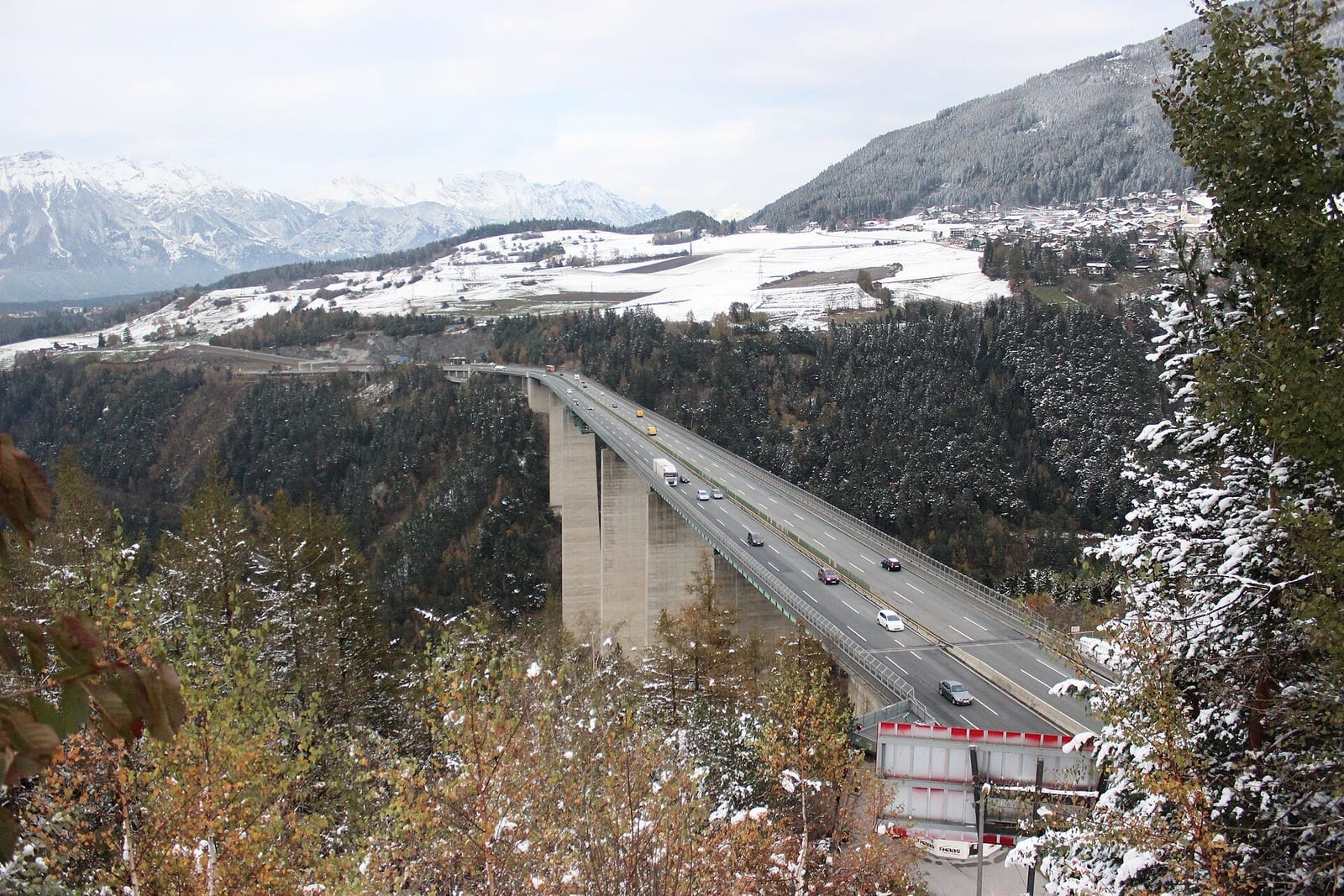
Photo: Steinsplitter · CC BY-SA 3.0, via Wikimedia Commons
Buy from these eight sites, and nowhere else
Buy the vignette from one of the eight official sites below, typed in yourself, never a search ad, a text message, or an email claiming yours is about to expire. Switzerland's customs authority says it plainly. The e-vignette costs a flat 40 Swiss francs as of May 2026, no deposit, no surprise total.
The FOCBS will never ask you to confirm your payment information by email.
Swiss Federal Office for Customs and Border Security
- Type the address yourself. Do not tap a sponsored result, a text message link, or an email link. Bookmark the real one before the trip.
- Check the currency before you confirm. A vignette priced in anything other than the local currency, or a total that looks four figures for a toll sticker, is a closed tab, not a purchase.
- Read the domain, not the logo. Austria's federal police warn that fake ASFINAG shops use misspelled addresses or odd endings like .mom or .lat, dressed up with the real branding.
- Save the confirmation like any other travel document. A screenshot in a folder, or the document storage in a trip-planning app like TripProf, alongside your passport scan and insurance policy, beats an email you will delete by mistake.
Bookmark these before you go. Every other result, including a paid ad that outranks them, is not the source.
| Country | Official site | Local name |
|---|---|---|
| Austria | shop.asfinag.at | Vignette |
| Switzerland | via.admin.ch/shop | E-vignette |
| Czech Republic | edalnice.gov.cz | Dálniční známka |
| Slovakia | eznamka.sk | Diaľničná známka |
| Slovenia | evinjeta.dars.si | Vinjeta |
| Hungary | ematrica.nemzetiutdij.hu | Matrica |
| Romania | erovinieta.ro | Rovinietă |
| Bulgaria | bgtoll.bg | Vinetka |
Every one of these is a government or state-toll-authority domain, and every one was reachable when we checked this week. Typing the address by hand is the entire defense.
Why fake vignette sites are surging now
So two dated warnings landed within seven months of each other, and neither describes an old problem. Switzerland's federal cybersecurity office flagged a wave of phishing messages on 6 January 2026, right as the country's sticker-era vignette approached its 31 January expiry. The messages told recipients their e-vignette had been "temporarily blocked" and pointed them to a fake payment page. Germany's Verbraucherzentrale followed in July with the eight-country, cross-border version, timed to summer road trips. Austria's own criminal police keep a standing page on the fraud, last updated 29 July 2026, because it never fully stops.
It's the same shape as this summer's WhatsApp booking scam that hit hotel guests: a convincing copy of an official channel, arriving right when a real deadline creates urgency.
The reseller version is less criminal and more common. German consumer outlet CleanKids reports that, as of July 2026, a vignette priced at 10 to 20 euros can turn into 40 euros or more on a site that is not stealing your card, just marking up a public price with no disclosure. A separate wave, reported by ad-hoc-news in January 2026, uses text messages and emails claiming a vignette payment failed, banking on the same renewal-season anxiety.
Trusting the logo. Austria's federal police say fake ASFINAG shops copy the real branding pixel for pixel and only slip on the web address: a typo, or an ending like .mom or .lat that no government toll authority actually uses.
We'd treat any vignette payment screen that quotes a currency we don't recognize as a closed tab, not a support ticket. We'd also bookmark the real link before we leave home, not after a search ad grabs us at a service station with one bar of signal.
Neither habit costs anything.
Both would have stopped every case in this article.

What to watch next
Austria's paper sticker era ends on 1 February 2027, the date ASFINAG has already confirmed. Expect the fake-site volume to climb through the rest of the 2026 renewal season and again as that date closes in, because a first-time online buyer is the easiest target a scam site gets. Switzerland's own renewal window opens again around its usual 31 January deadline, which is precisely when this January's phishing wave hit last time. If the pattern holds, the next one lands on the same calendar page. We'd bet the volume keeps outrunning the warnings, because a phishing page costs its operator one weekend and a template, while a consumer bulletin takes a government office months to write and publish.
Frequently Asked Questions
What exactly is the vignette scam?
Fake websites copy a country's official toll-sticker portal, take a driver's payment details, and either overcharge for a real-looking vignette or deliver nothing at all. Some show inflated totals in unfamiliar currencies during a fake payment-confirmation step.
Which countries are affected?
Austria, Switzerland, Czech Republic, Slovakia, Slovenia, Hungary, Romania and Bulgaria, per Germany's Verbraucherzentrale. All eight require a vignette or e-vignette instead of a per-kilometer toll.
How do I know a vignette site is fake?
Check the domain against the official list above, never trust a sponsored search result, and stop if the payment screen shows a currency you don't recognize or a total that looks wrong for a toll sticker.
Is Austria's paper vignette really disappearing?
Yes. ASFINAG is selling the sticker for the last time through 2026, and only the digital vignette will be sold from 1 February 2027 onward.
What do I do if I already paid a fake site?
Contact your card issuer immediately to dispute the charge, then buy the real vignette from the official domain before you drive. Report the fake site to the toll authority it copied.
Key takeaways
- Type the official domain yourself. Never a sponsored search result, an SMS link, or an email claiming your vignette is blocked.
- Watch the payment screen, not just the homepage. An unfamiliar currency or a four-figure total for a toll sticker means stop.
- Check the ending, not just the name. Government toll domains don't end in .mom or .lat.
- Austria's paper sticker is gone after 1 February 2027. Learn the digital process before that date, not at the border.
- Save your real confirmation like any other document. A folder, a photo, or a trip-planning app like TripProf that already stores your passport and insurance scans all beat an email you will delete.
- We'd rather you bookmark one of the eight links above right now than trust the next search result. The next renewal window will bring the next wave.
Sources
- Verbraucherzentrale Baden-Württemberg: eight-country warning on fake vignette sites and the Armenian dram payment-screen trick, 15 July 2026.
- Swiss Federal Office for Cybersecurity (BACS): weekly bulletin on e-vignette phishing messages, 6 January 2026.
- Swiss Federal Office for Customs and Border Security (FOCBS): official e-vignette purchase page and fraud warning.
- Austrian Federal Criminal Police Office: standing advisory on fake ASFINAG shops.
- ASFINAG: current Austrian vignette prices and the shift to digital-only sales.
- ASFINAG press release: confirms 1 February 2027 as the digital-only date and the 75 percent digital-adoption figure, 8 October 2025.
- CleanKids: reseller-markup version of the scam, 24 July 2026.
- ad-hoc-news: SMS and email phishing wave targeting vignette renewals, 6 January 2026.
- ASFINAG Toll Shop: official Austrian vignette purchase portal.
- Via Portal: official Swiss e-vignette purchase portal.
- edalnice.gov.cz: official Czech e-vignette portal.
- eznamka.sk: official Slovak e-vignette portal.
- evinjeta.dars.si: official Slovenian e-vignette portal.
- ematrica.nemzetiutdij.hu: official Hungarian e-vignette portal.
- erovinieta.ro: official Romanian e-vignette portal.
- bgtoll.bg: official Bulgarian e-vignette portal.
Keep Reading
More travel tips and guides picked for you

UK ETA scam warning: fake websites are charging Austrians up to €900
Fake UK ETA websites are charging Austrian and EU travellers hundreds of euros for a form that costs £20. Here's how the real one works, and how to spot a scam before you pay it.

Austria's official fraud watchlist just added two more fake booking sites
Austria's official fraud watchlist added two more fake vacation-booking sites this month, one copying a real Tyrolean alpine hut. Here's the two-minute check to run before you pay for a stay this winter.

Delta's new LAX to Manila nonstop flight: how to plan the family trip
Delta launches the first nonstop LAX to Manila flight on March 28, 2027, ending Philippine Airlines' years-long monopoly. Here's how to time the booking, add a second Philippine stop, and what the whole trip actually costs.