10 Tage in Italien: 3 Routen für Paare, Familien und Freundesgruppen
Die wichtigsten Punkte
- 1
- 2
- 3
+4 weitere in der Zusammenfassung am Ende
Deine familiäre WhatsApp-Gruppe hat vier Städte, zwei Inseln und einen Mietwagen ausgesucht, den eigentlich niemand an den Steilhängen von Amalfi fahren will. Es ist Tag eins der Planung für eine zehntägige Italien-Reise und es gab schon drei Streitigkeiten. Dein Freundeskreis hat das entgegengesetzte Problem: Niemand hat eine Meinung, also starrst du um 23 Uhr auf ein leeres Google Doc und hast drei Tabs mit Zugfahrplänen offen. Beide Reisen enden gleich. Überladen. Erschöpft. Pleite.
Zehn Tage in Italien funktionieren, wenn du aufhörst, alles sehen zu wollen, und eine Route wählst, die zu deinen Reisebegleitern passt und nicht nur zu den Städten, die am besten klingen. Paare machen Rom, die Amalfiküste und Florenz; Familien machen Rom, Florenz und die Cinque Terre; Freundesgrupfen machen die klassische Strecke Rom-Florenz-Venedig in einem schnelleren Tempo. Alle drei lassen Sizilien und die Dolomiten aus, weil die Zugzeiten in zehn Tagen einfach nicht hinhören. Buche Hochgeschwindigkeitszüge, sobald Tickets in den Verkauf gehen, und Museumsplätze zwei bis vier Wochen im Voraus.
Jede Online-Liste mit „10 Tagen in Italien“ wirft dir dieselben drei Städte vor, sagt dir, dass du alles sehen musst, und lässt den Teil aus, in dem eine Familie mit einem neunjährigen Kind, ein Paar in den Flitterwochen und sechs Freunde, die sich ein Airbnb teilen, völlig unterschiedliche Tempos, verschiedene Stopps und ganz andere Definitionen von einem guten Abend brauchen. Die Gruppe, mit der du reist, ist wichtiger als die Städte, die du auswählst.
Anstatt nur eines Reiseplans gibt es hier also drei und einen schnellen Weg, um herauszufinden, welcher davon deiner ist. Jede Route beschränkt sich auf drei Stopps mit jeweils drei oder mehr Nächten, und jeder Zugabschnitt bleibt unter vier Stunden. Gehst du über diese Grenze hinaus, verbringst du die Reise in Zügen statt an den Orten, zu denen du hingeflogen bist, um sie zu sehen. Unsere ausführliche Analyse darüber, wie viele Städte für eine Reise tatsächlich zu viel sind, behandelt genauer, warum diese Grenze existiert, als hier Platz hat.
Die meisten Beiträge über die „besten Italien-Reisepläne“ unterteilen nach Reisestil: Budget im Vergleich zu Luxus, langsam im Vergleich zu schnell. Das ist die falsche Achse. Ein Paar in den Flitterwochen und eine vierköpfige Familie können genau dasselbe Budget und exakt denselben Reisestil haben und trotzdem völlig unterschiedliche Reisen brauchen. Das liegt daran, dass die einen ein neunjähriges Kind haben, das keinen fünfstündigen Zugtag bewältigen kann, und die anderen nicht. Daher unterteilen diese drei Routen danach, wer tatsächlich in deiner Gruppe ist, mit den jeweiligen Zugstrecken in Minuten für jeden Transfer zwischen den Stopps.
So wählst du deine Route aus
Der schnellste Weg zur Auswahl führt über die Personen in deiner Gruppe und nicht darüber, welche Stopps am spannendsten klingen. Paare bekommen das langsamste Tempo und die meiste Atmosphäre. Familien erhalten die wenigsten Übergänge und einen integrierten Pausentag. Freundesgruppen tauschen langsame Vormorgene gegen das schnellste Tempo und das meiste Nachtleben der drei Optionen. Ordne deine Gruppe unten einer Route zu und passe dann die Nächte pro Stopp nach Geschmack an.
- Reisen als Paar oder in den Flitterwochen: Route A, Amalfi und Chianti
- Reisen mit Kindern unter 12 Jahren: Route B, Städte und ländliche Region
- Vier oder mehr Freunde, die Nachtleben und Essen über Museen stellen: Route C, Die großen Drei, schnell
- Wenigste Zugtransfers und null Busabschnitte gewollt: Route B
- Küste und Strandstopp gewünscht: Route A
- Spezifisch Rom, Florenz und Venedig gewollt: Route C
- Weniger als 10 Tage Zeit: streiche einen Stopp, füge keine vierte Stadt hinzu
Du bist dir immer noch nicht sicher, ob die Rechnung aufgeht? Hier ist, was Reiseziele tatsächlich ein- oder ausschließt.
Diese letzte Zahl ist das Hauptargument gegen einen vierten Stopp. Ein einziger Zugabschnitt, der 9 bis 11 Stunden verschlingt (Trainline), verwandelt eine zehntägige Reise in zwei Reisetage allein für die Hin- und Rückfahrt nach Sizilien, bevor du überhaupt etwas gesehen hast. Die Dolomiten und der Comer See haben dasselbe Problem in anderer Form: keine direkte Schnellfahrstrecke, was einen Mietwagen erfordert, wodurch der Reiz wegfällt, kein Auto zu brauchen, der die drei folgenden Routen überhaupt erst möglich macht.
Route A: Amalfi und Chianti, für Paare und Flitterwöchler
Diese Route tauscht Geschwindigkeit gegen Atmosphäre. Drei Nächte in Rom, drei an der Amalfiküste, drei in Florenz mit einem Tagesausflug ins Chianti-Gebiet und an jedem Ende ein Reisetag. Sie ist auf einen weiten Ausblick pro Tag ausgelegt und nicht auf eine Checkliste von Sehenswürdigkeiten. Falls sich eine Struktur mit drei Stopps wie diese eng anfühlt, zeigt unser Planungsleitfaden für Städte-Mehreisen in Europa Schritt für Schritt, wie du Stopps gegen Nächte abwägst, bevor du dich festlegst.
Tag 1 bis 3: Rom. Versuche nicht, jede Ruine hineinzupressen. Zwei volle Tage decken das Kolosseum und das Forum Romanum, den Vatikan und ein langes Abendessen in Trastevere ab, ohne dass man danach noch irgendwo sein müsste. Spare dir den dritten Tag für Streifzüge auf, nicht für ein weiteres Museum. Quartiere dich nach Möglichkeit in Monti statt in der Nähe des Vatikans ein. Von dort aus ist das Kolosseum näher, die Restaurants sind nicht auf Reisegruppen ausgelegt und nach 21 Uhr fühlt es sich immer noch wie ein echtes Viertel statt wie eine abgesperrte Sehenswürdigkeit an.
Tag 4: die Weiterfahrt nach Süden. Italo bewältigt die Strecke von Rom nach Neapel in nur 55 Minuten, mit Preisen ab ca. 14,90 € (Italo). Die Preise in diesem Reiseführer sind Momentaufnahmen vom August 2026, und die Zugpreise schwanken je nach Saison und Buchungszeitpunkt im Voraus, betrachte die Zahlen daher eher als Richtwert denn als Festpreis. Betrachtet man das gesamte Netz inklusive der langsameren Regional- und Intercity-Verbindungen, zählt Trainline rund 29 Züge pro Tag auf dieser Route mit einer netzweit schnellsten Zeit von 1 Stunde und 8 Minuten, sodass es selbst außerhalb des eigenen Italo-Fahrplans selten zu langen Wartezeiten auf die nächste Abfahrt kommt. Steige in Neapel in die Circumvesuviana um, die Regionalbahn, die die gesamten 47 km (29 Meilen) hinunter nach Sorrento in etwa einer Stunde zurücklegt (Wikipedia). Sorrento ist jedoch nicht die Endstation. Ein separater SITA-Bus bringt Reisende von dort aus weiter.
Tag 4 bis 6: die Amalfiküste. Nimm dein Quartier in Positano und plane echten Zeitpuffer für diesen Anschlussbus ein. Der Abschnitt von Sorrento nach Positano dauert im Schnitt 41 Minuten, wobei die schnellste Fahrt 35 Minuten beträgt (Rome2Rio) - aber im Juli und August staut sich der Verkehr auf der Küstenstraße und diese Zahl verliert an Bedeutung. Positano selbst ist ein Kieselstrand, der sich über ein dichtes Treppensystem an eine Klippe schmiegt. Packe also leicht und wähle ein Hotel, das dir ehrlich sagt, wie viele Treppenabgänge es entfernt liegt. Ein Mietwagen löst das Verkehrsproblem ebenfalls nicht. Auf der Küstenstraße SS163 gilt im Juni, Juli und Oktober an Wochenenden und Feiertagen sowie im August und September an jedem einzelnen Tag von 10:00 bis 18:00 Uhr eine Regelung mit alternierenden Kennzeichen, bei der je nach Datum nur ungerade oder gerade Nummernschilder durchgelassen werden (Città di Amalfi) - ein weiterer Grund, warum der Bus dem Selbstfahren vorzuziehen ist. Ravello eignet sich als Halbtagesausflug den Berg hinauf für die Aussicht von der Villa Rufolo. Capri ist eine Fährfahrt entfernt und verdient einen ganzen Tag statt einer gehetzten Hälfte.
Tag 7 bis 9: Florenz, erreichbar über Neapel zurück im Hochgeschwindigkeitsnetz. Italo bringt dich direkt von Neapel nach Florenz in 2 Stunden und 42 Minuten ab 23,90 € (Italo), ohne den Umweg über Rom. Verbringe einen der drei Tage komplett außerhalb der Stadt: ein Chianti-Tagesausflug mit einem Mietwagen oder einer kleinen geführten Tour, Weinberge und ein langes Mittagessen, ganz ohne Museen auf dem Programm. Greve in Chianti bildet einen guten Ausgangspunkt. Es ist klein genug, um einmal zu parken und den ganzen Ort zu Fuß zu erkunden, mit einer zentralen Piazza, die statt Souvenirständen von Weinhandlungen umringt ist.
Tag 10: Abreise aus Florenz.
Buche die Capri-Fähre und alle Restaurantreservierungen in Positano vor der Abreise von zu Hause, wenn du im Juli oder August reist. Die Fähren nach Capri sind an klaren Tagen ausgebucht, und das hochsommerliche Positano funktioniert fast ausschließlich über Reservierungen.
Capri und Ravello sind die Abstecher wert, aber keines davon ist Pflicht - betrachte sie als Optionen für den Tag, der sich nach etwas Extra anfühlt, und nicht als abzuarbeitende Checkliste.
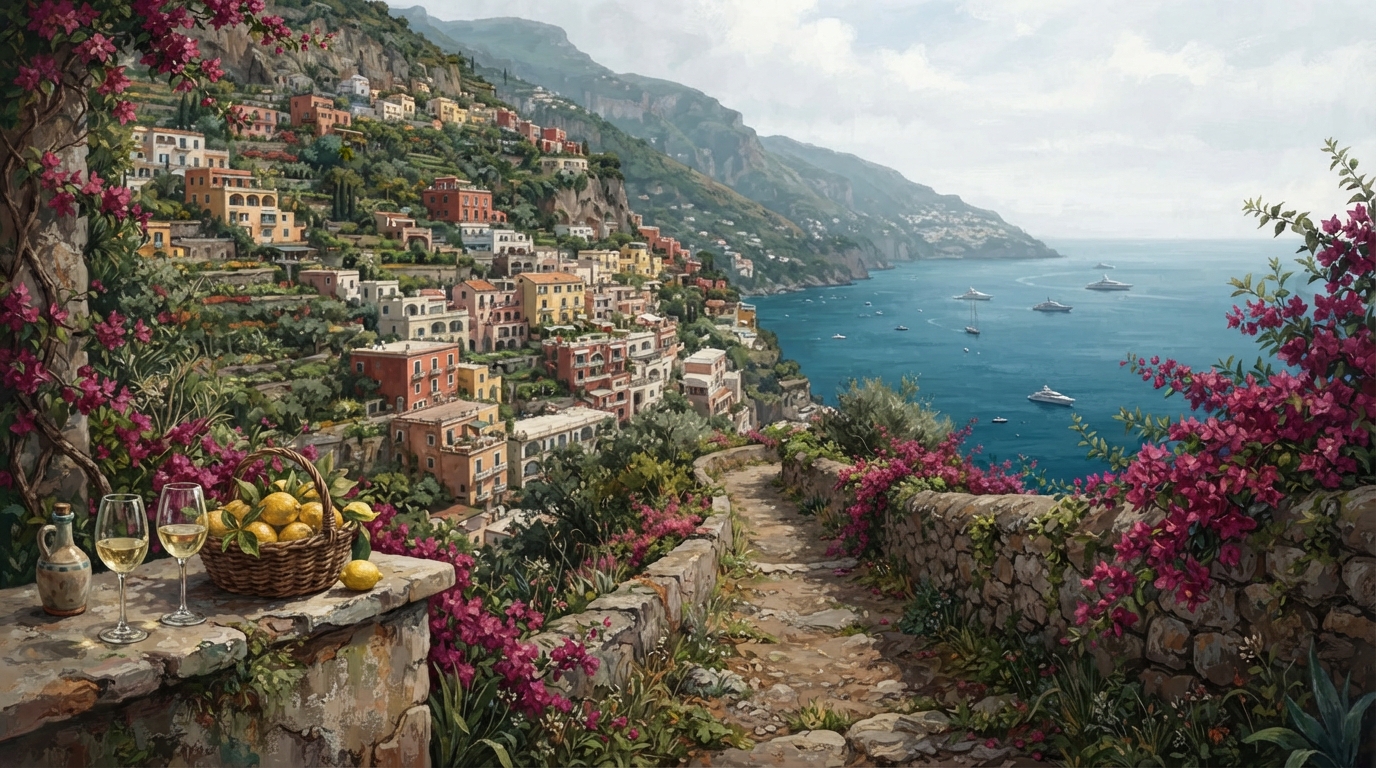
Das ist das gesamte Tempo von Route A: drei Aussichten, drei Städte, keine Hektik dazwischen.
Route B: Städte und ländliche Region, für Familien mit Kindern
Dies ist die Route mit den wenigsten Übergängen. Drei Stopps, keine Busfahrten und ein kompletter Tag, an dem sich die Kinder austoben können, statt im Zug zu sitzen. Dies ist die Variante eines zehntägigen Italien-Reiseplans, die eine Familie mit kleinen Kindern tatsächlich übersteht, und diejenige, bei der auch die Eltern endlich mal wieder entspannt zu Abend essen können, anstatt nur Streitschlichter zu spielen. Unser Leitfaden zur Planung einer ersten Auslandsreise mit Kindern deckt die Grundlagen zu Pass, Jetlag und Packen ab, von denen dieser Reiseplan ausgeht.
Tag 1 bis 3: Rom. Buche das Kolosseum für den Vormittag vor der Hitze und halte die Nachmittage offen. Gelato zählt als Sightseeing-Stopp. Die Villa Borghese bietet echten Auslauf und einen kleinen See mit Ruderbooten, was einem quengeligen Kind mehr hilft als eine weitere Stunde in einer Museumsschlange.
Tag 4: Rom nach Florenz. Italo bewältigt die Strecke in nur 1 Stunde und 25 Minuten ab 14,90 € (Italo); die schnellste Verbindung, die Trainline im weiteren Netz erfasst, beträgt 1 Stunde und 42 Minuten für dieselben 232 km (144 Meilen), während der Durchschnitt aller Züge auf dieser Route eher bei 2 Stunden und 6 Minuten liegt (Trainline). So oder so ist es ein Sitzplatz ohne Umsteigen, und du bist vor dem Mittagessen da. Familien, die diese Strecke absolviert haben, sagen, dass das Timing genauso wichtig ist wie die Dauer: Wer die Abfahrt am Vormittag erwischt, erlebt die Schlafenszeit im Zug statt eines Wutanfalls mitten an der Hotelrezeption.
Tag 4 bis 7: Florenz, vier Nächte. Teile die Uffizien und den Dom auf zwei Vormittage auf, statt einen anstrengenden Tag daraus zu machen, und plane einen ganzen Tag komplett außerhalb der Stadt ein: ein Agriturismo in den toskanischen Hügeln, ein Nudelkochkurs, Tiere für die Kinder zum Anschauen und niemand, der auf ein Smartphone starrt. Es ist dasselbe Prinzip wie in unserem Leitfaden zur Planung einer Städte-Mehreise mit Familie und Freunden, ohne dass die gesamte Gruppe bis zum sechsten Tag ausbrennt.
Tag 8 und 9: Cinque Terre. Die schnellsten Züge von Florenz nach La Spezia brauchen etwa 1 Stunde und 31 Minuten; im Durchschnitt beläuft sich die Dauer nach Berücksichtigung langsamerer Regionalverbindungen auf rund 2 Stunden und 26 Minuten (Trainline). Von La Spezia aus verbinden Regionalzüge die fünf Cinque-Terre-Dörfer in wenigen Minuten. Nimm ein Quartier in einem Dorf (Monterosso hat den meisten echten Strand) und besuche die übrigen per Tagesausflug mit dem Zug. Vernazza besitzt den Hafen, den jeder fotografiert, und Manarola ist klein genug, um es in einer Stunde von einem Ende zum anderen zu erkunden, was wichtig ist, wenn die Geduld eines Fünfjährigen der limitierende Faktor ist. Mit kleinen Kindern ist das Hopsen von Dorf zu Dorf per Bahn den Klippenwanderwegen jedes Mal überlegen.
Tag 10: Pisa auf dem Rückweg. Die Fahrt von La Spezia nach Pisa dauert mit den schnellsten Zügen nur 39 Minuten, im Schnitt etwa 58 Minuten (Trainline) - gerade genug Zeit für das obligatorische Foto mit dem schiefen Turm vor dem Flughafen.
Setze jeden Stopp auf mindestens drei Nächte an. Zwei Nächte bedeuten, dass eine davon durch das Verarbeiten des Transfers verschluckt wird, und ein müder Neunjähriger merkt das sofort.
Die Cinque Terre lassen die Reise ruhiger ausklingen als Rom oder Florenz, indem sie das Museumsgewimmel und die Schlangen von zwei Großstädten gegen fünf Fischerdörfer und eine Küste eintauschen, die man gemütlich erkunden statt abhaken kann.

Schau, diese Route ist nicht die fotogenste der drei. Es ist diejenige, bei der alle Beteiligten am zehnten Tag noch miteinander reden.
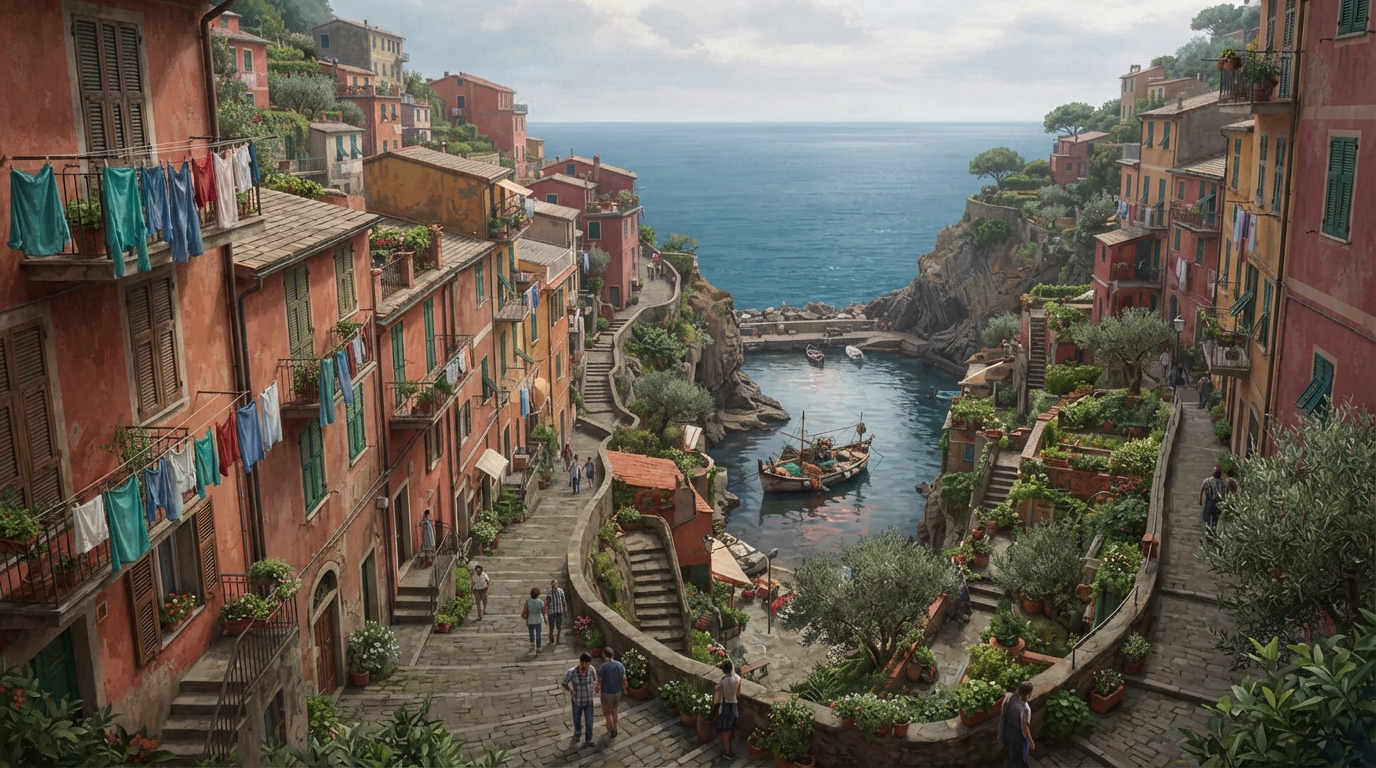
Riomaggiore verleiht dem Halt seine ganz eigene Textur: Pastellfarbene Häuser, die sich in einer Schlucht aneinanderreihen, Wäscheleinen, die über die Gassen gespannt sind, und der Duft von Focaccia, der aus offenen Türen strömt, bevor überhaupt jemand hungrig ist. Der Klippenpfad Sentiero Azzurro, der die Dörfer verbindet, erfordert eine kostenpflichtige Cinque Terre Card, und für den Abschnitt von Riomaggiore nach Manarola, die Via dell'Amore, ist zusätzlich ein gebührenpflichtiges Zeitfensterticket nötig (Details zur Cinque Terre Card). Entscheide vor deiner Ankunft, ob du zwischen den Dörfern wandern oder die Bahn nehmen willst.
Route C: Die großen Drei, schnell, für Freundesgruppen
Dies ist die klassische Strecke Rom-Florenz-Venedig, allerdings im Tempo einer Freundesgruppe statt einer Museumscheckliste. Jeweils drei Nächte, Hochgeschwindigkeitszüge zwischen jedem Stopp und Abende rund um Trastevere, das Oltrarno-Viertel und Cannaregio statt der nächsten Galerie. Falls Italien noch nicht feststeht, vergleicht unsere Übersicht der besten Gruppenreise-Ziele für 2027 es mit anderen Orten, die Freundesgruppen in Betracht ziehen.
Tag 1 bis 3: Rom. Skip das vierte Museum und schicke die Gruppe stattdessen nach Testaccio zum Abendessen. Dort essen Einheimische tatsächlich, und die Aperitivo-Kultur schließt dort nicht um 21 Uhr wie in der Nähe der Touristenmagnete. Folge dem Geruch von holzgebackener Pizza vorbei an den Marktständen in der Dämmerung und du findest die Tische, an denen Einheimische wirklich sitzen.
Tag 4: Rom nach Florenz, das gleiche Zeitfenster von schnell bis durchschnittlich wie bei Route B oben: 1 Stunde und 25 Minuten mit dem Italo am schnellen Ende, bis zu 2 Stunden und 6 Minuten am langsameren Ende des weiteren Netzes (Italo, Trainline).
Tag 4 bis 6: Florenz. Die Oltrarno-Seite des Flusses hat die Weinbars und die Touristenmengen überqueren die Brücke nicht so oft, wie man vermuten würde. Die Via di Santo Spirito ist der ideale Startpunkt, eine Weinbar nach der anderen mit Tischen im Freien und ohne die Preisaufschläge auf der Domseite. Teilt die Zeit der Gruppe auf beide Ufer auf, anstatt die ganze Zeit in der Nähe des Doms zu campieren.
Tag 7: Florenz nach Venedig. Italo bewältigt die 253 km (157 Meilen) lange Strecke in etwa 2 Stunden, mit Fahrkarten ab 18,90 € (Italo). Direkt von Rom nach Venedig zu fahren und Florenz auszulassen ist ebenfalls eine Option: Italo bedient diese Strecke direkt in 3 Stunden und 34 Minuten ab 29,90 € (Italo). Das lässt jedoch eine Stadt weg, und drei Stopps sind für eine Gruppe dieser Größe in 10 Tagen ohnehin das Limit.
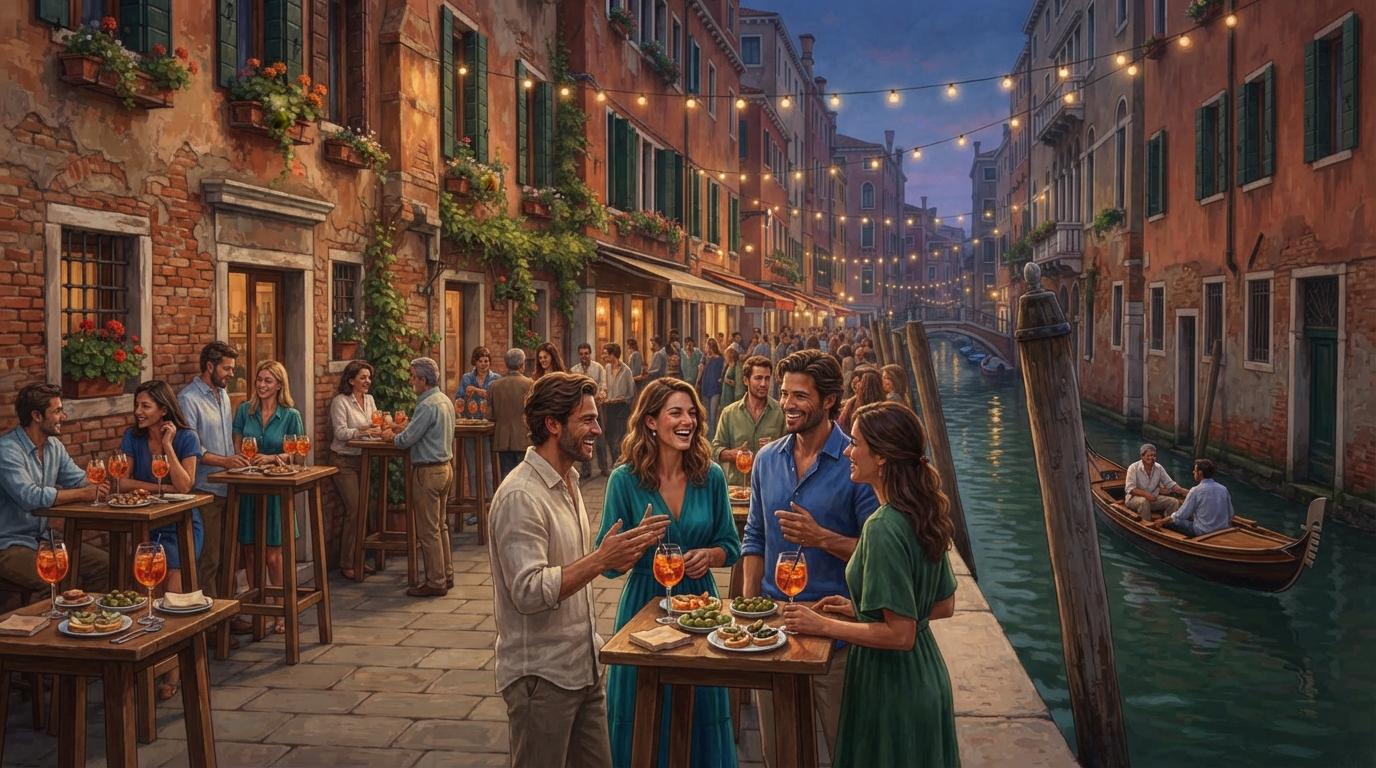
Tag 7 bis 9: Venedig. Cannaregio bietet die Spritz-Kultur und nur einen Bruchteil der Menschenmassen am Markusplatz. Nimm dir dafür einen ganzen Tag Zeit und nicht nur einen flüchtigen Durchgang auf dem Weg zur Vaporetto-Haltestelle. Die Fondamenta della Misericordia ist die Uferpromenade am Kanal, wo sich das Leben abspielt: Bacari, die Cicchetti direkt von der Theke servieren, Stehplätze, und niemand drückt dir eine laminierte Touristenkarte in die Hand.
Tag 10: Abreise aus Venedig, typischerweise über einen Anschlusszug zurück zu einem größeren Flughafen-Drehkreuz.
Hänge Sizilien nicht an diese Route an, nur weil „man ja schon im Süden ist“. Der schnellste Zug von Neapel nach Palermo braucht rund 9 Stunden, und die durchschnittliche Fahrt liegt näher bei 11 Stunden (Trainline). Das ist pro Richtung ein verlorener Reisetag innerhalb einer Reise, die ohnehin nur 10 Tage dauert.
Bei sechs Personen wird die Geldfrage unübersichtlicher als bei zweien. Kläre daher vor Reisebeginn, wer was bezahlt, und nicht erst am ersten Restauranttisch. Unser Leitfaden über das Aufteilen von Reisekosten ohne Drama deckt die Mechanismen ab, falls deine Gruppe diesen Punkt noch nicht geklärt hat.
Alle drei Routen im direkten Vergleich
Dieselben 10 Tage, drei unterschiedliche Reisen, und der Unterschied zwischen ihnen zeigt sich in dem Moment, in dem man die Zahlen nebeneinanderstellt. Route B erfordert die geringste Transitzeit und die wenigsten Übergänge der drei. Route A verlangt die meiste Zeit unterwegs - als Gegenleistung für die meiste Landschaft pro Tag. Route C bildet den Mittelpunkt und tauscht etwas von der Atmosphäre von Route A gegen ein Tempo ein, das eher der Effizienz von Route B ähnelt. Hier ist die vollständige Übersicht.
| Route | Am besten für | Stopps | Nächte pro Stopp | Gesamtreisezeit | Vibe |
|---|---|---|---|---|---|
| A: Amalfi & Chianti | Paare | Rom, Amalfiküste, Florenz | 3 / 3 / 3 | ~5 Std. 12 Min. | Langsam, romantisch, eine Aussicht pro Tag |
| B: Städte & ländliche Region | Familien | Rom, Florenz, Cinque Terre | 3 / 4 / 2 | ~2 Std. 56 Min. | Wenugste Übergänge, integrierte Freizeit |
| C: Die großen Drei, schnell | Freundesgruppen | Rom, Florenz, Venedig | 3 / 3 / 3 | ~3 Std. 25 Min. | Schnelles Tempo, Fokus auf Nachtleben |
Die „Gesamtreisezeit“ addiert den jeweils schnellsten verifizierten Abschnitt zwischen jedem Paar von Stopps auf dieser Route auf (dasselbe Zahlenmaterial wie oben zitiert), ohne die An- und Abreisetage an den jeweiligen Enden mitzuzählen. Auf dem Papier wirkt Route B am wenigsten ambitioniert, und genau das ist der Sinn. Sie tauscht eine Küste oder eine zweite Großstadt gegen null Bustransfers und einen integrierten Landtag zur Erholung ein. Route A bringt sowohl die meiste Transitkomplexität als auch die längste Gesamtreisezeit der drei mit sich, was hauptsächlich an dem Amalfi-Busabschnitt liegt - und genau deshalb belohnt sie diejenigen, die alles im Voraus buchen. Route C liegt dazwischen: zwei Schnellzugabschnitte, keine Ruhetage, auf pure Dynamik ausgelegt.
Keine der drei Optionen ist objektiv „besser“. Ein Paar auf Route C wäre am sechsten Tag ausgebrannt, und eine Freundesgruppe auf Route A würde die halbe Reise auf einen Bus warten. Die Routen sind nicht hierarchisch geordnet. Sie sind passgenau zugeschnitten.

Züge, Museen und Gepäck buchen, ohne den Verstand zu verlieren
Buche Hochgeschwindigkeitszüge, sobald Tickets in den Verkauf gehen, und buche wichtige Museumsplätze zwei bis vier Wochen im Voraus. Das sind zwei unterschiedliche Zeitfenster, und diese zu verwechseln ist der mit Abstand häufigste Planungsfehler bei einer so eng getakteten Reise.
- Öffne die Buchungen von Trenitalia und Italo, sobald diese freigeschaltet sind. Trenitalia gibt Tickets bis zu sechs Monate vor dem Reisedatum frei (bahn.de), und die günstigsten Preiskategorien bei beiden Anbietern sind zuerst ausverkauft, nicht zuletzt.
- Buche Plätze für Uffizien und Accademia im Voraus, wenn du zwischen April und September ankommst. Toskanas offizielles Tourismusbüro empfiehlt die Buchung in diesem Zeitraum unabhängig vom Wochentag und mindestens einen Tag im Voraus für jeden Samstag oder Feiertagsbesuch (Visit Tuscany).
- Packe nur eine Tasche, die du allein eine Zugstufe hinaufheben kannst. Regionalbahnen wie die Circumvesuviana verfügen über keine für Koffer ausgelegten Gepäckablagen, und der SITA-Bus ebenfalls nicht. Die Hochgeschwindigkeitszüge von Frecciarossa und Italo bieten zwar Überkopfablagen und Gepäckständer am Ende des Wagens, diese sind bei sommerlichen Vollbesetzungen jedoch schnell voll.
- Plane nur dann einen Puffer ein, wenn du Route A fährst. Der SITA-Busabschnitt ist bei jeder dieser drei Routen die einzige Variable, die niemand vollständig unter Kontrolle hat.
- Bewahre die gesamte Route mit mehreren Städten an einem Ort auf und nicht in vier Browser-Tabs. Reiseplanungstools wie die Routenübersicht von TripProf zeigen jeden Streckenabschnitt einer Reise, Entfernung, Dauer sowie das Verkehrsmittel auf und summieren die Reisestatistiken automatisch. Das erleichtert es, einen überladenen Reisetag zu erkennen, bevor du dafür bezahlt hast.
Europas Schienennetz wird zudem kontinuierlich ausgebaut, und vor dem Festlegen der Reisedaten lohnt sich ein kurzer Blick darauf. Unsere Übersicht zu Europas neuen Zugverbindungen für 2026 zeigt, was sich im breiteren Netz über Italien hinaus verändert hat.

Häufig gestellte Fragen
Sind 10 Tage genug für Rom, Florenz und Venedig?
Ja. Zehn Tage decken alle drei bequem mit jeweils drei Nächten ab, inklusive jeweils einem eingeplanten Reisetag an den Enden. Genau dieses Tempo nutzt Route C oben, und es ist die engste der drei Routen, ohne sich gehetzt anzufühlen.
Wie viele Städte sollte man in 10 Tagen in Italien besuchen?
Höchstens drei. Jede Route oben beschränkt sich auf drei Stopps mit jeweils drei oder mehr Nächten. Erhöhst du auf vier, verlierst du volle Tage durch Reisen, statt Zeit für Sightseeing zu gewinnen.
Braucht man für 10 Tage in Italien einen Mietwagen?
Nein, für keine der drei Routen hier. Hochgeschwindigkeitszüge verbinden Rom, Florenz und Venedig direkt, und Regionalzüge plus ein Busabschnitt decken die Amalfiküste und die Cinque Terre ab. Ein Auto rentiert sich ausschließlich für den einzelnen Chianti-Tagesausflug bei Route A.
Ist die Amalfiküste zusammen mit Rom in 10 Tagen machbar?
Ja, das ist Route A. Plane über den Zug von Neapel nach Sorrento hinaus eine zusätzliche Stunde für den SITA-Anschlussbus ein und rechne damit, dass sich diese Stunde bei Juli- und Augustverkehr auf der Küstenstraße weiter ausdehnt.
Was ist der beste 10-tägige Italien-Reiseplan für Familien mit Kindern?
Route B: Rom, Florenz und Cinque Terre, mit einem integrierten Agriturismo-Tag beim Stopp in Florenz. Sie hat von den drei Routen die wenigsten Übergänge und absolut keine Busabschnitte.
Lohnen sich die Cinque Terre auf einer zehntägigen Reise?
Ja, wenn deine Route ohnehin über Florenz führt. Sie fügt pro Richtung etwa einen halben Tag Zugfahrt hinzu und schenkt Familien zwei volle Tage gemütliches Insel- beziehungsweise Dorfhüpfen, das die größeren Städte nicht bieten können.
Was ist ein guter Italien-Flitterwochen-Reiseplan für 10 Tage?
Route A oben: drei Nächte in Rom, drei an der Amalfiküste und drei in Florenz mit einem Chianti-Tagesausflug. Sie hält das Tempo absichtlich langsam, wobei jeder Tag eher eine lange Aussicht oder ein langes Abendessen als eine vollgepackte Sightseeing-Liste bereithält.
Wichtige Erkenntnisse
- Wähle deine Route danach aus, wer reist, und nicht nach den am besten klingenden Städten: Paare bekommen Route A (Amalfi und Chianti), Familien erhalten Route B (Städte und ländliche Region), Freundesgruppen wählen Route C (die großen Drei, schnell).
- Beschränke dich auf drei Stopps mit jeweils drei oder mehr Nächten. Allein Neapel nach Palermo dauert per Zug 9 bis 11 Stunden, weshalb Sizilien und die Dolomiten ohne Auto nicht in eine zehntägige Reise passen.
- Rom nach Florenz dauert mit dem Italo nur 1 Stunde und 25 Minuten, und Rom nach Neapel nur 55 Minuten. Diese schnellen Teilstrecken machen Routen mit drei Stopps überhaupt erst möglich.
- Plane über den Zug von Neapel nach Sorrento hinaus eine zusätzliche Stunde für den SITA-Bus ein, wenn du die Amalfiküste-Route wählst - im Juli- und Augustverkehr noch mehr.
- Buche den Hochgeschwindigkeitszug in dem Moment, in dem Tickets freigeschaltet werden, und buche wichtige Museumsplätze zwei bis vier Wochen im Voraus. Es handelt sich um unterschiedliche Zeitfenster und verschiedene Fristen.
- Tools wie TripProf können die Abschnitte und Reisezeiten einer Route mit mehreren Städten automatisch darstellen, was dabei hilft, einen überladenen Reisetag abzufangen, bevor du ihn gebucht hast.
- Egal für welche Route du dich entscheidest, die Reise, an die du dich tatsächlich erinnern wirst, ist diejenige, bei der du nicht jeden zweiten Tag zu einem Zug gesprintet bist.
Quellen
- Italo: Rom nach Florenz Tickets, Fahrzeit und Startpreis
- Trainline: Rom nach Florenz, schnellste Fahrzeit über alle Betreiber hinweg
- Italo: Rom nach Neapel Tickets, Fahrzeit und Startpreis
- Italo: Neapel nach Florenz Tickets, Fahrzeit und Startpreis
- Trainline: Rom nach Napoli Centrale, Fahrzeit und tägliche Abfahrten
- Wikipedia: Circumvesuviana, Streckenlänge und Fahrzeit der Verbindung Neapel-Sorrento
- Rome2Rio: Bus von Positano nach Sorrento, Fahrzeit des SITA-Busses
- Italo: Florenz nach Venedig Tickets, Fahrzeit und Startpreis
- Italo: Rom nach Venedig Tickets, Fahrzeit und Startpreis
- Trainline: Florenz nach La Spezia, Fahrzeiten für das Cinque-Terre-Tor
- Trainline: La Spezia Centrale nach Pisa, Fahrzeiten
- Trainline: Neapel nach Palermo, warum Sizilien nicht in eine zehntägige Reise passt
- Deutsche Bahn: Häufig gestellte Fragen zur Trenitalia-Frühbuchung, Buchungszeitfenster
- Visit Tuscany: Uffizien- und Accademia-Tickets, offizielle Buchungshinweise
- Città di Amalfi: Regelungen zu alternierenden Kennzeichen, offizielle SS163-Fahrregeln für die Amalfiküste
- Cinque Terre Travel: Cinque Terre Card, Zugang zu Wanderwegen und Kartenanforderungen
Zuletzt aktualisiert: 22. August 2026
Weiter lesen
Weitere Reisetipps und Guides für dich

Was eine Friendsgiving-Reise wirklich kostet und wie man fair teilt
Acht Freunde, eine Hütte, ein verlängertes Wochenende vor Thanksgiving: So viel kostet ein echter Friendsgiving-Ausflug pro Person - und so teilt ihr die Kosten unkompliziert, bevor Missstimmungen aufkommen.

Der Fragebogen für Gruppenreisen: 16 Fragen vor der Buchung
Die meisten Gruppenreisen scheitern an vier Antworten: flexibel, ganz egal, passt schon und so um die 2.000 $. Hier sind 16 Fragen, die all das unmöglich machen, was hinter den Antworten steckt, sowie eine Kopiervorlage für den Versand vor der Buchung.

In wie vielen US-Bundesstaaten waren Sie schon? Die ehrliche Antwort eines Rentners (und wie Sie Ihre eigene Zahl finden)
Ein 58-jähriger Rentner malt zum ersten Mal seine US-Landkarte aus und kommt auf eine ganz andere Zahl als erwartet. Die echten YouGov-Statistiken, die Grenzen der Schätzung und wie Sie Ihre eigene Checkliste der besuchten Staaten führen.