Vols en auto-transfert : qui paie en cas de correspondance manquée ?

Points clés
- 1
- 2
- 3
+4 de plus dans le résumé final
Vous atterrissez à Rome à 18 h 20. Votre correspondance pour Varna décolle à 19 h 50. Quatre-vingt-dix minutes, la même compagnie aérienne, réservées sous forme de deux billets séparés parce que cela vous a permis d'économiser quarante euros. Pas de bagages en soute, simple, vous dites-vous. Puis l'avion reste sur le tarmac pendant vingt minutes après l'atterrissage. Maintenant, vous traversez le terminal au pas de course, à la recherche d'un panneau d'affichage, en vous demandant qui vous aidera si vous ratez votre vol. Personne, en fin de compte. Pas même la compagnie aérienne avec laquelle vous venez de voler.
L'auto-transfert signifie que votre voyage est composé de deux billets séparés ou plus, même si un moteur de recherche les a présentés comme un seul itinéraire. Si vous ratez la correspondance, aucune des deux compagnies aériennes n'est tenue de vous proposer un nouveau vol ou un remboursement, et c'est vrai même lorsque les deux vols sont assurés par le même transporteur sur des réservations distinctes. Le règlement EU261 ne s'applique que lorsque vos vols partagent une réservation unique, donc la plupart des auto-transferts ne sont pas couverts, et la réforme EC261 convenue en juin 2026 ne comble pas cette lacune. Une proposition européenne distincte sur le thème « un voyage, un billet, des droits complets » concerne les voyages en train multi-opérateurs, pas les vols, alors ne confondez pas les deux. Prévoyez au moins 2 heures pour un vol intérieur, 2 heures dans un hub modéré comme Schiphol, et 3 à 4 heures ou plus dans des hubs comme Heathrow (risque le plus élevé) ou Changi (risque modéré, mais toujours mesuré en heures, pas en minutes), et lisez les petits caractères de votre assurance voyage avant de supposer qu'elle couvre une correspondance que vous avez organisée vous-même.
L'auto-transfert n'est pas un vol en correspondance, même si cela y ressemble
Voici la croyance qui laisse les gens en plan : si les deux vols sont assurés par la même compagnie aérienne, ou si un site de réservation les affiche regroupés sur une seule page de résultats, cela doit fonctionner comme une correspondance normale. Ce n'est pas le cas. Un vol en auto-transfert, aussi appelé transfert non protégé, « est un voyage que vous assemblez vous-même à partir de deux réservations distinctes ou plus, au lieu d'acheter un seul billet pour l'ensemble du trajet ». Going.com le dit tout aussi crûment : un auto-transfert « signifie que votre voyage est constitué de billets séparés réservés indépendamment, même s'ils apparaissent ensemble dans un seul résultat de recherche ».
Cette dernière partie est le piège. Google Flights, Kiwi.com et une douzaine d'autres outils de recherche vous montreront volontiers un itinéraire Rome-Varna qui semble fluide. Il ne l'est pas. Deux PNR (dossiers de réservation passager), deux contrats distincts, aucune connexion entre eux dans le système de l'une ou l'autre compagnie aérienne.
Une discussion réelle sur r/Flights, publiée mi-juillet 2026, montre exactement comment cela sème la confusion même chez ceux qui essaient d'aider. L'auteur avait un vol Londres-Rome et un vol Rome-Varna, tous deux avec WizzAir, espacés de 90 minutes, les deux étant des réservations séparées. Deux commentateurs ont mis en garde contre le passage du contrôle des passeports en entrant dans l'espace Schengen, un conseil obsolète : les frontières aériennes de la Bulgarie font partie de l'espace Schengen depuis mars 2024, selon la Commission européenne, il n'y a donc pas de contrôle des passeports sur cet itinéraire spécifique. Mais sous le détail erroné sur la frontière, l'avertissement réel tenait la route : « il n'y a aucune protection ni réacheminement puisque la compagnie aérienne ne considère pas ces vols comme connectés ». Si vous vous trompez sur la règle frontalière, vous restez bloqué par la règle de responsabilité.
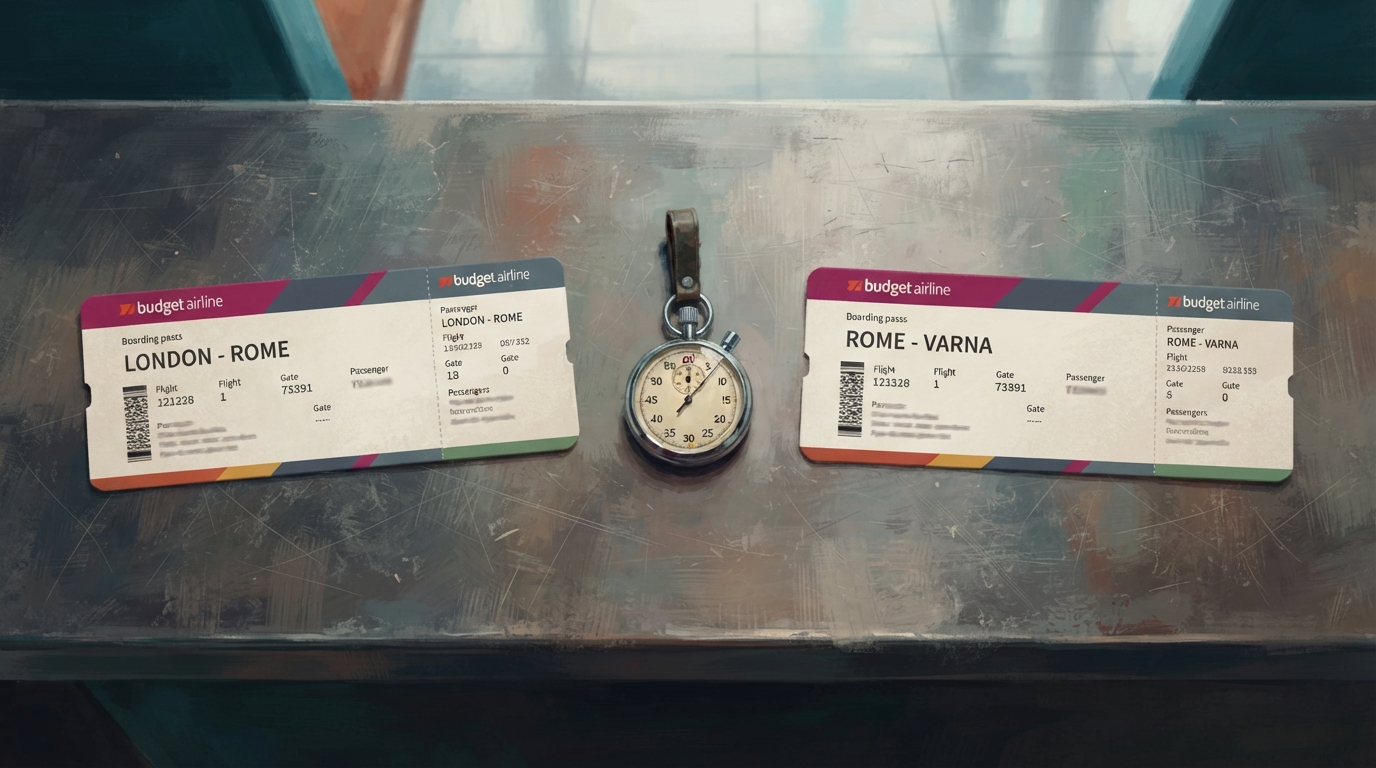
Même compagnie aérienne. Même alliance, techniquement, puisque WizzAir assure elle-même les deux segments. La même compagnie aérienne ne vous sauve pas si la billetterie est fractionnée. Ce qui compte, ce n'est pas qui exploite le vol. C'est de savoir si les deux vols figurent sur une seule réservation ou deux.
Ce qui sépare réellement les deux cas se résume à une chose : si un agent ou un algorithme a lié vos vols dans un dossier unique avant que vous ne payiez.
- Une réservation, un contrat de transport
- La compagnie aérienne définit et respecte un temps de correspondance minimum publié
- Les bagages sont enregistrés jusqu'à votre destination finale
- Un retard sur le premier segment oblige le transporteur à vous réacheminer sur le second
- Deux réservations distinctes ou plus, même sur la même compagnie
- Aucun temps de correspondance minimum publié ne s'applique à vous
- Vous récupérez vos bagages et vous enregistrez à nouveau de zéro
- Un retard sur le premier segment est entièrement votre problème, pas celui du transporteur
Ce tableau résume tout l'article. Tout le reste, le calcul de la marge de sécurité, les petits caractères de l'assurance, le risque lié aux voyages de groupe, découle de cette distinction. Si vous voulez connaître les mécanismes plus profonds des temps de correspondance publiés pour un itinéraire normal sur un seul billet, nous avons traité cela séparément dans combien de temps prévoir entre deux vols en correspondance. Cet article concerne l'autre type : celui où ce chiffre publié n'existe pas du tout pour vous.
Qui est réellement responsable quand vous ratez votre vol
AirHelp expose clairement le mécanisme de responsabilité : « Sur un auto-transfert, la responsabilité vous incombe. » C'est le compromis pour le tarif plus bas. Et surtout : « La première compagnie aérienne a fait son travail en vous amenant à l'aéroport de correspondance (même en retard) ; elle n'a jamais promis de vous livrer au second vol. » Personne n'a rompu de contrat. Il n'y avait pas de contrat couvrant les deux vols à rompre.
Comparez cela à un cas qu'un voyageur a réservé et compris comme un billet unique, qui a échoué la même semaine. Un voyageur sur r/Flights a réservé un voyage Toronto-Guangzhou via Manille, un seul billet, Philippine Airlines assurant le premier segment et China Southern le second, tous deux payés à PAL via Trip.com. Lorsque le vol de PAL a été dérouté pour une urgence médicale et que le voyageur a raté la correspondance, PAL a d'abord prétendu ne pas pouvoir trouver la réservation suivante, puis a dit au voyageur de régler cela avec l'agence de voyage, puis, selon le récit du voyageur, a dit à un officier de l'aviation civile que le siège sur China Southern était confirmé alors qu'il ne l'était pas. Voyageant avec une jeune fille, la famille a fini par acheter elle-même un nouveau billet.
Oui, le transporteur qui arrive en retard est responsable de vous réacheminer vers votre destination. C'est juste une énorme erreur ou un mépris de la part de PAL.
- Utilisateur de r/Flights, juillet 2026 (50 votes positifs)
Remarquez sur quoi portait réellement l'argument le plus vif dans cette discussion. Non pas sur le fait que PAL devait un réacheminement en principe, mais sur le fait que cette réservation comptait même comme un seul billet, une vraie bataille non résolue parmi les répondants fouillant dans les règles tarifaires intercompagnies. La réponse la plus votée (50 votes positifs) a tranché : « le transporteur qui arrive en retard est responsable de vous réacheminer vers votre destination ». Comparez cela, aussi contesté soit-il, à un auto-transfert : là, personne ne discute pour savoir si une obligation existe, car il est évident qu'il n'y en a pas.
C'est la différence entre « la compagnie aérienne a rompu sa promesse » et « il n'y avait aucune promesse ». L'un vous donne droit à une compensation, éventuellement, peut-être après une bataille. L'autre vous vaut un haussement d'épaules compatissant.
L'EU261 vous couvre-t-il ? Le test de la réservation unique
Réponse courte : généralement non, et voici la clause exacte qui en décide. La page Your Europe sur les droits des passagers de l'UE indique que l'indemnisation pour une correspondance manquée s'applique lorsque « vos vols ont été réservés dans le cadre d'une réservation unique ». La page donne un exemple analogue pour les annulations : « Si vous avez réservé un vol aller et un vol retour séparément avec des compagnies aériennes différentes et que le vol aller est annulé, le remboursement n'est dû que pour le vol annulé. » Réservation séparée, protection partielle. L'auto-transfert est la version correspondance de cette même règle.
Deux développements de 2026 rendent cela facile à mal interpréter. Gardez-les séparés.
Les législateurs de l'UE sont parvenus à un accord politique sur la réforme de l'EC261 mi-juin 2026, selon l'analyse juridique de DLA Piper. Par ailleurs, le 13 mai 2026, la Commission européenne a adopté une proposition intitulée « Un voyage, un billet, des droits complets ». Il s'agit de pistes sans rapport couvrant des modes de voyage sans rapport. Les confondre est l'erreur la plus courante sur ce sujet en ce moment.
Prenez d'abord la réforme de l'EC261. C'est une véritable réforme du règlement existant sur les droits des passagers aériens, et elle touche à la billetterie séquentielle, mais seulement dans un scénario étroit : les passagers à qui l'embarquement est refusé sur un vol retour parce qu'ils n'ont pas pris le vol aller de la même réservation. C'est une correction pour les pénalités de non-présentation, pas pour l'auto-transfert. La propre couverture d'AirHelp sur la réforme est directe : « Si vous avez réservé les segments séparément, les compagnies aériennes n'ont pas à vous connecter. » Cette phrase décrit les conséquences de la réforme, pas son prédécesseur. En juillet 2026, l'accord doit encore faire l'objet d'un vote formel du Parlement et du Conseil avant de devenir loi, ce qui prendra probablement effet courant 2027. Les billets séparés restent non protégés dans tous les cas.
Maintenant, la seconde proposition, totalement sans rapport. « Un voyage, un billet » semble être exactement la solution qu'un voyageur en auto-transfert voudrait. Ce n'est pas pour vous. L'annonce de la Commission elle-même la décrit comme une simplification de « la planification et la réservation pour les voyages régionaux, longue distance et transfrontaliers, en particulier pour les trajets ferroviaires impliquant plusieurs opérateurs », permettant « des réservations sur un seul billet auprès de plusieurs opérateurs ferroviaires ». Ce sont des trains. Des trajets ferroviaires multi-opérateurs en Europe, pas des vols, et ce n'est encore qu'une proposition de la Commission qui doit être approuvée par le Conseil et le Parlement européen avant d'être contraignante pour quiconque.
Les États-Unis ne sont pas plus généreux. Il n'y a pas d'équivalent à l'EU261 pour une correspondance manquée ici, et la même logique qui vous laisse en plan à Rome ou Amsterdam s'applique à JFK ou LAX : des billets séparés signifient des contrats séparés. Si votre premier vol est en retard et que le second est sur un PNR différent, la seconde compagnie aérienne n'a aucune obligation légale de conserver votre siège, et la pratique de l'industrie vous traite comme un passager non présenté si vous n'embarquez pas.
Si votre itinéraire s'avère être en réalité un billet unique après tout cela, le calcul change complètement, et il vaut mieux lire notre analyse des temps de battement pour les vols en correspondance, car un temps de correspondance minimum publié s'applique réellement à vous. Et si un vol est annulé purement et simplement sur un billet qui EST protégé, notre guide pour obtenir votre remboursement après une annulation détaille le processus de réclamation.

Temps de battement pour l'auto-transfert, hub par hub
Oubliez le temps de correspondance minimum officiel de l'aéroport. Ce chiffre a été publié pour les passagers enregistrés jusqu'à destination sur un seul billet, et il ne décrit pas votre situation. Pour un auto-transfert, prévoyez l'immigration, la récupération des bagages, la marche entre les terminaux, un nouvel enregistrement et à nouveau la sécurité, tout cela à partir de zéro.
| Hub | MCT Billet Unique | Marge Auto-transfert | Niveau de risque |
|---|---|---|---|
| Amsterdam Schiphol | 40 min Schengen / 50 min hors-Schengen, selon KLM (SimpleFlying) | 2 h minimum (SimpleFlying) | Modéré |
| Londres Heathrow | Défini par chaque compagnie, non publié par l'aéroport (Heathrow.com) | 2 à 3 h sans bagages en soute, 4 h et plus avec bagages ou changement de terminal (The Points Analyst, citant British Airways) | Élevé |
| Singapour Changi | ~60 min avec enregistrement jusqu'à destination (Trip.com) | 3 à 4 h (Trip.com) | Modéré |
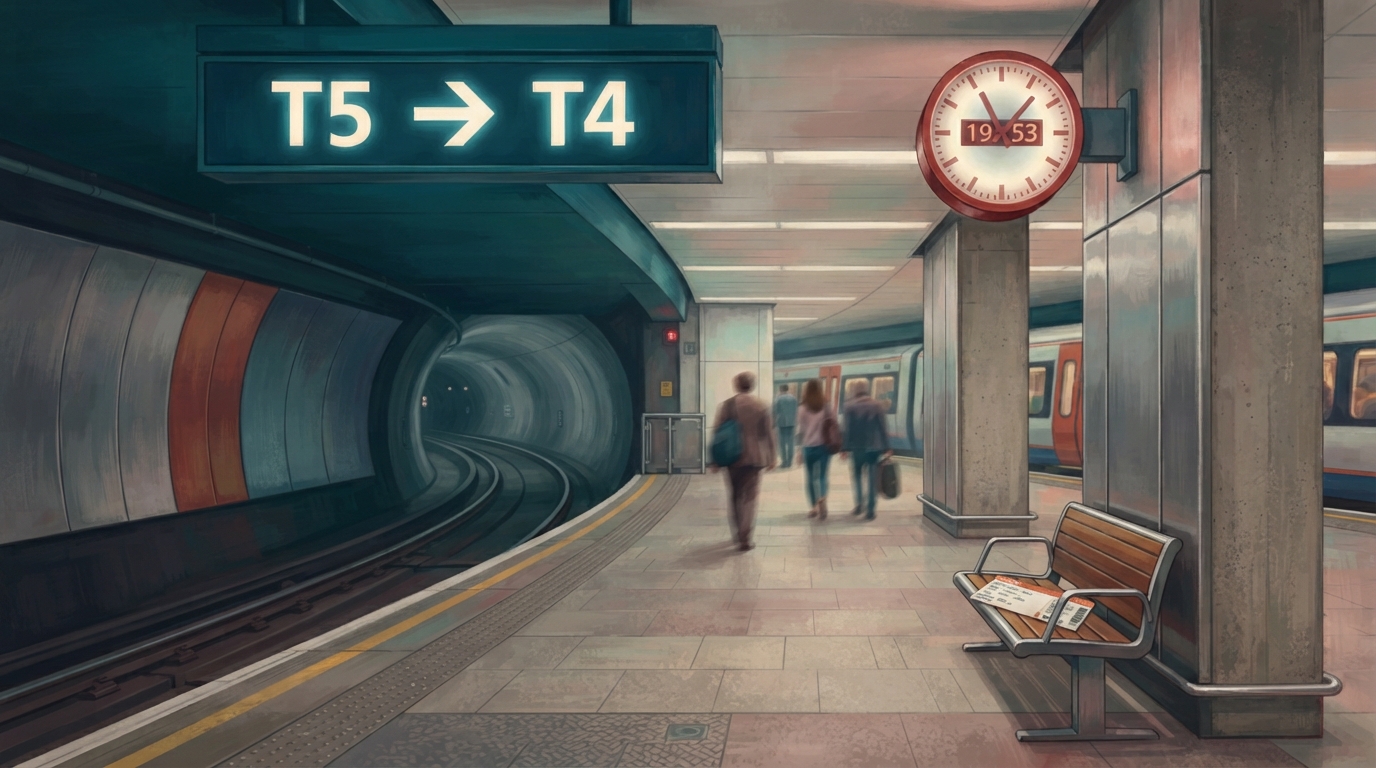
Heathrow mérite le badge « élevé » pour une raison précise et ennuyeuse : son propre site web est celui qui vous dit que les règles ne s'appliquent pas à vous. « Si vous avez réservé vos vols séparément, ces temps de correspondance minimum ne s'appliquent pas », indique la page d'Heathrow, avant de recommander aux passagers de « prévoir beaucoup de temps supplémentaire pour passer la récupération des bagages et le contrôle des passeports, transférer entre les terminaux, puis s'enregistrer et passer la sécurité ». Seuls deux des quatre terminaux, T2 et T3, sont reliés par un passage piéton, 5 à 10 minutes de porte à porte. Toute autre combinaison implique un train ou un bus, et le temps de trajet seul ne raconte pas toute l'histoire. T5 vers T2/T3 est un bus côté piste de 15 à 20 minutes (ou 3 minutes avec le Heathrow Express), mais The Points Analyst estime le transfert complet, marche et sécurité incluses, à 25 à 40 minutes et recommande de prévoir une heure. T4 vers T2/T3 est un trajet direct en Elizabeth Line de 10 à 15 minutes ; prévoyez 45. T5 vers T4 est la combinaison dont il faut vraiment s'inquiéter : une correspondance à deux trains avec un changement de quai qui prend 30 à 55 minutes de trajet seul, 50 à 75 minutes une fois la sécurité intégrée, avec une marge recommandée de 90 minutes.
Un voyageur sur r/Flights a posé la question d'un auto-transfert de 2 h 55 à Kuala Lumpur, volant avec Malaysia Airlines sur des billets séparés et devant passer l'immigration, récupérer ses bagages et s'enregistrer à nouveau pour la première fois de sa vie. C'est à peu près le minimum pour Changi, et c'est serré même dans un hub bien géré. Le bot modérateur de r/Flights dit à tout le monde que les « escales de plus de 2 h 30 » sont « supprimées car c'est un temps suffisant pour se connecter dans n'importe quel aéroport mondial », et la même notification automatique renvoie séparément quiconque mentionne un auto-transfert vers un guide différent. Certaines compagnies aériennes enregistreront toujours vos bagages jusqu'à destination sur des billets séparés si vous le demandez au premier comptoir - c'est l'exception, pas la règle, et cela ne règle pas le problème de l'absence de protection en cas de réacheminement, mais cela vaut la peine de demander avant de supposer le pire.
- Confirmez si les deux vols partagent un seul PNR ou deux, même s'il s'agit de la même compagnie
- Vérifiez si votre site de réservation a intégré une protection contre les perturbations lors du paiement, et lisez ce qu'elle couvre réellement
- Demandez au premier comptoir d'enregistrement s'il est possible d'enregistrer les bagages jusqu'à votre destination finale
- Souscrivez une assurance qui mentionne explicitement l'auto-transfert, pas un complément générique pour correspondance manquée
- Voyagez uniquement avec un bagage à main si votre marge est inférieure à 3 heures
Le piège de l'assurance : pourquoi votre police pourrait ne pas vous sauver
C'est ici que la discussion Reddit sur WizzAir prend tout son sens. Une réponse a servi d'avertissement pour vérifier les petits caractères avant de supposer qu'une couverture existe, et il s'avère que c'est généralement vrai, pour une raison que la plupart des voyageurs ne lisent jamais assez attentivement pour la saisir.
Assurez-vous que votre assurance voyage couvre spécifiquement les auto-transferts qui tournent mal ; peu le font.
- Utilisateur de r/Flights, juillet 2026
La page de Squaremouth sur les avantages en cas de correspondance manquée liste « temps d'escale insuffisant entre les vols » comme quelque chose que la couverture n'inclut explicitement pas. Lisez cela deux fois. Si vous avez organisé un auto-transfert serré pour économiser de l'argent et que la marge était tout simplement trop mince, c'est le choix du voyageur aux yeux de l'assureur, pas un événement couvert.
World Nomads est au moins précis sur ce qui déclenche l'avantage : c'est « uniquement disponible sur les plans Explorer et Epic pour des retards de plus de 3 heures consécutives », et il nomme le scénario directement, « les voyageurs utilisent souvent deux compagnies aériennes distinctes pour se rendre à une destination », sans exclure l'auto-transfert. Mais le retard lui-même doit être un retard documenté et vérifié d'un transporteur public, pas juste votre parole qu'une marge de 90 minutes était malchanceuse plutôt qu'ambitieuse.
Faites plutôt ceci : ne comptez pas sur une police de voyage générique pour couvrir un auto-transfert que vous avez réservé trop serré. Soit vous réservez avec une vraie marge, soit vous achetez un produit conçu pour cet échec précis. La garantie Kiwi.com dit les choses clairement : « Parce qu'il ne s'agit pas d'un itinéraire officiel, les transporteurs ne sont pas obligés de fournir des vols de remplacement si leurs perturbations signifient que vous ne pourrez pas prendre vos vols suivants. » Son option de protection contre les perturbations « fournit cette couche de protection supplémentaire, et offre une compensation instantanée qui peut être utilisée pour un vol de remplacement, ou une assistance pour obtenir un remboursement auprès des transporteurs ». Aucun prix fixe n'est publié ; attendez-vous à ce qu'il soit intégré au total lors du paiement.
Une chose de plus à savoir avant de faire confiance au filet de sécurité d'un site de réservation : un voyageur sur r/Flights a paniqué après avoir déposé une demande de remboursement auprès de Kiwi.com et a essayé de se connecter directement à l'application WizzAir pour protéger les billets de ce qu'ils appelaient « les bots d'annulation automatisés de Kiwi ». La réponse d'un autre utilisateur a été directe : « Ajouter à votre profil ne sert à rien, et n'empêchera pas Kiwi d'annuler. » Si vous avez réservé via un revendeur, le revendeur contrôle le PNR, que vous puissiez ou non voir la réservation dans l'application de la compagnie aérienne.
Si vous voulez une image plus complète de ce qu'une police standard couvre et là où elle est généralement refusée, notre guide sur ce que l'assurance voyage couvre réellement en 2026 va plus loin que cette section.

Les voyages de groupe multiplient le risque, une file d'attente lente bloque tout le monde
Nous avons tous fixé un résultat Google Flights qui ressemblait à un itinéraire fluide sans jamais le remettre en question. Chaque source en ligne sur le risque d'auto-transfert en parle comme d'un problème individuel : vous ratez votre vol, vous en achetez un nouveau, vous êtes agacé. Personne ne parle de ce qui se passe quand il s'agit de quatre personnes, ou d'une famille avec enfants, faisant un auto-transfert ensemble pour économiser de l'argent sur un itinéraire partagé. Le calcul devient pire, pas seulement plus grand.
Repensez au scénario de Kuala Lumpur, mais avec trois amis au lieu d'un voyageur solo nerveux. Les files d'attente à l'immigration ne bougent pas à la vitesse d'un groupe. Un passeport est signalé pour un contrôle manuel, un bagage sort en dernier du tapis, la carte d'arrivée en ligne d'une personne a une faute de frappe qui doit être corrigée à un comptoir. Le groupe ne rate pas la correspondance ensemble. Une ou deux personnes la ratent, les autres non, et maintenant le voyage s'est fracturé en « qui attend à la porte et qui avance », une conversation vraiment désagréable avec cinquante minutes au compteur.
Et ce n'est plus seulement le vol. Le transfert aéroportuaire était réservé pour 21 h. L'hôtel garde les chambres du groupe jusqu'à minuit. La visite à pied de demain matin a sa propre heure limite. Une correspondance manquée pour un voyageur ne coûte pas seulement à ce voyageur un nouveau billet - cela peut se transformer en une annulation d'enregistrement, des frais de non-présentation ou une place de visite non remboursée.
Intégrez la marge de sécurité dans le plan avant que quiconque ne réserve, pas après que quelqu'un soit coincé au contrôle des passeports. Des outils comme TripProf vous permettent de déposer le vol de chaque voyageur dans le constructeur d'itinéraire jour par jour à côté de l'heure d'enregistrement à l'hôtel et de la première activité, de sorte que l'écart entre « atterrit à 18 h 20 » et « dîner de groupe à 20 h » soit visible pendant que vous comparez encore les options de vol, pas quelque chose que vous découvrez en direct dans une file d'attente à l'immigration. Si vous coordonnez un voyage multi-destinations où plusieurs personnes font un auto-transfert vers la même ville sur des vols différents, notre guide pour planifier un voyage multi-destinations avec famille et amis couvre l'aspect coordination plus en détail.
Que faire si vous êtes déjà devant la porte d'embarquement
Vous l'avez raté. La porte ferme, ou est déjà fermée, et la panique n'aide pas. Voici l'ordre qui vous permet de repartir le plus vite possible.
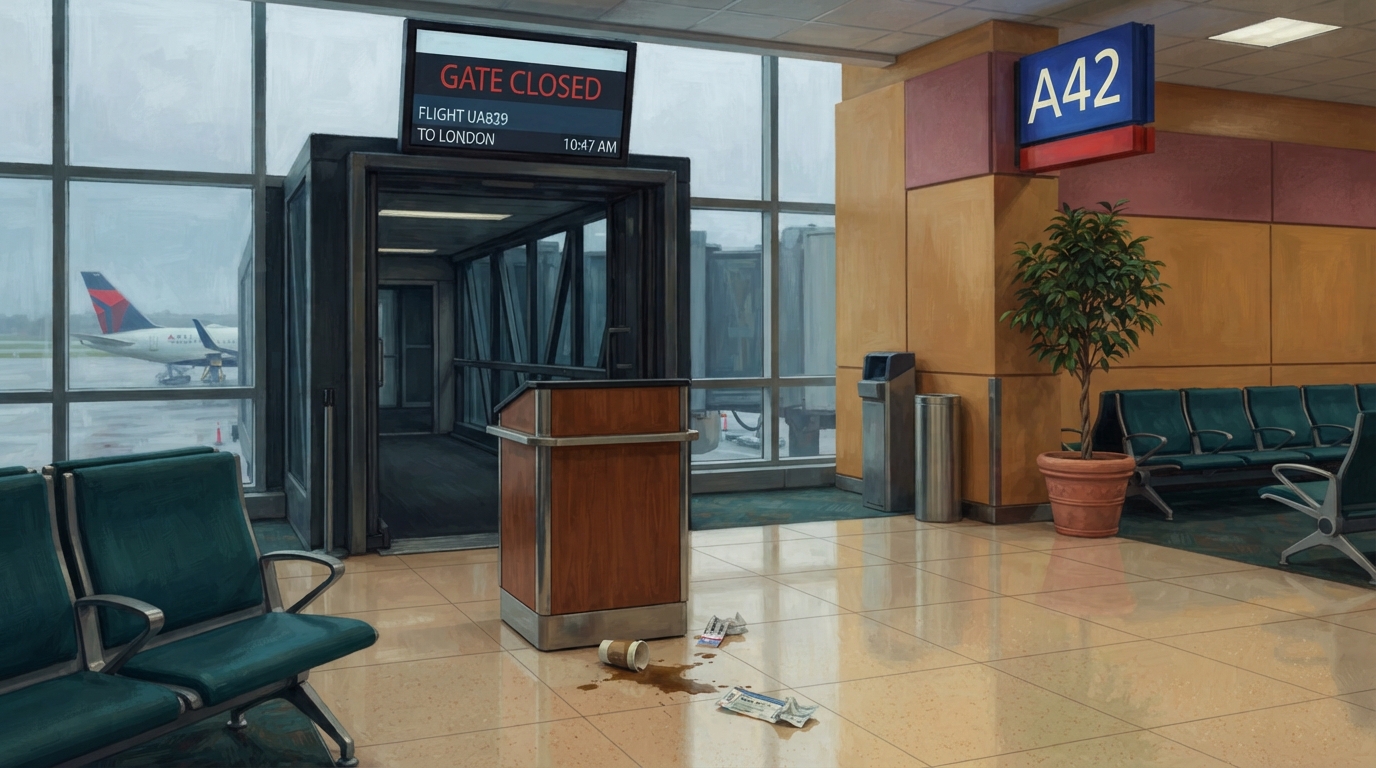
- Allez au comptoir du vol que vous avez raté, pas celui sur lequel vous étiez. La compagnie aérienne avec laquelle vous venez d'atterrir ne peut généralement pas aider avec la réservation d'un autre transporteur. Trouvez d'abord le comptoir ou l'application de la seconde compagnie aérienne.
- Renseignez-vous sur la mise en attente le jour même avant d'acheter un billet plein tarif. Certaines compagnies aériennes vous déplaceront sur un vol ultérieur pour des frais modiques plutôt que de forcer un nouveau tarif, mais seulement si vous demandez avant de quitter le comptoir.
- Déposez une réclamation immédiatement si vous avez acheté une protection. La garantie Kiwi.com, une police d'assurance voyage ou un avantage lié à une carte bancaire a généralement une courte fenêtre de déclaration, alors n'attendez pas d'être rentré chez vous pour le faire.
- Photographiez tout avant de passer à autre chose. Cartes d'embarquement, panneau d'affichage montrant le retard, nom ou numéro de référence de tout membre du personnel. Vous voudrez cela plus tard même si vous ne déposez jamais de réclamation.
- Si vous voyagez en groupe, décidez ensemble, rapidement. Est-ce que tout le monde attend la personne bloquée, est-ce que le groupe se sépare et se retrouve à l'hôtel, ou est-ce que quelqu'un réserve à nouveau le segment suivant de tout le groupe ? L'indécision coûte plus cher que l'un ou l'autre choix.
Rien de tout cela n'annule le raté. C'est toujours la différence entre payer un nouveau billet et payer aussi une nuit d'hôtel gâchée et une réservation de visite perdue.
Questions fréquemment posées
Qui paie si je rate mon vol en correspondance sur des billets séparés ?
C'est vous. Sur un auto-transfert, chaque billet est son propre contrat, donc la compagnie aérienne exploitant votre vol manqué n'a aucune obligation de vous réacheminer ou de vous rembourser, à moins que vous n'ayez acheté séparément une protection comme la garantie Kiwi.com ou une police qui couvre explicitement les correspondances auto-réservées.
Une escale de 90 minutes est-elle suffisante pour un auto-transfert ?
Rarement, et cela dépend de l'aéroport. Quatre-vingt-dix minutes pourraient fonctionner dans un petit aéroport à terminal unique sans immigration et avec uniquement des bagages à main. Dans un hub majeur avec récupération des bagages, contrôle des passeports et un nouvel enregistrement, considérez 90 minutes comme risqué, pas confortable.
Quelle est la différence entre un auto-transfert et un vol en correspondance normal ?
Un vol en correspondance normal est réservé sur un seul billet, donc la compagnie aérienne définit un temps de correspondance minimum et assume le risque d'une correspondance manquée. Un auto-transfert est constitué de deux billets séparés ou plus assemblés par vous-même, sans dossier lié, sans temps minimum garanti et sans obligation de réacheminement si quelque chose tourne mal.
L'EU261 couvre-t-il l'auto-transfert ?
Généralement, non. L'indemnisation EU261 pour une correspondance manquée exige que vos vols aient été réservés dans le cadre d'une réservation unique. Comme un auto-transfert est, par définition, deux réservations séparées ou plus, la plupart des correspondances en auto-transfert tombent en dehors de la protection du règlement.
Si les deux vols sont de la même compagnie mais réservés séparément, suis-je toujours non protégé ?
Oui. La responsabilité découle de la façon dont les billets sont liés dans le système de réservation, pas de qui exploite l'avion. Deux vols WizzAir réservés comme deux réservations séparées sont traités exactement comme deux compagnies aériennes différentes : aucune obligation de vous connecter si le premier est en retard.
L'assurance voyage couvre-t-elle une correspondance en auto-transfert manquée, et la garantie Kiwi.com en vaut-elle la peine ?
Parfois, mais vérifiez les petits caractères. De nombreuses polices excluent « temps d'escale insuffisant » comme cause, et exigent un retard vérifié d'un transporteur public, souvent de plus de 3 heures, avant que l'avantage ne s'active. La protection contre les perturbations de la garantie Kiwi.com est conçue spécifiquement pour les itinéraires en auto-transfert et vaut le prix du complément si votre marge est déjà serrée ; aucun prix fixe n'est publié, attendez-vous à ce qu'il soit intégré au total lors du paiement.
Un vol en auto-transfert vaut-il les économies compte tenu du risque ?
Souvent oui, pour le bon voyage. En voyageant uniquement avec un bagage à main avec une marge de plus de 3 heures dans un aéroport familier, les économies battent généralement le petit risque ajouté. Réduisez la marge en dessous de 2 heures dans un hub inconnu, ajoutez des bagages en soute ou ajoutez les horaires d'autres personnes, et le calcul bascule rapidement.
Points clés
- L'auto-transfert signifie des billets séparés, même sur la même compagnie. Même transporteur ne signifie pas protection.
- Personne n'est contractuellement obligé de vous réacheminer sur des réservations séparées. La responsabilité incombe au voyageur, pas à la compagnie aérienne.
- L'EU261 exige une réservation unique pour s'appliquer, donc la plupart des auto-transferts tombent en dehors, et la réforme EC261 convenue en juin 2026 ne change pas cela.
- La proposition européenne « un voyage, un billet » de mai 2026 concerne les voyages en train multi-opérateurs, pas les vols. Ne laissez pas le titre vous tromper.
- Prévoyez au moins 2 heures pour un auto-transfert intérieur ou dans un hub modéré comme Schiphol, et 3 à 4 heures ou plus dans des hubs comme Heathrow (risque le plus élevé) ou Changi (risque modéré, mais toujours mesuré en heures, pas en minutes).
- L'assurance voyage standard exclut souvent « temps d'escale insuffisant » purement et simplement. Lisez la police avant de supposer que vous êtes couvert.
- Les voyages de groupe et en famille multiplient le risque : une file d'attente lente à l'immigration peut bloquer les plans de tout le groupe, pas seulement un billet. Des outils comme TripProf vous permettent de planifier des marges de vol directement dans l'itinéraire jour par jour d'un groupe, de sorte que le risque soit visible avant que quiconque ne réserve.
Réservez l'auto-transfert si les économies sont réelles et la marge honnête. Ne laissez juste pas l'itinéraire bien ordonné d'un moteur de recherche vous convaincre que quelqu'un d'autre assume le risque. Personne ne le fait, jusqu'à ce que vous décidiez d'acheter cette protection vous-même.
Sources
- AirHelp : Droits sur les vols en auto-transfert - définition et mécanisme de responsabilité pour l'auto-transfert
- Going.com : Guide Google Flights sur l'auto-transfert - définition de l'auto-transfert et problème d'affichage des moteurs de recherche
- Union européenne Your Europe : Droits des passagers aériens - exigence de réservation unique pour l'indemnisation EU261
- Commission européenne : Levée des contrôles aux frontières aériennes et maritimes Schengen pour la Bulgarie et la Roumanie - confirme la date du 31 mars 2024 pour l'adhésion de la Bulgarie à l'espace Schengen pour les frontières aériennes
- DLA Piper : Accord conclu sur la réforme de l'EC261 - portée de la réforme de juin 2026 et statut législatif
- AirHelp : Ce que la réforme EC261 signifie pour vous - confirmation que les billets séparés restent non protégés sous la réforme
- Commission européenne : Un voyage, un billet, des droits complets - proposition de billetterie multimodale ferroviaire de mai 2026
- SimpleFlying : Temps de correspondance à Amsterdam Schiphol - temps de correspondance minimum officiels de KLM (40 min Schengen / 50 min hors-Schengen) et recommandation de marge pour l'auto-transfert
- Heathrow : Vols en correspondance - confirmation officielle que les temps de correspondance minimum ne s'appliquent pas aux réservations séparées
- The Points Analyst : Transfert de terminal à Heathrow - marge pour l'auto-transfert citant les conseils de British Airways
- Trip.com : Guide de transit à l'aéroport de Singapour - temps de correspondance à Changi pour les passagers enregistrés jusqu'à destination et en auto-transfert
- World Nomads : Couverture des correspondances manquées - seuil de retard de l'assurance et scénario de correspondance auto-réservée
- Squaremouth : Couverture des correspondances manquées - exclusion pour temps d'escale insuffisant
- Kiwi.com : La garantie Kiwi.com - conditions de protection contre les perturbations pour les itinéraires en auto-transfert
- r/Flights : Conseils pour une escale à Rome FCO - cas de même compagnie aérienne avec réservations séparées
- r/Flights : Cas Philippine Airlines à Manille - cas de contraste avec billet unique
- r/Flights : Escale en auto-transfert à Kuala Lumpur - exemple de marge pour auto-transfert international
- r/Flights : Écart de confiance dans la réservation Kiwi.com - exemple de contrôle du PNR par le revendeur
Dernière mise à jour: 19 juillet 2026
Continuer la lecture
Plus de conseils de voyage et de guides sélectionnés pour vous

What counts as visiting a state? Layovers, drive-throughs and the rules 50-staters use
Only 2% of Americans name a plane change as the minimum that counts as visiting a state, while 27% set the bar at driving through. Here's a three-tier rubric, a lookup table for the edge cases from Four Corners to D.C., and one trip counted three ways.

Le faux site de billets SBB qui vole les données de carte de crédit et Twint des voyageurs
La police cantonale zurichoise a confirmé qu'un faux site de billets SBB dérobe les informations de paiement par carte de crédit et Twint des voyageurs le trouvant via une recherche Google classique. Voici comment le repérer et quoi faire si vous avez déjà payé.

Alerte aux faux sites ETA pour le Royaume-Uni : des arnaques facturent jusqu'à 900 € aux voyageurs autrichiens
De faux sites web ETA britanniques facturent des centaines d'euros aux voyageurs autrichiens et européens pour un formulaire qui ne coûte que 20 £. Voici comment fonctionne la vraie procédure et comment repérer une arnaque avant de payer.