Tour de France 2026 Barcelona Grand Départ: A Budget Guide
Key Highlights
- 1
- 2
- 3
+4 more in the takeaways below
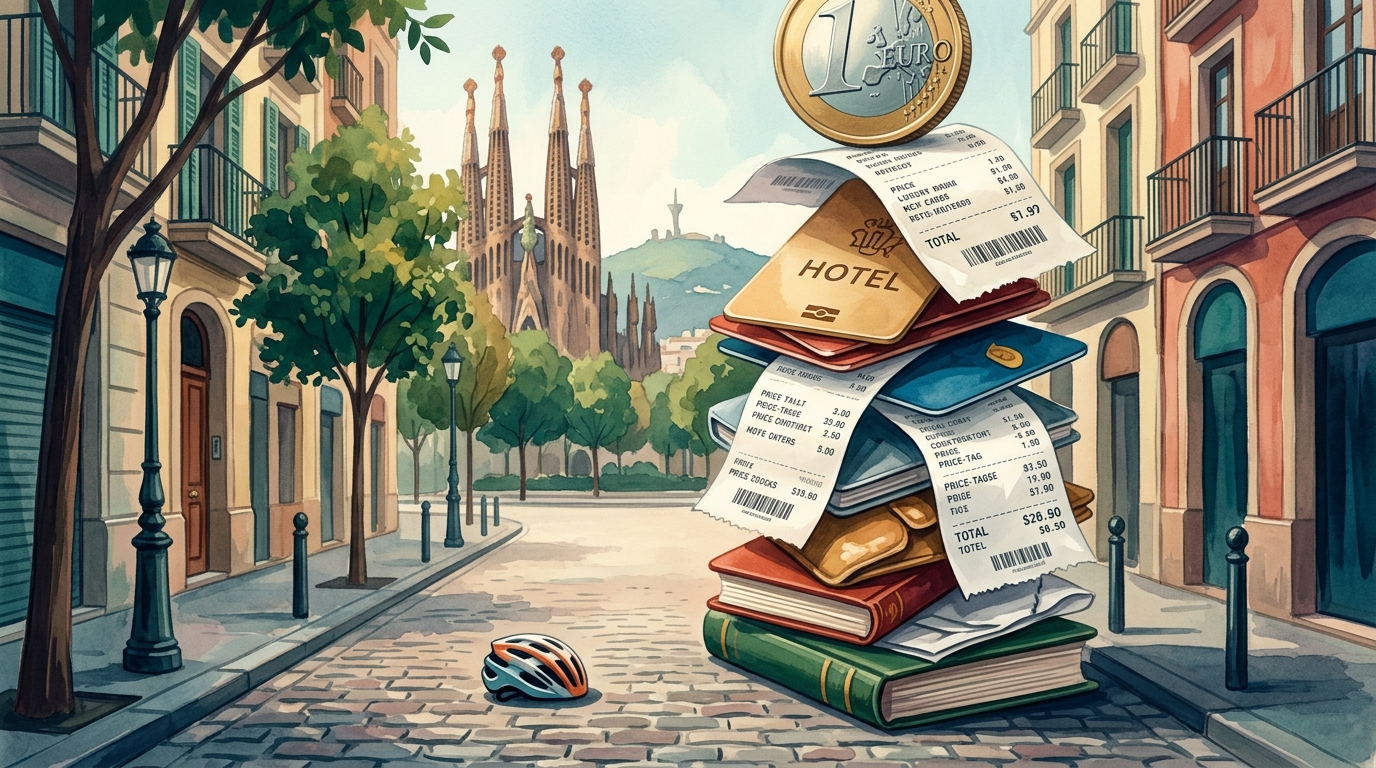
On Saturday, July 4, 2026, the world's biggest bike race rolls out of Barcelona for the first time ever. A 19.7 km team time trial loops past the Sagrada Família and finishes at Montjuïc. Two more stages cross Catalonia. Hotels are charging triple; the roadside is still free. This is a budget guide to the tour de france 2026 barcelona grand depart: where to stand, where to sleep, and which trains keep you near the action.
The Tour de France 2026 rolls out of Barcelona for the first time ever on July 4, with three Catalan stages: a TTT around the city, Tarragona-to-Barcelona finishing on Montjuïc, then Granollers to the French Pyrenees. Roadside spectating is free. Hotels in central Barcelona have hiked sharply for July 3-5 and inventory has thinned since the route was confirmed. Sleep in Sitges, Vilanova, Tarragona, or Granollers (€70-90 over Barcelona prices) and ride Rodalies in. A lean weekend lands around €350-500; comfortable around €700.
Why Barcelona, Why 2026, Why It Matters For Your Wallet
This is only the third time the Tour has ever started in Spain (after San Sebastián in 1992 and Bilbao in 2023), and the first time Barcelona has ever hosted a Grand Départ. It's also the first opening team time trial in decades, which means three days where the city becomes the race's living, breathing centerpiece.
The 113th edition of the Tour runs from July 4 to July 26, covering 3,333 km across 21 stages with 8 summit finishes. Only the first three stages happen in Catalonia. After Monday, the race vanishes north into France and your hotel bill returns to gravity.
The cost asymmetry is the whole story. Watching the race itself is one of the few major sporting events left on the planet where you don't need a ticket. Everything around it (beds, flights for July 3, restaurant patios with a Montjuïc view) is where promoters and platforms collect their fee. Once you know which costs are real and which are self-inflicted, the weekend gets much cheaper.
One more layer worth knowing: 2026 is also when Barcelona's tourist tax jumped sharply. As of April 1, the city raised the regional and municipal accommodation surcharge to a €12-per-night charge for five-star hotels, €8.40 for four-stars, €9.50 for short-term rentals and €6 for hostels. That's stacked onto whatever your booking platform quotes. Three nights for two people at a four-star runs an extra ~€50 in tax alone.
The Three Stages Of The Barcelona Grand Départ, Translated Into Spectator Plans
The Barcelona Grand Départ runs three Catalan stages between July 4 and July 6, 2026: a 19.7 km team time trial through central Barcelona on Saturday, a 178 km road race from Tarragona finishing with three laps up Montjuïc Castle on Sunday, and a 196 km mountain stage from Granollers across the French border on Monday. Each stage favors a different spectator strategy. Pick one and commit, because chasing two in one weekend means missing both.
Stage 1, Saturday July 4: The Team Time Trial
A 19.7 km loop that starts at the Recinte Plataforma Marina near the Fòrum, runs along Avinguda del Litoral past Port Olímpic, passes Sagrada Família, and finishes on Montjuïc near the Estadi Olímpic Lluís Companys. Teams set off at intervals, so the action stretches across most of the afternoon, not the 30-second blur of a road-race finish line.
For a TTT, the smart spectator move is the start zone (you see every team set off at close range), a sharp corner in the middle, or the finish climb. The Avinguda Diagonal and the lower slopes of Montjuïc give you both speed and atmosphere without the elbows of the official finish.
Stage 2, Sunday July 5: Tarragona to Barcelona
A 178 km road stage that rolls through Torredembarra, El Vendrell, Vilanova i la Geltrú, Sitges, and Begues before three laps up Côte du Château de Montjuïc - riders hit the 13% ramp three times in 30 minutes (1.6 km at an average of 9.3%, with a 600 m section ramping to 13%). This is the day the GC starts to crack open. Spectator-wise, it's the most exciting stage in the whole Grand Départ.
The smartest free viewing strategy: get up the Montjuïc climb early, ideally a few hundred meters before the steepest pitch. Cyclingnews recommends positioning below a climb's summit, not at the very top. For the short 1.6 km Montjuïc climb, that means a few hundred meters before the steepest pitch. With three laps, you'll see the peloton three times from the same spot, and the gradient pulls riders apart so you actually see faces, not a blurred clump.
Stage 3, Monday July 6: Granollers to Les Angles
A 196 km mountain stage with 3,950 m of climbing, finishing across the French border. The depart from the Porxada is one of the rare start villages where the riders sign on under a 16th-century stone arcade instead of a sponsor tent. Granollers itself is a Rodalies-easy day trip from Barcelona on the R2.
For a road stage, the publicity caravan rolls through roughly two hours before the riders, throwing freebies into the crowd. Stake out your spot at least three hours pre-peloton if you want a good vantage and a tote bag full of branded snacks.
Where To Stand For Free: The Real Spectator Map
You do not need a ticket. The race route is open to the public, lined with metal barriers in the urban zones and nothing at all in the rural stretches. Roadside spectating costs €0. Grandstands and VIP packages exist for the finish line and start village, running €50 to €300+, but they're optional, not required.
Here's where to actually stand, ranked by what you'll see versus how early you have to arrive:
| Spot | Stage | Cost | Arrive By | What You See |
|---|---|---|---|---|
| Montjuïc climb, mid-slope | 1 & 2 | Free | 11:00 | Three laps of pain on Sunday; finish atmosphere both days |
| Start village, Fòrum | 1 | Free | 10:00 | Every team setting off, up close |
| Avinguda Diagonal | 1 | Free | 12:00 | Wide road, full TTT speed, fewer crowds |
| Sitges seafront | 2 | Free | 11:00 | Peloton on the coast, photogenic backdrop |
| Porxada, Granollers | 3 | Free | 10:00 | Start village in a 16th-century market square |
| Montjuïc grandstand | 1 & 2 | €50-300+ | By ticket time | Reserved seat, big screens, no standing |
The honest takeaway: unless you specifically want a guaranteed seat and a big screen, the grandstand isn't worth it. Standing on a mid-slope of Montjuïc, you'll see riders three times, close enough to hear breathing and feel heat coming off the carbon. That's the kind of contact experienced spectators describe as the whole point of being there in person. The grandstand sees them once at the line.
I always position a few kilometres below a climb's summit. The crowds thin out, the riders are still going full-gas, and you don't have to fight for sightlines.
Cyclingnews spectator's guide, paraphrased from "I've been to seven Tours de France as a fan"
The Hotel Math (And Why You Shouldn't Sleep In Barcelona)
Barcelona's hotels have done what every host city's hotels do: they've raised rates sharply for the Grand Départ weekend. The Catalan government projects €260 million in tourism spend across the three Catalan stages with 1.2 million spectators expected, and rooms have been thinning since the route was confirmed in late 2025. Normal July pricing for the city already starts at ~$189/night for a 3-star, $227 for a 4-star, and $449 for a 5-star. Event weekend rooms in central Barcelona are listing well above those baselines, and the doubled tourist tax stacks on top, so a four-star room that prints as €230 lands closer to €600+ once everything's tallied.
Booking the first central hotel that pops up because "I want to walk to the start line." On Stage 1 and 2 morning, central Barcelona is a closed-road maze. Your hotel front door faces a barrier; your taxi can't reach you; the metro is your only realistic exit. Staying central buys you nothing on race day except an inflated bill.
The smart move is to sleep in a satellite town and ride the Rodalies into the city the morning of the race. Barcelona is one of the best-connected commuter rail hubs in Europe. From Sitges, Tarragona, Vilanova, Granollers, or even Badalona, you can be in central Barcelona within 30 to 90 minutes for under €10 round trip.
| Base | To BCN center | Rodalies line | Typical July night (non-event) | Vibe |
|---|---|---|---|---|
| Sitges | ~35 min | R2 Sud | ~$73-119/night (Expedia) | Beach town, lively, on Stage 2 route |
| Tarragona | ~70-90 min | R14/R15/R16 | Generally below Sitges | Roman ruins, Stage 2 start |
| Vilanova i la Geltrú | ~45 min | R2 Sud | Mid-range | Quieter than Sitges, Stage 2 passes through |
| Granollers | ~30 min | R2 Nord / R3 | Below city center | Stage 3 start village |
| Badalona | ~15-25 min | R1 / Metro L2 | Below city center | City-adjacent, easiest commute |
| Gràcia or Sants (within BCN) | Walking/metro | n/a | Inflated, but less than Eixample | Local neighborhoods, more value |
If you're set on staying in Barcelona itself, look at Gràcia, Sants, Poble Sec, or Badalona rather than Eixample or the Gothic Quarter. The neighborhoods are still well-connected, the bars stay open later, and the price gap can be hundreds of euros a night.
Whichever base you choose, book a hotel within walking distance of the Rodalies station, not a 20-minute taxi ride away. On race weekend, road closures and event traffic make even short drives a gamble. Walking to a train, riding 30 minutes, then walking to Montjuïc is the most reliable plan.
Getting In: Flights, Trains, And The Three-Airport Trade-Off
Barcelona has three usable airports. BCN (El Prat) is the main one and the closest. Girona (GRO) sits about 47 miles north of the city, and Reus (REU) is about 55 miles south. Girona is a Ryanair stronghold (also Jet2 and Transavia); Expedia listings as of May 2026 average around $116 per ticket. Add a €15-20 bus or train to Barcelona and Girona can still beat BCN if BCN prices are jacked up for the weekend.
Baseline flight pricing, meaning what you'd normally pay on a non-event weekend, tells you how much of any "deal" is event markup:
- London → BCN: from $64-68 round trip on Ryanair (Momondo listings, May 2026) in normal periods. For July 3-6, expect significant inflation.
- Paris → BCN: from $57 round trip on Ryanair (Omio listings, May 2026), or Vueling one-way from €22.
- From inside Spain: Vueling Madrid-BCN regularly sits in the €30-50 range. The high-speed AVE train competes hard on price and is usually faster door-to-door.
For Europe-based travelers, the train math often wins. AVE and Ouigo run direct Paris-Barcelona and Madrid-Barcelona at speeds that make the airport-transit-airport hassle look silly. If you're coming from southern France, riding into Barcelona on July 3 and back on July 7 puts you on the network when it actually works.
Booking accommodation for a Tour town within weeks of the route reveal is too late. Freewheeling France warns that Tour-stage accommodation typically disappears within weeks of the route announcement. For 2026 Barcelona, the route was confirmed in late 2025. By mid-2026, the inventory that's left is the inventory at the top of the pricing curve.
Getting Around: The Metro, The Card, And The Road Closures
Race weekend, the metro is your best friend and your only reliable option. Several core streets will close on July 4 and 5, including parts of the Diagonal, Litoral, and Montjuïc area. Barcelona's official event guidance points to L9 Sud (the airport line) and R2 Nord as the most useful for spectator movement.
The single best transit purchase is the Hola Barcelona Travel Card. Prices in 2026 are €18.70 for 48 hours, €27.30 for 72 hours, €35.60 for 96 hours, and €43.60 for 120 hours, with unlimited rides including the airport metro. The 48-hour version alone saves you the cost of two airport metro rides at €5.90 each plus every spectator-day journey you'll take.
If you're staying in the city for longer and not flying in via metro, the T-Casual 10-journey ticket at around €13 (Zone 1) is the cheapest per-ride option. For Rodalies trips out to Sitges, Granollers, or Tarragona, single tickets are typically €3-5 each way; bicycles ride free on Rodalies when space allows, which is handy if you've brought a bike.
The Race-Weekend Spectator Playbook
A repeatable plan that works whether you're solo, in a couple, or wrangling four friends.
- Pick one stage, not all three. Stage 2 (Sunday on Montjuïc) is the spectacle. Stage 1 is more relaxed. Stage 3 requires getting to Granollers early. Pick the day you'll commit to, plan the rest as bonus.
- Sleep outside the central zone. Sitges, Vilanova, Tarragona, Granollers, or Badalona. Book hotels within 10 minutes' walk of the Rodalies station.
- Buy the Hola Barcelona Card on arrival. 48h covers a weekend, 72h covers a long weekend. Includes the airport metro.
- Stake out your spot 3+ hours pre-peloton. Bring water, sunscreen, a hat, snacks, a portable battery. The publicity caravan arrives 2 hours before the riders; that's your warning bell to put your phone down.
- Walk in, walk out. Once the race ends, transit will be chaos for an hour. Walk to a metro stop one or two stations away from the finish to skip the surge.
- Hit the free Fan Park before or after. Open July 2-5, no ticket, BMX shows and workshops. Easiest way to feel the event without elbowing for road space.
Build Your Barcelona Grand Départ Budget: Three Realistic Numbers
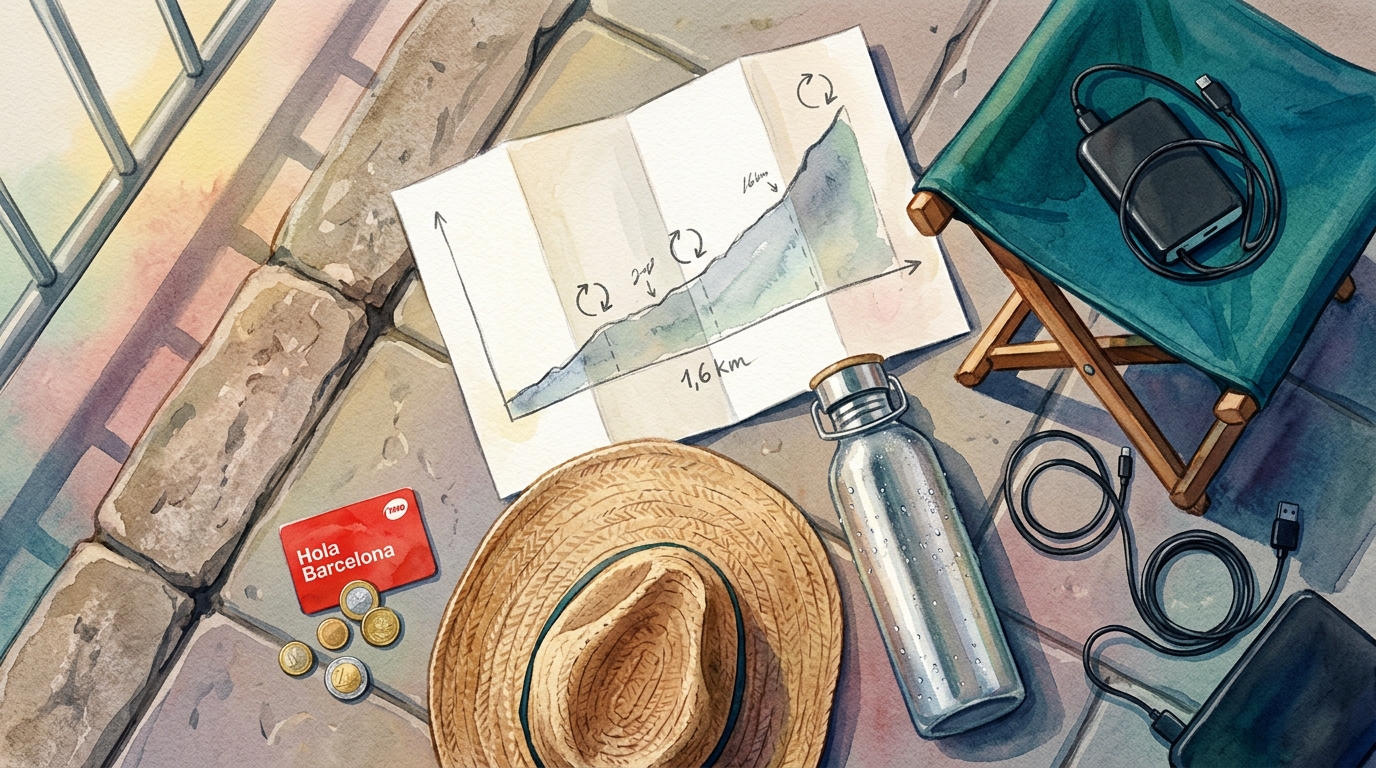
Three sample budgets, in person-days. They assume you fly in on July 3, watch Stages 1 and 2, leave July 6. Numbers exclude the flight (which varies wildly by origin) and tourist tax (calculated separately).
| Plan | Sleeping | Transit | Food | Spectating | 3-Day Total (per person) |
|---|---|---|---|---|---|
| Lean | Hostel dorm in Sitges/Vilanova (typically €60-100 during event weekends, check Hostelworld closer to dates) | Hola BCN 72h (€27.30) + Rodalies (€20) | Mercat groceries + 1 cheap menú del día (€20/day) | Roadside, free | ~€350-450 |
| Mid | 3-star outside Eixample (approximate ~€180/night during event, check at booking) | Hola BCN 72h + occasional cab | Tapas + 1 proper dinner (€40/day) | Roadside + 1 Fan Park visit | ~€700-900 |
| Splurge | Central 4-star (approximate ~€600/night during event, check at booking) + €8.40/night tax | Cabs + private transfers | Restaurants, including 1 Michelin-adjacent dinner (€80+/day) | Grandstand ticket €100-300 | ~€2,500+ |
Prices reflect listing ranges observed in May 2026 for July 3-6 dates; expect movement before booking.
The gap between Lean and Splurge isn't about the race. It's about how much you're paying the city for the privilege of sleeping inside its central zone during peak demand. The race itself is the same race from both seats.
What To Pack For Race Day
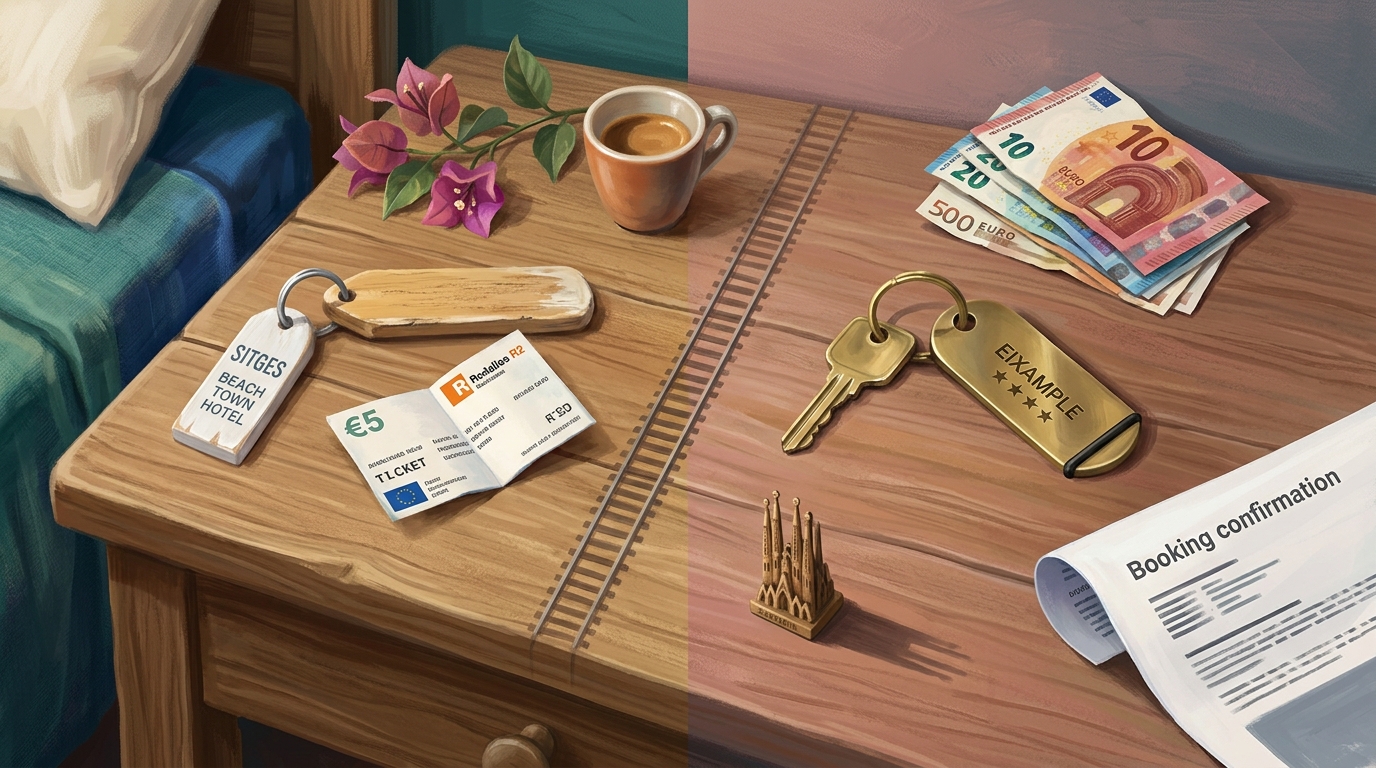
You'll be outside for 6-9 hours on a Barcelona summer afternoon, often standing on hot pavement, often without easy access to shade or shops. Pack like you're going to a beach festival, not a sporting event.
- Two liters of water per person (refill at public fountains where available)
- Sun hat + SPF 50 (July afternoons in Barcelona regularly top 30°C, with no shade on Montjuïc)
- Portable phone battery (you'll be photographing, tracking, navigating closures)
- Cash in small notes (some kiosks won't take card, ATMs near closures may be empty)
- Lightweight folding stool or sit-pad for climb spots
- Snacks that survive heat (no chocolate, no soft fruit)
- Downloaded offline map of the closure zones and your transit routes
- A printed or screenshot copy of your hotel address and Rodalies times
The offline map matters more than people think. With 100,000+ spectators in the same square kilometer all trying to load Google Maps at once, cellular gets flaky. Cache your maps the night before.
Cache everything the night before. A planning app that works offline keeps your hotel address, transit times, and Rodalies schedule readable on the platform when the metro signs are in Catalan and 100,000 phones are fighting for the same tower.
What Else Is Happening In Barcelona That Weekend
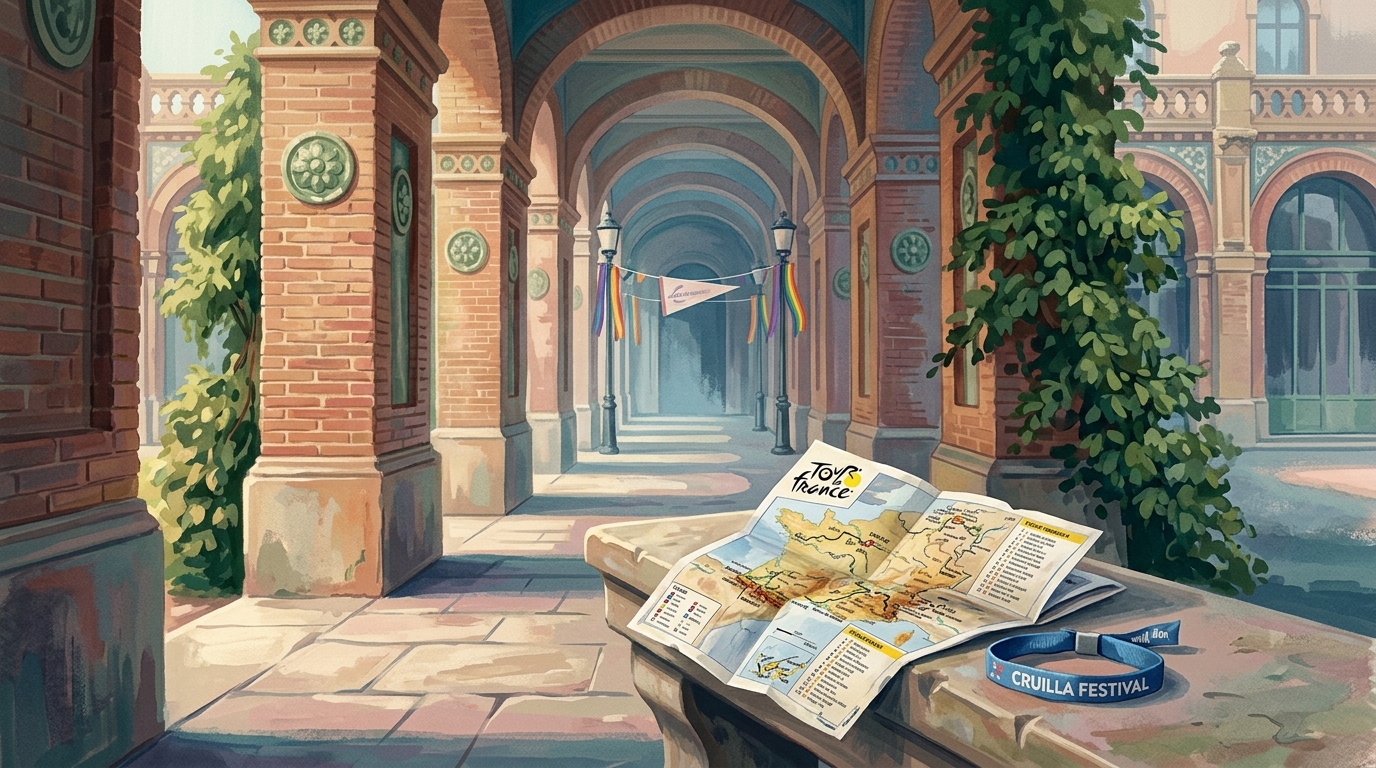
The Grand Départ doesn't happen in a vacuum. Barcelona is the UNESCO World Capital of Architecture in 2026, which has driven elevated visitor numbers all year. Cruïlla Festival runs July 8-11 immediately after the race, and Barcelona Pride programming opens June 26 and peaks the weekend of July 16-18. Both keep hotel prices stubborn through mid-July. The official team presentation happens July 2 at the Sant Pau Art Nouveau Site, which is open to the public.
If you're stitching the race into a longer Catalan or European trip, the days after the Tour leaves (July 7-10 onwards) are when hotel rates drop, the city exhales, and you can actually enjoy a Sagrada Família visit without the cycling crowd. If you're turning the trip into a longer stay, our 4-day Barcelona itinerary lays out a group-friendly route for exactly those calmer post-race days. For multi-stop planning, our multi-city Europe planning guide covers how to sequence stops so you're never paying peak in two places at once.
Frequently Asked Questions
Do I need a ticket to watch the Tour de France in Barcelona?
No. Roadside spectating is free and requires no booking. The race route is open to the public and lined with metal barriers in urban zones. Grandstand seats at the finish on Montjuïc cost €50 to €300+ and are entirely optional. Most fans watch for free.
Where is the best free viewing spot for the Barcelona Grand Départ?
The mid-slope of the Montjuïc climb, a few hundred meters before the steepest pitch. You see riders on Stage 1's finish and three times on Stage 2's laps. Cyclingnews experienced spectators recommend a few km below a summit over the very top.
How much are Barcelona hotels during Tour de France 2026?
Specific verified spike percentages haven't been published by industry bodies, but normal July baselines already start at ~$189/night for a 3-star, $227 for a 4-star, $449 for a 5-star, and event-weekend listings in central Barcelona sit well above that. The Catalan government projects 1.2 million spectators across the three Catalan stages. Add the new €6-€12 per-night tourist tax on top.
What's the cheapest way to see the Tour de France Grand Départ?
Sleep in Sitges, Vilanova, Tarragona, or Granollers, ride Rodalies into Barcelona, buy a Hola BCN 72h card (€27.30), stand roadside for free, eat from a Mercat. A 3-day lean budget runs roughly €350-450 per person, excluding flights.
Can I bring my bike on the train in Catalonia?
Yes. Rodalies allows bikes for free on all lines without time restrictions, provided there's room. Folding bikes count as hand luggage. Staff can deny access on heavily crowded trains, so avoid rush-hour spectator surges if you're carrying a bike.
Which airport should I fly into for the Barcelona Grand Départ?
BCN El Prat is the main option and closest to the action via the L9 Sud metro. Girona (GRO) averages ~$116 per ticket on Ryanair, Jet2, and Transavia, but sits 47 miles from the city. Reus is ~55 miles away and works for Tarragona-based stays. For event weekend, GRO often beats BCN on total cost despite the transfer.
What about the publicity caravan?
The sponsor caravan rolls along the road stage route roughly two hours before the riders, throwing branded freebies into the crowd. It's a key part of the spectator experience and a reason to arrive early. The TTT on Saturday has a smaller caravan presence; Sunday's road stage is when the full circus rolls.
Key Takeaways
- Roadside spectating is free. Grandstands at €50-300+ are optional, not required.
- Hotels in central Barcelona for July 3-5 are running well above normal July baselines, with limited remaining inventory. Sleep in Sitges, Vilanova, Tarragona, Granollers, or Badalona and ride Rodalies in.
- Stage 2 (Sunday) is the spectacle: three laps up Montjuïc with a 13% ramp. Pick a mid-slope spot, not the summit.
- Buy a Hola Barcelona Travel Card on arrival (€18.70 for 48h, €27.30 for 72h). It includes the airport metro and pays for itself in a weekend.
- Barcelona's tourist tax doubled in April 2026: €6-€12/night depending on accommodation type. Factor it into every quoted hotel price.
- Arrive at your spectator spot at least 3 hours before the peloton. Pack like a beach festival, not a sports event.
- If you can shift your trip by a few days, July 7-10 onwards is when prices drop and the city becomes pleasant again. For event-budget thinking on other 2026 cities, see our Vienna Eurovision 2026 budget guide.
Sources
- Wikipedia: 2026 Tour de France: dates, distances, history of Spanish starts
- Le Tour Barcelona: official Grand Départ site, team presentation venue and dates
- Le Tour Barcelona, Stage 2: Montjuïc climb specifications
- Discover France: Stage 1 TTT route detail
- Cyclingstage: Stage 2 Tarragona-Barcelona route and Montjuïc laps
- Catalan News: Stage 3 Granollers-Les Angles route and elevation
- Barcelona.com: event overview, grandstand prices, transit guidance
- Barcelona Ajuntament: Fan Park dates and free programming
- Inside The Games: Catalan government projections (€260M, 1.2M spectators)
- Freewheeling France: free spectating, accommodation timing
- Cyclingnews: seven-time spectator's guide to where to stand
- ProCycling UK: publicity caravan, road-stage timing
- Expedia Barcelona hotels: baseline July pricing by hotel class
- Expedia Sitges hotels: baseline July pricing for the Stage 2 town
- Idealista: 2026 Barcelona tourist tax rates by accommodation type
- TMB: airport metro single-ticket pricing
- TMB Hola Barcelona Card: official 2026 prices by duration
- Rodalies de Catalunya: bike-on-train policy and ticketing FAQ
- Expedia Girona flights: average ticket pricing to GRO
- Momondo London-Barcelona: baseline Ryanair fare reference
- Omio Paris-Barcelona: baseline Vueling and Ryanair fares
- Vueling Madrid-Barcelona: domestic flight reference
- Barcelona Life: Cruïlla Festival dates
- Nomadic Boys: Barcelona Pride 2026 schedule
Prices and dates verified May 2026. Hola BCN fares, tourist tax rates, and event programming can change; check the linked official sources before booking.
Last updated: September 2, 2026
Keep Reading
More travel tips and guides picked for you
Christmas markets from London by train: what 3 nights really costs per person in 2026
Three nights at a Christmas market from London cost £426 to £704 per person. We priced Eurostar fares, central hotels and food for Lille, Brussels, Bruges and Cologne.
Wizz Air and Ryanair are cutting Vienna flights: what to book instead
Wizz Air has fully left Vienna and Ryanair has cut five aircraft over Austria's aviation tax. Here's exactly what changed, why it happened, and how to still book a cheap flight this winter.
Mallorca's tourist tax hike got cancelled. Here's what a 2026 trip really costs
The Balearic tourist tax hike everyone's still warning about got cancelled in February. Here's what a week on Mallorca actually costs in 2026, flights, hotel, tax, and food, with real numbers.