Japan tax-free shopping from 1 November 2026: pay full price, claim at the airport
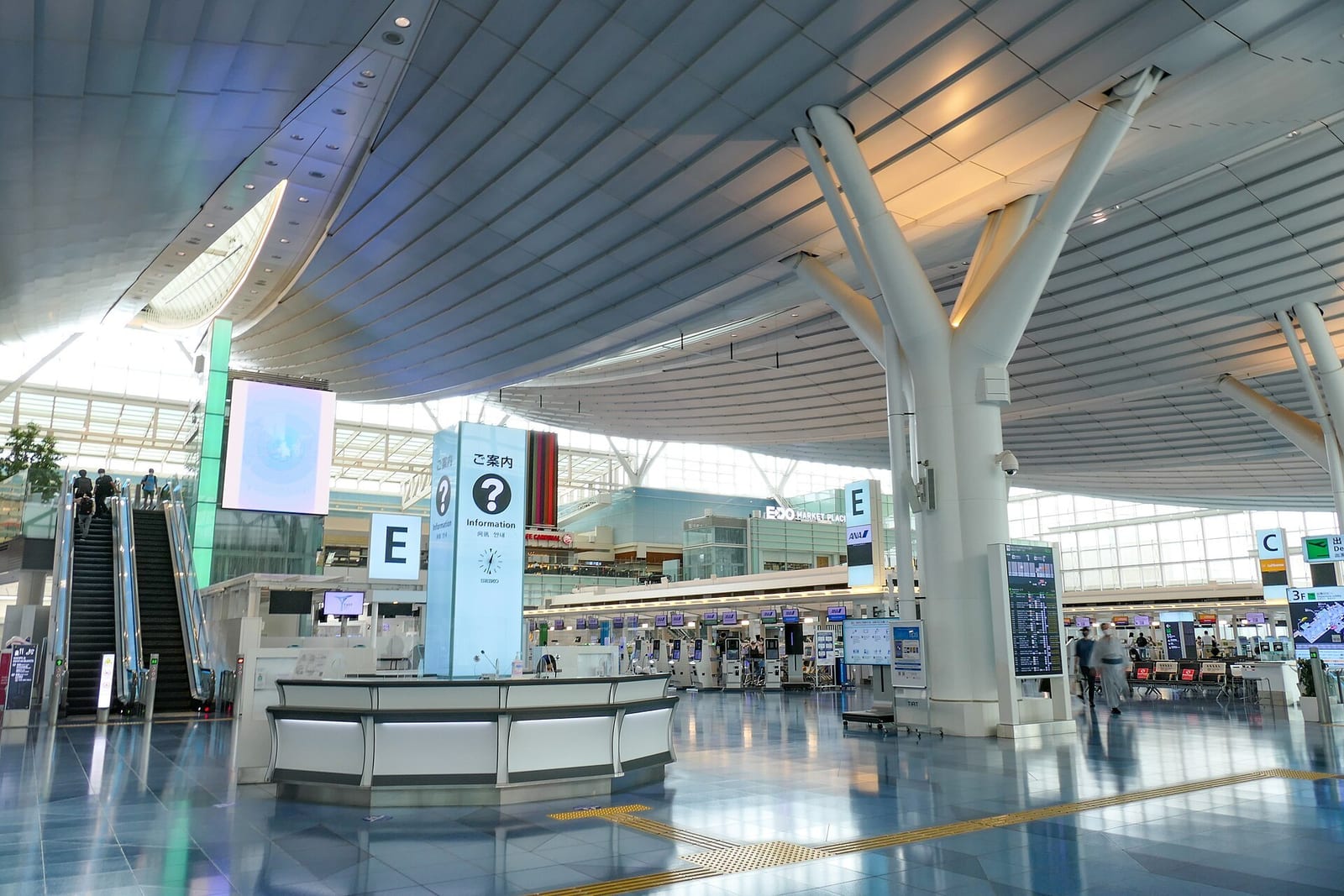
Since 1 November 2026, Japan tax-free shopping runs on a new system: for goods you carry out of the country, shops no longer take the consumption tax off at the till. You pay the full price, then scan your passport at a customs kiosk before you check a bag, within 90 days.
Skip the kiosk and you get nothing, and the change bites at the till on every purchase from 1 November. One missing item voids its whole receipt. The Japan Tourism Agency says there is no rule on who pays an agent's fee.
- The rule: for purchases made on or after 1 November 2026, you pay the tax-inclusive price and claim the consumption tax back when you leave.
- The threshold: JPY 5,000 or more before tax, at one store, on one day.
- The order: customs kiosk (or Visit Japan Web at seven airports) comes first, with every item in your hands, before you drop a bag.
- The money: the refund comes from the shop or its provider, who may take a fee. The government charges none.
Who this applies to
This applies to you if all four of these are true.
- You're a foreign visitor (non-resident) who has been in Japan less than six months since entry.
- You buy at a Japan Tax-free Shop on or after 1 November 2026.
- You spend 5,000 yen or more, tax excluded, at the same store in one day.
- You can personally carry the goods out of Japan.
Japanese citizens who've lived abroad for two years or more can qualify too, and My Number Card is now an accepted proof of that, per the official traveller leaflet. This guide is written for short-stay visitors.
Find your case
Find your situation below. Each row names the official page it comes from.
| Situation | What happens | Do this |
|---|---|---|
| Bought before 1 November 2026 | The sale date, meaning delivery of the goods, decides, not your flight date (National Tax Agency Q&A) | Ask the shop which procedure it used and keep that receipt apart |
| Under 5,000 yen before tax at one store in one day | Not eligible on its own; same-day purchases at several stores can be combined when the shops use a shared procedure counter (Japan Tourism Agency) | Check for a shared counter, or buy in one place |
| Bag with the goods already checked | The agency says you cannot do the tax-free procedure after checking in your baggage, and a checked bag cannot be retrieved for it. Without customs confirmation there is no refund, per the "No Customs procedure, No Refund" notice quoted below | Ask the airline whether anything can be done; the agency names no fix |
| Ate or used up food, drink or cosmetics | Don't use the kiosk; report it to a customs officer at the counter. Consumed items lose the refund, and with one item missing, nothing else on that receipt qualifies either | Report at the counter, and keep the other receipts' goods intact |
| One item missing from a receipt | Nothing on that receipt is refunded; goods on other receipts still are (Japan Tourism Agency) | Keep each receipt's items together |
| Used a camera or other non-consumable | It still qualifies if the same item leaves Japan (Japan Tourism Agency) | Carry it out with you |
| Connecting through another Japanese airport | Do the procedure at the final airport before you leave Japan (Japan Tourism Agency) | Allow time at that airport |
| Cruise that starts and ends in Japan, then a flight home from Japan | The whole stay is handled at the departure airport, before bag check-in (Japan Tourism Agency) | Use the airport, not the cruise stop |
| Cruise that starts and ends overseas | You use an electronic terminal at your final port in Japan, before checking baggage (Japan Tourism Agency) | Go to that final port terminal |
| Japanese national | Can't use Visit Japan Web (Japan Tourism Agency) | Use the kiosk |
What changed on 1 November 2026
What changed on 1 November 2026 is the moment the tax comes off: after you leave, not at the till. Under the old system, eligible visitors bought at the tax-exclusive price. Under the new "Refund Method", an amount equal to the consumption tax is returned once customs confirms the goods are leaving Japan.
There was no transition period in which both systems ran together, per the National Tax Agency's Q&A. A narrow carve-over exists for a shop that, under its continuously applied sales-recording standard, books sales made after midnight on 1 November as 31 October sales. The Q&A's example is 00:00 to 01:00, and it lets only that shop use the old procedure for those sales.
Purchase date or flight date?
The purchase date decides, not the date you fly. The tax agency's Q&A says the method applies from the sale date, and that a "sale" means delivery of the goods. That makes a 30 October purchase an old-rules purchase even if you fly home in December.
One airport's own notice words it differently, saying the revised system applies to passengers departing on or after 1 November. Customs, the Japan Tourism Agency and the tax agency all say purchase date. We follow the issuing authorities.
Nothing we read says what a kiosk does with an old-style tax-exclusive receipt. If you're in that edge case, ask the shop which rule it applied and keep that receipt separate.
Photo: Fabio Achilli from Milano, Italy · CC BY 2.0, via Wikimedia Commons
What to do, from the till to the gate
The route from the till to the gate is six steps, in this order. The first three happen in the shop and in your hotel. The rest happen on departure day.
- Show your passport and pay the full price. The official leaflet shows the passport check, tax-inclusive payment and registering refund details such as a credit card at the till.
- Choose how you want the refund. Instructions are given in the shop, and the refund methods vary by shop. Ask which methods it offers.
- Keep every item and its receipt. Don't eat, drink or use up food, drinks or cosmetics. The special sealed packaging for consumables is gone, but consumed consumables still lose the refund. You have 90 days from the day after purchase, and for a 1 November purchase the last day is 30 January.
- Keep the goods on you until the kiosk. Don't put them in a bag you will check, because you must have all purchased goods in your possession at the terminal. Keep the receipts on top.
- Go to customs before bag drop. Scan your passport at a tax-free procedure terminal with all goods in your hands. At the seven airports listed below, Visit Japan Web is the online alternative.
- Read the result, then drop your bag and clear security. Green means the procedure is done. Red means you take the goods to the customs inspection area. The shop or its refund provider pays you after customs confirms.
We'd treat step 5 as the first stop of departure day, ahead of bag drop, coffee and duty free.
The airport order: customs first, bag second
Do the customs step before you check any luggage. The Japan Tourism Agency says you must have all purchased goods with you at the terminal, so you can't do it after bag check-in. It adds that you can't get a checked bag back for this purpose.
The terminals sit in the departure lobby before baggage check-in. Narita asks passengers to finish customs confirmation before the security check. At Narita the customs confirmation points are listed as open 05:30 to 23:00 (the cash refund counters keep their own hours), so a very early flight needs your goods and receipts packed in hand luggage the night before.
There's an online alternative at seven airports: Narita, Haneda, Kansai, Chubu Centrair, Fukuoka, New Chitose and Naha. You use Visit Japan Web on the dedicated Wi-Fi, in the departure lobby before the security checkpoint. If it fails, you use the kiosk instead. Visit Japan Web is open only to people with Temporary Visitor, Diplomat or Official status, and Japanese nationals can't use it.
The Japan Tourism Agency puts the kiosk itself at a few seconds, but a red result adds an inspection. And if you can't depart because you ran out of time, neither the airline nor customs compensates you.
So build in slack. No official page gives an arrival time for this step. We'd add at least half an hour to your usual airport arrival time, and we'd keep every tax-free purchase in one tote with the receipts on top until the screen says green.
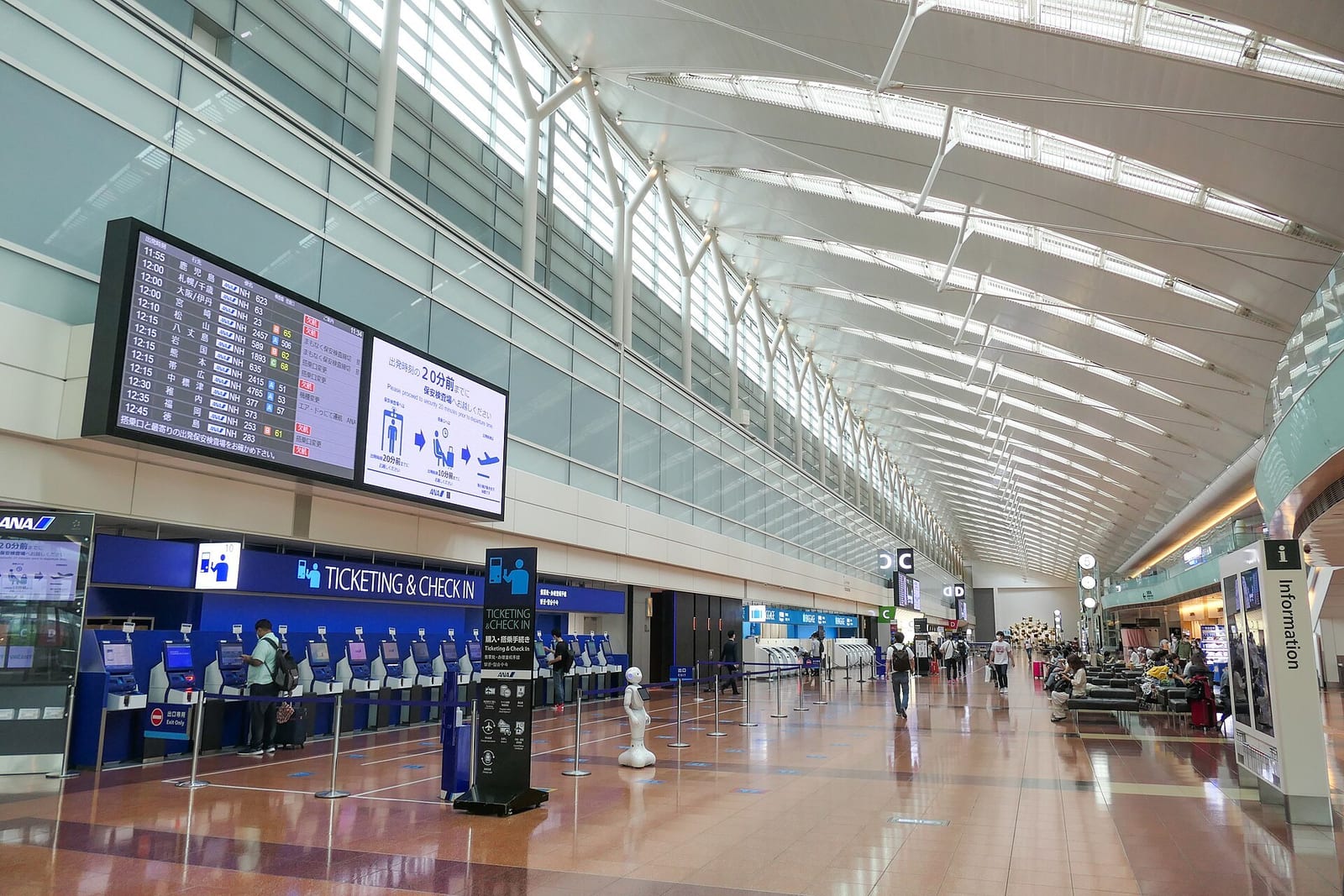
Photo: MaedaAkihiko · CC BY-SA 4.0, via Wikimedia Commons
What the refund is worth: a ¥100,000 purchase
As of November 2026, on a ¥100,000 tax-inclusive purchase at the standard 10% rate, the tax is about ¥9,091, and what you keep depends on the channel. Executive Traveller uses the same ¥9,091 benchmark. Our own check: 100,000 x 10 / 110 = 9,090.9.
The chart below uses our arithmetic on the tax-inclusive ¥100,000; Executive Traveller (10% fee) for the second bar.
| Channel | Refund received |
|---|---|
| Shop absorbs the fee | 9091 |
| 10% provider fee (approx.) | 8182 |
The second bar applies the 10% fee Executive Traveller reports for Cash Japan to our ¥9,091, giving ¥8,182; the outlet itself says roughly ¥8,180.
"No Customs procedure, No Refund"
- National Tax Agency and Customs, English notice
The shop's group can also absorb it. PPIH Group said in a press release, carried by Hokkaido Shimbun on 8 October 2026, that it waives the refund application fee, except when you take cash at the airport. That's a company statement, and it says the terms can change without notice.
The official position sits in between. The Japan Tourism Agency's shop FAQ, in Japanese, says there's no rule on who bears an agent's fee and that the government itself charges none. We'd ask at the till, before paying, what will come off and whether airport cash is offered.
Cost and timing at a glance
The cost to you and the payout timing are set by the shop or its provider; the government charges nothing.
| Item | The rule |
|---|---|
| Provider or shop fee | Set by the shop or provider, so ask at purchase |
| When money moves | After customs confirmation; no official arrival time |
Cash isn't guaranteed. Narita itself says some stores don't offer a cash refund in the airport, and refunds to cards, QR payment services or bank accounts are registered online using the guidance given at purchase. Narita pays cash in yen only.
The exceptions people get wrong
The exceptions people get wrong start with the receipt, not the kiosk. Customs checks per purchase transaction. If you don't have even one item from a receipt, none of the goods on it qualify.
The official leaflet shows a worked case: a receipt with items at ¥3,000, ¥75,000 and ¥13,000, totalling ¥91,000. The ¥13,000 item isn't in the traveller's possession, so the receipt gets "No tax exemption for any goods". That's a ¥91,000 receipt wiped out by a missing ¥13,000 item.
The rule is per receipt, not per trip. If one item from Store B is missing, the agency says the item bought at Store A still gets its refund.
So the fix is cheap. We'd put food, drinks and cosmetics on their own receipt where the shop allows it, because Time Out Tokyo advises splitting bills so one eaten snack can't sink a big purchase. That's the outlet's tip, not an official instruction, but the per-receipt mechanism behind it is official.
If you've consumed any food, drink or cosmetics, don't use the kiosk. Report it to a customs officer at the counter instead. Consumed items lose the refund, and with one item missing, nothing else on that receipt qualifies either.
- Used non-consumables. The agency's FAQ says a non-consumable you've used in Japan can still qualify, as long as that same item is taken out of the country. Time Out Tokyo's stricter "don't open anything" advice is the safe-side version.
- Receipt at customs. Holding the receipt isn't strictly required, but customs may ask you to present it. Carry it anyway.
- A single item of ¥1 million or more before tax. Customs may ask for certificates of authenticity or warranties with the item.
- Not exporting what customs confirmed. The exempted amount is collected, and you'll face a penalty.
- Direct shipping. A shop that ships your goods overseas is handled under export rules, not the refund method. Shops differ on whether they offer it, so ask for it for anything bulky.
Shops can also dodge the cash question entirely. The Japan Tourism Agency FAQ confirms a shop may refund through coupons or points instead. A voucher isn't a scam, but it's not cash either.
Is the refund worth the hassle?
The refund is worth the hassle for one big purchase, and often not for small ones. At the standard 10% rate, a ¥5,000 purchase before tax costs ¥5,500 at the till and returns about ¥500 (our arithmetic), before any provider fee.

And the work is the same either way: register details, keep goods in hand, find the kiosk. So we'd skip the claim on a lone ¥5,500 item if the line is long and your flight is tight. We'd never skip it on a ¥100,000 camera.
On a ¥100,000 purchase, we'd pick a shop that absorbs the fee, and we'd ask whether the card or bank route carries one before choosing it over airport cash. At the 10% Cash Japan fee Executive Traveller reports, a ¥100,000 purchase loses roughly ¥900 when you take cash at the airport. Whether a card or bank refund carries a fee depends on the shop and its provider, so ask.
Tools like TripProf can log each yen purchase as an expense in its own currency, so you can see what the shopping cost before the refund lands.
Taxes and fees on the trip are shifting in other ways too, which we cover in our guide to every new fee and tax hitting Japan tourists in 2026. And the full price now lands on your card, so check what your card charges abroad in our Revolut vs Wise vs bank card fee breakdown. Keep the passport you'll scan with the rest of your paperwork, as in our travel document checklist.
Frequently Asked Questions
Is Japan tax free shopping changing in November 2026?
Yes. For purchases made on or after 1 November 2026, Japan moved to the Refund Method. You pay the tax-inclusive price and get the consumption tax back after a customs check at the airport or seaport.
How does the new Japan tax free refund work?
The new refund works in two stages: you show your passport and pay the full price in the shop. Within 90 days, you then scan your passport at a customs kiosk with the goods in your hands. The shop or its provider then issues the refund by the method you registered.
Can I put tax free items in my checked luggage in Japan?
Tax free items can go in checked luggage only after the customs step. The goods must be in your possession at the terminal, so you can't complete it after checking your baggage.
How much tax free refund do I get on 100,000 yen?
About ¥9,091 in tax on a ¥100,000 tax-inclusive price at the standard 10% rate, minus any fee your refund provider charges. At the 10% fee Executive Traveller reports for one cash operator, that is about ¥8,182.
Is there a fee for the Japan tax free refund?
The government charges none, and the agency's shop FAQ sets no rule on who bears an agent's fee. Fees vary by shop and provider, so ask at purchase.
Can I open or use tax free items in Japan?
You can open or use tax free items in Japan, with one big exception. Eating or using up consumables such as food, drinks or cosmetics loses the refund for them, and with one item missing, nothing else on that receipt qualifies either. Report it to a customs officer at the counter instead of using the kiosk.
Do I need my receipt at the airport?
You don't strictly need your receipt at the airport, but customs may ask to see it. Keep it with the goods.
What if I bought before 1 November 2026 but fly after?
If you bought before 1 November 2026 but fly after, the tax agency says the sale date decides, not your departure date. Ask the shop which procedure it used for your receipt.
How long do I have to claim a Japan tax free refund?
You have 90 days from the day after purchase to get customs confirmation. For a 1 November purchase, the tax agency gives a deadline of 30 January.
Last verified
Last verified 18 November 2026, against the Japan Tourism Agency's English traveller page and Japan Customs' tax refund page, both of which confirm the 1 November 2026 start. The agency page describes the new system as in place. Refund fees and cash availability vary by shop and can change, so confirm them at the till.
Sources
- Japan Customs: Tax Exemption (Refund) Program for Foreign Visitors: start date, 90 days, JPY 5,000 minimum, kiosk fallback, Visit Japan Web before security
- Japan Customs: Visit Japan Web tax refund procedure: the seven airports and the Wi-Fi network
- Japan Tourism Agency: Refund Method for travellers: kiosk before check-in, per-receipt rule, no compensation, Visit Japan Web eligibility, shared procedure counters
- Japan Tourism Agency: traveller FAQ on purchasing: consumables, sealed packaging and direct shipping
- Japan Tourism Agency: traveller FAQ on departure: used items, receipts, kiosk time, cruises, domestic connections
- Japan Tourism Agency: traveller FAQ on refunds: refund methods and timing
- Japan Tourism Agency: shop FAQ (Japanese): no government fee, no rule on who bears agent fees, coupons and points
- Japan Tourism Agency: English leaflet for travellers: worked receipt example, certificates for high-value items
- Japan Tourism Agency: list of eligible purchasers: who qualifies
- National Tax Agency: tax-free shopping brochure: 90-day counting example
- National Tax Agency: Q&A on the Refund Method, overview (Japanese, revised November 2026): no transition period, the midnight carve-over, sale date not departure date
- National Tax Agency and Customs: English notice: "No Customs procedure, No Refund"
- Narita International Airport: tax refund guide: customs before security, opening hours, cash availability
- Chubu Centrair International Airport: tax refund notice: the departure-date wording
- Time Out Tokyo: separate-bill tip, October 2026
- Executive Traveller: the ¥100,000 benchmark and one operator's fee as reported, November 2026
- Hokkaido Shimbun: PPIH Group's press release on refund fees, 8 October 2026
Keep Reading
More travel tips and guides picked for you
China visa-free for Germans: what happens after 31 December 2026
German passport holders can enter China visa-free for 30 days only until 24:00 on 31 December 2026, and no 2027 extension has been announced. Who is covered, what a regular visa costs from Germany, and how to book a 2027 trip without betting on an extension.

China Visa-Free Entry for New Zealanders Runs to 31 December 2026: What a 2027 Trip Means
New Zealand passport holders get 30 days visa-free in China only until 31 December 2026. Here is the 2027 status, the NZ$105 visa fallback and when to book.
New flights from London in 2027: 23 routes with dates and airports
23 routes start from London airports between 4 December 2026 and 3 November 2027. Dates, airports, frequencies and fares, with what is confirmed and what rests on schedule filings.