Where War Is Making Travel Cheaper (and Where It's Costing You More)
Key Highlights
- 1
- 2
- 3
+4 more in the takeaways below
Oil crossed $100+ per barrel in March 2026. Barcelona's hotel prices jumped over 5%. A Euronews survey found 40% of European travelers are rethinking their Easter and summer plans entirely. And yet, right now, you can book a five-star all-inclusive week in Turkey for under €650.
That's not a typo. It's the new reality.
Geopolitics just redrew the travel price map. The Iran conflict, oil supply disruptions, and a massive redistribution of tourists away from the Middle East have created a split world for summer 2026 travel, with some surprisingly cheap destinations emerging on one side and painfully expensive ones on the other. The difference between a €2,000 vacation and a €5,000 one might come down to which side of that line you book on.
This isn't a think piece about global politics. It's a practical, numbers-first comparison of where your money stretches further this summer and where it won't - plus what to do about flights, insurance, and plans you've already made.
Turkey, the Balkans, and Egypt are the budget wins of summer 2026, with daily costs 40-60% lower than Western Europe. Spain, Southeast Asia, and long-haul flights are the price losers thanks to tourist taxes, fuel shortages, and surging demand. Book flights now, use points or miles when cash fares are inflated, and consider August for 20-30% savings over June/July. One more thing: your standard travel insurance probably won't cover war-related cancellations.
Why Your Summer Trip Costs More Than It Did in January
Three forces reshaped travel prices since February 2026. They hit at almost the same time, and together they've created the most volatile pricing environment for summer travel in years.
The oil shock. The Strait of Hormuz disruption pushed crude oil past $100 per barrel, up from roughly $70 in late 2025, according to the Irish Times. That single number ripples through everything: jet fuel, ground transport, even the electricity bill at your hotel.
Fuel surcharges hit airlines hard. IATA data published by Hurriyet Daily News shows jet fuel prices surged 83% in a single month. CNBC reports spot prices jumped from $2.42 per gallon at the end of February to nearly $4.00 by mid-March. Airlines didn't absorb that. They passed it straight to you. Cathay Pacific roughly doubled its fuel surcharges starting March 18, Air France slapped a 12% surcharge on transatlantic routes, and United Airlines added $45-75 per domestic segment.
And then there's the redistribution effect. Oxford Economics estimates Middle East tourism dropped 11-27% depending on the country. The WTTC calculates that's roughly €550 million per day in lost tourism revenue. Those millions of travelers didn't stay home. They redirected to Europe, driving up demand in places like Spain, Greece, and Portugal. Places that were already at capacity.
So you've got higher fuel costs making flights more expensive, and more people competing for rooms in the same popular destinations. That's the squeeze. But it's not squeezing everywhere equally.
Where Your Money Goes Further Right Now
Let's be honest: Turkey, the Balkans, and Egypt were already budget-friendly before any of this started. The war didn't make them cheaper. What it did was make Western Europe significantly more expensive, which widened the gap between the two to a point that's hard to ignore. The destinations below are the same price they were in January. Barcelona is not.
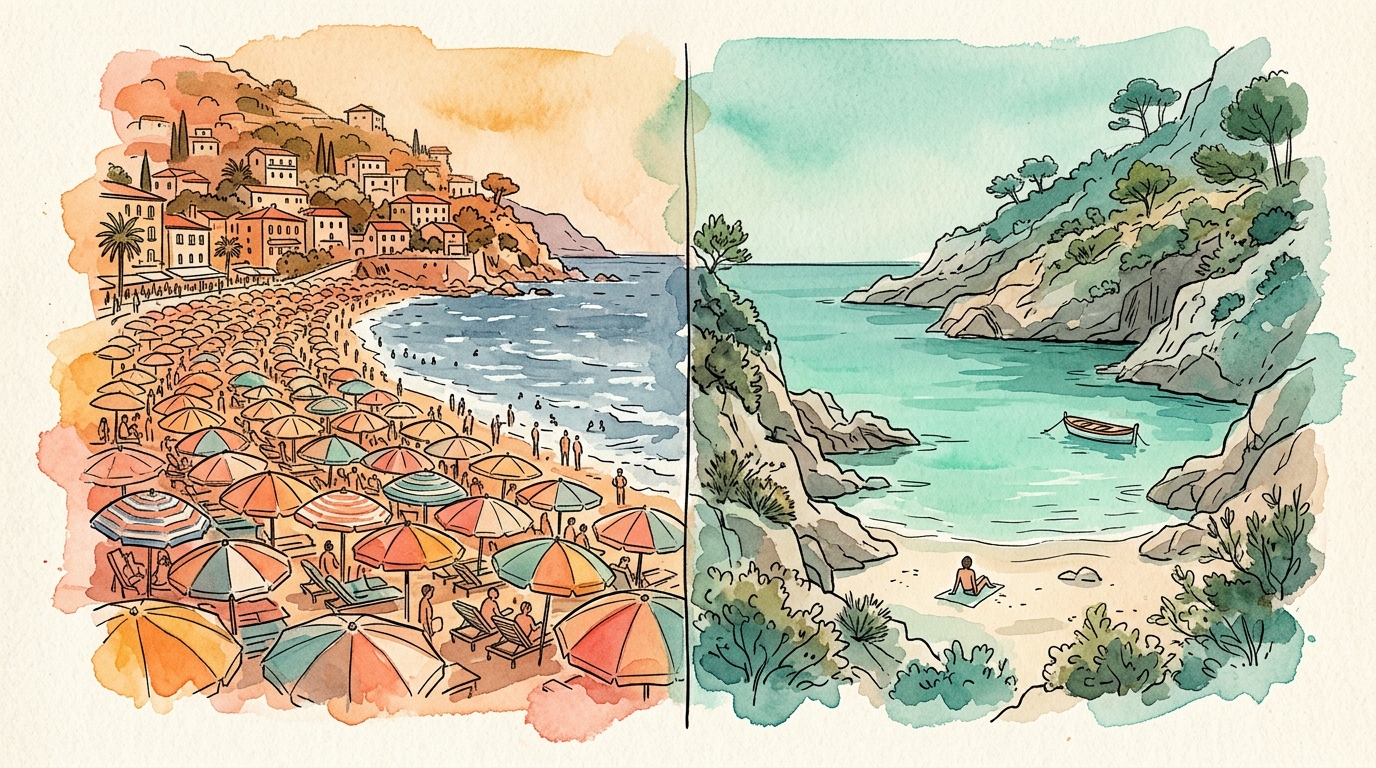
We priced out a week in Sarande against a week in Barcelona. The difference was staggering.
Turkey: The Value Play of 2026
The Turkish lira has been weak for years. That's bad news for locals. For visitors paying in euros or dollars, it means incredible value across the board.
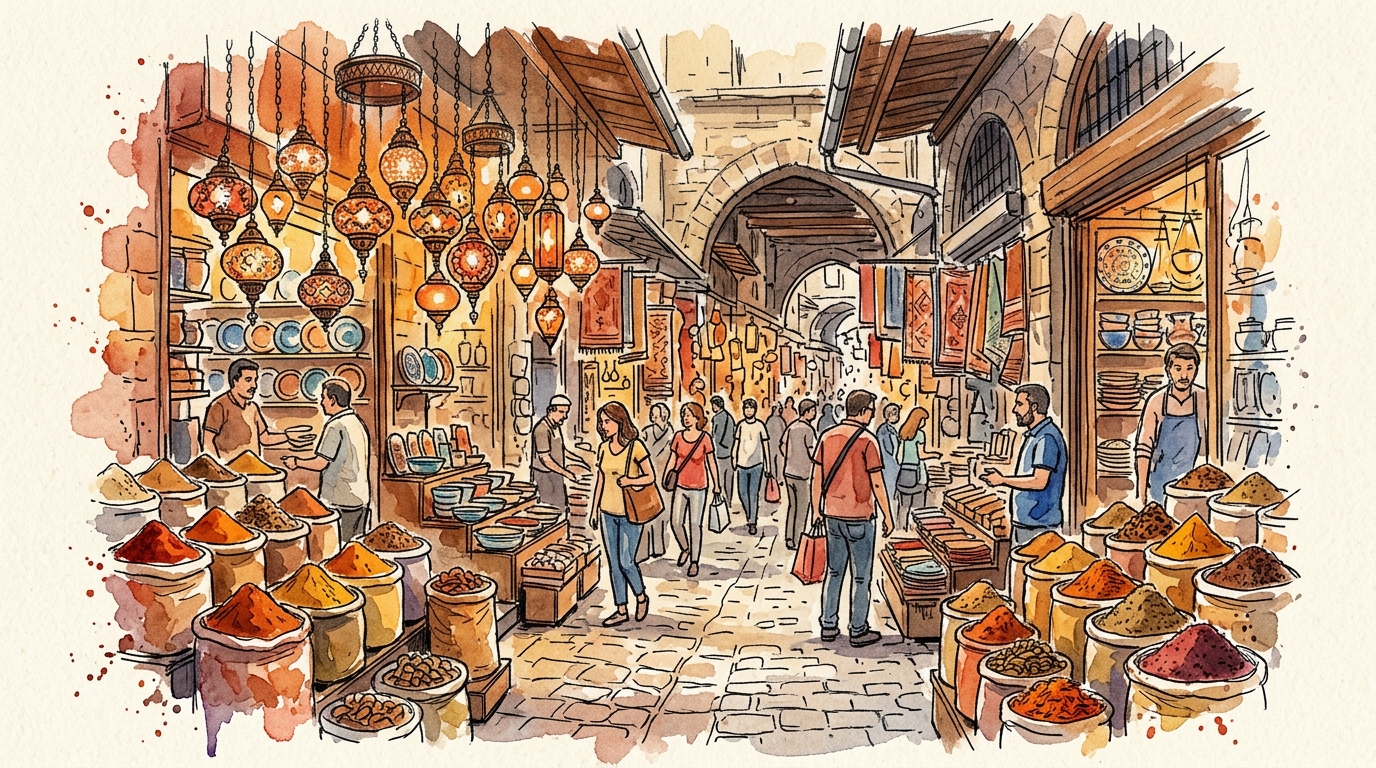
Five-star all-inclusive resorts along the Turkish Riviera start from around $103 per night as of March 2026, according to Expedia. Full-week all-inclusive packages on KAYAK go for as little as $450-650 in spring and shoulder season. Beachfront hotels that peak at €200-400 per night in July and August drop to €80-150 in May and late September.
But Turkey isn't just beach resorts. Istanbul gives you world-class food, 2,000 years of history, and a nightlife scene that rivals any European capital, at a fraction of London or Paris prices. Cappadocia's hot air balloons and cave hotels are unlike anything else on earth. Antalya's old town has the Mediterranean charm of an Italian coastal village without the Italian price tag.
Our pick: don't default to the resort package. Spend at least a few days exploring independently. A proper Turkish breakfast spread runs roughly €3-5, a kebab lunch €4-7, and a full sit-down dinner with drinks rarely tops €20 per person outside the most touristy spots. Those are approximate street-level prices as of March 2026, consistent with what TimeOut and KAYAK report for mid-range independent travel in Turkey.
The Balkans: Europe Without the Price Tag
Albania's having a moment. The WTTC reports Albanian tourism surged 34% in the first half of 2024 compared to the same period in 2023, making it the third-fastest-growing tourism destination on the planet according to UNWTO. It's still climbing. Sarande and Ksamil offer crystal-clear Ionian Sea beaches with accommodation from €20 per night and a daily budget of €40-60 per day, according to TimeOut.
Montenegro's Bay of Kotor is the comparison that sells itself: Croatia's dramatic Adriatic coastline, Croatia's medieval old towns, but without Croatia's crowds or Croatia's prices. You'll spend 30-40% less across the board.
Look, North Macedonia and Bosnia aren't on most travelers' radar yet. That's the point. Ohrid's lakeside setting rivals anything in Switzerland. Mostar's Stari Most bridge and the surrounding old town are stunning. And daily costs stay well under €50 even during peak season.
The swap: skip Dubrovnik and go to Kotor. Skip Santorini and go to Sarande. You'll get 80% of the experience for 30% of the cost. If you're a first-time international traveler, these destinations are easier on the wallet and easier on the nerves than overcrowded Western European hotspots.
Eastern Mediterranean on a Budget
Egypt keeps delivering absurd value for money. Meals cost $2-5 (€2-4.50). You can see the Pyramids, cruise the Nile, and eat like royalty on a budget that wouldn't cover three days in Barcelona. Cairo, Luxor, and Aswan all remain well-connected and affordable.
Jordan's another smart pick if you look beyond the obvious. Everyone books Petra (and you should), but Aqaba on the Red Sea and the quieter town of Madaba offer great budget-friendly alternatives for extended stays.
There's also a structural shift working in your favor. Countries across the eastern Mediterranean are actively competing for redirected tourism with new flight routes, simplified visa processes, and promotional pricing. Turkey alone has added dozens of new weekly connections to destinations in Egypt, Jordan, and Oman in 2026, making multi-country trips across the region much easier to plan than even a year ago.
| Destination | Daily Budget | Room | Meal |
|---|---|---|---|
| Albania (Sarande) | €40-60 | €20-40 | €5-10 |
| Turkey (Antalya) | €50-80 | €40-80 | €5-15 |
| Egypt (Cairo) | €25-50 | €15-30 | €2-5 |
| Montenegro (Kotor) | €50-70 | €30-50 | €8-15 |
| Bulgaria (Sofia) | €35-55 | €25-50 | €5-10 |
| Barcelona (comparison) | €150-220 | €90-180 | €15-30 |
| All prices approximate per person, as of March 2026. Barcelona estimate includes the new €10-15/night tourist tax (Euronews). Costs vary by season and travel style. | |||
That Barcelona row tells the whole story. A week there for two people now costs more than two weeks in Albania. Same Mediterranean, same sunshine, a fraction of the budget.
Where You'll Pay More Than Last Year
The same forces making some destinations cheaper are making the most popular ones more expensive. Three regions in particular took the hit. And if you've already booked in any of them, it's worth knowing what you're walking into.
Spain: Record Crowds, Record Prices
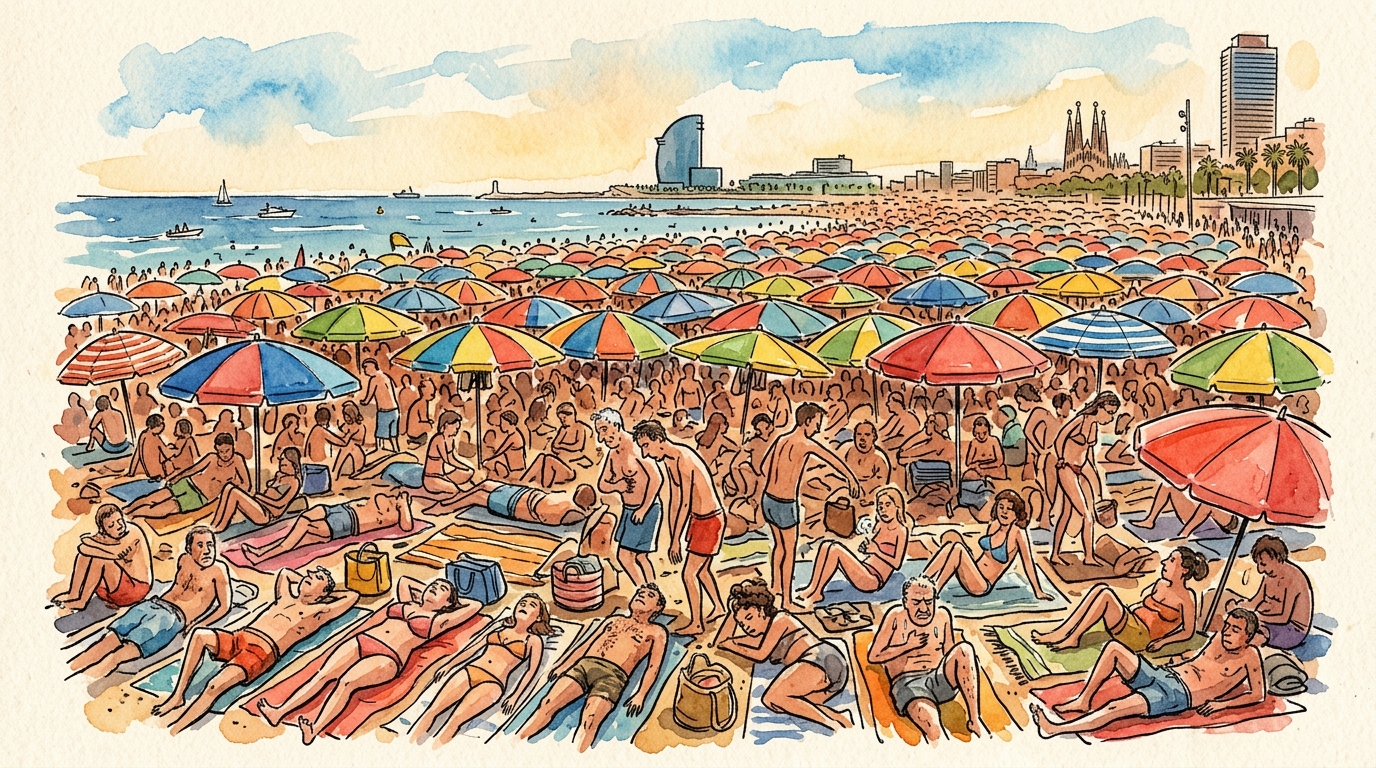
Spain was already the most-visited country in Europe. Now it's absorbing millions of redirected Middle East tourists on top of its usual summer flood. Iberia is offering 21.4 million+ seats across its routes, with record bookings for Madrid, Barcelona, and the Balearic Islands.
Barcelona's new tourist tax kicks in April 2026 at €10-15 per night depending on accommodation type, according to Euronews. Hotel prices are up 5.3% year-over-year and climbing. The city is also in the middle of phasing out 65,000+ illegal Airbnb listings, with a full ban planned by 2028. Fewer rentals plus more demand equals higher prices across the board.
Residents are fed up. Anti-tourism protests have been escalating across Barcelona, Mallorca, and the Canary Islands. "Tourists go home" graffiti isn't exactly the welcome sign you want on vacation.
Better move: if you love the Mediterranean coast, go to Albania or Montenegro instead of Spain this summer. You'll get the same sea, similar food, and avoid both the crowds and the hostility.
Southeast Asia: The Fuel Crisis Nobody Saw Coming
The Strait of Hormuz disruption didn't just affect flights. It created genuine fuel shortages across Southeast Asia. Al Jazeera reports that Thailand, Indonesia, the Philippines, Vietnam, and Malaysia are all dealing with supply constraints that go well beyond tourism.
The numbers are wild. Bangkok's airport taxis dropped from roughly 6,000 operating vehicles to about 2,500. The Philippines implemented a four-day work week to conserve fuel. Indonesia reduced ferry schedules between islands. Airlines are cutting domestic and regional routes across the region.
None of this means you can't visit. The temples are still there. The beaches haven't moved. But the logistics of getting around are harder, domestic flights are pricier, and the overall experience is more disrupted than it's been since COVID.
Every Long-Haul Flight
This one's simple math. Longer flights burn more fuel. More fuel costs more money. Cathay Pacific roughly doubled its fuel surcharges from March 18. The EU's Sustainable Aviation Fuel mandate adds another $10-25 per ticket. And routes that used to fly over Iran and Iraq are now rerouted, which adds hours of flight time and thousands of kilograms of extra fuel burn per trip.
We checked routes on Google Flights and the pattern is clear: short-haul European fares barely moved. A London-to-Lisbon or Berlin-to-Athens ticket hasn't spiked nearly as much as a New York-to-Rome or London-to-Bangkok fare. If your trip stays within the continent, you're in a much better position. Also worth checking: our guide on how to get a refund when your flight is cancelled, just in case.
Barcelona's tourist tax alone adds €105-210 to a 7-night hotel stay for two people (as of April 2026). That's a return flight to Albania.
The Flight Price Playbook
Aviation experts agree on one thing right now: if you're flying this summer, book immediately. Waiting will cost you.
CNN and CNBC both recommend locking in fares as soon as possible. A Fortune analysis confirms the trend: airlines will keep adjusting surcharges upward as long as oil stays above $100. Every week you wait, the price inches higher.
But here's the move most people miss: don't buy basic economy. Skip it entirely. The €30-50 you save isn't worth the risk of being stuck with a non-changeable, non-refundable ticket when the geopolitical situation shifts overnight. Buy a fare that lets you change dates or rebook. If prices somehow drop, you rebook at the lower fare and pocket the difference. If they go up, you've already locked in.
Consider August. CBS News notes that August fares are typically 20-30% cheaper than June and July. Schools in many European countries are still on break, so you're not sacrificing much by shifting your dates a few weeks later. If you're flexible on timing, this is free money.
Fly midweek if you can. Tuesday and Wednesday departures remain 15-25% cheaper than weekend flights, and that gap hasn't closed despite the overall price surge. Pair that with an August departure and you're looking at the lowest fares available this summer.
If you've been hoarding airline miles or credit card points, this is the summer to use them. When cash fares are inflated, the per-point value of your redemptions goes up. A flight that costs €800 in cash but 30,000 miles? That's 2.7 cents per point - well above the standard 1.5-cent valuation.
What Your Travel Insurance Won't Tell You
You're stranded at Athens airport because your Emirates connection through Dubai got rerouted. You call your insurer. They read you the exclusions clause. "Acts of war," they say. "Not covered." You paid €120 for that policy. Good luck.
That scenario is playing out for thousands of travelers right now. Most standard travel insurance policies exclude "acts of war" from coverage, and that phrase covers military action, government-ordered airspace closures, and conflict-related disruptions. CNBC's analysis of major insurance providers confirms it. The standard "trip cancellation" coverage most people buy is designed for illness, weather events, and airline bankruptcy. War doesn't make the list.
The only policy type that reliably covers war-related cancellations is CFAR - cancel for any reason. ABC News reports that CFAR add-ons typically cost 40-60% more than standard policies. There's a catch: you usually have to purchase CFAR within 14-21 days of your first trip deposit. Miss that window, and it's off the table.
Check your credit card benefits too. Some premium travel cards offer "trip delay" coverage that kicks in after 6-12 hours of delay, and some of those do cover delays caused by airspace closures. That's not cancellation coverage, but it can help cover hotel nights and meals if you're stranded. Save every receipt. Save every email from your airline.
If you're booking travel near any conflict-adjacent region, CFAR is the only policy worth buying. Everything else is a coin flip. Keep your insurance documents, booking confirmations, and passport copies organized. Our travel document checklist walks through exactly what to have on hand.
How to Rebuild Your Summer Plans
You don't need to cancel everything. Really. Most summer trips can be adjusted, not scrapped. The key is knowing which pieces to keep and which to swap out.
1. Audit What You've Already Booked
Pull up every confirmation email. Check which bookings are refundable, which are changeable with a fee, and which are locked in. Flag anything routed through Middle East airspace. Those flights are the most likely to be rescheduled or rerouted, which could mess with your connection times.
Most European hotels allow free cancellation up to 24-48 hours before arrival. That flexibility is your best friend right now. Flights are the rigid part. Hotels are not.
2. Swap the Destination, Keep the Dates
If you planned Barcelona, look at Albania's Sarande coast. Similar Mediterranean vibe, beach and old-town combo, a fraction of the price, and no tourist tax. If you planned Thailand, consider Turkey. You'll get beach culture, incredible food, and historical depth at a comparable or lower budget, without the fuel-shortage logistics issues.
We wrote a full guide on where to go in Europe to skip the crowds this summer. It pairs well with what we're covering here.
3. Lock In Flights Now, Keep Hotels Flexible
Flights are the volatile part of your budget right now. Lock those in with changeable fares. Hotels in most of Europe can wait. You'll often find the same or better prices closer to your travel date, especially for flexible bookings.
And when you're comparing budgets across different destination options and currencies, redirect, don't cancel. Tools like TripProf's multi-currency expense tracker can help you compare the old budget against the new one, which is especially useful when you're juggling euros, Turkish lira, and Egyptian pounds across redirected plans. If you're traveling with others, our guide on splitting trip costs fairly with friends is worth a read too.
Don't forget the new EES border system if you're entering the EU as a non-EU citizen. It's another thing to factor into your planning.

Frequently Asked Questions
Should I cancel my summer Europe trip?
No. Intra-European short-haul flights are the least affected by fuel surges. Focus on swapping expensive destinations (Spain, France) for cheaper ones (Albania, Turkey, Bulgaria). Your trip doesn't need to die. It needs to adapt. Keep your dates, change your destination.
Will flight prices come back down before summer?
Not likely before September. CNBC reports experts expect elevated prices for months even if the conflict de-escalates. Book now and get changeable tickets so you can rebook at lower fares if they drop. Waiting is the most expensive option.
Is Turkey safe to visit right now?
Turkey isn't directly involved in the conflict and remains open to tourists. The UK FCDO advises against travel only within 10km of the Syria border. The US State Department rates Turkey at Level 2 ("exercise increased caution"), not "do not travel." Check your government's official advisory page before booking.
Is Southeast Asia still worth visiting during the fuel crisis?
It depends on your tolerance for disruption. Expect reduced ferry schedules, fewer domestic flights, and higher local transport costs. The experiences are still there. The temples, the beaches, the food. But the logistics are harder right now. Consider visiting after the fuel situation stabilizes, or stick to one region instead of island-hopping.
Should I use points or cash for flights this summer?
Points. When cash fares are inflated, your miles and points stretch further. A flight costing €800 cash but 30,000 miles gives you 2.7 cents per point, much better than the standard 1.5-cent valuation. If you've been saving points, this is the summer to spend them.
Does travel insurance cover flight cancellations from the war?
Most standard policies don't. War and military actions are typically listed as exclusions. Only "cancel for any reason" (CFAR) add-ons cover war-related cancellations, and they must be purchased within 14-21 days of your first trip deposit. Read your policy's exclusion section before assuming you're covered.
What's the cheapest way to travel Europe this summer?
Target the Balkans (Albania, Montenegro, Bosnia) or Bulgaria. Daily budgets of €40-60 are realistic. Use FlixBus or local trains between cities. Fly into cheaper hubs like Sofia or Tirana instead of Barcelona or Rome. Check our guide on skipping the crowds in Europe for more ideas.
Key Takeaways
- Oil prices above $100/barrel are driving up flight costs globally. Not all destinations are affected equally.
- Turkey, the Balkans (Albania, Montenegro), Egypt, and Bulgaria are the budget wins of summer 2026, with daily costs 40-60% lower than Western Europe.
- Spain, Southeast Asia, and any long-haul flight route are the price losers. Higher taxes, fuel shortages, and surging demand are all pushing costs up.
- Book your summer flights now. Aviation experts across CNN, CNBC, and Fortune agree: waiting means paying more.
- Skip basic economy. Pay the extra €30-50 for a changeable ticket. The flexibility is worth it when the situation is unstable.
- Your standard travel insurance probably won't cover war-related cancellations. If you want coverage, buy a CFAR (cancel for any reason) add-on within 14-21 days of your first booking.
- Redirect, don't cancel. Swap Barcelona for Sarande, Thailand for Turkey, and use a multi-currency expense tracker like TripProf to keep your revised budget under control.
Sources
- IATA (via Hurriyet Daily News): Jet fuel price surge data
- CNBC: Airfare and jet fuel spot price analysis
- Euronews: European travel plan changes and flight cost analysis
- Al Jazeera: Southeast Asia fuel crisis impact
- Oxford Economics: Middle East tourism decline estimates
- Fortune: Airline pricing and traveler demand analysis
- CNN: Booking advice during conflict
- Irish Times: Oil prices and holiday costs
- CBS News: When to book summer flights
- ABC News: Travel insurance war exclusions
- WTTC (via Euronews): Middle East tourism revenue loss
- WTTC: Albania tourism growth data
Last updated: July 3, 2026
Keep Reading
More travel tips and guides picked for you
Christmas markets from London by train: what 3 nights really costs per person in 2026
Three nights at a Christmas market from London cost £426 to £704 per person. We priced Eurostar fares, central hotels and food for Lille, Brussels, Bruges and Cologne.
Wizz Air and Ryanair are cutting Vienna flights: what to book instead
Wizz Air has fully left Vienna and Ryanair has cut five aircraft over Austria's aviation tax. Here's exactly what changed, why it happened, and how to still book a cheap flight this winter.
Mallorca's tourist tax hike got cancelled. Here's what a 2026 trip really costs
The Balearic tourist tax hike everyone's still warning about got cancelled in February. Here's what a week on Mallorca actually costs in 2026, flights, hotel, tax, and food, with real numbers.