
Dag 1: Capodimontes kongelige kunst, Spaccanapolis kirker og kapeller, den tilslørede Kristus, pizza hvor den blev opfundet. Dag 2: Piazza del Plebiscito, det kongelige palads, operahuset San Carlo, Castel Nuovo og Castel dell'Ovo langs bugten. Dag 3: Porta Nolana-fiskemarkedet, da Micheles to pizzaer, det arkæologiske museums fund fra Pompeji, derefter metroen op til Vomero for at se Certosa og Castel Sant'Elmo. Onsdag er Capodimonte og det kongelige palads lukket; tirsdag er Cappella Sansevero (dag ét), MANN og Certosa (dag tre, undgå tirsdage) lukket; Castel Nuovo er lukket om søndagen; mandag er Porta Nolana, Attanasio og akvariet lukket.
Dag 1: Spaccanapoli: Barokkirker, den tilslørede Kristus og pizzaens fødested
Dag ét forlader aldrig rigtig det gamle centrum, når man først er stået af metroen ved Capodimontes bakkepark. Spaccanapoli, den snorlige romerske decumanus, binder ni kirker og kapeller sammen på under en kilometer, afbrudt af to stop for bagværk, der holder denne by kørende på sukker og kaffe.

Museo di Capodimonte
Karl af Bourbon påbegyndte dette palads på bakketoppen i 1738 som en jagthytte, men planen voksede sig større. Indenfor findes Farnese-samlingen, som han arvede fra sin mor, samt Caravaggios piskning af Kristus og Titians Danae. Det er et af Italiens største museer og det mindst overrendte af Napolis tre store.

Piazza Dante
En buet plads fra det 18. århundrede snor sig omkring en statue af Dante, med Port'Alba-porten, byens gamle indgang, kun få skridt væk. Det er en pause mellem metroen og Spaccanapoli, ikke en destination i sig selv.
Antica Pizzeria Port'Alba
Almindeligt anerkendt som verdens første pizzeria, der kan spores tilbage til gadesælgere i 1738, før det åbnede som en butik i 1830. Stamkunder havde engang en regning kaldet pizza a otto, der skulle betales inden for otte dage. Bestil enkelt: olie, hvidløg, en Margherita.

Basilica of St. Dominic (San Domenico Maggiore)
Bygget mellem 1283 og 1324 til de angevinske konger; det er her, Thomas Aquinas vendte tilbage for at undervise i teologi i 1272. Sakristiet ovenover rummer 45 grave for aragonske kongelige, herunder kong Ferdinand I, hvis mumificerede rester engang var klædt i deres egne klæder fra det 15. og 16. århundrede.

Cappella Sansevero (Veiled Christ)
Giuseppe Sanmartino udskar den tilslørede Kristus i 1753, og marmorligklædet over kroppen overbeviser stadig førstegangsbesøgende om, at det må være ægte stof. Kapellets mæcen, prins Raimondo di Sangro, efterlod også to 'anatomiske maskiner' nedenunder, figurer af voks og tråd med deres karsystemer udstillet.
Pasticceria Scaturchio
Giovanni Scaturchio åbnede dette konditori på Piazza San Domenico Maggiore i 1905. Dets signaturkage, Ministeriale, en tæt mørk chokoladekage med rom og hasselnød, fulgte kort efter sammen med de sædvanlige sfogliatella og babà.

San Paolo Maggiore
To korintiske søjler læner sig ud fra facaden - alt hvad der overlevede et jordskælv i 1688 fra et romersk tempel for Castor og Pollux, der engang stod her. Selve kirken er fra det 9. århundrede, bygget for at markere en napolitansk sejr over saracenske angribere.

San Lorenzo Maggiore
Det gotiske kirkeskib er værd at se, men den virkelige attraktion ligger under jorden: halvdelen af Napolis romerske markedsplads, udgravet over 25 år og åben for besøgende siden 1992. Det siges, at Boccaccio mødte sin muse Fiammetta her i 1338, en detalje der overlever de fleste af barokkens sidekapeller.

Naples Cathedral (Duomo)
Napolis domkirke har sit populære navn fra San Gennaro, byens skytshelgen, hvis størknede blod siges at blive flydende tre gange om året, herunder hver 19. september. Under kirkeskibet bevarer den ældre Basilica di Santa Restituta en græsk mur fra et tempel for Apollo.

Gesù Nuovo
Den diamantformede stenfacade ser defensiv ud, fordi den var det: et privat palads, bygget i 1470 til Roberto Sanseverino, før jesuitterne købte det i 1580'erne og opførte en kirke bag de samme mure. Træd indenfor for at se kontrasten: et enkelt ydre, der gemmer på et forgyldt barokinteriør, dekoreret i det efterfølgende århundrede.

Santa Chiara
Dronning Sancha af Mallorca og kong Robert af Napoli grundlagde dette kloster i 1313; Roberts grav, udskåret i 1343, står bag alteret. Den virkelige attraktion er klostergården bagved: ottekantede søjler indhyllet i majolika-fliser, tilføjet i 1742 af Domenico Antonio Vaccaro, malet med citroner og hverdagslivet i Napoli.
Dag 2: Den kongelige havnefront: Paladser, slotte og bugten
Dag to tager mod det kongelige Napoli, som bourbonerne og de spanske vicekonger byggede for at blive set fra havet: én storslået plads, to slotte der indrammer havnefronten, et operahus ældre end det land, det ligger i, og et forskningsakvarium, hvor marinbiologien tog sin begyndelse.
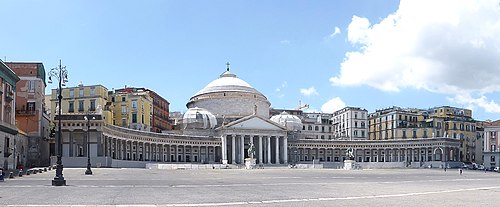
Piazza del Plebiscito
Napolis store plads tog fra 1809 til 1846 at færdiggøre og blev senere opkaldt efter afstemningen i 1860, der indlemmede byen i det forenede Italien. Den er brolagt med mørk vulkansk sten fra Vesuv og omkranset af San Francesco di Paolas buede kolonnade på den ene side og det kongelige palads på den anden.

San Francesco di Paola
Napoleons svoger Joachim Murat planlagde dette som et verdsligt monument for kejseren; efter bourbonernes tilbagekomst genindviede Ferdinand I den færdige bygning, opført 1816 til 1846, til den calabriske munk Frans af Paola i stedet. Det cirkulære interiør, der er modelleret åbenlyst efter Roms Pantheon, ligger under en 53 meter høj kuppel.

Royal Palace of Naples
Domenico Fontana lagde den første sten i 1600 til de spanske vicekonger, og paladset forblev i kongelig brug gennem bourbonerne og kortvarigt Joachim Murat. De otte statuer, der udfylder facadens nicher, én hersker pr. dynasti fra Roger II til Victor Emmanuel II, blev først tilføjet i 1888.
Gran Caffè Gambrinus
Vincenzo Apuzzo åbnede dette som Gran Caffè i 1860; det blev leverandør til det kongelige hus, før navnet Gambrinus blev tilføjet tredive år senere. Oscar Wilde og Hemingway drak begge her, og digteren Gabriele D'Annunzio improviserede angiveligt 'A Vucchella' ved et af marmorbordene i 1892.

Teatro di San Carlo
Åbnet i 1737, årtier før La Scala eller La Fenice, er dette verdens ældste kontinuerligt aktive operahus. Det nuværende hus har plads til omkring 1.400 gæster, ned fra de 3.285 i den oprindelige sal.

Church of San Ferdinando
Grundlagt af jesuitterne i 1636 for Frans Xavier, blev dette en militærordens kirke for Ferdinand III af Kastilien, efter at jesuitterne blev udvist i 1767, og tog den regerende konges skytshelgen med sig i ændringen.

Galleria Umberto I
Bygget mellem 1887 og 1890 som midtpunktet i Napolis risanamento efter koleraen, eller 'at gøre sund igen', bærer denne korsformede arkade en glaskuppel, der topper ved 57 meter. Den blandede butikker og caféer i gadeplan med lejligheder ovenpå, en bygning med blandet anvendelse fra det 19. århundrede, før begrebet eksisterede.
Pintauro
Pasquale Pintauro åbnede denne butik i 1785; dens sfogliatella-opskrift stammer fra 1818. Lukket i to år, genåbnede den i marts 2026 under nye ejere og sælger stadig kun riccia og frolla.

Castel Nuovo
Karl I af Anjou byggede dette på kun tre år fra 1279, og Alfonso af Aragon tilføjede triumfbuen mellem tårnene i 1470, hvilket markerede hans erobring af byen i 1443. Ferdinand I inviterede engang oprørske baroner til bryllup her og arresterede dem; pave Celestin V abdicerede fra pavedømmet i 1294.

Castel dell'Ovo
Napolis ældste slot ligger på stedet for en romersk villa bygget af Lucullus i det 1. århundrede f.Kr. Dets navn kommer fra en legende om, at Virgil begravede et magisk æg i fundamentet for at holde det oppe. Det har den bedste gratis udsigt over bugten på denne rute, ingen billet nødvendig.

Stazione Zoologica (Naples Aquarium)
Naturforskeren Anton Dohrn grundlagde denne havforskningsstation i 1872 med tidlig støtte fra Charles Darwin, og dens offentlige akvarium er stadig i drift i dag. Det lukker kl. 17.00, så et besøg sent på eftermiddagen her skal være hurtigt.
Dag 3: Markeder, det arkæologiske museum og metroen op til Vomero
Dag tre deler sig i to forskellige byer. Formiddagen er markedets råhed ved Porta Nolana og Forcella; eftermiddagen er Farnese-marmor og fund fra Pompeji inde på det arkæologiske museum; aftenen tager metroen op til Vomero for at se klosteret og fæstningen med den bedste udsigt i Napoli.
Mercato di Porta Nolana
Et af Napolis ældste markeder løber under porten fra det 15. århundrede, som det er opkaldt efter, og får stadig sin fangst fra bådene i Napolibugten hver morgen. Kom for støjen og sælgernes råb lige så meget som for fisken; det er et af de sidste markeder, der føles helt lokalt.

Santa Maria del Carmine
Konradin, den sidste hohenstaufenske arving til Napolis trone, blev halshugget her i 1268 i en alder af kun 16 år. Et monument fra det 19. århundrede indeni, bestilt af Bayerns kong Maximilian II, markerer hans grav. Pladsen var også vidne til kampe under Masaniellos oprør i 1647.

San Giorgio Maggiore
En af Napolis ældste kirker, der dateres tilbage til det 4. århundrede under et andet navn før genindvielsen i det 9. århundrede. En brand i 1640 og et senere jordskælv tvang Cosimo Fanzago til at genopbygge den bagfra, så nutidens indgang faktisk er den oprindelige basilikas apsis.

Porta Capuana
Denne renæssanceport erstattede en ældre i 1484, udskåret med klassiske trofæer og vingede sejrsgudinder, der ligner mere en triumfbue end et kontrolpunkt. Den stod engang ved siden af sit navngivne slot; i dag står den alene.

Castel Capuano
Bygget i det 12. århundrede af Vilhelm I og udvidet af Frederik II som kongelig residens, blev dette Napolis domstole, Vicaria, efter at de spanske vicekonger konsoliderede retssystemet i 1500-tallet. Domstolene flyttede ud fra 1995 og var helt fraflyttet i 2010. Restaurering har holdt interiøret lukket eller kun tilgængeligt via guidede ture for nylig, så betragt dette som et stop for det ydre: beundr murene fra gaden og gå videre.
L'Antica Pizzeria da Michele
Condurro-familien har lavet pizza i Napoli siden 1870, og da Michele har serveret præcis to slags siden da: Margherita og Marinara, gennem fem generationer. Den flyttede til denne adresse i 1930 og blev et pilgrimssted verden over, efter at Eat, Pray, Love satte den på skærmen. Forvent kø og en papirbillet.
Sfogliatelle Attanasio
Gemt i en gyde bag Napoli Centrale holder denne familiedrevne ovn sine sfogliatelle i en varmemontre, så de når disken varme frem for genopvarmede. Begge versioner findes her, den sprøde riccia og den blødere mørdej frolla, drysset med sukker og bedst spist stående ved disken.

Naples National Archaeological Museum (MANN)
Alt hvad der er trukket ud af Pompeji og Herculaneums mest berømte huse, lever her, ikke på stedet: mosaikkerne og freskerne, vægmalerier løftet hele fra villaer begravet i år 79 e.Kr. Museet rummer også Farnese-marmor, herunder den fire meter høje Farnese-tyr udskåret fra én blok. En senere dagstur til Vesuv giver mere mening efter at have set dette.

Certosa di San Martino
Dette karteuserkloster åbnede i 1368 og blev genopbygget til sin nuværende barokform under Cosimo Fanzago fra 1623, den samme arkitekt bag halvdelen af dag ét's kirkeinteriører. Dets museum rummer en af verdens fineste samlinger af presepi, detaljerede napolitanske julekrybber.

Castel Sant'Elmo
Den spanske ingeniør Pedro Luis Escrivà omformede denne fæstning til sin sekstakkede stjerne mellem 1537 og 1547, den type design stjernefæstninger antog, da kanoner gjorde runde tårne forældede. Voldene åbner sig mod hele bugten, inklusive Vesuv, det bedste panorama på denne rejseplan.
Bedste tid at besøge
Hvad der sker i Napoli
Festivaler, koncerter og udstillinger under din rejse.
Assumption Day (Ferragosto)
HelligdagNapoli Mon Amour (open-air cinema festival)
Jovanotti: Jova Summer Party
Festa di San Gennaro
Gianni Morandi live
St. Francis of Assisi's Day
HelligdagNotre Dame de Paris (musical)
All Saints Day
HelligdagGuidede ture
Nogle links kan give os en kommission, uden ekstra omkostning for dig.
Godt at vide, før du tager af sted
- Dette lille kapel kører med tidsbestemte pladser, der bliver udsolgt dage i forvejen i højsæsonen, i modsætning til de fleste af de gratis kirker omkring det. Køb online i det øjeblik dine datoer er fastlagt.
- MANN, Capodimonte og Certosa har begrænsede tidsbestemte adgangspladser, og en gruppe på seks eller flere, der ønsker det samme tidsrum i højsæsonen, bør reservere et par dage i forvejen frem for at møde op sammen.
- En guide til små grupper til Spaccanapoli eller Napoli Underground prissætter pr. gruppe op til en bestemt størrelse, så fire til seks personer, der rejser sammen, ofte lander langt under en solorejsendes pris.
- Kort fungerer i de fleste restauranter og museer, men markedsboder ved Porta Nolana, konditoridiske og kirkens donationsbøsser forventer ofte mønter eller små sedler. Tyve euro i byttepenge dækker de fleste huller.
- Napoli har en normal profil for småkriminalitet i storbyer: lommetyve i menneskemængder, sjældne scooter-tyverier af løse tasker. En taske på tværs af kroppen håndterer det meste. Se guiden 25 værste turistfælder for mere.
- Onsdag er Capodimonte og det kongelige palads lukket; tirsdag er Cappella Sansevero (dag ét), MANN og Certosa (dag tre, undgå tirsdage) lukket. Castel Nuovo er lukket om søndagen; mandag er Porta Nolana, Attanasio og akvariet lukket.
- Hvis dag tre falder på en mandag, er Porta Nolana-markedet og Attanasio begge lukket. Start ved San Giorgio Maggiore i stedet og betragt da Micheles pizza som dagens rigtige åbner.
- Metroen når Vomero, men det er stadig en 15-minutters gåtur op ad bakke til Certosa. Castel Sant'Elmo og Certosa har begge trapper og ujævne gulve, så afsæt ekstra tid, hvis mobilitet er en bekymring.