Como Planejar uma Viagem em Família para uma Data Especial com Todos Morando Longe

Pontos principais
- 1
- 2
- 3
+3 mais no resumo final
O aniversário de 50 anos dos seus pais é em junho. Três dos filhos moram em três estados diferentes, um mal consegue pagar o aluguel, outro acabou de comprar uma casa, e ninguém concordou com uma data, muito menos com um orçamento. Alguém tem que enviar a primeira mensagem. Esse alguém é você, e o chat em grupo já ficou em silêncio duas vezes.
Uma viagem familiar marcante esbarra em dois problemas que uma viagem em grupo comum nunca precisa resolver: uma data que não pode mudar e parentes que ainda não estão se coordenando entre si. Resolva essas duas coisas primeiro, antes que alguém reserve um voo. Isso significa que uma pessoa assume a data e o plano, o plano fica em um lugar onde cada núcleo familiar realmente possa vê-lo, e a conversa sobre dinheiro começa a partir de "quem pode contribuir com o quê" em vez de "dividir igualmente". No TripProf, isso é um organizador gerenciando uma viagem compartilhada, despesas que se dividem apenas entre as pessoas a quem se aplicam, e uma lista de verificação e pasta de documentos que ninguém precisa recriar três vezes.
Por que uma viagem marcante quebra o manual de viagens em grupo normal
Uma viagem marcante tem uma restrição que uma viagem em grupo comum nunca enfrenta: a data não pode mudar. Um aniversário de 50 anos é um aniversário de 50 anos em um fim de semana específico, e não quando quatro calendários por acaso coincidirem. E as pessoas que você precisa que estejam presentes, uma tia em Ohio, um irmão que se mudou para Lisboa há três anos, primos que se veem duas vezes por década, geralmente não estão se coordenando entre si sobre nada, muito menos sobre viagens.
Esse é um trabalho diferente de "vamos encontrar uma semana que funcione para o nosso grupo de sempre". A pesquisa de viagens multigeracionais de 2026 da Road Scholar descobriu que mais de 57% dos entrevistados já fizeram uma viagem multigeracional e fariam de novo, e uma em cada quatro viagens em família agora inclui três gerações, de acordo com o relatório de Tendências de Viagem de 2026 da AARP. A vontade existe. O que geralmente falta é a infraestrutura: um lugar único para colocar a data, o orçamento e o plano que não dependa de todo mundo já estar no mesmo chat em grupo.
Nossos próprios números apontam para a mesma coisa, em miniatura. Das viagens efetivamente criadas no TripProf, cerca de 13% são planejadas "com a família" e outros 9% "em um grupo maior" (dados do TripProf, 881 viagens, até setembro de 2026), o que coloca as viagens em família e em grandes grupos em aproximadamente um quarto do que as pessoas planejam no aplicativo, mesmo sem perguntarmos por que estão viajando em grupo. Esta é a situação para a qual o TripProf foi feito: uma viagem, um organizador, e visualizadores e editores que veem o mesmo plano em vez de cinco chats em grupo separados, cada um contendo metade da imagem.
Trave a data e o organizador antes de mexer em qualquer busca de hotel
Envie uma mensagem pedindo um intervalo de datas antes de qualquer outra coisa ser planejada. Em seguida, coloque uma pessoa, e não um comitê, no comando da viagem em si, porque uma viagem marcante administrada por consenso é uma viagem que nunca é reservada.
A parte difícil não é escolher um destino. É que metade das pessoas que precisam dizer sim não está em um calendário compartilhado, em um chat compartilhado ou sequer no mesmo fuso horário. Uma tia que se mudou em 2019 não é incluída automaticamente no chat em grupo dos irmãos. Um primo que entrou para a família por casamento há cinco anos não faz ideia de que há um aniversário marcante chegando. Alguém tem que alcançar além das pessoas que já são fáceis de alcançar.
- Pesquise o intervalo de datas primeiro, e mais nada. Três ou quatro opções, com alguns meses de diferença, enviadas a cada núcleo familiar separadamente se eles já não estiverem em um único chat.
- Escolha a data assim que 70% a 80% das pessoas que você realmente quer lá puderem comparecer. Esperar por 100% significa esperar para sempre.
- Crie a viagem e defina um organizador. No TripProf, esse é quem configura a viagem; todo o resto é adicionado como visualizador ou editor, e não como um segundo organizador.
- Dê acesso de editor para quem estiver realmente trabalhando. O irmão que reserva os voos, o primo que cuida do local, e não todos os adultos da família por padrão.
- Todo o resto continua como visualizador. Eles veem o plano, as datas e o que foi decidido, sem poder alterar silenciosamente a reserva de hospedagem três dias antes da partida.
Esperar por consenso é como viagens marcantes morrem em silêncio.
E esse último ponto importa mais do que parece. O TripProf dá a uma viagem exatamente um organizador, e todos os outros são ou um visualizador que pode olhar mas não mexer, ou um editor que pode adicionar e alterar coisas. Nosso guia geral de viagens em família aborda a versão cotidiana dessa decisão; uma viagem marcante apenas aumenta a aposta, porque as pessoas envolvidas frequentemente não planejaram nada juntas antes.
Sobre o timing: não espere por um "bom momento" para começar. A pesquisa de 2026 da AARP descobriu que mais da metade das viagens de 2026 dos entrevistados já estavam reservadas ou planejadas até o final de 2025, e isso é viagem comum, não uma reunião de data fixa concorrendo por voos e hospedagem com os planos de verão de todo mundo. Para um grupo desse tamanho, reserve a acomodação de 9 a 12 meses antes, se puder gerenciar isso. Os voos podem esperar. Trabalhar de trás para frente a partir da data, em vez de ir para a frente a partir de hoje, é o jeito mais fácil de atingir essa janela; nossa lista de verificação de contagem regressiva para a viagem detalha o que precisa ser travado em cada etapa.
Uma casa que acomoda dezesseis pessoas não pode.
O verdadeiro problema de dinheiro é a assimetria de contribuição, não uma divisão igualitária
O atrito em uma viagem marcante quase nunca vem de dividir os custos igualmente entre pessoas que já concordaram em ir. Ele vem da assimetria de contribuição: três núcleos familiares com três orçamentos diferentes tentando chegar a um único lugar para ficar, e ninguém querendo ser aquele que diz que a vila de € 4.200 ($ 4.870) é demais.
É aqui que os números ficam desconfortáveis rapidamente. A pesquisa de 2026 do CIT Bank com a Harris Poll descobriu que 45% dos viajantes em grupo já enfrentaram algum tipo de conflito ou desconforto financeiro em uma viagem, e 82% dizem que prefeririam pagar a mais silenciosamente do que ter a discussão, o que a pesquisa chama de "Imposto da Paz". Isso não é generosidade.
Isso são pessoas evitando uma conversa que ninguém as ensinou a ter.
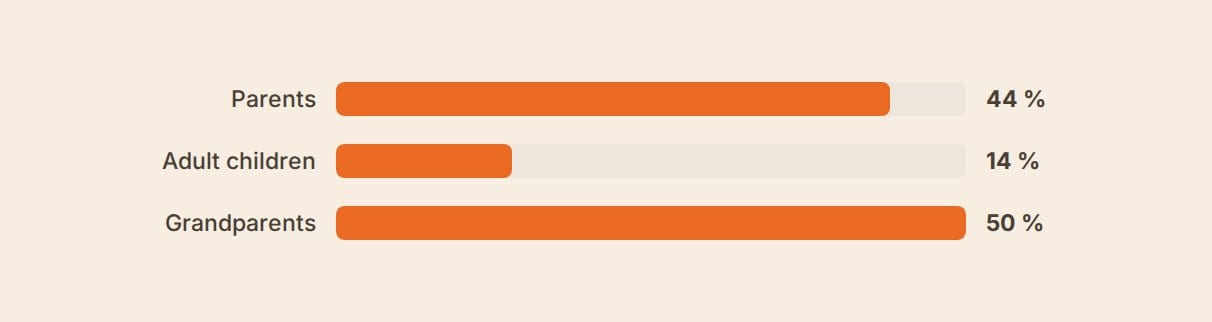
Em uma viagem multigeracional especificamente, o desequilíbrio geralmente vai dos mais velhos para os mais jovens. O Relatório de Tendências de 2026 da Hilton aponta que 44% dos pais que viajam com filhos adultos pagam pela viagem inteira sozinhos, com apenas 14% dos filhos adultos cobrindo a maior parte ou a totalidade de sua própria parte. E a geração dos avós não está apenas pagando, ela frequentemente está comandando o show: a cobertura do Travel Market Report sobre a Pesquisa de Viagens em Família nos EUA de 2023 da Family Travel Association descobriu que 50% dos avós pagam por viagens familiares multigeracionais inteiramente, e 54% as planejam e organizam. Apenas 10% disseram que não ajudam a planejar em nada.
Nada disso é barato também. Pouco menos da metade (48%) dos entrevistados da Road Scholar esperam pagar de $ 1.500 a $ 2.999 por pessoa por uma viagem assim. Multiplique isso por três núcleos familiares de diferentes tamanhos e diferentes rendas, e "dividir igualmente" deixa de ser justo no momento em que você diz isso em voz alta.
Imagine oito pessoas indo: dois avós, um casal com dois filhos e dois irmãos adultos viajando sozinhos. Na média da Road Scholar de cerca de $ 2.250 por cabeça, isso dá aproximadamente $ 18.000 no total antes de qualquer um decidir quem está pagando o quê. Dividido em três partes por núcleo familiar em vez de oito partes por pessoa, a parte do casal aposentado e a parte da família de quatro pessoas deixam de parecer em nada parecidas, que é exatamente a assimetria em torno da qual a tabela abaixo foi construída.
| Como o dinheiro é estruturado | Como funciona | Onde quebra |
|---|---|---|
| Avós cobrem os itens de alto valor | Aluguel de local ou casa tratado como presente; todo o resto cobre voos e seu próprio dinheiro para gastos | Parece generoso até que sutilmente compra a palavra final sobre onde todo mundo fica |
| Divisão igualitária por núcleo familiar | Custo total dividido pelo número de núcleos familiares, e não de pessoas | Um aposentado sozinho e uma família de cinco pessoas pagam a mesma fatia |
| Fundo conjunto para um momento compartilhado | Todo mundo contribui com uma quantia fixa para uma coisa, o jantar de aniversário ou um fotógrafo, e cobre o resto separadamente | Precisa de alguém para realmente monitorar quem pagou |
Nenhuma dessas opções está errada. O erro é escolher uma em silêncio e deixar as pessoas descobrirem qual se aplica a elas depois que a fatura chega. Uma divisão baseada no núcleo familiar supera uma por pessoa sempre que as rendas diferem tanto entre os ramos.
Decida quem paga o quê antes que alguém reserve um voo, e não depois que a primeira fatura chegar. Uma conversa de cinco minutos sobre o modelo de dinheiro evita a discussão que de outra forma aconteceria três semanas antes da partida.
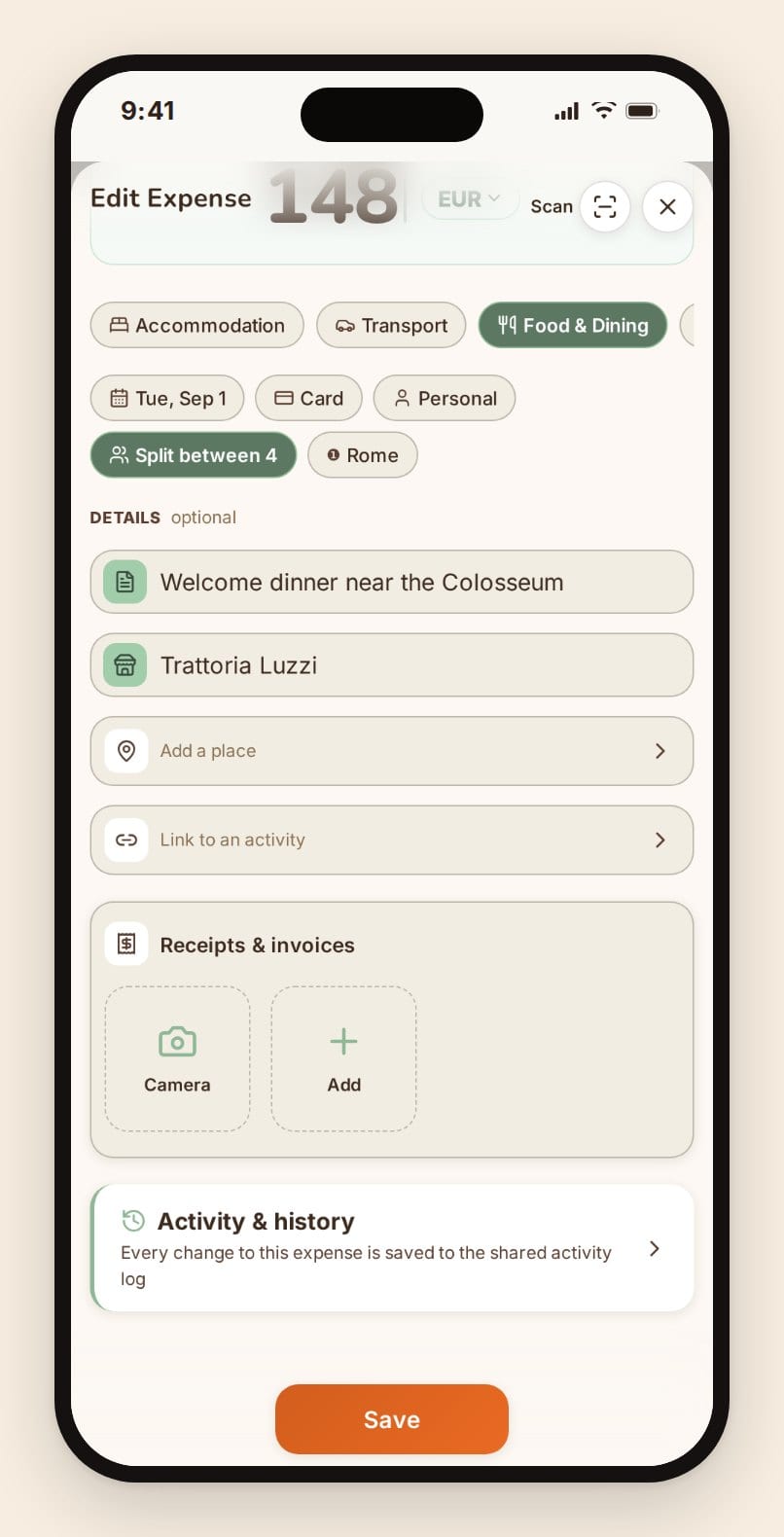
Escolha um, diga em voz alta e siga em frente. O controle de despesas do TripProf divide cada despesa entre os participantes que você escolher para essa despesa, e não automaticamente entre todos na viagem, de modo que o local pode ser dividido em três partes entre as famílias dos irmãos enquanto o presente de aniversário se divide de forma diferente, e o voo de um avô não aparece na aba de mais ninguém. Ele lida com várias moedas também, o que importa no momento em que um núcleo familiar está voando de fora da zona do euro ou do dólar, e os recibos podem ser escaneados em vez de digitados à mão.
Pule a abordagem de "a gente resolve isso depois". Nosso guia para dividir custos de viagem sem drama vai mais a fundo na mecânica se a dinâmica do grupo em si for o problema mais difícil; para uma comparação lado a lado de aplicativos criados especificamente para isso, veja nossa compilação de aplicativos de controle de despesas.
Construa o roteiro uma vez para que três núcleos familiares parem de fazer a mesma pergunta
Uma vez que o modelo de dinheiro esteja resolvido, o roteiro é a próxima coisa que desmorona em três núcleos familiares: todo mundo mandando mensagem "pera, que horas é o barco mesmo?" para quem eles acham que pode saber. Coloque tudo em um único lugar que se atualiza para todo mundo de uma vez.
Essa pergunta para de ser feita.
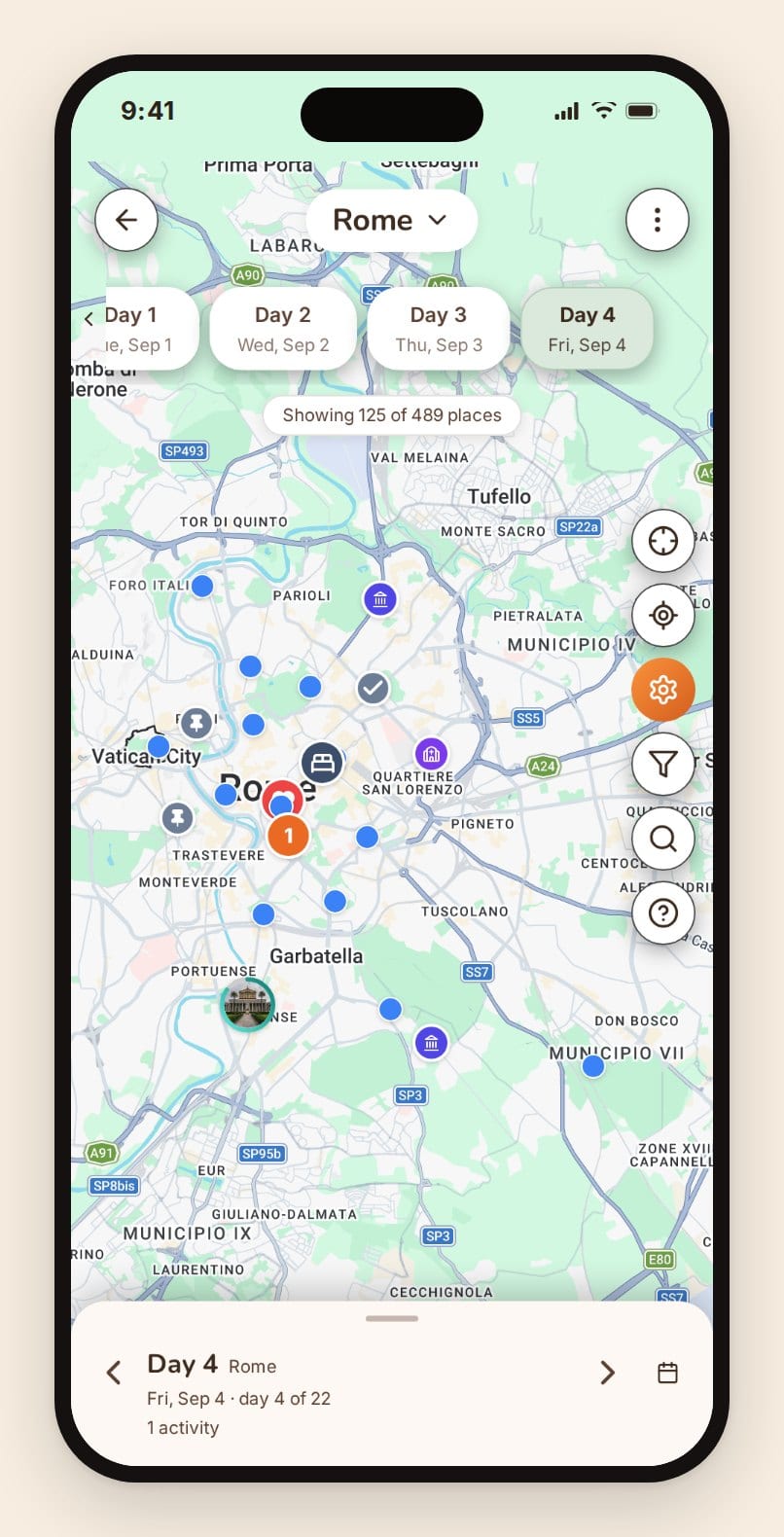
Três núcleos familiares, três perguntas sobre o horário do barco - o roteiro do TripProf foi feito para acabar com isso. Ele roda com planejamento diário apresentando tanto uma linha do tempo quanto uma visualização em calendário, para que alguém possa rolar dia a dia ou apenas dar uma olhada rápida na semana. Você pode pedir para ele gerar automaticamente um dia ou a viagem inteira escolhendo um intervalo de datas, um ritmo e os tipos de atividades que o grupo deseja, para depois revisar e manter apenas as sugestões que se encaixam, uma verdadeira economia de tempo quando você está planejando para três faixas etárias diferentes e três níveis de energia diferentes ao mesmo tempo. Tudo o que é sugerido é um lugar real onde é possível adicionar coisas, e não um texto resumido que você ainda precisa pesquisar por fora. Adicione uma lista de desejos para as coisas com as quais as pessoas estão apenas meio comprometidas, a viagem de um dia que o vovô vive mencionando, o restaurante que ninguém reservou ainda, e arraste atividades quando os planos mudarem, o que em uma viagem desse tamanho, vai acontecer.
Se a reunião for realmente duas paradas, uma base em uma casa de família mais uma viagem secundária que todo mundo acrescenta, a logística se multiplica rapidamente. Nosso guia para planejar uma viagem multicitadina com família e amigos cobre a coordenação extra que isso adiciona. As atividades de cada dia também aparecem em um mapa com a rota a pé ou de carro entre elas, o que importa mais quando metade do grupo nunca esteve no destino e a outra metade está tentando se lembrar dele de uma viagem feita há uma década.
Mantenha os documentos e a lista de verificação em um lugar que todo núcleo familiar possa acessar
Um grupo que nunca viajou junto não tem um sistema compartilhado para nada, o que significa que passaportes, detalhes de seguro e a confirmação do local acabam espalhados por três caixas de entrada e uma pasta física que a mãe de alguém está guardando. Coloque-os em um só lugar antes da viagem, e não enquanto estiver na fila do check-in.
O TripProf armazena documentos por categoria, passaportes, vistos, passagens, seguro, acomodação, para que ninguém fique vasculhando uma pasta genérica para encontrar a apólice de seguro de um avô. Você pode fotografar um documento físico ou PDF e digitalizá-lo, e alguns campos são preenchidos automaticamente a partir do que foi escaneado, com os detalhes do voo puxados direto de um cartão de embarque em vez de digitados duas vezes. Se você não tem certeza do que realmente pertence a essa pasta para uma viagem desse tamanho, nossa lista de verificação de documentos de viagem apresenta a lista completa por viajante e por tipo de documento. Os voos também aparecem visualmente, para que qualquer pessoa verificando conexões possa realmente ver as escalas em vez de decifrar uma sequência de códigos de aeroporto.
- Validade do passaporte verificada para cada viajante, e não apenas para os que voam internacionalmente
- Seguro de viagem confirmado especificamente para os viajantes mais velhos e mais jovens
- Confirmações de voo e acomodação salvas em algum lugar acessível offline
- Necessidades de acessibilidade sinalizadas antes da reserva, e não descobertas no local
- Uma pessoa de contato acordada por núcleo familiar para alterações de última hora
A lista de verificação em si é gerada de forma inteligente a partir do próprio perfil da viagem, destino, duração e quem vai participar, sendo depois agrupada por categoria para não parecer uma parede de texto. Modelos existem para tipos de viagens comuns se você preferir começar a partir de um deles. O que ela ainda não é, por enquanto, é atribuída por pessoa; ela é uma lista mestre compartilhada a partir da qual toda a viagem trabalha junta, e a atribuição por viajante ainda está no roteiro de novidades em vez de já ter sido lançada. Se você realmente precisa saber quem é o dono de qual item da lista, essa é uma lacuna real no momento: escreva as iniciais ao lado dos itens à mão, ou mantenha uma breve nota por núcleo familiar ao lado da lista compartilhada até que a atribuição seja lançada. O que você não perde de jeito nenhum é a lista única que todo mundo realmente pode ver, em vez de seis cópias inacabadas em que ninguém confia.
O que uma ferramenta exclusiva para reuniões não fará por você
Um aplicativo dedicado a reuniões é construído para resolver o evento: quem está vindo, quem está pagando o quê na vaquinha, quem se inscreveu para trazer a salada de batata. Geralmente para por aí, antes que a viagem real comece.
Os planejadores de reuniões feitos sob medida disponíveis por aí se apoiam em uma lista de convidados organizada por ramo familiar, rastreamento de confirmação de presença (RSVP), um total contínuo de "orçamento versus arrecadado", crachás de identificação imprimíveis e, às vezes, uma visualização em árvore genealógica de quem é parente de quem, juntamente com uma linha do tempo de planejamento e uma programação para o dia do evento. Esse é um conjunto de ferramentas genuinamente útil se o evento inteiro for uma única tarde em um pavilhão de parque. Ele se torna um ajuste mais fraco quando o evento é uma viagem de cinco dias com voos, uma casa alugada e a rotina de cochilos de uma criança pequena para contornar, porque nada disso cobre um roteiro, documentos armazenados ou planejamento diário quando todo mundo já estiver lá.
Uma ferramenta de reunião resolve o evento, não a viagem.
Portanto, essa é a lacuna para a qual o TripProf foi construído. Ele não faz rastreamento de RSVP ou lista de pratos compartilhados, e não vai enviar aos parentes um "reserve a data". O que ele faz assim que a data e a lista de convidados existem é gerenciar a viagem real: o roteiro, as despesas, os documentos, a lista de verificação e um diário de fotos e notas ao qual cada participante pode adicionar conteúdo junto, durante e depois da viagem. O plano gratuito já cobre o controle manual de despesas, listas de verificação e planejamento diário de roteiros de forma individual, sem necessidade de pagamento. Ativar a colaboração completa, para que os parentes possam realmente ver e adicionar informações à mesma viagem, fica atrás de um desbloqueio: um guia Pro, o nome do TripProf para o plano pago, e não um artigo de viagem. Para uma única viagem marcante, é um crédito único de € 3,99 ($ 3,99) que nunca expira; o plano mensal de € 7,99 ($ 7,99) só faz sentido se mais viagens como esta estiverem por vir.

tripprof.com
Perguntas Frequentes
Com quanto tempo de antecedência devemos começar a planejar uma viagem familiar marcante?
Comece a conversa sobre a data assim que o evento marcante for confirmado, idealmente de 9 a 12 meses antes para um grupo de dez ou mais pessoas. Grandes acomodações e locais são reservados primeiro; voos e os detalhes mais refinados podem vir depois que a data e o local estiverem travados.
Quem deve ser o organizador da viagem quando vários núcleos familiares estão envolvidos?
Uma pessoa, e não um comitê rotativo. Não precisa ser o parente mais próximo do evento marcante, apenas quem estiver disposto a assumir o calendário, a estrutura de orçamento e a palavra final quando o grupo não puder entrar em acordo. Todo o resto ainda pode opinar como editor ou visualizador.
E se um núcleo familiar realmente não puder arcar com o que os outros podem?
Diga isso cedo, e escolha um modelo de custo que não exija que todo mundo acompanhe quem gasta mais: uma divisão baseada no núcleo familiar em vez de uma por pessoa, um fundo conjunto para um momento compartilhado em vez de dividir cada despesa igualmente, ou os avós cobrindo os grandes custos fixos como presente. O movimento errado é ficar em silêncio e desistir no último minuto.
Os parentes podem ver o plano sem poder alterá-lo?
Sim. O TripProf adiciona pessoas como visualizador, que vê o roteiro, as despesas e os documentos mas não pode editar nada, ou como editor, que pode adicionar e alterar detalhes. Ninguém altera acidentalmente a rota da viagem só porque tinha acesso apenas de visualização.
O TripProf gerencia confirmações de presença (RSVPs) ou convites para uma grande reunião de família?
Não. O TripProf não tem um recurso de RSVP ou rastreamento de convites; esse é o trabalho de uma ferramenta específica para reuniões ou de uma mensagem em grupo simples antes que a viagem exista. O TripProf assume o controle assim que a data está definida e a lista de convidados é real, gerenciando o roteiro, as despesas, os documentos e a lista de verificação para a viagem real.
E se o grupo for grande demais para um bloco de quartos de hotel?
Reserve a acomodação por núcleo familiar ou subgrupo em vez de forçar todo mundo sob o mesmo teto, e use a visualização diária do roteiro para que cada núcleo familiar possa ver o plano compartilhado mesmo dormindo em um lugar diferente. A viagem continua sendo uma só; as camas não precisam ser.
Principais Aprendizados
- Trave a data antes de qualquer outra coisa. A data de uma viagem marcante não pode mudar, então pesquise intervalos de datas primeiro e comprometa-se assim que a maioria das pessoas que você quer puder ir.
- Defina um organizador, e não um comitê. Adicione todo o resto como visualizador ou editor para que o plano permaneça coerente entre núcleos familiares que nunca planejaram juntos antes.
- Planeje-se para a assimetria de contribuição, e não para uma divisão igualitária. Quase metade dos pais que viajam com filhos adultos paga pela viagem inteira sozinha, e fingir o contrário é onde o ressentimento começa.
- Diga o modelo de dinheiro em voz alta antes de reservar. Uma divisão por núcleo familiar, um fundo conjunto ou avós cobrindo os itens de alto valor, qualquer uma das opções funciona se todo mundo concordar com ela de antemão.
- Mantenha o roteiro, os documentos e a lista de verificação em um só lugar compartilhado. Um grupo que nunca viajou junto não tem um sistema compartilhado por padrão, então construa um antes do check-in, e não durante ele.
- Uma ferramenta de reunião e uma ferramenta de viagem resolvem problemas diferentes. Uma gerencia RSVPs e uma inscrição de pratos compartilhados; o TripProf gerencia a viagem real assim que a data e a lista de convidados existem.
Fontes
- Road Scholar, 2026 Multigenerational Travel Survey - frequência de viagens, orçamento e preferências de formato
- AARP, 2026 Travel Trends Survey - participação em viagens multigeracionais, timing de reserva e motivações de viagem para adultos de 50 anos ou mais
- CIT Bank / Harris Poll, 2026 Group Travel Survey - conflito financeiro e pagamentos excedentes em viagens em grupo
- Hilton, 2026 Trends Report: Inheritourism - pais e filhos adultos dividindo custos de viagem
- Travel Market Report, "Booking on Grandma's Budget" - viagens multigeracionais financiadas por avós, citando a Pesquisa de Viagens em Família nos EUA de 2023 da Family Travel Association
- NYU SPS / Family Travel Association, 2025 U.S. Family Travel Survey - participação em viagens multigeracionais, 1.596 entrevistados
Última atualização: 19 de setembro de 2026
Continue Lendo
Mais dicas de viagem e guias escolhidos para você

Quanto custa de verdade uma viagem de Friendsgiving e como dividir os gastos de forma justa
Oito amigos, uma cabana e um fim de semana prolongado antes do Dia de Ação de Graças: veja quanto custa uma viagem real de Friendsgiving por pessoa e uma forma simples de dividir os gastos antes que surjam desentendimentos.

Questionário para Viagem em Grupo: 16 Perguntas para Fazer Antes de Alguém Reservar
A maioria das viagens em grupo falha em quatro respostas: tanto faz, tranquilo, qualquer opção serve e por volta de $2 mil. Aqui estão 16 perguntas que impedem essas respostas vagas, o que cada uma realmente significa e um modelo pronto para copiar e enviar antes de qualquer reserva.

Quantos Estados Americanos Você Já Visitou? A Resposta Real de um Aposentado (E Como Descobrir a Sua)
Um aposentado de 58 anos pinta seu mapa dos EUA pela primeira vez e descobre um número bem diferente do que imaginava. Conheça as estatísticas reais da YouGov, os limites honestos e como acompanhar sua própria lista de estados visitados.