Hebben Australiërs een visum nodig? Alle 10 topbestemmingen gecontroleerd en gedateerd
Belangrijkste punten
- 1
- 2
- 3
+3 meer in de samenvatting onderaan
Je staat bij de gate in Perth, telefoon in de ene hand, instapkaart in de andere, en een forumdiscussie uit 2023 vertelt je zojuist dat Bali visumvrij is. Dat is niet zo. Dat is het voor Australianen nooit geweest. Elders op hetzelfde scherm wil een website je paspoortnummer en een "prioriteitsverwerkingskosten" voor een EU-systeem dat nog niet bestaat. Geen van beide is een gok. Beide zijn onjuist, en de ene probeert je geld af te pakken.
Dit is de oplossing: één tabel, tien bestemmingen, waarbij elke regel is gecontroleerd aan de hand van de officiële pagina van de betreffende overheid op 9 september 2026, en niet aan de hand van een andere blog die een andere blog citeert. Elk AUD-bedrag hieronder is een live omrekening per september 2026, geen getal dat is overgenomen uit een oud bericht.
Van de tien bestemmingen waar Australianen het meest naartoe reizen, zijn er slechts drie echt visumvrij waarvoor niets hoeft te worden aangevraagd: Nieuw-Zeeland (voor burgers), Japan en Fiji. Vier vereisen een betaalde elektronische toestemming of e-visum: de Britse ETA (GBP 20, ongeveer A$37), de Amerikaanse ESTA (USD 40,27, ongeveer A$56), het e-visum van Vietnam (vanaf USD 25, ongeveer A$35) en Indonesië's e-VOA voor Bali (IDR 500.000, ongeveer A$39). China is 30 dagen visumvrij, maar alleen tot 31 december 2026. Het visumvrije verblijf in Thailand wordt op 15 september 2026 verkort van 60 naar 30 dagen, zes dagen nadat dit artikel online is gegaan. Europa heeft nog geen ETIAS om aan te vragen, wat een oplichtingssite je ook vertelt. Elk cijfer hieronder vermeldt de datum waarop het is gecontroleerd en een link naar de overheidsspagina waar het vandaan komt.
De tien bestemmingen in één oogopslag
Dit is de tabel om een screenshot van te maken voordat je het tabblad sluit. Elke regel linkt naar de eigen pagina van de uitgever van de overheid, niet naar een visumdoorgiftebedrijf, en elke regel is gecontroleerd op 9 september 2026.
| Bestemming | Visum nodig? | Kosten | Toegestaan verblijf | Gecontroleerd |
|---|---|---|---|---|
| Indonesië (Bali) | Ja, e-VOA | IDR 500.000 (ongeveer A$39) | 30 dagen | 9 sep 2026 |
| Nieuw-Zeeland | Nee, als je staatsburger bent | Gratis | Onbeperkt (Resident Visa) | 9 sep 2026 |
| Japan | Nee | Gratis | 90 dagen | 9 sep 2026 |
| Verenigde Staten | Ja, ESTA | USD 40,27 (ongeveer A$56) | 90 dagen | 9 sep 2026 |
| Verenigd Koninkrijk | Ja, UK ETA | GBP 20 (ongeveer A$37) | Maximaal 6 maanden per bezoek | 9 sep 2026 |
| Schengen-Europa (Italië, Frankrijk enz.) | Geen visum; ETIAS nog niet open | Nu gratis; EUR 20 zodra ETIAS van start gaat | 90 dagen per periode van 180 dagen | 9 sep 2026 |
| Thailand | Nee, maar wordt korter | Gratis (TDAC vereist) | 30 dagen vanaf 15 sep 2026 | 9 sep 2026 |
| Vietnam | Ja, e-visum | Vanaf USD 25 (ongeveer A$35) | Maximaal 90 dagen | 9 sep 2026 |
| China | Nee, tot 31 dec 2026 | Gratis | 30 dagen | 9 sep 2026 |
| Fiji | Nee | Gratis | Maximaal 4 maanden | 9 sep 2026 |
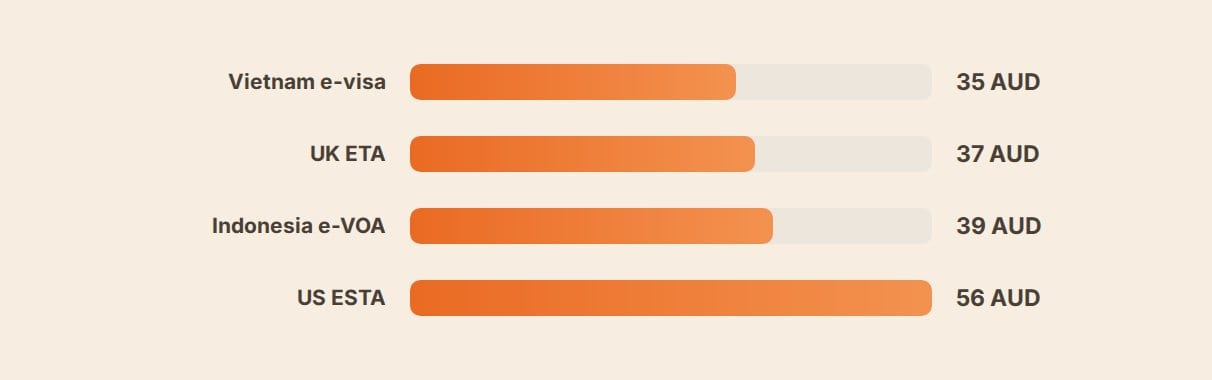
Gegevens: evisa.imigrasi.go.id, en.wikipedia.org, gov.uk, govinfo.gov
Hoe we deze tien hebben gekozen
Dit zijn de tien landen waar Australianen daadwerkelijk het meest naartoe vlogen, niet de tien waarvan iemand dacht dat ze interessant klonken. Volgens de publicatie van juni 2026 van het Australian Bureau of Statistics was Indonesië de populairste bestemming voor terugkeer van ingezetenden op korte termijn met 156.190 reizen, vóór Nieuw-Zeeland (81.060), Japan (61.650), het VK (56.930), China (55.410), de VS (52.030), Thailand (42.240), Vietnam (37.500), Fiji (36.930) en Italië (32.420).
We hebben Italië en Frankrijk gegroepeerd onder "Schengen-Europa" in plaats van Italië apart te vermelden, omdat de toegangsregel die hier echt toe doet, ETIAS, geldt voor alle 30 landen in de zone als één systeem, niet per land. Al het andere op de lijst behoudt zijn eigen rij omdat de regel echt specifiek is.
Het onderdeel dat iedereen overslaat: je tussenstop is een eigen visumvraag
Bijna niemand vliegt vanuit Australië naar Europa, de VS of Vietnam zonder ergens anders te landen. Singapore, Dubai, Doha, Kuala Lumpur en Hongkong verzorgen samen het grootste deel van het intercontinentale verkeer vanuit Perth, Brisbane en Sydney, en elk van deze plekken heeft zijn eigen toegangsregel, volledig los van waar je werkelijk naartoe reist.
Het goede nieuws voor deze specifieke lijst met tussenstops: geen enkele daarvan vraagt een houder van een Australisch paspoort om vooraf iets aan te vragen, of je nu achter de douane blijft of de immigratiedienst passeert voor een langere blik rondom.
| Tussenstophub | Toegang voor Australianen | Bron |
|---|---|---|
| Singapore (Changi) | Visumvrij, achter de douane of in het land zelf | ICA Singapore |
| Dubai / Abu Dhabi (VAE) | Visumvrij, maximaal 90 dagen | Visumbeleid van de VAE |
| Doha (Qatar) | Visumvrije toegang, achter de douane of in het land zelf, helemaal geen transitvisum nodig | Australische ambassade, Doha |
| Kuala Lumpur (Maleisië) | Visumvrij, maximaal 90 dagen | Visumbeleid van Maleisië |
| Hongkong | Visumvrij, maximaal 90 dagen, inclusief transit achter de douane | Immigration Department, Hongkong |

Foto: Michael · Publiek domein, via Wikimedia Commons
Geen van deze vijf tussenstops vereist een transitvisum voor een Australisch paspoort. Maar zodra een overstap het wisselen van luchtvaartmaatschappij of terminal met een zelfoverstap inhoudt, vertrouw je op de dienstregeling van de luchthaven zelf, niet op een visumregel, om je naar je volgende gate te brengen. Boek aansluitende vluchten indien mogelijk op één ticket, hetzelfde advies dat geldt voor een Britse overstap via Heathrow, wat onze gids over ETIAS en de UK ETA gedetailleerder behandelt voor het Europese deel.
Indonesië (Bali)
Ja, Australianen hebben een visum nodig voor Indonesië, en nee, er is geen visumvrije optie. Elke Australiër die Bali betreedt, heeft een Visa on Arrival of de digitale variant daarvan nodig, de e-VOA, die volgens Indonesië's eigen immigratieportaal IDR 500.000 kost (ongeveer A$39 tegen de wisselkoersen van september 2026) voor een enkelvoudige inreis en een verblijf van 30 dagen.
Vraag dit vóór je vlucht online aan via evisa.imigrasi.go.id en je gebruikt de e-gates op de luchthaven in plaats van de handmatige rij bij de balie. Bovenop het visum betaalt elke buitenlandse bezoeker een aparte toeristenheffing voor Bali van IDR 150.000 (ongeveer A$12), eenmalig te betalen per bezoek via het officiële Love Bali-systeem, en niet via het immigratieportaal. Beide tarieven zijn vast en alleen .go.id-domeinen zijn echt, een punt dat Smartraveller herhaalt om precies de reden waarmee dit artikel begint: nepsites voor aankomstkaarten richten zich actief op Australianen. We hebben de volledige procedure beschreven in onze complete gids over de inreisvereisten voor Bali.
Wie de online aanvraag moet overslaan: eigenlijk niemand. Zonder e-VOA opdagen betekent simpelweg dat je dezelfde IDR 500.000 bij een handmatige balie moet betalen na een nachtvlucht, wat een slechtere versie is van dezelfde vereiste, niet een goedkopere. Het eerlijke nadeel van Bali zelf is niet het papierwerk, maar de drukte: Bali registreerde 6.948.754 buitenlandse aankomsten in 2025, een stijging van 9,72% ten opzichte van 2024, en de heffingsrijen en bezienswaardigheden zijn het drukst rond de periode december-januari, wanneer de meeste schoolvakanties van de staten samenvallen.
Nieuw-Zeeland
Als je de Australische nationaliteit hebt, heb je helemaal niets nodig. Volgens de Trans-Tasman Travel Arrangement bevestigt de eigen pagina van Immigration New Zealand dat je "gewoon in Nieuw-Zeeland kunt wonen, werken en studeren zonder een visum of New Zealand Electronic Travel Authority (NZeTA) aan te hoeven vragen", en krijg je bij aankomst een Resident Visa afgegeven.
Dat is het punt dat bijna elke andere gids fout heeft of overslaat: de NZeTA-vrijstelling geldt niet voor elk Australisch paspoort. Als je een Australische permanent ingezetene bent die geen staatsburger is, vermeldt de pagina van Immigration New Zealand over het Australian Resident Visa duidelijk dat "je over een New Zealand Electronic Travel Authority (NZeTA) moet beschikken voordat je reist", vanaf NZD 17 (ongeveer A$14 tegen de wisselkoersen van september 2026). Het enige dat NIET verandert is de International Visitor Conservation and Tourism Levy: dezelfde pagina bevestigt dat een Australische permanent ingezetene de heffing van NZD 100 (ongeveer A$81 tegen de wisselkoersen van september 2026) "niet betaalt", net als een staatsburger. Een Britse staatsburger met een Australische verblijfsvergunning betaalt dus wel de NZeTA-kosten maar niet de heffing; een Australische staatsburger betaalt geen van beide.
Wie dit goed moet controleren: iedereen die reist met een niet-Australisch paspoort en permanent in Australië woont. Je hebt de NZeTA nodig, ook al is de heffing nog steeds niet op jou van toepassing.
Japan
Eenvoudig, voorlopig: Australianen krijgen een visumvrijstelling van 90 dagen voor toerisme en zakenreizen, bevestigd onder de officiële visumvrijstellingsregelingen van Japan en vermeld in het gepubliceerde visumbeleid van Japan. Niets om aan te vragen, niets te betalen, geen e-Gate-registratie behalve de gebruikelijke aankomstkaart.
Dat gaat veranderen, op termijn, niet op korte termijn. Het Japanse parlement heeft de wettelijke basis gelegd voor JESTA, een Japanse tegenhanger van de Amerikaanse ESTA die vereist dat visumvrije reizigers een betaalde screening vóór de reis ondergaan voordat ze aan board gaan, zoals is gemeld door Japanse handelsmedia waaronder Impress Watch and JBpress. Het doel is het fiscaal jaar 2028, dat in de Japanse kalender loopt vanaf april 2028. Dit verandert niets voor een reis die in 2026 of 2027 is geboekt, en er is nog geen vergoeding of aanvraagprocedure om je voor aan te melden.
Wie zich nu geen zorgen hoeft te maken over JESTA: iedereen die vóór 2028 vliegt. Wie dit jaar iets anders beweert, gokt op een datum die niemand, inclusief de Japanse overheid zelf, heeft bevestigd.
Verenigde Staten
Australianen reizen onder het Visa Waiver Program, wat betekent dat ze een ESTA (Electronic System for Travel Authorization) nodig hebben, geen visum. Het bedrag steeg op 30 september 2025 van USD 21 naar USD 40, en vervolgens naar USD 40,27 (ongeveer A$56 tegen de wisselkoersen van september 2026) voor het fiscaal jaar 2026 onder een inflatiecorrectie gepubliceerd in de Federal Register. Dit dekt verblijven van maximaal 90 dagen gedurende een geldigheidsperiode van ongeveer twee jaar of totdat je paspoort verloopt.
Vraag dit alleen aan op de officiële website esta.cbp.dhs.gov, ten minste 72 uur voordat je vliegt, hoewel de meeste goedkeuringen binnen enkele minuten binnenkomen.
Wie het losse aanvraagformulier moet overslaan: iedereen die op een site terechtkomt die niet esta.cbp.dhs.gov is en meer vraagt dan de overheidsprijs. Externe "versnelde" ESTA-sites rekenen routinematig dubbel of driedubbel voor dezelfde verwerking.
Verenigd Koninkrijk
De UK ETA is verplicht voor Australianen en is dat al sinds 25 februari 2026. Deze kost nu GBP 20 (ongeveer A$37 tegen de wisselkoersen van september 2026), een stijging ten opzichte van GBP 16 vóór de verhoging op 8 april 2026 die werd bevestigd in de eigen factsheet van het Home Office, en één aanvraag, gecontroleerd bij het instappen in plaats van aan de Britse grens, dekt meerdere reizen van maximaal zes maanden per bezoek gedurende twee jaar.
De enige vrijstelling die de moeite waard is om te kennen: een overstap op hetzelfde ticket en dezelfde dag via Heathrow of Manchester waarbij de beveiligde transitzone van de luchthaven niet wordt verlaten, slaat de ETA momenteel volledig over, hoewel het Britse Home Office die vrijstelling als tijdelijk beschrijft. Ga om welke reden dan ook landside, voor een overnachting, een terminalwissel via de grenscontrole, en je hebt de volledige ETA nodig tegen de volle prijs. We hebben het volledige plaatje van de UK ETA, ETIAS en het EU Entry/Exit System, inclusief de transitregel en de kosten voor een gezin van vier, besproken in onze speciale gids voor Europese inreizen.
Wie nu moet aanvragen in plaats van bij de gate: iedereen met een Britse tussenstop geboekt voor 2027. Goedkeuringen komen meestal binnen een dag binnen, maar het Home Office trekt er maximaal drie werkdagen voor uit, en een ontbrekende ETA is een incheckprobleem in Perth, geen grenscontroleprobleem in Londen.
Schengen-Europa (Italië, Frankrijk en de rest)
Geen visum, en vanaf 9 september 2026 nog steeds geen ETIAS om aan te vragen. Australianen reizen visumvrij naar Schengenlanden voor maximaal 90 dagen binnen elke periode van 180 dagen, precies zoals voorheen. Wat is veranderd, is dat een nieuwe biometrische grenscontrole, het Entry/Exit System, sinds 10 april 2026 volledig operationeel is aan elke buitengrens van Schengen, waarbij de inktstempel is vervangen door een foto en vingerafdrukken. Hier zijn geen kosten aan verbonden en er valt niets voor aan te vragen.
ETIAS, de geplande betaalde toestemming van de EU, is niet live. De eigen site van de Europese Commissie heeft de eerdere doelstelling voor het laatste kwartaal van 2026 losgelaten en meldt nu alleen nog dat reizigers "enkele maanden" van tevoren op de hoogte worden gebracht. Zodra het wel opent, kost het EUR 20 (ongeveer A$32 tegen de wisselkoersen van september 2026), is het gratis voor reizigers jonger dan 18 of ouder dan 70, en is het drie jaar geldig in alle 30 landen op basis van één aanvraag. Wie je nu, voordat het bestaat, geld laat betalen voor ETIAS, pleegt oplichting. Alle details, inclusief waarom tijd in het VK nooit meetelt voor je 90 dagen in Schengen, staan in onze Europese inreisgids voor Australianen.
Wie een "voorregistratievergoeding" voor ETIAS moet overslaan: iedereen, zonder uitzondering. Er valt nergens voor voor te registreren.
Thailand
Australianen blijven visumvrij voor Thailand, maar het verblijf is zojuist korter geworden. Tot en met 14 september 2026 loopt de vrijstelling nog steeds 60 dagen. Vanaf 15 september 2026, zes dagen nadat dit artikel online is gegaan, bevestigt de Tourism Authority van Thailand dat het verblijf wordt verkort tot 30 dagen voor Australië en 59 andere nationaliteiten, met een eenmalige verlenging van 30 dagen die beschikbaar is bij Thaise immigratiekantoren voor ongeveer 1.900 THB (ongeveer A$80 tegen de wisselkoersen van september 2026), wat hoe dan ook een maximum van 60 dagen oplevert als je de verlenging vooraf plant. Iedereen die vóór 15 september is binnengekomen, behoudt het verblijf dat bij aankomst is verleend.
Elke reiziger, visumvrij of niet, moet binnen 72 uur na aankomst op het officiële immigratieportaal van Thailand ook de gratis Thailand Digital Arrival Card (TDAC) indienen. Hier zijn geen kosten aan verbonden, dus elke site die geld vraagt om de TDAC namens jou te "verwerken", brengt kosten in rekening voor een formulier dat de Thaise overheid gratis verstrekt.
Controleer je inreisdatum aan de hand van de overgangsdatum, niet je vertrekdatum vanuit Australië. Een reis die op 20 september aankomt, krijgt nu bij aankomst 30 dagen in plaats van 60, tenzij je de verlenging persoonlijk aanvraagt voordat dag 30 is verstreken.

Wie het plannen rondom de oude regel van 60 dagen moet overslaan: iedereen die Thailand binnenkomt op of na 15 september 2026. Die reis gepland rond een volledig verblijf van 60 dagen vereist nu dat de persoonlijke verlengingsstap is ingebouwd, of een korter reisschema.
Vietnam
Australianen hebben een e-visum nodig voor Vietnam; er is geen visumvrije toeristische toegang zoals bij Thailand of Fiji. Het e-visum kost vanaf USD 25 (ongeveer A$35 tegen de wisselkoersen van september 2026) voor een enkelvoudige inreis of USD 50 (ongeveer A$69 tegen de wisselkoersen van september 2026) voor meervoudige inreis, en beide opties zijn maximaal 90 dagen geldig, volgens het gepubliceerde visumbeleid van Vietnam. Vraag dit aan via het officiële portaal van Vietnam, evisa.gov.vn, in plaats van een doorverkoopsite die een opslag rekent voor identieke verwerking.
Eén echt nuttige uitzondering: Phu Quoc Island biedt visumvrije toegang voor maximaal 30 dagen als je daar rechtstreeks van buiten Vietnam naartoe vliegt of vaart, zonder eerst via de immigratiedienst op het vasteland te reizen. Het is een specifiek geval, een eilandhop in plaats van een reis naar het vasteland, maar het is de moeite waard om te weten als dat je hele route is.
Wie het e-visum helemaal moet overslaan: alleen de reiziger die rechtstreeks op Phu Quoc landt en daar blijft. Iedereen die Hanoi, Ho Chi Minh-stad of Da Nang aandoet, heeft het volledige e-visum nodig, ongeacht de lengte van de reis.
China
Voorlopig visumvrij, en echt in tijd beperkt op een manier die de rest van deze lijst niet is. China laat houders van een Australisch paspoort tot 30 dagen visumvrij binnen voor zakelijke reizen, toerisme, familiebezoek, uitwisseling of doorreis, en de regeling is alleen bevestigd tot en met 31 december 2026, volgens de eigen kennisgeving van de Chinese ambassade in Australië van november 2025. Deze is al tweemaal op korte termijn verlengd, dus er is een staat van dienst van last-minute verlengingen, maar niets dat vandaag is gepubliceerd zegt wat er op 1 januari 2027 gebeurt.
Iedereen die binnenkomt, visumvrij of niet, moet ook tot 72 uur voor landing een gratis online aankomstkaart indienen, en iedereen die niet in een hotel verblijft, moet zijn accommodatie binnen 24 uur registreren bij de lokale politie. Geen van beide stappen is optioneel alleen omdat het visum zelf gratis is. We hebben de volledige analyse van de drie scenario's uitgewerkt voor een reis die de jaarwisseling overbrugt in onze speciale gids over visumvrij reizen naar China.
Wie met een uitwijkplan moet boeken: iedereen wiens inreisdatum op of na 1 januari 2027 valt. Boek waar mogelijk flexibel en controleer de mededelingenenpagina van de ambassade opnieuw voordat je je aan die etappe verbindt.
Fiji
De eenvoudigste inreis op deze lijst. Australianen die om vakantiedoeleinden reizen, krijgen bij aankomst een gratis bezoekersvergunning, zonder aanvraag, zonder kosten, voor aanvankelijk maximaal vier maanden, rechtstreeks bevestigd door het ministerie van Immigratie van Fiji. Verlengingen daarna zijn mogelijk, over het algemeen tot maximaal zes maanden in totaal, maar worden geregeld met de Fijische immigratiedienst zodra je daar bent, niet voordat je vliegt.
Je hebt nog steeds een paspoort nodig dat ruim na je verblijf geldig is, een retour- of onward-ticket en het bewijs dat je jezelf kunt onderhouden, dezelfde basisbeginselen die bijna overal elders op deze lijst gelden. Niets hiervan omvat een betaling aan een derde partij voorafgaand aan vertrek, wat Fiji de gemakkelijkste "nee" van deze hele tabel maakt.
Wie alsnog vooruit moet plannen: iedereen die de verlenging voorbij vier maanden wil. Regel dat persoonlijk met de Fijische immigratiedienst zodra je bent aangekomen, en niet door online naar een formulier te zoeken voordat je vertrekt.
Veelgestelde vragen
Hebben Australianen specifiek een visum nodig voor Bali, of voor Indonesië in het algemeen?
Dezelfde e-VOA dekt heel Indonesië, inclusief Bali. Er is geen apart visum alleen voor Bali en geen visumvrije uitzondering voor het eiland. Het bedrag van IDR 500.000 en het verblijf van 30 dagen zijn van toepassing, ongeacht of je landt in Denpasar of Jakarta.
Als ik een Australische permanent ingezetene ben maar geen staatsburger, verandert er dan iets voor mij op deze lijst?
Nieuw-Zeeland verandert, maar slechts gedeeltelijk: je hebt een NZeTA nodig waar een staatsburger niets nodig heeft, hoewel je in beide gevallen bent vrijgesteld van de International Visitor Conservation and Tourism Levy. Overal elders op deze lijst is de regel gebaseerd op het paspoort waarmee je reist, en niet op je Australische verblijfsstatus, dus controleer de regel voor de nationaliteit van je daadwerkelijke paspoort, niet die van Australië.
Heeft een tussenstop in Singapore, Dubai, Doha, Kuala Lumpur of Hongkong een eigen visumaanvraag nodig?
Niet voor een Australisch paspoort, op geen van deze vijf. Alle vijf staan visumvrije toegang toe of een gratis visum bij aankomst voor Australianen, ongeacht of je achter de douane blijft of de landside op gaat voor de overlay. Dat geldt niet voor elke hub; controleer elke tussenstop buiten deze lijst op eigen merites.
Welke van deze tien bestemmingen verandert binnenkort echt, en niet alleen in theorie?
Twee, en beide binnen maanden nadat dit artikel is gepubliceerd. Het visumvrije verblijf in Thailand wordt op 15 september 2026 verkort van 60 naar 30 dagen. De visumvrije toegang van 30 dagen voor China is alleen bevestigd tot en met 31 december 2026, waarbij nog niets is gepubliceerd over wat daarna volgt.
Is ETIAS hetzelfde als de UK ETA?
Nee, en ze door elkaar halen is de meest gemaakte fout over dit hele onderwerp. De UK ETA is echt, live en verplicht sinds februari 2026. ETIAS is de afzonderlijke, nog te openen tegenhanger van de EU voor Schengenlanden, zonder lanceerdatum. Tijd in het VK telt bovendien nooit mee voor je Schengen-vrijstelling van 90 dagen, aangezien deze afzonderlijk worden bijgehouden.
Betalen kinderen ook voor deze tarieven?
Over het algemeen wel, tegen hetzelfde tarief als een volwassene, met twee uitzonderingen op deze lijst: ETIAS zal gratis zijn voor reizigers onder de 18 zodra het wordt gelanceerd, en de aankomstvergunning van Fiji brengt voor niemand kosten in met zich mee. Overal elders, inclusief de UK ETA en de Amerikaanse ESTA, betaalt elke genoemde reiziger, inclusief baby's, het volledige bedrag.
Wat moet ik doen voordat ik vlieg, behalve het regelen van het visum zelf?
Controleer of je paspoort de geldigheid heeft die de bestemming daadwerkelijk vereist (zes maanden na aankomst voor Indonesië, drie maanden na vertrek voor Schengenlanden) en bewaar de bevestiging, QR-code of goedkeuringsmail ergens waar je zonder wifi bij kunt bij een grensbalie. Onze checklist voor reisdocumenten behandelt de rest van de pre-vertreklijst, en de eigen vertrekbelasting van Australië, de Passenger Movement Charge, stijgt afzonderlijk, wat onze gids over vertrekbelasting behandelt als je de hele reis begroot, niet alleen het bestemmingsgedeelte.
Belangrijkste punten
- Slechts drie bestemmingen op deze lijst zijn echt gratis en vereisen niets om aan te vragen: Nieuw-Zeeland (voor burgers, een NZeTA voor permanente inwoners die dat niet zijn), Japan en Fiji.
- Vier vereisen een betaalde elektronische toestemming of e-visum voordat je vliegt: de UK ETA (GBP 20), de Amerikaanse ESTA (USD 40,27), het e-visum van Vietnam (vanaf USD 25) en de e-VOA van Indonesië (IDR 500.000).
- Twee regels veranderen daadwerkelijk binnen enkele maanden na de publicatiedatum van dit artikel. Thailand verkort zijn visumvrije verblijf van 60 naar 30 dagen op 15 september 2026. De visumvrije inreis van 30 dagen voor China loopt alleen door tot en met 31 december 2026.
- ETIAS is niet live en heeft geen lanceerdatum. Wie nu geld vraagt om hiervoor aan te vragen, pleegt oplichting; de UK ETA is degene die vandaag de dag daadwerkelijk verplicht is.
- De vijf gebruikelijke intercontinentale tussenstops, Singapore, Dubai, Doha, Kuala Lumpur en Hongkong, zijn allemaal visumvrij voor Australianen, wat het enige goede nieuws is dat de checklist van niemand anders vermeldt.
- Bewaar de goedkeuringsmails en QR-codes ergens waar ze offline bereikbaar zijn. Apps zoals TripProf die reisdocumenten op één plek bewaren, zorgen ervoor dat je bij een immigratiebalie niet in je inbox hoeft te zoeken naar een bevestigingsnummer.
Laatst geverifieerd op 9 september 2026 aan de hand van de officiële pagina van elke bestemmingsregering die in de tabel hierboven wordt genoemd. Visum- en inreisregels veranderen snel; die van Thailand op deze lijst verandert binnen een week; controleer de officiële bron voor je bestemming opnieuw voordat je vliegt als het al een paar maanden geleden is sinds die datum.
Bronnen
- Australian Bureau of Statistics: Overseas Arrivals and Departures, Australia, laatste publicatie (juni 2026)
- Indonesisch directoraat-generaal voor Immigratie: e-VOA-informatie, officieel e-Visa-portaal
- Love Bali (provinciale overheid van Bali): Veelgestelde vragen over toeristenheffing
- Smartraveller (Australische overheid): Reisadvies Indonesië
- ANTARA News (rapportage BPS-Statistics Indonesia, provincie Bali): Buitenlandse toeristenaankomsten op Bali stijgen met bijna 10 procent in 2025
- Immigration New Zealand: Australische staatsburgers en permanent ingezetenen die naar Nieuw-Zeeland reizen
- Immigration New Zealand: Vereisten voor Australian Resident Visa, NZeTA en IVL
- Wikipedia: Visumbeleid van Japan
- Impress Watch: JESTA-reistoestemming, doelstelling fiscaal jaar 2028
- JBpress: Achtergrond en tijdlijn van JESTA
- U.S. Customs and Border Protection: Officiële ESTA-aanvraagwebsite
- Federal Register: Bepaalde immigratietarieven van het DHS vereist door HR-1, aanpassingen voor inflatie voor het fiscaal jaar 2026
- UK Home Office: Factsheet Electronic Travel Authorisation (ETA), april 2026
- gov.uk: Een ETA aanvragen
- Europese Unie: Wat is ETIAS, officiële EU ETIAS-site
- Europese Unie: Veelgestelde vragen over EES
- Tourism Authority of Thailand Newsroom: Nieuwe visumvrijstellingsregels van 30 en 15 dagen vanaf 15 september
- Wikipedia: Visumbeleid van Vietnam
- Chinese ambassade in Australië: Kennisgeving over verlenging van het visumvrije beleid
- Ministerie van Immigratie van Fiji: Visumaanvraag, inreisvergunningen
- Immigration and Checkpoints Authority, Singapore: Visumvrije transitzone-faciliteit
- Wikipedia: Visumbeleid van de Verenigde Arabische Emiraten
- Australische ambassade, Doha: Visums en staatsburgerschap
- Wikipedia: Visumbeleid van Maleisië
- Immigration Department, Hongkong: Bezoek/Transit
- Reserve Bank of Australia: Wisselkoersen, 9 september 2026
Laatst bijgewerkt: 19 september 2026
Blijf lezen
Meer reistips en gidsen voor jou geselecteerd

What counts as visiting a state? Layovers, drive-throughs and the rules 50-staters use
Only 2% of Americans name a plane change as the minimum that counts as visiting a state, while 27% set the bar at driving through. Here's a three-tier rubric, a lookup table for the edge cases from Four Corners to D.C., and one trip counted three ways.

De neppe SBB-ticketwebsite die creditcard- en Twint-gegevens steelt van reizigers
De kantonpolitie van Zürich bevestigt dat een neppe SBB-ticketwebsite betaalgegevens van creditcards en Twint steelt van reizigers die deze via een gewone Google-zoekopdracht vinden. Dit is hoe je hem herkent en wat je kunt doen als je al hebt betaald.

Waarschuwing voor Britse ETA-oplichting: nepsites rekenen Oostenrijkers tot wel 900 euro
Nepsites voor de Britse ETA laten Oostenrijkse en andere Europese reizigers honderden euro's betalen voor een formulier van slechts 20 pond. Lees hier hoe de echte aanvraag werkt en hoe je oplichting herkent.