SMS pour un péage impayé après une location de voiture ? Comment distinguer le vrai du faux

Points clés
- 1
- 2
- 3
+3 de plus dans le résumé final
Vous avez rendu la voiture de location à l'aéroport il y a trois jours, payé au comptoir, et vous n'avez pas repensé au véhicule depuis. Soudain, un SMS arrive : « Votre solde de péage de 6,85 $ est en retard. Payez dès maintenant pour éviter une pénalité de 50 $ et une suspension de permis. » Votre pouce se dirige déjà vers le lien avant même d'avoir fini de lire.
Les vrais avis de péage ne ressemblent presque jamais à ceux qui inondent les téléphones en ce moment. Si un SMS concernant le péage d'une voiture de location vous demande de toucher un lien, de répondre « O », ou de payer par carte-cadeau, c'est une arnaque, point final. Vérifiez trois choses en 10 secondes : le numéro de l'expéditeur, le domaine du lien, et si l'entreprise de location a déjà débité la carte enregistrée dans votre dossier. Si vous avez déjà payé, appelez l'émetteur de votre carte aujourd'hui, puis signalez-le à la FTC et à l'organisme de péage de votre État.
Le contrôle en 10 secondes : ce SMS de péage est-il réel ou une arnaque ?
Effectuez cette vérification avant de toucher quoi que ce soit. Les organismes de péage et les sociétés de location rédigent les vrais avis d'une manière très différente des SMS qui inondent les téléphones en ce moment, et la différence apparaît en moins de 10 secondes si vous savez où regarder.
- Regardez l'expéditeur. Un numéro aléatoire à 10 chiffres ou international, ou un numéro qui change si vous répondez, est un signe d'arnaque. La plupart des organismes de péage légitimes envoient des SMS à partir d'un code abrégé (un numéro à 5 ou 6 chiffres).
- Vérifiez le lien sans cliquer dessus. Appuyez longuement (sans toucher) pour prévisualiser l'URL. Un domaine qui n'est pas le site officiel de l'organisme de péage, se terminant par .xin, .top, .vip, ou utilisant un réducteur comme bit.ly, est une arnaque.
- Consultez d'abord le relevé de votre carte. Les frais de péage facturés par une entreprise de location apparaissent sous forme de débit de l'entreprise de location elle-même (Hertz, Avis, Enterprise), et non sous la forme d'un SMS avec un lien de paiement provenant d'une autorité de péage.
- Repérez le langage d'urgence. « Payez dans les 24 heures », « suspension de permis » ou « l'immatriculation du véhicule sera signalée » sont des tactiques de pression qu'aucun organisme de péage réel n'utilise lors d'un premier contact.
- Vérifiez ce qui est demandé. Toute demande concernant votre numéro de sécurité sociale, votre date de naissance ou votre numéro de carte complet dans un SMS est disqualifiante en soi.
- Contournez complètement le SMS. Ouvrez un navigateur, tapez vous-même l'adresse Web connue de l'organisme de péage, ou appelez le numéro imprimé sur votre contrat de location. N'utilisez jamais le numéro ou le lien contenu dans le SMS.
Six vérifications, dix secondes - et si cette arnaque nécessitait une vérification en dix secondes dès le départ, c'est en raison de l'ampleur qu'elle a déjà prise.
Rien de tout cela ne demande de deviner. Si votre SMS échoue à ne serait-ce qu'un seul de ces six contrôles, fermez-le, ne répondez pas et ne touchez pas au lien. Le reste de ce guide explique pourquoi les voitures de location sont particulièrement ciblées, à quoi ressemble réellement une vraie facture de péage de votre agence de location, et que faire si vous avez déjà cliqué ou payé.
Vrai SMS vs. SMS frauduleux : côte à côte
Les vrais avis de péage et de location proviennent d'un code abrégé ou d'un prélèvement déjà effectué sur votre carte, jamais d'un SMS contenant un lien. Les SMS frauduleux utilisent des numéros longs aléatoires, des salutations génériques telles que « Cher client » et des liens vers des domaines mal orthographiés. Mettez les deux côte à côte et le modèle saute aux yeux :
| Signal | Vrai avis de péage ou de location | SMS frauduleux |
|---|---|---|
| Expéditeur | Code abrégé (5-6 chiffres), ou prélèvement de la société de location sur le relevé de votre carte, et non un SMS | Numéro long aléatoire, souvent international |
| Salutation | Utilise votre nom ou votre numéro de compte | « Cher client » ou « Utilisateur E-ZPass » |
| Lien | Domaine officiel que vous pouvez également atteindre en le tapant vous-même | Domaine mal orthographié ou lien raccourci (.xin, .top, .vip, bit.ly) |
| Délai | Plusieurs semaines après le trajet, correspondant au cycle de facturation de votre agence de location | Quelques jours après avoir rendu la voiture, parfois avant même qu'un vrai péage ne soit évalué |
| Méthode de paiement | Débité sur la carte enregistrée ou payé sur le site officiel | Exige que vous touchiez un lien immédiatement, demande parfois des cartes-cadeaux ou une réponse « O » d'abord |
| Informations personnelles demandées | Aucune en dehors des identifiants de connexion sur le site officiel | Numéro de sécurité sociale, date de naissance, numéro de carte complet |
L'indice le plus rapide est la dernière ligne. Une véritable autorité de péage n'a jamais besoin de votre date de naissance ni de votre numéro de sécurité sociale pour percevoir quelques dollars de péage. Dès qu'un SMS demande l'un ou l'autre, la conversation est terminée. Ce qui rend cette version plus difficile à repérer que les tentatives de phishing plus anciennes, c'est l'effort déployé sur les détails de surface : le logo semble correct, la palette de couleurs correspond et le nom de domaine est suffisamment proche du vrai pour qu'un coup d'œil rapide ne permette pas de le voir. C'est précisément la raison pour laquelle la liste de contrôle ci-dessus vous indique de vérifier l'expéditeur et le lien sous-jacent, et non l'apparence du message.
Ne répondez pas « O », « STOP » ou quoi que ce soit d'autre à un SMS de péage inconnu, même pour vous désabonner. Des responsables de l'État de New York l'ont spécifiquement souligné : l'arnaque vous demande de répondre « O » pour confirmer que votre numéro est actif et renvoyer un nouveau lien. Répondre, quelle que soit la direction, indique à l'escroc que vous êtes une cible active. Si vous avez déjà répondu, n'envoyez rien de plus ; bloquez plutôt le numéro.
Comment fonctionne réellement cette arnaque
Le mécanisme est presque identique pour chaque version de ce SMS, ce qui explique pourquoi il se propage si facilement. Un message prétend que vous devez un montant modeste et précis, souvent de l'ordre d'un chiffre ou d'une dizaine de dollars, pour un péage impayé. Il menace d'une amende de retard beaucoup plus élevée, parfois de la suspension du permis ou du signalement de l'immatriculation du véhicule, si vous ne payez pas d'ici un jour ou deux. Un lien promet de régler le problème instantanément. En août 2026, le modèle a à peine changé depuis son apparition à grande échelle.
Le Centre de plainte sur la criminalité sur Internet du FBI a documenté ce schéma directement dans un communiqué de service public d'avril 2024, enregistrant plus de 2 000 plaintes concernant des SMS de smishing se faisant passer pour des services de perception de péages routiers d'au moins trois États en l'espace de quelques semaines. L'exemple de SMS cité par le FBI ressemble presque exactement à celui que vous avez peut-être reçu : « Nous avons remarqué un montant de péage impayé de 12,51 $ sur votre dossier. Pour éviter des frais de retard de 50,00 $, visitez [lien frauduleux] pour régler votre solde. » Le lien dans ces cas menait vers un faux site conçu pour ressembler au véritable service d'autoroute d'un État. Deux détails rendent cet exemple digne d'étude : le montant est spécifique et modeste, ce qui paraît plus crédible qu'un chiffre rond, et le délai est suffisamment court pour court-circuiter l'instinct de double vérification avant de payer.
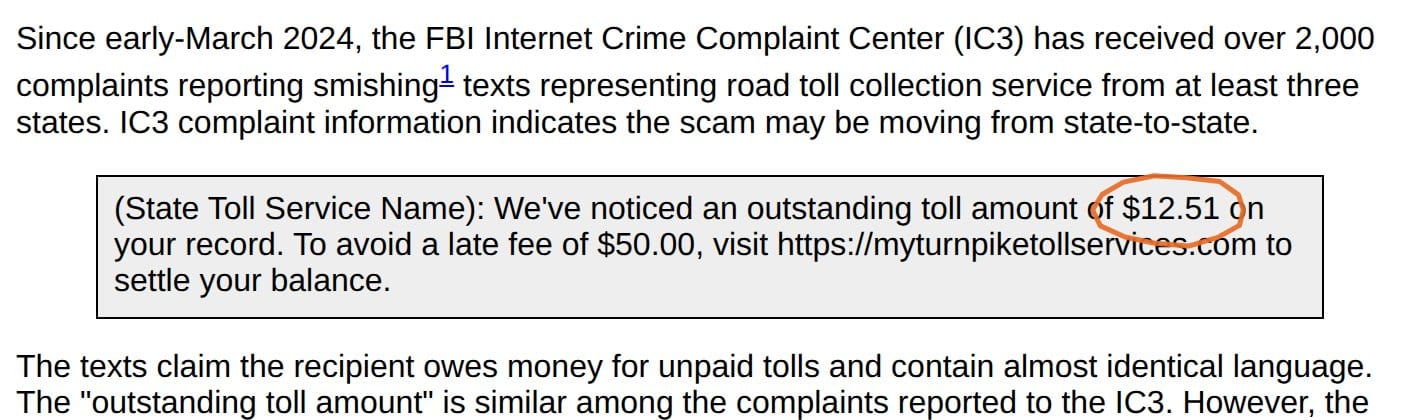
www.ic3.gov · 2026-08-28
Des responsables de plusieurs États l'ont affirmé haut et fort.
E-ZPass, ou Tolls by Mail, n'enverra jamais de SMS ni d'e-mail demandant des informations personnelles et sensibles.
Gouverneure Kathy Hochul, New York, février 2025
Ce même langage, usurpant l'identité d'E-ZPass, SunPass, FasTrak et TxTag précisément parce que ces noms semblent crédibles, est devenu si courant que le Scam Tracker du Better Business Bureau a enregistré plus de 800 signalements en mars 2025, SunPass de Floride étant la marque la plus usurpée. Le procureur général de Californie a émis une alerte aux consommateurs presque identique l'année précédente, affirmant clairement que « FasTrak ne demande pas de paiement par SMS avec un lien vers un site Web ». Les propres recommandations de la FCC font le même constat pour tous les exploitants de péage : ils n'utilisent généralement pas les SMS pour recouvrer des comptes en souffrance, et ils n'utilisent pas un langage menaçant pour vous brusquer.
Le préjudice financier ne vient pas vraiment des 6,85 $. C'est ce qui se produit après avoir touché le lien. Le clic vous amène sur une page conçue pour ressembler au véritable site de péage, où l'on vous demande de « vérifier » votre identité et d'entrer un numéro de carte pour régler le solde. L'escroc dispose désormais d'un numéro de carte valide, ainsi que de toutes les données personnelles saisies en cours de route. C'est le véritable gain, et c'est pourquoi le faux montant dû est toujours suffisamment faible pour sembler valoir la peine d'être payé juste pour se débarrasser de cet ennui.
Les SMS de péage ne sont également qu'une branche d'un arbre beaucoup plus vaste cette année. La même stratégie de smishing, une marque usurpée associée à un faux lien urgent, a alimenté une vague d'arnaques de voyage quasi identiques, notamment une vague d'arnaques sur WhatsApp usurpant Booking.com qui a touché les voyageurs avant les réservations estivales. Si vous souhaitez avoir une vue d'ensemble de ce qui cible activement les voyageurs en ce moment, notre guide des pires arnaques touristiques mondiales par région fait le point selon votre destination.
Pourquoi les voitures de location sont la cible idéale de cette arnaque
Une voiture de location rend cette arnaque plus crédible que presque tout autre déclencheur, car un mécanisme réel se cache derrière : il est tout à fait possible que vous ayez emprunté un péage sans payer en espèces, et vous ignorez précisément le montant exact. Les escrocs misent sur cette incertitude.
Voici ce qui se passe réellement lorsque vous conduisez une voiture de location sur une route à péage. La caméra de l'organisme de péage lit votre plaque d'immatriculation. Elle facture le propriétaire du véhicule, à savoir la société de location, et non vous. La société de location associe ensuite ce montant à votre dossier de location spécifique et prélève le montant sur la carte enregistrée dans votre dossier, en y ajoutant ses propres frais administratifs. Toute cette chaîne prend du temps. Avis indique clairement que « les frais e-Toll peuvent prendre de 4 à 8 semaines après la fin de la location pour être facturés sur votre carte de paiement enregistrée ». Il ne s'agit pas d'une rare exception, c'est le processus normal, et c'est pourquoi un SMS arrivant trois jours après avoir restitué la voiture et exigeant un paiement immédiat ne correspond en rien à la façon dont ces programmes facturent réellement.
Les conducteurs louant un véhicule hors de leur État d'origine constituent le groupe le plus exposé, tout simplement parce qu'ils sont les moins susceptibles de savoir quelles routes à péage ils ont réellement empruntées ou à quel programme, le cas échéant, ils ont souscrit lors de la prise en charge. Un conducteur local habitué à une autoroute familière sait généralement en moins d'une journée s'il a franchi un péage sans espèces en main. Quelqu'un qui a loué une voiture pour un voyage d'affaires ou des vacances en famille dans une ville inconnue n'a pas ce réflexe, de sorte qu'un SMS prétendant qu'il doit de l'argent pour un péage qu'il ne peut honnêtement pas exclure d'avoir emprunté paraît plausible plutôt que suspect. Cet écart entre « je ne m'en souviens pas » et « je suis certain de ne pas l'avoir fait » est précisément le terrain d'opération de cette arnaque. Cette même exploitation de l'incertitude et de l'urgence se manifeste dans une vague plus large de tactiques d'escroquerie généralisant les sites de réservation et les appels par voix clonée, que notre guide des arnaques de voyage assistées par l'intelligence artificielle en 2026 analyse plus en détail.
Les trois principales sociétés de location américaines gèrent chacune leur propre programme de péage, et la tarification diffère suffisamment pour qu'il soit utile de savoir à quoi vous avez réellement souscrit au comptoir :
| Programme | Mode de facturation | Tarif approximatif |
|---|---|---|
| Avis e-Toll | Frais de commodité facturés uniquement les jours où vous utilisez réellement une route à péage, en plus du péage au tarif affiché par l'organisme | 6,95 $ par jour de péage, plafonné à 34,95 $ par location |
| Enterprise TollPass | Modèle similaire par jour d'utilisation dans la plupart des régions | Environ 4,95 $ par jour de péage, plafonné à environ 34,65 $ par location en Californie, dans le Nord-Est et dans certaines autres régions ; les tarifs varient selon la région (jusqu'à 3,95 $/jour, plafonnés à 19,75 $, dans plusieurs autres États, et plus élevés à Chicago) |
| Hertz PlatePass | Soit un tarif journalier forfaitaire tout compris, soit, en cas de refus, les péages facturés au tarif le plus élevé sans réduction, majorés de frais administratifs pour chaque route empruntée | Varie selon le lieu de prise en charge ; le propre site de Hertz invite les locataires à appeler directement PlatePass plutôt que d'afficher un prix national unique |
Remarquez ce qu'aucun de ces programmes ne fait : aucun d'entre eux ne vous envoie de SMS avec un lien de paiement. Chacun d'eux prélève le montant sur la carte déjà enregistrée pour la location, automatiquement, plusieurs semaines après la fin du voyage. Si vous fixez un SMS vous demandant de payer manuellement un péage pour une voiture que vous avez déjà rendue, cela contredit à soi seul le mode de fonctionnement de la facturation des péages de toutes les grandes sociétés de location.
C'est également là que la consultation du relevé de votre banque ou de votre carte de crédit surclasse la lecture du SMS. Si la société de location vous a déjà facturé les frais de péage, vous verrez une ligne de facturation émanant de Hertz, Avis ou Enterprise, et non de « E-ZPass Services » ou d'une autorité de péage que vous ne reconnaissez pas. Si aucun débit de ce type n'apparaît encore, patientez. La facturation réelle des péages arrive après le voyage ; le SMS d'arnaque est conçu pour sembler beaucoup plus urgent que la réalité ne l'est jamais.
Les SMS de péage ne sont pas la seule arnaque liée aux voitures de location reposant sur une charge d'apparence plausible qui survient après la restitution des clés. Notre guide pour se défendre contre les arnaques aux dommages sur voitures de location aborde la version symétrique du même problème, à savoir les frais contestés qui arrivent après la restitution, avec une liste de contrôle avant/après que vous pouvez utiliser lors de la prise en charge. Conserver votre contrat de location avec le reste de vos documents, comme le ferait une liste de contrôle des documents de voyage, signifie que vous pouvez vérifier ce que vous avez réellement signé au lieu de deviner sous pression lorsqu'un tel SMS se manifeste. La section Documents de TripProf fonctionne de la même manière en pratique : elle stocke votre confirmation de location et votre contrat avec tous les autres éléments du voyage, et ses sections Sensibilisation aux arnaques et Guide de location de voiture vous apportent un contexte spécifique à votre destination avant que vous ne vous trouviez au comptoir, et non après la réception d'un SMS suspect.
Vous avez déjà cliqué sur le lien ou déjà payé. Et maintenant ?
Cliquer sur le lien ne revient pas à perdre de l'argent, et payer ne signifie pas que vous n'avez aucun recours. La rapidité prime sur tout le reste dans cette situation. Si vous avez payé avec une carte de débit, traitez le problème avec encore plus d'urgence : l'argent quitte généralement votre compte immédiatement au lieu de rester en tant qu'autorisation en attente que vous pouvez contester avant son règlement, et les délais de contestation sur les transactions par carte de débit ont tendance à être plus courts que sur les cartes de crédit.
- Appelez immédiatement l'émetteur de votre carte. Indiquez-lui que le paiement a été effectué via un site de phishing, demandez le blocage et le renouvellement de la carte, et contestez la transaction spécifique.
- Modifiez tout mot de passe que vous avez réutilisé sur ce faux site. Si vous avez saisi un identifiant que vous utilisez ailleurs, changez-le partout, en commençant par votre messagerie et vos comptes bancaires.
- Faites des captures d'écran du SMS et du faux site avant de supprimer quoi que ce soit. Vous aurez besoin du numéro de l'expéditeur et du lien pour les signalements ci-dessous.
- Signalez l'incident à la FTC sur ReportFraud.ftc.gov, et déposez une plainte auprès du Centre de plainte sur la criminalité sur Internet du FBI sur ic3.gov si vous avez partagé des informations financières.
- Contactez directement votre véritable organisme de péage, en utilisant le numéro figurant sur votre contrat de location ou le site officiel connu de l'organisme, afin de confirmer si vous devez réellement quelque chose.
- Transférez le SMS au 7726 (SPAM) pour permettre à votre opérateur de signaler le numéro.
Si vous n'êtes pas sûr de devoir réellement un péage, la solution la plus sûre reste la plus simple : connectez-vous directement au compte de votre société de location ou appelez le numéro du service client imprimé sur votre contrat de location, et non un numéro provenant du SMS. Consumer Reports a interrogé directement les organismes de péage américains et a constaté qu'à la date de publication, chacun d'eux a confirmé ne pas envoyer de SMS de recouvrement de paiement contenant des liens. Si un véritable avis de péage finit par arriver, il se présentera par courrier, ou sous la forme d'un débit déjà appliqué au compte ou à la carte enregistrée, et non sous la forme d'un lien urgent.
Foire aux questions
Un SMS concernant un péage E-ZPass ou SunPass impayé est-il parfois réel ?
Aucun grand organisme de péage n'envoie actuellement de SMS contenant un lien de paiement exigeant le règlement immédiat d'un solde. Si votre compte présente réellement un péage impayé, cela apparaît lorsque vous vous connectez directement à votre compte ou par le biais d'un avis envoyé par courrier, et jamais sous la forme d'un SMS non sollicité assorti d'un lien « payer maintenant ».
Pourquoi ces SMS frauduleux ciblent-ils spécifiquement les personnes qui viennent de rendre une voiture de location ?
Parce que c'est crédible. La facturation des péages de location prend réellement plusieurs semaines, et vous ne suivez pas précisément chaque route à péage empruntée. Les escrocs exploitent cette véritable incertitude au moyen d'une fausse facture aux accents urgents qui arrive plus rapidement que ne le ferait jamais un vrai prélèvement.
Comment puis-je savoir si je dois réellement un péage pour ma location ?
Vérifiez sur le relevé de votre carte si un prélèvement a été effectué par la société de location elle-même (Hertz, Avis, Enterprise ou similaire), et non par une autorité de péage. Ce débit est généralement affiché 4 à 8 semaines après la restitution du véhicule, conformément au calendrier publié par Avis pour son programme e-Toll.
J'ai déjà cliqué sur le lien mais je n'ai pas saisi d'informations de paiement. Suis-je en danger ?
Le plus grand risque survient si vous avez saisi des informations : numéro de carte, identifiants ou données personnelles. Si vous avez seulement cliqué et fermé la page sans rien taper, le principal risque est d'avoir confirmé à l'escroc que votre numéro est actif, alors surveillez les SMS ultérieurs et n'y répondez pas non plus.
Puis-je récupérer mon argent si j'ai déjà payé un faux SMS de péage ?
Parfois, si vous agissez rapidement. Appelez l'émetteur de votre carte le jour même, expliquez que le débit provient d'un site de phishing, et demandez une contestation ou un remboursement (chargeback). Plus vous le signalez vite, meilleures sont vos chances ; les banques fixent des limites strictes quant au délai au-delà duquel elles n'annulent plus une transaction frauduleuse.
Une société de location de voitures m'envoie-t-elle parfois un SMS direct concernant un péage ?
Certaines entreprises envoient des notifications de compte par SMS si vous avez accepté les alertes de leur programme lors de la prise en charge, mais ces messages proviennent du programme de péage lui-même (comme le compte PlatePass ou e-Toll auquel vous avez adhéré), mentionnent votre véritable numéro de location et ne vous demandent jamais de cliquer sur un lien pour « vérifier » vos informations personnelles. En cas de doute, consultez l'application ou le compte auquel vous avez réellement souscrit plutôt que le SMS.
Quels programmes de péage et États font l'objet du plus grand nombre d'usurpations d'identité ?
E-ZPass dans le Nord-Est et le Mid-Atlantic, SunPass en Floride, FasTrak en Californie, I-PASS dans l'Illinois et TxTag au Texas apparaissent le plus souvent dans les SMS frauduleux, selon les recommandations de la FCC, l'alerte aux consommateurs de la FTC de mai 2026 et les signalements du BBB Scam Tracker, principalement parce qu'il s'agit des systèmes de péage que la plupart des conducteurs reconnaissent déjà par leur nom.
Points clés à retenir
- Effectuez le contrôle en 10 secondes avant de toucher quoi que ce soit. Le numéro de l'expéditeur, le domaine du lien et le relevé de votre propre carte vous en disent plus en 10 secondes que le SMS lui-même ne le fera jamais.
- Les vrais frais de péage de location proviennent de la société de location, et non d'un SMS d'une autorité de péage. Avis, Hertz et Enterprise débitent tous directement la carte enregistrée, généralement plusieurs semaines après la fin du voyage.
- Toute demande concernant votre numéro de sécurité sociale, votre date de naissance ou votre numéro de carte complet est disqualifiante en soi. Aucun organisme de péage n'a besoin de ces informations pour recouvrer quelques dollars.
- Ne répondez jamais à un SMS de péage inconnu, pas même pour envoyer « STOP ». Toute réponse confirme que votre numéro est actif et mérite d'être ciblé à nouveau.
- Si vous avez déjà payé, appelez l'émetteur de votre carte le jour même. La rapidité prime sur tout le reste pour obtenir l'annulation d'un débit frauduleux.
- Conserver votre contrat de location et les détails de votre programme de péage dans un endroit accessible, comme le fait la section Documents de TripProf, permet de vérifier facilement ce à quoi vous avez réellement souscrit au lieu de deviner sous la pression.
Sources
- FTC : Les données montrent que les pertes signalées liées aux arnaques à l'imposture s'élèvent à 3,5 milliards de dollars en 2025 (juin 2026)
- Alerte aux consommateurs de la FTC : Nouvelles tendances dans les signalements d'arnaques à l'imposture (mai 2026)
- PYMNTS : La FTC tire la sonnette d'alarme alors que les arnaques à l'imposture volent 3,5 milliards de dollars (mai 2026)
- FCC : Comment repérer et éviter les SMS frauduleux de paiement de péage routier
- Centre de plainte sur la criminalité sur Internet du FBI : Arnaque par smishing concernant des dettes pour des services de péage routier (avril 2024)
- Better Business Bureau : Alerte aux arnaques concernant le phishing par SMS de péage routier (mars 2025)
- Procureur général de Californie Bonta : Alerte aux consommateurs sur les arnaques aux frais de péage par SMS (juillet 2024)
- Gouverneure de New York Hochul : Mise en garde concernant l'arnaque au SMS E-ZPass (février 2025)
- The Toll Roads (Californie) : Avis aux clients concernant une arnaque nationale de phishing par SMS
- Avis : Péages de voitures de location et services e-Toll
- Hertz : Paiement électronique des péages vidéo PlatePass
- Enterprise : FAQ sur le pass de péage pour voiture de location (Sud de la Californie)
- Consumer Reports : Ce SMS concernant des péages impayés est une arnaque
Dernière mise à jour: 30 août 2026
Continuer la lecture
Plus de conseils de voyage et de guides sélectionnés pour vous
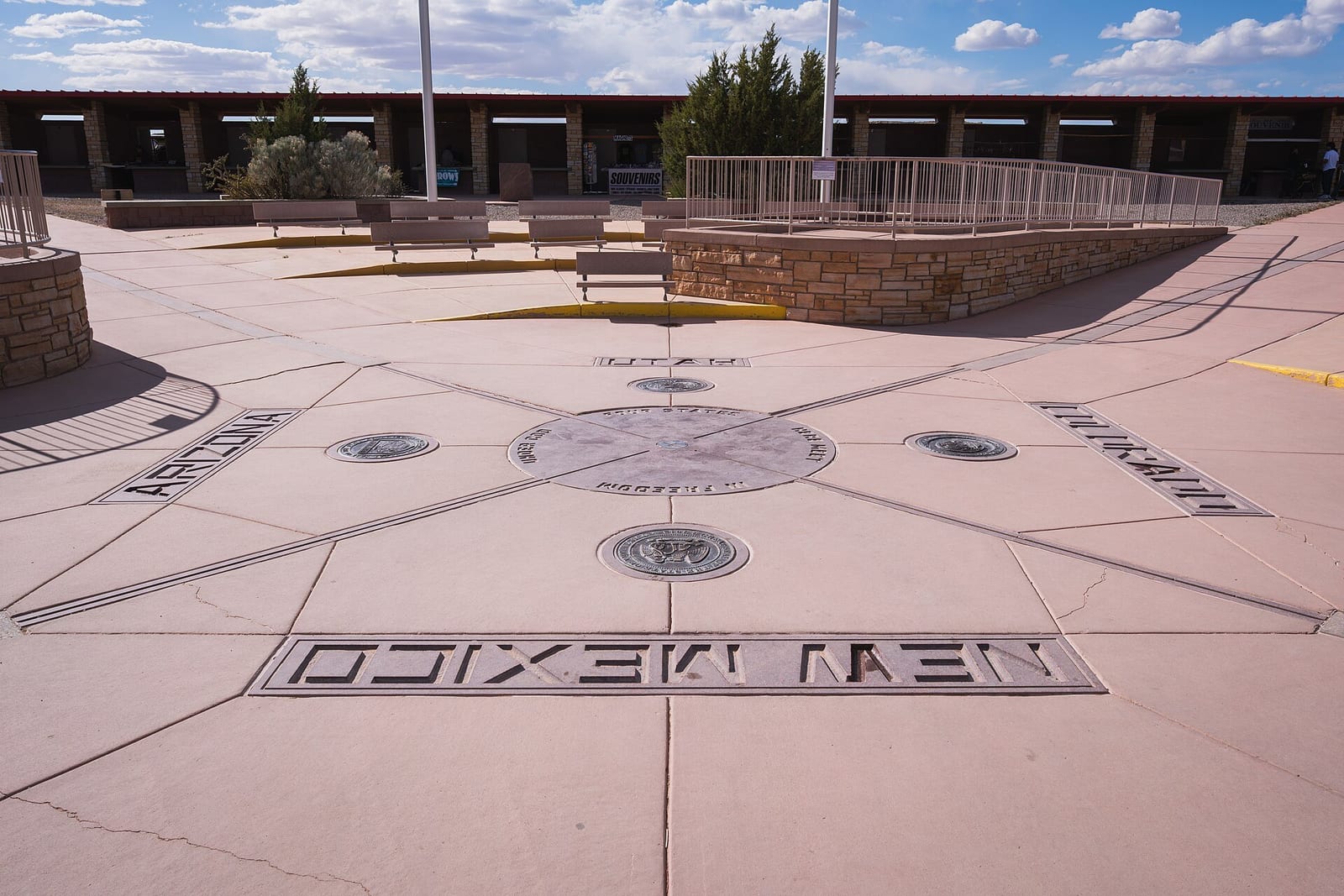
What counts as visiting a state? Layovers, drive-throughs and the rules 50-staters use
Only 2% of Americans name a plane change as the minimum that counts as visiting a state, while 27% set the bar at driving through. Here's a three-tier rubric, a lookup table for the edge cases from Four Corners to D.C., and one trip counted three ways.
Le faux site de billets SBB qui vole les données de carte de crédit et Twint des voyageurs
La police cantonale zurichoise a confirmé qu'un faux site de billets SBB dérobe les informations de paiement par carte de crédit et Twint des voyageurs le trouvant via une recherche Google classique. Voici comment le repérer et quoi faire si vous avez déjà payé.

Alerte aux faux sites ETA pour le Royaume-Uni : des arnaques facturent jusqu'à 900 € aux voyageurs autrichiens
De faux sites web ETA britanniques facturent des centaines d'euros aux voyageurs autrichiens et européens pour un formulaire qui ne coûte que 20 £. Voici comment fonctionne la vraie procédure et comment repérer une arnaque avant de payer.