
Day 1: Rathaus, Rathausmarkt, Bucerius Kunst Forum, the old-town churches St. Petri and St. Jacobi, Chilehaus, the Speicherstadt warehouses, Miniatur Wunderland and the Elbphilharmonie plaza. Day 2: St. Michaelis tower, the Elbe Tunnel, the Landungsbrücken, a U-boat museum, the Altona fish market and a seafood dinner, finishing at the Strandperle beach bar. Day 3: Franzbrötchen on Osterstrasse, the Nikolai memorial, Planten un Blomen's Japanese garden, the Kunsthalle and an evening on the Aussenalster. Book Miniatur Wunderland's timed slot in advance, it sells out fastest of anything on this route.
Día 1: The Old Town, the Warehouse District and the Elbphilharmonie
Day one stays inside the old town's tight grid: the Rathaus, two Gothic church towers and the Kontorhausviertel's brick office blocks, then across into the Speicherstadt's canals for Miniatur Wunderland and a sunset at the Elbphilharmonie plaza. Everything sits within a twenty-minute walk of the next stop.

Hamburg City Hall
Finished in 1897 after eleven years of building on 4,000 wooden piles sunk into marshy ground, the Rathaus holds 647 rooms. It's still Hamburg's working city hall, so guided tours of the staterooms (8 EUR for adults, 6 EUR with the Hamburg CARD) can be cancelled without notice when the senate is in session.

Bucerius Kunst Forum
This small exhibition space next to the Rathaus runs no permanent collection, just a rotating program of loan shows on subjects from Rembrandt to photography, usually three or four a year. Tuesdays cut the ticket roughly in half, useful if your visit lands mid-week. Budget an hour, the galleries wrap a single floor and rarely take longer.

St. Peter's Church
Hamburg's oldest parish church, first recorded in 1195. Rebuilt after the 1842 fire, it reopened in 1849, though the 132-metre tower wasn't finished until 1878. The bronze lion-head door handles on the west entrance date to 1342, making them the oldest surviving artwork in the city. That tower is climbable via 544 steps for anyone who wants a workout instead of the Elbphilharmonie queue.

St. James' Church
St. Jacobi's real draw is inside: the Arp Schnitger organ, built 1689 to 1693, is the largest surviving organ from before 1700 anywhere, with roughly 4,000 pipes across four manuals. Most of the original pipework survived WWII bombing, and a 1989-to-1993 restoration by Jürgen Ahrend brought the sound back. It's played at every Sunday service.

Museum of Art and Crafts Hamburg
Germany's museum of arts and crafts is closed Mondays, spanning furniture, fashion, ceramics and Art Nouveau across four floors. At a packed pace, pick one wing, it's five minutes from St. Jacobi.

Chilehaus
Fritz Höger's 1924 office block gets its ship's-prow point from the site's sharp street corner, an effect sharpened by dark clinker brick laid with every seventh course twisted 45 degrees for a shimmer. It's named for shipping magnate Henry Sloman's Chilean saltpeter fortune. Along with the surrounding Kontorhausviertel, it's been a UNESCO World Heritage Site since 2015. There's no public interior, view it from the street.

Wasserschloss Speicherstadt Hamburg
Built 1905 to 1907 at the point where two canals meet, the Wasserschloss was the only building in the Speicherstadt warehouse district allowed as a residence, home to the winch keepers who ran the cargo hoists. It's been protected as a heritage building since 1991 and now doubles as a wedding venue for Hamburg-Mitte's registry office. Photograph it from the bridge for the classic angle.
Speicherstadt Kaffeeroesterei
Set in an 1888 warehouse on Kehrwieder, this working coffee roastery runs live roasting demonstrations roughly eight times a day and sells from its own factory shop, a fitting stop given 200 years of Hamburg's coffee trade.

Miniatur Wunderland
The world's largest model railway packs nine themed sections, including a working airport with planes on cables, into a former warehouse. Online tickets are tied to a set entry window, book your slot before arriving.

Elbphilharmonie
Herzog and de Meuron's glass wave sits on a converted 1963 cocoa warehouse; the concert hall opened in January 2017, nearly ten years and about ten times its original budget later. The Plaza viewing deck at 37 metres is free and open daily, reached by the Tube, an 82-metre curved escalator that takes about four minutes end to end. Same-day plaza tickets go fast, arrive early.
Carls Brasserie
Carls Brasserie sits right on the Elbphilharmonie plaza, a two-minute walk from where you just came down the escalator. German and European brasserie food, a relaxed room with harbor views, and a menu that does not require a reservation booked weeks out, though calling ahead on weekends helps.
Día 2: St. Pauli, the Harbor Tunnel and Altona's Fish Quarter
Day two trades churches for harbor grit: St. Michaelis first, then the Elbe Tunnel under the river, a fish sandwich at the Landungsbrücken, a Cold War submarine, and Altona's fish market district for a proper seafood lunch. It ends at Strandperle, a beach bar with container ships for scenery.

St. Michaelis Church, Hamburg
Der Michel's current tower dates to a 1906 fire and a six-year rebuild finished in 1912; incendiary bombs gutted the interior again in 1944 to 1945. The 132-metre spire's viewing platform sits at 83 metres and costs 8 EUR by lift. The crypt below holds over 2,000 burials, including composer Carl Philipp Emanuel Bach.

Millerntor-Stadion
Home to FC St. Pauli and their skull-and-crossbones flag, first flown here by a fan in 1986. The 29,546-capacity ground sits right against the Reeperbahn; even without a match on, the exterior and club shop are worth the short detour.

Elbe Tunnel
Opened in 1911 as continental Europe's first river tunnel, the 426-metre tube runs 24 metres under the Elbe to link the docks with Blohm and Voss shipyard workers on the far bank. Pedestrians and cyclists still ride the original lifts down and cross for free, day or night. Walk through for the tiled entrance halls alone.
Brücke 10
A fish-sandwich stand right on the Landungsbrücken with harbor views of the cranes and passing ferries. Order a Fischbrötchen with matjes herring, or the vegan version, both served fast at a walk-up counter. Seating is outside on the jetty, so this works better as a quick harbor-side bite than a sit-down meal.

B-515
This 90-metre Soviet Tango-class submarine, built in 1976 for espionage patrols off the US coast, is one of the largest hunting-and-espionage submarines ever built. You climb through the actual cramped crew quarters and control room.
Altonaer Fischmarkt (Fischauktionshalle)
Hamburg's fish market has traded from this spot since 1703, though today's Fischauktionshalle hall dates to 1896. Vendors still shout deals on fish, fruit and flowers to a crowd that hasn't gone to bed yet, while a brass band plays inside the hall. If your dates don't line up with a Sunday, the red-brick hall itself is still worth a look from outside.
Fischereihafen Restaurant
Run by the Kowalke family since 1981 on the site of Altona's old fish harbor, this is Hamburg's classic splurge for seafood: matjes herring, Finkenwerder scholle, and a raw bar out front. The balcony tables catch the same Elbe views as the harbor cruises, minus the boat. Reservations matter on weekend evenings.

Altonaer Museum
A regional history museum covering northern Germany's maritime and rural life, from ship figureheads to a reconstructed farmhouse room. It's smaller and quieter than the big-name museums downtown, closed Tuesdays, and pairs naturally with the fish-market history you've just walked past. Budget under two hours, the collection doesn't sprawl.
Strandperle
This Övelgönne beach bar started life as a milk hall in the early 1900s and reopened as a snack stand in 1949; locals now treat it as an institution. Grab a table in the sand or on the wooden planks and watch container ships glide past, a genuinely odd mix of beach and heavy industry. It gets packed on warm evenings, arrive before sunset for a seat.
Día 3: Concert Halls, Planten un Blomen and the Alster
Day three starts with a detour to Eimsbuettel for Hamburg's most-awarded Franzbroetchen, then doubles back to the old town's second ruined church tower, the culture mile of concert halls, Planten un Blomen's Japanese garden, the Kunsthalle, and an evening loop around the Aussenalster before dinner in the Schanzenviertel.
Kleine Konditorei (Osterstrasse)
This Eimsbüttel bakery on Osterstrasse has been baking since 1964 and twice won Hamburg's official Franzbrötchen competition, in 2013 and 2015. Franzbrötchen, a cinnamon pastry unique to the city, is the thing to order here with a coffee before the day properly starts. It opens early, from 6am on weekdays, so it fits neatly before the morning's churches.

St. Nicholas Church, Hamburg
Completed in 1874 at 147 metres, St. Nikolai was briefly the tallest building on earth until Rouen Cathedral overtook it two years later. Firebombing in the July 1943 raids gutted the church, leaving only the spire standing, and the ruins were deliberately never rebuilt, kept instead as a war memorial. A glass lift climbs to a platform at 76 metres.

Laeiszhalle
Funded by shipping magnate Carl Laeisz's will and opened in 1908 as Germany's largest concert hall of its day, designed by the same architects behind the Rathaus. Richard Strauss and Stravinsky both conducted here.

Hamburg State Opera
Home to the Hamburg Ballett, led by choreographer John Neumeier from 1973 until 2024, one of the longest tenures of any company director in dance. The current building dates to 1955, rebuilt after WWII bombing.

Planten un Blomen
This free city park holds the largest Japanese garden in Europe alongside a tropical greenhouse. From May to late September, free water-light concerts run nightly, no ticket or registration needed. Outside that window it's simply a good place to sit down after two mornings of churches and museums. Skip it if it's pouring, the Kunsthalle two stops later is the better wet-weather swap.

Hamburger Kunsthalle
Hamburg's main art museum runs from medieval altarpieces through Caspar David Friedrich to contemporary work, split across a historic building and a 1990s cube extension. It's closed Mondays. Thursday evenings cut the ticket price roughly in half, a good option if you're touring on a tighter budget. Give it a full two hours, the collection is genuinely large.

Deutsches Schauspielhaus
Opened in 1901 in a neo-Baroque hall seating around 1,200, this is one of Germany's largest spoken-word theatres. It runs a busy repertory season year-round, and the ornate facade on Kirchenallee is worth the detour.

Aussenalster
At 1.64 square kilometres, the Aussenalster is Hamburg's sailing and rowing lake, ringed by parkland and, on the up-and-down winds off the surrounding buildings, notoriously tricky to sail. The Hamburger und Germania Ruder Club, founded 1836, held Germany's first-ever rowing regatta right here in 1844. Walk or rent a pedal boat for the classic view back toward the church spires.
Bullerei
TV chef Tim Mälzer's restaurant occupies a converted 1900s cattle-market hall in the Schanzenviertel, serving grilled meat and fish since 2009. The attached Deli does casual lunch from noon; the main restaurant kitchen opens at 5:30pm and books out well ahead on weekends. It's a fitting last dinner: unpretentious, loud and very Hamburg.
Mejor época para visitar
Qué hacer en Hamburgo
Festivales, conciertos y exposiciones durante tu viaje.
Reeperbahn Festival
FilmFest Hamburg
German Unity Day
Día festivo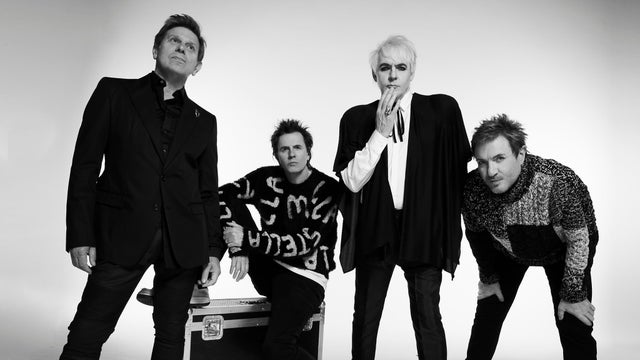
Duran Duran
Reformation Day
Día festivoHamburger Winterdom
Historischer Weihnachtsmarkt (Rathausmarkt)
Christmas Day citywide closure
Christmas Day
Día festivoSt. Stephen's Day (Boxing Day)
Día festivoNew Year's Day
Día festivoTours guiados
Algunos enlaces pueden generarnos una comisión, sin coste adicional para ti.
Antes de ir
- Tickets are bound to a specific entry window, and groups compete for the same limited slots on weekends. Reserve online before you land, especially if there are more than four of you.
- Nine paid stops add up fast per person, museums and church towers all charge separately. Agree who covers what before you go, and run a shared kitty so nobody's doing math at every ticket counter.
- If your dates land on Sep 16 to 19, reserve accommodation well ahead, especially for groups needing multiple rooms near St. Pauli or the centre; the festival fills the neighborhood's beds fast.
- It bundles free HVV transport with up to 50 percent off at over 150 attractions, and a group card covers up to five people sharing one ticket, cheaper than five separate passes.
- The Michel's lift (8 EUR) and the Nikolai memorial's glass lift (7 EUR) are different buildings with separate tickets, easy to conflate when planning. Only climb both if towers are really your thing.
- Hamburg's climate runs damp most of the year; a light rain jacket does more good than an umbrella on windy harbor walks between the Landungsbrücken and Strandperle.
- Both restaurants get busy on weekend evenings and neither holds large tables without notice; call or book online a day or two ahead if there are more than two of you.
- St. Michaelis, St. Nikolai and the Elbphilharmonie Plaza are lift- or escalator-accessible. St. Peter's 544-step tower is stairs only, worth knowing if climbing isn't for everyone in your group.