World Cup 2026 Alcohol Rules: Where Fans Can (and Can't) Drink
Key Highlights
- 1
- 2
- 3
+4 more in the takeaways below
The World Cup kicks off tomorrow, and somewhere a Dutch fan is about to learn that the beer he's legally carried through a dozen European city centers can get him fined on a New York sidewalk. World Cup 2026 alcohol rules change every time you cross a border, and sometimes every time you cross a state line: three drinking ages, passport-only ID checks, tailgating bans, and brand-new 4 a.m. bar laws. Here's the full map.
Beer is sold in stadium seats across all three host countries, a reversal of Qatar 2022. But the rules around it shift constantly: the US drinking age is 21 and many venues accept only a physical passport as ID for foreign fans. Street drinking is illegal in nearly every host city, with two exceptions: Kansas City's Power & Light District and any Massachusetts towns that opt into the state's new public-drinking districts. Tailgating is banned at several stadiums. New York, Philadelphia, and Ontario extended last call to 4 a.m. through the tournament, Kansas City goes to 5 a.m. in permitted districts, and Vancouver kept its regular hours.
Three Countries, Three Sets of Alcohol Rules
The 2026 World Cup is the first hosted across three countries, and alcohol law doesn't travel with your ticket. The US drinking age is 21 in every state. Canada's is 19 in both host provinces, Ontario and British Columbia. Mexico's is 18. Open-container rules, accepted forms of ID, and closing times then change again at the state, provincial, and city level, so a habit that's fine in Mexico City can cost you money in Boston.
Start with the ages, because they trip up more fans than anything else. The US minimum of 21 is federal-highway-funding-enforced and applies in all 50 states (CDC). Canada sets drinking age by province: 19 in Ontario and British Columbia, the two hosting provinces, though it drops to 18 in Alberta, Manitoba, and Quebec if your travels take you there. Mexico's minimum purchase age is 18 nationwide, per the IARD's minimum legal age database. A 19-year-old in your travel group can drink legally at the Toronto and Mexico City matches and not at a single US venue.
One planning heuristic carries you through all of it: when two rules could apply, the stricter one wins. If you're not sure whether a plaza is part of a fan festival footprint, treat it as public street. If you're not sure whether a venue takes foreign ID, assume it doesn't and bring the passport. Nobody has ever had a match ruined by being too conservative about where they opened a can.
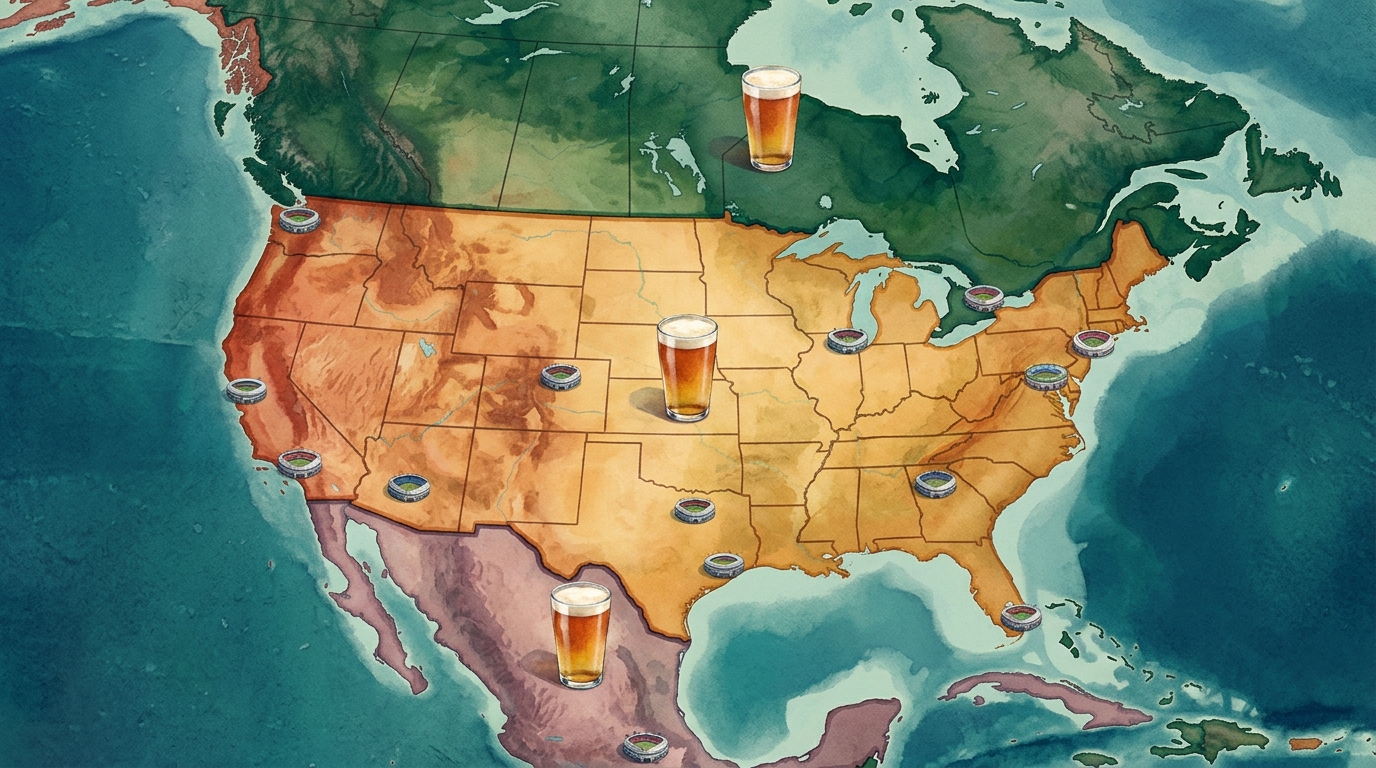
Here's the matrix worth screenshotting before you fly:
| Rule | United States | Canada (ON / BC) | Mexico |
|---|---|---|---|
| Drinking age | 21 everywhere | 19 in both host provinces | 18 |
| ID for foreign fans | Physical passport at many venues; foreign licenses often refused | Passport recommended; checks less strict | Official ID required at purchase; passport safest |
| Drinking on the street | Illegal in most host cities; district-level exceptions (see below) | Illegal outside licensed areas | Illegal; fines or up to 36-hour detention in CDMX |
| Beer in stadium seats | Yes | Yes | Yes |
| Last call during the tournament | Varies: 2 a.m. to 5 a.m. by city | 4 a.m. in Ontario; standard hours in BC | Varies by venue and borough |
The takeaway from that table: the stadium experience is broadly consistent, and everything outside the stadium is not. The rest of this guide walks through where the differences actually bite, starting with the one that ruins the most evenings.
Bring Your Passport: The ID Rule That Catches Foreign Fans
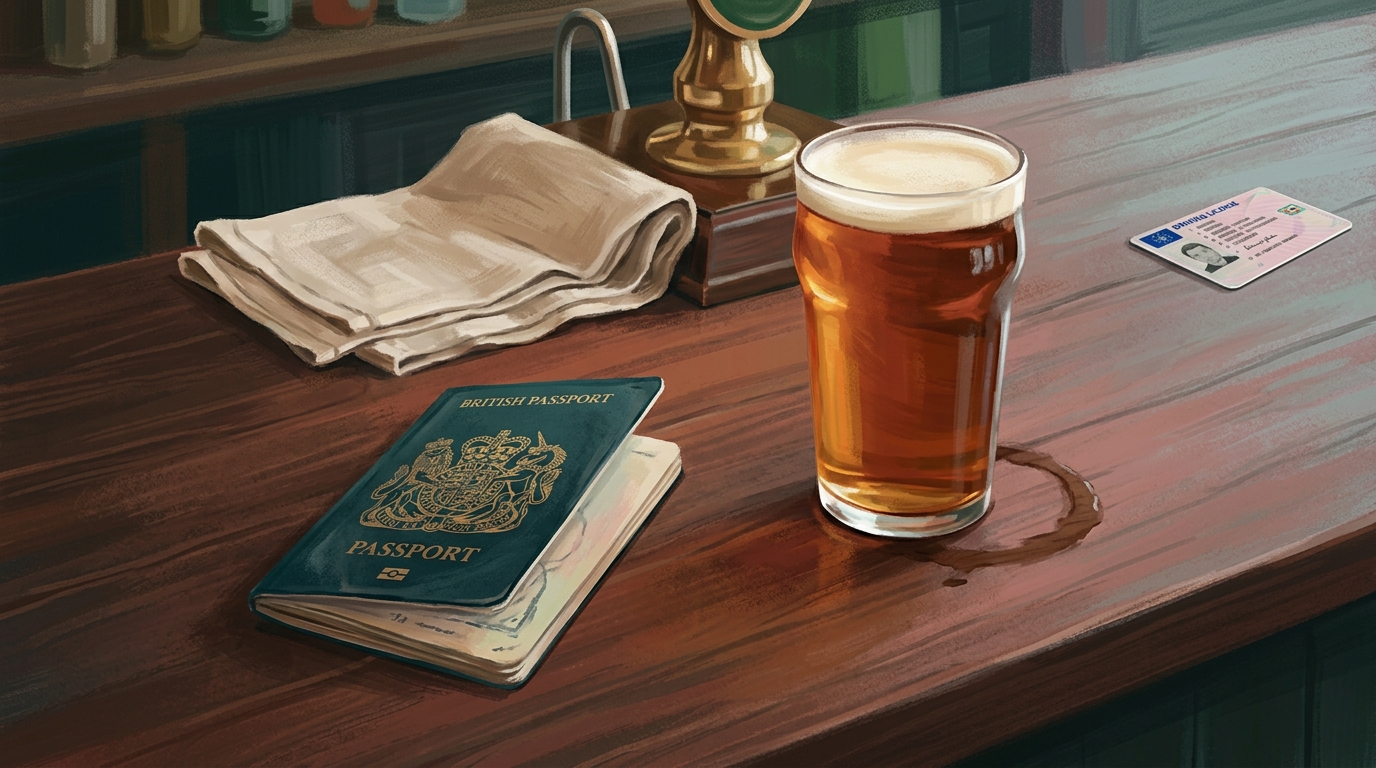
If you're a visiting fan in the US, carry your physical passport whenever you plan to buy alcohol. FindLaw's host-city legal roundup flags that in Dallas and Arlington, international visitors need a physical, original passport, and foreign driver's licenses will not be accepted. The same applies in Boston, Houston, and Miami. A photo of your passport on your phone usually won't cut it either.
This surprises Europeans more than any other rule. At home, a national ID card or driving licence works everywhere, and nobody cards a 35-year-old. In much of the US, Texas explicitly included, bartenders and servers face personal penalties for serving underage drinkers, so they card aggressively and reject anything they can't verify. A German driving licence means nothing to a 22-year-old server in Arlington who has never seen one. California is slightly more flexible: passports (US or foreign), US driver's licenses, and US military IDs all work for the Bay Area and Los Angeles matches, but foreign licenses still don't (FindLaw).
Treat your passport like your match ticket: it comes with you to every game and every bar, even if you're visibly over 40. Use a zipped inner pocket or a neck wallet, and stash a photocopy plus a digital scan separately in case it goes missing.
Canada is more relaxed in practice, but a passport is still the only ID guaranteed to work at Toronto and Vancouver venues. Mexico's bars are famously lighter-touch on carding, but stadium concessions during a FIFA tournament are a different animal, and your passport is again the only document that settles every question.
The New 4 a.m. Bar Laws, City by City
Eight US states and one Canadian province changed their liquor laws for this tournament. New York's is the biggest: Governor Hochul signed legislation on June 9, 2026 allowing bars and restaurants statewide to serve until 4 a.m. from June 11 through July 20, overriding stricter county closing times. The law expires July 21 and doesn't apply where the State Liquor Authority has placed stricter hours on an individual licence.
One nuance fans keep getting wrong online: New York City bars could already legally serve until 4 a.m. The new law matters most in the rest of the state, where counties had set earlier cutoffs. So your Long Island or Hudson Valley sports bar can now match Manhattan hours for the tournament, though nothing forces any bar to stay open later. State officials expect 1.2 million visitors in the New York/New Jersey region during the tournament, so plenty will.
The wider picture, per AP reporting: Kansas, Missouri, New Jersey, Pennsylvania, Rhode Island, and Washington all approved extended alcohol-hours measures ahead of the tournament, with many requiring municipalities or individual businesses to opt in. Massachusetts made it eight on June 8, when Governor Healey signed a bill letting towns extend last call to 3 a.m. through July 31, useful if you're staying in Boston for the Gillette matches. New Jersey's version is a municipal opt-in running June 11 through July 19, final day included (Philadelphia Inquirer). Here's how the host cities shake out:
| City / Region | Normal last call | During the World Cup | Status |
|---|---|---|---|
| New York (statewide) | Varies by county | 4 a.m., June 11-July 20 | Extended |
| Boston / Massachusetts | 2 a.m. | 3 a.m. where towns opt in, through July 31 | Extended |
| New Jersey (statewide) | Varies by town | Municipal opt-in to extended hours, June 11-July 19 | Extended |
| Philadelphia | 2 a.m. | 4 a.m. with a permit, June 11-July 20 | Extended |
| Kansas City | 3 a.m. in entertainment districts | Up to 5 a.m. for permitted bars | Extended |
| Toronto / Ontario | 2 a.m. | 4 a.m., June 11-July 19 | Extended |
| Vancouver / BC | Varies by licence | Standard hours; ~30 bars individually approved to 4 a.m. | Unchanged |
Philadelphia's version came through a bipartisan bill Governor Shapiro signed covering the World Cup, the MLB All-Star Game, and America's 250th birthday celebrations. Bars need a temporary "Philadelphia 250" permit from the Pennsylvania Liquor Control Board, with a $500 application fee, plus a mandatory in-person training session for ownership and management, to pour until 4 a.m. (The Hill, 6abc). Not every bar applied, so check before you settle in for a midnight kickoff.
Two caveats apply across every extended-hours city. None of these laws force a single bar to stay open later, and plenty won't bother on quiet group-stage nights, so confirm closing times before committing to a 2 a.m. half-time. And serving rules still apply at 3:45 a.m. exactly as they did at 9 p.m.: visibly intoxicated fans get cut off, and bouncers in World Cup host cities have rarely been busier.
Kansas City went furthest. Bars in the Plaza, Midtown, downtown, River Market, and 18th and Vine districts could apply for permits to serve until 5 a.m. from June 11 through July 19, KSHB reports, with applications closing June 8. The AP notes the late-late tier requires a security plan filed with police.
Canada split down the middle. Ontario announced that licensed bars and restaurants across the province can serve until 4 a.m. from June 11 to July 19, two hours past the usual 2 a.m. last call, and 27 LCBO retail stores across the Greater Toronto Area and Ottawa get extended hours for the same window (CBC News). British Columbia declined a blanket extension for a refreshingly honest reason: time zones. Vancouver's latest kickoff is 9 p.m. Pacific, so every match ends within existing service hours. Downtown Vancouver bars can still apply individually for extensions to 4 a.m., and the province's Liquor and Cannabis Regulation Board had already approved about 30 of them (CBC News).
Why does a 4 a.m. last call matter for a football tournament? Because the schedule spans four time zones. A 9 p.m. kickoff in Vancouver is a midnight kickoff in Toronto and New York, which means full-time around 2 a.m. Eastern. Without the extensions, East Coast fans would be watching knockout-round penalties on the sidewalk. If you're still piecing together where to base yourself for all this, our World Cup 2026 budget travel guide covers the cost side of host-city hopping.
Street Drinking Is Illegal Almost Everywhere (With Two Exceptions)
There is no European-style walk to the ground with a beer in hand at this World Cup, with two narrow exceptions. Drinking in public remains illegal in nearly every host city across all three countries. The first exception is Kansas City's Power & Light District, where a 2005 Missouri law lets you carry a drink between bars in a logo-marked plastic cup, and only inside the district's pedestrian footprint. The second arrived two days before kickoff: Massachusetts Governor Healey signed a law on June 8 letting cities and towns create designated public-drinking districts through July 31. Whether Boston actually draws any on a map was still an open question as of June 10, so check the city's announcements before treating a Seaport sidewalk like a beer garden. Everywhere else, the pint stays in the bar, the fan festival, or the stadium.
New York City's ban is explicit: Administrative Code § 10-125 prohibits drinking or carrying an open container with intent to drink in any public place, with a fine of up to $25. There was a real push to change this for the tournament. The HOST Act, a bill that would have let cities create temporary "entertainment zones" for legal outdoor drinking during the World Cup, got genuine momentum and plenty of press (Time Out New York). It didn't happen: bill A10339 was referred to committee in February and never advanced. What New York did instead is the World Cup One-Day Permit, which lets licensed venues and event organizers extend service into adjacent outdoor areas and run large viewing events. Legal outdoor drinking exists, but only inside permitted footprints.
Don't assume a relaxed vibe means relaxed law. In Mexico City, drinking on the street ("en la vía pública") carries fines of 2,375.94 to 3,394.20 pesos (21-30 UMA at 2026 rates), detention of 25 to 36 hours, or 12 to 18 hours of community work under the city's civic culture law (Infobae). That's a rougher outcome than New York's $25 ticket.
Boston is the same story with different paperwork: city code section 16-12.28 prohibits drinking alcoholic beverages in public, and Gillette Stadium's own World Cup matchday guidance reminds fans that open containers in public spaces are illegal in Massachusetts (NBC Boston). Ontario and BC keep drinking to licensed premises, patios, and private residences. The pattern holds tournament-wide, so the safe default in any host city is simple: if you're not inside a licensed venue, a fan festival, or the stadium, don't open it.
Keeping three countries' worth of this straight is exactly the kind of thing that falls apart on a multi-city trip. Destination guides in tools like TripProf include a dedicated alcohol and smoking rules section for each stop, which beats re-Googling local law from a stadium queue every few days.
Tailgating: Banned at the Stadiums That Invented It
Tailgating is banned or impossible at several US World Cup venues. Fox News reported that Arrowhead Stadium in Kansas City, Gillette Stadium outside Boston, and Lincoln Financial Field in Philadelphia are among the host sites where fans won't be allowed to tailgate, and MetLife Stadium's usual gameday parking lots are closed to fans entirely, which kills the tradition there by default.
FIFA's position is more slippery than the headlines suggested. After the initial reports, FIFA clarified it has no universal anti-tailgating policy; restrictions are site-specific decisions made with host-city public safety authorities (Bleacher Report). But the venue-level rules are concrete. Gillette Stadium's official matchday checklist spells it out:
"No Tailgating: Please note that the traditional 'tailgating' (eating and drinking around parked cars) is not permitted for these events."
The culture clash here is genuinely funny. American fans are furious that a parking-lot ritual older than the Super Bowl is suspended at its own temples. European and Latin American fans are mostly discovering that drinking in a parking lot was ever a protected tradition in the first place. Kansas City wrote the modern tailgate playbook - and Arrowhead is one of the venues telling fans to leave the grill at home this summer.
Practical upshot: don't build your matchday around the car. Arrive by transit or rideshare where you can, do your pre-match drinking at a fan festival or a permitted bar district, and check the specific venue's official matchday page the week of your game, because these policies are local and have already shifted once.
Inside the Stadium: Beer Yes, Cash No
You can buy beer in your seat at World Cup 2026 matches in all three host countries. That's a clean break from Qatar 2022, when stadium beer sales were banned two days before kickoff. The flip side exists too: some venues, including Vancouver's BC Place, will offer designated alcohol-free seated areas for fans who want a different matchday (Football Ground Guide).
Now the part your wallet needs to hear. At England's pre-tournament warm-up against New Zealand at Tampa's Raymond James Stadium on June 6, the stadium menu listed domestic beer at $16.75, premium beer at $18, an "ultra premium double cocktail" at $26.50, and a litre of water at $8.75, with all prices excluding tax (GiveMeSport). Tampa isn't a World Cup venue, but it's a fair preview of US stadium pricing this summer.
It was cheaper to get a drink in Qatar.
- Simon Mullock, football writer, via GiveMeSport
Two US-specific habits make the final bill worse than the menu. First, listed prices exclude sales tax, which gets added at the till. Second, tipping: at stadium bars and counters, a dollar or two per drink is customary, and at sit-down bars 18-20% is the norm. Run the real math on that premium beer: $18 on the menu, sales tax added at the till, a tip on top, and you're past $21 a pour. The menu says $18 - the card reader says more. Budget for it rather than being freshly outraged at every transaction. Mexico runs cheaper across the board, though FIFA's commercial takeover of the renamed Mexico City Stadium reaches surprising depths: the organization even barred longtime box owners from bringing in their own food and drinks, a rule box owners fought to a court injunction (Mexico News Daily). Outside drinks are not coming through any gate, anywhere.
Then there's payment. Major US venues are fully cashless. Gillette Stadium states it's completely cashless and runs five cash-to-card kiosks that convert your bills to prepaid Visa cards free of charge. SoFi Stadium in Los Angeles is card-only with cash-to-card kiosks on Level 4 and at the entry plaza (SoFi Stadium A-Z guide). If your home bank card charges foreign transaction fees, a tournament's worth of $18 beers adds up; our Revolut vs Wise vs your bank card comparison breaks down which card to tap all summer. And before you plan what to carry to the gate at all, read our World Cup heat survival guide, which covers stadium entry and carry-in rules in detail.
Your matchday pocket kit, then, looks like this:
- Physical passport (not a photo of it)
- Fee-free card or phone wallet for cashless concessions
- Match ticket and venue-specific matchday rules checked that week
- Transit plan home that works at last call, whether that's 2 or 4 a.m.
- Zero outside alcohol, zero open containers on the walk
A 4 a.m. last call is not a 4 a.m. drive. US states enforce roughly 0.08 BAC limits with zero tolerance for drivers under 21, BC issues roadside penalties from 0.05, and Mexico City runs random alcoholímetro breathalyzer checkpoints where failing means immediate detention. Every host city in this guide has late-night transit or rideshare. Build your way home into the plan before the first pint, not after the last one.
Frequently Asked Questions
Can you drink beer at World Cup 2026 stadiums?
Yes. Beer and other alcoholic drinks are sold at concessions and can be consumed in general seating at venues across the US, Canada, and Mexico. Some stadiums, including Vancouver's BC Place, also offer designated alcohol-free seated sections. Outside alcohol is prohibited at every venue.
Is my driver's license enough to buy alcohol in the US as a foreign fan?
Usually not. Cities including Dallas, Arlington, Boston, Houston, and Miami require international visitors to show a physical, original passport; foreign driver's licenses are not accepted. California accepts foreign passports but still rejects foreign licenses. Carry your actual passport, not a photo of it.
Can I drink on the street walking to the stadium?
Almost never. Open-container and public-drinking laws apply in nearly all host cities. New York City fines up to $25 under its administrative code, while Mexico City penalties run to fines of 2,375.94-3,394.20 pesos (21-30 UMA at 2026 rates), detention of 25 to 36 hours, or 12 to 18 hours of community work. The two exceptions: Kansas City's Power & Light District allows open containers in logo cups inside the district, and Massachusetts towns can opt into new public-drinking districts through July 31. Everywhere else, drink at licensed venues, fan festivals, or inside the stadium.
Is tailgating allowed at World Cup 2026 matches?
Not at several major venues. Arrowhead, Gillette, and Lincoln Financial Field have no-tailgating rules for their matches, and MetLife Stadium's usual fan parking lots are closed. FIFA has no universal tailgating policy, so always check your specific venue's official matchday page.
What's the drinking age in the USA, Canada, and Mexico?
The US drinking age is 21 in all states. Canada's host provinces, Ontario and British Columbia, set it at 19, while Alberta, Manitoba, and Quebec allow 18. Mexico's minimum purchase age is 18 nationwide. An 18-year-old fan can drink legally in Mexico City but nowhere in the US.
How late are bars open during the World Cup?
It depends on the city. New York State, Philadelphia (with permits), and all of Ontario allow service until 4 a.m. during the tournament. Permitted Kansas City bars can pour until 5 a.m. Vancouver kept standard hours, with roughly 30 downtown bars individually approved for 4 a.m. closings.
Can I pay cash for beer at the stadiums?
Mostly no in the US. Major venues like Gillette and SoFi are fully cashless, with cash-to-card kiosks that convert bills into prepaid cards at no fee. Bring a contactless card or phone wallet, ideally one without foreign transaction fees.
Key Takeaways
- Three drinking ages apply at this World Cup: 21 in the US, 19 in Ontario and BC, 18 in Mexico. The strictest local rule always wins.
- Carry your physical passport for every drink purchase in the US; foreign driver's licenses are widely refused, including in Dallas, Arlington, Boston, Houston, and Miami.
- Street drinking is illegal in nearly every host city. New York's "entertainment zones" bill died in committee. The two exceptions: Kansas City's Power & Light District (open containers legal in logo cups) and any Massachusetts towns that opt into the state's new public-drinking districts.
- Last call moved to 4 a.m. in New York State, permitted Philadelphia bars, and all of Ontario through the tournament; permitted Kansas City bars go to 5 a.m.; Vancouver stays on normal hours.
- Tailgating is off at Arrowhead, Gillette, and Lincoln Financial Field, and MetLife's fan lots are closed. Plan pre-match drinks in bar districts or fan zones instead.
- US stadium drinks run $16.75-$26.50 before tax and tip, venues are cashless, and outside alcohol is banned everywhere, so bring a fee-free card and a sense of humor.
- Rules shift every time you change cities. A personalized guide app like TripProf keeps each destination's alcohol rules, tipping norms, and payment quirks in one place for every stop on your route.
The whistle blows tomorrow. Know the local rulebook, and the only surprise left is the football.
Sources
- Governor of New York: legislation extending bar and restaurant hours to 4 a.m. statewide, June 11-July 20, 2026, and regional visitor projections
- New York State Liquor Authority: World Cup One-Day Permit for outdoor service extensions and viewing events
- New York State Senate: bill A10339 (HOST Act) status, referred to committee February 2026
- Time Out New York: the HOST Act entertainment-zone proposal for outdoor drinking
- NYC Administrative Code § 10-125: prohibition on alcohol consumption in public places
- ABC News / Associated Press: states approving extended bar and restaurant hours for the tournament
- The Hill: Pennsylvania law allowing Philadelphia bars to serve until 4 a.m.
- 6abc Philadelphia: Philadelphia 250 permit process and fees
- KSHB Kansas City: 5 a.m. extended-hours permits in entertainment districts
- CBC News Toronto: Ontario's 4 a.m. last call and extended LCBO hours
- CBC News British Columbia: BC's decision against a blanket extension and individual licence approvals
- Mass.gov: Governor Healey's June 8 law allowing 3 a.m. last call and municipal public-drinking districts through July 31
- Philadelphia Inquirer: New Jersey's municipal opt-in for extended bar hours, June 11 through July 19
- Kansas City Power & Light District (Wikipedia): the district's open-container allowance under Missouri law since 2005
- Fox News: tailgating restrictions at Arrowhead, Gillette, and Lincoln Financial Field
- Bleacher Report: FIFA's clarification that tailgating rules are site-specific
- NBC Boston: Gillette Stadium matchday checklist tailgating ban and Massachusetts open-container note
- Infobae: 2026 Mexico City fines, detention, and community-work penalties for drinking in public, at current UMA rates
- Mexico News Daily: FIFA's takeover of Mexico City Stadium and the box-owner food and drink dispute
- Football Ground Guide: stadium alcohol sales and designated alcohol-free sections at venues including BC Place
- GiveMeSport: drink prices at England's Tampa warm-up match, June 2026
- NPR: Qatar 2022 stadium beer sales ban two days before kickoff
- Gillette Stadium: cashless policy and cash-to-card kiosks
- SoFi Stadium: cashless payments and kiosk locations
- FindLaw: host-city ID requirements for alcohol purchases
- CDC: the US minimum legal drinking age of 21
- IARD: minimum legal purchase ages by country, including Mexico and Canadian provinces
Last updated: July 3, 2026
Keep Reading
More travel tips and guides picked for you
Michelin's Great Lakes Cities, Ranked by What They Paid
Six Great Lakes cities are paying wildly different amounts for a shot at a Michelin star, and half won't say what they spent. Here's how all six rank, and why Fort Worth's zero-star result after paying proves it buys nothing.
Where to spend Diwali 2026: six real celebrations worth the trip
Diwali 2026 falls on 8 November. From Ayodhya's record-breaking lamp display to Leicester's Golden Mile and a month of Global Village in Dubai, here are six real celebrations worth planning a trip around, with dates, costs, and honest downsides.
The Best Apps to Book a Food Tour (and Where You'll Overpay)
Airbnb Experiences, EatWith, Devour Tours, GetYourGuide and Traveling Spoon, compared on real prices and honest downsides, plus the two minute check that stops you paying twice for the same tour.