10 Hotels With Incredible Stories (Fact vs. Legend)
Key Highlights
- 1
- 2
- 3
+4 more in the takeaways below
Some hotels are just beds. A few are characters in a story bigger than themselves. A bartender invented a pink cocktail behind one of these bars. A novelist checked into another on the last night before it shut for winter and walked out with a nightmare that became a book. These are hotels with incredible stories, and the line between fact and legend runs right through the lobby.
The world's most interesting hotels earned their fame through real events, not marketing. The Stanley Hotel gave Stephen King the idea for The Shining (the novel; Kubrick's film was shot elsewhere). Raffles invented the Singapore Sling. The Savoy was Britain's first electric luxury hotel. The Burj Al Arab's "7-star" label is a journalist's myth. We sorted the verified facts from the beloved legends (ghost brides, refused entries, liberated wine cellars) so you can book a stay and know exactly which stories hold up.
The Stanley Hotel: the dream that became The Shining
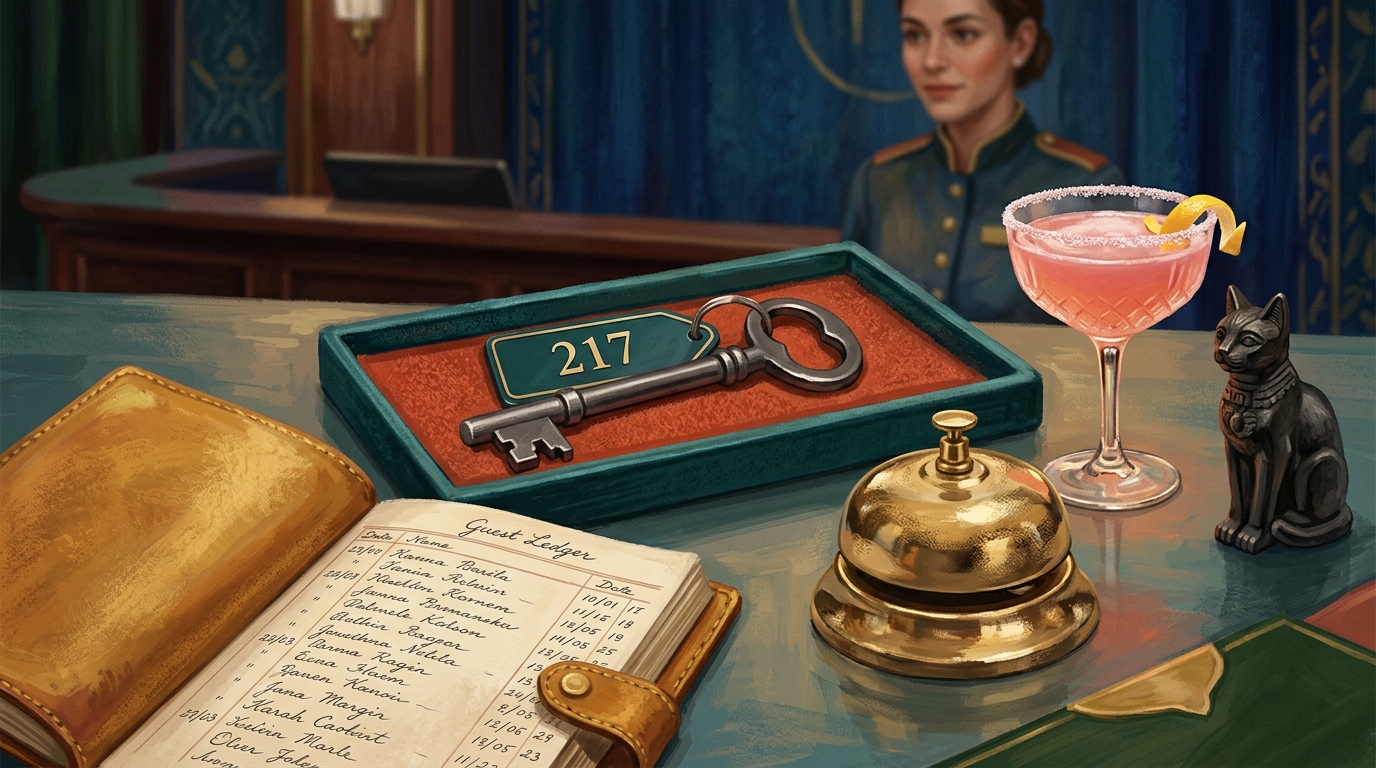
The most famous backstory in hospitality belongs to a hotel in the Colorado Rockies. In 1974, Stephen King and his wife Tabitha checked into the Stanley Hotel in Estes Park on the night before it closed for the season. They were the last guests of the season. King stayed in Room 217, dreamed of his son running screaming through empty corridors, and woke up with the bones of The Shining.
The hotel itself has a good origin. Freelan Oscar Stanley built it and opened the doors on July 4, 1909. Stanley was the inventor of the Stanley Steamer, the steam-powered automobile, and he built a grand Colonial Revival resort to give himself somewhere to recover from tuberculosis in the mountain air. So far, so wholesome. Then a horror writer turned up six decades later and made it immortal.
Here's the part everyone gets wrong, and it matters.
The Stanley inspired King's 1977 novel. It did not appear in Stanley Kubrick's 1980 film. Those eerie exteriors were shot at the Timberline Lodge on Mount Hood, Oregon. The Stanley you see on screen is the 1997 King-scripted TV miniseries, which was filmed at the real hotel. Book yes, Kubrick no.
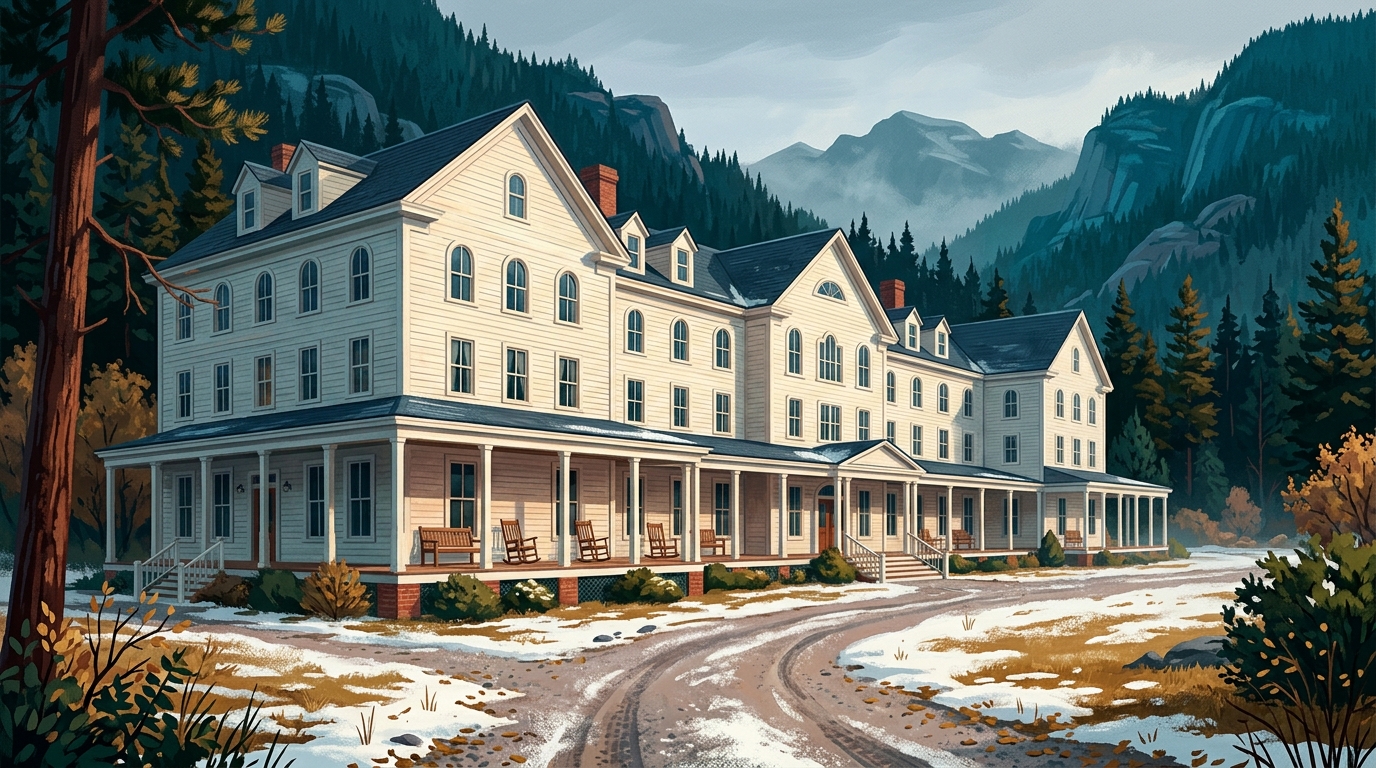
You can stay in Room 217. People book it a year out. The hotel leans into the haunting hard, with ghost tours and a hedge maze added later as a nod to the film it was never actually in. But the foundational story is real and documented. A man invented a steam car, built a hotel to breathe easier, and a guest turned an off-season vacancy into one of the most famous novels in American horror.
Hotel del Coronado: the Beautiful Stranger and a borrowed crown
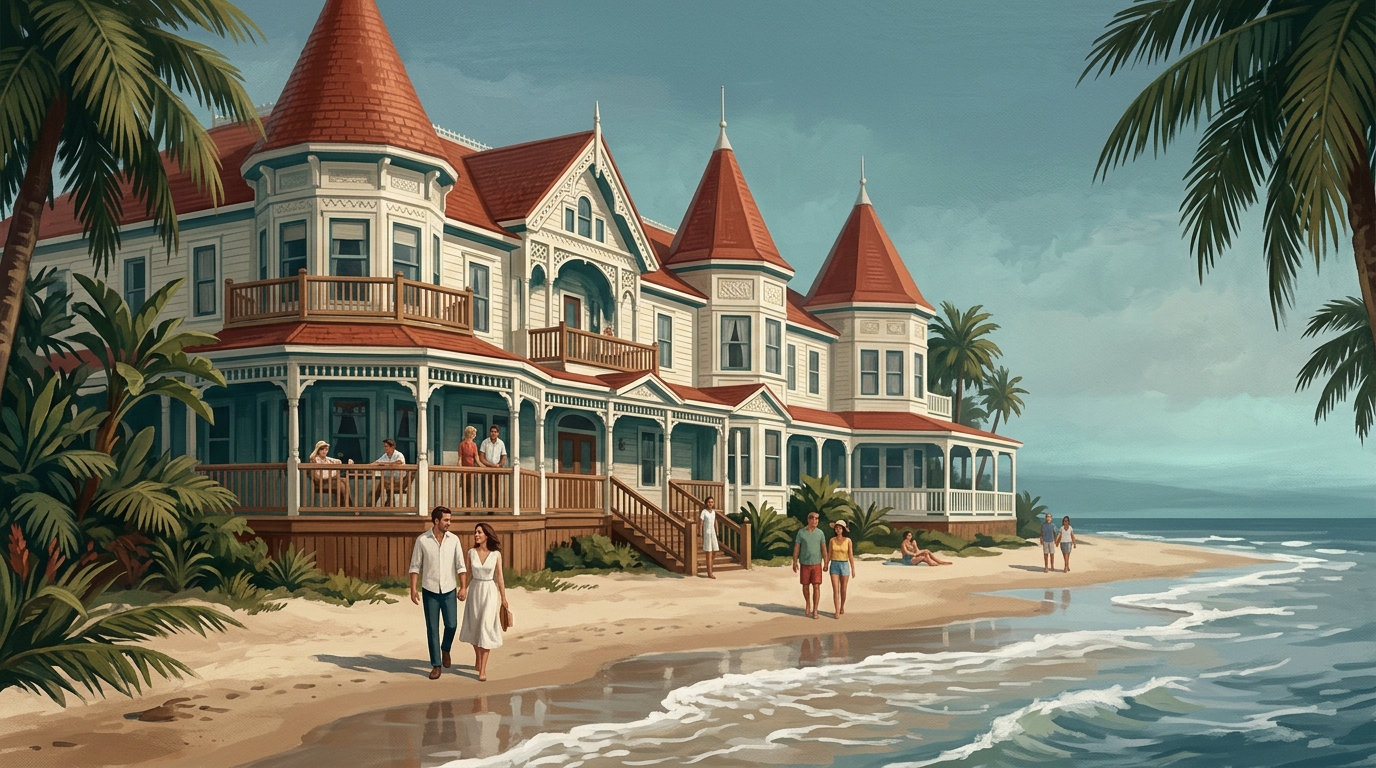
The Hotel del Coronado opened in 1888 on a sandbar off San Diego and remains one of the largest wooden buildings in the United States: a white Victorian sprawl with red turrets that looks like a wedding cake left on the beach. Its claim to film fame is solid: Billy Wilder shot Some Like It Hot here, the 1959 comedy with Marilyn Monroe, Tony Curtis, and Jack Lemmon that the American Film Institute later named the funniest American film ever made.
The hotel's other two stories need careful handling, because both are repeated as fact and neither quite is.
The ghost first. In November 1892, a young woman checked in alone, gave a false name, and was found dead five days later on an exterior staircase from a gunshot wound the coroner ruled self-inflicted. Her name was Kate Morgan. Staff and guests have reported flickering lights and cold spots in her room ever since, and the hotel calls her the "Beautiful Stranger." That a woman died on the property in 1892 is documented. The ghost is, of course, a ghost - believe what you like.
The second is more seductive and more wrong. You'll read that Wizard of Oz author L. Frank Baum designed the Crown Room's chandelier and that the Hotel Del inspired the Emerald City. Baum did stay here repeatedly and wrote several later Oz books during his Coronado years. But the chronology breaks the legend: Baum first came to Coronado in 1904, and the Emerald City had already appeared in The Wonderful Wizard of Oz, published in 1900. The hotel couldn't have inspired a city that existed four years before he saw it. It's a lovely story that simply doesn't survive a calendar.
Fairmont Banff Springs: the castle built to fill train seats
The Banff Springs Hotel opened in 1888, and its reason for existing is gloriously unromantic: the Canadian Pacific Railway needed passengers. The railway's general manager reportedly put it bluntly: if you can't export the scenery, import the tourists. So the CPR built a Scottish Baronial castle deep in the Rockies, all steep roofs and stone towers, purely to give wealthy travelers a reason to ride the train west. Commerce dressed up as a fairy tale.
The fairy tale took on a life of its own. Two ghost stories define the place.
The ghost bride is said to have fallen to her death on the grand staircase before reaching her groom; some versions add her gown catching fire on candles. And Sam McAuley, a Scottish bellman of the 1960s and 70s, supposedly promised to return after death and is still "seen" helping guests. Both are retold by the hotel itself, as legend, not record.
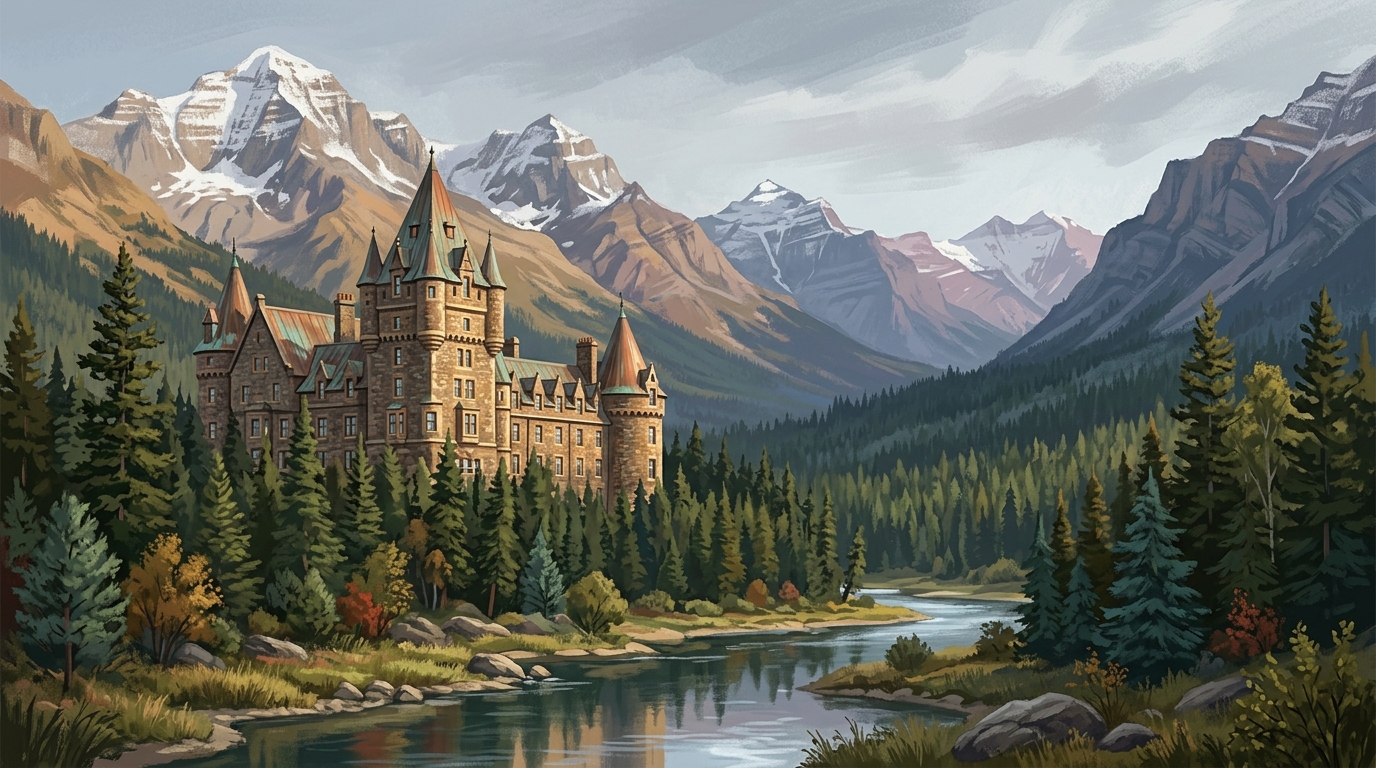
Then there's Room 873. Guests insist it's missing, sealed off behind a smooth wall on the eighth floor, no door, after something too dark to discuss. It's the kind of detail that's almost too perfect, and the hotel has happily let the mystery breathe. What's certain is the building: a genuine castle in a national park, built by a railway accountant's logic, now one of the most photographed hotels on Earth.
The Savoy: Britain's first hotel with light, lifts, and hot water
The Savoy opened in 1889, funded by an unlikely source: comic opera. Richard D'Oyly Carte made his fortune producing Gilbert and Sullivan's operettas at the adjacent Savoy Theatre, and he poured the profits into building the most modern hotel London had ever seen. It was the first in Britain lit throughout by electric light, with electric lifts (marketed as "ascending rooms"), and en-suite bathrooms with constant hot and cold running water: luxuries so novel that the builder reportedly asked why anyone would need that much bathing.
Carte then hired two men who would define fine dining for a century: César Ritz as manager and Auguste Escoffier as chef. The partnership turned the Savoy restaurant into the most fashionable table in London before either man left to build his own legend across the Channel.
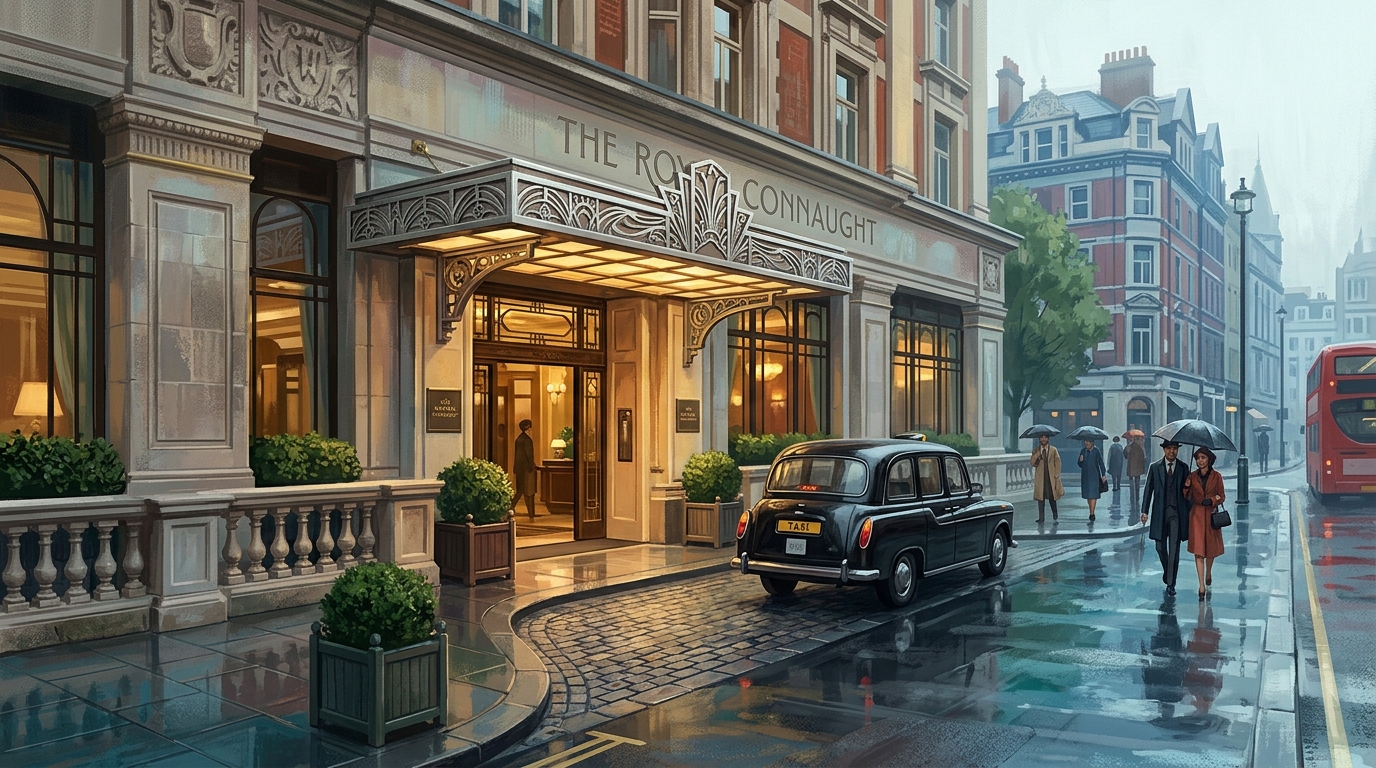
Two quirks make the Savoy irresistible. The driveway, Savoy Court, is famously the one British road where traffic is required to drive on the right: a carriage-era arrangement, fixed by a 1902 Act of Parliament, so cabbies could let passengers out at the theatre door without anyone walking around the vehicle. And then there's Kaspar.
In 1927, after a diner who hosted a party of thirteen later died, the Savoy resolved that no table would ever seat thirteen again. Their solution: a sleek black cat carved from a single block of wood by designer Basil Ionides. When a party numbers thirteen, Kaspar is seated as the fourteenth guest, a napkin tied at his neck, served every course with full cutlery and china. Winston Churchill insisted on it for his dining club. The cat still works there.
Hôtel Ritz Paris: the cellar Hemingway "liberated"
César Ritz left the Savoy and, with Escoffier, opened his own hotel on the Place Vendôme in 1898. It was so synonymous with opulence that the hotel's name became an adjective, "ritzy," and later a song, Irving Berlin's "Puttin' on the Ritz." Among the first hotels in Europe to offer an en-suite bathroom, electricity, and a telephone in every room, it set the template every luxury hotel since has chased.
Coco Chanel made it her home for more than thirty years, living in a suite that still bears her name. Marcel Proust wrote there. F. Scott Fitzgerald drank there. But the story people love most belongs to Ernest Hemingway, and it's the one to handle with a raised eyebrow.
As the legend goes, when Paris was freed in August 1944, Hemingway rolled up with a band of resistance fighters to "liberate" the Ritz and its wine cellar, then drank 51 martinis at the bar. It's a wonderful tale, endlessly embellished by Hemingway himself and everyone since. Treat it as folklore with a kernel of truth, not military history. The bar now carries his name anyway.
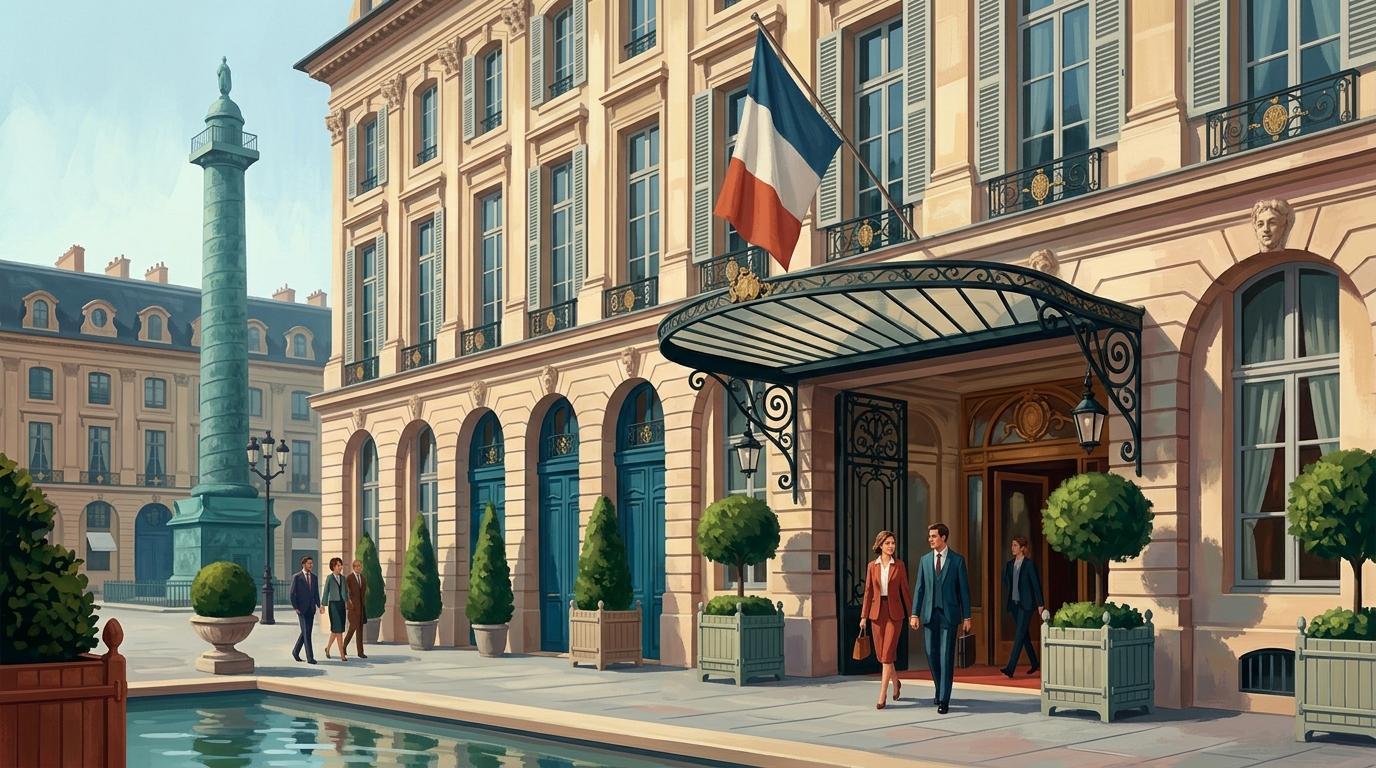
The Ritz also holds a quieter, sadder footnote: it was where Princess Diana dined on her final evening in 1997. We mention it once, plainly, and move on.
Raffles Singapore: where the Singapore Sling was born
The Raffles Hotel opened in 1887, founded by the Armenian Sarkies brothers and named for Sir Stamford Raffles. It became the colonial "grande dame" of Southeast Asia, and its Long Bar gave the world one genuinely famous invention. Around 1915, head bartender Ngiam Tong Boon mixed gin, cherry liqueur, and fruit juices into a pink drink that looked harmless enough for a lady to sip in public. The Singapore Sling has been copied in every airport bar on the planet since.
The literary guest list is real and impressive. Somerset Maugham wrote here and stayed in the same suite on all three visits; Rudyard Kipling passed through. But the hotel's signature anecdote needs a small correction.
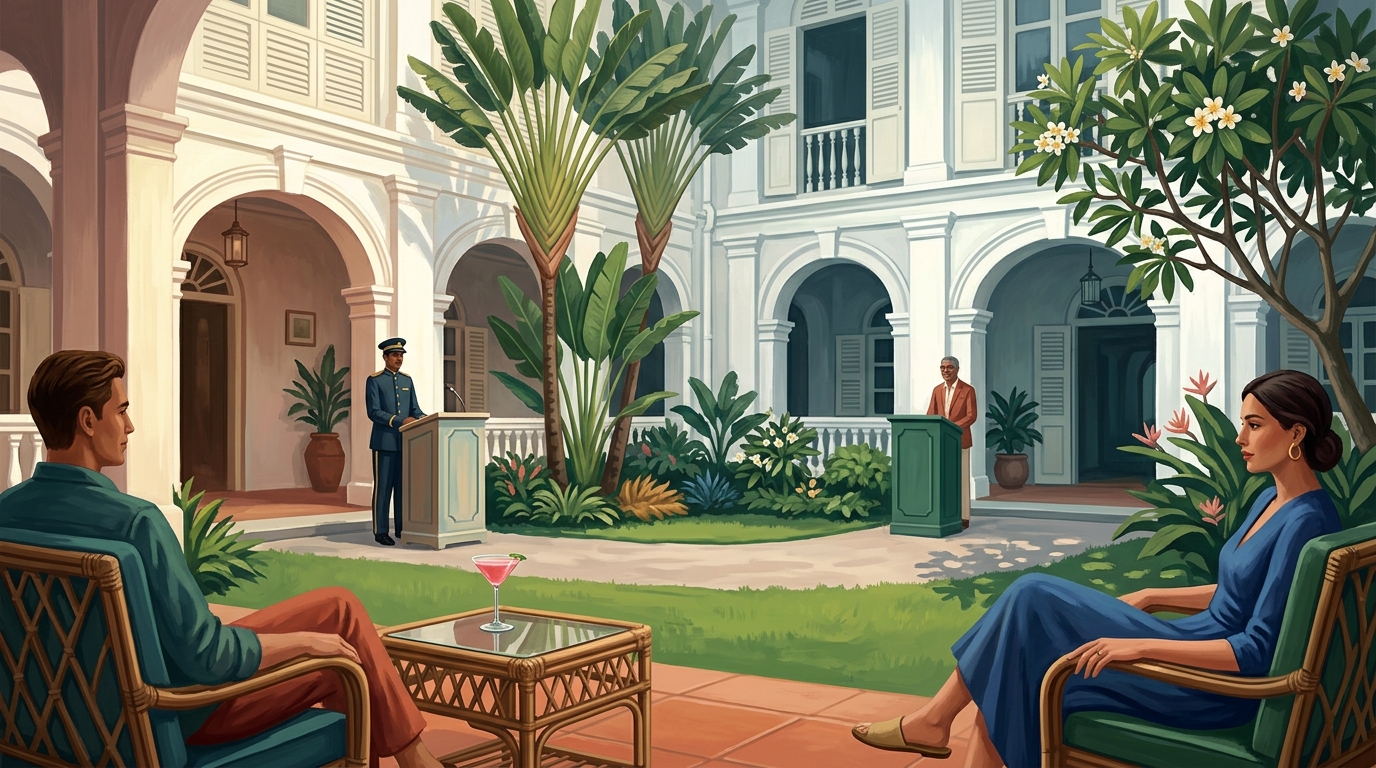
You'll hear that the last tiger in Singapore was shot under the Bar & Billiard Room. Half true. In 1902, a tiger really was shot in the storage space beneath that elevated building, by the headmaster of Raffles Institution, summoned in his pyjamas with a Lee-Enfield rifle after a function had left him slightly tipsy. But the animal had escaped from a nearby circus. It was not a wild tiger, and calling it the "last tiger in Singapore" stretches a captive escapee into a national symbol. The shooting was real; the mythology grew on top of it over the decades.
Marriott Mena House: the hunting lodge where WWII allies met
At the foot of the Giza pyramids sits a hotel that began as a royal hunting lodge. The Mena House became a hotel in 1886, converted from a rest house the Khedive Ismail used when hunting in the desert or visiting the pyramids. Few hotels can claim a view like it. The Great Pyramid fills the window. And fewer can claim its place in twentieth-century history.
In November 1943, the property hosted the Cairo Conference, where Franklin Roosevelt, Winston Churchill, and Chiang Kai-shek met to plan the postwar order in Asia. The talks produced the Cairo Declaration, which set out Allied intentions for Japan, Manchuria, Korea, and Taiwan once the war ended. Three men who shaped the second half of the century sat in a hotel built so a viceroy could shoot in comfort.
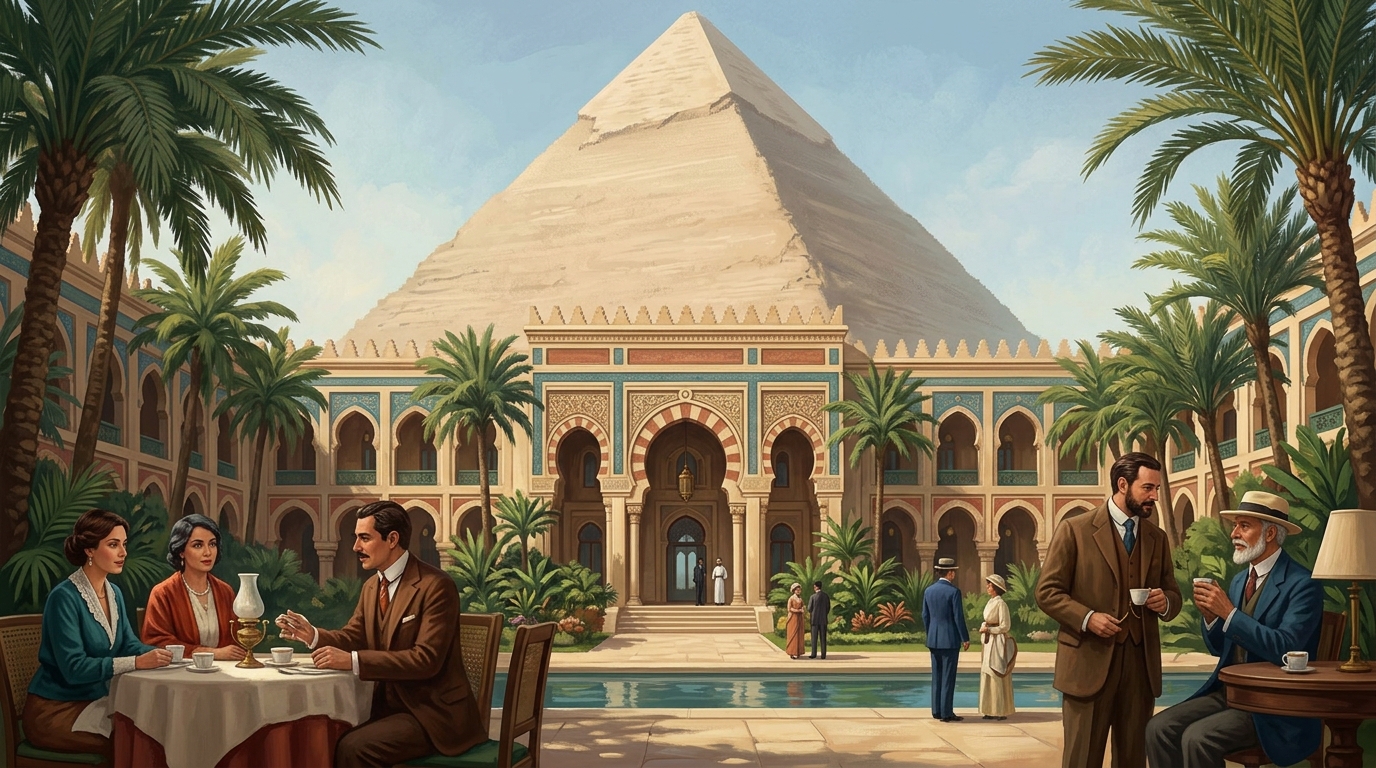
It's worth pausing on that view. You can stand on a Mena House balcony, coffee in hand, and watch the sun move across a structure that was already ancient when the Roman Empire was young. The hotel knows what it has. It has never needed to invent a ghost.
If you're plotting a route that strings together stops like this (a pyramid-view stay here, a castle there), the practical side of sequencing destinations is its own small art. We've written about planning a multi-city trip without losing your mind to the logistics, and the same pacing logic applies whether you're crossing continents or counties.
Burj Al Arab: the "7-star" hotel that isn't
The Burj Al Arab opened in 1999 on a man-made island roughly 280 metres off Jumeirah Beach, connected to the mainland by a single curving bridge. Designed by British architect Tom Wright of Atkins in the shape of a billowing dhow sail, it rises 321 metres and is, by the hotel's own measure, the tallest all-suite hotel in the world. It is unmistakable, deliberately so. It was built to become Dubai's silhouette, and it worked.
And now the label everyone repeats and almost nobody questions.
The Burj Al Arab is not a "7-star" hotel. No such rating exists. The phrase came from a British journalist on a pre-opening press trip who gushed that the place felt like more than five stars, and the hyperbole snowballed into global shorthand. The hotel's own management says it never used the term in advertising. Officially, by both Forbes and Dubai's tourism authority, it's a five-star hotel.
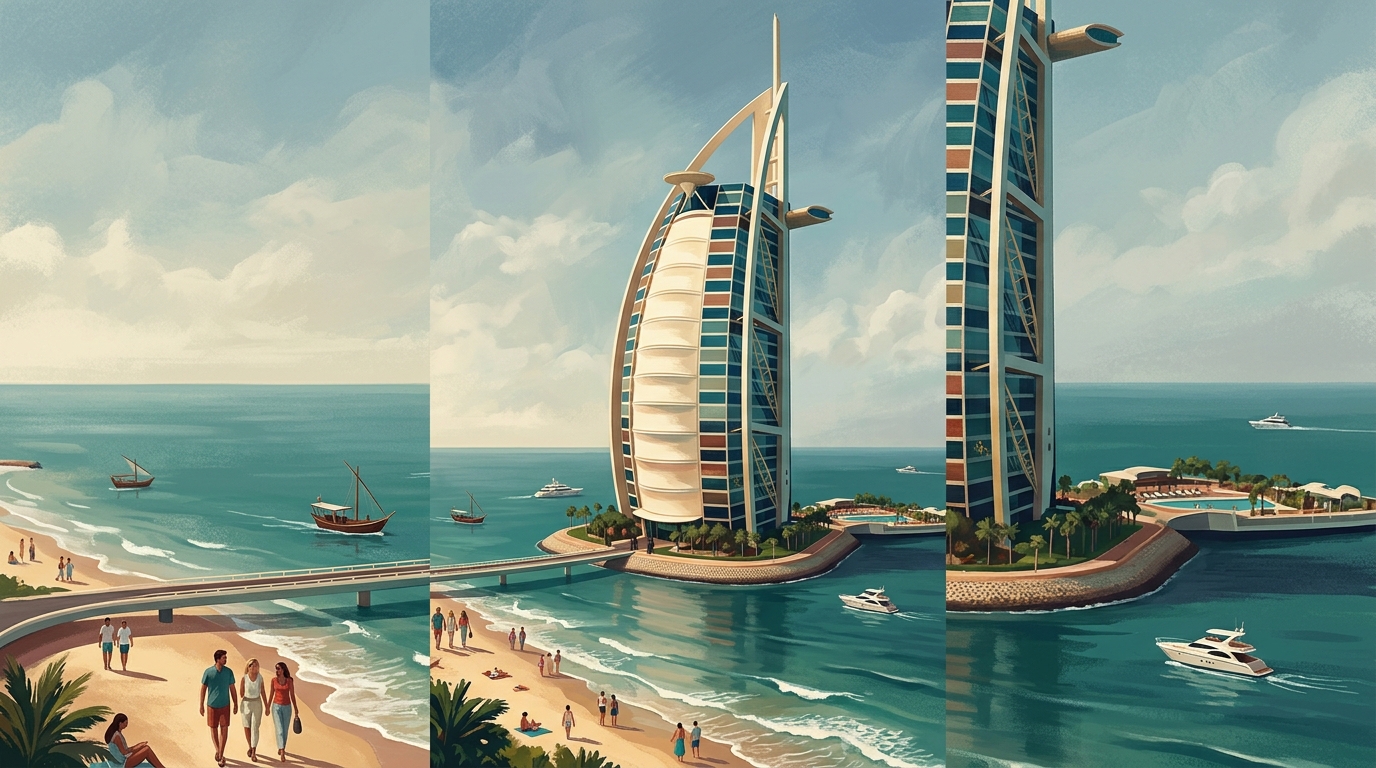
The myth stuck because it fit the story Dubai was telling about itself: biggest, tallest, most. A single off-hand line in a travel column became one of the most durable marketing phrases in hospitality, and the hotel never had to lift a finger to spread it.
ICEHOTEL: the hotel that melts every spring
In the Swedish village of Jukkasjärvi, 200 kilometres above the Arctic Circle, there's a hotel that doesn't permanently exist. The ICEHOTEL is built fresh every winter from snow and ice harvested out of the frozen Torne River, and when spring arrives, the whole thing melts and flows back into the river it came from. It is the world's first ice hotel, and its impermanence is the entire point.
The origin is an accident. In 1989, founder Yngve Bergqvist opened an igloo art gallery beside the river. One night the village cabins were fully booked, a group of visitors had nowhere to sleep, and Bergqvist handed them sleeping bags and let them bed down inside the gallery. They survived. They loved it. A hotel was born from a logistics problem.
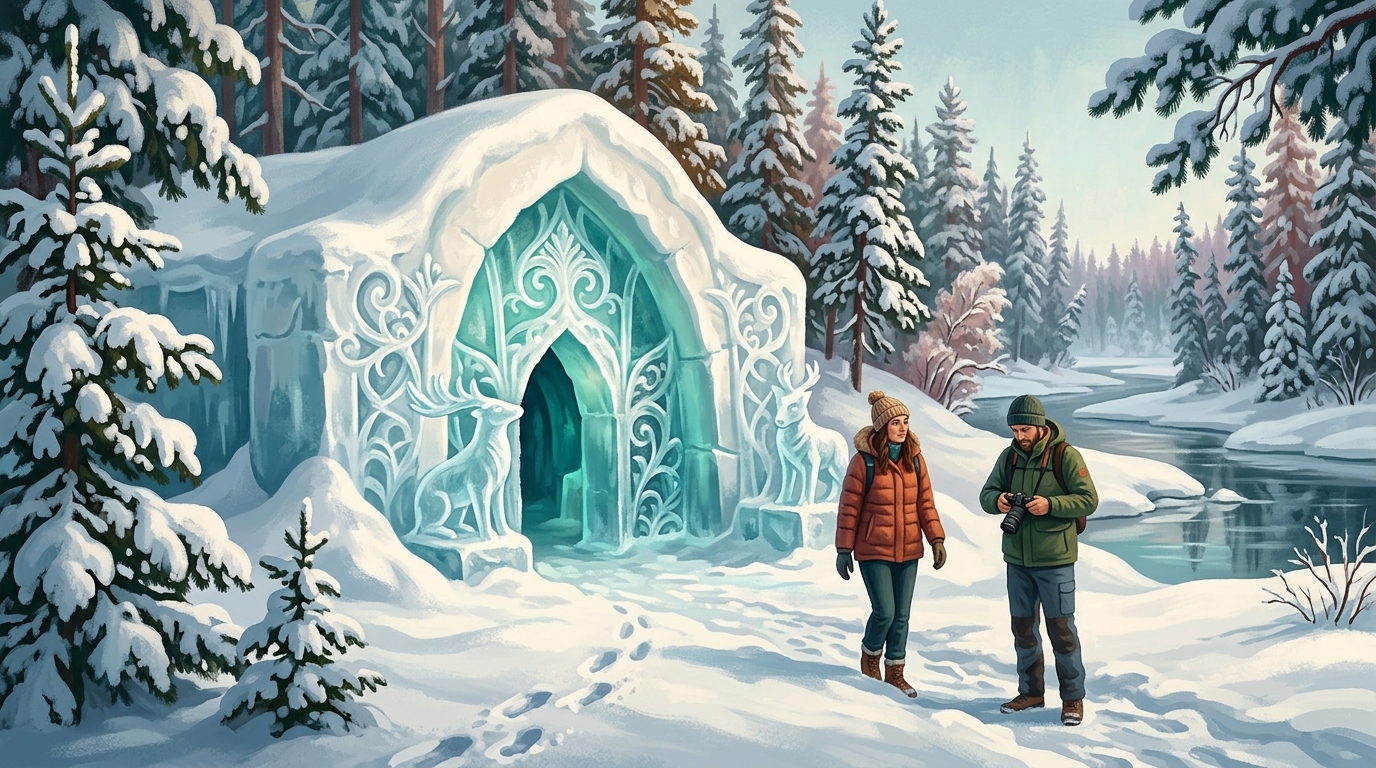
Every year, artists carve a new set of suites: different sculptures, different rooms, gone by May. Then in 2016, the operation added ICEHOTEL 365, a permanent ice structure kept frozen year-round by solar-powered cooling that draws on the endless Arctic summer daylight to hold the building at minus five degrees even in July. A hotel cooled by the very sun that should melt it - that's a backstory you can't make up.
The Taj Mahal Palace: the legend historians won't confirm
The Taj Mahal Palace opened on the Mumbai waterfront on 16 December 1903, commissioned by the industrialist Jamsetji Tata. It faced Bombay harbour, dazzled arriving ships, and was among the first buildings in India wired for electricity. It is one of the great hotels of the world, full stop. But its most-told story is also its most disputed.
The legend goes like this: Tata tried to enter Watson's Hotel, the grandest in the city, was turned away because it admitted "whites only," and built the Taj out of pride and defiance, a hotel grander than any his colonizers could bar him from.
Historians aren't sold. The Watson's snub appears nowhere in contemporary records, and Tata historian Sharada Dwivedi argues he built it "purely for the love of the city." A friend and early director offered a plainer motive: Tata wanted to draw visitors to India and improve Bombay. The refusal story is widely repeated and possibly apocryphal. A great hotel doesn't need a revenge plot.
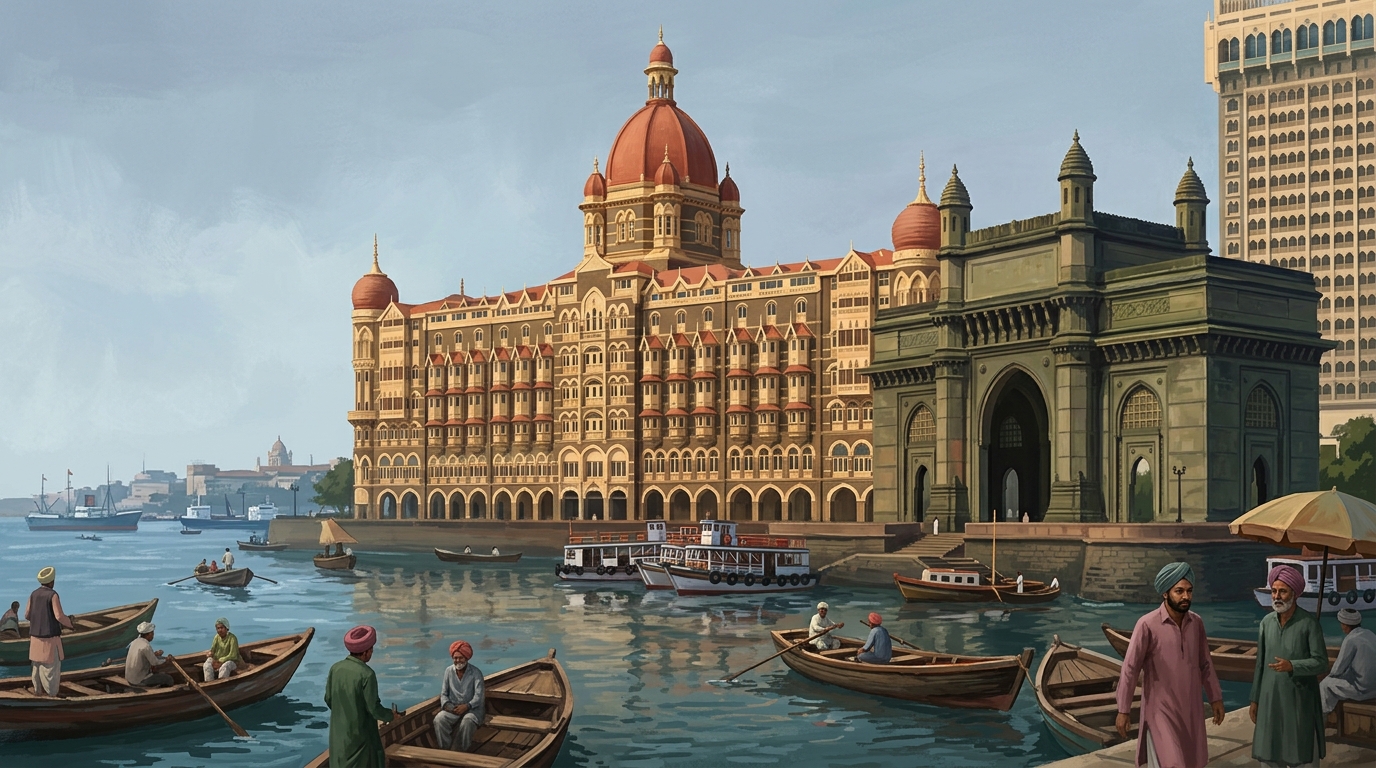
One more thing deserves a single respectful line: the Taj was attacked in 2008, survived, and was fully restored, a chapter that says more about the building's place in Mumbai's heart than any founding myth could.
The 10 hotels with incredible stories, at a glance
Ten hotels, ten reasons they outlived their own brochures. Here's the quick reference, including which "facts" are actually legends you should enjoy with a pinch of salt.
| Hotel | Location | Opened | Claim to fame |
|---|---|---|---|
| The Stanley Hotel | Estes Park, USA | 1909 | Inspired Stephen King's The Shining (Fact) |
| Hotel del Coronado | San Diego, USA | 1888 | Some Like It Hot location; Oz link (Myth) |
| Fairmont Banff Springs | Alberta, Canada | 1888 | Railway castle; ghost bride (Legend) |
| The Savoy | London, UK | 1889 | UK's first electric luxury hotel; Kaspar the cat (Fact) |
| Hôtel Ritz Paris | Paris, France | 1898 | Source of "ritzy"; Hemingway's bar (Legend) |
| Raffles Singapore | Singapore | 1887 | Birthplace of the Singapore Sling (Fact) |
| Marriott Mena House | Giza, Egypt | 1886 | Hosted the 1943 Cairo Conference (Fact) |
| Burj Al Arab | Dubai, UAE | 1999 | Sail-shaped icon; "7-star" rating (Myth) |
| ICEHOTEL | Jukkasjärvi, Sweden | 1989 | World's first ice hotel; melts yearly (Fact) |
| The Taj Mahal Palace | Mumbai, India | 1903 | Founding "snub" story (Disputed) |
Notice the oldest on the list isn't the most famous. Mena House quietly predates them all, opening as a hotel in 1886 while a viceroy's hunting parties were still riding out to the pyramids.
A timeline of openings, 1886 to 1999
Most of these hotels are children of the same moment: the railway-and-steamship boom of the late nineteenth century, when travel became something the wealthy did for pleasure and someone had to give them grand places to sleep. Then, more than a century later, two outliers rewrote the rules entirely.
- 1886 Mena House opens at the foot of the Giza pyramids, converted from a royal hunting lodge.
- 1887 Raffles opens in Singapore; the Long Bar will later invent the Singapore Sling.
- 1888 Hotel del Coronado and Banff Springs both open: one a beach palace, one a mountain castle.
- 1889 The Savoy brings electric light and hot running water to London.
- 1898 César Ritz opens the Ritz Paris and lends his name to the language.
- 1903 The Taj Mahal Palace rises on the Mumbai waterfront.
- 1909 The Stanley Hotel opens in Colorado, decades before a writer makes it famous.
- 1999 The Burj Al Arab redraws Dubai's skyline as a sail of steel and glass.
The pattern is hard to miss: nineteenth-century empire built most of these, and modern ambition built the last two. The ICEHOTEL, born in 1989, sits outside the pattern entirely: a hotel that refuses to be permanent at all.
How to actually visit them without losing the magic
Booking a hotel for its story is a different exercise than booking one for a pool. You want the room with the history, the bar where the thing happened, the suite the writer slept in, and those sell out far ahead. A little structure goes a long way, and the difference between a rushed pin-drop and a stay that lets the place breathe usually comes down to how long you give it.
Book the specific room when the story lives in one. Room 217 at the Stanley and Coco Chanel's suite at the Ritz are reserved months out. Confirm the exact room category at booking, because "a room at the hotel" and "the room from the story" are priced and stocked very differently.
Here's our honest take: skip the Stanley's ghost tour if you only have one night. Book Room 217, read the novel in it, and let the empty corridors do the work.
For the legend-heavy stays, do what we did for this article: separate the verified from the embellished before you go. Half the fun of standing in the Savoy's Kaspar's restaurant or beneath Raffles' Bar & Billiard Room is knowing precisely which part of the plaque is true and which part the marketing team loves a little too much. Keeping your bookings, your notes, and the day's plan in one place helps. Tools like TripProf let you save the booking confirmation as a travel document and drop the hotel and its landmarks straight onto a day in your itinerary, so the story and the logistics live together instead of in four different apps.
If you're stitching several of these into one trip, resist the urge to bag all ten in a fortnight. Our take on how many stops is too many applies doubly to story-hotels. These are places to sit in the bar, not tick off a list. And if you'd rather plan around the crowds, avoiding peak-season Europe means the Savoy's right-hand driveway and the Ritz's Place Vendôme without the queues.
Frequently Asked Questions
Can you actually stay at the hotel that inspired The Shining?
Yes. The Stanley Hotel in Estes Park, Colorado, is fully operational, and you can book Room 217, where Stephen King stayed in 1974. Important distinction: the Stanley inspired King's novel, but Kubrick's 1980 film used Oregon's Timberline Lodge for exteriors. The 1997 TV miniseries was the version actually shot at the Stanley.
Which hotel invented the Singapore Sling?
Raffles Hotel in Singapore. The cocktail was created around 1915 by Hainanese bartender Ngiam Tong Boon at the hotel's Long Bar. He blended gin, cherry liqueur, and fruit juices into a pink drink that looked like an innocent fruit punch, deliberately, so women could drink it discreetly in public. It's still served at Raffles today.
Is the Burj Al Arab really a 7-star hotel?
No. There is no official 7-star rating anywhere in the world. The term came from a British journalist's enthusiastic description during a pre-opening press trip in 1999, and the hyperbole spread globally. The hotel says it never used the label in its own advertising. Officially, the Burj Al Arab is rated five stars.
Which is the oldest hotel on this list?
The Marriott Mena House in Giza, Egypt, which became a hotel in 1886 after being converted from a royal hunting lodge. Raffles Singapore follows in 1887, then Hotel del Coronado and Banff Springs, both in 1888. The newest by far is Dubai's Burj Al Arab, which opened in 1999.
Did Jamsetji Tata really build the Taj because he was refused entry to a hotel?
That's the popular legend, but historians doubt it. The story says Tata was turned away from the whites-only Watson's Hotel and built the Taj in response. There's no contemporary record of the snub, and Tata historians argue he built it out of civic pride and a desire to attract visitors to Bombay. Treat it as a beloved but unverified tale.
Why does ICEHOTEL have to be rebuilt every year?
Because it melts. The original ICEHOTEL in Jukkasjärvi, Sweden, is carved each winter from ice harvested out of the Torne River, and every spring it thaws and flows back into the river. A separate permanent wing, ICEHOTEL 365, opened in 2016 and stays frozen year-round using solar-powered cooling.
Key Takeaways
- The Stanley Hotel inspired the novel, not the Kubrick film. Room 217 is real and bookable; the famous movie exteriors were shot in Oregon.
- Separate fact from legend before you go. The Coronado-to-Oz link, Banff's ghost bride, Hemingway's "liberated" cellar, and the Taj's founding snub are stories worth telling, but flag them as legends, not history.
- Some claims are rock solid. The Singapore Sling was born at Raffles, the Savoy was Britain's first electric luxury hotel, and the Cairo Conference really happened at Mena House.
- The "7-star" Burj Al Arab is a journalist's myth. It's officially a five-star hotel; no 7-star rating exists.
- The ICEHOTEL is the only entry that deliberately disappears. It's built from river ice each winter, melted back every spring, with a solar-cooled permanent wing since 2016.
- Book the specific room, not just the hotel. Story-rooms sell out months ahead. Keeping your booking documents and a day-by-day plan together, in a planner like TripProf, saves the scramble when the suite you want is the whole reason you're going.
- Slow down. These are places to sit in the bar and soak up the history, not destinations to speed-run.
Sources
- Stanley Hotel official history: 1909 opening, F.O. Stanley, the King inspiration and 1997 miniseries
- Timberline Lodge, Mount Hood: the lodge used for Kubrick's 1980 film exteriors
- Stanley Hotel official: Room 217: the room King stayed in, the dream that inspired the novel
- Hotel del Coronado official history: 1888 opening and hotel heritage
- Atlas Obscura: Hotel del Coronado: Some Like It Hot filming, Kate Morgan
- Hotel del Coronado timeline: L. Frank Baum: 1904 first visit, chronology debunking the Oz inspiration
- Atlas Obscura: Banff Springs Hotel: 1888 CPR origin, Scottish Baronial design
- Fairmont Banff Springs official ghost stories: ghost bride and Sam the bellman as hotel-told legend
- Historic Hotels: The Savoy: first British hotel with electric lighting and hot/cold running water
- Londontopia: Why the Savoy driveway is reversed: the one UK road where traffic drives on the right, 1902 Act of Parliament
- The Spectator: Kaspar the Savoy Cat: 1927 carving, the fourteenth guest tradition
- Wikipedia: Hôtel Ritz Paris: 1898 founding, "ritzy," Chanel's residence, Hemingway 1944 legend
- Wikipedia: Raffles Hotel: 1887 founding, Sarkies brothers, Maugham, tiger incident
- Raffles official: How the Singapore Sling conquered the world: Ngiam Tong Boon, c. 1915
- National Library Board: Tigers in Singapore: 1902 Raffles tiger, escaped circus animal, not a wild "last tiger"
- International Churchill Society: Mena House, the Summit of Cairo: November 1943 conference, Roosevelt, Churchill, Chiang Kai-shek; Mena House as a hotel since 1886
- Wikipedia: Burj Al Arab: 1999, Tom Wright/Atkins, dhow sail, 321m, man-made island
- The National: Why the Burj Al Arab isn't a seven-star hotel: origin of the myth and the official five-star rating
- ICEHOTEL official: The Story: 1989 founding, Torne River ice, annual melt
- ICEHOTEL official: ICEHOTEL 365: 2016 permanent wing, solar-powered cooling
- Wikipedia: Taj Mahal Palace Hotel: 1903 opening, Jamsetji Tata, disputed Watson's Hotel legend, Dwivedi's "love of the city"
Last updated: July 3, 2026
Keep Reading
More travel tips and guides picked for you
The Best Apps to Book a Food Tour (and Where You'll Overpay)
Airbnb Experiences, EatWith, Devour Tours, GetYourGuide and Traveling Spoon, compared on real prices and honest downsides, plus the two minute check that stops you paying twice for the same tour.
The Best Carnivals to Travel For in 2027, and Why the Whole Calendar Runs Early
Easter falls on one of its earliest possible dates in 2027, and it drags Venice and Rio Carnival two weeks earlier than usual. Here are the real 2027 dates for all seven biggest carnivals and festivals, plus when to book each one.
Where to Spend Lunar New Year 2027: Singapore vs Hong Kong vs Taipei vs Bangkok, Real Costs, Crowds, and How to Route a Multi-City Family Trip
Hong Kong and Singapore cost about the same for Lunar New Year 2027, Taipei sits in the middle, and Bangkok undercuts all three by a wide margin. Here is the real booking deadline and how to route a multi-city family trip.