The $100 National Park Surcharge: A Complete Guide for International Visitors
Key Highlights
- 1
- 2
- 3
+5 more in the takeaways below
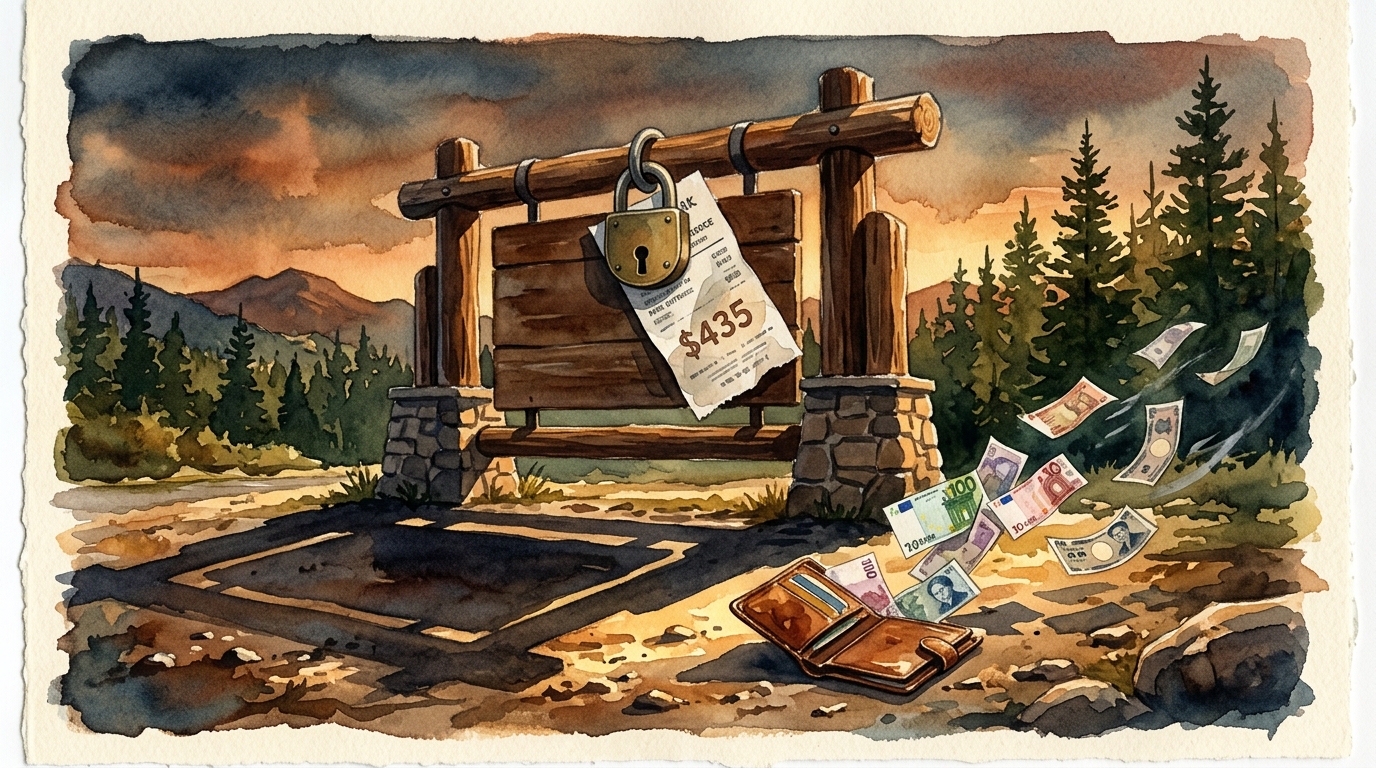
You've saved for months, planned the perfect American road trip, and Yellowstone is the highlight. Then you hit the entrance gate and hear: "That'll be $435, please." Not a typo. As of January 1, 2026, a family of four from outside the United States now pays $435 to enter a single national park: the standard $35 vehicle fee plus a $100-per-person surcharge for every non-U.S. resident aged 16 and over. The US national park fee for international visitors in 2026 is the most significant pricing shift in the National Park Service's century-plus history, and it changes the math on every park trip you're planning.
But here's what the headlines don't tell you: the surcharge only applies to 11 of the 400+ national park units, there are smart pass strategies that cut costs by more than half, and dozens of equally stunning parks don't charge international visitors a single extra dollar. This guide breaks down exactly what you'll pay, where you'll pay it, and how to build a park trip that doesn't blow your budget. No panic required.
As of March 2026, the surcharge is active. Starting January 2026, non-U.S. residents pay an extra $100 per person (ages 16+) at 11 popular national parks, on top of the standard entrance fee. A $250 annual pass covers you plus three adults at all parks. Children under 16 are exempt. Green card holders pay the resident rate. The surcharge doesn't apply at 400+ other park units, including crowd-free alternatives like North Cascades, Canyonlands, and the always-free Great Smoky Mountains. Plan your pass strategy before you arrive: the savings are significant.
What the $100 Surcharge Actually Costs You
The new nonresident fee is a flat $100 per person charged to every non-U.S. resident aged 16 and older entering one of 11 designated parks. It stacks on top of the existing entrance fee, which remains $35 per vehicle (or $20 per person for walk-ins and cyclists). Each $100 payment is valid for seven consecutive days at that specific park.
Here's what that looks like in real dollars for different group sizes:
| Scenario | Before 2026 | After Jan 1, 2026 | Increase |
|---|---|---|---|
| Solo traveler (car) | $35 | $135 | +$100 |
| Couple (car) | $35 | $235 | +$200 |
| Family of 4, two adults + two teens | $35 | $435 | +$400 |
| Family of 4, two adults + two kids under 16 | $35 | $235 | +$200 |
| Friend group of 6 adults (two cars) | $70 | $670 | +$600 |
The children-under-16 exemption is the one piece of good news for families. If your kids are 15 or younger, they pay nothing beyond the standard vehicle fee. But teenagers turning 16 during the trip? They're charged the full $100 on the day they cross the gate.
For perspective: a European family of four spending two weeks road-tripping through the western U.S. might visit Yellowstone, Grand Teton, and Zion. Under the old system, that's $105 in entrance fees (3 parks x $35). Under the new system with two adults and two teens, it's $105 plus $1,200 in surcharges ($100 x 4 people x 3 parks) for a total of $1,305 in park fees alone. That's more than many travelers spend on their entire camping setup.
The fee was authorized by an executive order from President Trump directing the Department of the Interior to implement nonresident pricing. The projected revenue: over $90 million annually. The rationale is that American taxpayers already fund the National Park Service through federal taxes, and nonresidents should contribute more directly.
The 11 Parks That Charge the Surcharge
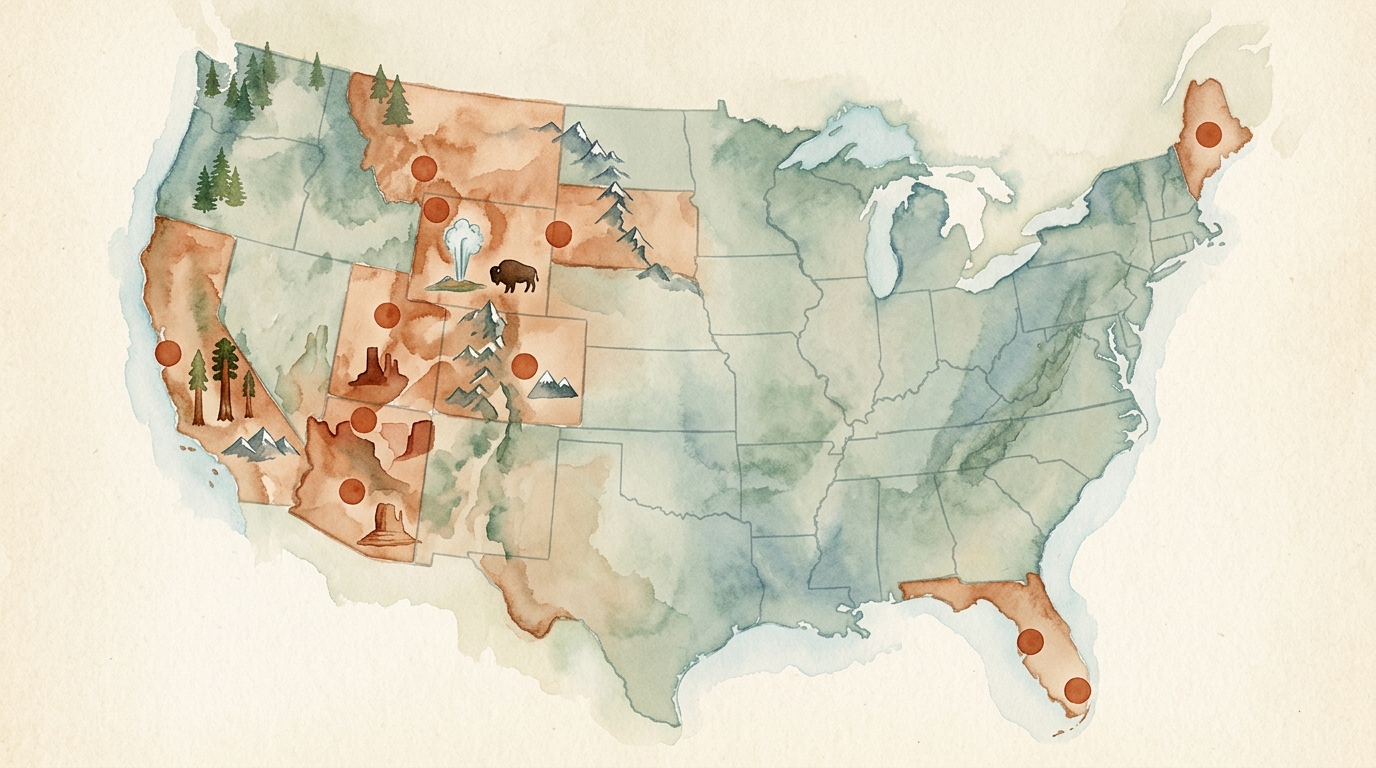
Only 11 of America's 400+ National Park Service units charge the nonresident surcharge. These are among the most-visited parks in the system, and they're the ones most international travelers have on their list. Here's the full roster, along with the standard entrance fee that also applies:
| Park | State | Standard Fee (vehicle) | Total w/ Surcharge (1 adult) |
|---|---|---|---|
| Acadia | Maine | $35 | $135 |
| Bryce Canyon | Utah | $35 | $135 |
| Everglades | Florida | $35 | $135 |
| Glacier | Montana | $35 | $135 |
| Grand Canyon | Arizona | $35 | $135 |
| Grand Teton | Wyoming | $35 | $135 |
| Rocky Mountain | Colorado | $35 | $135 |
| Sequoia & Kings Canyon | California | $35 | $135 |
| Yellowstone | Wyoming/Montana/Idaho | $35 | $135 |
| Yosemite | California | $35 | $135 |
| Zion | Utah | $35 | $135 |
Every other national park, monument, historic site, seashore, and recreation area in the system charges only the standard fee (and many charge nothing at all). That's important, because some of the country's most spectacular landscapes sit outside this list.
Notice what's missing: Death Valley, Joshua Tree, Olympic, Arches, Canyonlands, Shenandoah, Great Smoky Mountains, Crater Lake, Badlands, Big Bend. All are world-class parks. None carry the surcharge. The fee targets the parks with the highest international visitation: KQED reports that Everglades sees up to 60% international visitors in summer months, and the other 10 parks consistently rank among the top destinations for overseas travelers.
ID, Residency, and the Gray Areas
The NPS FAQ defines the fee based on citizenship and permanent residency, not how long you've lived in the U.S. Three categories determine what you'll pay at the gate:
- U.S. citizens and green card holders: resident rate. Show a U.S. passport, state driver's license or ID, or permanent residency card. You'll pay the standard $35 vehicle fee and nothing more.
- Work visa holders (H-1B, L-1, etc.): it depends on your ID. The NPS defines "nonresident" as anyone who is not a U.S. citizen or permanent resident. Rangers accept state driver's licenses at entrance stations. If you hold a valid state license from a work visa, you may be able to present it at the gate, though the NPS FAQ hasn't confirmed this as intended.
- Tourists and other visitors: nonresident rate. If you can't produce one of the accepted IDs, you'll pay the $100 surcharge per person.
Rangers verbally ask about residency at entrance stations. U.S. citizens who forget to bring a passport or state ID have reportedly been charged the nonresident rate. Bring physical identification to every park visit.
The mixed-nationality family problem is real: if one parent is American and the other is visiting on a tourist visa, the visiting parent pays $100 while the citizen parent doesn't. Children under 16 are exempt regardless of nationality. The NPS hasn't published specific guidance for this scenario, so expect some inconsistency between parks.
One more wrinkle: if you're an American living abroad and you left your state driver's license at home (or let it expire), you'll need your U.S. passport. Don't assume you can talk your way through the entrance station. Rangers have instructions to verify, and the policy leaves little room for exceptions. If you're planning to visit multiple parks on a longer U.S. trip, make sure your travel documents are sorted well before departure.
The $250 Annual Pass: When It Saves You Money
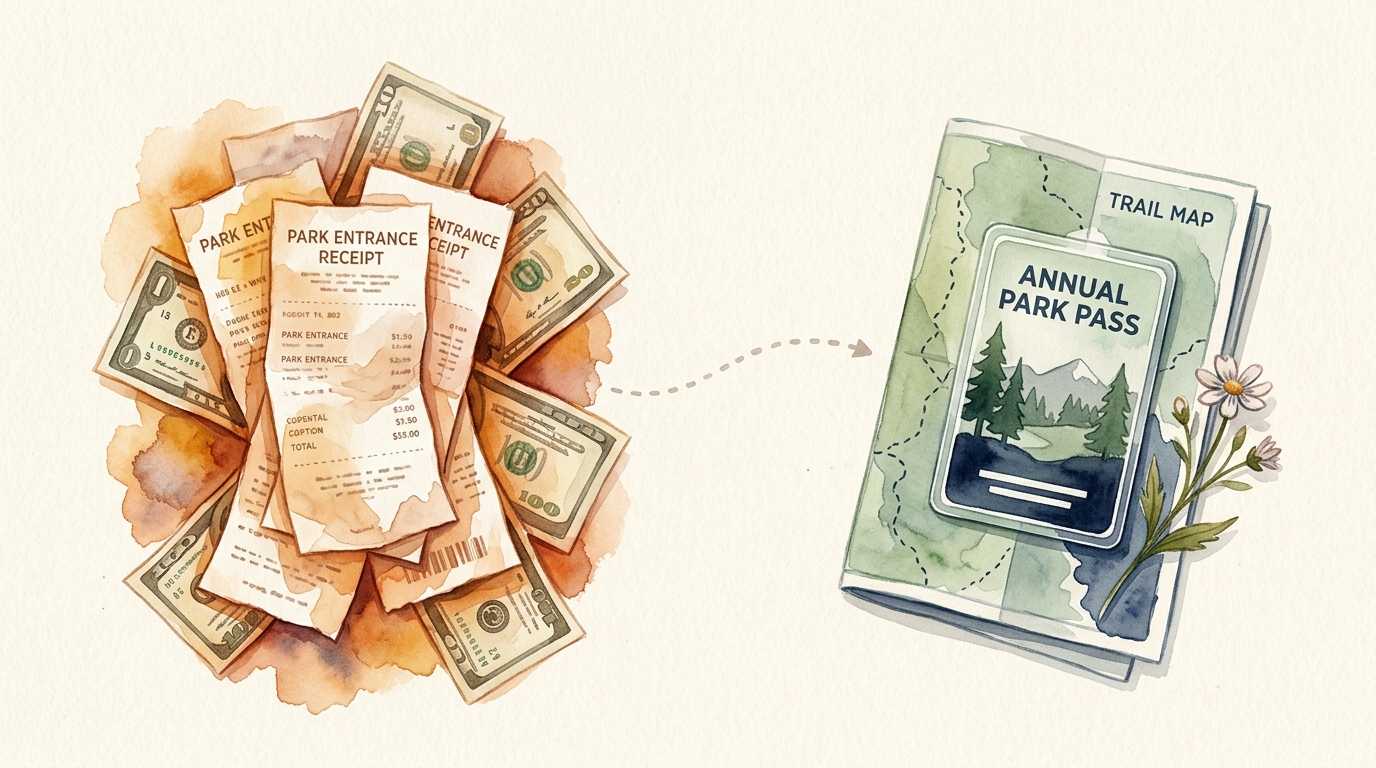
The America the Beautiful Non-Resident Annual Pass costs $250 and covers the passholder plus three additional adults (aged 16+) at all national park units for a full year. It replaces both the standard entrance fee and the $100 surcharge. Here's the break-even math:
| Trip Plan | Pay-Per-Park Cost | Annual Pass Cost | Savings with Pass |
|---|---|---|---|
| Solo, 1 surcharge park | $135 | $250 | -$115 |
| Solo, 2 surcharge parks | $270 | $250 | +$20 |
| Solo, 3 surcharge parks | $405 | $250 | +$155 |
| Couple, 1 surcharge park | $235 | $250 | -$15 |
| Couple, 2 surcharge parks | $470 | $250 | +$220 |
| Family of 4 (all 16+), 1 park | $435 | $250 | +$185 |
The takeaway: solo travelers break even at two surcharge parks. Couples break even at two. Families of four save money from the very first park. If you're visiting any two surcharge parks, buy the pass. No exceptions.
One common multi-park road trip illustrates the math perfectly. The "Grand Circle" route through Utah and Arizona hits Zion, Bryce Canyon, and Grand Canyon. Without the annual pass, a couple pays $235 per park ($35 vehicle + $200 in surcharges) across three parks for $705 in combined fees. With the $250 pass, the total drops to $250. That's $455 saved on a single trip.
The pass also covers standard entrance fees at every other park in the system: Arches, Capitol Reef, Canyonlands, Death Valley, Joshua Tree, and the rest. If you're doing any kind of park road trip, the annual pass is effectively mandatory for international visitors in 2026.
Passes purchased before January 1, 2026, retain their original benefits and cover both entrance fees and the nonresident surcharge for their remaining validity period. If you bought an $80 America the Beautiful pass in late 2025, it works at full value until it expires.
Fee-Free Days Don't Apply to You
The National Park Service expanded its schedule to 10 fee-free days in 2026, including Presidents Day, Memorial Day, Flag Day, Independence Day weekend, and Veterans Day. They sound like a great deal. They're not, if you're from outside the U.S.
Beginning in 2026, fee-free days apply exclusively to U.S. residents. International visitors still pay the standard entrance fee and the $100 surcharge on all 10 fee-free days. Don't plan your trip around them expecting to save. You won't.
The 2026 fee-free schedule includes Presidents Day (February 16), Memorial Day (May 25), Flag Day (June 14), Independence Day weekend (July 3-5, three days), the NPS's 110th birthday (August 25), Constitution Day (September 17), Theodore Roosevelt's birthday (October 27), and Veterans Day (November 11). The NPS removed Martin Luther King Jr. Day and Juneteenth from the free-day calendar for 2026, replacing them with what the agency calls "patriotic fee-free days." Regardless of the political reshuffling, none of these dates help international visitors save a cent.
Surcharge-Free Parks Worth Your Time
Here's what nobody else is telling you: the 11 surcharge parks are famous, but they're not the only world-class landscapes in America. For every park on the surcharge list, there's a comparable alternative that charges international visitors nothing extra. Some charge nothing at all.
| Instead of... | Try This | Why It Works | Entrance Fee |
|---|---|---|---|
| Glacier | North Cascades (WA) | Glacier-capped peaks, turquoise rivers, dense forests | Free |
| Bryce Canyon | Canyonlands (UT) | Dramatic red rock canyons, fewer crowds | $30/vehicle |
| Yosemite | Pinnacles (CA) | Dramatic volcanic rock formations, talus caves, condors | $30/vehicle |
| Grand Canyon | Black Canyon of the Gunnison (CO) | Sheer 2,000-foot walls, dramatic and uncrowded | $30/vehicle |
| Yellowstone | Lassen Volcanic (CA) | Geothermal features, boiling mud pots, fewer visitors | $30/vehicle |
| Rocky Mountain | Great Sand Dunes (CO) | Tallest dunes in North America, mountain backdrop | $25/vehicle |
| Zion | Capitol Reef (UT) | Red rock cliffs, slot canyons, fruit orchards | $20/vehicle |
| Acadia | Shenandoah (VA) | Appalachian ridge views, waterfalls, Skyline Drive | $30/vehicle |
| Everglades | Big Cypress Preserve (FL) | Same ecosystem, alligators, no entrance fee on most areas | Free |
| Grand Teton | Sawtooth NRA (ID) | Jagged peaks, alpine lakes, wild and uncrowded | Free |
And then there's Great Smoky Mountains, America's most-visited national park with over 13 million annual visitors. It charges zero entrance fee to anyone, regardless of nationality. A 1951 deed restriction from Tennessee guarantees it stays that way. Park there for $5-$40 for parking, and you've got full access to one of the most biodiverse places in the temperate world.
The strategy here is simple: build your trip around two or three surcharge parks you truly want to see (covered by the $250 annual pass), then fill the rest of your itinerary with surcharge-free alternatives. A two-week western road trip could hit Yellowstone and Grand Teton (surcharge parks, covered by your pass), then spend equal time at Canyonlands, Arches, Capitol Reef, and Great Sand Dunes (no surcharge). Same quality of scenery. Fraction of the added cost.
If you're traveling with kids, a guide to planning international trips with kids covers more practical logistics for families crossing borders.
How the US Compares to Global Dual Pricing
The angry reactions make it easy to forget that dual pricing for tourists isn't new. Dozens of countries charge foreign visitors more than locals for parks and cultural sites. What is new is seeing it in the United States, a country that never charged nationality-based fees for public lands before 2026.
Here's how the U.S. surcharge stacks up against established dual-pricing systems worldwide:
| Country / Site | Local Price | Foreign Price | Multiplier |
|---|---|---|---|
| India: Taj Mahal | ~$0.60 | ~$15 | ~25x |
| Kenya: Nairobi NP | ~$8 | $80 | ~10x |
| Ecuador: Galapagos | $30 | $200 | ~7x |
| Thailand: National Parks (Group 4) | ~$3 | ~$15 | ~5x |
| Peru: Machu Picchu | ~$17 | ~$48 | ~3x |
| USA: Surcharge Parks (family of 4) | $35 total | $435 total | ~12x |
International entry prices as of March 2026. Exchange rates and fee structures change frequently: verify current prices before your trip.
The per-person math matters here. In most dual-pricing countries, the absolute cost to foreign visitors is low: $15 for the Taj Mahal, $15 for a Thai national park. The U.S. surcharge is $100 per person on top of an already non-trivial entrance fee, in a country where a day of travel already costs significantly more than in India or Thailand. CNN reported that critics consider the policy "America-first" pricing that could deter international tourists from visiting entirely.
There's another distinction worth noting. In countries like India and Thailand, dual pricing is often justified by vast income disparities between locals and international tourists. The argument is that a $15 fee represents a manageable amount for a Western tourist but would exclude local families earning $200 per month. The U.S. doesn't have that economic gap with its primary visitor markets: the UK, Germany, France, Australia, and Canada. A British family visiting the Grand Canyon has roughly comparable purchasing power to an American family. The surcharge is less about economic accessibility and more about revenue generation, which is why the backlash has been sharper than what you'd see over a $15 Thai park fee.
Pretty much writes off any visits I would be planning. It's not just the money. It's the message that international visitors aren't welcome.
r/travel user, January 2026
The Tourism Fallout (So Far)
The surcharge took effect on January 1, 2026, and the early numbers paint a stark picture. Newsweek reported that Intrepid Travel, which runs over 300 U.S. national park tours, saw bookings drop 42% for 2026. Canadian bookings specifically plummeted by 93%. UK-based travel agency Cazenove+Loyd canceled plans for tailor-made park itineraries across California, Montana, and Washington.
GearJunkie data showed the decline extends beyond just one operator: international bookings to U.S. parks are down broadly, with visitors from Australia and the UK joining Canada in reducing travel. Cirium data reported by Travel Weekly showed forward bookings from Europe to the U.S. down 14.2% year-on-year for July 2026.
The economic concern goes beyond park gates. Gateway towns like Springdale (Zion), West Yellowstone (Yellowstone), and Bar Harbor (Acadia) depend on international tourist spending for restaurants, hotels, and outfitters. International visitors contributed $253.9 billion to the U.S. economy in 2024 according to the U.S. Department of Commerce, with national parks serving as major tourism drivers in rural areas.
The irony isn't lost on the travel industry: the surcharge was projected to generate $90 million in revenue, but even a modest drop in international visitation could cost gateway communities far more in lost hotel bookings, restaurant meals, and guide services. The International Inbound Travel Association warned that the policy may result in net economic losses rather than gains, particularly for rural economies that depend heavily on summer tourism.
The broader picture is even starker. The World Travel & Tourism Council projected that the U.S. would lose $12.5 billion in international visitor spending in 2025, making it the only country out of 184 analyzed to see a decline. Against that backdrop, the surcharge's projected $90 million in annual revenue looks less like sound fiscal policy and more like rounding error.
For international travelers already dealing with the strong dollar, expensive domestic flights, and the cost of U.S. hotels, the surcharge adds another line item to a trip that was already pricier than alternatives in Europe or Southeast Asia. If you're watching your summer 2026 travel budget, the park fee is one more reason to plan carefully rather than showing up and winging it.
Legal Challenges and What Might Change
The fee hasn't gone unchallenged. Senator Alex Padilla and four colleagues sent a letter to Secretary of the Interior Doug Burgum demanding a pause, calling the fees "discriminatory" and noting this is the first time the United States has required proof of residency to access public lands. The letter argued the fees were not properly noticed in accordance with the Federal Lands Recreation Enhancement Act of 2004.
The Center for Biological Diversity filed a lawsuit challenging related changes to the America the Beautiful pass, arguing they violate the same federal law. The National Parks Conservation Association has also demanded a halt to the fee changes.
As of March 2026, the surcharge remains in full effect and is being collected at all 11 parks. The Interior Department has pushed back against the legal challenges, defending the fee structure as a reasonable exercise of executive authority. No court injunction has paused collection.
What does this mean for your planning? Don't count on a legal resolution before your summer trip. Budget for the fees as they stand today. If a court eventually strikes down the surcharge or a new administration reverses it, you'll get a pleasant surprise. But plan for the world as it is, not as it might be.
Your Pre-Trip Checklist
Whether you're visiting surcharge parks or sticking to free alternatives, preparation saves both money and frustration at the gate. Run through this before you leave home:
- Confirm which parks on your route charge the surcharge (only the 11 listed above)
- Calculate per-person costs for your group, including children's ages
- Buy the $250 annual pass if visiting 2+ surcharge parks (or 1 park with 4+ adults)
- Bring physical ID: U.S. passport, state license, or green card
- Check if you have a pre-2026 pass still in its validity period
- Research surcharge-free alternatives for each park on your list
- Download offline maps and park guides before you arrive (cell signal is spotty in most parks)
If you're keeping a travel document checklist, add your park pass and accepted ID to it. The last thing you want is to reach a gate in rural Montana and realize your identification is back at the hotel.
Frequently Asked Questions
How much does it cost to visit US national parks as a foreigner in 2026?
At the 11 surcharge parks, non-U.S. residents aged 16+ pay $100 per person on top of the standard $35 vehicle entrance fee. At all other parks, you pay only the standard fee. A solo international visitor entering one surcharge park by car pays $135 total. A family of four with two teens pays $435.
Which US national parks have the $100 international surcharge?
The 11 parks are Acadia, Bryce Canyon, Everglades, Glacier, Grand Canyon, Grand Teton, Rocky Mountain, Sequoia & Kings Canyon, Yellowstone, Yosemite, and Zion. All other national parks, monuments, and recreation areas charge only the standard entrance fee.
Is the $250 America the Beautiful nonresident pass worth it?
Yes, if you're visiting two or more surcharge parks as a solo traveler or couple, or even one surcharge park with four or more adults. The pass covers the cardholder plus three additional adults at all national park units for a year. It replaces both the standard entrance fee and the $100 surcharge.
Do green card holders have to pay the surcharge?
No. Green card holders (lawful permanent residents) qualify for the $80 resident rate. Bring your permanent residency card to the entrance gate as proof.
Are fee-free days free for international visitors?
No. Starting in 2026, fee-free days apply exclusively to U.S. residents. International visitors must pay the standard entrance fee and the nonresident surcharge on all 10 fee-free days.
What happens with mixed-nationality families?
Each person is assessed individually. A U.S. citizen parent pays nothing beyond the vehicle fee, while a non-resident spouse pays the $100 surcharge. Children under 16 are exempt regardless of nationality. The NPS hasn't issued specific guidance for this scenario.
Can I buy the nonresident annual pass before arriving in the US?
Yes. The $250 Non-Resident Annual Pass is available for purchase online through the USGS Store before your trip. Buying in advance saves time at entrance gates and guarantees you won't pay per-park surcharges.
Key Takeaways
- The $100-per-person surcharge applies at only 11 of 400+ national park units. Most of America's parks charge international visitors the same fee as residents.
- Children under 16 are exempt from the surcharge, making family trips with young kids less painful financially.
- The $250 nonresident annual pass pays for itself at two surcharge parks for solo travelers, and at one park for groups of four adults.
- Fee-free days don't apply to international visitors in 2026. Don't build your itinerary around them.
- Green card holders are not affected. Bring your permanent residency card to every park.
- Surcharge-free alternatives like North Cascades, Canyonlands, Capitol Reef, and Great Smoky Mountains offer world-class scenery without the extra cost.
- If you're planning a multi-park trip, tools like TripProf can help you map out which parks fit your budget, track entrance fees across your itinerary, and keep all your travel documents organized before you cross any borders.
- The legal situation is unresolved, but the fees are active now. Budget for them, buy the pass if it makes sense, and explore the hundreds of surcharge-free parks that most visitors overlook.
Sources
- NPS: Nonresident Fees
- NPS: Commercial Tours and Nonresident Fees FAQ
- NPS: Entrance Passes
- NPS: Great Smoky Mountains Fees and Passes
- USGS Store: 2026 Non-Resident Annual Pass
- The Hill: National Parks Surcharge 2026
- KQED: Yosemite New Fees for International Tourists
- Newsweek: Foreign National Parks Visits Tumbling
- CNN: US National Park Foreign Fees
- GearJunkie: US National Park Visitation Slump
- Travel Weekly: US-Europe Summer Air Bookings Decline
- U.S. Department of Commerce: International Inbound Visitor Spending
- Congress.gov: NPS Fee Increases for International Visitors
- Senator Padilla: Demand to Pause Discriminatory Fees
- Center for Biological Diversity: Lawsuit on National Parks Pass
- NPCA: Demands Halt to Fee Changes
- DOI: Modernized National Park Access
- Galapagos Islands: Entry Fees
- The Nation Thailand: Thailand National Park Entry Fees
- AFAR: 2026 National Park Free Days Changes
- Newsweek: Interior Department Hits Back After Lawsuit
- NPS: Why No Entrance Fee at Great Smoky Mountains
- IITA: New National Park Nonresident Fee Response
- WTTC: US Economy Set to Lose $12.5B in International Traveler Spend
- Taj Mahal: Ticketing & Fees
- Nairobi National Park: Entry Fees 2026
- Ticket Machu Picchu: Machu Picchu Ticket Prices
Last updated: July 3, 2026
Keep Reading
More travel tips and guides picked for you
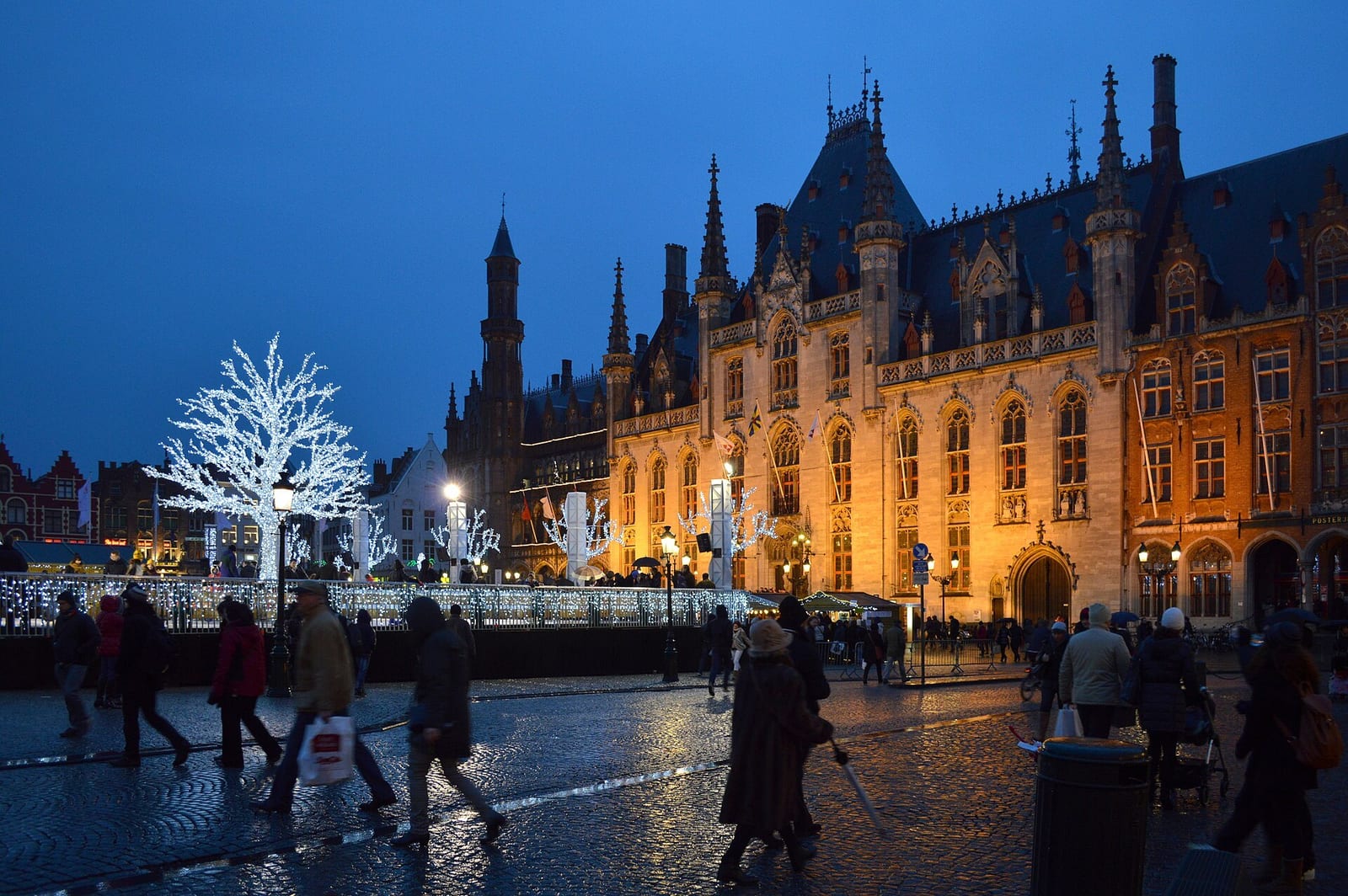
Christmas markets from London by train: what 3 nights really costs per person in 2026
Three nights at a Christmas market from London cost £426 to £704 per person. We priced Eurostar fares, central hotels and food for Lille, Brussels, Bruges and Cologne.
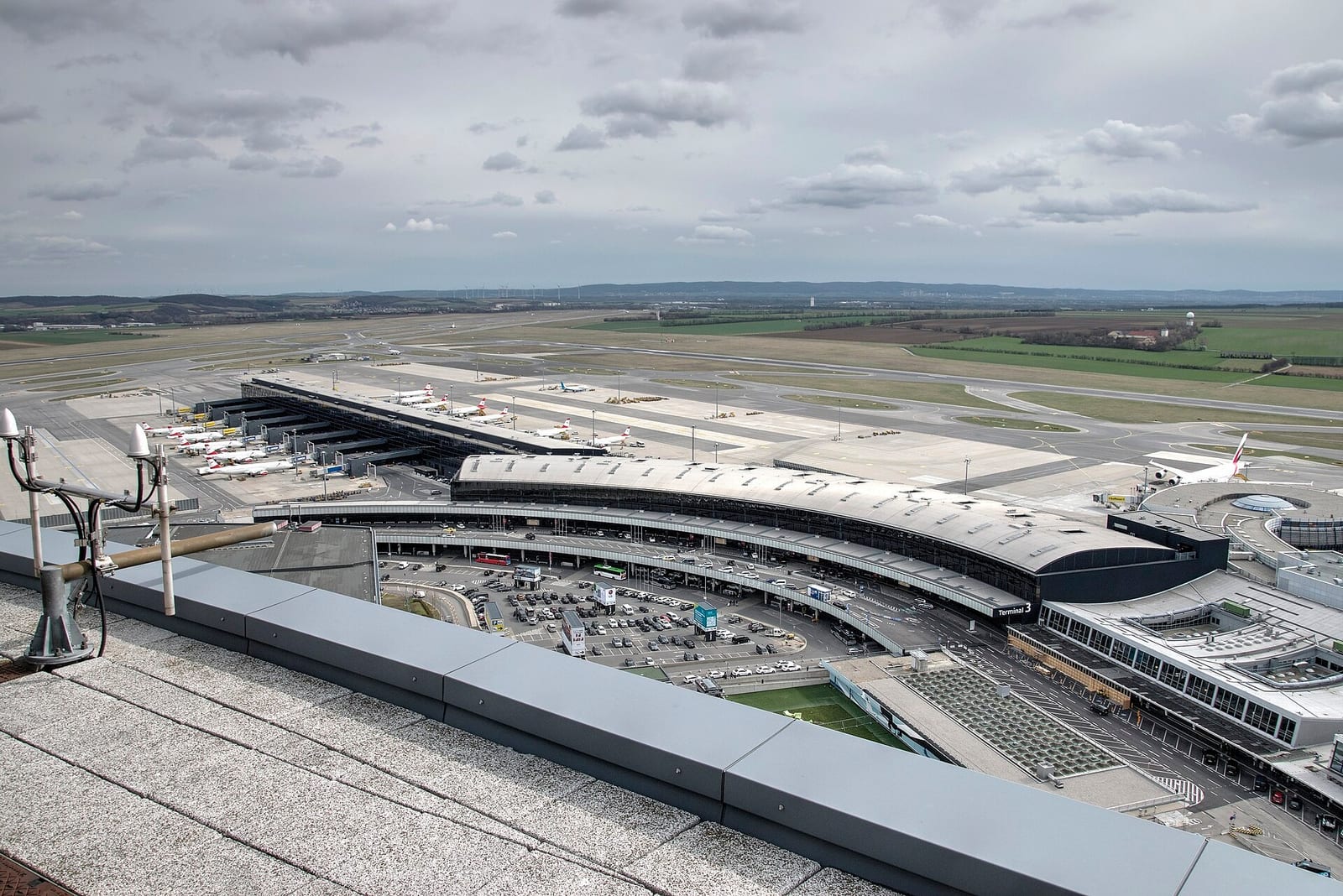
Wizz Air and Ryanair are cutting Vienna flights: what to book instead
Wizz Air has fully left Vienna and Ryanair has cut five aircraft over Austria's aviation tax. Here's exactly what changed, why it happened, and how to still book a cheap flight this winter.
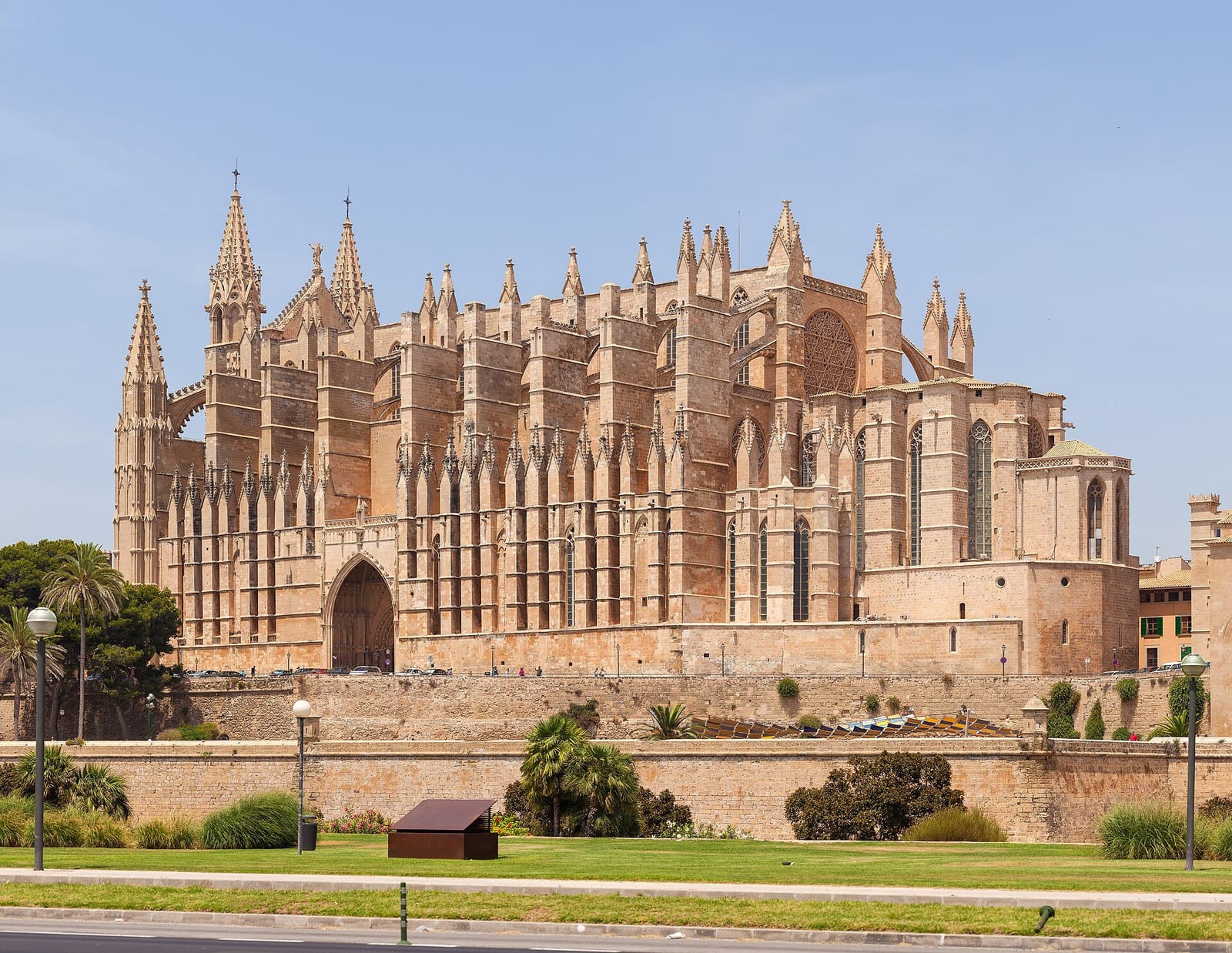
Mallorca's tourist tax hike got cancelled. Here's what a 2026 trip really costs
The Balearic tourist tax hike everyone's still warning about got cancelled in February. Here's what a week on Mallorca actually costs in 2026, flights, hotel, tax, and food, with real numbers.