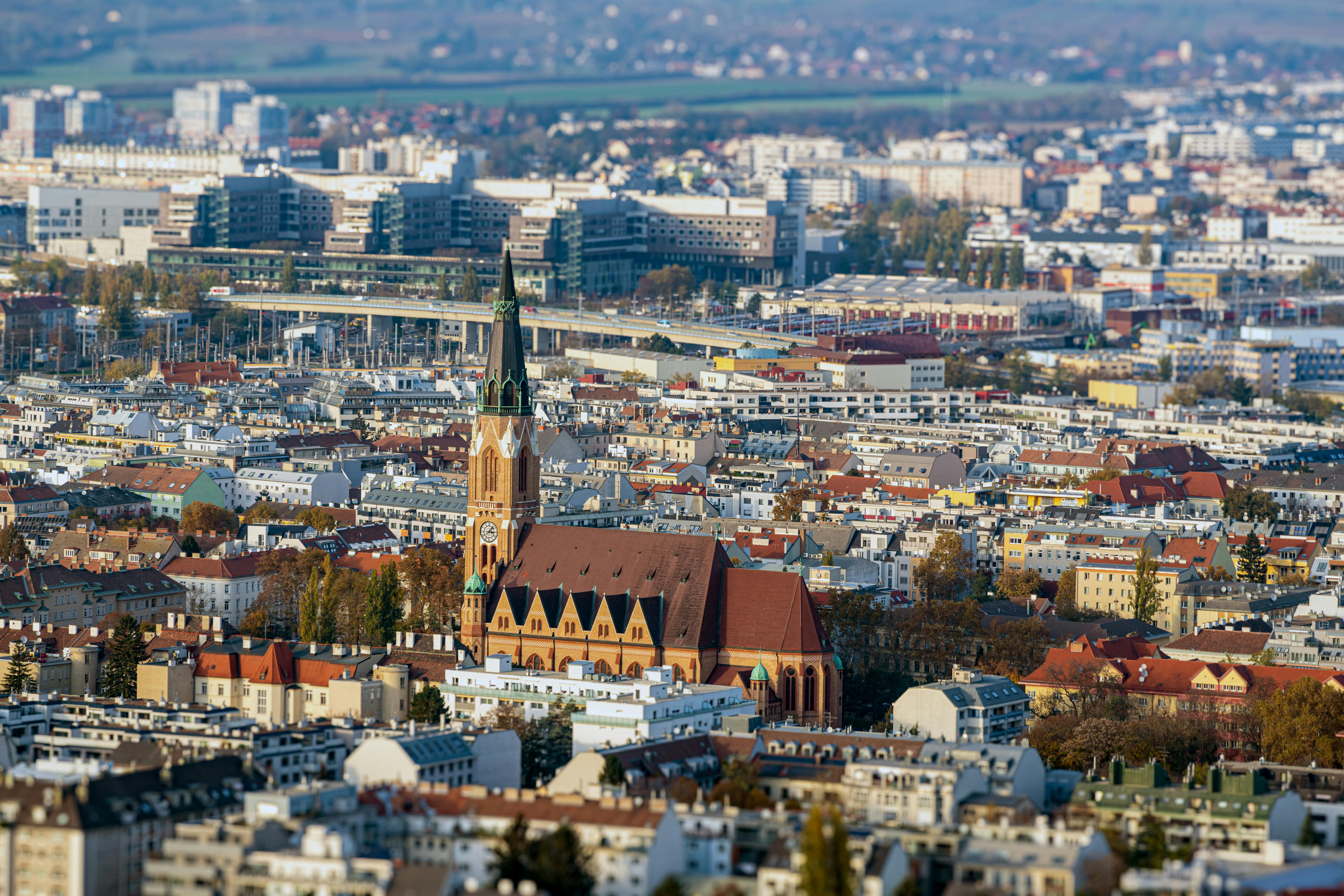
Day 1: St. Stephen's Cathedral, the Graben's churches and plague column, the Hofburg, the Albertina and the State Opera, finished with schnitzel, all on foot. Day 2: the twin Kunsthistorisches and Natural History museums, the Baroque State Hall, Heldenplatz and the Ring's parliament and Burgtheater, broken up by a classic coffeehouse. Day 3: Schönbrunn Palace and the world's oldest zoo by U-Bahn, then the Naschmarkt, the Secession's golden dome, Karlskirche's cupola and the Belvedere's Klimt. For a three-day visit a 7-day transit ticket usually beats separate 24-hour tickets, and keeping Mondays off the museum-heavy days keeps the route open.
Day 1: The Old City on Foot: Cathedral, Hofburg and Coffeehouses
Day one never leaves the old city, and never needs to: everything sits within a twenty-minute walk of the cathedral. Squares, Baroque churches, the Hofburg's courtyards and a coffeehouse or two, all on foot with your bags already at the hotel. A couple of the churches you step inside; the rest are a quick look from the square.
.JPG/500px-Wien_-_Stephansdom_(1).JPG)
St. Stephen's Cathedral
The Steffl, the 136-metre south tower the Viennese named like an old friend, has anchored the skyline since the 1430s, with 343 steps climbing to its viewing room. Overhead, 230,000 glazed tiles pattern the roof into a giant double-headed eagle, and the Pummerin bell in the north tower was recast from cannon captured at the 1683 siege.

Stephansplatz
The square wrapping the cathedral is the pin every Vienna map centres on, where two U-Bahn lines cross beneath your feet and the mirrored glass Haas-Haus throws the gothic spire back at itself. It is less a destination than the hinge the old city turns on, so you will pass through it more than once.

Pestsäule
Halfway along the Graben, the pedestrian spine running west from the cathedral, a frothy Baroque column erupts in gilded clouds and tumbling figures. It is the city's memorial to the plague that emptied Vienna in the 1670s, and it set the template for the trinity columns copied across Central Europe.

St. Peter's Church
Tucked just off the Graben, St. Peter's hides one of Vienna's most theatrical Baroque interiors behind a narrow facade: a green copper dome, pink marble, gilt, and a ceiling fresco that seems to lift the roof clean off. Free organ recitals run most afternoons, worth timing if the schedule lines up.
Demel
Demel has glazed and gilded its cakes as an imperial court confectioner since Emperor Franz Joseph granted it the warrant in 1874, and its window displays on the Kohlmarkt are still small theatre. Order the Anna Torte or a slice of its own Sachertorte, watch the white-gloved counter staff work, and pay for the room as much as the cake.

St. Michael's Church
Facing the Hofburg's domed gate, the Michaelerkirche mixes Romanesque bones with a Baroque overlay, and beneath it a crypt where dry air naturally mummified coffined Viennese nobility in their 17th- and 18th-century clothes. The guided crypt visit is the reason to stop here; the nave above is a quick look.

Hofburg Palace
The Habsburgs ran an empire from here for the better part of seven hundred years, and the Hofburg grew with them into eighteen wings and around 2,600 rooms. Austria's president works behind one of these facades today. A day disappears inside; a walk through the courtyards and past the domed Michaelertor is the free version.

Albertina
Duke Albert began hoarding drawings here in 1776, and the Albertina now holds over a million prints and 60,000 drawings, including Dürer's impossibly precise Young Hare of 1502. The original is extremely light-sensitive and only shown for short spells, so check the Albertina's current exhibitions before counting on seeing it. The gilded Habsburg state rooms upstairs are always worth the climb.

Vienna State Opera
The house calls itself the world's largest repertory opera, cycling through dozens of productions a season, not one on repeat. If a night at the opera sounds out of reach, a few hundred standing places go on sale on the day from a few euros; otherwise the forty-minute guided tour walks you up the grand staircase and into the auditorium.
Figlmüller
Figlmüller has served Wiener Schnitzel since the early 1900s down a lane off the Stephansplatz, and its version is the postcard one: veal pounded so thin and wide it drapes over the plate rim. Come hungry, expect a wait or a reservation, and order the obvious classic without guilt.
Day 2: The Ring: Imperial Museums and Grand Boulevards
Day two follows the Ringstrasse, the grand boulevard the emperor laid over the old city walls. Two matching museums, a Baroque library, the parliament and the Burgtheater line up along it, close enough to walk and backed by the ring tram if your legs give out.

Kunsthistorisches Museum
The Habsburgs spent centuries buying art, and this is where the best of it landed: Vermeer, Velazquez, Raphael, and above all the world's largest gathering of Pieter Bruegel the Elder, twelve panels in one room including Hunters in the Snow. Give the first-floor picture gallery most of your time; the building itself is half the show.
.JPG/500px-Wien_-_Naturhistorisches_Museum_(2).JPG)
Natural History Museum
The Kunsthistorisches Museum's mirror-image twin across Maria-Theresien-Platz holds the 29,500-year-old Venus of Willendorf, a palm-sized limestone figure dug from Lower Austria in 1908, plus the largest public meteorite hall on earth. The two buildings went up together in matching stone, a single grand gesture facing each other.

MuseumsQuartier
Behind the long Baroque facade of the former imperial court stables spreads one of the world's largest arts quarters: modern-art museums, cafés, and, in the courtyards, coloured enamel loungers where students and visitors sprawl for hours. Even ticketless it works as a break between the heavier stops.

Heldenplatz
The great open crescent in front of the Hofburg has staged Austria's history at full volume, from imperial parades to the crowd that greeted the 1938 Anschluss. Today it is mostly gravel, equestrian statues and room to breathe. Each October the National Day fills it with military hardware, open-air exhibits and crowds.

Austrian National Library
Inside the Hofburg, the State Hall is the Baroque library everyone pictures: 77 metres of walnut shelving under a frescoed dome, built for Emperor Charles VI in the 1720s by the Fischer von Erlach father and son. It holds 200,000 leather volumes, among them the 15,000-book library of Prince Eugene of Savoy. Come for the room, not the reading.
Café Central
Under the vaulted arcades of the Palais Ferstel, Café Central has poured coffee since 1876 and once counted Trotsky among the regulars who nursed a single cup for hours over the free newspapers. The queue outside is real, so go early or late, order a Melange, and enjoy the wait.

Burgtheater
Facing the City Hall across the Ring, the Burgtheater is one of the German-speaking world's most important stages, and a young Gustav Klimt painted part of its twin staircase ceilings in the 1880s with his brother Ernst and Franz Matsch. You cannot wander in by day, but the facade and a guided tour show off those frescoes.

Austrian Parliament Building
The Greek-temple front on the Ring, all columns and the Pallas Athena fountain out front, reopened in 2023 after a five-year restoration that dug new public halls beneath the old chambers. You can tour the debating hall when parliament is not sitting; otherwise Athena and the pediment reward a slow pass along the boulevard.
Day 3: Schönbrunn, the Naschmarkt and the Belvedere
Day three spreads out. A morning at Schönbrunn on the U-Bahn's western end, then back into town for the Naschmarkt, the Secession, Karlskirche and the Belvedere. The Upper Belvedere stops admitting around 17:30, so it lands mid-afternoon here, right after Karlskirche, not last.

Schönbrunn Palace
Maria Theresa remade this as the Habsburg summer residence in the 1740s, and its 1,441 rooms, formal gardens and hilltop Gloriette earned it UNESCO listing in 1996. You will not see all of it; the state rooms and a walk up to the Gloriette are the core. The state rooms are ticketed by timed slot and sell out in season, so book a Grand Tour entry online before you go; the gardens are free. Arrive at opening to beat the coaches.

Schönbrunn Zoo
In the palace grounds sits the oldest zoo still running anywhere, laid out as an imperial menagerie in 1752 with a Baroque pavilion at its centre where the emperor once breakfasted among the animals. The koalas, the pandas when in residence, and that original pavilion are the draw, and the compact layout means you can catch the highlights in a single morning.
Naschmarkt
Vienna's biggest market runs for half a kilometre of spice stalls, cheese counters and sit-down mezze along the old river course. Come Saturday and the far end becomes the city's sprawling flea market, hundreds of stalls of vinyl, porcelain and other people's attics. Graze rather than commit to one plate, and haggle at the flea end. The fixed stalls close on Sundays and public holidays (the sit-down restaurants stay open), so if the market itself is the point, run Day 3 on any day but Sunday.

Theater an der Wien
This modest-looking opera house on the Wienzeile premiered Beethoven's only opera, Fidelio, in 1805, and was built by Emanuel Schikaneder, the impresario behind Mozart's Magic Flute. It is a working stage rather than a tour stop, so admire the facade and its theatrical sculpture on the way past to the market or the Secession.

Secession Building
Klimt and his allies walked out of Vienna's art establishment in 1897 and built themselves this white cube crowned with a dome of roughly 3,000 gilded laurel leaves, the golden cabbage of local nickname. Downstairs, Klimt's Beethoven Frieze wraps three walls, painted for a single 1902 exhibition and never taken down since.

Karlsplatz
More transit crossroads than square, Karlsplatz still hides Otto Wagner's twin green-and-gold pavilions, Jugendstil gems left over from the 1890s city railway, marooned in a park with the church mirrored in a shallow pool. Cut through rather than linger, Wagner's pavilions and the water framing the great dome ahead.

Karlskirche
That green dome ahead belongs to Vienna's grandest Baroque church, vowed by an emperor during the plague of 1713 and fronted by two columns modelled on Trajan's in Rome. Inside, when installed, a panoramic lift rises some 32 metres into the cupola, close enough to read the brushwork in Rottmayr's 1725 fresco, then up to a rooftop view over the city; check the church's site before counting on it.
.JPG/500px-Wien_-_Schloss_Belvedere%2C_oberes_(2).JPG)
Belvedere
Prince Eugene of Savoy built this pair of Baroque palaces between 1717 and 1723, and the Upper Belvedere now holds the world's largest Klimt collection, twenty-four paintings led by The Kiss in its shimmering gold. The Austrian state bought The Kiss straight off the wall in 1908; the terraced gardens between the palaces cost nothing to walk.
Best time to visit
What's on in Vienna
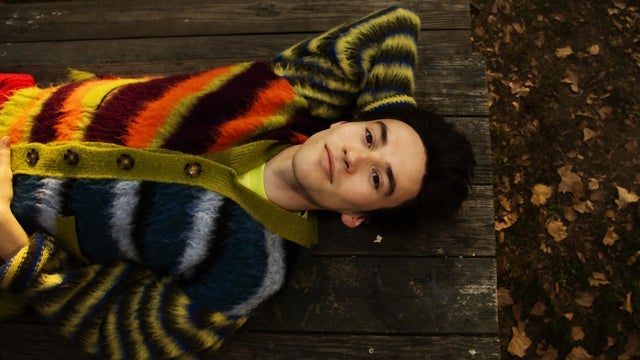
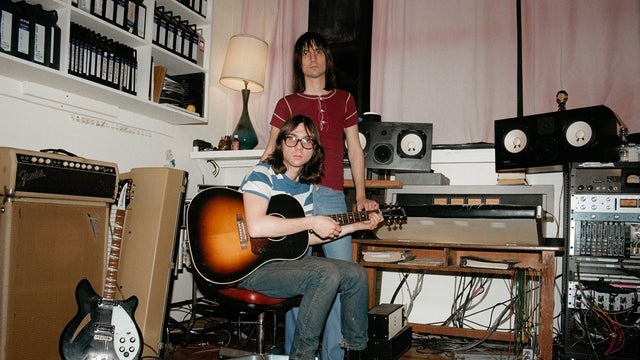
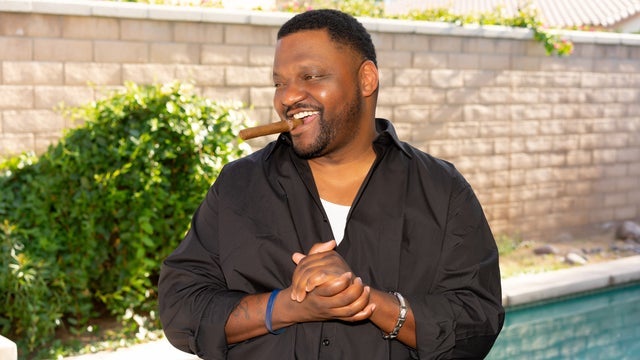
Festivals, concerts, and exhibitions happening during your trip.
Jacob Collier
The Lemon Twigs

Lake Street Dive
Aries Spears
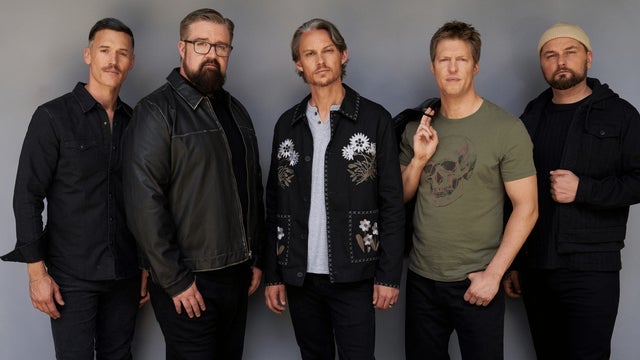
Home Free
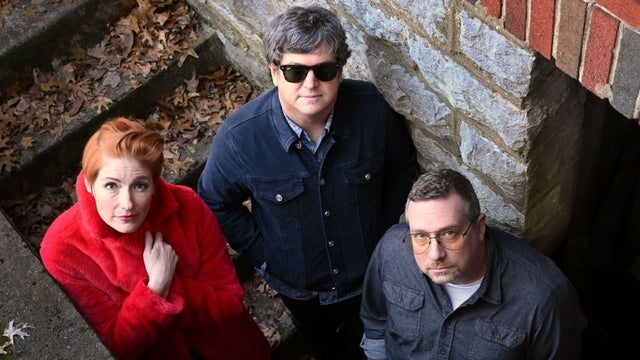
Sixpence None the Richer
National Holiday
Public holidayGuided tours
Some links may earn us a commission at no extra cost to you.
Know before you go
- Take the S7 to Wien Mitte; it is a fraction of the airport-express fare and runs on the normal rail network, the simple cheap way in with no car.
- Compare a 7-day ticket against separate 24-hour tickets for your exact dates; for a three-day visit the weekly is usually the cheaper, simpler buy, and it covers every U-Bahn, tram and bus. Check current ticket types on wienerlinien.at.
- Palace interior tours run on timed entry and sell out in season. Reserve your Grand Tour slot online for early morning so you are inside before the coach groups; the gardens need no ticket.
- Everything on day one is walkable, and the U-Bahn reaches Schönbrunn and the Belvedere in minutes. The old city is dense, parking is costly and much of the centre is pedestrian, so first-timers are far better off on foot and rail.
- St. Stephen's south tower is a 343-step climb with no lift (the north-tower Pummerin has one); the Karlskirche cupola is reached by lift; Schönbrunn's state rooms, the Naschmarkt and most museums are step-free and stroller-friendly.
- The Kunsthistorisches Museum, the Secession and the State Hall library all close on Mondays, and the Natural History Museum closes on Tuesdays. If your trip includes a Monday, run the day-one walking route that day, since none of its sights close then, and keep the two museum days midweek.
- Cards work almost everywhere, but coffeehouse tips, the Naschmarkt flea stalls and a few church donation boxes still run on coins and notes. Twenty euros in small change covers the gaps a first-timer tends to hit.
- Small-group old-city walking tours and day trips out to Hallstatt price per person and drop noticeably once you book four or more together. Ask the operator for a group rate rather than each booking separately.
- Figlmüller, Café Central and the Sacher all fill fast, and walking up as a group of four or more usually means a long wait. Book a day or two ahead, especially for dinner and weekend afternoons.